×

Uzbekistan🇺🇿 | national parksAydar-Arnasay Lakes Systemshallow lakes, migratory waterfowl, reed beds | things to do and best time to go

Explore Zarafshan State Nature ReserveExplore Dengizkul State Nature Reserve

Backpacking in Aydar-Arnasay Lakes System
👀 For curious travelersnational park ranked #13
By Johan Kruseman 🇳🇱 | Updated October 6, 2026

The Aydar-Arnasay system was created by accident in 1969, when a flood of Syr Darya water was released into the Arnasay depression, and it now stretches for over 200 kilometers. It sits in the Navoi and Jizzakh regions, in the Kyzylkum desert northwest of the Fergana corridor. Roads here are rough and distances long, so experienced travelers arrange a driver with a 4x4 in Jizzakh rather than gamble on shared taxis. Birdlife, camel rides and sunsets over flat water are the draw. Shade is scarce and there are no marked trails. Bird lovers and campers will love it. Anyone wanting hiking routes or comfort should skip it.

Discover everything you want to know in the 📖 Uzbekistan Travel Guide.


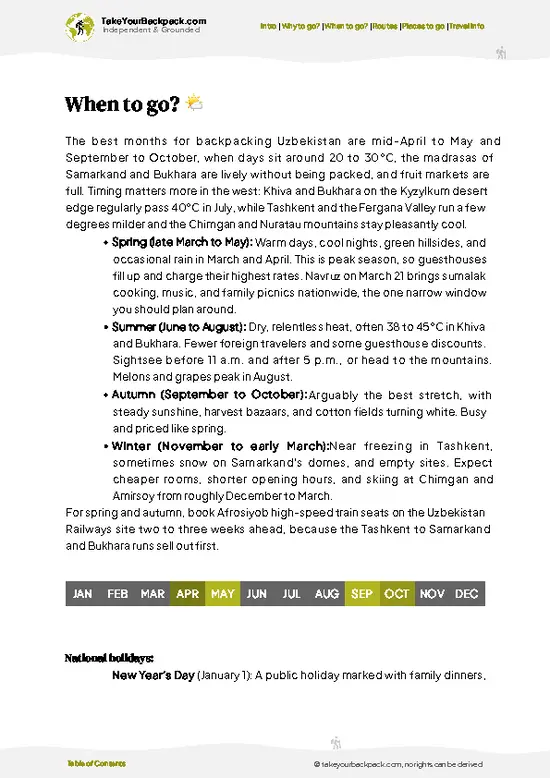
example page 0 from our offline Travel Guide for Uzbekistan
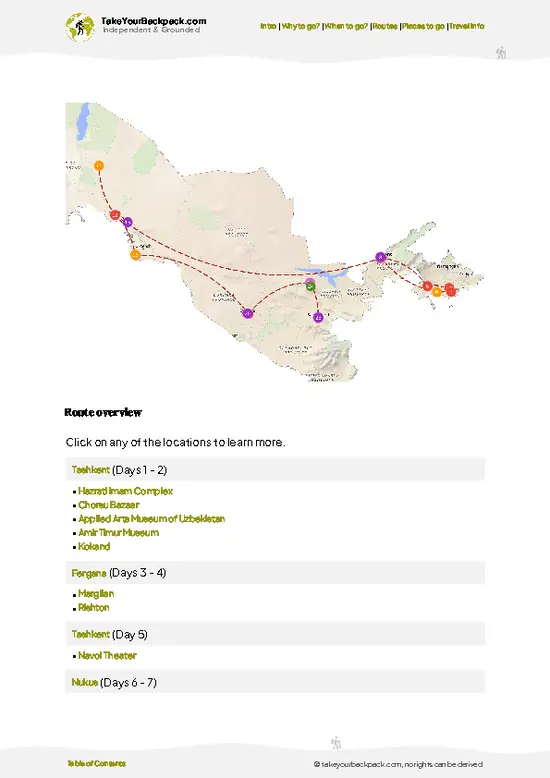
example page 1 from our offline Travel Guide for Uzbekistan
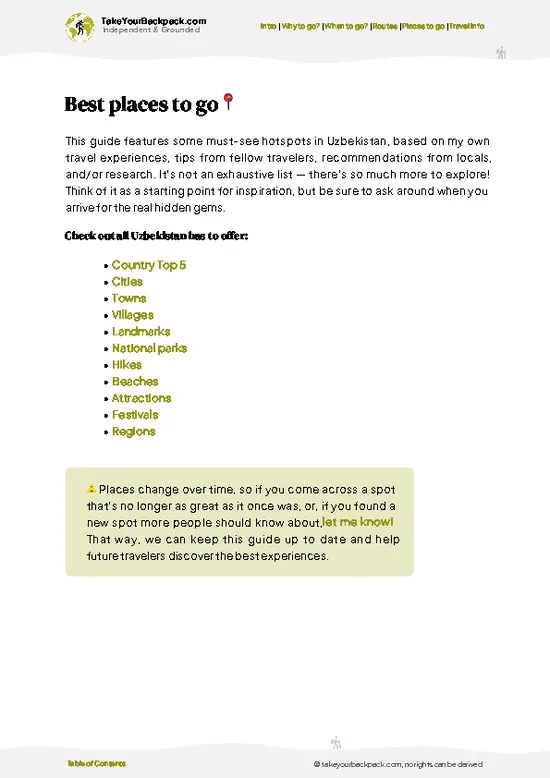
example page 2 from our offline Travel Guide for Uzbekistan
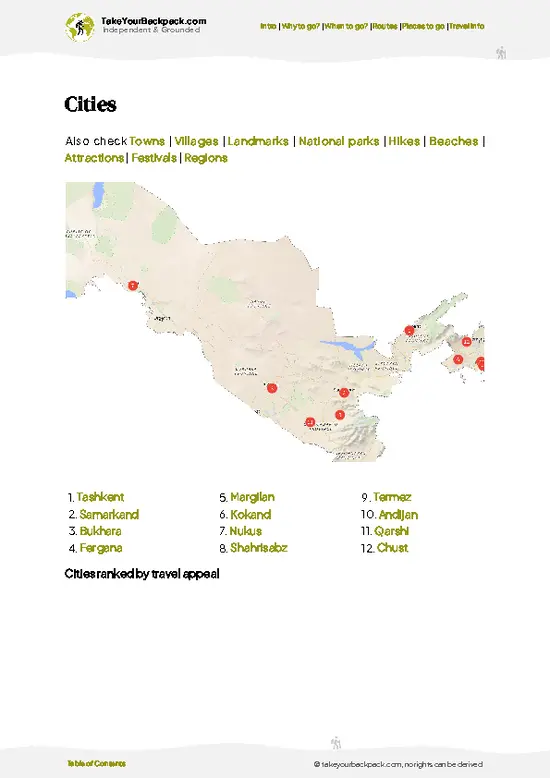
example page 3 from our offline Travel Guide for Uzbekistan
example page 4 from our offline Travel Guide for Uzbekistan
example page 5 from our offline Travel Guide for Uzbekistan
example page 6 from our offline Travel Guide for Uzbekistan
example page 7 from our offline Travel Guide for Uzbekistan
Loading the map 🌍
CLICK TO FILTER
cities
towns
villages
landmarks
national parks
hikes
beaches
attractions
festivals
regions
SHOW COUNTRY’S BESTSHOW ALL

✨ Why go?
Ranked #13 national park in Uzbekistan
Why visitors keep coming back

Backpackers come for the yurt camps on the Aydar shore, where you sleep in felt tents a few steps from the water, eat fish from the lake and wake to quiet that city travelers rarely get. The lake is a fixed point in the Kyzylkum desert, so you can wander the shoreline near camp on your own, though a driver or camp guide is wiser for the dunes and salt flats beyond. The system is also a bird area with thousands of waterfowl, including pelicans and herons in season. You can swim, kayak or just sit. Tours are common, but a self-guided stay works if you sort out a driver, and you get to choose how long you linger.

💡 HighlightsDon't-miss highlights and experiences

  1. Aydarkul shoreline: The largest lake in the system, with long pale beaches and calm water good for swimming in summer.
  2. Yurt camps: Felt tents set along the shore, where you sleep close to the water and eat a fish dinner.
  3. Sunset over the lake: The flat horizon turns copper and pink, and the dunes behind cool quickly.
  4. Birdwatching: Pelicans, herons, cormorants and ducks gather on the water, with the most variety during migration seasons.
  5. Camel rides: Short rides along the dunes arranged by camps, a slow way to see the desert edge.
  6. Kyzylkum dunes: Sandy ridges behind the shore, good for walking and wide views across the lake.
  7. Fishing and boat trips: Local fishermen work the lake, and boat outings can be arranged through camps.
Start with a night at a yurt camp on Aydarkul, since it gives you the shoreline, the sunset and the birds in one stop.
Spotted a mistake or missing something? Contact us.

🌤️ When to go?When to go for the best experience

  • Spring (April to May): Days run 18 to 28°C (64 to 82°F), the steppe turns green and migratory birds pass through. Nights at the lake drop to 8 to 12°C (46 to 54°F), so a warm layer matters.
  • Summer (June to August): Highs reach 35 to 40°C (95 to 104°F) with almost no shade on the shore. Swimming is the draw, and yurt camps charge their top rates.
  • Autumn (September to October): Highs of 20 to 30°C (68 to 86°F), calmer winds and fewer visitors. Daylight shrinks to about 11 hours by October.
  • Winter (November to March): Lows fall to -5°C (23°F) or below, most camps close and the dust-heavy wind is cold.
Book a yurt midweek in May or September for the best rates and the quietest shore.

source: climatestotravel.comJANJanuary: below average for travelingFEBFebruary: below average for travelingMARMarch: fair for travelingAPRApril: highly recommended for travelingMAYMay: excellent for travelingJUNJune: highly recommended for travelingJULJuly: fair for travelingAUGAugust: fair for travelingSEPSeptember: highly recommended for travelingOCTOctober: highly recommended for travelingNOVNovember: fair for travelingDECDecember: below average for traveling
uzbekistan-national-park-aydar-arnasay-lakes-system
© Google |

✈️ The backpacker research shortcutUzbekistan Travel Guide

An offline-friendly backpacking guide with optimized travel routes, ranked highlights, transport advice, and the best areas to stay.
example page 0 from our offline Travel Guide for Uzbekistan
example page 1 from our offline Travel Guide for Uzbekistan
example page 2 from our offline Travel Guide for Uzbekistan
example page 3 from our offline Travel Guide for Uzbekistan
example page 4 from our offline Travel Guide for Uzbekistan
example page 5 from our offline Travel Guide for Uzbekistan
example page 6 from our offline Travel Guide for Uzbekistan
example page 7 from our offline Travel Guide for Uzbekistan
The digital guide (246 pages) contains:
✅ 74 highlights, ranked by travel appeal
✅ Optimized 5, 10 & 15-day travel routes
✅ Cities, national parks, landmarks, beaches
✅ How to get around
✅ Offline-friendly for travel without Wi-Fi
👉 Click to see all 30+ guide features

📅 Plan smarter in minutes, not weeks
✅ Month by month travel advice
✅ Festivals & national holidays
✅ Budget expectations

🗺️ Go to the right places, skip the overrated ones
✅ Honest pros & cons of destinations
✅ Top hikes, parks & viewpoints
✅ Lesser-known places most travelers miss
✅ Clear “worth it vs skip it” guidance

🛏️ Travel smoothly without rookie mistakes
✅ Best areas to stay
✅ Transport systems explained simply
✅ Common scams & safety advice
✅ SIM cards, money & practical tips

🌍 Understand the country, not just visit it
✅ Culture & traditions
✅ 52 Essential phrases & customs
✅ Festivals worth planning around
✅ Traveler-friendly historical context
✅ Insights that make places more meaningful

📱 Built for real travel conditions
✅ Fully downloadable PDF
✅ Works completely offline
✅ Optimized for phone use
✅ Useful in remote areas & buses
✅ Everything in one place
Stop searching, start planning
Get instant access to your full guide. 30‑day money-back guarantee.
+ Add another guide for just

By proceeding you agree to our terms.
Sent to your inbox immediately after payment • 100% Secure Checkout
Best Backpacking Travel Advisor 2025 tourism awardBest Backpacking
Travel Advisor
2025
What others say about Take Your Backpack Guides:
⭐⭐⭐⭐⭐
Fantastic, amazing amount of information!
⭐⭐⭐⭐⭐
My goodness this is amazing, it's what I've been looking for hats off too you!
⭐⭐⭐⭐⭐
I think this is absolutely BRILLIANT
⭐⭐⭐⭐
Very complete and informative. It's still missing places, but I gotta to commend you
⭐⭐⭐⭐⭐
This is truly amazing, thank you, can't wait to explore it with my kids!
⭐⭐⭐⭐⭐
Awesome resource, thank you!
⭐⭐⭐⭐⭐
This is amazing! Can't wait to explore the ones I haven't seen
⭐⭐⭐⭐
I love this! Well done, great idea.
⭐⭐⭐⭐⭐
Thanks for taking the time to make this gem!
⭐⭐⭐⭐⭐
This might be the best website I've ever seen.
⭐⭐⭐⭐⭐
Congratulations, and thank you so much for your work; it's incredibly valuable.
⭐⭐⭐⭐
In all seriousness I think you did a great job pointing out the important spots
⭐⭐⭐⭐⭐
10/10 very good
⭐⭐⭐⭐⭐
As someone who's only just starting to visit regularly this is awesome, thank you.
⭐⭐⭐⭐
Thank you very much! I'm going to visit my dad, it's going to be very useful!
⭐⭐⭐⭐⭐
This is really cool! We'll be travelling for the first time and this definitely come in handy.
⭐⭐⭐⭐⭐
You are now our minister of culture, congratulations 👨‍💼
⭐⭐⭐⭐⭐
Just wanted to tell you that this is a pearl! Going to follow your recommendations.
⭐⭐⭐⭐⭐
This is so cool. I'll definitely be using the resource for my travels soon.
⭐⭐⭐⭐⭐
This is very impressive! Good work.
⭐⭐⭐⭐⭐
This is an amazing and informative site. Very well done!

🛏️ Where to stay?Best areas and accommodation options

Yurt camps on the lakeshore are the best base, and almost everyone sleeps in one. Camps such as those near Tuzkan and along the Aydarkul shore offer felt-lined yurts with shared beds, meals included, for roughly US$30 to 45 per person. Most sit on sandy beaches facing the water, with camel rides, fishing and stargazing built in. Many travelers arrive on a tour from Samarkand, but camps can also be booked directly through a homestay host or tour operator. Some camps have basic shared toilets and limited electricity, so bring a power bank. Outside the yurts there is little formal lodging nearby. … read more 👉
Yurt camps on the lakeshore are the best base, and almost everyone sleeps in one. Camps such as those near Tuzkan and along the Aydarkul shore offer felt-lined yurts with shared beds, meals included, for roughly US$30 to 45 per person. Most sit on sandy beaches facing the water, with camel rides, fishing and stargazing built in. Many travelers arrive on a tour from Samarkand, but camps can also be booked directly through a homestay host or tour operator. Some camps have basic shared toilets and limited electricity, so bring a power bank. Outside the yurts there is little formal lodging nearby. The closest towns with guesthouses are Nurota, about an hour or so away and known for its fortress ruins and spring, and Jizzakh, the regional capital with hotels and a bus station. Samarkand, around three hours by road, offers the widest range of hostels and is the usual starting point.

👛 Costs (as of 6 October 2026)What things cost and how to budget

A realistic budget for the Aydar-Arnasay Lakes is US$60 to 100 per day, mostly for yurt lodging with meals and getting there. The table below uses US dollars, though payment is in Uzbek som (UZS).
CategoryBudget RangeLocal Reality
Entrance feesUSD 0 to 3Little formal ticketing, with small fees sometimes collected at camps or on the access road.
Accommodation (high season)USD 30 to 45Shared yurt beds in summer, usually with dinner and breakfast bundled in.
Local transportUSD 15 to 30Shared taxi or a private car for the transfer, split between several travelers to cut the cost.
Food and suppliesUSD 5 to 8Lunch and snacks plus bottled water, as camps cover the main meals.
ActivitiesUSD 10 to 14Camel rides, boat trips or fishing arranged at the camp.
Total Daily BudgetUSD 60 to 100Per person, per day, in high season.


source: uzbekistan.travel
⚠️ Prices can change and everyone travels differently, so take this as a rough guide. Hope it helps you plan your adventure!

🥾 TrailsHiking Aydar-Arnasay Lakes System national park: highlights and difficulty

There are no designated trails here, so hiking means free walking along the shoreline and over the low dunes of the Kyzylkum. The terrain is flat to gently rolling sand, packed salt crust and reeds near the water. Walks of one to three hours are easy, but shade is almost nonexistent, so carry plenty of water, a hat and sunscreen. Summer heat is intense, and spring and early autumn are far more comfortable for walking. Wind can whip up sand on open stretches, so a scarf helps.

Wildlife is the highlight. Water birds are the main attraction, including pelicans, herons and ducks, while the desert … read more 👉
There are no designated trails here, so hiking means free walking along the shoreline and over the low dunes of the Kyzylkum. The terrain is flat to gently rolling sand, packed salt crust and reeds near the water. Walks of one to three hours are easy, but shade is almost nonexistent, so carry plenty of water, a hat and sunscreen. Summer heat is intense, and spring and early autumn are far more comfortable for walking. Wind can whip up sand on open stretches, so a scarf helps.

Wildlife is the highlight. Water birds are the main attraction, including pelicans, herons and ducks, while the desert hosts lizards, foxes and the occasional gazelle or camel herd. Dawn and dusk are the best times to watch.

Getting there is the hardest part. Public transport is limited, with shared taxis reaching towns near the lake and not the camps themselves, so most visitors arrange a private driver with a high-clearance vehicle from Jizzakh, Samarkand or Tashkent. The tracks to the shore turn rough and sandy. Crowds are small even in season, with camps busiest on summer weekends. There is no formal park entrance fee at the lake, but camps charge for stays, meals and activities.
⚠️ Hiking info can sometimes be outdated or inaccurate. Before you hit the trail, check the latest conditions with locals. If you do spot anything that's off, I'd love to hear from you, so I can update it for fellow travelers.

🛡️ SafetyScams, Hazards, and Annoyances

The lakes are straightforward for most visitors, and the main hazards are sun, wind and distance. Summer heat on the open shore is intense, so carry at least 3 liters of water per person, a hat and sunscreen, since shade is scarce. Winds can whip sand into the evening and temperatures drop sharply after sunset, even in summer. The terrain is flat desert and steppe, but tracks are unmarked and phone signal is patchy, so go with a driver or camp guide when exploring beyond the shoreline. Swim only near the camp, as the lake bed shelves unpredictably. Camels and dogs around camps are used to people, though keep your distance from unfamiliar animals.

FAQCommon questions from travelers

One night is the practical minimum, and two nights suit anyone who wants to swim, ride a camel and watch the stars. Most travelers come from Samarkand, which is around three hours by road, so a day trip is possible but leaves little time at the shore. A common plan is to combine the lakes with Nurota on the way, giving a loop of two to three days.
Public transport does not reach the yurt camps, so a car is needed for the last stretch. Shared taxis and buses run from Samarkand to Nurota or Jizzakh, and from there you can hire a driver for the remaining leg, typically US$15 to 30. Many camps can arrange pickup, which makes the trip simple without your own vehicle.
There is no strict entrance ticket for most visitors, and independent travelers rarely need a permit. Small access or camp fees of around US$1 to 3 can be collected locally, and yurt camps charge per person for lodging and meals. Carry your passport and registration slip, as police checkpoints on the road from Jizzakh sometimes ask for them.
⚠️ Things can change over time, so always validate details locally before you go.

Other Uzbek national parks near Aydar-Arnasay Lakes System

Explore more nearby:


💡 Not sure where to go next?
Create a personalized itinerary for Uzbekistan including Aydar-Arnasay Lakes System and the places that fit your trip.

Generate my itinerary

👉 Discover all national parks

Or checkout all Uzbekistan has to offer (think cities, towns, villages, national parks, hikes, beaches, festivals)
Country photo of Uzbekistan

We 💚 feedbackSumming up the experience

Look down at the shoreline at dawn. Fishermen haul in the night’s catch, birds crowd the shallows and the sand is still cool. Most visitors sleep through it after a late campfire. Set an alarm, bring a warm layer, and walk the water’s edge before the heat and the day’s drivers arrive.

✍️ Help improve this page!
The information on this page is based on in-depth research, insights shared by experienced travelers, and feedback from the local travel community in Uzbekistan. While every effort is made to keep the information accurate and current, conditions can change — so if you spot anything incorrect or outdated, please get in touch.


🙋‍♂️ Give feedback

👋 Meet the founderWho’s Behind Take Your Backpack?

Johan, backpacker and founder of TakeYourBackpackHi, I’m Johan (Netherlands 🇳🇱), the creator of TakeYourBackpack. Over the past 3 decades, I’ve backpacked through 90+ countries across six continents, gaining extensive experience with independent travel, long-term trips, and overland routes.

This site is built on a combination of firsthand travel experience and carefully curated insights from other backpackers. Many guides are based on places I’ve personally visited, while others bring together tips, observations, and practical advice shared by trusted travelers I’ve met along the way.

The goal is to provide realistic, experience-driven guidance — not generic itineraries — so you can explore destinations with better context, clearer expectations, and more confidence.