×

Vanuatu🇻🇺 | attractionsNanda Blue HoleRope swing, bamboo raft, banyan roots, limestone-filtered water | things to do and best time to go

Explore Vanuatu Cultural Centre Fieldworker Network EventsExplore Jackie’s Blue Hole

Backpacking in Nanda Blue Hole
🏆 Top pickattraction ranked #2
By Johan Kruseman 🇳🇱 | Updated October 7, 2026

Nanda Blue Hole is best known for water so clear and blue that the bottom looks close enough to touch, with a rope swing hanging over it and tree roots draped along the bank. It sits on the east coast of Espiritu Santo, in the north of Vanuatu, a ride north of Luganville. The wow-factor is real, and it comes from the color. Rainwater filters through limestone and surfaces as a cold freshwater spring, so the pool glows brightest when the sun is high. Arrive late morning, not at dawn, because that is when the light hits the water. Go midweek, since cruise-ship days and weekends bring crowds. Carry small bills in vatu, because the landowners collect the entry fee directly and rarely have change. Bring water shoes, as the banks are rooty and slick. Backpackers who love swimming, jumping and lazy afternoons will adore it. Anyone chasing big adrenaline or a full-day attraction will find it small.

Discover everything you want to know in the 📖 Vanuatu Travel Guide.


Loading the map 🌍
CLICK TO FILTER
towns
villages
landmarks
national parks
hikes
beaches
attractions
festivals
regions
SHOW COUNTRY’S BESTSHOW ALL

✨ Why go?
Ranked #2 attraction in Vanuatu
The unique appeal for travelers

Santo is the island where backpackers trade resort pools for freshwater springs, and Nanda is one of the easiest to reach by road without a guide or tour. You swim in water far colder and clearer than the ocean a short walk away, which is a relief after a sweaty day of travel on the east coast. The place is run by the local landowners, so your entry fee goes to the community that looks after the trails and platforms.

It also works as a milestone on a northern Santo route. The rope swing gives the visit a bit of play, and the setting is quiet enough to feel like a break from the road rather than a checked-off sight. Nanda sits among other blue holes, so it fits the classic Santo habit of comparing them, deciding on a favorite, and arguing about it at the guesthouse that night. Many travelers … read more 👉
Santo is the island where backpackers trade resort pools for freshwater springs, and Nanda is one of the easiest to reach by road without a guide or tour. You swim in water far colder and clearer than the ocean a short walk away, which is a relief after a sweaty day of travel on the east coast. The place is run by the local landowners, so your entry fee goes to the community that looks after the trails and platforms.

It also works as a milestone on a northern Santo route. The rope swing gives the visit a bit of play, and the setting is quiet enough to feel like a break from the road rather than a checked-off sight. Nanda sits among other blue holes, so it fits the classic Santo habit of comparing them, deciding on a favorite, and arguing about it at the guesthouse that night. Many travelers find this one the most relaxed of the group, with room to lie on the bank and no one rushing you along.

💡 HighlightsThe experiences that define the visit

  1. The main spring pool: the star of the place, an intensely blue freshwater basin ringed by jungle. The water is cold and so clear that you can watch fish and submerged logs from the bank.
  2. The rope swing: a long rope over the water lets you launch yourself out and drop in. It is the main source of laughter, and watching others miss the landing is half the fun.
  3. Jumping platforms and overhanging branches: low-key spots for cannonballs and dives. Check the depth with a swim first, as the bottom varies across the pool.
  4. The bamboo raft: a simple raft that locals use for floating across the pool. You drift over the deepest, bluest water and look down into it, which is hard to beat for photos.
  5. Snorkeling in the spring: with a mask you can see the underwater tree roots, drowned branches and the sandy bottom
… read more 👉
  1. The main spring pool: the star of the place, an intensely blue freshwater basin ringed by jungle. The water is cold and so clear that you can watch fish and submerged logs from the bank.
  2. The rope swing: a long rope over the water lets you launch yourself out and drop in. It is the main source of laughter, and watching others miss the landing is half the fun.
  3. Jumping platforms and overhanging branches: low-key spots for cannonballs and dives. Check the depth with a swim first, as the bottom varies across the pool.
  4. The bamboo raft: a simple raft that locals use for floating across the pool. You drift over the deepest, bluest water and look down into it, which is hard to beat for photos.
  5. Snorkeling in the spring: with a mask you can see the underwater tree roots, drowned branches and the sandy bottom lit in shifting shades of turquoise. Bring your own gear.
  6. The forest edge and banyan roots: the tangled roots around the pool make natural seats and a shaded spot to dry off. Birdsong and the rustle of leaves fill the space between swims.
Allow about two to three hours for everything, or longer if you intend to laze on the bank.
Spotted a mistake or missing something? Contact us.

Things to do near Nanda Blue Hole

Ratings based on Tripadvisor reviews. When you book through this link, you support our work at no extra cost to you.

🌤️ When to go?Weather, crowds, and seasonal trade-offs

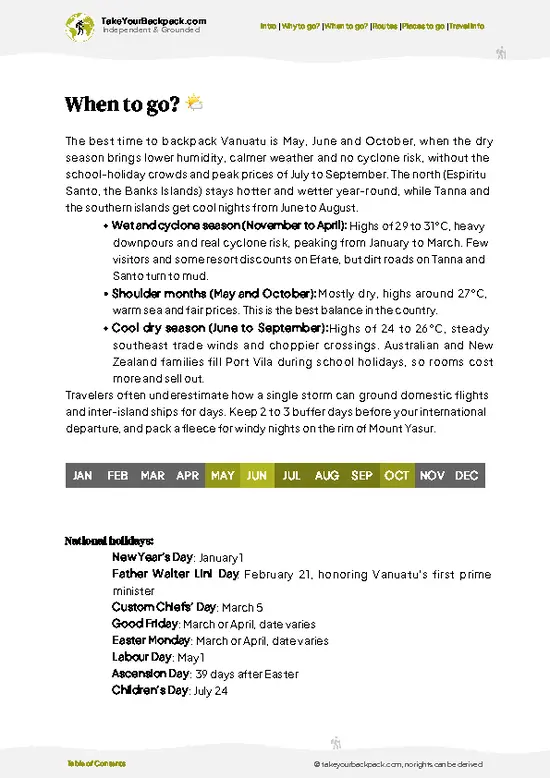
  • Dry Season (May to October): Mornings and afternoons stay around 20 to 28°C (68 to 82°F), and the spring-fed water holds a steady turquoise color. Sunrise comes near 6:15 am and sunset near 5:45 pm, so plan your swim for late morning when light hits the water directly. Efate road conditions are best now, and cruise ships push more day visitors toward the island.
  • Wet Season (November to April): Expect 25 to 32°C (77 to 90°F), heavy humidity and afternoon downpours. Runoff can cloud the pool and the access track gets muddy. Daylight stretches to about 6:45 pm. Cyclones are possible, especially January to March, and tours or buses can be cancelled.
  • Shoulder Months (April, May, October, November): Fewer visitors, warm water and mostly manageable showers. Accommodation on Efate is often a bit cheaper
… read more 👉
  • Dry Season (May to October): Mornings and afternoons stay around 20 to 28°C (68 to 82°F), and the spring-fed water holds a steady turquoise color. Sunrise comes near 6:15 am and sunset near 5:45 pm, so plan your swim for late morning when light hits the water directly. Efate road conditions are best now, and cruise ships push more day visitors toward the island.
  • Wet Season (November to April): Expect 25 to 32°C (77 to 90°F), heavy humidity and afternoon downpours. Runoff can cloud the pool and the access track gets muddy. Daylight stretches to about 6:45 pm. Cyclones are possible, especially January to March, and tours or buses can be cancelled.
  • Shoulder Months (April, May, October, November): Fewer visitors, warm water and mostly manageable showers. Accommodation on Efate is often a bit cheaper than in July and August.
  • Time of Day: Before 10 am the pool is quieter and the rope swing line is short. Midday brings tour groups.
Arrive on a weekday morning outside school holidays (July and December) for the calmest swim.


source: climatestotravel.comJANJanuary: fair for travelingFEBFebruary: fair for travelingMARMarch: fair for travelingAPRApril: fair for travelingMAYMay: excellent for travelingJUNJune: highly recommended for travelingJULJuly: highly recommended for travelingAUGAugust: highly recommended for travelingSEPSeptember: excellent for travelingOCTOctober: highly recommended for travelingNOVNovember: fair for travelingDECDecember: fair for traveling
vanuatu-attraction-nanda-blue-hole
© Google |

✈️ The backpacker research shortcutVanuatu Travel Guide

An offline-friendly backpacking guide with optimized travel routes, ranked highlights, transport advice, and the best areas to stay.
example page 0 from our offline Travel Guide for Vanuatu
example page 1 from our offline Travel Guide for Vanuatu
example page 2 from our offline Travel Guide for Vanuatu
example page 3 from our offline Travel Guide for Vanuatu
example page 4 from our offline Travel Guide for Vanuatu
example page 5 from our offline Travel Guide for Vanuatu
example page 6 from our offline Travel Guide for Vanuatu
example page 7 from our offline Travel Guide for Vanuatu
The digital guide (149 pages) contains:
✅ 41 highlights, ranked by travel appeal
✅ Optimized 2, 3 & 5-day travel routes
✅ Cities, national parks, landmarks, beaches
✅ How to get around
✅ Offline-friendly for travel without Wi-Fi
👉 Click to see all 30+ guide features

📅 Plan smarter in minutes, not weeks
✅ Month by month travel advice
✅ Festivals & national holidays
✅ Budget expectations

🗺️ Go to the right places, skip the overrated ones
✅ Honest pros & cons of destinations
✅ Top hikes, parks & viewpoints
✅ Lesser-known places most travelers miss
✅ Clear “worth it vs skip it” guidance

🛏️ Travel smoothly without rookie mistakes
✅ Best areas to stay
✅ Transport systems explained simply
✅ Common scams & safety advice
✅ SIM cards, money & practical tips

🌍 Understand the country, not just visit it
✅ Culture & traditions
✅ 52 Essential phrases & customs
✅ Festivals worth planning around
✅ Traveler-friendly historical context
✅ Insights that make places more meaningful

📱 Built for real travel conditions
✅ Fully downloadable PDF
✅ Works completely offline
✅ Optimized for phone use
✅ Useful in remote areas & buses
✅ Everything in one place
Save weeks of stressful planning
Get instant access to your full guide. 30‑day money-back guarantee.
+ Add another guide for just

By proceeding you agree to our terms.
Sent to your inbox immediately after payment • 100% Secure Checkout
Best Backpacking Travel Advisor 2025 tourism awardBest Backpacking
Travel Advisor
2025
What others say about Take Your Backpack Guides:
⭐⭐⭐⭐⭐
Fantastic, amazing amount of information!
⭐⭐⭐⭐⭐
My goodness this is amazing, it's what I've been looking for hats off too you!
⭐⭐⭐⭐⭐
I think this is absolutely BRILLIANT
⭐⭐⭐⭐
Very complete and informative. It's still missing places, but I gotta to commend you
⭐⭐⭐⭐⭐
This is truly amazing, thank you, can't wait to explore it with my kids!
⭐⭐⭐⭐⭐
Awesome resource, thank you!
⭐⭐⭐⭐⭐
This is amazing! Can't wait to explore the ones I haven't seen
⭐⭐⭐⭐
I love this! Well done, great idea.
⭐⭐⭐⭐⭐
Thanks for taking the time to make this gem!
⭐⭐⭐⭐⭐
This might be the best website I've ever seen.
⭐⭐⭐⭐⭐
Congratulations, and thank you so much for your work; it's incredibly valuable.
⭐⭐⭐⭐
In all seriousness I think you did a great job pointing out the important spots
⭐⭐⭐⭐⭐
10/10 very good
⭐⭐⭐⭐⭐
As someone who's only just starting to visit regularly this is awesome, thank you.
⭐⭐⭐⭐
Thank you very much! I'm going to visit my dad, it's going to be very useful!
⭐⭐⭐⭐⭐
This is really cool! We'll be travelling for the first time and this definitely come in handy.
⭐⭐⭐⭐⭐
You are now our minister of culture, congratulations 👨‍💼
⭐⭐⭐⭐⭐
Just wanted to tell you that this is a pearl! Going to follow your recommendations.
⭐⭐⭐⭐⭐
This is so cool. I'll definitely be using the resource for my travels soon.
⭐⭐⭐⭐⭐
This is very impressive! Good work.
⭐⭐⭐⭐⭐
This is an amazing and informative site. Very well done!

🛏️ Where to stay?Choosing the right base

Port Vila is the place to sleep, since the Blue Hole sits on the northeast coast of Efate roughly 35 to 40 kilometers from town and has no hostel scene of its own. The waterfront stretch around Main Street and Lini Highway puts you within walking distance of cafés, the produce market, and the minibus terminals where buses and tours leave. Most budget travelers settle here because dorm beds, shared kitchens, and rooftop or garden common areas make it easy to meet people and split a rental car or a hired driver for the Blue Hole run. Solo travelers also like it because the center is lit, busy until … read more 👉
Port Vila is the place to sleep, since the Blue Hole sits on the northeast coast of Efate roughly 35 to 40 kilometers from town and has no hostel scene of its own. The waterfront stretch around Main Street and Lini Highway puts you within walking distance of cafés, the produce market, and the minibus terminals where buses and tours leave. Most budget travelers settle here because dorm beds, shared kitchens, and rooftop or garden common areas make it easy to meet people and split a rental car or a hired driver for the Blue Hole run. Solo travelers also like it because the center is lit, busy until evening, and straightforward to move around on foot in daylight.
The Erakor Lagoon and Pango side, just south of town, is calmer and better if you want a beach feel with snorkeling off the shore, though you will rely more on buses. Mele and the north coast suit people with a vehicle who want fewer crowds and sea views, but nightlife and dorms are thin. For the shortest drive to the pool, a village homestay along the Eton or Ringdove side of the coast road works, with basic rooms and home cooking, though it is quiet and best for two nights or fewer.

👛 Costs (as of 7 October 2026)How expensive it really is

A realistic budget for a day built around Nanda Blue Hole is about US$55 to 110, with most of that going to a bed and transport rather than the swim itself.
CategoryBudget RangeLocal Reality
Entrance feeVT 500 to 1,000 (US$4 to 8)Paid to the local landowners at the gate, cash only. Fee can vary by season and by whether a guide or kayak is included.
Accommodation (high season)US$20 to 45Dorm bed or basic private room in Port Vila. Prices climb in July, August, and December.
TransportUS$8 to 35Shared minibus along the ring road costs a few dollars, then a short walk or a negotiated taxi leg. A full private taxi or a rental car costs more but allows multiple stops.
Food and drinksUS$12 to 20Market meals and bakery snacks in town are cheap. Bring water and lunch as options near the pool are very limited.
… read more 👉
A realistic budget for a day built around Nanda Blue Hole is about US$55 to 110, with most of that going to a bed and transport rather than the swim itself.
CategoryBudget RangeLocal Reality
Entrance feeVT 500 to 1,000 (US$4 to 8)Paid to the local landowners at the gate, cash only. Fee can vary by season and by whether a guide or kayak is included.
Accommodation (high season)US$20 to 45Dorm bed or basic private room in Port Vila. Prices climb in July, August, and December.
TransportUS$8 to 35Shared minibus along the ring road costs a few dollars, then a short walk or a negotiated taxi leg. A full private taxi or a rental car costs more but allows multiple stops.
Food and drinksUS$12 to 20Market meals and bakery snacks in town are cheap. Bring water and lunch as options near the pool are very limited.
ExtrasUS$3 to 10Rope swing and kayak use are usually included or cost a small tip. Pay in vatu, since cards are not accepted at the site.
Total Daily BudgetUS$55 to 110Lower end uses buses and dorms. Higher end adds a private ride and a private room.
⚠️ Prices can change and everyone travels differently, so take this as a rough guide. Hope it helps you plan your adventure!

FAQFrequently asked questions about Nanda Blue Hole

Plan on 2 to 3 hours at the pool itself, or about half a day including the drive from Port Vila. The swim, rope swing, and a short forest walk fill the first couple of hours. Many travelers pair it with the ring road stops on Efate, which turns it into a full day.
For most travelers, yes, because the fee is only about VT 500 to 1,000 (US$4 to 8) and covers a spring-fed, clear turquoise pool with a rope swing, kayaks, and a forest setting. Few places near Port Vila offer a freshwater swim this easy. Go early on a weekday to avoid tour crowds, and bring cash in vatu.
Take a shared minibus or taxi from Port Vila along the Efate ring road northeast, roughly 35 to 40 kilometers and about 45 to 60 minutes each way. Minibuses cost only a few dollars but run less often toward the afternoon, so a hired taxi (about US$30 to 60 return) or a rental car is more flexible. Tell the driver you are heading to Nanda Blue Hole near Eton, and expect a short walk or track to the entrance.
⚠️ Things can change over time, so always validate details locally before you go.

Other Ni-Vanuatu attractions near Nanda Blue Hole

Explore more nearby:


💡 Not sure where to go next?
Create a personalized itinerary for Vanuatu including Nanda Blue Hole and the places that fit your trip.

Generate my itinerary

👉 Discover all attractions

Or checkout all Vanuatu has to offer (think cities, towns, villages, national parks, hikes, beaches, festivals)
Country photo of Vanuatu

We 💚 feedbackFinal thoughts on visiting Nanda Blue Hole

Pair Nanda with Matevulu Blue Hole and Port Olry on a northern loop from Luganville, then finish at Champagne Beach if you have a second day. I would do the blue holes first thing after breakfast, swim at midday, and keep the beach for the afternoon. Skip the rope swing if you are tired, because the bank is slick.

✍️ Help improve this page!
The information on this page is based on in-depth research, insights shared by experienced travelers, and feedback from the local travel community in Vanuatu. While every effort is made to keep the information accurate and current, conditions can change — so if you spot anything incorrect or outdated, please get in touch.


🙋‍♂️ Give feedback

👋 Meet the founderWho’s Behind Take Your Backpack?

Johan, backpacker and founder of TakeYourBackpackHi, I’m Johan (Netherlands 🇳🇱), the creator of TakeYourBackpack. Over the past 3 decades, I’ve backpacked through 90+ countries across six continents, gaining extensive experience with independent travel, long-term trips, and overland routes.

This site is built on a combination of firsthand travel experience and carefully curated insights from other backpackers. Many guides are based on places I’ve personally visited, while others bring together tips, observations, and practical advice shared by trusted travelers I’ve met along the way.

The goal is to provide realistic, experience-driven guidance — not generic itineraries — so you can explore destinations with better context, clearer expectations, and more confidence.