v2.webp)
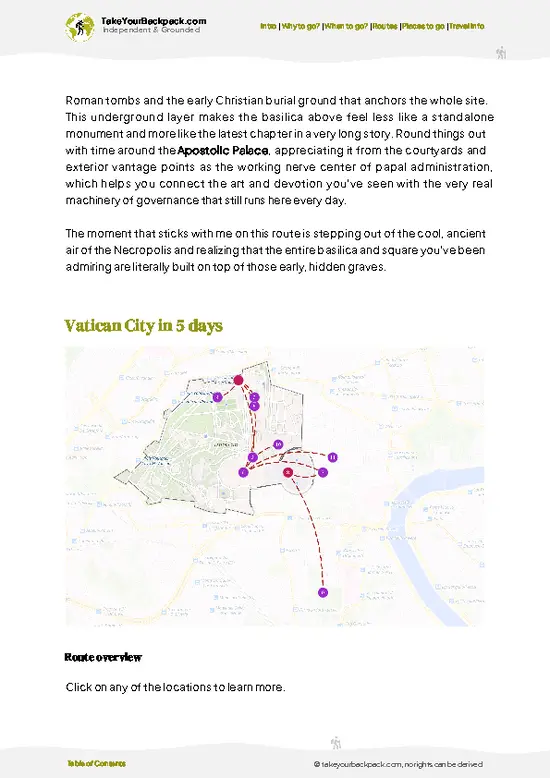
- The Tomb of St. Peter (Scavi Necropolis) — The real draw: an underground Roman cemetery built over what’s believed to be St. Peter’s grave. It’s intimate, ancient and a little eerie in the best way. Only accessible by the guided Scavi tour (book weeks ahead), which makes it feel like a secret slice of history. (Personal favorite — the hush and the raw continuity of 2,000 years hits you hard.)
- The Vatican Grottoes (Papal Tombs) — Rows of chapels and graves where popes from different eras are interred. Marble sarcophagi, small altars and devotional plaques show how papal burial customs changed over centuries. Easier to visit than the Scavi and still full of detail.
- Funerary Monuments and Sculptural Tombs — Baroque and Renaissance tombs carved with portraits, angels and symbolic scenes. Even
- The Tomb of St. Peter (Scavi Necropolis) — The real draw: an underground Roman cemetery built over what’s believed to be St. Peter’s grave. It’s intimate, ancient and a little eerie in the best way. Only accessible by the guided Scavi tour (book weeks ahead), which makes it feel like a secret slice of history. (Personal favorite — the hush and the raw continuity of 2,000 years hits you hard.)
- The Vatican Grottoes (Papal Tombs) — Rows of chapels and graves where popes from different eras are interred. Marble sarcophagi, small altars and devotional plaques show how papal burial customs changed over centuries. Easier to visit than the Scavi and still full of detail.
- Funerary Monuments and Sculptural Tombs — Baroque and Renaissance tombs carved with portraits, angels and symbolic scenes. Even if you’re not an art nerd, the craftsmanship and theatricality of these monuments are striking—they tell power and personality stories without needing words.
- Layers of Archaeology — Underfoot you’ll see fragments of the old Constantinian basilica, Roman foundations, and early-Christian mosaics. The site is a stratified history lesson: empire, church, and modern devotion stacked in stone.
- Atmosphere and Quiet Reflection — Unlike the bustling piazza above, the crypts are hushed and cool. People actually whisper; you’ll find space to sit, think, or watch the dust motes in a shaft of light. It’s a pocket of calm inside one of the busiest religious sites on earth.
- Inscriptions and Personal Stories — Epitaphs, donor plaques, and carved names give surprising human detail—who commissioned a tomb, who paid for a chapel, who was mourned. Those little texts make the crypts feel lived-in, not just monumental.
- Architectural and Material Details — Look for reused columns, mismatched marbles, and clever stone repairs that speak to centuries of building and rebuilding. The jumble of materials and styles is a quiet lesson in architectural recycling.
Spotted a mistake or missing something? Contact us.

Skip-The-Line Vatican Museums,Sistine Chapel & Optional Basilica

Vatican Museums, Sistine Chapel & St. Peters Basilica Guided Tour

Luxury Private Full-Day Rome Tour from Civitavecchia Port

Skip-the-line Private: Vatican Museums, Sistine Chapel&St Peter's

German Petersdomführung

Vatican Museums Tour with Sistine Chapel | Semi-Private & Private

Shore Excursion to Rome from Civitavecchia Port

St Peter's Basilica and Cupola guided tour

Private Shore Excursion from Civitavecchia Rome Port to Rome and Vatican City

 Best Backpacking
.jpg) Hi, I’m Johan (Netherlands 🇳🇱), the creator of TakeYourBackpack. Over the past decade, I’ve backpacked through 80+ countries across six continents, gaining extensive experience with independent travel, long-term trips, and overland routes.
Hi, I’m Johan (Netherlands 🇳🇱), the creator of TakeYourBackpack. Over the past decade, I’ve backpacked through 80+ countries across six continents, gaining extensive experience with independent travel, long-term trips, and overland routes.