×

Venezuela🇻🇪 | festivalsParadura del NiñoNiño Jesús altars, Andean parrandas, pesebres, December cold | things to do and best time to go

Explore Festival de la ChichaExplore Angel Falls

Backpacking in Paradura del Niño
👌 Worth visitingfestival ranked #11
By Johan Kruseman 🇳🇱 | Updated October 19, 2026

The Niño Jesús lies in the family manger from Christmas until the Paradura, when the figure is stood upright, carried through the neighborhood with songs and prayers, and neighbors gather to see it. The tradition belongs to the Andean state of Mérida, in the mountains of western Venezuela, and it runs through the villages around Santo Domingo, Mucuchíes and Mérida’s highland hamlets. It is a folk-religious festival: Andean string music, prayers, a procession and a lot of homemade food. Expect families and pilgrims, not backpacker crowds. It runs in late December into early January. Skip it if you want nightlife or stages. Go for the community, the cold mountain air and the chance to join real village ritual. Best for curious, respectful travelers who speak some Spanish.

Discover everything you want to know in the 📖 Venezuela Travel Guide.
Safety warning

The current risk level for Venezuela is high. Check the advice before going.


example page 0 from our offline Travel Guide for Venezuela
example page 1 from our offline Travel Guide for Venezuela
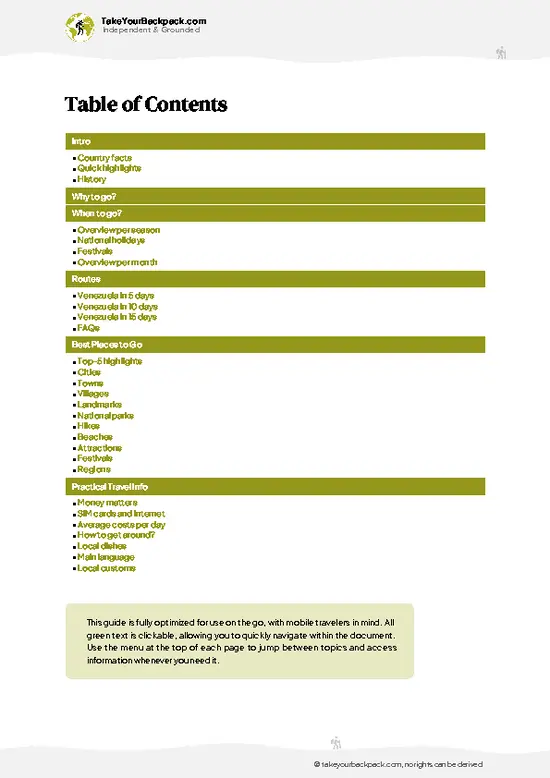
example page 2 from our offline Travel Guide for Venezuela
example page 3 from our offline Travel Guide for Venezuela
example page 4 from our offline Travel Guide for Venezuela
example page 5 from our offline Travel Guide for Venezuela
example page 6 from our offline Travel Guide for Venezuela
example page 7 from our offline Travel Guide for Venezuela
Loading the map 🌍
CLICK TO FILTER
cities
towns
villages
landmarks
national parks
hikes
beaches
attractions
festivals
regions
SHOW COUNTRY’S BESTSHOW ALL

✨ Why go?
Ranked #11 festival in Venezuela
Why visitors keep coming back

Paradura del Niño draws travelers who want a Venezuelan Christmas that no resort or city can stage. The core is the Paradura itself, when a carved Niño Jesús is stood upright, ending the cradle period, and families open their doors to anyone who joins the prayers. That openness is the reason to build a route around it. You walk in as a stranger, and within an hour someone hands you a mug of hot chocolate or a plate of hallacas and explains the verses being sung. The Andean setting adds cuatro, mandolin and guitar in cold air, which is nothing like the Caribbean festivals on the coast. It also costs almost nothing compared with ticketed events. Pair it with a few days around Mérida and the high páramo villages on a longer Andean loop.

💡 HighlightsThe experiences that define the visit

  1. The Paradura ceremony: the moment the Niño Jesús is raised upright from his cradle, with prayers and verses sung by the household. It is the reason the festival exists, and it feels intimate rather than staged.
  2. Home altars and nativity scenes: families build detailed pesebres with moss, small figures and handmade landscapes, and many welcome visitors to look. Each one is different, so walking between them is a pleasure.
  3. Andean parranda music: cuatro, guitar, mandolin and sung villancicos accompany the visits. Standing in a cold courtyard while a group plays is the best soundtrack you will get.
  4. Traditional holiday food: hallacas, pan de jamón, and hot drinks like chocolate or ponche are shared at the doorway. Accept what you are offered, because refusing is awkward and the food is excellent.
  5. The
… read more 👉
  1. The Paradura ceremony: the moment the Niño Jesús is raised upright from his cradle, with prayers and verses sung by the household. It is the reason the festival exists, and it feels intimate rather than staged.
  2. Home altars and nativity scenes: families build detailed pesebres with moss, small figures and handmade landscapes, and many welcome visitors to look. Each one is different, so walking between them is a pleasure.
  3. Andean parranda music: cuatro, guitar, mandolin and sung villancicos accompany the visits. Standing in a cold courtyard while a group plays is the best soundtrack you will get.
  4. Traditional holiday food: hallacas, pan de jamón, and hot drinks like chocolate or ponche are shared at the doorway. Accept what you are offered, because refusing is awkward and the food is excellent.
  5. The village procession: neighbors carry the figure through the streets with candles and singing at dusk. It is the best chance for photos, though asking before shooting up close is the polite move.
Start with the Paradura ceremony, because everything else on the list makes more sense once you have watched the central ritual and met the people who host it.
Spotted a mistake or missing something? Contact us.

🌤️ When to go?When is the celebration of Paradura del Niño?

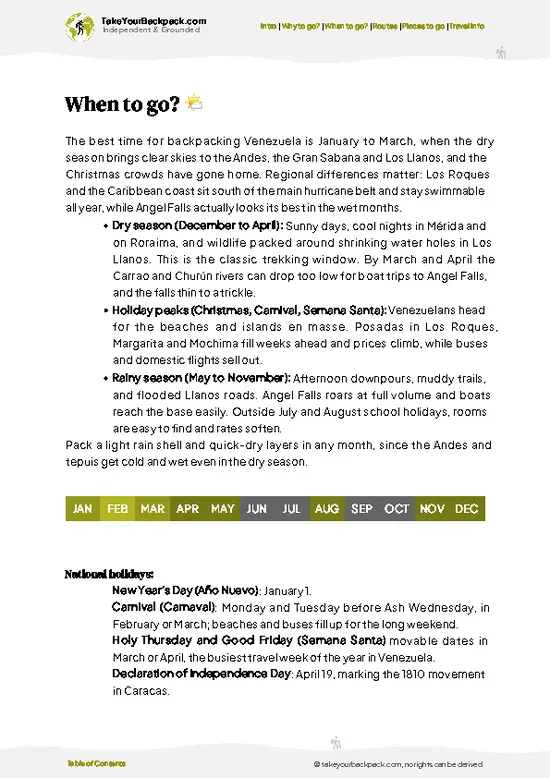
Paradura del Niño is held between January 1 and February 2, the feast of the Candelaria, in Mérida state, in the Andean villages around Mérida such as Santo Domingo, San Rafael de Mucuchíes and Mucuchíes, and each household picks its own day.
  • Best moment: The morning procession is the one to catch, when villagers carry the Niño Jesús figure and the “robo” (the symbolic stealing) of the child is re-enacted, followed by the “parada” and a returned child in the afternoon. Arrive early, because the key scenes happen before midday.
  • Weather: Mountain mornings run about 5 to 10°C (41 to 50°F), warming to 15 to 20°C (59 to 68°F) by afternoon. Showers are uncommon in January, but the sun is strong at altitude. Bring a warm jacket, a hat and sunscreen.
  • Booking: Reserve a bed in Mérida by early December,
… read more 👉
Paradura del Niño is held between January 1 and February 2, the feast of the Candelaria, in Mérida state, in the Andean villages around Mérida such as Santo Domingo, San Rafael de Mucuchíes and Mucuchíes, and each household picks its own day.
  • Best moment: The morning procession is the one to catch, when villagers carry the Niño Jesús figure and the “robo” (the symbolic stealing) of the child is re-enacted, followed by the “parada” and a returned child in the afternoon. Arrive early, because the key scenes happen before midday.
  • Weather: Mountain mornings run about 5 to 10°C (41 to 50°F), warming to 15 to 20°C (59 to 68°F) by afternoon. Showers are uncommon in January, but the sun is strong at altitude. Bring a warm jacket, a hat and sunscreen.
  • Booking: Reserve a bed in Mérida by early December, since the holidays push rates up roughly 20 to 40 percent.
  • Roads: Mountain roads clog after midday, so leave villages before late afternoon and carry cash for transport.
Sleep in Mérida the night before and take the first shared taxi up the valley.


source: climatestotravel.comJANJanuary: excellent for travelingFEBFebruary: not recommended for travelingMARMarch: not recommended for travelingAPRApril: not recommended for travelingMAYMay: not recommended for travelingJUNJune: not recommended for travelingJULJuly: not recommended for travelingAUGAugust: not recommended for travelingSEPSeptember: not recommended for travelingOCTOctober: not recommended for travelingNOVNovember: not recommended for travelingDECDecember: not recommended for traveling

✈️ The backpacker research shortcutVenezuela Travel Guide

An offline-friendly backpacking guide with optimized travel routes, ranked highlights, transport advice, and the best areas to stay.
example page 0 from our offline Travel Guide for Venezuela
example page 1 from our offline Travel Guide for Venezuela
example page 2 from our offline Travel Guide for Venezuela
example page 3 from our offline Travel Guide for Venezuela
example page 4 from our offline Travel Guide for Venezuela
example page 5 from our offline Travel Guide for Venezuela
example page 6 from our offline Travel Guide for Venezuela
example page 7 from our offline Travel Guide for Venezuela
The digital guide (290 pages) contains:
✅ 91 highlights, ranked by travel appeal
✅ Optimized 5, 10 & 15-day travel routes
✅ Cities, national parks, landmarks, beaches
✅ How to get around
✅ Offline-friendly for travel without Wi-Fi
👉 Click to see all 30+ guide features

📅 Plan smarter in minutes, not weeks
✅ Month by month travel advice
✅ Festivals & national holidays
✅ Budget expectations

🗺️ Go to the right places, skip the overrated ones
✅ Honest pros & cons of destinations
✅ Top hikes, parks & viewpoints
✅ Lesser-known places most travelers miss
✅ Clear “worth it vs skip it” guidance

🛏️ Travel smoothly without rookie mistakes
✅ Best areas to stay
✅ Transport systems explained simply
✅ Common scams & safety advice
✅ SIM cards, money & practical tips

🌍 Understand the country, not just visit it
✅ Culture & traditions
✅ 52 Essential phrases & customs
✅ Festivals worth planning around
✅ Traveler-friendly historical context
✅ Insights that make places more meaningful

📱 Built for real travel conditions
✅ Fully downloadable PDF
✅ Works completely offline
✅ Optimized for phone use
✅ Useful in remote areas & buses
✅ Everything in one place
Stop searching, start planning
Get instant access to your full guide. 30‑day money-back guarantee.
+ Add another guide for just

By proceeding you agree to our terms.
Sent to your inbox immediately after payment • 100% Secure Checkout
Best Backpacking Travel Advisor 2025 tourism awardBest Backpacking
Travel Advisor
2025
What others say about Take Your Backpack Guides:
⭐⭐⭐⭐⭐
Fantastic, amazing amount of information!
⭐⭐⭐⭐⭐
My goodness this is amazing, it's what I've been looking for hats off too you!
⭐⭐⭐⭐⭐
I think this is absolutely BRILLIANT
⭐⭐⭐⭐
Very complete and informative. It's still missing places, but I gotta to commend you
⭐⭐⭐⭐⭐
This is truly amazing, thank you, can't wait to explore it with my kids!
⭐⭐⭐⭐⭐
Awesome resource, thank you!
⭐⭐⭐⭐⭐
This is amazing! Can't wait to explore the ones I haven't seen
⭐⭐⭐⭐
I love this! Well done, great idea.
⭐⭐⭐⭐⭐
Thanks for taking the time to make this gem!
⭐⭐⭐⭐⭐
This might be the best website I've ever seen.
⭐⭐⭐⭐⭐
Congratulations, and thank you so much for your work; it's incredibly valuable.
⭐⭐⭐⭐
In all seriousness I think you did a great job pointing out the important spots
⭐⭐⭐⭐⭐
10/10 very good
⭐⭐⭐⭐⭐
As someone who's only just starting to visit regularly this is awesome, thank you.
⭐⭐⭐⭐
Thank you very much! I'm going to visit my dad, it's going to be very useful!
⭐⭐⭐⭐⭐
This is really cool! We'll be travelling for the first time and this definitely come in handy.
⭐⭐⭐⭐⭐
You are now our minister of culture, congratulations 👨‍💼
⭐⭐⭐⭐⭐
Just wanted to tell you that this is a pearl! Going to follow your recommendations.
⭐⭐⭐⭐⭐
This is so cool. I'll definitely be using the resource for my travels soon.
⭐⭐⭐⭐⭐
This is very impressive! Good work.
⭐⭐⭐⭐⭐
This is an amazing and informative site. Very well done!

🛏️ Where to stay?Best areas to stay in Venezuela

Mérida city is the best base for Paradura del Niño, since it has the most hostels and posadas, plenty of solo travelers and frequent shared transport up into the Andean villages. Stay around the Plaza Bolívar and the streets toward Avenida 2 and 3, where you can walk at night in the busier blocks, find cheap restaurants and meet other backpackers over breakfast. Dorm beds usually cost US$8 to 15 and private rooms US$20 to 40, with higher rates around New Year. For a quieter and more local feel, look at Apartaderos or Mucuchíes, which put you close to the processions and cold mornings, with simple … read more 👉
Mérida city is the best base for Paradura del Niño, since it has the most hostels and posadas, plenty of solo travelers and frequent shared transport up into the Andean villages. Stay around the Plaza Bolívar and the streets toward Avenida 2 and 3, where you can walk at night in the busier blocks, find cheap restaurants and meet other backpackers over breakfast. Dorm beds usually cost US$8 to 15 and private rooms US$20 to 40, with higher rates around New Year. For a quieter and more local feel, look at Apartaderos or Mucuchíes, which put you close to the processions and cold mornings, with simple family posadas at roughly US$25 to 50. Santo Domingo suits those who want mountain air and fewer crowds, though choices are limited, so book early. Avoid walking unlit roads after dark in any of these places, and arrange rides through your host or a known driver.

👛 Costs (as of 19 October 2026)Travel costs and budget guide for Paradura del Niño

A day at Paradura del Niño costs about US$70 for an independent traveler in high season, mostly for a bed and transport from Mérida.
CategoryBudget RangeLocal Reality
Festival ticketsUS$0Free, a community and religious event in the open air.
AccommodationUS$10 to 40Dorms in Mérida cost less; New Year rates run higher. Budget US$25 as a typical figure.
Local transportUS$5 to 20Shared buses and colectivos from Mérida to highland towns; a private driver costs more.
Food & drinksUS$8 to 20Village meals, trout, soups and hot chocolate, usually paid in cash dollars.
Miscellaneous expensesUS$5 to 15Donations, small gifts, warm layers and snacks.
Total Daily BudgetUS$68Based on US$0 tickets, US$25 bed, US$15 transport, US$15 food and US$13 extras.
⚠️ Prices can change and everyone travels differently, so take this as a rough guide. Hope it helps you plan your adventure!

🍲 FoodLocal Cuisine & Drinks

Expect highland comfort food in the villages during Paradura del Niño: hot chocolate and café con leche against the morning cold, pan de arroz and empanadas from family stalls, and bowls of sopa de trigo or pisca andina, the Andean broth with egg, cheese and cilantro that locals swear fixes altitude and hangovers alike.
Try the arepas andinas, sweeter than lowland versions, with fresh queso de mano and trucha (trout) when a family grill is going. Many households hand out dulces and warm drinks to visitors who join the procession, so accept with a smile and a thank you. Local ponche crema or a miche shot appears among adults, so pace yourself at altitude.
Bring small bills, since cash in dollars is commonly used and card machines are rare in villages. Portions are generous, lines move slowly, and sharing a table is normal.

FAQFrequently asked questions about Paradura del Niño

Paradura del Niño takes place every year between January 1 and February 2, with events in the Andean villages of Mérida state such as Santo Domingo, Mucuchíes and Apartaderos. Processions start in the morning and run through the afternoon. Most visitors stay in Mérida and travel up roughly 1 to 2 hours by road.
Attending Paradura del Niño is free, since it is a community and religious tradition. Your costs are transport from Mérida (about US$5 to 20 round trip), food at village stalls (US$8 to 20) and a bed at US$10 to 40. Expect about US$70 for a full day including extras.
No, Paradura del Niño does not require tickets, as the processions are open to anyone. What you do need in advance is a bed, ideally booked by mid-December in Mérida or a highland posada. Rides up from Mérida fill early on weekends, so arrange transport the night before.
⚠️ Things can change over time, so always validate details locally before you go.

Other Venezuelan festivals near Paradura del Niño

Explore more nearby:

  • Carnaval—El Callao madamas, calypso bands, foam and flour, Margarita beach parties
  • Feria del Sol—Bullring concerts, Reina del Sol, Andean city nights, ice cream flavors
  • Feria de la Chinita—La Chinita basilica, furro drum, November 18 dawn, El Saladillo

💡 Not sure where to go next?
Create a personalized itinerary for Venezuela including Paradura del Niño and the places that fit your trip.

Generate my itinerary

👉 Discover all festivals

Or checkout all Venezuela has to offer (think cities, towns, villages, national parks, hikes, beaches, festivals)
Country photo of Venezuela

We 💚 feedbackParting advice and final tips

Many travelers treat Paradura del Niño like a show and arrive late, camera first. Get it right: ask a local guesthouse host which household is hosting, show up on time, dress warmly, bring a small gift like sweets, and put the phone away during the prayers.

✍️ Help improve this page!
The information on this page is based on in-depth research, insights shared by experienced travelers, and feedback from the local travel community in Venezuela. While every effort is made to keep the information accurate and current, conditions can change — so if you spot anything incorrect or outdated, please get in touch.


🙋‍♂️ Give feedback

👋 Meet the founderWho’s Behind Take Your Backpack?

Johan, backpacker and founder of TakeYourBackpackHi, I’m Johan (Netherlands 🇳🇱), the creator of TakeYourBackpack. Over the past 3 decades, I’ve backpacked through 90+ countries across six continents, gaining extensive experience with independent travel, long-term trips, and overland routes.

This site is built on a combination of firsthand travel experience and carefully curated insights from other backpackers. Many guides are based on places I’ve personally visited, while others bring together tips, observations, and practical advice shared by trusted travelers I’ve met along the way.

The goal is to provide realistic, experience-driven guidance — not generic itineraries — so you can explore destinations with better context, clearer expectations, and more confidence.