×

Western Sahara🇪🇭 | hikesZemour Rangegranite outcrops, remote plateaus, Berber rock art | things to do and best time to go

Explore Dragon CanyonExplore Oued Chebbi Trail

Backpacking in Zemour Range
🏆 Top pickhike ranked #1
By Johan Kruseman 🇳🇱 | Updated June 1, 2026

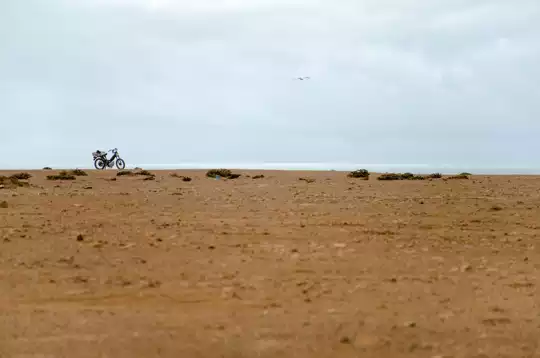
You face a real fork in the sand when you eye the Zemour Range: do you commit to the full traverse, or settle for a half-day out-and-back? That choice matters, because the full route is a test of grit—twenty kilometers of loose rock, sun-baked ridgelines, and the kind of wind that scours your skin raw. Zemour Range sits in the northern interior of Western Sahara, a spine of ancient stone rising out of the desert’s monotony. The hike itself is raw and exposed, with scenery that’s more about stark drama than postcard prettiness: think ochre cliffs, fossil-studded outcrops, and the endless shimmer of heat. The payoff? Cresting the final ridge, you get a view that feels like the edge of the world—just you, the wind, and a horizon that refuses to end. Getting to the trailhead is half the battle; public transport drops you at Smara, but you’ll need a lift or a long, dusty walk to reach the start. Compared to the more accessible dunes near Laayoune, Zemour is wilder, lonelier, and far less forgiving—but if you want a hike that earns its reward, this is the one.

Discover everything you want to know in the 📖 Western Sahara Travel Guide.
Best time to go: October - April
Duration: 5 to 7 days
Distance: 150 kilometers
Total ascent: 1,200 meters
Loading the map 🌍
CLICK TO FILTER
cities
towns
villages
landmarks
hikes
beaches
festivals
regions
SHOW COUNTRY’S BESTSHOW ALL

✨ Why go?
Ranked #1 hike in Western Sahara
What sets this place apart

The Zemour Range in Western Sahara is a magnet for backpackers craving adventure. The scenery-to-effort ratio here is unbeatable. You’ll trek through rugged terrain, where the ochre mountains rise sharply against the endless blue sky. Each step is a challenge, but the payoff? Jaw-dropping vistas that make you feel like you’re on top of the world.

Access is surprisingly easy. Public transport options drop you close to the trailhead, making it a breeze to get started. Plus, the low cost of travel in this region means you can stretch your budget without sacrificing experience.

Flexibility is key; you can tailor your hike to fit your pace, whether you’re in for a quick day trip or a multi-day trek. This adaptability allows you to weave the Zemour Range seamlessly into a longer backpacking route, … read more 👉
The Zemour Range in Western Sahara is a magnet for backpackers craving adventure. The scenery-to-effort ratio here is unbeatable. You’ll trek through rugged terrain, where the ochre mountains rise sharply against the endless blue sky. Each step is a challenge, but the payoff? Jaw-dropping vistas that make you feel like you’re on top of the world.

Access is surprisingly easy. Public transport options drop you close to the trailhead, making it a breeze to get started. Plus, the low cost of travel in this region means you can stretch your budget without sacrificing experience.

Flexibility is key; you can tailor your hike to fit your pace, whether you’re in for a quick day trip or a multi-day trek. This adaptability allows you to weave the Zemour Range seamlessly into a longer backpacking route, connecting with other stunning landscapes along the way.

After a day of climbing and exploring, nothing beats the moment you crack open that first cold beer, soaking in the sunset over the dunes. That’s the real reward—the journey and the destination, intertwined.
Want to include Zemour Range in your Western Sahara route?
Create a personalized Western Sahara itinerary that includes Zemour Range and the places that fit your trip — based on your travel style, budget, and available time. Get your route in seconds.

Generate my trip

💡 HighlightsWhat this place is best known for

  1. Wind-sculpted sandstone ridges — Narrow, honeycombed rock fins and steep slabs carved by decades of wind give the range a jagged, almost lunar skyline. Scrambling along the ridges rewards you with shifting colours at dawn and dusk that you won’t see on a leafy trail.
  2. Dune meets plateau panoramas — Where the sand sea laps the rocky high ground you get these enormous, empty vistas: rolling dunes below a hard, weathered rim. The scale and solitude here make even short breaks feel cinematic — great for sunrise or sunset photos (and silence).
  3. Scattered rock art and caravan traces — Weathered petroglyph panels and faint caravan tracks dot the range; they’re not museum-perfect but they give you a real sense of long human movement across these landscapes. Spotting an old engraving beside a wadi
read more 👉
  1. Wind-sculpted sandstone ridges — Narrow, honeycombed rock fins and steep slabs carved by decades of wind give the range a jagged, almost lunar skyline. Scrambling along the ridges rewards you with shifting colours at dawn and dusk that you won’t see on a leafy trail.
  2. Dune meets plateau panoramas — Where the sand sea laps the rocky high ground you get these enormous, empty vistas: rolling dunes below a hard, weathered rim. The scale and solitude here make even short breaks feel cinematic — great for sunrise or sunset photos (and silence).
  3. Scattered rock art and caravan traces — Weathered petroglyph panels and faint caravan tracks dot the range; they’re not museum-perfect but they give you a real sense of long human movement across these landscapes. Spotting an old engraving beside a wadi is a humbling reminder this place has been travelled for centuries.
  4. Seasonal wadis and desert micro-oases — After rains the dry channels sprout green pockets of acacia and tamarisk that attract birds and lizards. These little refuges are excellent natural rest stops and offer contrast to the surrounding stone and sand — and you might hear frogs if the season’s right.
  5. Sahrawi nomad camps & living culture — The range is still a working landscape for local herders. Passing a tent camp, sharing tea, or watching a camel caravan gives you direct cultural context that no guidebook viewpoint can match. Be respectful, ask before photographing, and you’ll leave with better stories than selfies.
Spotted a mistake or missing something? Contact us.
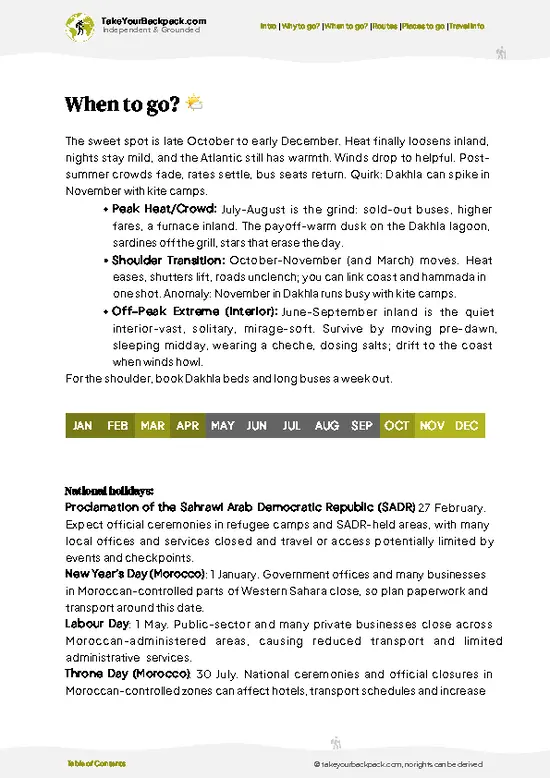
🌤️ When to go?Choosing the right time of year


  • Weather: The Zemour Range bakes under a Saharan sun most of the year, with brutal heat from late spring through early fall. Aim for late autumn to early spring when daytime highs drop to a manageable 20-25°C (68-77°F). Nights can get chilly, so pack layers.

  • Temperature: Summer highs often soar past 40°C (104°F), making hiking a slow, exhausting slog. Winter days hover around 18-22°C (64-72°F), perfect for pushing hard on the trails without frying your skin or lungs.

  • Daylight Hours: Winter months bring shorter days—about 10 hours of light—so start early and plan your route to avoid hiking in the dark. Summer offers long days but pairs with oppressive heat, so balance is key.

  • Crowds: The range sees few visitors year-round, but the cooler months attract a trickle of adventure seekers.
read more 👉

  • Weather: The Zemour Range bakes under a Saharan sun most of the year, with brutal heat from late spring through early fall. Aim for late autumn to early spring when daytime highs drop to a manageable 20-25°C (68-77°F). Nights can get chilly, so pack layers.

  • Temperature: Summer highs often soar past 40°C (104°F), making hiking a slow, exhausting slog. Winter days hover around 18-22°C (64-72°F), perfect for pushing hard on the trails without frying your skin or lungs.

  • Daylight Hours: Winter months bring shorter days—about 10 hours of light—so start early and plan your route to avoid hiking in the dark. Summer offers long days but pairs with oppressive heat, so balance is key.

  • Crowds: The range sees few visitors year-round, but the cooler months attract a trickle of adventure seekers. You’ll rarely feel crowded, but expect more company from December to February.

  • Seasonal Activities: Winter is prime for trekking and rock scrambling. Spring can surprise with brief wildflower bursts after rare rains, adding unexpected color to the stark landscape.

  • Price Fluctuations: Off-peak seasons (summer and early fall) see lower prices on local guides and accommodations, but the trade-off is punishing heat. Cooler months command a premium but deliver a far better experience.


Pro-tip: Time your trek for late November through February to dodge the Sahara’s furnace and catch the Zemour Range at its most walkable, with crisp air and fewer crowds pushing your pace.


source: climatestotravel.comJANJanuary: excellent for travelingFEBFebruary: excellent for travelingMARMarch: highly recommended for travelingAPRApril: good for travelingMAYMay: fair for travelingJUNJune: below average for travelingJULJuly: below average for travelingAUGAugust: below average for travelingSEPSeptember: fair for travelingOCTOctober: good for travelingNOVNovember: highly recommended for travelingDECDecember: excellent for traveling
when-to-go

✈️ The backpacker research shortcutWestern Sahara Travel Guide

An offline-friendly backpacking guide with optimized travel routes, ranked highlights, transport advice, and the best areas to stay.
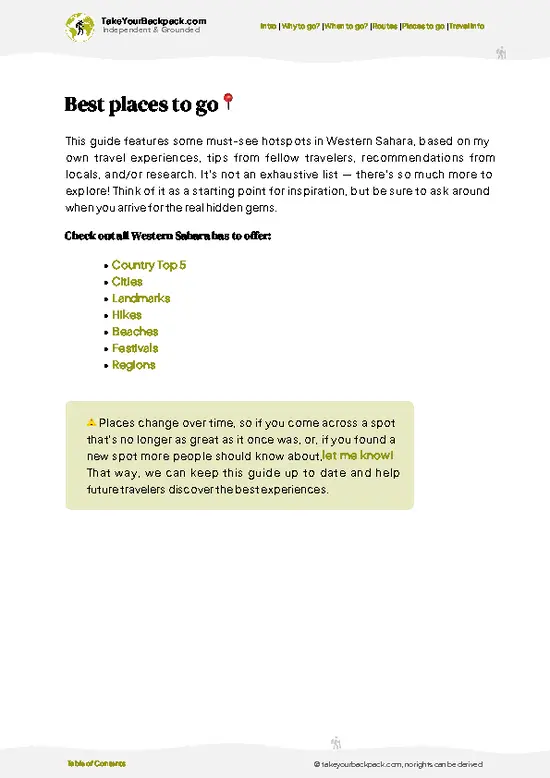
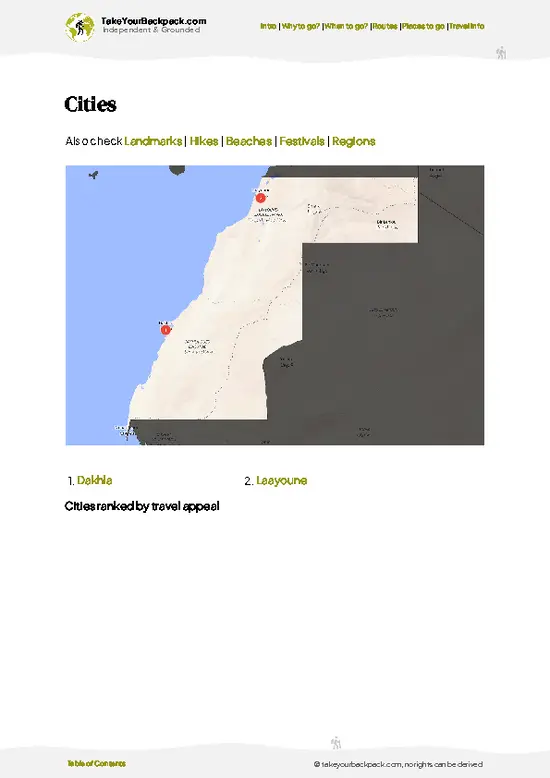
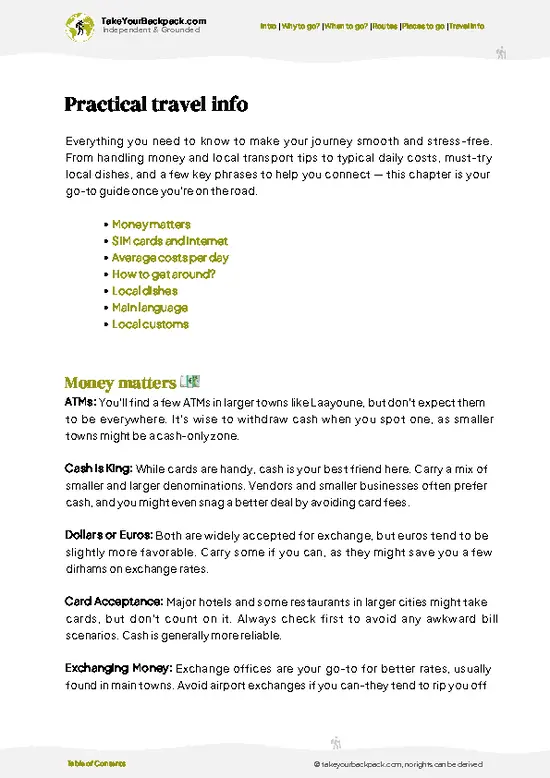
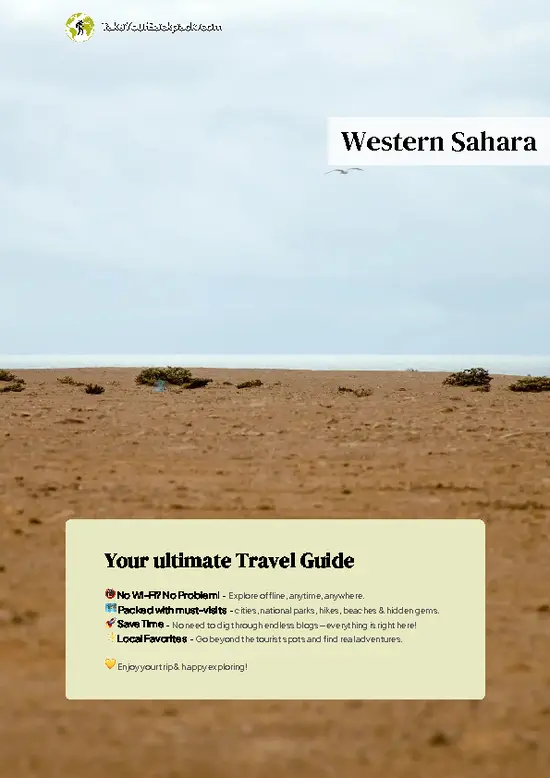
example page 0 from our offline Travel Guide for Western Sahara
example page 1 from our offline Travel Guide for Western Sahara
example page 2 from our offline Travel Guide for Western Sahara
example page 3 from our offline Travel Guide for Western Sahara
example page 4 from our offline Travel Guide for Western Sahara
example page 5 from our offline Travel Guide for Western Sahara
example page 6 from our offline Travel Guide for Western Sahara
example page 7 from our offline Travel Guide for Western Sahara
The digital guide (117 pages) contains:
22 highlights, ranked by travel appeal
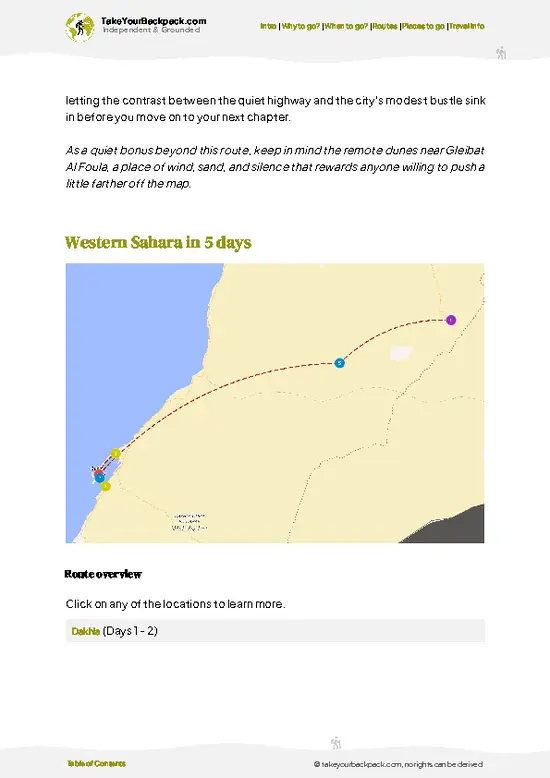
Optimized 2, 3 & 5-day travel routes
Cities, national parks, landmarks, beaches
How to get around
Offline-friendly for travel without Wi-Fi
👉 Click to see all 30+ guide features

📅 Plan smarter in minutes, not weeks
Month by month travel advice
Festivals & national holidays
Budget expectations

🗺️ Go to the right places, skip the overrated ones
Honest pros & cons of destinations
Top hikes, parks & viewpoints
Lesser-known places most travelers miss
Clear “worth it vs skip it” guidance

🛏️ Travel smoothly without rookie mistakes
Best areas to stay
Transport systems explained simply
Common scams & safety advice
SIM cards, money & practical tips

🌍 Understand the country, not just visit it
Culture & traditions
52 Essential phrases & customs
Festivals worth planning around
Traveler-friendly historical context
Insights that make places more meaningful

📱 Built for real travel conditions
Fully downloadable PDF
Works completely offline
Optimized for phone use
Useful in remote areas & buses
Everything in one place
Save weeks of stressful planning
Get instant access to your full guide. 30‑day money-back guarantee.


By proceeding you agree to our terms.
Sent to your inbox immediately after payment • 100% Secure Checkout
Best Backpacking Travel Advisor 2025 tourism awardBest Backpacking
Travel Advisor
2025
What others say about Take Your Backpack Guides:
⭐⭐⭐⭐⭐
Fantastic, amazing amount of information!
⭐⭐⭐⭐⭐
My goodness this is amazing, it's what I've been looking for hats off too you!
⭐⭐⭐⭐⭐
I think this is absolutely BRILLIANT
⭐⭐⭐⭐
Very complete and informative. It's still missing places, but I gotta to commend you
⭐⭐⭐⭐⭐
This is truly amazing, thank you, can't wait to explore it with my kids!
⭐⭐⭐⭐⭐
Awesome resource, thank you!
⭐⭐⭐⭐⭐
This is amazing! Can't wait to explore the ones I haven't seen
⭐⭐⭐⭐
I love this! Well done, great idea.
⭐⭐⭐⭐⭐
Thanks for taking the time to make this gem!
⭐⭐⭐⭐⭐
This might be the best website I've ever seen.
⭐⭐⭐⭐⭐
Congratulations, and thank you so much for your work; it's incredibly valuable.
⭐⭐⭐⭐
In all seriousness I think you did a great job pointing out the important spots
⭐⭐⭐⭐⭐
10/10 very good
⭐⭐⭐⭐⭐
As someone who's only just starting to visit regularly this is awesome, thank you.
⭐⭐⭐⭐
Thank you very much! I'm going to visit my dad, it's going to be very useful!
⭐⭐⭐⭐⭐
This is really cool! We'll be travelling for the first time and this definitely come in handy.
⭐⭐⭐⭐⭐
You are now our minister of culture, congratulations 👨‍💼
⭐⭐⭐⭐⭐
Just wanted to tell you that this is a pearl! Going to follow your recommendations.
⭐⭐⭐⭐⭐
This is so cool. I'll definitely be using the resource for my travels soon.
⭐⭐⭐⭐⭐
This is very impressive! Good work.
⭐⭐⭐⭐⭐
This is an amazing and informative site. Very well done!

🛏️ Where to stay?How to pick the right area

If you enjoy meeting fellow travelers, consider choosing hostels with high ratings for atmosphere. On the other hand, if you prefer having your own space, a hotel might be a better option.

🥾 Hike detailsRoute, distance, and difficulty explained

Total Distance: Approximately 50 kilometers, depending on the specific route you choose. Some sections can be looped for extra mileage, but the main trail is around that mark.

Estimated Duration: Expect to take around 3 to 5 days to complete the hike, factoring in time for breaks and enjoying the scenery. If you’re a fast hiker, you might push it to 2 days, but that could be a bit rushed.

Difficulty Level: Moderate to challenging. The terrain can be rocky and uneven, with some steep sections. Good physical fitness is a must, and you should be comfortable navigating without marked trails.

Starting read more 👉
Total Distance: Approximately 50 kilometers, depending on the specific route you choose. Some sections can be looped for extra mileage, but the main trail is around that mark.

Estimated Duration: Expect to take around 3 to 5 days to complete the hike, factoring in time for breaks and enjoying the scenery. If you’re a fast hiker, you might push it to 2 days, but that could be a bit rushed.

Difficulty Level: Moderate to challenging. The terrain can be rocky and uneven, with some steep sections. Good physical fitness is a must, and you should be comfortable navigating without marked trails.

Starting Point: The trail typically begins near the town of Dakhla. You can reach Dakhla by taking a bus from major cities like Laayoune or Agadir. Once in Dakhla, local taxis or shared vans can get you to the trailhead, which is usually a short ride away.

Major Landmarks Along the Route:
  • Lagoon Views: Stunning vistas of the Atlantic Ocean and the unique lagoons that dot the landscape.
  • Rock Formations: Interesting geological features that make for great photo ops and exploration.
  • Traditional Berber Camps: You might come across these along the way, offering a glimpse into local culture.

Type of Terrain and Scenery: The trail features a mix of rocky paths, sandy stretches, and some hilly areas. You’ll be hiking through desert landscapes, with occasional oases and rugged mountains. The views can be breathtaking, especially during sunrise and sunset when the colors change dramatically.

Typical Vegetation and Wildlife:
  • Vegetation: Expect to see hardy desert plants like acacias and various succulents. There may be patches of grass near water sources.
  • Wildlife: Look out for desert foxes, lizards, and a variety of bird species, especially near the lagoons.

Just remember to pack plenty of water and snacks, as resources can be scarce along the way. A good map or GPS is also a lifesaver, since trail markers can be hit or miss. Happy hiking!
⚠️ Hiking info can sometimes be outdated or inaccurate. Before you hit the trail, check the latest conditions with locals. If you do spot anything that's off, I'd love to hear from you, so I can update it for fellow travelers.

🛡️ SafetySafety Tips and Common Scams in Zemour Range

The Zemour Range offers a rugged yet rewarding experience. Expect weather shifts; the sun can scorch during the day, while nights can dip unexpectedly. Dress in layers and pack a reliable windbreaker. The terrain varies from rocky paths to sandy stretches, so sturdy boots are essential. Navigation can be tricky; a good map and compass will keep you on track.

Wildlife is sparse but present. If you spot a lizard or a rare bird, keep your distance and enjoy the moment without disturbing their space.

Pace yourself. The elevation can sneak up on you, especially if you’re not acclimated. Take breaks, hydrate, and soak in the views—each summit reveals a panorama that makes the effort worthwhile.

Be mindful of your impact; stick to established trails to preserve the delicate ecosystem. The journey … read more 👉
The Zemour Range offers a rugged yet rewarding experience. Expect weather shifts; the sun can scorch during the day, while nights can dip unexpectedly. Dress in layers and pack a reliable windbreaker. The terrain varies from rocky paths to sandy stretches, so sturdy boots are essential. Navigation can be tricky; a good map and compass will keep you on track.

Wildlife is sparse but present. If you spot a lizard or a rare bird, keep your distance and enjoy the moment without disturbing their space.

Pace yourself. The elevation can sneak up on you, especially if you’re not acclimated. Take breaks, hydrate, and soak in the views—each summit reveals a panorama that makes the effort worthwhile.

Be mindful of your impact; stick to established trails to preserve the delicate ecosystem. The journey here is as much about the grit of the trail as it is about the breathtaking vistas waiting at the end.

Other Sahrawi hikes near Zemour Range

Explore more nearby:

  • Oued Chebbi Trail—seasonal riverbed, shifting dunes, acacia groves
  • Dragon Canyon—narrow gorges, fossil beds, layered sandstone
  • Assa—desert fort, palm oasis, mudbrick villages

💡 Not sure where to go next?
Create a personalized itinerary for Western Sahara including Zemour Range and the places that fit your trip.

Generate my itinerary

👉 Discover all hikes

Or checkout all Western Sahara has to offer (think cities, towns, villages, national parks, hikes, beaches, festivals)
Country photo of Western Sahara

We 💚 feedbackFinal thoughts on hiking the Zemour Range

The Zemour Range is raw and unfiltered, a place where the grit of the trails matches the warmth of the locals. Expect to sweat; the climbs are relentless, but the panoramic views are your reward. The best surprise? Stumbling upon a hidden oasis where you can cool off and recharge. Just a heads-up: the sun can be brutal. Pack plenty of water and don’t underestimate the power of a good hat. This place isn’t just about the destination; it’s about every step you take along the way.

✍️ Help improve this page!
The information on this page is based on in-depth research, insights shared by experienced travelers, and feedback from the local travel community in Western Sahara. While every effort is made to keep the information accurate and current, conditions can change — so if you spot anything incorrect or outdated, please get in touch.


🙋‍♂️ Give feedback

👋 Meet the founderWho’s Behind Take Your Backpack?

Johan, backpacker and founder of TakeYourBackpackHi, I’m Johan (Netherlands 🇳🇱), the creator of TakeYourBackpack. Over the past decade, I’ve backpacked through 80+ countries across six continents, gaining extensive experience with independent travel, long-term trips, and overland routes.

This site is built on a combination of firsthand travel experience and carefully curated insights from other backpackers. Many guides are based on places I’ve personally visited, while others bring together tips, observations, and practical advice shared by trusted travelers I’ve met along the way.

The goal is to provide realistic, experience-driven guidance — not generic itineraries — so you can explore destinations with better context, clearer expectations, and more confidence.

Get full country guide •
Instant download • 22 highlights • Full Offline guide