v2.webp)
🌤️ When to go?Best time to visit Papua New Guinea
The best time for backpacking Papua New Guinea is May to October, when the southeast trade winds bring the driest weather to most of the country, trekking trails firm up and the big highland shows fill the calendar. The exceptions are Lae, the Huon Gulf and parts of Milne Bay, where those same winds make June to August the wettest stretch, while the highlands and islands see some rain in every month.
source: climatestotravel.com
- Wet season (December to March): The northwest monsoon brings heavy afternoon downpours and muggy lowlands at 25 to 32°C (77 to 90°F). Landslides cut the Highlands Highway and most Kokoda treks stop. Foreign visitors are few, though this is surf season in Kavieng and Vanimo.
- Shoulder (April and November): Rain eases or builds depending on the month, Kokoda season opens or winds down, and Alotau holds its Kenu and Kundu canoe festival in early November.
- Dry season (May to October): Port Moresby gets little rain, highland mornings are clear and cool, and Mount Wilhelm and Kokoda are at their best. The Rabaul Mask Festival runs in July, the Mount Hagen Show in August.
- Festival crunch (September): Independence Day on 16 September, the Goroka Show and Port Moresby’s Hiri Moale festival land together, so Goroka beds sell out months ahead and rates jump.
source: climatestotravel.com
Why visit Papua New Guinea in January?
January sits deep in the northwest monsoon across most of Papua New Guinea, with thick humidity, lowland highs around 31°C and afternoon storms that can turn highland dirt roads into mud slides. Small planes into places like Tari or Tufi get delayed when clouds sit on the ridges, so leave slack in your schedule. Foreign tourists are rare, but hotel rates barely drop because they are set for business travelers. The month suits surfers chasing monsoon swell in Kavieng and Vanimo, and anyone visiting friends in Port Moresby. Trekkers should wait.
Why visit Papua New Guinea in February?
Expect some of the heaviest rain of the year in February, especially around Port Moresby and the northern coast of Papua New Guinea, where flash floods and slippery highland roads make overland travel slow and unpredictable. Kokoda operators are mostly idle and Mount Wilhelm’s summit is usually wrapped in cloud. On the upside, you will share guesthouses with almost nobody, and the reef breaks around New Ireland keep working. Go now if surfing or a flexible, rain-tolerant village stay is the whole plan; for trekking or festivals, this is the wrong month.
Why visit Papua New Guinea in March?
Rain still dominates March over the highlands, the Sepik and the north coast, though the south around Port Moresby starts to dry out toward the end of the month. The surf season in Kavieng tails off, and the trekking season has not yet started, which leaves March in an awkward gap. It does suit travelers heading for Lae and the Huon Gulf, since that area’s heavy rains come mid-year instead. Prices hold steady and flights are easy to book. Patient travelers with indoor backup plans and a good rain jacket will manage fine.
Why visit Papua New Guinea in April?
April is a coin toss in Papua New Guinea. The monsoon is retreating, Port Moresby gets noticeably drier and the first Kokoda treks of the season set off later in the month, but the highlands still throw heavy afternoon storms and roads can stay damaged from the wet months. Easter brings a burst of domestic travel and church events, with some offices closing for the long weekend. Crowds are otherwise thin and fares normal. It works for early-season trekkers who don’t mind mud and for travelers who want towns to themselves before the festival rush.
Why visit Papua New Guinea in May?
Drier weather arrives across most of the country in May, and Papua New Guinea becomes much easier to travel: highland mornings dawn clear, nights in Goroka and Mount Hagen drop to around 13°C, and trails like Kokoda are firming up. Lowland humidity eases too. The trade-off is regional, since Lae and parts of Milne Bay begin their wetter stretch now. Festivals haven’t started, so beds are easy to find and you are rarely competing with trekking groups. This is a very good month for hikers, birders in the highlands and anyone wanting dry-season weather without peak bookings.
Why visit Papua New Guinea in June?
June is the best month of the year for most of Papua New Guinea. Port Moresby and the Owen Stanley Range see very little rain, Kokoda and Mount Wilhelm offer their clearest conditions, and the highlands settle into warm days of about 25°C with cool nights. The festival rush is still weeks away, so guesthouses and domestic flights have space and rates stay at their normal level. The one region to avoid is the Huon Gulf around Lae, now in its wettest months. Trekkers, climbers and first-time visitors all do well here.
Why visit Papua New Guinea in July?
Kokoda gets busy in July, when Australian school holidays send large trekking groups to Papua New Guinea and campsites along the track can feel crowded. The weather stays dry and settled in the south and the highlands. East New Britain is the cultural draw, with the National Mask Festival in Kokopo bringing Tolai fire dancers and Baining masks to the Gazelle Peninsula. Book Kokoda permits and Kokopo accommodation well ahead. Lae and Milne Bay remain damp. It’s a strong month for culture fans and trekkers who start on off-peak dates.
Why visit Papua New Guinea in August?
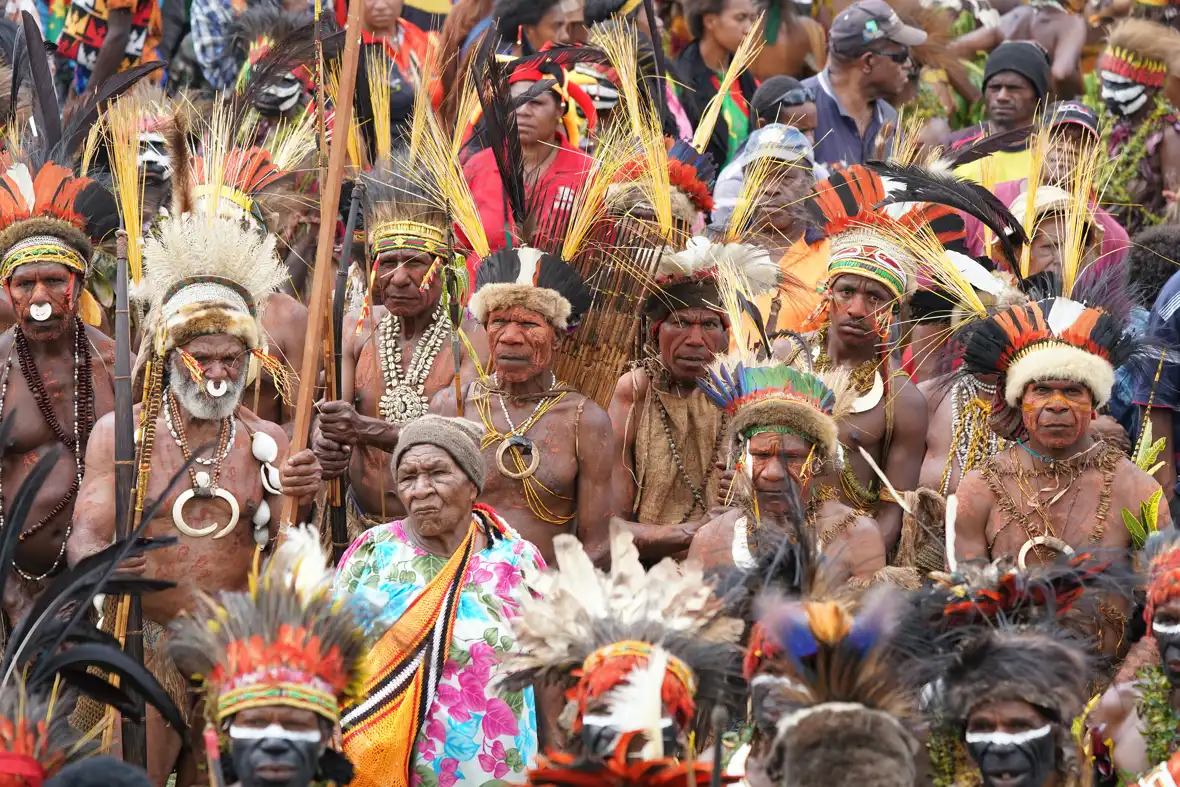
Highland show season kicks off in August with the Mount Hagen Show in the Western Highlands, where hundreds of clan groups in paint and feathers perform over a weekend, and the Crocodile Festival in Ambunti along the Sepik River. Dry, sunny days continue in most of Papua New Guinea, though nights around Mount Hagen can fall near 10°C. The cost is pressure on beds: Mount Hagen’s limited hotels fill early and rates climb. Travelers focused on culture will love it; anyone wanting empty lodges should come in June instead.
Why visit Papua New Guinea in September?
September packs Papua New Guinea’s biggest events into a few days around Independence Day on 16 September: the Goroka Show in the Eastern Highlands and the Hiri Moale Festival in Port Moresby, with its lakatoi canoe races and beauty pageant. Weather stays mostly dry. The problem is demand, since Goroka rooms are reserved months in advance, prices spike and domestic flights fill up, while shops and offices close for the public holiday. It works brilliantly if you book early and want festival culture, and poorly for last-minute or budget-minded travelers.
Why visit Papua New Guinea in October?
Once the Independence crowds leave, October settles into one of the better months for Papua New Guinea. The dry season holds in the south, Kokoda trekking continues with fewer groups on the track, and Milne Bay’s seas turn calm, opening its best diving window through December. Highland afternoons start bringing storms toward the end of the month, so hike early. Accommodation is easy to find again and rates return to normal. Divers, trekkers wanting quieter trails and anyone who missed the festivals but still wants dry weather will be happy here.
Why visit Papua New Guinea in November?
Rains build through November in the highlands and along the north coast, making it a transition month with mixed conditions across Papua New Guinea. Alotau hosts the Kenu and Kundu Festival early in the month, a gathering of war canoes and drumming groups from across Milne Bay’s islands. Surf starts picking up in Kavieng and Vanimo, while the last Kokoda treks of the year face muddier slopes. Crowds stay low outside the festival weekend. It suits divers, surfers and canoe-festival seekers more than highland hikers.
Why visit Papua New Guinea in December?
Heavy monsoon rain returns to most regions in December, and the Christmas period adds its own complications: domestic flights fill with Papua New Guineans flying home to their villages, and many businesses, government offices and some lodges close from late December into early January. Lowlands are hot and sticky, highland roads slip and slide, and trekking is largely off the table. Book any flights early if you must travel now. The month suits surfers in New Ireland, early-December divers in Milne Bay and travelers spending the holidays with local friends.
Explore Papua New Guinea
Does the weather seem nice in the period you would like to go? Find all the info you need to start your trip, including reasons to go, general country info and health and safety advice.