×

United States Virgin Islands Itinerary Planner

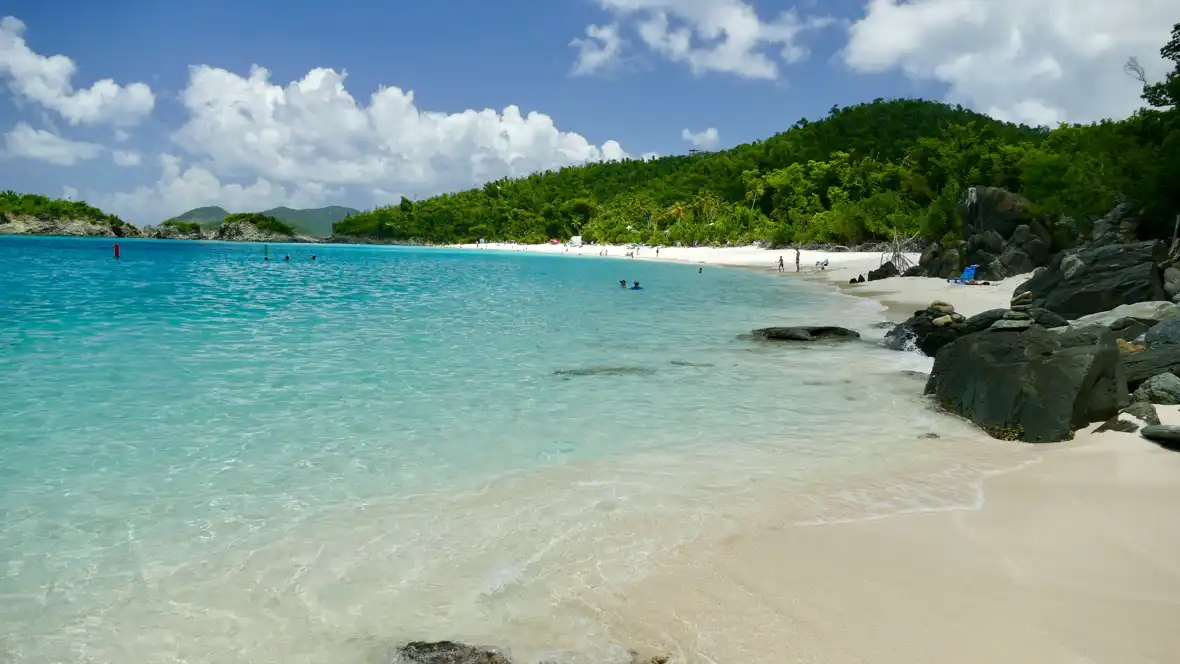
Set the trip length, pick your interests and your pace, and the route follows your priorities instead of a fixed script. Add a start point, an end point or a stop you refuse to skip, such as Trunk Bay, and the plan bends around it. Check the day count before you lock anything in, because too many stops in too few days costs more in rushed ferries and wasted afternoons than any ticket price. Leave room in each day, keep the mandatory stops to a short list, and let the plan carry the rest.

Plan
your Trip


We build
your Route


Get your
Travel Plan

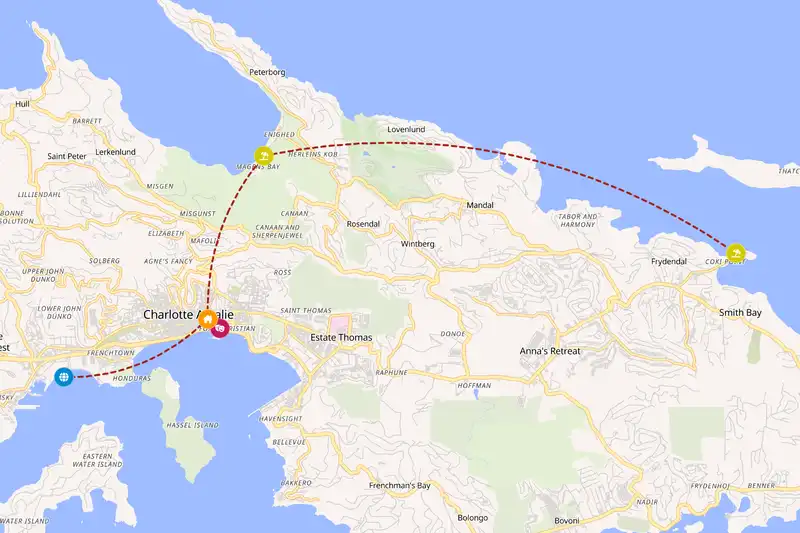
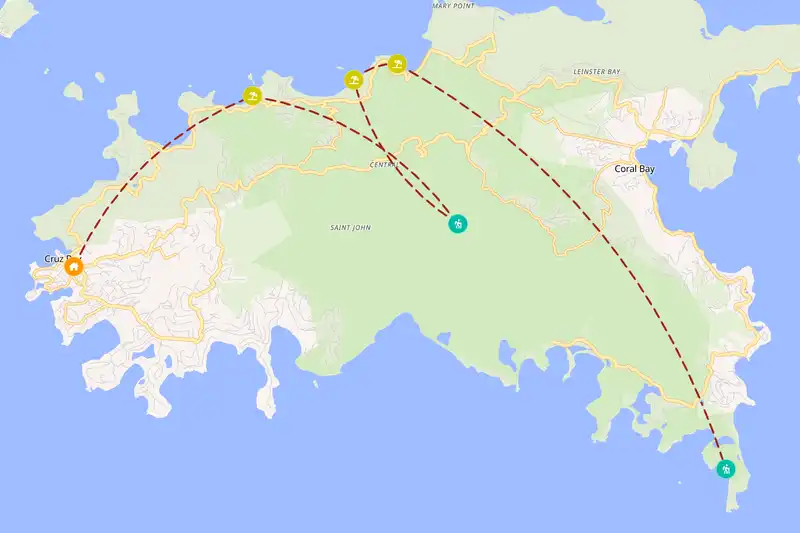
Example United States Virgin Islands itinerary planner route
Build your own United States Virgin Islands route
Example United States Virgin Islands itinerary planner route
Build your own United States Virgin Islands route

🇻🇮 United States Virgin IslandsCreate Your Itinerary

1 How many days will you travel?
2 What are your interests?
3 Travel speed
⚙️ Advanced options

🙋 FAQGood to know before you start

Two days covers the essentials, three gives you room for a hike and a beach without rushing, and five lets you add a second island at an easy pace. Count the ferry time between islands as part of the days you spend, not as extra.
Yes, the British Virgin Islands lie right next to the U.S. Virgin Islands, so Tortola and Jost Van Dyke make a natural add-on by ferry. Puerto Rico, a U.S. territory rather than a separate country, is a short flight west, and Anguilla and Sint Maarten are the nearest other options in the Caribbean.

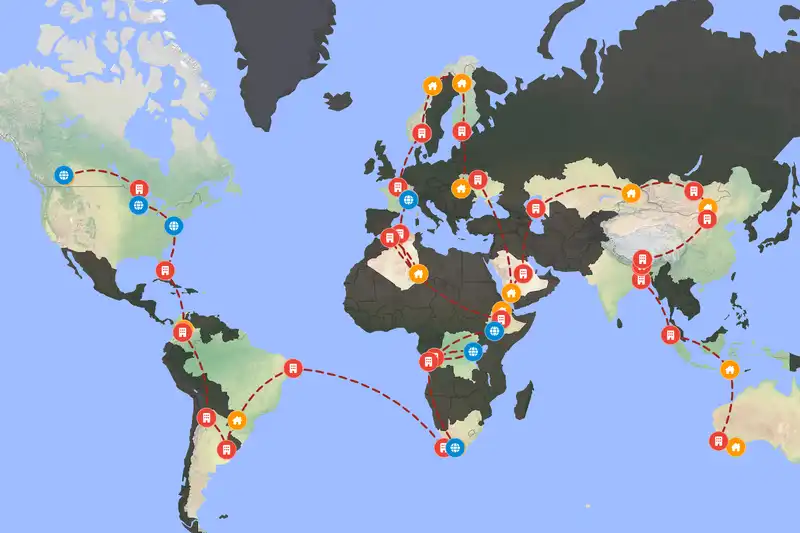
Build a multi-country route
Yes. Stops are sequenced to minimize backtracking and grouped by how close they are to each other, and your chosen travel pace (fast, normal, or slow) adjusts how much ground each day covers.
Absolutely. Adjust your trip length, interests, starting point, or travel style and generate a new route in seconds.
Yes, generating and viewing your route is completely free. An offline-friendly PDF version is available as an optional purchase which gives more detailed information for each location on your route.

🗺️ RegionsWhere things are located

The islands are small, but the distances between places are bigger than the map suggests, because water separates them and getting between them takes planning. A morning at Magens Bay and an afternoon at Salt River Bay National Historical Park and Ecological Preserve are not neighbors, and treating them that way is how a day disappears. The same applies to the Bioluminescent Bays of St. Croix, which suit an evening of their own. The planner groups close places together so each day stays in one area. To protect your budget and your time, name only the stops you really want, and avoid squeezing in a distant extra on the last day.

📈 StatisticsUnited States Virgin Islands by the numbers

Our set of curated travel destinations for United States Virgin Islands

Cities & Towns: 6      Landmarks: 3      National Parks: 4      Hikes: 5      Beaches: 11      Attractions: 3     

Most popular interests

  • 🚶‍♀️ Hikes (100%)
  • 🏖️ Beaches (100%)

Most included destinations

⚙️ How it worksBuilding your route, step by step

You choose a trip length, your interests and a pace, and the planner turns them into a day-by-day route. First, it groups nearby places so you are not paying for extra ferry crossings or losing hours to backtracking. Second, it picks one sensible direction through those groups, so the route moves forward instead of zigzagging. Third, it sets the time at each stop by its type and by how much sits close by. A walk like Reef Bay Trail, for example, gets a generous block of the day, and the smaller stops nearby are fitted around it as short additions rather than separate trips. Where one area holds several things to see, it becomes a base you stay in longer, with the smaller spots handled as day trips from it. Two habits save money and time. Keep the pace setting honest, because an ambitious pace packs in more stops than most people enjoy, and a day with a long hike needs slack on either side. Also, leave mandatory stops to those you truly care about, since each one limits how well the route can group places.