×

Afghanistan🇦🇫 | attractionsNational Museum of Afghanistan
archaeological artifacts, ancient sculptures, curated exhibits | things to do and best time to go

Explore Shahr-e ZohakExplore Babur’s Gardens

Backpacking in National Museum of Afghanistan
🌟 Highlightattraction ranked #7
By Johan Kruseman 🇳🇱 | Updated April 11, 2026

Here’s what nobody tells you: the National Museum of Afghanistan is one of the rare places in Kabul where you can actually slow down, breathe, and take in centuries of history without being elbowed by tour groups or hustled for selfies. It sits just off Darulaman Road, southwest of the city center—a taxi ride from the chaos, but not a world away. For backpackers, this isn’t a place for adrenaline or Instagram glory shots; it’s a crash course in Afghanistan’s soul, with artifacts that survived war, looting, and neglect. The wow-factor isn’t in flashy displays but in the raw, battered resilience of the collection. Entry is cheap, crowds are thin, and the staff are genuinely proud to share their heritage. Compared to the country’s headline-grabbing ruins or mountain treks, the museum is quieter, deeper, and—if you care about context—absolutely essential.

Discover everything you want to know in the 📖 Afghanistan Travel Guide.
Safety warning

The current risk level for Afghanistan is high. Check the advice before going.


Get your Afghanistan Travel Guide
Loading the map 🌍
CLICK TO FILTER
city
town
unique site
national park
hike
attraction
festival
region
SHOW COUNTRY‘S BESTSHOW ALL

✨ Why go?
Ranked #7 attraction in Afghanistan
Reasons people choose to visit here

The National Museum of Afghanistan isn’t your typical tourist stop—it’s a gritty, raw dive into a country’s soul that’s been battered by decades of conflict. Forget the polished, Instagram-ready spots; this place wears its scars openly. Yes, the crowds are sparse, and the facilities are far from luxurious, but that’s exactly why it hits differently. You’re not just looking at artifacts; you’re witnessing resilience. The museum houses some of the world’s rarest treasures—Bactrian gold, ancient manuscripts, and relics that survived war and looting. It’s a cultural anchor in a landscape where history often feels erased. For backpackers, it’s a milestone that demands time because it’s a rare chance to connect with Afghanistan beyond headlines and stereotypes. The effort to get there—navigating … read more 👉
The National Museum of Afghanistan isn’t your typical tourist stop—it’s a gritty, raw dive into a country’s soul that’s been battered by decades of conflict. Forget the polished, Instagram-ready spots; this place wears its scars openly. Yes, the crowds are sparse, and the facilities are far from luxurious, but that’s exactly why it hits differently. You’re not just looking at artifacts; you’re witnessing resilience. The museum houses some of the world’s rarest treasures—Bactrian gold, ancient manuscripts, and relics that survived war and looting. It’s a cultural anchor in a landscape where history often feels erased. For backpackers, it’s a milestone that demands time because it’s a rare chance to connect with Afghanistan beyond headlines and stereotypes. The effort to get there—navigating tricky logistics and security—is rewarded with a profound sense of stepping into a living history that few outsiders ever experience. This isn’t a tourist trap; it’s a testament to endurance and identity.
Get the complete Travel Guide for Afghanistan
Everything organized for offline planning — routes, highlights, costs & tips

See what’s inside 👉

Get the Travel Guide -

💡 HighlightsDon't-miss highlights and experiences

1. The Bactrian Gold Hoard (Tillya Tepe Treasures)
Forget the Instagram filters—this is the real gold standard. The Bactrian Gold, unearthed from ancient burial mounds in northern Afghanistan, is a jaw-dropper even for seasoned museum-goers. We’re talking intricate crowns, jewelry, and ornaments that predate most European empires. These pieces survived looting, war, and smuggling attempts. Seeing them in person is a reminder that Afghanistan was once the crossroads of civilizations, not just a headline. The craftsmanship is so delicate you’ll wonder how it survived millennia, let alone the last few decades.


2. Greco-Buddhist Gandhara Statues
You’ll see Buddha here, but not like anywhere else. These statues fuse Greek artistic influence with Buddhist iconography—think Apollo’s curls on the Buddha’s … read more 👉
1. The Bactrian Gold Hoard (Tillya Tepe Treasures)
Forget the Instagram filters—this is the real gold standard. The Bactrian Gold, unearthed from ancient burial mounds in northern Afghanistan, is a jaw-dropper even for seasoned museum-goers. We’re talking intricate crowns, jewelry, and ornaments that predate most European empires. These pieces survived looting, war, and smuggling attempts. Seeing them in person is a reminder that Afghanistan was once the crossroads of civilizations, not just a headline. The craftsmanship is so delicate you’ll wonder how it survived millennia, let alone the last few decades.


2. Greco-Buddhist Gandhara Statues
You’ll see Buddha here, but not like anywhere else. These statues fuse Greek artistic influence with Buddhist iconography—think Apollo’s curls on the Buddha’s head. It’s a visual collision of East and West, proof that Afghanistan was a melting pot long before the word was invented. The statues are battered, yes, but that’s part of the story. They’ve survived iconoclasm, earthquakes, and neglect. Their scars are a testament to resilience, not just beauty.


3. Pre-Islamic Artifacts
If you want to understand Afghanistan beyond the headlines, start here. The museum’s pre-Islamic collection includes tools, pottery, and sculptures from the Bronze Age and earlier. These aren’t just relics—they’re evidence of a sophisticated society that traded with Mesopotamia and Persia. The sheer age and variety of these objects will recalibrate your sense of time. You’ll walk out realizing Afghanistan’s story didn’t start—or end—with conflict.


4. Islamic Calligraphy and Manuscripts
This is where the museum gets quietly spectacular. The calligraphy and illuminated Qurans on display are masterworks of patience and devotion. Some are centuries old, with ink so fine it looks printed. The artistry here isn’t just visual—it’s spiritual. These manuscripts survived invasions and censorship, and seeing them up close is a privilege, not a given.


5. The Museum’s War-Scarred Walls
Here’s the anti-Instagram moment: bullet holes and patched-up masonry. The building itself is a living artifact, scarred by decades of conflict. It’s not pretty, but it’s real. Walking these halls, you feel the weight of history—both ancient and recent. The museum’s survival is a quiet act of defiance, and that’s worth more than any postcard shot.
Spotted a mistake or missing something? Contact us.

🌤️ When to go?When to go for the best experience


  • Weather: The best window is from April to October when Kabul’s climate is dry and warm. Winters (November to March) are harsh, with temperatures often dropping below freezing (0°C/32°F), making museum visits less comfortable.

  • Temperature: Spring and early fall offer mild days around 15-25°C (59-77°F), perfect for exploring without sweating buckets or shivering. Summer can hit 30°C (86°F), but the museum’s indoor setting provides relief.

  • Daylight Hours: From May to August, you get long days—up to 14 hours of light—giving you plenty of time to soak in the exhibits and the city’s vibe before dusk.

  • Crowds: The museum isn’t a tourist magnet, so expect manageable crowds year-round. However, local holidays and weekends can bring in more Afghan families and school groups, especially in spring.
read more 👉

  • Weather: The best window is from April to October when Kabul’s climate is dry and warm. Winters (November to March) are harsh, with temperatures often dropping below freezing (0°C/32°F), making museum visits less comfortable.

  • Temperature: Spring and early fall offer mild days around 15-25°C (59-77°F), perfect for exploring without sweating buckets or shivering. Summer can hit 30°C (86°F), but the museum’s indoor setting provides relief.

  • Daylight Hours: From May to August, you get long days—up to 14 hours of light—giving you plenty of time to soak in the exhibits and the city’s vibe before dusk.

  • Crowds: The museum isn’t a tourist magnet, so expect manageable crowds year-round. However, local holidays and weekends can bring in more Afghan families and school groups, especially in spring.

  • Seasonal Activities: Spring and fall are when Kabul buzzes with cultural events and markets, adding layers to your visit beyond the museum walls.

  • Price Fluctuations: Entry fees remain stable year-round, but travel costs spike in winter due to weather delays and limited transport options.


Pro-tip: Aim for late April or early October to dodge extreme temps and catch Kabul’s cultural pulse without the hassle of winter chills or summer scorch.


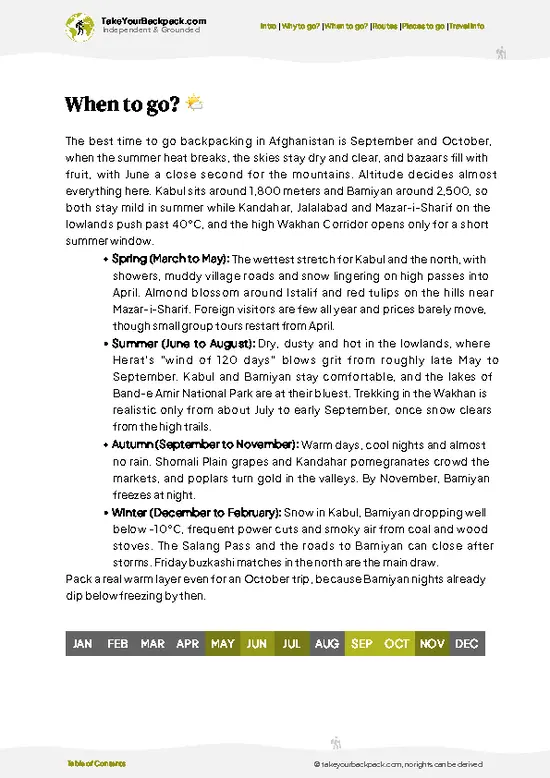
source: climatestotravel.comJANJanuary: below average for travelingFEBFebruary: below average for travelingMARMarch: fair for travelingAPRApril: highly recommended for travelingMAYMay: excellent for travelingJUNJune: excellent for travelingJULJuly: excellent for travelingAUGAugust: excellent for travelingSEPSeptember: highly recommended for travelingOCTOctober: highly recommended for travelingNOVNovember: fair for travelingDECDecember: below average for traveling
when-to-go

✈️ The backpacker research shortcutAfghanistan Travel Guide

An offline-friendly backpacking guide with optimized travel routes, ranked highlights, transport advice, and the best areas to stay.
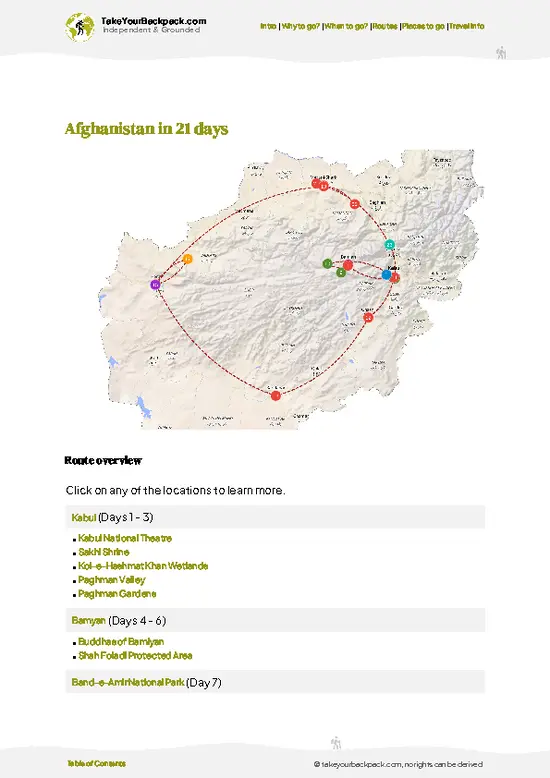
example page 0 from our offline Travel Guide for Afghanistanexample page 1 from our offline Travel Guide for Afghanistanexample page 2 from our offline Travel Guide for Afghanistanexample page 3 from our offline Travel Guide for Afghanistanexample page 4 from our offline Travel Guide for Afghanistanexample page 5 from our offline Travel Guide for Afghanistan
The digital guide (257 pages) contains:
72 highlights, ranked by travel appeal
Optimized 7, 14 & 21-day travel routes
Best neighborhoods to stay
How to get around
Offline-friendly for travel without Wi-Fi
👉 See all 30+ guide features

📅 Plan smarter in minutes, not weeks
Month by month travel advice
Festivals & national holidays
Budget expectations

🗺️ Go to the right places, skip the overrated ones
Honest pros & cons of destinations
Top hikes, parks & viewpoints
Lesser-known places most travelers miss
Clear “worth it vs skip it” guidance

🛏️ Travel smoothly without rookie mistakes
Best areas to stay
Transport systems explained simply
Common scams & safety advice
SIM cards, money & practical tips

🌍 Understand the country, not just visit it
Culture & traditions
52 Essential phrases & customs
Festivals worth planning around
Traveler-friendly historical context
Insights that make places more meaningful

📱 Built for real travel conditions
Fully downloadable PDF
Works completely offline
Optimized for phone use
Useful in remote areas & buses
Everything in one place
Save weeks of stressful planning
Get instant access to the full guide directly. 30-day money-back guarantee.


Sent to your inbox immediately after payment • 100% Secure Checkout
Best Backpacking Travel Advisor 2025 tourism awardBest Backpacking
Travel Advisor
2025
What others say about Take Your Backpack Guides:
⭐⭐⭐⭐⭐
Fantastic, amazing amount of information!
⭐⭐⭐⭐⭐
My goodness this is amazing, it's what I've been looking for hats off too you!
⭐⭐⭐⭐⭐
I think this is absolutely BRILLIANT
⭐⭐⭐⭐
Very complete and informative. It's still missing places, but I gotta to commend you
⭐⭐⭐⭐⭐
This is truly amazing, thank you, can't wait to explore it with my kids!
⭐⭐⭐⭐⭐
Awesome resource, thank you!
⭐⭐⭐⭐⭐
This is amazing! Can't wait to explore the ones I haven't seen
⭐⭐⭐⭐
I love this! Well done, great idea.
⭐⭐⭐⭐⭐
Thanks for taking the time to make this gem!
⭐⭐⭐⭐⭐
This might be the best website I've ever seen.
⭐⭐⭐⭐⭐
Congratulations, and thank you so much for your work; it's incredibly valuable.
⭐⭐⭐⭐
In all seriousness I think you did a great job pointing out the important spots
⭐⭐⭐⭐⭐
10/10 very good
⭐⭐⭐⭐⭐
As someone who's only just starting to visit regularly this is awesome, thank you.
⭐⭐⭐⭐
Thank you very much! I'm going to visit my dad, it's going to be very useful!
⭐⭐⭐⭐⭐
This is really cool! We'll be travelling for the first time and this definitely come in handy.
⭐⭐⭐⭐⭐
You are now our minister of culture, congratulations 👨‍💼
⭐⭐⭐⭐⭐
Just wanted to tell you that this is a pearl! Going to follow your recommendations.
⭐⭐⭐⭐⭐
This is so cool. I'll definitely be using the resource for my travels soon.
⭐⭐⭐⭐⭐
This is very impressive! Good work.
⭐⭐⭐⭐⭐
This is an amazing and informative site. Very well done!

🛏️ Where to stay?Where staying makes the most sense

The National Museum of Afghanistan sits in Kabul’s heart, a place where history fights to survive amid chaos. Forget the glossy Instagram shots—this city is raw, loud, and often tense. Crowds aren’t your usual tourist throngs; they’re locals, students, and the occasional curious traveler. Safety is a real concern here, so pick your neighborhood wisely.

For backpackers, the best spots to stay are the areas around Shahr-e-Naw and Karte Seh. These districts offer a mix of relative calm and social buzz. Shahr-e-Naw is the city’s commercial pulse—markets, cafes, and a handful of guesthouses where … read more 👉
The National Museum of Afghanistan sits in Kabul’s heart, a place where history fights to survive amid chaos. Forget the glossy Instagram shots—this city is raw, loud, and often tense. Crowds aren’t your usual tourist throngs; they’re locals, students, and the occasional curious traveler. Safety is a real concern here, so pick your neighborhood wisely.

For backpackers, the best spots to stay are the areas around Shahr-e-Naw and Karte Seh. These districts offer a mix of relative calm and social buzz. Shahr-e-Naw is the city’s commercial pulse—markets, cafes, and a handful of guesthouses where you can meet other travelers without feeling isolated. It’s not luxury, but it’s authentic Kabul life, with enough security presence to keep nerves in check.

Karte Seh leans quieter, with tree-lined streets and a more residential vibe. It’s a good fallback if you want to avoid the hustle but still be within walking distance of the museum. Both areas give you a chance to connect with locals and other backpackers, which is the real treasure here. Kabul isn’t about comfort; it’s about stepping into a story that’s still being written.

👛 Costs (as of 23 December 2025)How expensive it really is

The entrance fee for the National Museum of Afghanistan typically ranges from USD5 to USD10. Additional costs may include guided tours or special exhibitions, which can vary but generally remain affordable. There are no significant extra charges once inside.

source: lonelyplanet.com
⚠️ Prices can change and everyone travels differently, so take this as a rough guide. Hope it helps you plan your adventure!

Other Afghan attractions near National Museum of Afghanistan

Explore more nearby:


👉 Discover all attractions

Or checkout all Afghanistan has to offer (think cities, towns, villages, national parks, hikes, beaches, festivals)
Country photo of Afghanistan

We 💚 feedbackFinal thoughts on visiting National Museum of Afghanistan

The National Museum of Afghanistan isn’t a polished, crowd-free palace—expect a bit of dust, a few curious locals, and the occasional power flicker. But that’s exactly the point. It’s raw history, unfiltered and stubbornly alive. The real magic hits when you see artifacts that survived decades of conflict, quietly telling stories no glossy exhibit ever could. If you want a sanitized experience, look elsewhere. Here, you get the soul of a nation in every cracked pot and faded scroll.

✍️ Help improve this page!
The information on this page is based on in-depth research, insights shared by experienced travelers, and feedback from the local travel community in Afghanistan. While every effort is made to keep the information accurate and current, conditions can change — so if you spot anything incorrect or outdated, please get in touch.


🙋‍♂️ Give feedback

👋 Meet the founderWho’s Behind Take Your Backpack?

Johan, backpacker and founder of TakeYourBackpackHi, I’m Johan (Netherlands 🇳🇱), the creator of TakeYourBackpack. Over the past decade, I’ve backpacked through 80+ countries across six continents, gaining extensive experience with independent travel, long-term trips, and overland routes.

This site is built on a combination of firsthand travel experience and carefully curated insights from other backpackers. Many guides are based on places I’ve personally visited, while others bring together tips, observations, and practical advice shared by trusted travelers I’ve met along the way.

The goal is to provide realistic, experience-driven guidance — not generic itineraries — so you can explore destinations with better context, clearer expectations, and more confidence.

Get Full Country Guide |
Instant download • 72 highlights • Full Offline guide