×

Afghanistan🇦🇫 | best attractionsBest 10 attractions in Afghanistan

Afghanistan’s best attractions are defined by a rugged blend of history, culture, and landscape that demands more than casual sightseeing. The country’s diverse regions—from the ancient ruins of Bamiyan to the bustling bazaars of Kabul—offer vastly different experiences shaped by geography, security, and seasonal access. For backpackers and independent travelers, understanding these distinctions is crucial. Northern Afghanistan’s cooler summers and relative safety contrast sharply with the southern provinces, where travel restrictions and security concerns can limit options. Timing your visit affects not just comfort but the authenticity of cultural encounters and the ease of moving between sites. Budget-wise, remote areas may require costly guides or permits, while urban centers offer cheaper, more straightforward logistics. Choosing the right attraction here isn’t just about ticking off landmarks; it’s about aligning your itinerary with the country’s complex realities to maximize immersion, minimize risk, and preserve your energy for moments that truly define Afghanistan’s soul.

By Johan Kruseman 🇳🇱 | Updated July 18, 2026
Explore the best festivals in Afghanistan

Why go?Why Travelers Love These Spots

Afghanistan’s attractions stand apart because they demand more than a casual glance—they require commitment, patience, and a readiness to navigate complex realities. Unlike destinations where you can hop from one site to the next with ease, Afghanistan’s geography and infrastructure impose a natural filter on travel. Rugged mountains and limited roads mean that reaching many attractions involves long journeys over challenging terrain. This isn’t a place for quick checklists; it’s for travelers who value depth over breadth, willing to trade convenience for immersive encounters with history and culture that have endured millennia of upheaval.

The country’s cultural and historical layers are dense and raw, shaped by its position as a crossroads of empires and trade routes. This makes Afghanistan’s … read more 👉
Afghanistan’s attractions stand apart because they demand more than a casual glance—they require commitment, patience, and a readiness to navigate complex realities. Unlike destinations where you can hop from one site to the next with ease, Afghanistan’s geography and infrastructure impose a natural filter on travel. Rugged mountains and limited roads mean that reaching many attractions involves long journeys over challenging terrain. This isn’t a place for quick checklists; it’s for travelers who value depth over breadth, willing to trade convenience for immersive encounters with history and culture that have endured millennia of upheaval.

The country’s cultural and historical layers are dense and raw, shaped by its position as a crossroads of empires and trade routes. This makes Afghanistan’s attractions uniquely authentic, but also less polished or tourist-friendly than those in more developed regions. Visitors should expect fewer amenities and more unpredictability. The payoff is access to sites where the past feels palpably alive, not sanitized for mass consumption. However, this comes with the caveat that safety, political stability, and local conditions can fluctuate, requiring thorough preparation and flexibility.

Climatic extremes add another layer of complexity. Harsh winters and scorching summers limit the window for comfortable exploration, forcing travelers to plan carefully around seasons. This isn’t a country where you can casually drop in year-round without consequences for your experience or well-being.

In short, Afghanistan’s attractions matter because they offer a rare, unfiltered glimpse into a world shaped by endurance and resilience. But this comes with trade-offs: expect travel to be slower, infrastructure sparse, and conditions demanding. Those willing to accept these challenges will find rewards that are profound and unlike anywhere else on earth. The key is understanding these constraints upfront to preserve your energy and resources for what truly counts—engaging deeply with a place that defies easy categorization or convenience.
Our Approach to Ranking
The list of best attractions in Afghanistan is created based on cultural significance or entertainment value. If you feel a attraction is missing in this list, please let us know.

When to go?When to Plan Your Trip

Seasonal Realities That Shape Your Afghanistan Experience


Afghanistan’s climate is a study in extremes, and understanding its seasonal rhythms is crucial to avoid wasting time and energy on conditions that will sap your spirit. Winters are not just cold—they can be brutal, with heavy snow and freezing temperatures that shut down access to many attractions. Roads become impassable, and the risk of altitude sickness spikes if you’re not prepared for the chill. This isn’t a place to show up in winter expecting to wander freely or soak in the landscape.

Spring and autumn are the sweet spots for visiting. These shoulder seasons offer a balance: the weather is milder, the landscapes shift dramatically with blooming wildflowers or autumnal hues, and the crowds are thinner. Costs tend to be more … read more 👉

Seasonal Realities That Shape Your Afghanistan Experience


Afghanistan’s climate is a study in extremes, and understanding its seasonal rhythms is crucial to avoid wasting time and energy on conditions that will sap your spirit. Winters are not just cold—they can be brutal, with heavy snow and freezing temperatures that shut down access to many attractions. Roads become impassable, and the risk of altitude sickness spikes if you’re not prepared for the chill. This isn’t a place to show up in winter expecting to wander freely or soak in the landscape.

Spring and autumn are the sweet spots for visiting. These shoulder seasons offer a balance: the weather is milder, the landscapes shift dramatically with blooming wildflowers or autumnal hues, and the crowds are thinner. Costs tend to be more reasonable too, since you’re outside the peak tourist surge. But don’t expect perfect conditions every day—spring can bring sudden rain showers, and autumn nights drop sharply in temperature. Layering and flexibility are your best friends here.

Summer is Afghanistan’s peak travel window, but it comes with its own set of challenges. Daytime heat can be intense, especially in lower elevations, pushing temperatures well above comfortable levels. This can limit how much ground you cover and how long you can comfortably explore outdoor sites. However, summer also means longer daylight hours and generally stable weather, which is why many travelers accept the heat trade-off. If you’re sensitive to heat or want to avoid the busiest period, the shoulder seasons are a smarter bet.

No matter when you go, be ready for abrupt weather shifts and plan for limited infrastructure outside major centers. The key to a successful trip is timing your visit to maximize access and comfort while minimizing the risks of weather-related disruptions. This strategic approach saves your energy and budget for the moments that truly matter—when the country’s raw history and rugged beauty unfold without compromise.

attraction hoppingSuggested Travel Strategies

Strategic Routing and Regional Clustering

Afghanistan’s attractions are spread across distinct regions, each with its own character and logistical realities. The key to combining them efficiently is to cluster stops geographically rather than chasing a scattered list. Start by grouping sites within the same province or neighboring areas to minimize exhausting backtracking. Moving in a logical direction—generally from south to north or east to west—helps maintain momentum and reduces wasted travel time on rough roads or limited transport options.

Realistic Time Allocation

Expect to spend at least a full day at major cultural or historical sites to absorb their depth without rushing. Natural landscapes and trekking spots demand even more time, often two to three days, to appreciate the terrain … read more 👉

Strategic Routing and Regional Clustering

Afghanistan’s attractions are spread across distinct regions, each with its own character and logistical realities. The key to combining them efficiently is to cluster stops geographically rather than chasing a scattered list. Start by grouping sites within the same province or neighboring areas to minimize exhausting backtracking. Moving in a logical direction—generally from south to north or east to west—helps maintain momentum and reduces wasted travel time on rough roads or limited transport options.

Realistic Time Allocation

Expect to spend at least a full day at major cultural or historical sites to absorb their depth without rushing. Natural landscapes and trekking spots demand even more time, often two to three days, to appreciate the terrain and avoid fatigue. Trying to cram multiple heavy-hitter stops into a single day is a classic mistake that leads to burnout and superficial experiences. Balance is crucial: shorter visits suit urban markets or quick photo ops, but deeper exploration requires patience.

Common Planning Pitfalls

One of the biggest errors is underestimating travel times and overestimating infrastructure reliability. Roads can be unpredictable, and public transport schedules erratic. Another trap is ignoring local conditions like weather or security advisories, which can abruptly alter plans. Overloading the itinerary with too many stops sacrifices quality for quantity, turning what should be a journey of discovery into a checklist chore.

Trade-offs: Speed, Comfort, and Depth

Travelers must decide what they value most: speeding through to tick off every highlight, or slowing down to savor the atmosphere and engage with local culture. Budget constraints often force compromises between comfort and accessibility—opting for basic accommodations might open up remote areas but at the cost of rest and recovery. Effort versus reward is another balancing act; some of Afghanistan’s most rewarding experiences require physical stamina and mental flexibility.

Flexibility and Strategic Planning

Leave room for adjustments. Rigid schedules rarely survive the realities on the ground here. Prioritize key attractions but allow buffer days for unexpected delays or spontaneous detours. Use regional hubs as bases to explore surrounding sites without constant packing and moving. This approach preserves energy and maximizes the quality of each encounter, turning a complex itinerary into a coherent, rewarding adventure.

The ListTop attractions of Afghanistan

1 Band-e Amir Viewpoints and Lakeside Shrine Area

travertine lakes, blue water vistas, lakeside shrine

Pause at limestone cliffs overlooking deep blue lakes, then observe pilgrims visiting the modest shrine set beside the water’s edge.

2 Blue Mosque Complex

ceramic tilework, white doves, courtyard arcades

Admire intricate blue mosaics and watch flocks of doves circle the open courtyards as locals pass through for daily prayers.

3 Buddha Niches and Cliffside Caves of Bamiyan

empty Buddha alcoves, sandstone cliffs, cave dwellings

Walk beneath towering niches carved into cliffs, then explore interconnected caves once used by monks and travelers centuries ago.

4 Friday Mosque of Herat

glazed tile mosaics, minaret towers, prayer halls

Stand beneath archways lined with patterned tiles and observe the steady rhythm of worship in one of Afghanistan’s oldest mosques.

5 Minaret of Jam Archaeological Site

brick minaret, river valley, remote ruins

Reach a solitary minaret rising from a narrow valley, surrounded by scattered archaeological remains and mountain scenery.

6 Babur’s Gardens

terraced gardens, Mughal-era tomb, orchard paths

Stroll through layered gardens framed by fruit trees and stonework, where local families gather and Mughal history quietly endures.

7 National Museum of Afghanistan

archaeological artifacts, ancient sculptures, curated exhibits

Trace Afghanistan’s layered history through objects spanning millennia, from Greco-Bactrian statues to Islamic ceramics and coins.

8 Darul Aman Palace

neoclassical ruins, grand staircases, hilltop setting

Survey the shell of a palace set above the city, where faded grandeur and bullet-scarred walls hint at shifting eras.

9 Sakhi Shrine Complex

blue domes, pilgrimage site, marble courtyard

Watch pilgrims gather in a marble courtyard beneath blue domes, especially during spring festivals and religious holidays.

10 Herat Old Bazaar and Caravanserai Area

covered market lanes, caravanserai courtyards, spice stalls

Wander through shaded alleys filled with merchants, then step into quiet courtyards where traders once rested with their goods.

11 Old City Bazaar and Citadel Area

mudbrick alleys, hilltop fortress, artisan workshops

Explore winding lanes below a fortified citadel, where craftspeople shape metal and wood in small, open-fronted shops.

12 Paghman Hill Castle and Memorial Arch

mountain backdrop, ceremonial arch, landscaped grounds

Walk landscaped lawns beneath a triumphal arch, with mountain views and a castle-like structure marking the edge of the city.

13 Chicken Street Antique and Carpet Market

vintage carpets, brassware stalls, lapis jewelry

Browse narrow shopfronts stacked with old carpets, hand-beaten metalwork, and blue stone trinkets traded for generations.

14 Shrine of Hazrat Ali Night Market Area

evening food stalls, illuminated shrine, local sweets

Sample street food and sweets as the shrine glows after dark, drawing crowds to the lively market that springs up each night.

15 Kart-e Sakhi Hill Overlook

city panorama, hillside shrine, evening lights

Climb to a hilltop shrine for wide views over Kabul, especially striking as dusk settles and the city lights begin to glow.

16 Kabul National Theater Area

Soviet-era facade, public square, street murals

Observe daily life around a landmark theater, where locals gather in the square and colorful murals brighten concrete walls.

Think you know Afghanistan?

Prove you’re a true local — uncover 6 lesser-known attractions in Afghanistan that locals tend to keep to themselves.
Loading the map 🌍

Expert viewInsights from Locals and Experts

Expert Commentary


Afghanistan is a country where the weight of history presses heavily on every stone, every valley, and every ruined fortress. But let’s get real: this isn’t a place where you can casually tick off a dozen attractions in a week. The reality is that you should plan to visit no more than three to five major sites if you want to absorb their significance without burning out or blowing your budget. Trying to cram more in is a fast track to exhaustion and disappointment.

Travel here demands patience and a willingness to embrace unpredictability. Infrastructure outside major hubs is often rough, roads can be treacherous, and transport options limited. This means moving between attractions can take far longer than you’d expect from a map alone. Factor in extra time for delays, … read more 👉

Expert Commentary


Afghanistan is a country where the weight of history presses heavily on every stone, every valley, and every ruined fortress. But let’s get real: this isn’t a place where you can casually tick off a dozen attractions in a week. The reality is that you should plan to visit no more than three to five major sites if you want to absorb their significance without burning out or blowing your budget. Trying to cram more in is a fast track to exhaustion and disappointment.

Travel here demands patience and a willingness to embrace unpredictability. Infrastructure outside major hubs is often rough, roads can be treacherous, and transport options limited. This means moving between attractions can take far longer than you’d expect from a map alone. Factor in extra time for delays, security checks, and the occasional detour. Your daily mileage will be modest, so plan accordingly. If you’re the type who thrives on ticking boxes, Afghanistan will test your patience. But if you’re here to soak in the atmosphere and let the weight of the place sink in, the slower pace is a gift.

Budget-wise, don’t expect the usual backpacker bargains. Costs can vary wildly depending on where you are and how you travel. Local guides and drivers are essential, not just for navigation but for safety and cultural insight, and they don’t come cheap. Accommodation ranges from basic guesthouses to more comfortable lodges, but luxury is rare and often overpriced. The trade-off here is clear: you’ll spend more on logistics and local expertise, but that’s the price of unlocking authentic experiences and staying safe. Trying to cut corners on transport or guides is a false economy that will cost you time, stress, or worse.

Speaking of safety, this is the elephant in the room. Afghanistan’s security situation is complex and fluid. It’s not a place for the casual tourist or the unprepared. You need to stay informed, connect with trusted local contacts, and be ready to change plans on a moment’s notice. The cultural landscape is equally important to respect. Afghanistan’s social fabric is woven with deep traditions and strict codes of conduct. Dress conservatively, ask permission before photographing people, and be mindful of gender dynamics. Ignoring these can lead to uncomfortable or even dangerous situations. The payoff for respecting local customs is genuine warmth and hospitality that few other places can match.

When it comes to prioritizing attractions, think less about quantity and more about depth. Each site carries layers of history and meaning that deserve time to explore. Rushing through ruins or museums won’t do them justice. Instead, pick a handful that resonate with your interests—whether that’s ancient architecture, cultural heritage, or natural landscapes—and invest your energy there. This approach lets you engage with the stories behind the stones rather than just snapping photos for the sake of it.

One of the biggest hidden costs is mental energy. Afghanistan demands a high tolerance for ambiguity and discomfort. You’ll face language barriers, sporadic services, and the constant need to negotiate your way through unfamiliar terrain. This isn’t a polished tourist circuit; it’s raw, real, and often challenging. But that’s exactly why it’s worth it. The moments when you connect with locals, witness centuries-old traditions, or stand in the shadow of history’s giants are profound. They stay with you long after the trip ends.

A quick word on timing: seasons matter more here than in many places. Summers can be blisteringly hot, making travel exhausting and limiting your window for outdoor exploration. Winters bring cold and snow, which can shut down roads and isolate regions. Spring and autumn offer the best balance of weather and accessibility, but even then, be prepared for sudden changes. Flexibility is your best friend.

Finally, don’t underestimate the value of local knowledge. Independent travel is possible but often impractical without trusted guides who understand the nuances of the terrain, culture, and security landscape. They’re your lifeline to authentic experiences and your buffer against the unexpected. Investing in good local support is not just a safety measure—it’s the key to unlocking the country’s true character.

In short, Afghanistan’s attractions are not a checklist to conquer but a handful of profound encounters to savor. The secret to a successful trip here is to embrace the constraints—time, budget, safety, and cultural complexity—as part of the experience. When you do, you’ll find moments that are rare, intense, and deeply rewarding. This is a destination that demands respect and preparation, but for those who come ready, it offers a connection to history and humanity that few places can match.

✈️ The backpacker research shortcutAfghanistan Travel Guide

An offline-friendly backpacking guide with optimized travel routes, ranked highlights, transport advice, and the best areas to stay.
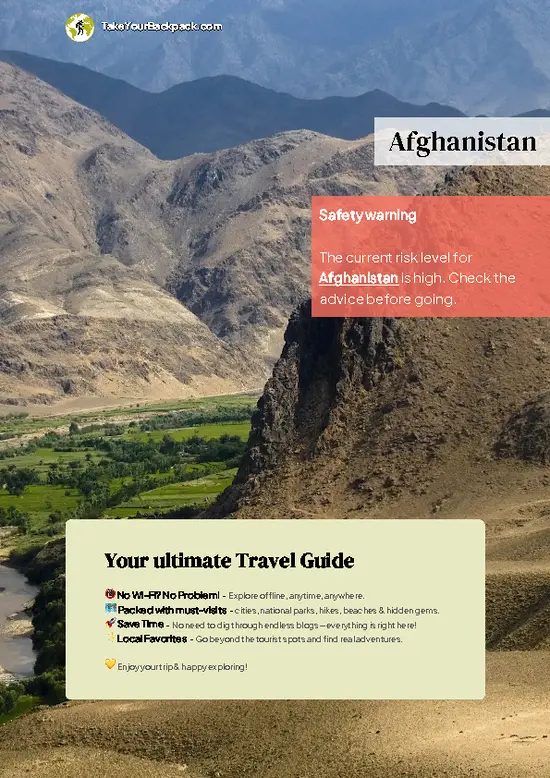
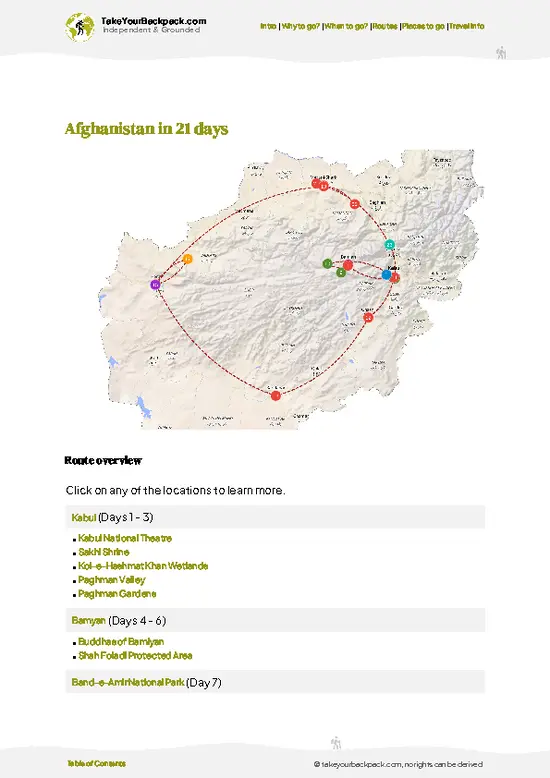
example page 0 from our offline Travel Guide for Afghanistan
example page 1 from our offline Travel Guide for Afghanistan
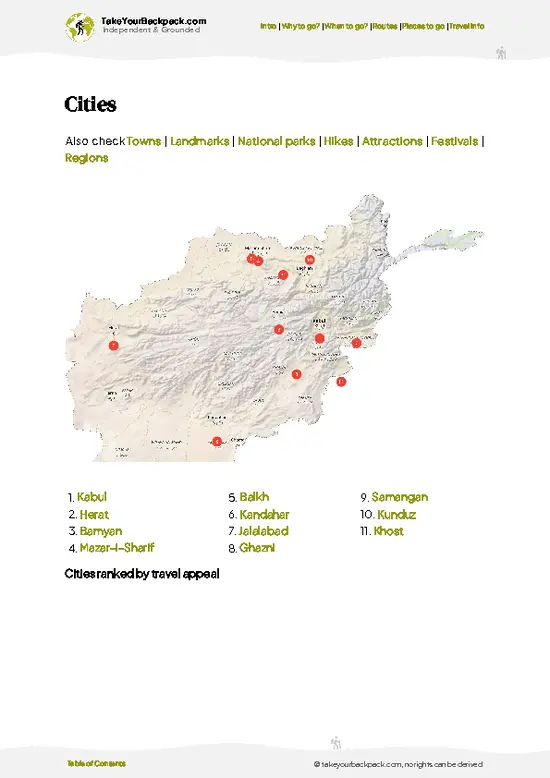
example page 2 from our offline Travel Guide for Afghanistan
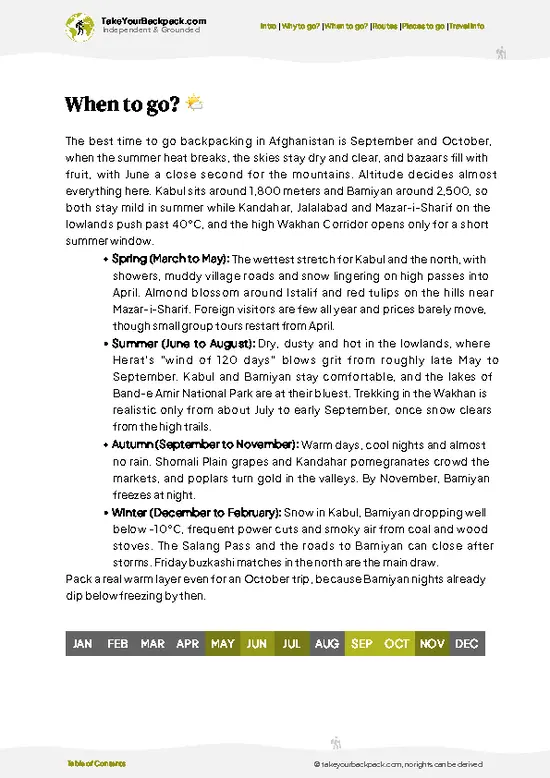
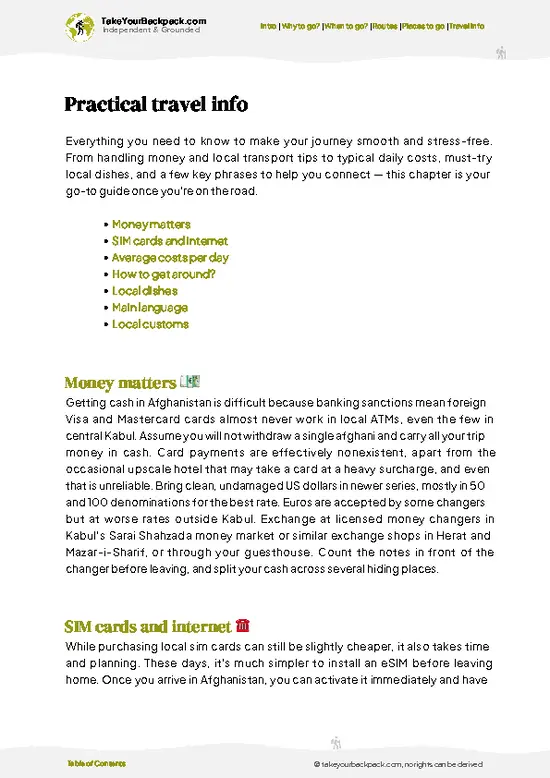
example page 3 from our offline Travel Guide for Afghanistan
example page 4 from our offline Travel Guide for Afghanistan
example page 5 from our offline Travel Guide for Afghanistan
example page 6 from our offline Travel Guide for Afghanistan
example page 7 from our offline Travel Guide for Afghanistan
The digital guide (228 pages) contains:
55 highlights, ranked by travel appeal
Optimized 7, 14 & 21-day travel routes
Cities, national parks, landmarks, beaches
How to get around
Offline-friendly for travel without Wi-Fi
👉 Click to see all 30+ guide features

📅 Plan smarter in minutes, not weeks
Month by month travel advice
Festivals & national holidays
Budget expectations

🗺️ Go to the right places, skip the overrated ones
Honest pros & cons of destinations
Top hikes, parks & viewpoints
Lesser-known places most travelers miss
Clear “worth it vs skip it” guidance

🛏️ Travel smoothly without rookie mistakes
Best areas to stay
Transport systems explained simply
Common scams & safety advice
SIM cards, money & practical tips

🌍 Understand the country, not just visit it
Culture & traditions
52 Essential phrases & customs
Festivals worth planning around
Traveler-friendly historical context
Insights that make places more meaningful

📱 Built for real travel conditions
Fully downloadable PDF
Works completely offline
Optimized for phone use
Useful in remote areas & buses
Everything in one place
Save weeks of stressful planning
Get instant access to your full guide. 30‑day money-back guarantee.


By proceeding you agree to our terms.
Sent to your inbox immediately after payment • 100% Secure Checkout
Best Backpacking Travel Advisor 2025 tourism awardBest Backpacking
Travel Advisor
2025
What others say about Take Your Backpack Guides:
⭐⭐⭐⭐⭐
Fantastic, amazing amount of information!
⭐⭐⭐⭐⭐
My goodness this is amazing, it's what I've been looking for hats off too you!
⭐⭐⭐⭐⭐
I think this is absolutely BRILLIANT
⭐⭐⭐⭐
Very complete and informative. It's still missing places, but I gotta to commend you
⭐⭐⭐⭐⭐
This is truly amazing, thank you, can't wait to explore it with my kids!
⭐⭐⭐⭐⭐
Awesome resource, thank you!
⭐⭐⭐⭐⭐
This is amazing! Can't wait to explore the ones I haven't seen
⭐⭐⭐⭐
I love this! Well done, great idea.
⭐⭐⭐⭐⭐
Thanks for taking the time to make this gem!
⭐⭐⭐⭐⭐
This might be the best website I've ever seen.
⭐⭐⭐⭐⭐
Congratulations, and thank you so much for your work; it's incredibly valuable.
⭐⭐⭐⭐
In all seriousness I think you did a great job pointing out the important spots
⭐⭐⭐⭐⭐
10/10 very good
⭐⭐⭐⭐⭐
As someone who's only just starting to visit regularly this is awesome, thank you.
⭐⭐⭐⭐
Thank you very much! I'm going to visit my dad, it's going to be very useful!
⭐⭐⭐⭐⭐
This is really cool! We'll be travelling for the first time and this definitely come in handy.
⭐⭐⭐⭐⭐
You are now our minister of culture, congratulations 👨‍💼
⭐⭐⭐⭐⭐
Just wanted to tell you that this is a pearl! Going to follow your recommendations.
⭐⭐⭐⭐⭐
This is so cool. I'll definitely be using the resource for my travels soon.
⭐⭐⭐⭐⭐
This is very impressive! Good work.
⭐⭐⭐⭐⭐
This is an amazing and informative site. Very well done!

🛏️ Where to stay?Where to Stay in Afghanistan

Hostels in Afghanistan are rare; budget accommodation in Afghanistan mostly means basic guesthouses or cheap hotels in major cities, so expect sparse facilities, arrival security checks, and stricter procedures than typical backpacker destinations.

In Kabul the most practical neighbourhoods are Wazir Akbar Khan (more secure and quieter, close to embassies but pricier), Shahr‑e‑Now (commercial hub with the most cheap guesthouses, markets and transport links but noisy), and Karte Parwan (near museums with quieter mid‑range options); prioritize safety and access to sights over nightlife, which is minimal.

Outside Kabul, central districts of Mazar‑i‑Sharif (near the shrine and bus terminals), … read more 👉
Hostels in Afghanistan are rare; budget accommodation in Afghanistan mostly means basic guesthouses or cheap hotels in major cities, so expect sparse facilities, arrival security checks, and stricter procedures than typical backpacker destinations.

In Kabul the most practical neighbourhoods are Wazir Akbar Khan (more secure and quieter, close to embassies but pricier), Shahr‑e‑Now (commercial hub with the most cheap guesthouses, markets and transport links but noisy), and Karte Parwan (near museums with quieter mid‑range options); prioritize safety and access to sights over nightlife, which is minimal.

Outside Kabul, central districts of Mazar‑i‑Sharif (near the shrine and bus terminals), Herat (old city near the citadel, culturally rich and quiet) and Kandahar (central district with very basic lodgings and frequent security checkpoints) offer the most budget choices; carry cash, confirm local security conditions before arrival, and plan contingency transport.

If you enjoy meeting fellow travelers, consider choosing hostels with high ratings for atmosphere. On the other hand, if you prefer having your own space, a hotel might be a better option.

AfghanistanMore of Afghanistan

👋 Meet the founderWho’s Behind Take Your Backpack?

Johan, backpacker and founder of TakeYourBackpackHi, I’m Johan (Netherlands 🇳🇱), the creator of TakeYourBackpack. Over the past decade, I’ve backpacked through 80+ countries across six continents, gaining extensive experience with independent travel, long-term trips, and overland routes.

This site is built on a combination of firsthand travel experience and carefully curated insights from other backpackers. Many guides are based on places I’ve personally visited, while others bring together tips, observations, and practical advice shared by trusted travelers I’ve met along the way.

The goal is to provide realistic, experience-driven guidance — not generic itineraries — so you can explore destinations with better context, clearer expectations, and more confidence.

Get full country guide •
Instant download • 55 highlights • Full Offline guide