×

Algeria🇩🇿 | landmarksDjémilaCuicul forum, mountain-spur ruins, mosaic museum, limestone ridge | things to do and best time to go

Explore Ghoufi BalconiesExplore Sahara Desert

Backpacking in Djémila
UNESCO World Heritage site
👍 Recommendedunique site ranked #4
By Johan Kruseman 🇳🇱 | Updated October 22, 2026

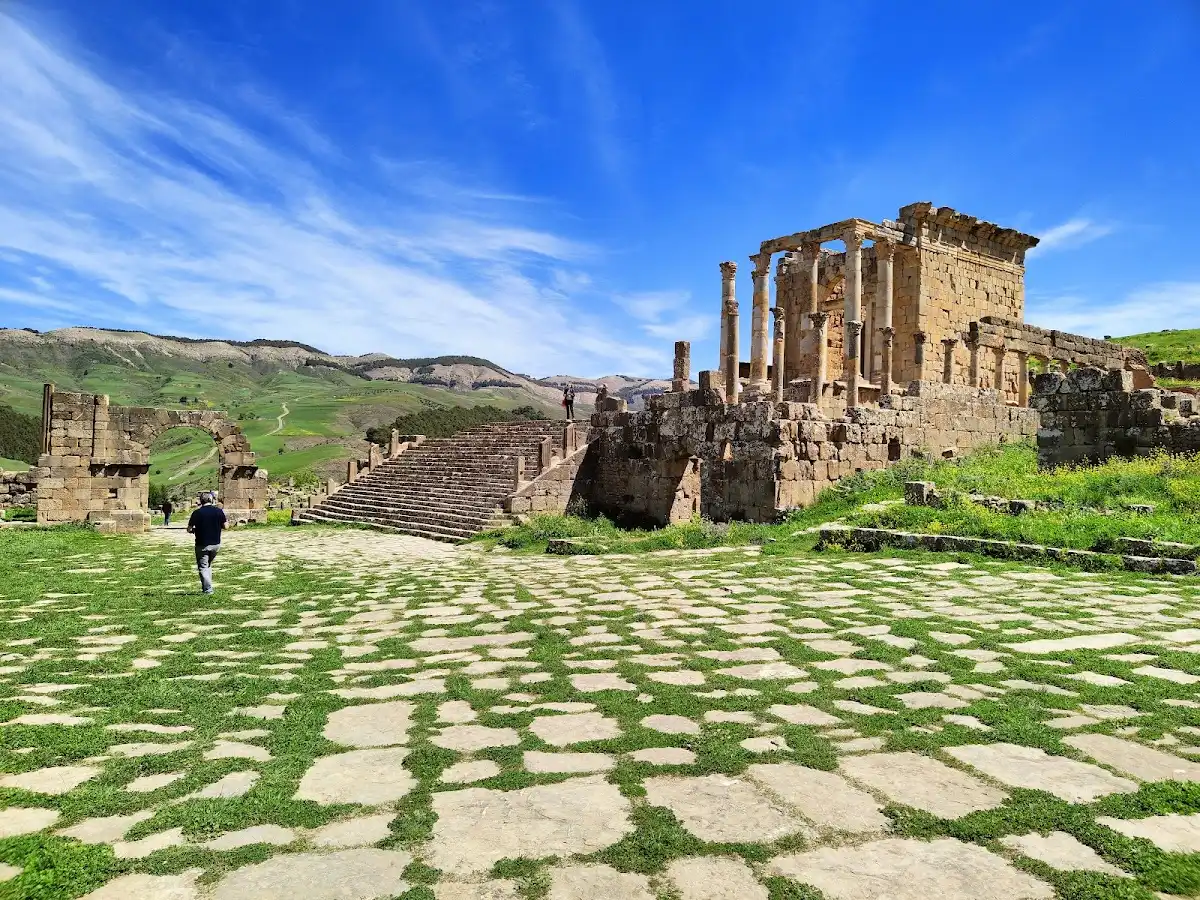
Djémila is a Roman town, not a Berber or Ottoman one, and its ancient name was Cuicul. Many visitors expect a single column field like Timgad, yet this is a whole hillside town. It sits in the north of Algeria, northeast of Sétif, in the Kabylie hills, with a UNESCO listing since 1982. The stone is warm pink and gray limestone, rough under your palm, and the wind carries thyme and sheep dung across the forum. Cicadas drone in summer, and the ground is stony and uneven, so sturdy shoes matter. The Forum, the Severan Temple and the Cardo are worth your time. The small museum is thin on atmosphere, though its mosaics are good. Crowds are almost absent, which makes photos easy. Unlike Timgad, with its rigid grid on a flat plain, Djémila follows a mountain spur, and the setting beats the ruins.

Discover everything you want to know in the 📖 Algeria Travel Guide.


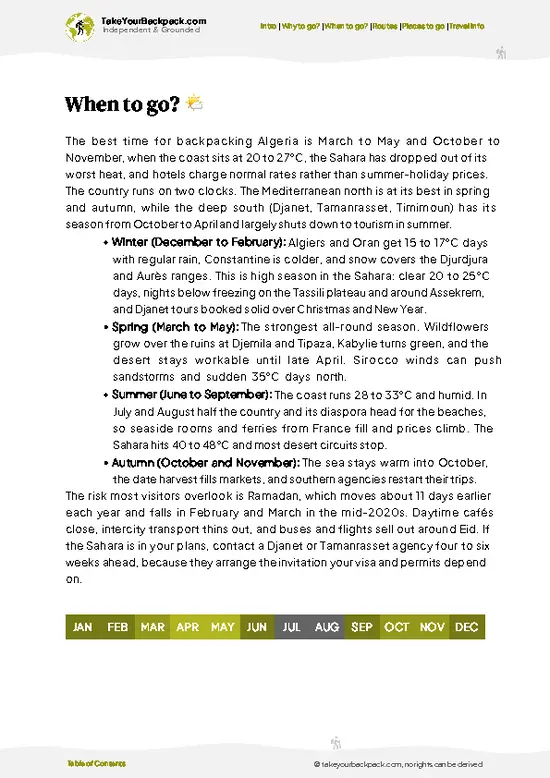
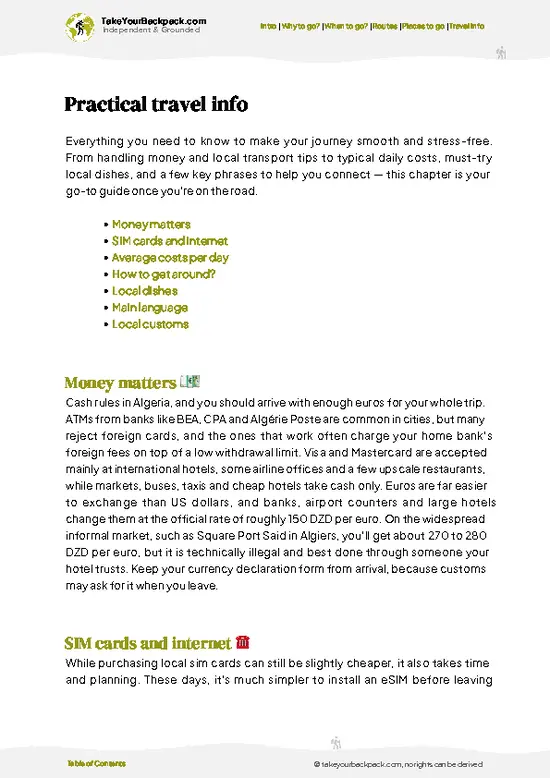
example page 0 from our offline Travel Guide for Algeria
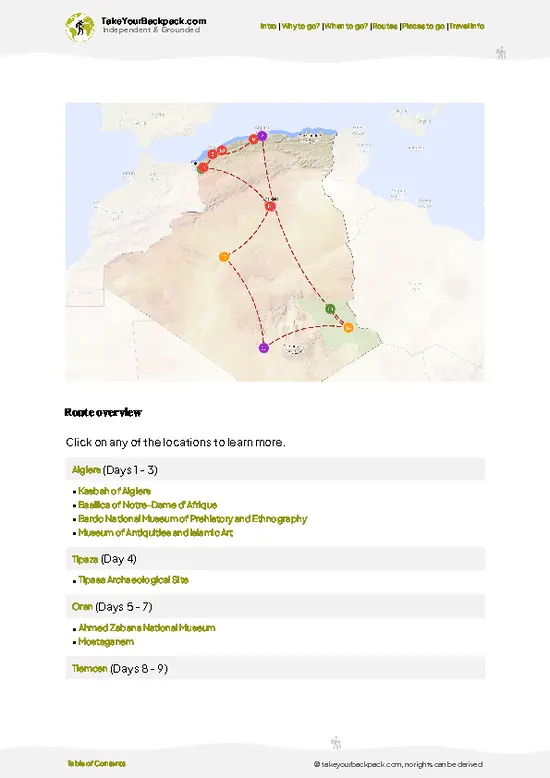
example page 1 from our offline Travel Guide for Algeria
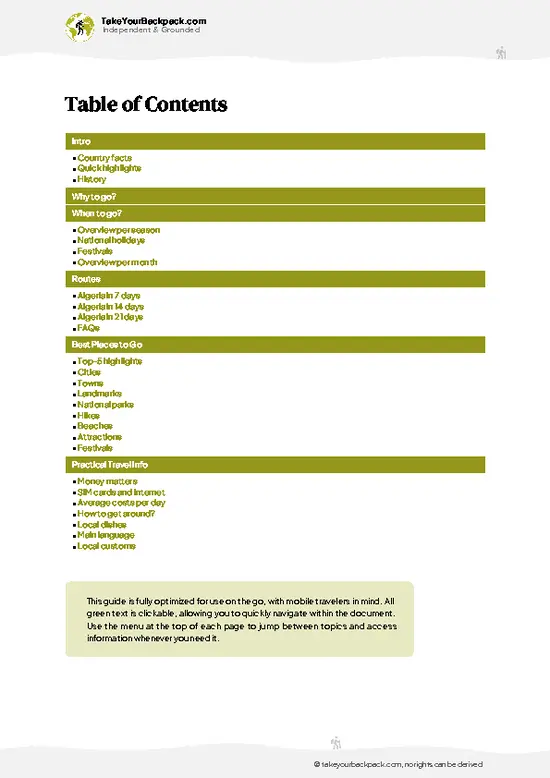
example page 2 from our offline Travel Guide for Algeria
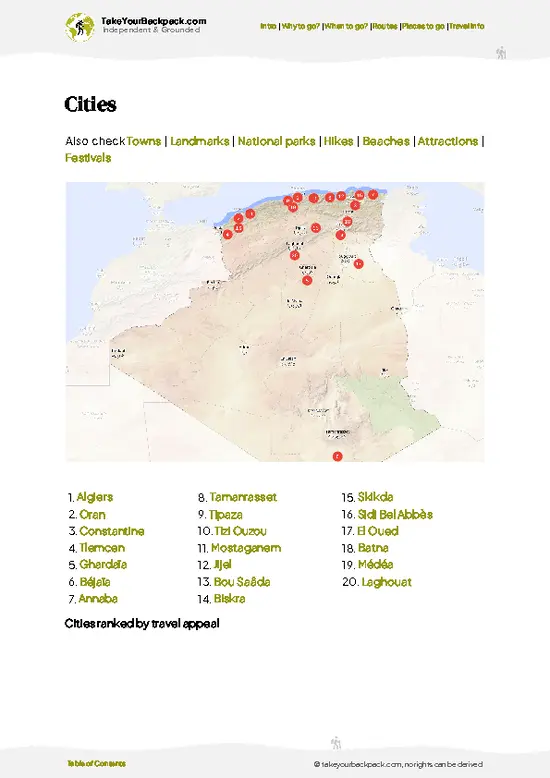
example page 3 from our offline Travel Guide for Algeria
example page 4 from our offline Travel Guide for Algeria
example page 5 from our offline Travel Guide for Algeria
example page 6 from our offline Travel Guide for Algeria
example page 7 from our offline Travel Guide for Algeria
Loading the map 🌍
CLICK TO FILTER
cities
towns
landmarks
national parks
hikes
beaches
attractions
festivals
SHOW COUNTRY’S BESTSHOW ALL

✨ Why go?
Ranked #4 unique site in Algeria
Why Djémila should be on your travel list

Djémila rewards the effort because you can walk among two thousand year old streets with perhaps a handful of other visitors. Few Roman sites in the Mediterranean offer that silence. The town clings to a spur between two ravines, so the Wadi Guergour and Wadi Bou Merzoug gorges frame almost every view. That setting is unlike the flat, gridded ruins at Timgad or Tipasa.
The site also works well inside a broader Algerian route. It pairs naturally with Sétif, whose museum holds mosaics found in the region, and with the coastal city of Béjaïa, so you can mix hills, sea and ruins in one loop. Travelers who like the standard Roman circuit of Italy or Tunisia will find the Severan Temple and the Cuicul Forum as impressive and far less polished. Entry costs very little, there are no barriers or rope … read more 👉
Djémila rewards the effort because you can walk among two thousand year old streets with perhaps a handful of other visitors. Few Roman sites in the Mediterranean offer that silence. The town clings to a spur between two ravines, so the Wadi Guergour and Wadi Bou Merzoug gorges frame almost every view. That setting is unlike the flat, gridded ruins at Timgad or Tipasa.
The site also works well inside a broader Algerian route. It pairs naturally with Sétif, whose museum holds mosaics found in the region, and with the coastal city of Béjaïa, so you can mix hills, sea and ruins in one loop. Travelers who like the standard Roman circuit of Italy or Tunisia will find the Severan Temple and the Cuicul Forum as impressive and far less polished. Entry costs very little, there are no barriers or rope lines, and you can wander for hours. If you want ancient history without a tour group in your frame, this is the place in North Africa.

💡 HighlightsDon't-miss highlights and experiences

  1. Forum of Cuicul: The paved main square is the heart of the site, ringed by the temple, basilica and arch. Standing on its limestone slabs gives you the best sense of the town’s scale.
  2. Temple of Septimius Severus: Built in the early third century, it stands on a high podium reached by a broad staircase. The rising terrace makes it the most photographed spot.
  3. Arch of Caracalla: A triumphal arch from the early third century, set at the northern edge of the city. Its pale stone frames the green valley behind it.
  4. Cosmological House and Christian Quarter: The ruins of the basilica and baptistery show how the town shifted to Christianity. The big baptismal basin is worth a look.
  5. Roman Theater: Cut into the slope outside the main grid, it held several thousand spectators. From the upper tiers you see
… read more 👉
  1. Forum of Cuicul: The paved main square is the heart of the site, ringed by the temple, basilica and arch. Standing on its limestone slabs gives you the best sense of the town’s scale.
  2. Temple of Septimius Severus: Built in the early third century, it stands on a high podium reached by a broad staircase. The rising terrace makes it the most photographed spot.
  3. Arch of Caracalla: A triumphal arch from the early third century, set at the northern edge of the city. Its pale stone frames the green valley behind it.
  4. Cosmological House and Christian Quarter: The ruins of the basilica and baptistery show how the town shifted to Christianity. The big baptismal basin is worth a look.
  5. Roman Theater: Cut into the slope outside the main grid, it held several thousand spectators. From the upper tiers you see the gorge and the hills.
  6. Djémila Museum: A small museum with mosaics, including scenes of the hunt and mythology. The colors are surprisingly fresh, and it is the best place to understand the details you saw outside.
  7. Market of Cosinius: A well preserved Roman market with a measuring table, where merchants once checked their goods. It is an easy detail to miss and a good one to find.
  8. Cardo Maximus and Decumanus: The narrow main streets still show cart ruts and paving. Walking them gives a feel for daily life in a mountain town.
The open-air ruins and the Roman streets cost almost nothing to wander on arrival, and the museum is usually the item with a separate small fee.
Spotted a mistake or missing something? Contact us.
🌤️ When to go?When to go for the best experience

  • Spring (April to June): Djémila is at its easiest from April to early June, with highs of 18 to 27°C (64 to 81°F) and green fields around the Roman ruins at about 900 meters. Days are long enough to cover the whole site, and wildflowers are out in April and May.
  • Summer (July to August): Highs reach 30 to 35°C (86 to 95°F) with little shade among the ruins. Algerian families visit in numbers, and prices in nearby Sétif and Djémila itself rise slightly. Go at opening time or in late afternoon.
  • Autumn (September to October): Highs of 20 to 29°C (68 to 84°F) and thinner crowds make this a very comfortable window, with golden light on the limestone.
  • Winter (November to March): Highs of 6 to 13°C (43 to 55°F), with rain, frost and occasional snow on the Sétif plateau. Days are short, so you will have
… read more 👉
  • Spring (April to June): Djémila is at its easiest from April to early June, with highs of 18 to 27°C (64 to 81°F) and green fields around the Roman ruins at about 900 meters. Days are long enough to cover the whole site, and wildflowers are out in April and May.
  • Summer (July to August): Highs reach 30 to 35°C (86 to 95°F) with little shade among the ruins. Algerian families visit in numbers, and prices in nearby Sétif and Djémila itself rise slightly. Go at opening time or in late afternoon.
  • Autumn (September to October): Highs of 20 to 29°C (68 to 84°F) and thinner crowds make this a very comfortable window, with golden light on the limestone.
  • Winter (November to March): Highs of 6 to 13°C (43 to 55°F), with rain, frost and occasional snow on the Sétif plateau. Days are short, so you will have the forum nearly to yourself, though the ground can be slick and muddy.
Check the bus and taxi schedule in Sétif the day before, because winter weather can slow down the mountain road.


source: climatestotravel.comJANJanuary: fair for travelingFEBFebruary: fair for travelingMARMarch: good for travelingAPRApril: excellent for travelingMAYMay: excellent for travelingJUNJune: excellent for travelingJULJuly: below average for travelingAUGAugust: below average for travelingSEPSeptember: excellent for travelingOCTOctober: excellent for travelingNOVNovember: good for travelingDECDecember: fair for traveling
algeria-unique-site-djemila
© Google |

✈️ The backpacker research shortcutAlgeria Travel Guide

An offline-friendly backpacking guide with optimized travel routes, ranked highlights, transport advice, and the best areas to stay.
example page 0 from our offline Travel Guide for Algeria
example page 1 from our offline Travel Guide for Algeria
example page 2 from our offline Travel Guide for Algeria
example page 3 from our offline Travel Guide for Algeria
example page 4 from our offline Travel Guide for Algeria
example page 5 from our offline Travel Guide for Algeria
example page 6 from our offline Travel Guide for Algeria
example page 7 from our offline Travel Guide for Algeria
The digital guide (314 pages) contains:
✅ 79 highlights, ranked by travel appeal
✅ Optimized 7, 14 & 21-day travel routes
✅ Cities, national parks, landmarks, beaches
✅ How to get around
✅ Offline-friendly for travel without Wi-Fi
👉 Click to see all 30+ guide features

📅 Plan smarter in minutes, not weeks
✅ Month by month travel advice
✅ Festivals & national holidays
✅ Budget expectations

🗺️ Go to the right places, skip the overrated ones
✅ Honest pros & cons of destinations
✅ Top hikes, parks & viewpoints
✅ Lesser-known places most travelers miss
✅ Clear “worth it vs skip it” guidance

🛏️ Travel smoothly without rookie mistakes
✅ Best areas to stay
✅ Transport systems explained simply
✅ Common scams & safety advice
✅ SIM cards, money & practical tips

🌍 Understand the country, not just visit it
✅ Culture & traditions
✅ 52 Essential phrases & customs
✅ Festivals worth planning around
✅ Traveler-friendly historical context
✅ Insights that make places more meaningful

📱 Built for real travel conditions
✅ Fully downloadable PDF
✅ Works completely offline
✅ Optimized for phone use
✅ Useful in remote areas & buses
✅ Everything in one place
Stop searching, start planning
Get instant access to your full guide. 30‑day money-back guarantee.
+ Add another guide for just

By proceeding you agree to our terms.
Sent to your inbox immediately after payment • 100% Secure Checkout
Best Backpacking Travel Advisor 2025 tourism awardBest Backpacking
Travel Advisor
2025
What others say about Take Your Backpack Guides:
⭐⭐⭐⭐⭐
Fantastic, amazing amount of information!
⭐⭐⭐⭐⭐
My goodness this is amazing, it's what I've been looking for hats off too you!
⭐⭐⭐⭐⭐
I think this is absolutely BRILLIANT
⭐⭐⭐⭐
Very complete and informative. It's still missing places, but I gotta to commend you
⭐⭐⭐⭐⭐
This is truly amazing, thank you, can't wait to explore it with my kids!
⭐⭐⭐⭐⭐
Awesome resource, thank you!
⭐⭐⭐⭐⭐
This is amazing! Can't wait to explore the ones I haven't seen
⭐⭐⭐⭐
I love this! Well done, great idea.
⭐⭐⭐⭐⭐
Thanks for taking the time to make this gem!
⭐⭐⭐⭐⭐
This might be the best website I've ever seen.
⭐⭐⭐⭐⭐
Congratulations, and thank you so much for your work; it's incredibly valuable.
⭐⭐⭐⭐
In all seriousness I think you did a great job pointing out the important spots
⭐⭐⭐⭐⭐
10/10 very good
⭐⭐⭐⭐⭐
As someone who's only just starting to visit regularly this is awesome, thank you.
⭐⭐⭐⭐
Thank you very much! I'm going to visit my dad, it's going to be very useful!
⭐⭐⭐⭐⭐
This is really cool! We'll be travelling for the first time and this definitely come in handy.
⭐⭐⭐⭐⭐
You are now our minister of culture, congratulations 👨‍💼
⭐⭐⭐⭐⭐
Just wanted to tell you that this is a pearl! Going to follow your recommendations.
⭐⭐⭐⭐⭐
This is so cool. I'll definitely be using the resource for my travels soon.
⭐⭐⭐⭐⭐
This is very impressive! Good work.
⭐⭐⭐⭐⭐
This is an amazing and informative site. Very well done!

🛏️ Where to stay?Choosing the right base

Sétif is the best base for backpackers visiting Djémila, because it has the regional transport hub, the most budget accommodation and a lively student population. The city sits roughly 50 kilometers from the ruins, and shared taxis and buses run from its stations to the site area on most days. Stay near the center around the Ain Fouara fountain, where cafés, bakeries and cheap grill restaurants stay open into the evening and you can easily meet local students and other travelers. Streets here are busy and feel comfortable for solo visitors, including after dark. Look for simple guesthouses and … read more 👉
Sétif is the best base for backpackers visiting Djémila, because it has the regional transport hub, the most budget accommodation and a lively student population. The city sits roughly 50 kilometers from the ruins, and shared taxis and buses run from its stations to the site area on most days. Stay near the center around the Ain Fouara fountain, where cafés, bakeries and cheap grill restaurants stay open into the evening and you can easily meet local students and other travelers. Streets here are busy and feel comfortable for solo visitors, including after dark. Look for simple guesthouses and budget hotels within walking distance of the main avenues so you can reach the station without a taxi. A second option is the village of Djémila, which has only a handful of basic lodgings and few places to eat. It suits those who want to be at the gates at opening time and have the ruins nearly to themselves in the early morning. Book ahead in summer and on weekends, when domestic visitors fill the village rooms. Most travelers choose Sétif for flexibility and day-trip the site.

👛 Costs (as of 22 October 2026)Money, prices, and spending tips

Djémila costs most independent travelers about US$40 a day, with the entry ticket being one of the smallest items. Algerian dinars are used for all payments, and cards are rarely accepted outside larger hotels.
CategoryBudget RangeLocal Reality
Site entryUS$1 to 3Foreign visitors pay a small fee for the ruins and a separate small fee for the museum.
Accommodation (high season)US$15 to 25Basic hotels and guesthouses in Sétif; prices rise in summer and on weekends.
Accommodation (low season)US$10 to 20Winter rooms are easier to find and often negotiable.
TransportUS$5 to 12Shared taxi or bus between Sétif and Djémila; a private taxi round trip with waiting costs more.
FoodUS$6 to 10Grilled meat, sandwiches, couscous and bakery snacks; sit-down meals are inexpensive.
Guide (optional)US$0 to 5Informal
… read more 👉
Djémila costs most independent travelers about US$40 a day, with the entry ticket being one of the smallest items. Algerian dinars are used for all payments, and cards are rarely accepted outside larger hotels.
CategoryBudget RangeLocal Reality
Site entryUS$1 to 3Foreign visitors pay a small fee for the ruins and a separate small fee for the museum.
Accommodation (high season)US$15 to 25Basic hotels and guesthouses in Sétif; prices rise in summer and on weekends.
Accommodation (low season)US$10 to 20Winter rooms are easier to find and often negotiable.
TransportUS$5 to 12Shared taxi or bus between Sétif and Djémila; a private taxi round trip with waiting costs more.
FoodUS$6 to 10Grilled meat, sandwiches, couscous and bakery snacks; sit-down meals are inexpensive.
Guide (optional)US$0 to 5Informal guides at the entrance offer tours; agree on a price first.
Total Daily BudgetUS$37 to 53About US$40 a day for a day trip from Sétif, with a modest room.


source: algeria.com
⚠️ Prices can change and everyone travels differently, so take this as a rough guide. Hope it helps you plan your adventure!

FAQTraveler FAQ

Djémila is a UNESCO-listed Roman town, ancient Cuicul, set in the mountains of northeastern Algeria. Its well-preserved forum, temples, triumphal arch and basilicas date from the 1st to 4th centuries, and a museum holds fine mosaics. It lies about 50 kilometers from Sétif and is one of the best Roman sites in North Africa.
Djémila needs about 2 to 3 hours for the main ruins and the museum, and a full morning if you like to photograph and linger. Add travel time from Sétif, usually 1 to 1.5 hours each way, so a day trip is realistic. Staying overnight in the village lets you see the site at opening time before tour groups arrive.
To reach Djémila, travel first to Sétif, which has trains from Algiers and Constantine and a major bus station. From there, shared taxis and buses run toward Djémila village in about 1 to 1.5 hours for roughly US$3 to 6, and a private taxi round trip costs more. The ruins are a short walk from the village, and the mountain road can be slow in winter.
⚠️ Things can change over time, so always validate details locally before you go.

Other Algerian landmarks near Djémila

Explore more nearby:

  • Timgad—Trajan’s arch, gridded streets, plateau ruins, Roman library| 113 km away
  • Hammam Debagh—Steaming travertine, boiling spring, sulfur air, thermal pools| 138 km away
  • Ghoufi Balconies—Canyon rim, cliff houses, palm floor, Chaoui villages| 146 km away

💡 Not sure where to go next?
Create a personalized itinerary for Algeria including Djémila and the places that fit your trip.

Generate my itinerary

👉 Discover all landmarks

Or checkout all Algeria has to offer (think cities, towns, villages, national parks, hikes, beaches, festivals)
Country photo of Algeria

We 💚 feedbackSumming up the experience

Djémila trips often go wrong when travelers arrive at midday and rush the ruins in an hour. Come early, or stay late, because the stone cools and the valley fills with soft shadows. I would bring a hat, plenty of water and sturdy shoes, and I would save the museum for last.

✍️ Help improve this page!
The information on this page is based on in-depth research, insights shared by experienced travelers, and feedback from the local travel community in Algeria. While every effort is made to keep the information accurate and current, conditions can change — so if you spot anything incorrect or outdated, please get in touch.


🙋‍♂️ Give feedback

👋 Meet the founderWho’s Behind Take Your Backpack?

Johan, backpacker and founder of TakeYourBackpackHi, I’m Johan (Netherlands 🇳🇱), the creator of TakeYourBackpack. Over the past 3 decades, I’ve backpacked through 90+ countries across six continents, gaining extensive experience with independent travel, long-term trips, and overland routes.

This site is built on a combination of firsthand travel experience and carefully curated insights from other backpackers. Many guides are based on places I’ve personally visited, while others bring together tips, observations, and practical advice shared by trusted travelers I’ve met along the way.

The goal is to provide realistic, experience-driven guidance — not generic itineraries — so you can explore destinations with better context, clearer expectations, and more confidence.