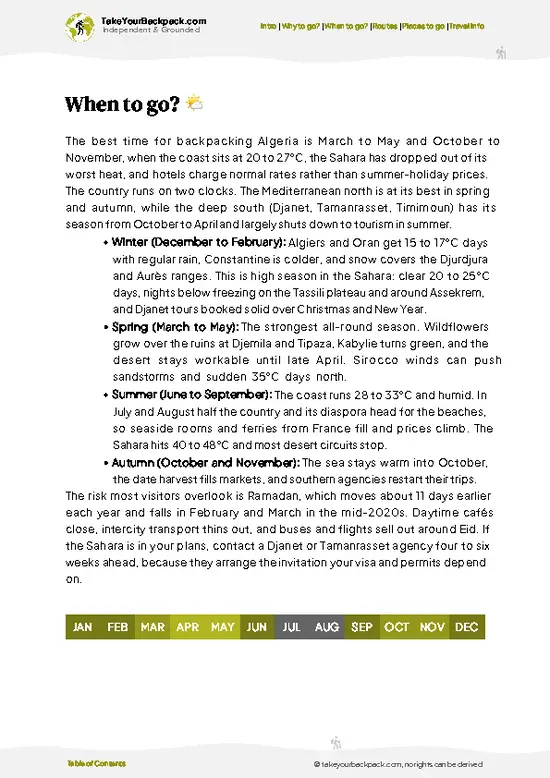
Great Mosque of Tlemcen (Masjid Agadir)
This 12th-century Almoravid mosque is the city’s architectural anchor. The prayer hall’s forest of horseshoe arches and the intricate mihrab are a crash course in Maghrebi design—no filter needed. Non-Muslims can’t enter during prayers, but the courtyard and exterior are fair game. Early morning or late afternoon is best for soft light and fewer crowds. Free entry. Allow 30-45 minutes if you’re not joining prayers; longer if you linger over the details.
El Mechouar Palace
A fortress-palace hybrid, El Mechouar is where Tlemcen’s sultans played chess with history. The restored courtyards, Andalusian tilework, and echoing halls are a tactile lesson in dynastic ambition. The attached museum covers everything from Berber jewelry to colonial intrigue. Go … read more 👉
This 12th-century Almoravid mosque is the city’s architectural anchor. The prayer hall’s forest of horseshoe arches and the intricate mihrab are a crash course in Maghrebi design—no filter needed. Non-Muslims can’t enter during prayers, but the courtyard and exterior are fair game. Early morning or late afternoon is best for soft light and fewer crowds. Free entry. Allow 30-45 minutes if you’re not joining prayers; longer if you linger over the details.
El Mechouar Palace
A fortress-palace hybrid, El Mechouar is where Tlemcen’s sultans played chess with history. The restored courtyards, Andalusian tilework, and echoing halls are a tactile lesson in dynastic ambition. The attached museum covers everything from Berber jewelry to colonial intrigue. Go … read more 👉
Great Mosque of Tlemcen (Masjid Agadir)
This 12th-century Almoravid mosque is the city’s architectural anchor. The prayer hall’s forest of horseshoe arches and the intricate mihrab are a crash course in Maghrebi design—no filter needed. Non-Muslims can’t enter during prayers, but the courtyard and exterior are fair game. Early morning or late afternoon is best for soft light and fewer crowds. Free entry. Allow 30-45 minutes if you’re not joining prayers; longer if you linger over the details.
El Mechouar Palace
A fortress-palace hybrid, El Mechouar is where Tlemcen’s sultans played chess with history. The restored courtyards, Andalusian tilework, and echoing halls are a tactile lesson in dynastic ambition. The attached museum covers everything from Berber jewelry to colonial intrigue. Go mid-morning to dodge school groups. Entry is modest (expect under 500 DZD). You’ll want at least an hour, but history buffs could easily double that.
Lalla Setti Plateau
Ride the cable car or brave the winding road—either way, the plateau is Tlemcen’s panoramic trump card. The city sprawls below, the mountains flex on the horizon, and the air is a notch cooler. There’s a café, a park, and space to breathe. Sunset is the jackpot, but weekends get busy with local families. Cable car tickets are affordable (under 200 DZD round trip). Plan for 1-2 hours, more if you picnic or wander.
Sidi Boumediene Mosque & Quarter
This isn’t just a mosque—it’s a pilgrimage site, a Sufi stronghold, and a living neighborhood. The tiled tomb of Sidi Boumediene draws devotees, but the surrounding alleys are pure Tlemcen: blue doors, citrus trees, and the hum of daily life. Respectful visitors are welcome outside prayer times. Free entry, but bring small change for local guides or tea. Best in the morning, when the light is gentle and the quarter is waking up. 45-60 minutes is enough for most.
National Museum of Tlemcen
Skip the generic museums—this one is a deep dive into Tlemcen’s layered identity. Roman mosaics, medieval ceramics, and Berber textiles are all here, curated with more care than flash. It’s compact but dense. Go midday to escape the heat. Entry is a bargain (typically under 300 DZD). 30-45 minutes is plenty unless you’re a detail hound.
El Kiffane Caves (Grotte de Beni Add)
Technically just outside the city but easily reached by taxi, these limestone caves are a cool, otherworldly detour. Stalactites, echo chambers, and a whiff of adventure—plus, it’s a favorite with local families. Guided tours run regularly. Go early to avoid crowds and maximize the eerie quiet. Entry and guide fees are reasonable (under 500 DZD). Allow 1-1.5 hours.
If you’re hungry for more, Tlemcen is the launchpad for day trips to Mansourah’s ruined minaret, the waterfalls at El-Ourit, and the forested trails of Tlemcen National Park—each a worthy extension if you want to see how the city’s story spills into the hills.
This 12th-century Almoravid mosque is the city’s architectural anchor. The prayer hall’s forest of horseshoe arches and the intricate mihrab are a crash course in Maghrebi design—no filter needed. Non-Muslims can’t enter during prayers, but the courtyard and exterior are fair game. Early morning or late afternoon is best for soft light and fewer crowds. Free entry. Allow 30-45 minutes if you’re not joining prayers; longer if you linger over the details.
El Mechouar Palace
A fortress-palace hybrid, El Mechouar is where Tlemcen’s sultans played chess with history. The restored courtyards, Andalusian tilework, and echoing halls are a tactile lesson in dynastic ambition. The attached museum covers everything from Berber jewelry to colonial intrigue. Go mid-morning to dodge school groups. Entry is modest (expect under 500 DZD). You’ll want at least an hour, but history buffs could easily double that.
Lalla Setti Plateau
Ride the cable car or brave the winding road—either way, the plateau is Tlemcen’s panoramic trump card. The city sprawls below, the mountains flex on the horizon, and the air is a notch cooler. There’s a café, a park, and space to breathe. Sunset is the jackpot, but weekends get busy with local families. Cable car tickets are affordable (under 200 DZD round trip). Plan for 1-2 hours, more if you picnic or wander.
Sidi Boumediene Mosque & Quarter
This isn’t just a mosque—it’s a pilgrimage site, a Sufi stronghold, and a living neighborhood. The tiled tomb of Sidi Boumediene draws devotees, but the surrounding alleys are pure Tlemcen: blue doors, citrus trees, and the hum of daily life. Respectful visitors are welcome outside prayer times. Free entry, but bring small change for local guides or tea. Best in the morning, when the light is gentle and the quarter is waking up. 45-60 minutes is enough for most.
National Museum of Tlemcen
Skip the generic museums—this one is a deep dive into Tlemcen’s layered identity. Roman mosaics, medieval ceramics, and Berber textiles are all here, curated with more care than flash. It’s compact but dense. Go midday to escape the heat. Entry is a bargain (typically under 300 DZD). 30-45 minutes is plenty unless you’re a detail hound.
El Kiffane Caves (Grotte de Beni Add)
Technically just outside the city but easily reached by taxi, these limestone caves are a cool, otherworldly detour. Stalactites, echo chambers, and a whiff of adventure—plus, it’s a favorite with local families. Guided tours run regularly. Go early to avoid crowds and maximize the eerie quiet. Entry and guide fees are reasonable (under 500 DZD). Allow 1-1.5 hours.
If you’re hungry for more, Tlemcen is the launchpad for day trips to Mansourah’s ruined minaret, the waterfalls at El-Ourit, and the forested trails of Tlemcen National Park—each a worthy extension if you want to see how the city’s story spills into the hills.
Spotted a mistake or missing something? Contact us.
v2.webp)

Best Backpacking
Hi, I’m Johan (Netherlands 🇳🇱), the creator of TakeYourBackpack. Over the past decade, I’ve backpacked through 80+ countries across six continents, gaining extensive experience with independent travel, long-term trips, and overland routes.