×

American Samoa🇦🇸 | villagesAunu’uCar-free island, red crater lake, quicksand swamp, lava coast | things to do and best time to go

Explore AmouliExplore Tula

Backpacking in Aunu’u
🌟 Highlightvillage ranked #2
By Johan Kruseman 🇳🇱 | Updated October 16, 2026

Aunu’u hands you a car-free island in one easy morning, with no itinerary to plan. It sits just off the southeastern tip of Tutuila in American Samoa, and the village is the only settlement on it. Trails cross taro plots and bush to a red crater lake and a quicksand swamp, and a rough coastal edge sits on the far side. The downsides are plain: no real nightlife, almost no places to eat, and little to do once you have walked the loop. Most travelers come as a half-day outing from the Pago Pago side, so evenings are quiet and you will rarely meet other backpackers unless you arrive with them. Go on a weekday, since Sunday shuts the island down for church. Wear shoes you do not mind getting muddy. Bring your own water and snacks. Carry small bills and confirm the last boat back before you start walking.

Discover everything you want to know in the 📖 American Samoa Travel Guide.


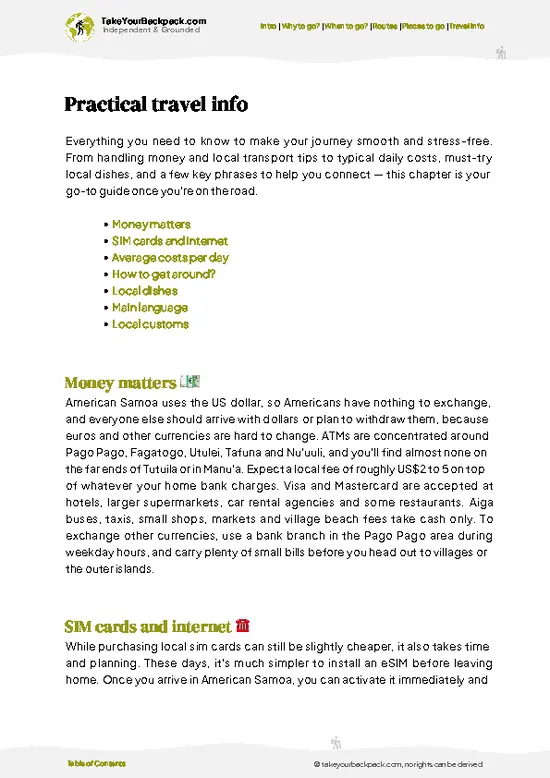
example page 0 from our offline Travel Guide for American Samoa
example page 1 from our offline Travel Guide for American Samoa
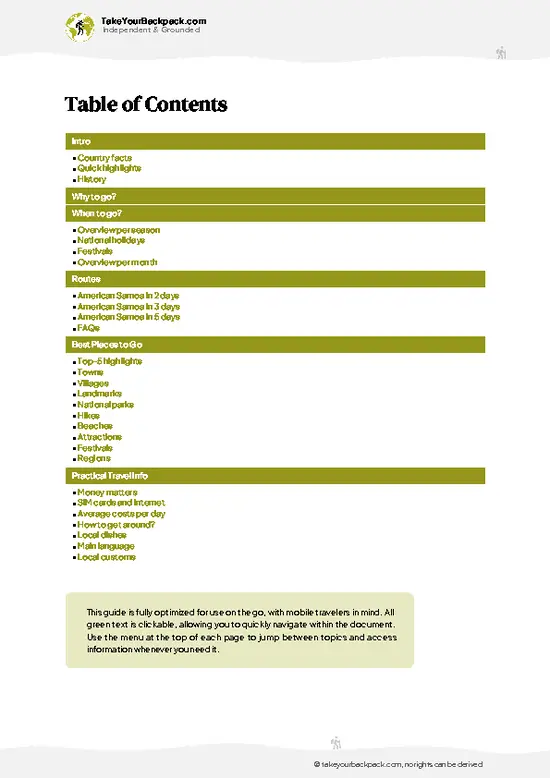
example page 2 from our offline Travel Guide for American Samoa
example page 3 from our offline Travel Guide for American Samoa
example page 4 from our offline Travel Guide for American Samoa
example page 5 from our offline Travel Guide for American Samoa
example page 6 from our offline Travel Guide for American Samoa
example page 7 from our offline Travel Guide for American Samoa
Loading the map 🌍
CLICK TO FILTER
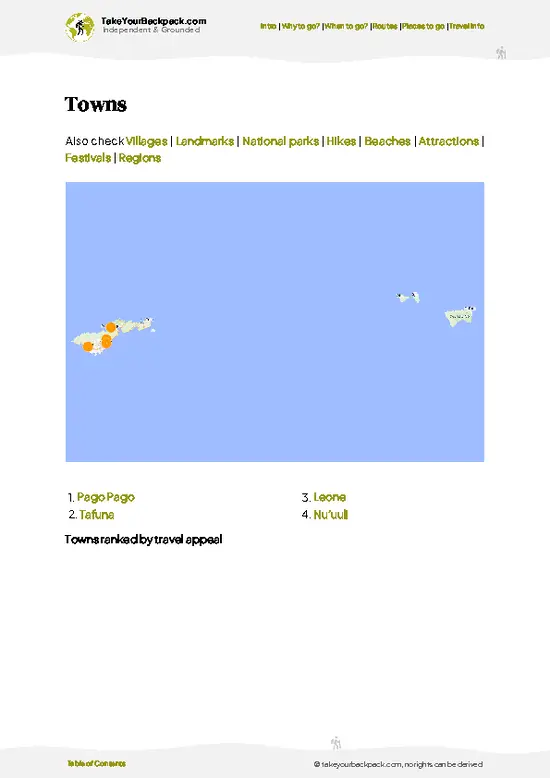
towns
villages
landmarks
national parks
hikes
beaches
attractions
festivals
regions
SHOW COUNTRY’S BESTSHOW ALL

✨ Why go?
Ranked #2 village in American Samoa
Reasons people choose to visit here

Backpackers come to Aunu’u for something the main island rarely offers: a working Samoan village where people still outnumber vehicles, and where a stroll turns into a conversation. The island is small enough that you can walk the whole loop in a few hours, yet it holds a red crater lake, a quicksand swamp called Pala Lake and a wild shoreline, all within sight of Tutuila’s ridges. That density is the appeal. It suits hikers who like short, muddy, low-stakes trails, and slow travelers who would rather greet the people they pass than tick off sights. Couples and solo travelers both fit in easily, because people say hello, and it never feels like a hangout scene. Most visitors stay for an afternoon, and that is the right call for most. Linger only if you have arranged a family stay in advance … read more 👉
Backpackers come to Aunu’u for something the main island rarely offers: a working Samoan village where people still outnumber vehicles, and where a stroll turns into a conversation. The island is small enough that you can walk the whole loop in a few hours, yet it holds a red crater lake, a quicksand swamp called Pala Lake and a wild shoreline, all within sight of Tutuila’s ridges. That density is the appeal. It suits hikers who like short, muddy, low-stakes trails, and slow travelers who would rather greet the people they pass than tick off sights. Couples and solo travelers both fit in easily, because people say hello, and it never feels like a hangout scene. Most visitors stay for an afternoon, and that is the right call for most. Linger only if you have arranged a family stay in advance and want to see island life after the boats stop. Treat it as a quiet counterweight to the busier bays and beaches on the main island.

💡 HighlightsThe experiences that define the visit

  1. Red Lake: The island’s best-known sight is a small crater lake with a rusty, reddish tint, reached by a path through village plantations. Go in the morning, when the light is soft and the mud is less churned up. It is usually free or costs a few dollars as a village courtesy, and a visit takes 30 to 45 minutes.
  2. Pala Lake: This quicksand swamp sits inland and is protected as part of the island’s natural landmark. Look from the edge and treat it with respect, because the ground is soft and unstable. Dry mornings are best for the approach. Plan about 30 to 60 minutes including the walk, with no set fee beyond a small village contribution if asked.
  3. The south coast walk: The loop that leads along the rocky shoreline gives you raw sea views, crashing swells and thick coastal bush, and few other walkers.
… read more 👉
  1. Red Lake: The island’s best-known sight is a small crater lake with a rusty, reddish tint, reached by a path through village plantations. Go in the morning, when the light is soft and the mud is less churned up. It is usually free or costs a few dollars as a village courtesy, and a visit takes 30 to 45 minutes.
  2. Pala Lake: This quicksand swamp sits inland and is protected as part of the island’s natural landmark. Look from the edge and treat it with respect, because the ground is soft and unstable. Dry mornings are best for the approach. Plan about 30 to 60 minutes including the walk, with no set fee beyond a small village contribution if asked.
  3. The south coast walk: The loop that leads along the rocky shoreline gives you raw sea views, crashing swells and thick coastal bush, and few other walkers. It is best in the cooler first half of the day. Allow 2 to 3 hours with stops, and expect no entry fee. Wear sturdy sandals or shoes, since lava rock is sharp.
For day trips from the island, the nearby Tutuila coast offers Tia Seu Lupe near Tafuna, the beach at Alega, and the harbor scenery around Pago Pago. The part most visitors miss is the village itself, where the gardens, church grounds and open lawns between the houses show more of daily Samoan life than any lake does.
Spotted a mistake or missing something? Contact us.

🌤️ When to go?When to go for the best experience

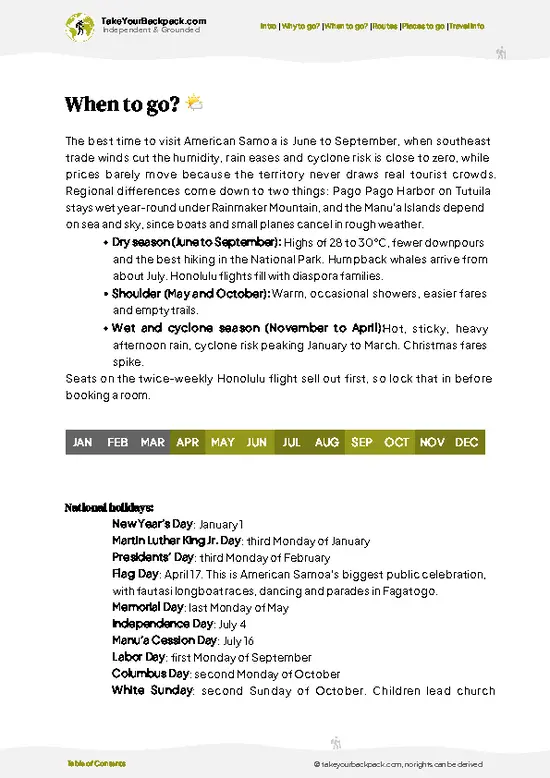
  • Dry Season (May to October): Aunu’u is easiest to visit from May to October, when showers thin out and the boat crossing from Au‘asi is calmer. Highs run 28 to 31°C (82 to 88°F), nights 23 to 25°C (73 to 77°F), and the trails to the crater and Red Lake stay firmer underfoot.
  • Wet Season (November to April): Expect heavy downpours, humidity, and the occasional cyclone warning. Temperatures sit near 27 to 31°C (81 to 88°F). The crater floor and the quicksand-prone swamp edges turn soupy, and rough seas can cancel boats.
  • Daylight: Sunrise and sunset shift only about an hour through the year, with roughly 11 to 13 hours of light. Plan to be back at the dock well before dusk.
  • Crowds and Prices: The island sees few visitors in any month, and the boat fare does not change seasonally. Flag Day (April
… read more 👉
  • Dry Season (May to October): Aunu’u is easiest to visit from May to October, when showers thin out and the boat crossing from Au‘asi is calmer. Highs run 28 to 31°C (82 to 88°F), nights 23 to 25°C (73 to 77°F), and the trails to the crater and Red Lake stay firmer underfoot.
  • Wet Season (November to April): Expect heavy downpours, humidity, and the occasional cyclone warning. Temperatures sit near 27 to 31°C (81 to 88°F). The crater floor and the quicksand-prone swamp edges turn soupy, and rough seas can cancel boats.
  • Daylight: Sunrise and sunset shift only about an hour through the year, with roughly 11 to 13 hours of light. Plan to be back at the dock well before dusk.
  • Crowds and Prices: The island sees few visitors in any month, and the boat fare does not change seasonally. Flag Day (April 17) and Christmas week bring returning families and a livelier village.
Go on a weekday morning, since boat service thins out later in the day and on Sundays.


source: climatestotravel.comJANJanuary: fair for travelingFEBFebruary: fair for travelingMARMarch: fair for travelingAPRApril: good for travelingMAYMay: excellent for travelingJUNJune: excellent for travelingJULJuly: highly recommended for travelingAUGAugust: highly recommended for travelingSEPSeptember: highly recommended for travelingOCTOctober: good for travelingNOVNovember: fair for travelingDECDecember: fair for traveling
american-samoa-city-aunuu
© Google | Mark G

✈️ The backpacker research shortcutAmerican Samoa Travel Guide

An offline-friendly backpacking guide with optimized travel routes, ranked highlights, transport advice, and the best areas to stay.
example page 0 from our offline Travel Guide for American Samoa
example page 1 from our offline Travel Guide for American Samoa
example page 2 from our offline Travel Guide for American Samoa
example page 3 from our offline Travel Guide for American Samoa
example page 4 from our offline Travel Guide for American Samoa
example page 5 from our offline Travel Guide for American Samoa
example page 6 from our offline Travel Guide for American Samoa
example page 7 from our offline Travel Guide for American Samoa
The digital guide (141 pages) contains:
✅ 36 highlights, ranked by travel appeal
✅ Optimized 2, 3 & 5-day travel routes
✅ Cities, national parks, landmarks, beaches
✅ How to get around
✅ Offline-friendly for travel without Wi-Fi
👉 Click to see all 30+ guide features

📅 Plan smarter in minutes, not weeks
✅ Month by month travel advice
✅ Festivals & national holidays
✅ Budget expectations

🗺️ Go to the right places, skip the overrated ones
✅ Honest pros & cons of destinations
✅ Top hikes, parks & viewpoints
✅ Lesser-known places most travelers miss
✅ Clear “worth it vs skip it” guidance

🛏️ Travel smoothly without rookie mistakes
✅ Best areas to stay
✅ Transport systems explained simply
✅ Common scams & safety advice
✅ SIM cards, money & practical tips

🌍 Understand the country, not just visit it
✅ Culture & traditions
✅ 52 Essential phrases & customs
✅ Festivals worth planning around
✅ Traveler-friendly historical context
✅ Insights that make places more meaningful

📱 Built for real travel conditions
✅ Fully downloadable PDF
✅ Works completely offline
✅ Optimized for phone use
✅ Useful in remote areas & buses
✅ Everything in one place
Stop searching, start planning
Get instant access to your full guide. 30‑day money-back guarantee.
+ Add another guide for just

By proceeding you agree to our terms.
Sent to your inbox immediately after payment • 100% Secure Checkout
Best Backpacking Travel Advisor 2025 tourism awardBest Backpacking
Travel Advisor
2025
What others say about Take Your Backpack Guides:
⭐⭐⭐⭐⭐
Fantastic, amazing amount of information!
⭐⭐⭐⭐⭐
My goodness this is amazing, it's what I've been looking for hats off too you!
⭐⭐⭐⭐⭐
I think this is absolutely BRILLIANT
⭐⭐⭐⭐
Very complete and informative. It's still missing places, but I gotta to commend you
⭐⭐⭐⭐⭐
This is truly amazing, thank you, can't wait to explore it with my kids!
⭐⭐⭐⭐⭐
Awesome resource, thank you!
⭐⭐⭐⭐⭐
This is amazing! Can't wait to explore the ones I haven't seen
⭐⭐⭐⭐
I love this! Well done, great idea.
⭐⭐⭐⭐⭐
Thanks for taking the time to make this gem!
⭐⭐⭐⭐⭐
This might be the best website I've ever seen.
⭐⭐⭐⭐⭐
Congratulations, and thank you so much for your work; it's incredibly valuable.
⭐⭐⭐⭐
In all seriousness I think you did a great job pointing out the important spots
⭐⭐⭐⭐⭐
10/10 very good
⭐⭐⭐⭐⭐
As someone who's only just starting to visit regularly this is awesome, thank you.
⭐⭐⭐⭐
Thank you very much! I'm going to visit my dad, it's going to be very useful!
⭐⭐⭐⭐⭐
This is really cool! We'll be travelling for the first time and this definitely come in handy.
⭐⭐⭐⭐⭐
You are now our minister of culture, congratulations 👨‍💼
⭐⭐⭐⭐⭐
Just wanted to tell you that this is a pearl! Going to follow your recommendations.
⭐⭐⭐⭐⭐
This is so cool. I'll definitely be using the resource for my travels soon.
⭐⭐⭐⭐⭐
This is very impressive! Good work.
⭐⭐⭐⭐⭐
This is an amazing and informative site. Very well done!

🛏️ Where to stay?Where staying makes the most sense

Nobody runs a hostel on Aunu’u, so most backpackers sleep on the main island of Tutuila and come over for the day. Homestays on the island itself are rare and informal, arranged only through the village pastor or a family contact, so don’t count on a bed.

The practical base is the Au‘asi and Faga‘itua side of eastern Tutuila, near the dock where the small ferry boats leave. Guesthouses and small inns around Pago Pago Harbor and Utulei run roughly US$80 to 130 a night for a simple private room, and there is no dorm culture here. Look for family-run places with a kitchen or fan-cooled rooms, and … read more 👉
Nobody runs a hostel on Aunu’u, so most backpackers sleep on the main island of Tutuila and come over for the day. Homestays on the island itself are rare and informal, arranged only through the village pastor or a family contact, so don’t count on a bed.

The practical base is the Au‘asi and Faga‘itua side of eastern Tutuila, near the dock where the small ferry boats leave. Guesthouses and small inns around Pago Pago Harbor and Utulei run roughly US$80 to 130 a night for a simple private room, and there is no dorm culture here. Look for family-run places with a kitchen or fan-cooled rooms, and bring cash, since many smaller owners prefer it.

Staying closer to the dock saves you a long early drive. From Pago Pago, Au‘asi is about 25 to 40 minutes by road or bus, so a harborside room works fine if you catch the first morning boat. Camping is not an established option on Aunu’u, and wandering off to pitch a tent on village land without asking would be disrespectful. If you hope to sleep on the island, ask politely and expect to contribute a fair amount for the family’s hospitality.

🚌 Day tripsEasy escapes and nearby places

Aunu’u is itself the day trip, and the island works well from Tutuila because the crossing is short and everything on it is walkable.

Aunu’u Island Loop:
The boat from Au‘asi takes about 10 minutes and costs a few dollars each way (roughly US$5 to 10 return, cash). Once there, a loop through the single village, the crater rim and the coast takes 3 to 4 hours on foot. Go in the dry months, wear sturdy shoes, and carry water, because there are few shops. First-timers often leave the dock without arranging the return crossing, so confirm the last boat before you wander off.


Aunu’u Crater and Red Lake:
The volcanic crater holds a bright reddish lake and the Faimulivai Marsh. Allow about 1.5 to 2 hours return from the village, with no entry cost beyond a courtesy to locals, and a local guide … read more 👉
Aunu’u is itself the day trip, and the island works well from Tutuila because the crossing is short and everything on it is walkable.

Aunu’u Island Loop:
The boat from Au‘asi takes about 10 minutes and costs a few dollars each way (roughly US$5 to 10 return, cash). Once there, a loop through the single village, the crater rim and the coast takes 3 to 4 hours on foot. Go in the dry months, wear sturdy shoes, and carry water, because there are few shops. First-timers often leave the dock without arranging the return crossing, so confirm the last boat before you wander off.


Aunu’u Crater and Red Lake:
The volcanic crater holds a bright reddish lake and the Faimulivai Marsh. Allow about 1.5 to 2 hours return from the village, with no entry cost beyond a courtesy to locals, and a local guide is worth a tip of roughly US$10 to 20. Stay on the dry ridge path and never step into the soft ground.

Alega Beach:
From Au‘asi, hop a bus or taxi west to Alega, where a lovely curve of sand sits above Tutuila’s eastern reef. The trip takes about 45 minutes from Pago Pago and costs US$2 to 3 by bus. Go on a weekday morning for calm water, and skip swimming when surf is high.

FAQTraveler FAQ

Take a small boat from the dock at Au‘asi on the east side of Tutuila, a crossing of about 10 minutes. Au‘asi is roughly 25 to 40 minutes by bus or taxi from Pago Pago, and the return fare is typically US$5 to 10 in cash. Boats run mainly in the morning and early afternoon, so check the last departure with the boatman.
Yes, if you like quiet walking and a village where pigs, chickens and church bells set the pace. The crater with its red lake and the coastal paths give you a full half day on foot, and the island has almost no tourist infrastructure. Skip it only if you need nightlife or restaurants, as shops are minimal.
Yes, and that is how most people do it. Leave Pago Pago by 8 am, cross from Au‘asi, and spend 3 to 5 hours walking the crater and the village before catching an afternoon boat back. Bring water, snacks and cash, and avoid Sundays, when boats and village activity are limited.
⚠️ Things can change over time, so always validate details locally before you go.

Other American Samoan villages near Aunu’u

Explore more nearby:

  • Amouli—nearby Aunu’u boat landing, fishing boats, channel views, road’s end| 3 km away
  • Tula—Eastern headland, first light, reef shelves, Sunday hymns| 3 km away
  • Vatia—Pola sea stack, north-coast bay, rainforest trail, fruit bats| 13 km away

💡 Not sure where to go next?
Create a personalized itinerary for American Samoa including Aunu’u and the places that fit your trip.

Generate my itinerary

👉 Discover all villages

Or checkout all American Samoa has to offer (think cities, towns, villages, national parks, hikes, beaches, festivals)
Country photo of American Samoa

We 💚 feedbackIs it worth it?

Most first-timers rush to the lakes and overlook the evening prayer hour, when the village falls silent and people stay indoors. I would plan to be back at the landing, or at least quietly seated, before it begins. Bring a modest cover-up and your patience. That stillness is the island at its truest.

✍️ Help improve this page!
The information on this page is based on in-depth research, insights shared by experienced travelers, and feedback from the local travel community in American Samoa. While every effort is made to keep the information accurate and current, conditions can change — so if you spot anything incorrect or outdated, please get in touch.


🙋‍♂️ Give feedback

👋 Meet the founderWho’s Behind Take Your Backpack?

Johan, backpacker and founder of TakeYourBackpackHi, I’m Johan (Netherlands 🇳🇱), the creator of TakeYourBackpack. Over the past 3 decades, I’ve backpacked through 90+ countries across six continents, gaining extensive experience with independent travel, long-term trips, and overland routes.

This site is built on a combination of firsthand travel experience and carefully curated insights from other backpackers. Many guides are based on places I’ve personally visited, while others bring together tips, observations, and practical advice shared by trusted travelers I’ve met along the way.

The goal is to provide realistic, experience-driven guidance — not generic itineraries — so you can explore destinations with better context, clearer expectations, and more confidence.