

×

American Samoa🇦🇸 | regionsOfu IslandOfu Beach, shore snorkeling, Va’oto reserve, small airstrip | things to do and best time to go

Explore Ta’ū IslandExplore Olosega Island

Backpacking in Ofu Island
🏆 Top pickregion ranked #1
By Johan Kruseman 🇳🇱 | Updated October 15, 2026

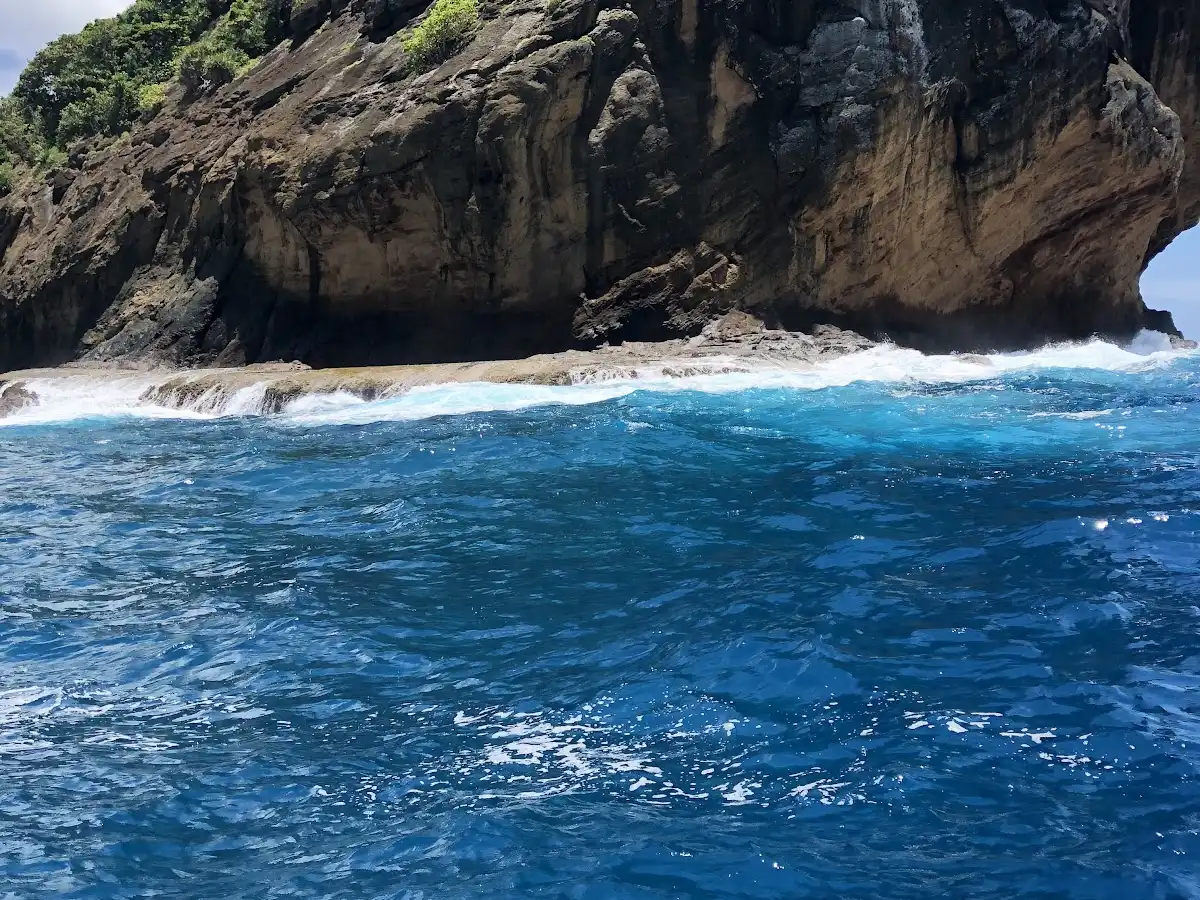
You step off the little plane onto a grass-edged strip, and within ten minutes you’re walking a road with no traffic, coconut crabs rustling in the verge, and the surf thumping on a reef you can hear before you see. Ofu Island sits in the Manu’a group, in the east of American Samoa, a short hop by air from Tutuila. The big draw is Ofu Beach, about three kilometers of pale sand backed by National Park forest, with a lagoon of staggeringly healthy coral you can snorkel from the shore. Go at high tide in the morning, when the water over the reef is deepest and the light is clear. Against that, there are no restaurants worth the name, a handful of homestays, and flights that get bumped by weather. The reward is a place with almost no other visitors. Hikers, snorkelers and people who like quiet will love it. Anyone who needs nightlife, ATMs or a plan B should skip it.

Discover everything you want to know in the 📖 American Samoa Travel Guide.


example page 0 from our offline Travel Guide for American Samoa
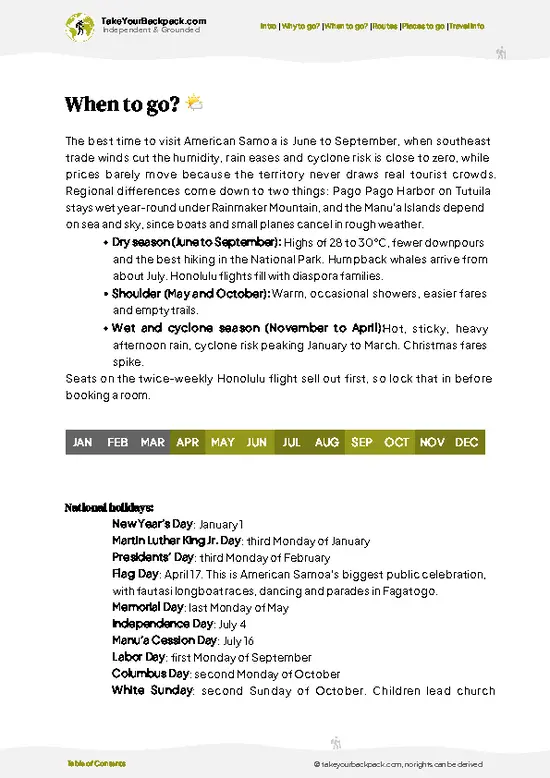
example page 1 from our offline Travel Guide for American Samoa
example page 2 from our offline Travel Guide for American Samoa
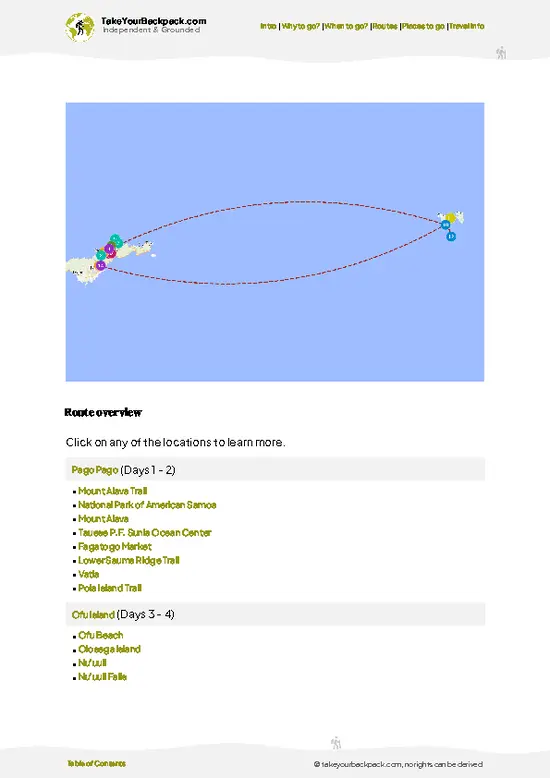
example page 3 from our offline Travel Guide for American Samoa
example page 4 from our offline Travel Guide for American Samoa
example page 5 from our offline Travel Guide for American Samoa
example page 6 from our offline Travel Guide for American Samoa
example page 7 from our offline Travel Guide for American Samoa
Loading the map 🌍
CLICK TO FILTER
towns
villages
landmarks
national parks
hikes
beaches
attractions
festivals
regions
SHOW COUNTRY’S BESTSHOW ALL

✨ Why go?
Ranked #1 region in American Samoa
What sets this place apart

Backpackers come to Ofu Island for one reason that outweighs the awkward logistics: the coral lagoon off Ofu Beach. You wade in from the sand, and within a few strokes you’re over table corals and schools of fish in shallow water that tolerates heat spikes better than most reefs. You need no boat, no guide and no tour fee, only a mask and a patient morning.

The second reason is how compact everything is. One road runs along the island’s edge, so you can walk or hitch between the beach, Ofu village and Va’oto, and the trailhead for the ridge above. The bridge to Olosega crosses the narrow channel between the two islands, and the water below is bright enough to show the fish from above. That lets you tick off two islands in a day without arranging a single boat.

The third is the pace. With … read more 👉
Backpackers come to Ofu Island for one reason that outweighs the awkward logistics: the coral lagoon off Ofu Beach. You wade in from the sand, and within a few strokes you’re over table corals and schools of fish in shallow water that tolerates heat spikes better than most reefs. You need no boat, no guide and no tour fee, only a mask and a patient morning.

The second reason is how compact everything is. One road runs along the island’s edge, so you can walk or hitch between the beach, Ofu village and Va’oto, and the trailhead for the ridge above. The bridge to Olosega crosses the narrow channel between the two islands, and the water below is bright enough to show the fish from above. That lets you tick off two islands in a day without arranging a single boat.

The third is the pace. With so little to book, days fall into a rhythm of swimming, walking, eating what your host cooks and watching the tide. That slow stretch is the point.

💡 HighlightsWhat this place is best known for

  1. Ofu Beach: the island’s signature stretch of white sand inside the National Park of American Samoa, with palms leaning over the shore and almost nobody on it. Walk it end to end for the best light.
  2. Ofu Lagoon snorkeling: the coral pools behind the reef host dense, varied coral and reef fish. Go at mid to high tide so you don’t scrape the shallows.
  3. Va’oto Marine Reserve: the protected section of lagoon where fishing is restricted, which is why the fish are bold and plentiful.
  4. Ofu to Olosega bridge: a single-lane road bridge from 1970 over a narrow channel, with strong currents and clear water below. It is the easiest way to cross between the two islands.
  5. Olosega Village: a small, quiet settlement across the bridge where you will meet locals and see the way daily life works on the Manu’a islands.
… read more 👉
  1. Ofu Beach: the island’s signature stretch of white sand inside the National Park of American Samoa, with palms leaning over the shore and almost nobody on it. Walk it end to end for the best light.
  2. Ofu Lagoon snorkeling: the coral pools behind the reef host dense, varied coral and reef fish. Go at mid to high tide so you don’t scrape the shallows.
  3. Va’oto Marine Reserve: the protected section of lagoon where fishing is restricted, which is why the fish are bold and plentiful.
  4. Ofu to Olosega bridge: a single-lane road bridge from 1970 over a narrow channel, with strong currents and clear water below. It is the easiest way to cross between the two islands.
  5. Olosega Village: a small, quiet settlement across the bridge where you will meet locals and see the way daily life works on the Manu’a islands.
  6. Tumu Mountain ridge trail: a steep forest climb to a ridge with sweeping views over the lagoon and out to sea. Start early, since the climb is humid and exposed in parts.
  7. Ofu Village: the main settlement, with a church, a few shops and the airstrip nearby. Locals are quick to wave you into a chat.
  8. Ofu-Olosega coastal road walk: a flat, quiet ride or stroll with views of cliffs and surf, and nothing to dodge but the occasional dog.
  9. Sunset at the airstrip end: a local favorite spot where the runway opens to the sea and the sky turns orange over the reef.
If time is short, skip the village walk and spend it in the lagoon.
Spotted a mistake or missing something? Contact us.
⌛️ 5 daysHow to make the most of Ofu Island

Day 1: Ofu Beach: Start in the water. Flights from Tutuila arrive in the morning and run on weather, so the schedule rules everything. Drop your bag at your homestay and head to the lagoon at once, because the tide and light matter more than any itinerary. Snorkel the reef pools, then rest in the shade of the park forest.

Day 2: Va’oto and Ofu Village: Work along the island road on foot. Va’oto Marine Reserve sits in the lagoon, and the road allows a slow wander through the village, where evening meals tend to be arranged with your host. Walking suits an island with one road and almost no vehicles.

Day 3: Olosega: Cross the bridge in the morning and spend the day in Olosega Village. Watch the channel water from above, then swim in calmer spots only. Return before the afternoon heat. This … read more 👉
Day 1: Ofu Beach: Start in the water. Flights from Tutuila arrive in the morning and run on weather, so the schedule rules everything. Drop your bag at your homestay and head to the lagoon at once, because the tide and light matter more than any itinerary. Snorkel the reef pools, then rest in the shade of the park forest.

Day 2: Va’oto and Ofu Village: Work along the island road on foot. Va’oto Marine Reserve sits in the lagoon, and the road allows a slow wander through the village, where evening meals tend to be arranged with your host. Walking suits an island with one road and almost no vehicles.

Day 3: Olosega: Cross the bridge in the morning and spend the day in Olosega Village. Watch the channel water from above, then swim in calmer spots only. Return before the afternoon heat. This is the detour off the main line, and it needs no boat or booking.

Day 4: Tumu Mountain: Climb early, when the forest is cool and birdsong carries. The ridge gives you the best view of the lagoon and both islands. Spend the afternoon in the water to ease your legs.

Day 5: Departure: Leave a buffer on the last day, since the small plane can be delayed or canceled. Keep your morning easy, with a last swim and a walk to the airstrip.

If you can only justify the trip with one day, make it Day 1, when the lagoon is empty and the water is clearest.

🌤️ When to go?Choosing the right time of year

  • Dry Season (May to October): Days run 27 to 30°C (81 to 86°F) with lower humidity and trade winds, and the lagoon at Va'oto is at its calmest and clearest for snorkeling. Flights to the island are least likely to be scrubbed. Expect around 11 to 11.5 hours of daylight in June and July.
  • Wet Season (November to April): Temperatures sit at 26 to 31°C (79 to 88°F) with heavy showers and sticky air. Cyclone risk peaks from December to March, and a storm can strand you on Ofu for days. Daylight stretches to about 12.5 hours.
  • Crowds and Prices: Ofu is quiet all year, with only a handful of visitors on any given day. Airfare and the few homestay beds don't move much by season, but beds fill fast around holidays when families return from Pago Pago.
  • Sea Life: Humpback whales pass through the Manu'a waters
… read more 👉
  • Dry Season (May to October): Days run 27 to 30°C (81 to 86°F) with lower humidity and trade winds, and the lagoon at Va'oto is at its calmest and clearest for snorkeling. Flights to the island are least likely to be scrubbed. Expect around 11 to 11.5 hours of daylight in June and July.
  • Wet Season (November to April): Temperatures sit at 26 to 31°C (79 to 88°F) with heavy showers and sticky air. Cyclone risk peaks from December to March, and a storm can strand you on Ofu for days. Daylight stretches to about 12.5 hours.
  • Crowds and Prices: Ofu is quiet all year, with only a handful of visitors on any given day. Airfare and the few homestay beds don't move much by season, but beds fill fast around holidays when families return from Pago Pago.
  • Sea Life: Humpback whales pass through the Manu'a waters roughly from July to October, and the reef shows its best color when the water is clear.
Book a flight with a spare day or two on each end, since weather delays are the norm rather than the exception.


source: climatestotravel.comJANJanuary: fair for travelingFEBFebruary: fair for travelingMARMarch: fair for travelingAPRApril: fair for travelingMAYMay: excellent for travelingJUNJune: excellent for travelingJULJuly: excellent for travelingAUGAugust: excellent for travelingSEPSeptember: excellent for travelingOCTOctober: good for travelingNOVNovember: fair for travelingDECDecember: fair for traveling
american-samoa-region-ofu-island
© Google |

✈️ The backpacker research shortcutAmerican Samoa Travel Guide

An offline-friendly backpacking guide with optimized travel routes, ranked highlights, transport advice, and the best areas to stay.
example page 0 from our offline Travel Guide for American Samoa
example page 1 from our offline Travel Guide for American Samoa
example page 2 from our offline Travel Guide for American Samoa
example page 3 from our offline Travel Guide for American Samoa
example page 4 from our offline Travel Guide for American Samoa
example page 5 from our offline Travel Guide for American Samoa
example page 6 from our offline Travel Guide for American Samoa
example page 7 from our offline Travel Guide for American Samoa
The digital guide (141 pages) contains:
✅ 36 highlights, ranked by travel appeal
✅ Optimized 2, 3 & 5-day travel routes
✅ Cities, national parks, landmarks, beaches
✅ How to get around
✅ Offline-friendly for travel without Wi-Fi
👉 Click to see all 30+ guide features

📅 Plan smarter in minutes, not weeks
✅ Month by month travel advice
✅ Festivals & national holidays
✅ Budget expectations

🗺️ Go to the right places, skip the overrated ones
✅ Honest pros & cons of destinations
✅ Top hikes, parks & viewpoints
✅ Lesser-known places most travelers miss
✅ Clear “worth it vs skip it” guidance

🛏️ Travel smoothly without rookie mistakes
✅ Best areas to stay
✅ Transport systems explained simply
✅ Common scams & safety advice
✅ SIM cards, money & practical tips

🌍 Understand the country, not just visit it
✅ Culture & traditions
✅ 52 Essential phrases & customs
✅ Festivals worth planning around
✅ Traveler-friendly historical context
✅ Insights that make places more meaningful

📱 Built for real travel conditions
✅ Fully downloadable PDF
✅ Works completely offline
✅ Optimized for phone use
✅ Useful in remote areas & buses
✅ Everything in one place
Stop searching, start planning
Get instant access to your full guide. 30‑day money-back guarantee.
+ Add another guide for just

By proceeding you agree to our terms.
Sent to your inbox immediately after payment • 100% Secure Checkout
Best Backpacking Travel Advisor 2025 tourism awardBest Backpacking
Travel Advisor
2025
What others say about Take Your Backpack Guides:
⭐⭐⭐⭐⭐
Fantastic, amazing amount of information!
⭐⭐⭐⭐⭐
My goodness this is amazing, it's what I've been looking for hats off too you!
⭐⭐⭐⭐⭐
I think this is absolutely BRILLIANT
⭐⭐⭐⭐
Very complete and informative. It's still missing places, but I gotta to commend you
⭐⭐⭐⭐⭐
This is truly amazing, thank you, can't wait to explore it with my kids!
⭐⭐⭐⭐⭐
Awesome resource, thank you!
⭐⭐⭐⭐⭐
This is amazing! Can't wait to explore the ones I haven't seen
⭐⭐⭐⭐
I love this! Well done, great idea.
⭐⭐⭐⭐⭐
Thanks for taking the time to make this gem!
⭐⭐⭐⭐⭐
This might be the best website I've ever seen.
⭐⭐⭐⭐⭐
Congratulations, and thank you so much for your work; it's incredibly valuable.
⭐⭐⭐⭐
In all seriousness I think you did a great job pointing out the important spots
⭐⭐⭐⭐⭐
10/10 very good
⭐⭐⭐⭐⭐
As someone who's only just starting to visit regularly this is awesome, thank you.
⭐⭐⭐⭐
Thank you very much! I'm going to visit my dad, it's going to be very useful!
⭐⭐⭐⭐⭐
This is really cool! We'll be travelling for the first time and this definitely come in handy.
⭐⭐⭐⭐⭐
You are now our minister of culture, congratulations 👨‍💼
⭐⭐⭐⭐⭐
Just wanted to tell you that this is a pearl! Going to follow your recommendations.
⭐⭐⭐⭐⭐
This is so cool. I'll definitely be using the resource for my travels soon.
⭐⭐⭐⭐⭐
This is very impressive! Good work.
⭐⭐⭐⭐⭐
This is an amazing and informative site. Very well done!

🛏️ Where to stay?Best areas to stay in American Samoa

Va'oto and Ofu village are the places to sleep on Ofu, because they put you within a short walk of the main beach and the lagoon. Accommodation on the island is limited to a few family-run guesthouses and homestays, so there are no hostel dorms and no party scene. Beds are few, and you should arrange yours before you fly, since you cannot count on finding one on arrival.

Va'oto, at the western end of the island, is the practical choice for most backpackers. The lagoon with its coral gardens is steps away, the National Park beach is nearby, and you will likely meet other travelers, usually researchers, … read more 👉
Va'oto and Ofu village are the places to sleep on Ofu, because they put you within a short walk of the main beach and the lagoon. Accommodation on the island is limited to a few family-run guesthouses and homestays, so there are no hostel dorms and no party scene. Beds are few, and you should arrange yours before you fly, since you cannot count on finding one on arrival.

Va'oto, at the western end of the island, is the practical choice for most backpackers. The lagoon with its coral gardens is steps away, the National Park beach is nearby, and you will likely meet other travelers, usually researchers, divers and a few hikers, over a shared table or on the sand. It is also the closest area to the airstrip, which saves on rides. Ofu village, a bit further along the road, offers a deeper look at daily Samoan life, with church bells, kids playing cricket on the grass and neighbors who will certainly stop to ask where you come from.

Olosega, across the bridge, has a handful of homestays too and an even sleepier rhythm. Safety is a non-issue by most standards; the main concerns are sun, reef cuts and weather. Shops are few and stocked thinly, so arrive with snacks and basics from Pago Pago, and pay your hosts in cash.

🚌 Getting aroundTransportation options and practical tips

A ride in a villager's pickup on Ofu usually costs nothing or a few dollars, and you pay in US$ cash, so stash small bills; there are no meters, apps or ticket counters. One paved road follows the coast between the villages of Ofu, Alaufau and Va'oto, and a short bridge crosses to neighboring Olosega. Nobody here is in a hurry, and that works in your favor.
  • Flight from Pago Pago: The small plane to Ofu takes roughly 30 minutes and typically costs US$100 to 200 round trip, with only a few flights a week. Sit on the left going out if you can, because the coastline of Ofu comes into view with the reef glowing turquoise against the dark volcanic slopes. Schedules shift with weather, so confirm the day before and be at the little airstrip early.
  • Cargo and passenger boat: A supply boat sails from
… read more 👉
A ride in a villager's pickup on Ofu usually costs nothing or a few dollars, and you pay in US$ cash, so stash small bills; there are no meters, apps or ticket counters. One paved road follows the coast between the villages of Ofu, Alaufau and Va'oto, and a short bridge crosses to neighboring Olosega. Nobody here is in a hurry, and that works in your favor.
  • Flight from Pago Pago: The small plane to Ofu takes roughly 30 minutes and typically costs US$100 to 200 round trip, with only a few flights a week. Sit on the left going out if you can, because the coastline of Ofu comes into view with the reef glowing turquoise against the dark volcanic slopes. Schedules shift with weather, so confirm the day before and be at the little airstrip early.
  • Cargo and passenger boat: A supply boat sails from Pago Pago to the Manu'a group, taking around 7 to 10 hours depending on the sea, and fares run well under the airfare. The crossing can be rough, so bring motion tablets and a rain jacket. You arrive with the locals and the crates of groceries, which is a pretty good introduction to island life.
  • Hitching and village rides: Wave at a passing truck and it will most likely stop. Offer US$2 to 5 for a longer hop, or simply say thanks and chat on the way. You get the kind of conversation, and sometimes an invitation to dinner, that no tour can arrange.
  • On foot: The island is small enough to cover its main road on foot, and the 3 km stretch of white sand along Ofu Beach is walkable at low tide. Go early, before 9 a.m., while the air is cool and the sand is empty apart from hermit crabs and the occasional dog. Carry water and a hat, as shade is patchy.
  • Bridge to Olosega: The walk across takes minutes. Stop in the middle and look down at the clear channel, where fish dart over the rocks, then continue to Olosega village for a feel of an even quieter place.
Ask your host to phone ahead for a pickup at the airstrip, and keep Sunday free of any plans, as traffic nearly stops during church hours and the village goes still.

🍲 FoodLocal Flavors for Backpackers

Food on Ofu is home cooking, and it is made from what grows on the island or arrives on the boat. Look for palusami, taro leaves baked with coconut cream until they turn silky and rich, and oka, raw fish cured in lime juice and coconut milk, bright and cold on a hot afternoon. Taro, breadfruit and green bananas come boiled or roasted, with an earthy, starchy sweetness, and panikeke, fried Samoan pancakes, turn up at breakfast with a dusting of sugar. Tinned corned beef (pisupo) is everywhere, since imports are pricey and stores are scarce.

There are no restaurants to speak of. You eat at your homestay, where meals are usually included or cost a few dollars, and you may find a tiny village shop selling crackers, rice and canned goods. Drink fresh coconut straight from the husk, cracked open … read more 👉
Food on Ofu is home cooking, and it is made from what grows on the island or arrives on the boat. Look for palusami, taro leaves baked with coconut cream until they turn silky and rich, and oka, raw fish cured in lime juice and coconut milk, bright and cold on a hot afternoon. Taro, breadfruit and green bananas come boiled or roasted, with an earthy, starchy sweetness, and panikeke, fried Samoan pancakes, turn up at breakfast with a dusting of sugar. Tinned corned beef (pisupo) is everywhere, since imports are pricey and stores are scarce.

There are no restaurants to speak of. You eat at your homestay, where meals are usually included or cost a few dollars, and you may find a tiny village shop selling crackers, rice and canned goods. Drink fresh coconut straight from the husk, cracked open by a host with a machete, and sip koko Samoa, a hot cocoa drink from local roasted beans, if offered. Bring your own favorite snacks and any special dietary items from Pago Pago.

Sunday is the big meal day, when families prepare an umu, an earth oven, and the smoke rises from behind the houses by mid-morning. If you are invited, accept. Wait for the blessing before eating, take modest portions and eat with your right hand. Shorts that cover the knees are polite in the village, and so is a gentle thank-you to the cook.

FAQTraveler FAQ

Three to four days is enough for Ofu, and five suits you if you want slack for weather. That gives you time for snorkeling the lagoon at Va'oto, a long walk along the 3 km of Ofu Beach, and a stroll over the bridge to Olosega. Flights from Pago Pago take about 30 minutes but are often delayed, so build in a buffer day at each end.
Most visitors walk or hitch a ride with locals, since there is no public bus, no taxi service and almost no rental vehicles. A short ride in a villager's truck typically costs nothing to US$5 in cash, and the main road links Va'oto, Ofu village and Alaufau within a few kilometers. To reach the island, you fly from Pago Pago in about 30 minutes or take the supply boat, which takes roughly 7 to 10 hours.
Ofu is known for its beach, a 3 km curve of white sand backed by coconut palms and protected as part of the National Park of American Samoa. The lagoon at Va'oto holds dozens of coral species, some of them heat-tolerant, which draws marine scientists and snorkelers. It is also known for how remote and quiet it is, with a population of only a few dozen to a few hundred people living in small villages and a bridge to neighboring Olosega.
⚠️ Things can change over time, so always validate details locally before you go.

Other American Samoan regions near Ofu Island

Explore more nearby:

  • Olosega Island—Asaga Strait bridge, sea cliffs, two villages, flying foxes| 5 km away
  • Ta’ū Island—Manu’a cliffs, Lata summit, Fiti’uta cove, homestays| 25 km away

💡 Not sure where to go next?
Create a personalized itinerary for American Samoa including Ofu Island and the places that fit your trip.

Generate my itinerary

👉 Discover all regions

Or checkout all American Samoa has to offer (think cities, towns, villages, national parks, hikes, beaches, festivals)
Country photo of American Samoa

We 💚 feedbackSumming up the experience

Three nights is the right length for Ofu Island. Two feels rushed once the weather moves your flight, and a week only suits people who are happy doing little. I’d bring all your cash, snacks and sunscreen from Tutuila, and I’d build in a spare day before any onward flight. The surprise is how quickly the quiet starts to feel normal.

✍️ Help improve this page!
The information on this page is based on in-depth research, insights shared by experienced travelers, and feedback from the local travel community in American Samoa. While every effort is made to keep the information accurate and current, conditions can change — so if you spot anything incorrect or outdated, please get in touch.


🙋‍♂️ Give feedback

👋 Meet the founderWho’s Behind Take Your Backpack?

Johan, backpacker and founder of TakeYourBackpackHi, I’m Johan (Netherlands 🇳🇱), the creator of TakeYourBackpack. Over the past 3 decades, I’ve backpacked through 90+ countries across six continents, gaining extensive experience with independent travel, long-term trips, and overland routes.

This site is built on a combination of firsthand travel experience and carefully curated insights from other backpackers. Many guides are based on places I’ve personally visited, while others bring together tips, observations, and practical advice shared by trusted travelers I’ve met along the way.

The goal is to provide realistic, experience-driven guidance — not generic itineraries — so you can explore destinations with better context, clearer expectations, and more confidence.