×

American Samoa🇦🇸 | regionsTa’ū IslandManu’a cliffs, Lata summit, Fiti’uta cove, homestays | things to do and best time to go

Explore Aunu’u Island National Natural LandmarkExplore Ofu Island

Backpacking in Ta’ū Island
👌 Worth visitingregion ranked #4
By Johan Kruseman 🇳🇱 | Updated October 15, 2026

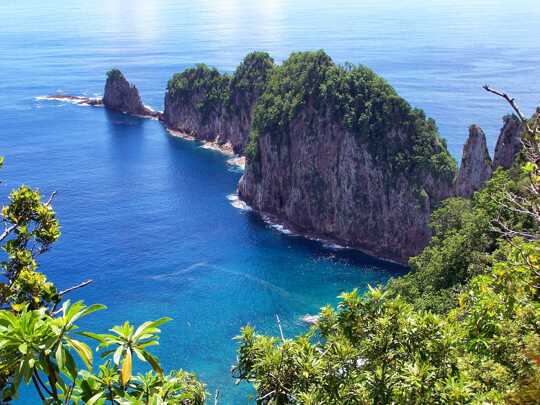
Ta’ū Island is best known as the heart of the National Park of American Samoa’s Manu’a unit, with the tallest sea cliffs in the park and the villages of Faleāsao, Fiti’uta and Ta’u hugging the north coast. It lies in the Manu’a Islands of American Samoa, roughly 100 kilometers east of Tutuila. Come for the quiet, not for nightlife. There are a few family-run homestays, one main road, and almost no commerce beyond small shops that close early. Evenings mean church hymns drifting across the village, dinner with your host family and lights out by 9 or 10. Meeting other travelers is easy only because there are so few of them. Bring cash, snacks and patience for flight schedules. Wander to Fiti’uta at dusk and listen for the village choir rehearsing, with fruit bats wheeling over the rainforest edge behind the houses.

Discover everything you want to know in the 📖 American Samoa Travel Guide.


example page 0 from our offline Travel Guide for American Samoa
example page 1 from our offline Travel Guide for American Samoa
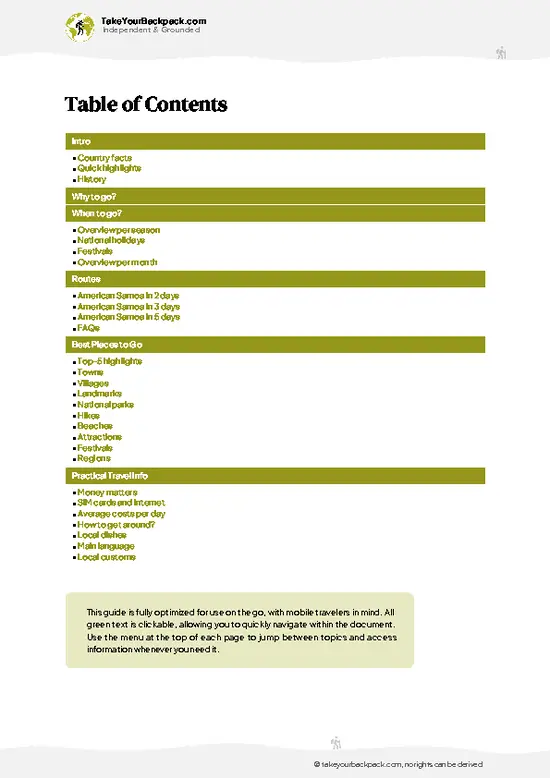
example page 2 from our offline Travel Guide for American Samoa
example page 3 from our offline Travel Guide for American Samoa
example page 4 from our offline Travel Guide for American Samoa
example page 5 from our offline Travel Guide for American Samoa
example page 6 from our offline Travel Guide for American Samoa
example page 7 from our offline Travel Guide for American Samoa
Loading the map 🌍
CLICK TO FILTER
towns
villages
landmarks
national parks
hikes
beaches
attractions
festivals
regions
SHOW COUNTRY’S BESTSHOW ALL

✨ Why go?
Ranked #4 region in American Samoa
Why visitors keep coming back

Backpackers come to Ta’ū Island because it is the one place in American Samoa where the rest of the world genuinely falls away. The pull is the Manu’a unit of the National Park, with trails through lowland rainforest, coast walks and some of the tallest sea cliffs in the Pacific at Lata Mountain’s seaward side. It is also considered the legendary birthplace of Samoan chiefly tradition, so the culture here feels unhurried and rooted. Most people stay three to five nights, partly because getting here takes planning and partly because the island rewards lingering. It suits hikers, birdwatchers, snorkelers and slow travelers who are comfortable with basic lodging and sharing meals with hosts. It is a poor fit if you need nightlife, ATMs or a flexible schedule. Solo travelers do fine because villagers … read more 👉
Backpackers come to Ta’ū Island because it is the one place in American Samoa where the rest of the world genuinely falls away. The pull is the Manu’a unit of the National Park, with trails through lowland rainforest, coast walks and some of the tallest sea cliffs in the Pacific at Lata Mountain’s seaward side. It is also considered the legendary birthplace of Samoan chiefly tradition, so the culture here feels unhurried and rooted. Most people stay three to five nights, partly because getting here takes planning and partly because the island rewards lingering. It suits hikers, birdwatchers, snorkelers and slow travelers who are comfortable with basic lodging and sharing meals with hosts. It is a poor fit if you need nightlife, ATMs or a flexible schedule. Solo travelers do fine because villagers are curious and welcoming, though you should dress modestly and respect Sunday quiet. Treat it as a deliberate side trip, not a pause between busier stops.

💡 HighlightsTop highlights of Ta’ū Island

  1. Ta’u Village and the Manu’a Cliffs Viewpoint: The sea cliffs on the island’s south coast drop several hundred meters, among the tallest in the world. Reach the viewpoint on foot via the park route above Fiti’uta, with a guide recommended. Go early morning when the cloud lifts. Free entry, allow 3 to 4 hours.
  2. Lata Mountain Trail: The path climbs toward the highest point in American Samoa at roughly 966 meters through cloud forest, with birds and fruit bats overhead. Dry mornings give the best footing. Park entry is free, plan 4 to 6 hours return, and arrange a local guide or check trail conditions with park staff.
  3. Fiti’uta Beach and Village: A quiet white sand cove with clear water where you can swim and snorkel, and village life carries on in the background. Calm mornings are best. It is free
… read more 👉
  1. Ta’u Village and the Manu’a Cliffs Viewpoint: The sea cliffs on the island’s south coast drop several hundred meters, among the tallest in the world. Reach the viewpoint on foot via the park route above Fiti’uta, with a guide recommended. Go early morning when the cloud lifts. Free entry, allow 3 to 4 hours.
  2. Lata Mountain Trail: The path climbs toward the highest point in American Samoa at roughly 966 meters through cloud forest, with birds and fruit bats overhead. Dry mornings give the best footing. Park entry is free, plan 4 to 6 hours return, and arrange a local guide or check trail conditions with park staff.
  3. Fiti’uta Beach and Village: A quiet white sand cove with clear water where you can swim and snorkel, and village life carries on in the background. Calm mornings are best. It is free to visit, and a couple of hours is plenty, though many linger half a day.
If time is short, skip the full summit hike and take the cliff viewpoint and the beach instead. Day trips from the island are limited, but the neighboring islands of Ofu and Olosega, also part of Manu’a, offer beaches and snorkeling reached by small boat or flight.
Spotted a mistake or missing something? Contact us.

⌛️ 5 daysWhat you can realistically do in a week

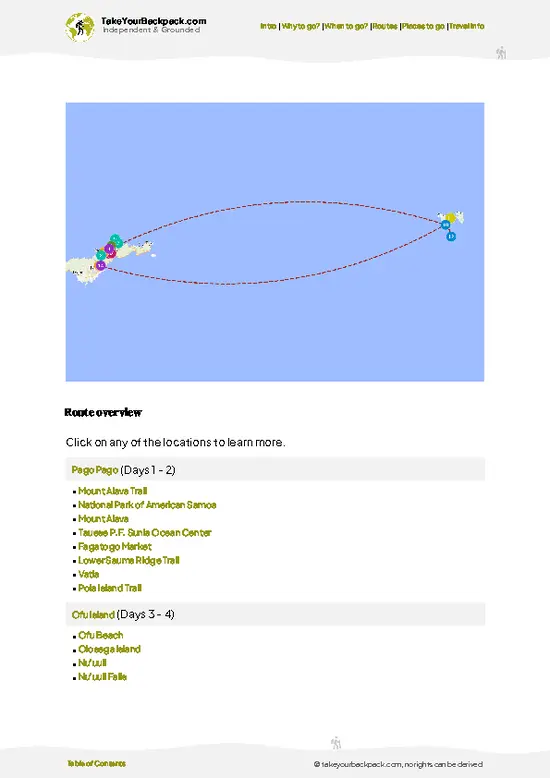
Day 1: Fiti’uta: The one stop not to skip is the cliffs at the southeast end of the island, and getting there starts at the airstrip in Fiti’uta, where the short flight from Tutuila lands. Flights are small and few, so the schedule sets your pace for the whole stay. Drop your bag, walk the village, and let the island's single main road decide the rest. Everything is reached on foot, by a lift from a host, or by the occasional pickup.
Day 2: Ta’ū Village: Move to the west coast, where Lumā and Siufaga sit side by side. This is the island's center of daily life, with the store, the church and the school. Spend the day meeting people and asking your host about local guides for the park. Arranging this in person is how things work here, so do it early.
Day 3 and 4: National Park of American Samoa, … read more 👉
Day 1: Fiti’uta: The one stop not to skip is the cliffs at the southeast end of the island, and getting there starts at the airstrip in Fiti’uta, where the short flight from Tutuila lands. Flights are small and few, so the schedule sets your pace for the whole stay. Drop your bag, walk the village, and let the island's single main road decide the rest. Everything is reached on foot, by a lift from a host, or by the occasional pickup.
Day 2: Ta’ū Village: Move to the west coast, where Lumā and Siufaga sit side by side. This is the island's center of daily life, with the store, the church and the school. Spend the day meeting people and asking your host about local guides for the park. Arranging this in person is how things work here, so do it early.
Day 3 and 4: National Park of American Samoa, Ta’ū Unit: Head south into the park, the reason the trip justifies itself. Day 3 is for the coastal and forest trails with a local guide, as the paths can be faint and slick. Day 4 is for the high sea cliffs in the south and southeast, among the tallest on earth, dropping into open ocean. Go with a full day of water and an early start, because there are no shops out there. Stay a second night nearby so you are not rushing the road back. The cliff day is the one that justifies the whole trip.
Day 5: Fiti’uta: Return northeast for your flight out, keeping the morning loose because small planes run on island time and weather. A short detour on the way back, down to the village beach near Fiti’uta, adds a swim and a quiet last look at the coast without risking the connection.

🌤️ When to go?Best time to visit Ta’ū Island

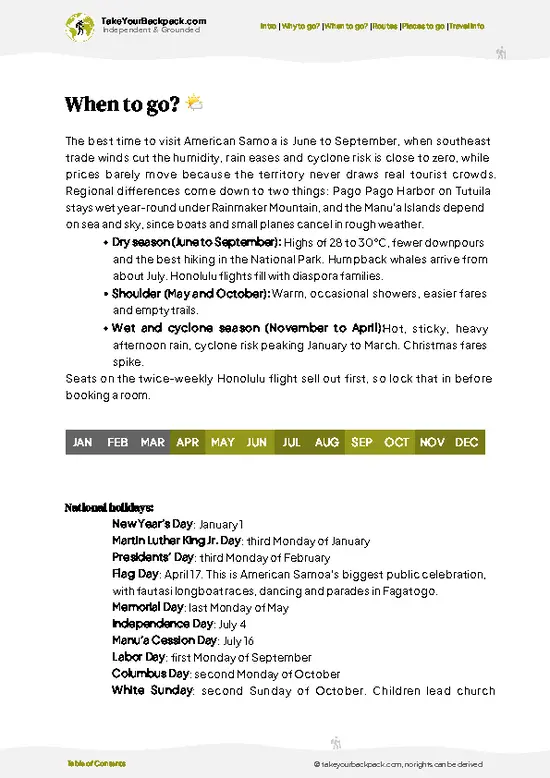
May through September is the window to aim for on Ta’u, when trade winds keep the air drier and the trails in the Manu’a Islands stay firmer underfoot.
  • Dry Season (May to September): Days run about 27 to 30°C (81 to 86°F), nights around 23°C (73°F). Rain still falls, but in shorter bursts. Sunrise is near 6:30 am and sunset near 6:00 pm, so plan hikes to finish by mid-afternoon.
  • Wet Season (October to April): Expect heavy showers, humidity that makes shirts stick, and muddy tracks in the national park. Cyclone risk peaks from December to March, and flights from Pago Pago can be canceled or delayed for days.
  • Crowds and Prices: Ta’u sees only a trickle of visitors year-round, so crowds are never an issue. Costs barely move with the season, but homestay beds are easiest to get outside the Christmas
… read more 👉
May through September is the window to aim for on Ta’u, when trade winds keep the air drier and the trails in the Manu’a Islands stay firmer underfoot.
  • Dry Season (May to September): Days run about 27 to 30°C (81 to 86°F), nights around 23°C (73°F). Rain still falls, but in shorter bursts. Sunrise is near 6:30 am and sunset near 6:00 pm, so plan hikes to finish by mid-afternoon.
  • Wet Season (October to April): Expect heavy showers, humidity that makes shirts stick, and muddy tracks in the national park. Cyclone risk peaks from December to March, and flights from Pago Pago can be canceled or delayed for days.
  • Crowds and Prices: Ta’u sees only a trickle of visitors year-round, so crowds are never an issue. Costs barely move with the season, but homestay beds are easiest to get outside the Christmas period, when relatives return home.
  • Cultural Calendar: Flag Day in April and the Christmas and New Year gatherings fill the village with returning family, and hosts are busy.
Book your flight early and leave a spare day or two at the end of the trip in case weather grounds the plane.


source: climatestotravel.comJANJanuary: fair for travelingFEBFebruary: fair for travelingMARMarch: fair for travelingAPRApril: good for travelingMAYMay: excellent for travelingJUNJune: excellent for travelingJULJuly: excellent for travelingAUGAugust: excellent for travelingSEPSeptember: excellent for travelingOCTOctober: good for travelingNOVNovember: fair for travelingDECDecember: fair for traveling
when-to-go

✈️ The backpacker research shortcutAmerican Samoa Travel Guide

An offline-friendly backpacking guide with optimized travel routes, ranked highlights, transport advice, and the best areas to stay.
example page 0 from our offline Travel Guide for American Samoa
example page 1 from our offline Travel Guide for American Samoa
example page 2 from our offline Travel Guide for American Samoa
example page 3 from our offline Travel Guide for American Samoa
example page 4 from our offline Travel Guide for American Samoa
example page 5 from our offline Travel Guide for American Samoa
example page 6 from our offline Travel Guide for American Samoa
example page 7 from our offline Travel Guide for American Samoa
The digital guide (141 pages) contains:
✅ 36 highlights, ranked by travel appeal
✅ Optimized 2, 3 & 5-day travel routes
✅ Cities, national parks, landmarks, beaches
✅ How to get around
✅ Offline-friendly for travel without Wi-Fi
👉 Click to see all 30+ guide features

📅 Plan smarter in minutes, not weeks
✅ Month by month travel advice
✅ Festivals & national holidays
✅ Budget expectations

🗺️ Go to the right places, skip the overrated ones
✅ Honest pros & cons of destinations
✅ Top hikes, parks & viewpoints
✅ Lesser-known places most travelers miss
✅ Clear “worth it vs skip it” guidance

🛏️ Travel smoothly without rookie mistakes
✅ Best areas to stay
✅ Transport systems explained simply
✅ Common scams & safety advice
✅ SIM cards, money & practical tips

🌍 Understand the country, not just visit it
✅ Culture & traditions
✅ 52 Essential phrases & customs
✅ Festivals worth planning around
✅ Traveler-friendly historical context
✅ Insights that make places more meaningful

📱 Built for real travel conditions
✅ Fully downloadable PDF
✅ Works completely offline
✅ Optimized for phone use
✅ Useful in remote areas & buses
✅ Everything in one place
Stop searching, start planning
Get instant access to your full guide. 30‑day money-back guarantee.
+ Add another guide for just

By proceeding you agree to our terms.
Sent to your inbox immediately after payment • 100% Secure Checkout
Best Backpacking Travel Advisor 2025 tourism awardBest Backpacking
Travel Advisor
2025
What others say about Take Your Backpack Guides:
⭐⭐⭐⭐⭐
Fantastic, amazing amount of information!
⭐⭐⭐⭐⭐
My goodness this is amazing, it's what I've been looking for hats off too you!
⭐⭐⭐⭐⭐
I think this is absolutely BRILLIANT
⭐⭐⭐⭐
Very complete and informative. It's still missing places, but I gotta to commend you
⭐⭐⭐⭐⭐
This is truly amazing, thank you, can't wait to explore it with my kids!
⭐⭐⭐⭐⭐
Awesome resource, thank you!
⭐⭐⭐⭐⭐
This is amazing! Can't wait to explore the ones I haven't seen
⭐⭐⭐⭐
I love this! Well done, great idea.
⭐⭐⭐⭐⭐
Thanks for taking the time to make this gem!
⭐⭐⭐⭐⭐
This might be the best website I've ever seen.
⭐⭐⭐⭐⭐
Congratulations, and thank you so much for your work; it's incredibly valuable.
⭐⭐⭐⭐
In all seriousness I think you did a great job pointing out the important spots
⭐⭐⭐⭐⭐
10/10 very good
⭐⭐⭐⭐⭐
As someone who's only just starting to visit regularly this is awesome, thank you.
⭐⭐⭐⭐
Thank you very much! I'm going to visit my dad, it's going to be very useful!
⭐⭐⭐⭐⭐
This is really cool! We'll be travelling for the first time and this definitely come in handy.
⭐⭐⭐⭐⭐
You are now our minister of culture, congratulations 👨‍💼
⭐⭐⭐⭐⭐
Just wanted to tell you that this is a pearl! Going to follow your recommendations.
⭐⭐⭐⭐⭐
This is so cool. I'll definitely be using the resource for my travels soon.
⭐⭐⭐⭐⭐
This is very impressive! Good work.
⭐⭐⭐⭐⭐
This is an amazing and informative site. Very well done!

🛏️ Where to stay?Best areas to stay in American Samoa

Ta’u has no hotels or hostels, so your bed will be a family homestay or a small guesthouse in Ta’u village or Fitiuta, and you should arrange it before you fly.
Expect basic rooms with a mattress, a fan and a shared bathroom, usually US$60 to 100 a night, often with meals included if you arrange it. Prices are agreed by phone or message, so confirm what is covered, including pickup from the airstrip at Fiti’uta, which sits on the island’s northeast side. Cash in US dollars is the only way to pay. There are no ATMs, so bring everything you need from Tutuila.
Ta’u village on the west coast is the … read more 👉
Ta’u has no hotels or hostels, so your bed will be a family homestay or a small guesthouse in Ta’u village or Fitiuta, and you should arrange it before you fly.
Expect basic rooms with a mattress, a fan and a shared bathroom, usually US$60 to 100 a night, often with meals included if you arrange it. Prices are agreed by phone or message, so confirm what is covered, including pickup from the airstrip at Fiti’uta, which sits on the island’s northeast side. Cash in US dollars is the only way to pay. There are no ATMs, so bring everything you need from Tutuila.
Ta’u village on the west coast is the better choice for most backpackers. It is the island’s main settlement, has the little shop and the clinic, and puts you close to the boat harbor at Faleāsao. Fiti’uta is quieter and smaller, handy if you arrive by plane and want a short walk from the runway, but supplies are thinner.
Staying with a family means you follow village rhythms. Sunday is for church and rest, and evening prayers often happen around dusk, so keep noise down. Bring a small gift such as rice, tinned fish or fruit from Pago Pago, which hosts appreciate more than extra cash. Pack a headlamp, since power can be patchy.

🚌 Getting aroundMoving around without the hassle

Ta’ū village, with its two halves Lumā and Siufaga, is flat and tiny enough to cover on foot in 15 to 20 minutes, and that is where walking stops making sense: the road to Fiti’uta in the northeast and the cliffs and national park in the south and southeast stretch for many kilometers of heat and climbing. Most backpackers fly in, then combine a few short walks with rides from locals and the occasional pickup truck. It is informal, but it works if you plan around it.
  • Flights from Tutuila: The small plane lands on the airstrip at Fiti’uta, and a one-way ticket runs roughly US$100 to 200 depending on the season. Flights are few and cancel when weather or maintenance interferes, so keep a spare day on each end of your trip. Book early, because seats are limited and the island has no alternative
… read more 👉
Ta’ū village, with its two halves Lumā and Siufaga, is flat and tiny enough to cover on foot in 15 to 20 minutes, and that is where walking stops making sense: the road to Fiti’uta in the northeast and the cliffs and national park in the south and southeast stretch for many kilometers of heat and climbing. Most backpackers fly in, then combine a few short walks with rides from locals and the occasional pickup truck. It is informal, but it works if you plan around it.
  • Flights from Tutuila: The small plane lands on the airstrip at Fiti’uta, and a one-way ticket runs roughly US$100 to 200 depending on the season. Flights are few and cancel when weather or maintenance interferes, so keep a spare day on each end of your trip. Book early, because seats are limited and the island has no alternative route out.
  • Walking: Free, and the right choice around Lumā and Siufaga, where shops, the harbor, churches and the guesthouses sit close together. Start before the sun climbs, since there is little shade on the road and the afternoon heat is heavy.
  • Rides from locals: There is no public bus service worth planning around, so people simply stop for walkers, and a pickup truck is the usual way to reach Fiti’uta. Accept, thank the driver, and offer a few dollars (US$5 to 10 for a longer run) if they went out of their way. Arrange the airstrip run through your host the night before and you will not be waiting at the roadside.
  • Arranged transfers and guides: Your guesthouse or the park staff can often connect you with a driver for the southern road toward the park and its sea cliffs. Expect to pay roughly US$20 to 60 for a half-day, split it if you meet other travelers, and agree the price before the engine starts.
Carry cash in small bills, since there are no apps here and change is scarce, and ask your host to phone ahead for any ride the evening before. Island plans run on relationships, and a quick call from a local gets you further than waiting beside the road.

🚌 Day tripsShort trips worth adding

Ta’u is a place where you do everything as a day trip from your homestay, since the island is small and the road network is short, though there is no public transport and you rely on your host or on walking.
Ofu and Olosega Island:
An island boat or a small plane runs the short hop to the Ofu-Olosega pair, though schedules shift with weather. Ofu’s Va’oto beach has some of the best snorkeling in the territory, with shallow coral right off the sand. Budget US$50 to 150 for the transfer depending on what is operating, and go between May and September when seas are calmer. Check the return before you leave, since a missed boat becomes an overnight.
👉 Explore Ofu Island
Ta’u Section of the National Park of American Samoa:
The park covers the southern side, with rainforest, cliffs and the Lata mountain … read more 👉
Ta’u is a place where you do everything as a day trip from your homestay, since the island is small and the road network is short, though there is no public transport and you rely on your host or on walking.
Ofu and Olosega Island:
An island boat or a small plane runs the short hop to the Ofu-Olosega pair, though schedules shift with weather. Ofu’s Va’oto beach has some of the best snorkeling in the territory, with shallow coral right off the sand. Budget US$50 to 150 for the transfer depending on what is operating, and go between May and September when seas are calmer. Check the return before you leave, since a missed boat becomes an overnight.
👉 Explore Ofu Island
Ta’u Section of the National Park of American Samoa:
The park covers the southern side, with rainforest, cliffs and the Lata mountain area above, the highest point in the territory at about 966 meters (3,170 feet). Allow 4 to 6 hours for a guided or well-briefed walk, and ask your host to arrange a local guide at roughly US$20 to 40. Wet-season trails turn slick, so wear shoes with grip.
👉 Explore National Park of American Samoa
Fiti’uta Village:
The northeast village is reached by road in about 30 to 45 minutes by car, with a dramatic coastline and a small community worth a slow wander. Ask permission before photographing or entering any village space.

🍲 FoodWhat to Eat & Drink

Meals on Ta’ū revolve around the umu, the Sunday stone oven where taro, breadfruit and green bananas steam beside pork or fish under banana leaves. Smoke drifts across the village by late morning. Look for palusami, taro leaves baked with coconut cream until silky and slightly peppery, and oka, raw fish cured in lime and finished with coconut milk. Fresh coconut water is the drink, cut straight from the tree, and koko Samoa, a hot cocoa made from local beans, shows up at breakfast.
There are no restaurant strips here. You eat at small village stores that sell canned fish, crackers and bread, at your guesthouse table, or from family cooking that a host can arrange for a modest price. Bring snacks and stock up when you can, because shelves empty between boat deliveries.
Customs matter. Sunday … read more 👉
Meals on Ta’ū revolve around the umu, the Sunday stone oven where taro, breadfruit and green bananas steam beside pork or fish under banana leaves. Smoke drifts across the village by late morning. Look for palusami, taro leaves baked with coconut cream until silky and slightly peppery, and oka, raw fish cured in lime and finished with coconut milk. Fresh coconut water is the drink, cut straight from the tree, and koko Samoa, a hot cocoa made from local beans, shows up at breakfast.
There are no restaurant strips here. You eat at small village stores that sell canned fish, crackers and bread, at your guesthouse table, or from family cooking that a host can arrange for a modest price. Bring snacks and stock up when you can, because shelves empty between boat deliveries.
Customs matter. Sunday is quiet and centered on church, with the big meal after the service. Wait to be invited to eat, wash your hands first, and accept what is offered, because refusing a plate lands badly. Guests are often served first while the family eats afterward, so say thank you in Samoan (“fa’afetai”) and take your time.

FAQTraveler FAQ

Fly from Pago Pago on Tutuila to Ta’u’s airstrip at Fiti’uta, about 30 to 40 minutes in a small plane operated for the Manu’a Islands. Flights run a few times a week, fares are typically US$150 to 300 round trip, and weather can cancel them, so keep a spare day. A cargo and passenger boat also makes the crossing from Pago Pago in roughly 7 to 10 hours, but sailings are irregular and the sea can be rough.
Yes, if you want quiet villages, uncrowded rainforest trails and one of the remotest places in the US. The national park section, Lumā beach and the walk to Fiti’uta take roughly 3 to 4 days to cover without rushing. Prices are higher than you would expect for the basics, around US$60 to 100 a night, and there are no ATMs, so it suits flexible, self-sufficient travelers.
Not realistically, because flights are limited and weather often disrupts them, which makes a same-day return from Pago Pago risky. Most visitors stay at least 2 nights, and a 3 to 4 night stay lets you hike in the park and see Lumā. Staying overnight also gives you a buffer if the plane is canceled.
⚠️ Things can change over time, so always validate details locally before you go.

Other American Samoan regions near Ta’ū Island

Explore more nearby:

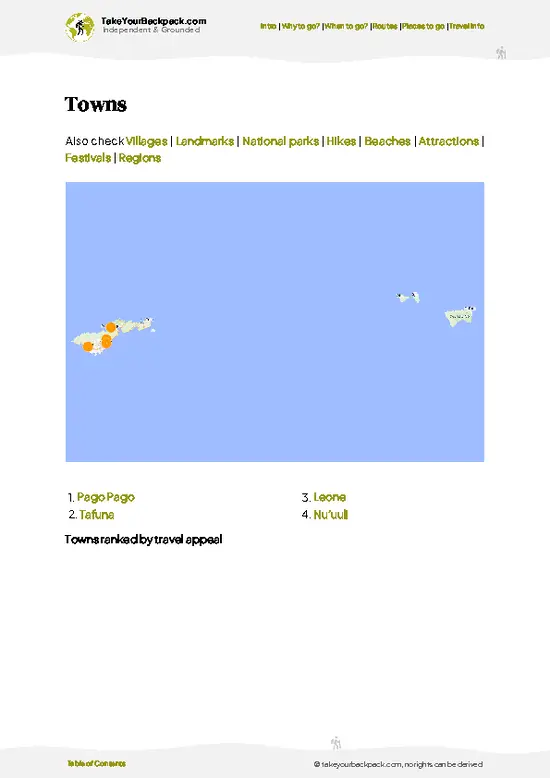
  • Olosega Island—Asaga Strait bridge, sea cliffs, two villages, flying foxes| 20 km away
  • Ofu Island—Ofu Beach, shore snorkeling, Va’oto reserve, small airstrip| 25 km away

💡 Not sure where to go next?
Create a personalized itinerary for American Samoa including Ta’ū Island and the places that fit your trip.

Generate my itinerary

👉 Discover all regions

Or checkout all American Samoa has to offer (think cities, towns, villages, national parks, hikes, beaches, festivals)
Country photo of American Samoa

We 💚 feedbackKey takeaways before you go

Go in the dry months from roughly May to September, and plan your walks for the first hours after sunrise, when the cliffs sit clear before cloud builds and the heat climbs. I would bring cash, a headlamp and extra food, and I would give flights a spare day on both ends, because schedules here bend with the weather.

✍️ Help improve this page!
The information on this page is based on in-depth research, insights shared by experienced travelers, and feedback from the local travel community in American Samoa. While every effort is made to keep the information accurate and current, conditions can change — so if you spot anything incorrect or outdated, please get in touch.


🙋‍♂️ Give feedback

👋 Meet the founderWho’s Behind Take Your Backpack?

Johan, backpacker and founder of TakeYourBackpackHi, I’m Johan (Netherlands 🇳🇱), the creator of TakeYourBackpack. Over the past 3 decades, I’ve backpacked through 90+ countries across six continents, gaining extensive experience with independent travel, long-term trips, and overland routes.

This site is built on a combination of firsthand travel experience and carefully curated insights from other backpackers. Many guides are based on places I’ve personally visited, while others bring together tips, observations, and practical advice shared by trusted travelers I’ve met along the way.

The goal is to provide realistic, experience-driven guidance — not generic itineraries — so you can explore destinations with better context, clearer expectations, and more confidence.