

×

American Samoa🇦🇸 | beachesTula BeachCape Matatula, lava-rock cliffs, tide pools, easternmost village | things to do and best time to go

Explore Onenoa BeachExplore Flag Day

Backpacking in Tula Beach
👍 Recommendedbeach ranked #4
By Johan Kruseman 🇳🇱 | Updated October 15, 2026

Tula Beach sits at the eastern tip of Tutuila, near the village of Tula, where the road from Pago Pago runs out of asphalt and the Pacific takes over. The headline here is Cape Matatula, the island’s easternmost point, with a rocky coast and a wide-open horizon in front of you. Swimming is limited: the shore is rough lava rock and surf, and the reef drops quickly, so you wade and look rather than paddle. Crowds are close to nonexistent, and the village keeps things clean and quiet. Budget food means a small village store or a plate from a family kitchen, so carry water and snacks from town. Go in the morning, when the light is soft and the road is empty, and the wild coast pays you back with a view all to yourself. It suits you if you like remote shoreline, photography and silence. If you want sand loungers, nightlife or calm lagoon swims, skip it.

Discover everything you want to know in the 📖 American Samoa Travel Guide.


example page 0 from our offline Travel Guide for American Samoa
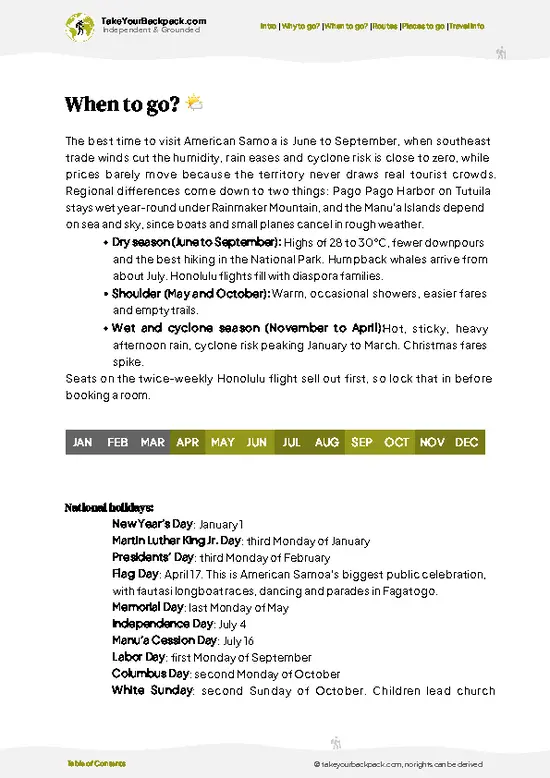
example page 1 from our offline Travel Guide for American Samoa
example page 2 from our offline Travel Guide for American Samoa
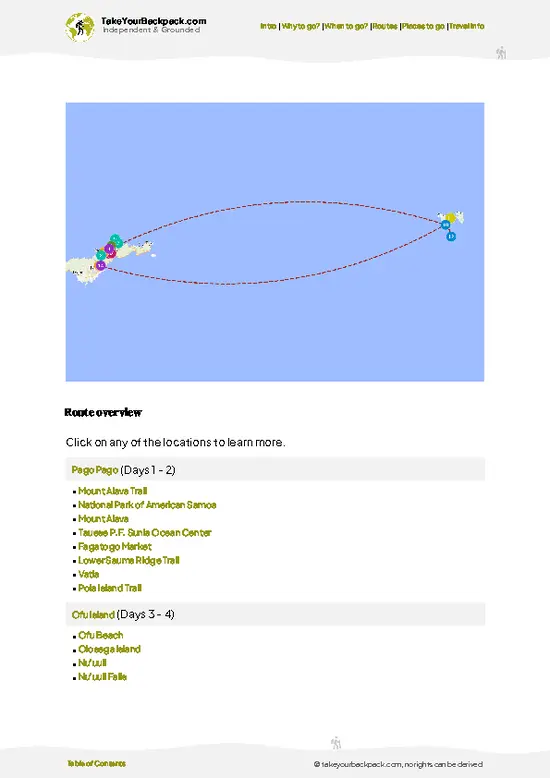
example page 3 from our offline Travel Guide for American Samoa
example page 4 from our offline Travel Guide for American Samoa
example page 5 from our offline Travel Guide for American Samoa
example page 6 from our offline Travel Guide for American Samoa
example page 7 from our offline Travel Guide for American Samoa
Loading the map 🌍
CLICK TO FILTER
towns
villages
landmarks
national parks
hikes
beaches
attractions
festivals
regions
SHOW COUNTRY’S BESTSHOW ALL

✨ Why go?
Ranked #4 beach in American Samoa
Reasons people choose to visit here

Backpackers come to Tula because it is the easternmost end of Tutuila, and getting there means a long ride along a coast road past small villages, where kids wave and pigs wander the verge. The pull is the sense of reaching an actual edge: Cape Matatula faces open ocean with nothing between you and the far side of the Pacific, and the surf throws spray against dark volcanic rock. It is also a reliable way to see village life without a tour. Church bells, Sunday quiet and rows of fale (open-sided houses) give context that Pago Pago’s harbor does not. Costs stay low because there is little to spend money on, so the trip is mostly about fuel or a bus fare and a packed lunch. People use it as an end-of-the-line pause on an east-side loop, then turn around and drift back toward the harbor with … read more 👉
Backpackers come to Tula because it is the easternmost end of Tutuila, and getting there means a long ride along a coast road past small villages, where kids wave and pigs wander the verge. The pull is the sense of reaching an actual edge: Cape Matatula faces open ocean with nothing between you and the far side of the Pacific, and the surf throws spray against dark volcanic rock. It is also a reliable way to see village life without a tour. Church bells, Sunday quiet and rows of fale (open-sided houses) give context that Pago Pago’s harbor does not. Costs stay low because there is little to spend money on, so the trip is mostly about fuel or a bus fare and a packed lunch. People use it as an end-of-the-line pause on an east-side loop, then turn around and drift back toward the harbor with a full camera roll and a salty breeze still in their hair.

💡 HighlightsKey sights and experiences for travelers

  1. Cape Matatula: the island’s easternmost point, where lava rock meets heavy surf. Stand back from the edge and watch the swells burst in white plumes against the cliffs.
  2. Tula Village Walk: stroll the single road past fale, churches and gardens. You see how a village actually runs, from taro plots to shared lawns.
  3. Shoreline Photography at Sunrise: the east-facing coast catches first light, and the black rock turns copper for a short time. It is the best hour here.
  4. Rock Pool Wading: at low tide, small pools form among the lava shelves. Wear sturdy sandals and look for crabs and small reef fish, but stay away from the open surf.
  5. Coastal Drive Stops: the road in passes lookouts and small coves, each with a different angle on the reef and the cliffs. Pull over wherever the view opens up.
Most visitors … read more 👉
  1. Cape Matatula: the island’s easternmost point, where lava rock meets heavy surf. Stand back from the edge and watch the swells burst in white plumes against the cliffs.
  2. Tula Village Walk: stroll the single road past fale, churches and gardens. You see how a village actually runs, from taro plots to shared lawns.
  3. Shoreline Photography at Sunrise: the east-facing coast catches first light, and the black rock turns copper for a short time. It is the best hour here.
  4. Rock Pool Wading: at low tide, small pools form among the lava shelves. Wear sturdy sandals and look for crabs and small reef fish, but stay away from the open surf.
  5. Coastal Drive Stops: the road in passes lookouts and small coves, each with a different angle on the reef and the cliffs. Pull over wherever the view opens up.
Most visitors rush to the point and miss the rock pools, which are quiet, calm and full of small life at low tide.
Spotted a mistake or missing something? Contact us.

🌤️ When to go?Choosing the right time of year

  • Dry Season (May to October): Tula’s east-facing coast gets steadier sunshine, with highs around 29 to 31°C (84 to 88°F) and nights near 24°C (75°F). Trade winds keep the afternoons breezy, and showers are brief.
  • Wet Season (November to April): Expect heavy downpours, humidity that makes shirts stick, and highs of 30 to 32°C (86 to 90°F). Cyclone risk peaks from January to March, and the road along the east coast can get rough after storms.
  • Daylight: Sunrise comes around 6:00 to 6:45 a.m. and sunset around 5:50 to 6:40 p.m. all year, so plan beach time before late afternoon.
  • Crowds and Prices: Tula is a quiet village beach. Visitors are scarce in every month, and lodging on the island stays about the same year-round, apart from small bumps around the Flag Day festivities in April.
  • Activities: Swell
… read more 👉
  • Dry Season (May to October): Tula’s east-facing coast gets steadier sunshine, with highs around 29 to 31°C (84 to 88°F) and nights near 24°C (75°F). Trade winds keep the afternoons breezy, and showers are brief.
  • Wet Season (November to April): Expect heavy downpours, humidity that makes shirts stick, and highs of 30 to 32°C (86 to 90°F). Cyclone risk peaks from January to March, and the road along the east coast can get rough after storms.
  • Daylight: Sunrise comes around 6:00 to 6:45 a.m. and sunset around 5:50 to 6:40 p.m. all year, so plan beach time before late afternoon.
  • Crowds and Prices: Tula is a quiet village beach. Visitors are scarce in every month, and lodging on the island stays about the same year-round, apart from small bumps around the Flag Day festivities in April.
  • Activities: Swell on the east coast tends to build in the drier months, which suits experienced surfers and coastal hikers.
Book flights into Pago Pago for June or July and you get the driest weather with the least fuss.


source: climatestotravel.comJANJanuary: fair for travelingFEBFebruary: fair for travelingMARMarch: fair for travelingAPRApril: good for travelingMAYMay: excellent for travelingJUNJune: excellent for travelingJULJuly: excellent for travelingAUGAugust: excellent for travelingSEPSeptember: excellent for travelingOCTOctober: excellent for travelingNOVNovember: good for travelingDECDecember: fair for traveling
american-samoa-beach-tula-beach
© Google | Courtney Bohler

✈️ The backpacker research shortcutAmerican Samoa Travel Guide

An offline-friendly backpacking guide with optimized travel routes, ranked highlights, transport advice, and the best areas to stay.
example page 0 from our offline Travel Guide for American Samoa
example page 1 from our offline Travel Guide for American Samoa
example page 2 from our offline Travel Guide for American Samoa
example page 3 from our offline Travel Guide for American Samoa
example page 4 from our offline Travel Guide for American Samoa
example page 5 from our offline Travel Guide for American Samoa
example page 6 from our offline Travel Guide for American Samoa
example page 7 from our offline Travel Guide for American Samoa
The digital guide (141 pages) contains:
✅ 36 highlights, ranked by travel appeal
✅ Optimized 2, 3 & 5-day travel routes
✅ Cities, national parks, landmarks, beaches
✅ How to get around
✅ Offline-friendly for travel without Wi-Fi
👉 Click to see all 30+ guide features

📅 Plan smarter in minutes, not weeks
✅ Month by month travel advice
✅ Festivals & national holidays
✅ Budget expectations

🗺️ Go to the right places, skip the overrated ones
✅ Honest pros & cons of destinations
✅ Top hikes, parks & viewpoints
✅ Lesser-known places most travelers miss
✅ Clear “worth it vs skip it” guidance

🛏️ Travel smoothly without rookie mistakes
✅ Best areas to stay
✅ Transport systems explained simply
✅ Common scams & safety advice
✅ SIM cards, money & practical tips

🌍 Understand the country, not just visit it
✅ Culture & traditions
✅ 52 Essential phrases & customs
✅ Festivals worth planning around
✅ Traveler-friendly historical context
✅ Insights that make places more meaningful

📱 Built for real travel conditions
✅ Fully downloadable PDF
✅ Works completely offline
✅ Optimized for phone use
✅ Useful in remote areas & buses
✅ Everything in one place
Stop searching, start planning
Get instant access to your full guide. 30‑day money-back guarantee.
+ Add another guide for just

By proceeding you agree to our terms.
Sent to your inbox immediately after payment • 100% Secure Checkout
Best Backpacking Travel Advisor 2025 tourism awardBest Backpacking
Travel Advisor
2025
What others say about Take Your Backpack Guides:
⭐⭐⭐⭐⭐
Fantastic, amazing amount of information!
⭐⭐⭐⭐⭐
My goodness this is amazing, it's what I've been looking for hats off too you!
⭐⭐⭐⭐⭐
I think this is absolutely BRILLIANT
⭐⭐⭐⭐
Very complete and informative. It's still missing places, but I gotta to commend you
⭐⭐⭐⭐⭐
This is truly amazing, thank you, can't wait to explore it with my kids!
⭐⭐⭐⭐⭐
Awesome resource, thank you!
⭐⭐⭐⭐⭐
This is amazing! Can't wait to explore the ones I haven't seen
⭐⭐⭐⭐
I love this! Well done, great idea.
⭐⭐⭐⭐⭐
Thanks for taking the time to make this gem!
⭐⭐⭐⭐⭐
This might be the best website I've ever seen.
⭐⭐⭐⭐⭐
Congratulations, and thank you so much for your work; it's incredibly valuable.
⭐⭐⭐⭐
In all seriousness I think you did a great job pointing out the important spots
⭐⭐⭐⭐⭐
10/10 very good
⭐⭐⭐⭐⭐
As someone who's only just starting to visit regularly this is awesome, thank you.
⭐⭐⭐⭐
Thank you very much! I'm going to visit my dad, it's going to be very useful!
⭐⭐⭐⭐⭐
This is really cool! We'll be travelling for the first time and this definitely come in handy.
⭐⭐⭐⭐⭐
You are now our minister of culture, congratulations 👨‍💼
⭐⭐⭐⭐⭐
Just wanted to tell you that this is a pearl! Going to follow your recommendations.
⭐⭐⭐⭐⭐
This is so cool. I'll definitely be using the resource for my travels soon.
⭐⭐⭐⭐⭐
This is very impressive! Good work.
⭐⭐⭐⭐⭐
This is an amazing and informative site. Very well done!

🛏️ Where to stay?Best areas and accommodation options

The best base for Tula is the Pago Pago Harbor area, because Tula is a remote village at the far eastern end of Tutuila with almost no visitor lodging of its own. The harbor villages of Utulei, Fagatogo and Pago Pago town hold the island’s small cluster of budget rooms and guesthouses, and they are where other travelers, volunteers and government visitors gather. You can buy groceries at the Fagatogo market, eat cheap plates of chop suey and fried chicken at local stalls, and catch the colorful aiga buses from the bus stop by the market. Rooms and guesthouses here run roughly US$60 to 120 a night, … read more 👉
The best base for Tula is the Pago Pago Harbor area, because Tula is a remote village at the far eastern end of Tutuila with almost no visitor lodging of its own. The harbor villages of Utulei, Fagatogo and Pago Pago town hold the island’s small cluster of budget rooms and guesthouses, and they are where other travelers, volunteers and government visitors gather. You can buy groceries at the Fagatogo market, eat cheap plates of chop suey and fried chicken at local stalls, and catch the colorful aiga buses from the bus stop by the market. Rooms and guesthouses here run roughly US$60 to 120 a night, so the island is not a dirt-cheap stop.

Staying near the airport side in Tafuna or Nu’uuli suits those who want supermarkets, car rental counters and quicker arrival logistics. It is quiet and less social, but a rental car is easiest to collect there, and driving to Tula along the southeast coast road takes about an hour and a half each way. Homestays arranged through village contacts are another option for those who want local company, though they need advance planning. Solo travelers should favor the harbor for the easy walking and the chance to share rides.

🛡️ SafetyTraveler Safety Guide

Tula Beach is a village shoreline on the exposed east coast, so treat it as a place to walk, look and wade rather than a swim spot. Open Pacific swell hits the reef edge, and rips and strong surge are common when waves build, especially in the drier months when the swell is strongest. Inside the reef the water can be calm at high tide but shallow and sharp at low tide, so reef shoes help. Local kids swim in the sheltered spots, and watching where they go is a good guide. There are no lifeguards or flag systems.

The sun is fierce from mid-morning, with little shade on parts of the shore, so bring water and reef-safe sunscreen. Dogs roam freely in villages, which is a nuisance more than a danger. Theft is rare, but keep valuables out of parked cars. Ask permission before walking onto village … read more 👉
Tula Beach is a village shoreline on the exposed east coast, so treat it as a place to walk, look and wade rather than a swim spot. Open Pacific swell hits the reef edge, and rips and strong surge are common when waves build, especially in the drier months when the swell is strongest. Inside the reef the water can be calm at high tide but shallow and sharp at low tide, so reef shoes help. Local kids swim in the sheltered spots, and watching where they go is a good guide. There are no lifeguards or flag systems.

The sun is fierce from mid-morning, with little shade on parts of the shore, so bring water and reef-safe sunscreen. Dogs roam freely in villages, which is a nuisance more than a danger. Theft is rare, but keep valuables out of parked cars. Ask permission before walking onto village land, and avoid Sunday morning, when church takes priority and quiet is expected.

FAQTraveler FAQ

Take a rental car or taxi from Pago Pago or the airport and follow the southeast coast road to the village of Tula at the island’s eastern tip. The drive is about 1 to 1.5 hours from Pago Pago, and rental cars start at roughly US$60 to 90 a day. Aiga buses run toward the east side from the Fagatogo market, but services thin out and are infrequent on the far end, so plan a car for flexibility.
Swimming is limited, since Tula faces the open Pacific and the reef edge sees strong surge and rips. Calm pockets inside the reef allow wading at high tide, and local kids swim in the more sheltered spots. Snorkeling can be fine on flat days but is for confident swimmers only, and surfing is best left to experienced surfers who can read the reef passes and know the local breaks.
Yes, there is no entrance fee and no gate to pass through. Tula is a village shoreline, so it is polite to ask permission or greet residents before wandering onto land, and some villagers may ask for a small donation of a few US dollars if you park or access private frontage. Facilities such as restrooms and shops are minimal, so bring water and snacks from Pago Pago.
⚠️ Things can change over time, so always validate details locally before you go.

Other American Samoan beaches near Tula Beach

Explore more nearby:

  • Onenoa Beach—East-coast sunrise, palm-lined village sand, reef-edge snorkeling, coastal drive| 2 km away
  • Lauli’i Beach—Reef-break surf, low-tide flats, north-coast sunrise, village shoreline| 10 km away
  • Fagasa Bay—Dark sand and coral rubble, Fagasa Pass viewpoint, Mt. Alava Trail, village road| 17 km away

💡 Not sure where to go next?
Create a personalized itinerary for American Samoa including Tula Beach and the places that fit your trip.

Generate my itinerary

👉 Discover all beaches

Or checkout all American Samoa has to offer (think cities, towns, villages, national parks, hikes, beaches, festivals)
Country photo of American Samoa

We 💚 feedbackWhat to keep in mind

Give Tula a half day, no more. Leave early, spend an hour on the rocks, walk the village road, and be back toward town before the afternoon heat builds. I would bring water, a hat and shoes with grip, and skip a swimsuit unless the tide pools look calm.

✍️ Help improve this page!
The information on this page is based on in-depth research, insights shared by experienced travelers, and feedback from the local travel community in American Samoa. While every effort is made to keep the information accurate and current, conditions can change — so if you spot anything incorrect or outdated, please get in touch.


🙋‍♂️ Give feedback

👋 Meet the founderWho’s Behind Take Your Backpack?

Johan, backpacker and founder of TakeYourBackpackHi, I’m Johan (Netherlands 🇳🇱), the creator of TakeYourBackpack. Over the past 3 decades, I’ve backpacked through 90+ countries across six continents, gaining extensive experience with independent travel, long-term trips, and overland routes.

This site is built on a combination of firsthand travel experience and carefully curated insights from other backpackers. Many guides are based on places I’ve personally visited, while others bring together tips, observations, and practical advice shared by trusted travelers I’ve met along the way.

The goal is to provide realistic, experience-driven guidance — not generic itineraries — so you can explore destinations with better context, clearer expectations, and more confidence.