×

Angola🇦🇴 | festivalsLubango International Festival of CultureSprawling program, Cristo Rei viewpoint, Serra da Leba, craft stalls | things to do and best time to go

Explore Luanda International Jazz FestivalExplore FENACULT

Backpacking in Lubango International of Culture
By Johan Kruseman 🇳🇱 | Updated October 15, 2026

Curious travelers who like a program that shifts and sprawls suit this festival best, especially anyone happy to chat with strangers in Portuguese gestures and grins. If you need printed schedules and polished stages, you may find it less rewarding. It happens in Lubango, the highland capital of Huíla province in southwest Angola, where the air at roughly 1,700 meters is cool and dry, and evenings smell of woodsmoke and grilled corn. Sound drifts from drums, brass and amplifiers. Costs catch people out here: Angola is pricey, so book a bed weeks ahead and carry kwanzas in small notes, since card machines fail. Confirm dates locally, because programs shift. Allow a buffer day when flying from Luanda, as delays are common.

Discover everything you want to know in the 📖 Angola Travel Guide.


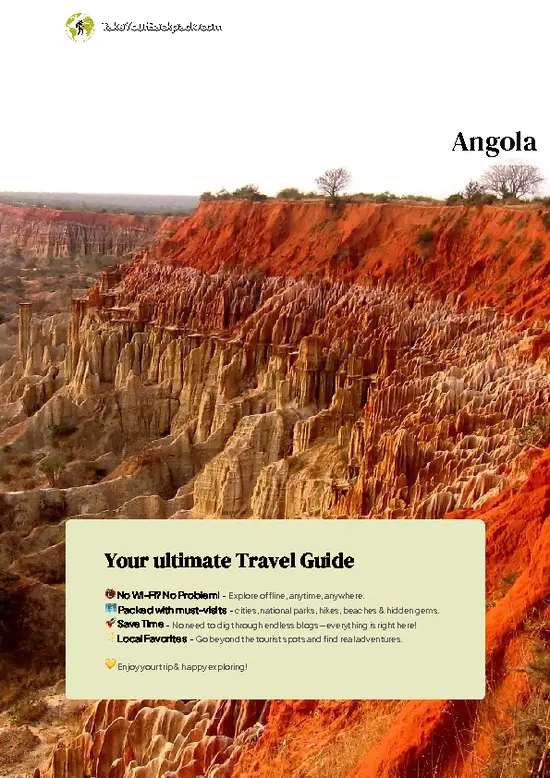
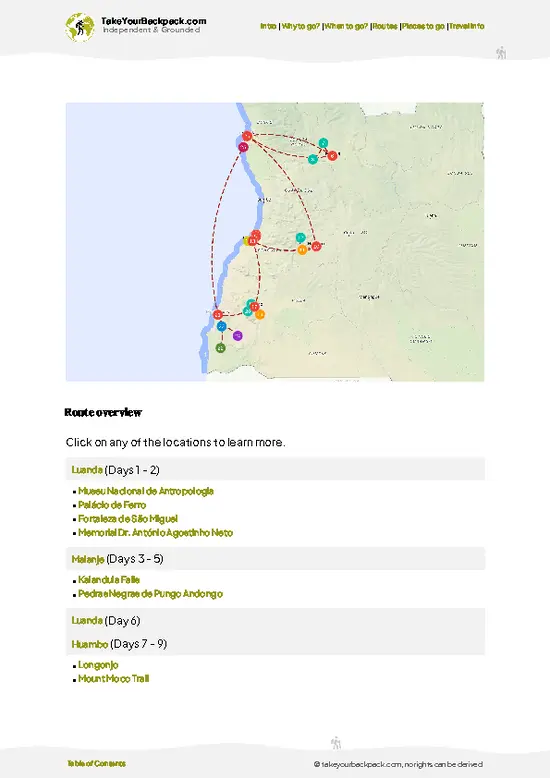
example page 0 from our offline Travel Guide for Angola
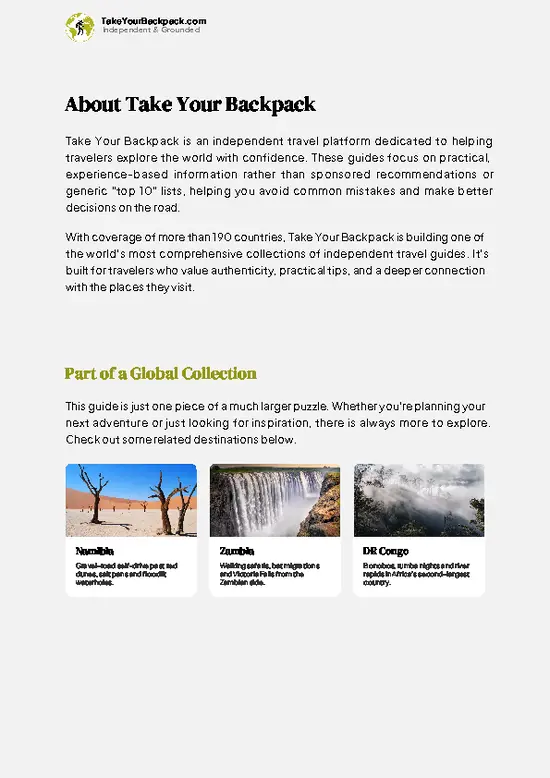
example page 1 from our offline Travel Guide for Angola
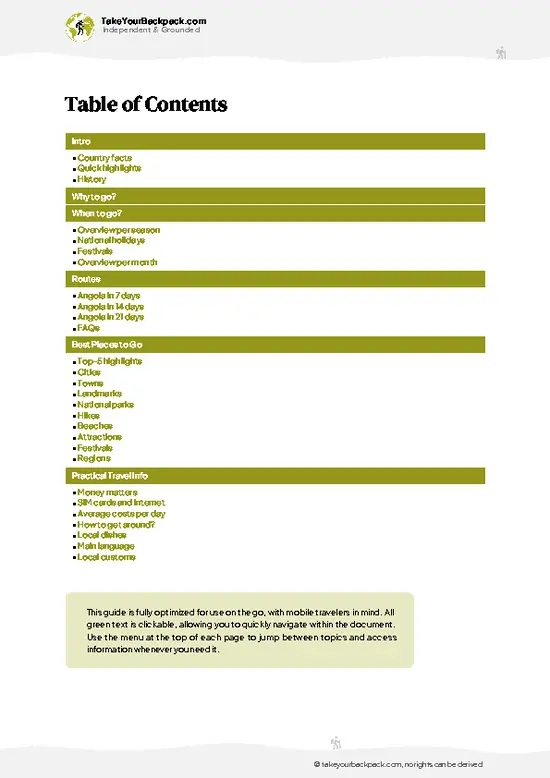
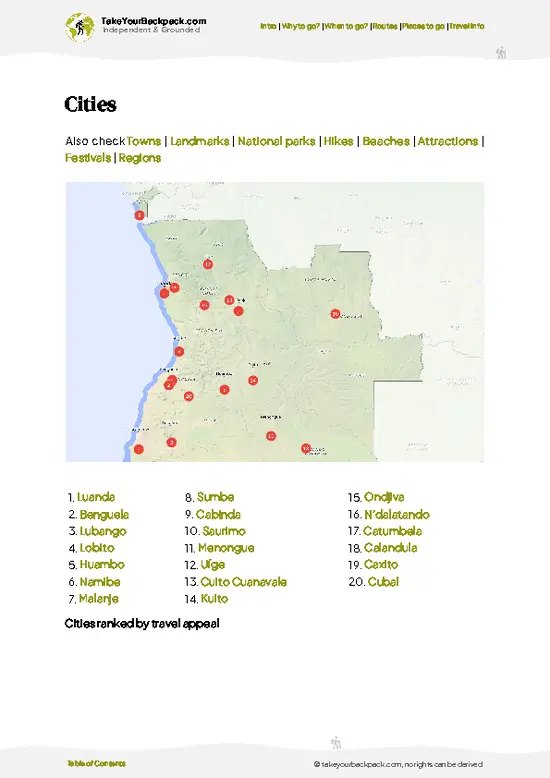
example page 2 from our offline Travel Guide for Angola
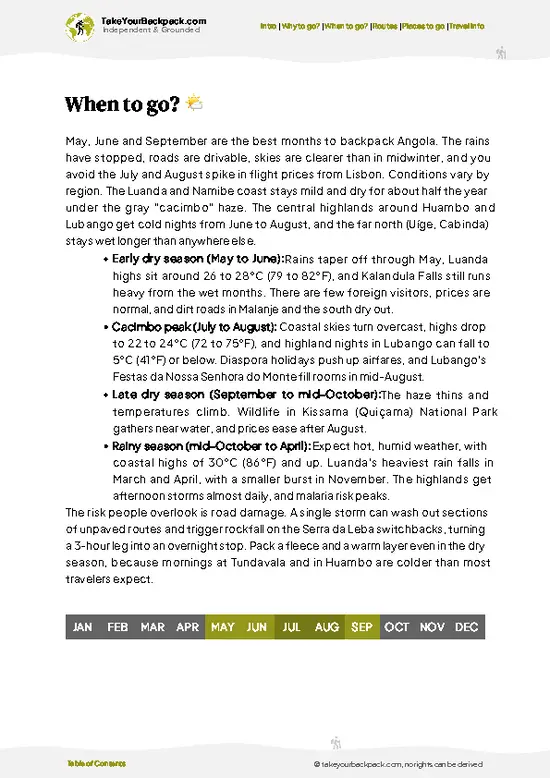
example page 3 from our offline Travel Guide for Angola
example page 4 from our offline Travel Guide for Angola
example page 5 from our offline Travel Guide for Angola
example page 6 from our offline Travel Guide for Angola
example page 7 from our offline Travel Guide for Angola
Loading the map 🌍
CLICK TO FILTER
cities
towns
landmarks
national parks
hikes
beaches
attractions
festivals
regions
SHOW COUNTRY’S BESTSHOW ALL

✨ Why go?
Ranked #99 festival in Angola
What makes this festival worth celebrating

Backpackers route through here because Lubango rewards a slow stay, and a festival gives that stay a pulse. The city sits on the Huíla plateau, so days are mild and you can walk between venues, markets and cafés without sweating through your shirt. Evenings fill with semba and kizomba from local performers, and dancing with people from Huíla and beyond is the quickest way to get past tourist small talk. The location also works for a bigger loop. The Serra da Leba switchbacks and the cliff edge at Tundavala are within day-trip range, and the desert coast around Namibe lies roughly three hours away by road. Angola is not a cheap country, so a festival that concentrates music, food and people into one compact city saves you from chasing sights across huge distances.

💡 HighlightsPlaces and moments you shouldn't skip

  1. Live semba and kizomba nights. These are Angola’s home-grown sounds, and hearing them from local musicians with a crowd that knows every word beats any recorded playlist.
  2. Traditional dance and costume displays. Groups from across Huíla and neighboring provinces show regional dress, rhythm and storytelling, which makes the plateau’s cultural variety easy to grasp in one afternoon.
  3. Craft and food stalls. Expect carved wood, woven goods and plates of grilled meat, funge and cassava, eaten standing up with sauce on your fingers. Small kwanza notes make buying quick.
  4. Cristo Rei viewpoint. The hilltop statue above Lubango looks over the city’s red roofs and the surrounding plateau, and late afternoon light there is soft and golden, a good break between events.
  5. Excursions to Tundavala and Serra da Leba.
… read more 👉
  1. Live semba and kizomba nights. These are Angola’s home-grown sounds, and hearing them from local musicians with a crowd that knows every word beats any recorded playlist.
  2. Traditional dance and costume displays. Groups from across Huíla and neighboring provinces show regional dress, rhythm and storytelling, which makes the plateau’s cultural variety easy to grasp in one afternoon.
  3. Craft and food stalls. Expect carved wood, woven goods and plates of grilled meat, funge and cassava, eaten standing up with sauce on your fingers. Small kwanza notes make buying quick.
  4. Cristo Rei viewpoint. The hilltop statue above Lubango looks over the city’s red roofs and the surrounding plateau, and late afternoon light there is soft and golden, a good break between events.
  5. Excursions to Tundavala and Serra da Leba. A drive to the Tundavala fissure, where the plateau drops away by hundreds of meters, and the zigzag Serra da Leba road pairs well with festival days when you want fresh air and space.
Cristo Rei is the best first stop, because it orients you in the city before the crowds and the music begin.
Spotted a mistake or missing something? Contact us.

🌤️ When to go?When is the celebration of Lubango International Festival of Culture?

The Lubango International Festival of Culture is usually held in Lubango, the capital of Huíla Province, in the second half of the year, with dates set by the provincial authorities each year. Events cluster around the city center and the Praça da Nossa Senhora do Monte area.
  • Cacimbo (dry season, May to September): Days reach 22 to 26°C (72 to 79°F), nights drop to 6 to 10°C (43 to 50°F) at roughly 1,700 m altitude. Skies are clear, with about 11 hours of daylight. Crowds and prices peak.
  • Early Rains (October to December): Highs of 24 to 27°C (75 to 81°F), afternoon storms, and lower accommodation prices.
  • Main Rains (January to April): Warm, green and wet, with 22 to 26°C (72 to 79°F). Outdoor stages are often disrupted.
Confirm dates with the Huíla provincial culture office a few weeks ahead, then book beds early.

source: climatestotravel.comJANJanuary: not recommended for travelingFEBFebruary: not recommended for travelingMARMarch: not recommended for travelingAPRApril: not recommended for travelingMAYMay: excellent for travelingJUNJune: not recommended for travelingJULJuly: not recommended for travelingAUGAugust: not recommended for travelingSEPSeptember: not recommended for travelingOCTOctober: not recommended for travelingNOVNovember: not recommended for travelingDECDecember: not recommended for traveling

✈️ The backpacker research shortcutAngola Travel Guide

An offline-friendly backpacking guide with optimized travel routes, ranked highlights, transport advice, and the best areas to stay.
example page 0 from our offline Travel Guide for Angola
example page 1 from our offline Travel Guide for Angola
example page 2 from our offline Travel Guide for Angola
example page 3 from our offline Travel Guide for Angola
example page 4 from our offline Travel Guide for Angola
example page 5 from our offline Travel Guide for Angola
example page 6 from our offline Travel Guide for Angola
example page 7 from our offline Travel Guide for Angola
The digital guide (246 pages) contains:
✅ 71 highlights, ranked by travel appeal
✅ Optimized 7, 14 & 21-day travel routes
✅ Cities, national parks, landmarks, beaches
✅ How to get around
✅ Offline-friendly for travel without Wi-Fi
👉 Click to see all 30+ guide features

📅 Plan smarter in minutes, not weeks
✅ Month by month travel advice
✅ Festivals & national holidays
✅ Budget expectations

🗺️ Go to the right places, skip the overrated ones
✅ Honest pros & cons of destinations
✅ Top hikes, parks & viewpoints
✅ Lesser-known places most travelers miss
✅ Clear “worth it vs skip it” guidance

🛏️ Travel smoothly without rookie mistakes
✅ Best areas to stay
✅ Transport systems explained simply
✅ Common scams & safety advice
✅ SIM cards, money & practical tips

🌍 Understand the country, not just visit it
✅ Culture & traditions
✅ 52 Essential phrases & customs
✅ Festivals worth planning around
✅ Traveler-friendly historical context
✅ Insights that make places more meaningful

📱 Built for real travel conditions
✅ Fully downloadable PDF
✅ Works completely offline
✅ Optimized for phone use
✅ Useful in remote areas & buses
✅ Everything in one place
Stop searching, start planning
Get instant access to your full guide. 30‑day money-back guarantee.
+ Add another guide for just

By proceeding you agree to our terms.
Sent to your inbox immediately after payment • 100% Secure Checkout
Best Backpacking Travel Advisor 2025 tourism awardBest Backpacking
Travel Advisor
2025
What others say about Take Your Backpack Guides:
⭐⭐⭐⭐⭐
Fantastic, amazing amount of information!
⭐⭐⭐⭐⭐
My goodness this is amazing, it's what I've been looking for hats off too you!
⭐⭐⭐⭐⭐
I think this is absolutely BRILLIANT
⭐⭐⭐⭐
Very complete and informative. It's still missing places, but I gotta to commend you
⭐⭐⭐⭐⭐
This is truly amazing, thank you, can't wait to explore it with my kids!
⭐⭐⭐⭐⭐
Awesome resource, thank you!
⭐⭐⭐⭐⭐
This is amazing! Can't wait to explore the ones I haven't seen
⭐⭐⭐⭐
I love this! Well done, great idea.
⭐⭐⭐⭐⭐
Thanks for taking the time to make this gem!
⭐⭐⭐⭐⭐
This might be the best website I've ever seen.
⭐⭐⭐⭐⭐
Congratulations, and thank you so much for your work; it's incredibly valuable.
⭐⭐⭐⭐
In all seriousness I think you did a great job pointing out the important spots
⭐⭐⭐⭐⭐
10/10 very good
⭐⭐⭐⭐⭐
As someone who's only just starting to visit regularly this is awesome, thank you.
⭐⭐⭐⭐
Thank you very much! I'm going to visit my dad, it's going to be very useful!
⭐⭐⭐⭐⭐
This is really cool! We'll be travelling for the first time and this definitely come in handy.
⭐⭐⭐⭐⭐
You are now our minister of culture, congratulations 👨‍💼
⭐⭐⭐⭐⭐
Just wanted to tell you that this is a pearl! Going to follow your recommendations.
⭐⭐⭐⭐⭐
This is so cool. I'll definitely be using the resource for my travels soon.
⭐⭐⭐⭐⭐
This is very impressive! Good work.
⭐⭐⭐⭐⭐
This is an amazing and informative site. Very well done!

🛏️ Where to stay?Best areas and accommodation options

The city center of Lubango is the best base, because most festival venues, markets and restaurants are within a 10 to 20 minute walk. Staying here also means you can return on foot after evening performances, which matters since taxi availability thins out late at night.
The streets around the central avenues and the main square are the safest and most social. Guesthouses and small pensions here attract a mix of Angolan visitors, NGO workers and a few overseas travelers, so conversations start easily at breakfast tables. Book early, because rooms fill fast during festival days.
The Mapunda and Nambambi … read more 👉
The city center of Lubango is the best base, because most festival venues, markets and restaurants are within a 10 to 20 minute walk. Staying here also means you can return on foot after evening performances, which matters since taxi availability thins out late at night.
The streets around the central avenues and the main square are the safest and most social. Guesthouses and small pensions here attract a mix of Angolan visitors, NGO workers and a few overseas travelers, so conversations start easily at breakfast tables. Book early, because rooms fill fast during festival days.
The Mapunda and Nambambi neighborhoods are quieter residential options a short taxi or moto ride away, usually cheaper and calmer, but less lively after dark. Stay near the center if you are traveling alone.
The Cristo Rei hilltop area is pleasant for views and cooler air, though it is a steep climb and rides are needed. Sleeping near the bus terminal is convenient for onward travel but noisier and less comfortable for solo arrivals after dark.

👛 Costs (as of 15 October 2026)How expensive it really is

Budget about US$55 to 110 per day for the Lubango International Festival of Culture, with accommodation as the biggest variable. Angola is pricey by regional standards, though Lubango is cheaper than Luanda. Prices are quoted in US dollars, while payment is made in kwanza (AOA).
CategoryBudget RangeLocal Reality
Festival ticketsUSD 0 to 10Most street and square events are free. Some concerts or gala evenings charge a small entry fee.
AccommodationUSD 25 to 70Simple guesthouse rooms start around USD 25, while mid-range hotels cost USD 50 to 70 and rise during festival days.
Local transportUSD 3 to 12Shared taxis (candongueiros) and moto-taxis cost a few dollars. Private taxis cost more, especially after dark.
Food & drinksUSD 12 to 30Street grills and local plates cost USD 3 to 8, restaurant meals
… read more 👉
Budget about US$55 to 110 per day for the Lubango International Festival of Culture, with accommodation as the biggest variable. Angola is pricey by regional standards, though Lubango is cheaper than Luanda. Prices are quoted in US dollars, while payment is made in kwanza (AOA).
CategoryBudget RangeLocal Reality
Festival ticketsUSD 0 to 10Most street and square events are free. Some concerts or gala evenings charge a small entry fee.
AccommodationUSD 25 to 70Simple guesthouse rooms start around USD 25, while mid-range hotels cost USD 50 to 70 and rise during festival days.
Local transportUSD 3 to 12Shared taxis (candongueiros) and moto-taxis cost a few dollars. Private taxis cost more, especially after dark.
Food & drinksUSD 12 to 30Street grills and local plates cost USD 3 to 8, restaurant meals USD 10 to 20, and a beer USD 1.50 to 3.
Miscellaneous expensesUSD 5 to 15Crafts, SIM card data, tips and occasional entry fees to nearby sights such as Tundavala Gap.
⚠️ Prices can change and everyone travels differently, so take this as a rough guide. Hope it helps you plan your adventure!

🍲 FoodLocal Flavors for Backpackers

Expect grilled meat and fish sizzling on charcoal around the festival grounds, served with funge (cassava or maize porridge) and muamba de galinha, chicken stewed in palm oil with okra and garlic. Huíla is cattle country, so grilled beef and goat turn up often, and the smoky smell pulls you across the crowd.
Try kizaca (cassava leaves cooked with peanuts and fish) and calulu, a slow-cooked dried fish or meat stew, from the women running small stalls. These dishes taste like home cooking, not tourist menus. Street snacks include mandioca frita, grilled corn and sweet fried dough.
For drinks, Cuca and Nocal beers are everywhere, usually served very cold. Look for traditional fermented drinks such as maruvo (palm wine) and sweet kissangua made from maize. Soft drinks and bottled water are easy … read more 👉
Expect grilled meat and fish sizzling on charcoal around the festival grounds, served with funge (cassava or maize porridge) and muamba de galinha, chicken stewed in palm oil with okra and garlic. Huíla is cattle country, so grilled beef and goat turn up often, and the smoky smell pulls you across the crowd.
Try kizaca (cassava leaves cooked with peanuts and fish) and calulu, a slow-cooked dried fish or meat stew, from the women running small stalls. These dishes taste like home cooking, not tourist menus. Street snacks include mandioca frita, grilled corn and sweet fried dough.
For drinks, Cuca and Nocal beers are everywhere, usually served very cold. Look for traditional fermented drinks such as maruvo (palm wine) and sweet kissangua made from maize. Soft drinks and bottled water are easy to find.
Bring cash in small kwanza notes, since most stalls do not take cards and change can be scarce. Portions are generous and meant for sharing. Lines move slowly, and food is cooked to order, so patience is part of the experience.

FAQFrequently asked questions about Lubango International of Culture

Dates change by edition, so check the current program with local cultural offices or the festival’s announcements before booking. The event is held in Lubango, Huíla province, and the city also hosts the Nossa Senhora do Monte celebrations around early August. Book a bed at least three to four weeks ahead if your trip overlaps.
Entry to many public cultural events in Angola is free or low-cost, but plan for the surrounding spending. Budget guesthouses in Lubango typically run about US$40 to 90 a night, and a street meal costs roughly US$3 to 8. Carry kwanzas in small notes, because card payments often fail.
Tickets are usually not needed for open-air performances and street events, though some ticketed concerts or indoor shows may require buying at the venue. Beds are the thing to reserve in advance, not entry. Flights from Luanda take about 1 hour 40 minutes, and the road trip is roughly 1,000 kilometers, so arrive a day early.
⚠️ Things can change over time, so always validate details locally before you go.

Other Angolan festivals near Lubango International of Culture

Explore more nearby:


💡 Not sure where to go next?
Create a personalized itinerary for Angola including Lubango International of Culture and the places that fit your trip.

Generate my itinerary

👉 Discover all festivals

Or checkout all Angola has to offer (think cities, towns, villages, national parks, hikes, beaches, festivals)
Country photo of Angola

We 💚 feedbackSumming up the experience

Treat Lubango as the middle of a southwest loop. Fly or bus in from Luanda, spend the festival days here, then head down the Serra da Leba to Namibe and the desert coast, where the heat and silence feel like another country. Pack a fleece for chilly highland nights, and confirm your return transport early.

✍️ Help improve this page!
The information on this page is based on in-depth research, insights shared by experienced travelers, and feedback from the local travel community in Angola. While every effort is made to keep the information accurate and current, conditions can change — so if you spot anything incorrect or outdated, please get in touch.


🙋‍♂️ Give feedback

👋 Meet the founderWho’s Behind Take Your Backpack?

Johan, backpacker and founder of TakeYourBackpackHi, I’m Johan (Netherlands 🇳🇱), the creator of TakeYourBackpack. Over the past 3 decades, I’ve backpacked through 90+ countries across six continents, gaining extensive experience with independent travel, long-term trips, and overland routes.

This site is built on a combination of firsthand travel experience and carefully curated insights from other backpackers. Many guides are based on places I’ve personally visited, while others bring together tips, observations, and practical advice shared by trusted travelers I’ve met along the way.

The goal is to provide realistic, experience-driven guidance — not generic itineraries — so you can explore destinations with better context, clearer expectations, and more confidence.