v2.webp)
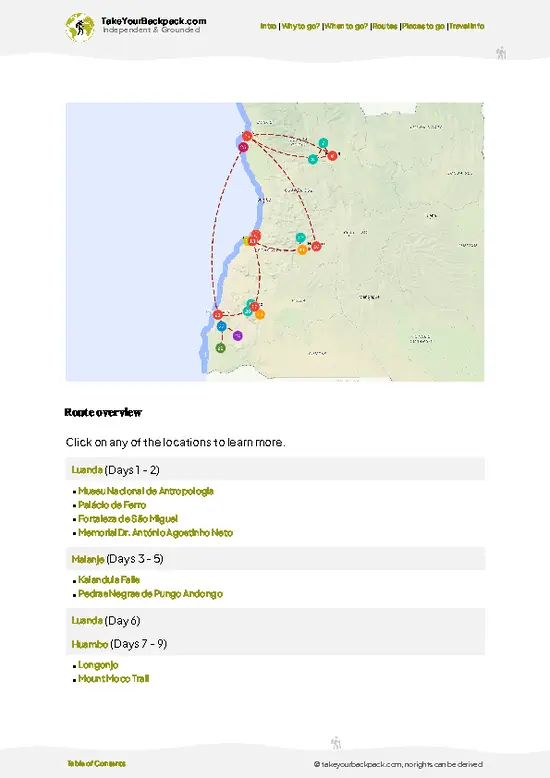
- Semba and kizomba in the jazz: Angolan musicians bring the country’s dance rhythms into improvisation, so even familiar tunes sound local. Listen for the shuffling percussion beneath the horns.
- Angolan voices and languages: Sets often include lyrics in Portuguese and Kimbundu, which gives the evenings a texture you won’t hear at European festivals.
- International guests next to local acts: Touring artists share the program with Angolan players, so you can compare traditions in a single night and see who borrows from whom.
- A crowd that dances: Luandans are not shy listeners. Couples dance in the aisles, people sing along to choruses, and the mood is closer to a party than a recital.
- Food and drink around the venue: Look for grilled fish, muamba de galinha (chicken stewed in palm oil with okra) and
- Semba and kizomba in the jazz: Angolan musicians bring the country’s dance rhythms into improvisation, so even familiar tunes sound local. Listen for the shuffling percussion beneath the horns.
- Angolan voices and languages: Sets often include lyrics in Portuguese and Kimbundu, which gives the evenings a texture you won’t hear at European festivals.
- International guests next to local acts: Touring artists share the program with Angolan players, so you can compare traditions in a single night and see who borrows from whom.
- A crowd that dances: Luandans are not shy listeners. Couples dance in the aisles, people sing along to choruses, and the mood is closer to a party than a recital.
- Food and drink around the venue: Look for grilled fish, muamba de galinha (chicken stewed in palm oil with okra) and a cold Cuca beer. Eating before or after the music is part of the evening, and prices at stalls beat those inside hotel venues.
Spotted a mistake or missing something? Contact us.

Luanda City tour

Kissama National Park Safari

Two hours around the Angolan Capital

Calandula Falls - Overnight Tour in Malange

Luanda Private Airport Transfer with Door to Door Service

Adventure at Quiçama National Park Safari and Nature

Overnight Adventure at Calandula Falls and Black Rocks

Transfers from February 4 airport-Luanda

The Shores of Kwanza : Boat Tour

 Best Backpacking
.jpg) Hi, I’m Johan (Netherlands 🇳🇱), the creator of TakeYourBackpack. Over the past 3 decades, I’ve backpacked through 90+ countries across six continents, gaining extensive experience with independent travel, long-term trips, and overland routes.
Hi, I’m Johan (Netherlands 🇳🇱), the creator of TakeYourBackpack. Over the past 3 decades, I’ve backpacked through 90+ countries across six continents, gaining extensive experience with independent travel, long-term trips, and overland routes.