×

Angola🇦🇴 | attractionsTeatro Nacional de AngolaGrand auditorium, national performances, orchestral concerts | things to do and best time to go

Explore Palácio de FerroExplore Elinga Teatro

Backpacking in Teatro Nacional de Angola
👌 Worth visitingattraction ranked #13
By Johan Kruseman 🇳🇱 | Updated September 3, 2026

Forget the glossy travel blogs—here’s a fact you won’t see on your feed: the Teatro Nacional de Angola isn’t just a stage for highbrow opera or government galas. On random weeknights, you’ll find local hip-hop battles, experimental dance, and the kind of raw, unfiltered storytelling that never makes it to the tourist brochures. Smack in the heart of Luanda, this theater is Angola’s cultural nerve center, but don’t expect velvet ropes and polite applause. The building itself is a bit battered, and the neighborhood is more real-life hustle than postcard pretty. Backpackers who crave authenticity over airbrushed experiences will find the crowds refreshingly local—no busloads of camera-toting tourists, but you’ll want to keep your wits about you after dark. Tickets are cheap by global standards, but the real cost is in the energy it takes to navigate Luanda’s chaos. Compared to Angola’s natural wonders, this place is pure urban adrenaline—messy, alive, and absolutely worth the detour if you want to feel the city’s pulse, not just see its surface.

Discover everything you want to know in the 📖 Angola Travel Guide.


Get your Angola guide
90 ranked highlights, routes & tips, works offline (341 pages)
Loading the map 🌍
CLICK TO FILTER
cities
towns
landmarks
national parks
hikes
beaches
attractions
festivals
regions
SHOW COUNTRY’S BESTSHOW ALL

✨ Why go?
Ranked #13 attraction in Angola
What makes it a must-see attraction

The Teatro Nacional de Angola isn’t just another photo op on your Angola itinerary—it’s a raw, pulsating symbol of the country’s cultural heartbeat. Sure, it’s not tucked away in some quiet corner; expect crowds, especially during performances or festivals. But that buzz is part of the deal. This place is where Angola’s complex history and vibrant present collide, making it a must-stop for anyone serious about understanding the country beyond the surface. The architecture alone tells a story—bold, modernist, and unapologetically Angolan, it stands as a monument to post-independence ambition and resilience.

Backpackers who carve out time here aren’t just ticking a box; they’re diving into a living archive of Angolan identity. The performances range from traditional music and dance to cutting-edge … read more 👉
The Teatro Nacional de Angola isn’t just another photo op on your Angola itinerary—it’s a raw, pulsating symbol of the country’s cultural heartbeat. Sure, it’s not tucked away in some quiet corner; expect crowds, especially during performances or festivals. But that buzz is part of the deal. This place is where Angola’s complex history and vibrant present collide, making it a must-stop for anyone serious about understanding the country beyond the surface. The architecture alone tells a story—bold, modernist, and unapologetically Angolan, it stands as a monument to post-independence ambition and resilience.

Backpackers who carve out time here aren’t just ticking a box; they’re diving into a living archive of Angolan identity. The performances range from traditional music and dance to cutting-edge theater that challenges social norms. It’s a cultural adrenaline rush that rewards the effort of navigating Luanda’s chaotic streets. More than that, it’s a milestone on the country route—a place where you can feel the pulse of Angola’s artistic soul, raw and unfiltered. If you want to skip the tourist gloss and get real, this is where you start.
Want to include Teatro Nacional de Angola in your Angola route?
Create a personalized Angola itinerary that includes Teatro Nacional de Angola and the places that fit your trip — based on your travel style, budget, and available time. Get your route in seconds.

Generate my trip

💡 HighlightsDon't-miss highlights and experiences

1. Live Angolan Dance Performances
Forget the sanitized, over-produced shows you see on travel posters. The real draw here is the raw, kinetic energy of Angolan dance—think Semba, Kizomba, and Kuduro—performed by local troupes who treat the stage like a living, breathing street corner. You’ll feel the floor vibrate with the stomp of bare feet and the snap of drums. This isn’t a tourist sideshow; it’s a living archive of Angola’s soul, and the crowd is as local as the performers. If you want to understand Angola, start with the rhythm.


2. Orchestral Concerts with a Local Twist
Yes, you’ll get your classical fix—Mozart, Beethoven, the usual suspects—but the real magic happens when the orchestra pivots to Angolan composers or fuses Western symphonies with traditional instruments. The sound is … read more 👉
1. Live Angolan Dance Performances
Forget the sanitized, over-produced shows you see on travel posters. The real draw here is the raw, kinetic energy of Angolan dance—think Semba, Kizomba, and Kuduro—performed by local troupes who treat the stage like a living, breathing street corner. You’ll feel the floor vibrate with the stomp of bare feet and the snap of drums. This isn’t a tourist sideshow; it’s a living archive of Angola’s soul, and the crowd is as local as the performers. If you want to understand Angola, start with the rhythm.


2. Orchestral Concerts with a Local Twist
Yes, you’ll get your classical fix—Mozart, Beethoven, the usual suspects—but the real magic happens when the orchestra pivots to Angolan composers or fuses Western symphonies with traditional instruments. The sound is lush, unfamiliar, and totally addictive. You’ll hear marimbas and ngomas where you expect violins. It’s a reminder that “high culture” isn’t just imported; it’s reimagined here, and the audience knows every note.


3. The Building Itself: Mid-Century Grandeur with Angolan Flair
Don’t let the Instagram filters fool you—this isn’t some pristine European opera house. The Teatro Nacional de Angola is a time capsule from the 1960s, with bold lines, retro mosaics, and a lobby that feels like a Wes Anderson set after a night out in Luanda. The patina is real. The wear and tear tell stories. You’re not here for perfection; you’re here for character. Every chipped tile and faded velvet seat is a reminder that this place has survived revolutions, blackouts, and decades of change.


4. Local Theater: Satire, Struggle, and Survival
If you’re expecting Shakespeare in the park, recalibrate. The theater scene here is sharp, political, and often hilarious. Plays tackle everything from colonial hangovers to daily life in Luanda, with a wit that cuts through language barriers. You’ll see actors who double as activists, scripts that flirt with censorship, and audiences that react out loud. It’s not always comfortable, but it’s never boring.


5. The Crowd: A Crash Course in Luanda’s Social Life
Here’s the secret: half the show is offstage. The lobby buzzes with politicians, artists, students, and families—everyone dressed to impress, everyone talking at once. If you want to see what Luanda looks like when it lets its guard down, this is the place. Skip the overpriced cocktails and just watch the people. You’ll learn more about Angola in one intermission than in a week of city tours.
Spotted a mistake or missing something? Contact us.

Things to do near Teatro Nacional de Angola

Ratings based on Tripadvisor reviews. When you book through this link, you support our work at no extra cost to you.

🌤️ When to go?Choosing the right time of year


  • Topic: Weather and Temperature – The best time to visit Teatro Nacional de Angola is during the dry season, from May to October. Expect daytime highs around 24-28°C (75-82°F), which is comfortable for exploring without the oppressive humidity and rain of the wet season. November to April brings heavy rains and temperatures climbing to 30-33°C (86-91°F), making outdoor activities less pleasant.

  • Topic: Daylight Hours – Angola sits near the equator, so daylight hours stay fairly consistent year-round, roughly 11 to 12 hours daily. This means you won’t lose much daylight no matter when you visit, but the dry season’s clearer skies make for better evening shows and safer late strolls around the theater.

  • Topic: Crowds – The theater sees its highest foot traffic during Angola’s cultural festivals,
read more 👉

  • Topic: Weather and Temperature – The best time to visit Teatro Nacional de Angola is during the dry season, from May to October. Expect daytime highs around 24-28°C (75-82°F), which is comfortable for exploring without the oppressive humidity and rain of the wet season. November to April brings heavy rains and temperatures climbing to 30-33°C (86-91°F), making outdoor activities less pleasant.

  • Topic: Daylight Hours – Angola sits near the equator, so daylight hours stay fairly consistent year-round, roughly 11 to 12 hours daily. This means you won’t lose much daylight no matter when you visit, but the dry season’s clearer skies make for better evening shows and safer late strolls around the theater.

  • Topic: Crowds – The theater sees its highest foot traffic during Angola’s cultural festivals, especially in July and August. If you want to dodge the crowds, avoid these months. However, visiting during festival season means catching performances that dive deep into Angolan heritage, a trade-off worth considering.

  • Topic: Seasonal Activities – The dry season aligns with the peak cultural calendar, including traditional dance and music events at the theater. These months offer a richer experience beyond just the architecture, with live performances that bring the space to life.

  • Topic: Price Fluctuations – Ticket prices and accommodation around the theater tend to spike during festival months (July and August) and national holidays. Visiting in the shoulder months of May, June, or September can save you money while still enjoying good weather and fewer tourists.


Pro-tip: Aim for late May or early September to catch the sweet spot of decent weather, manageable crowds, and better prices—perfect for soaking in the theater’s authentic vibe without the Instagram-style chaos.


source: climatestotravel.comJANJanuary: fair for travelingFEBFebruary: fair for travelingMARMarch: fair for travelingAPRApril: fair for travelingMAYMay: highly recommended for travelingJUNJune: highly recommended for travelingJULJuly: good for travelingAUGAugust: good for travelingSEPSeptember: highly recommended for travelingOCTOctober: highly recommended for travelingNOVNovember: below average for travelingDECDecember: below average for traveling
when-to-go

✈️ The backpacker research shortcutAngola Travel Guide

An offline-friendly backpacking guide with optimized travel routes, ranked highlights, transport advice, and the best areas to stay.
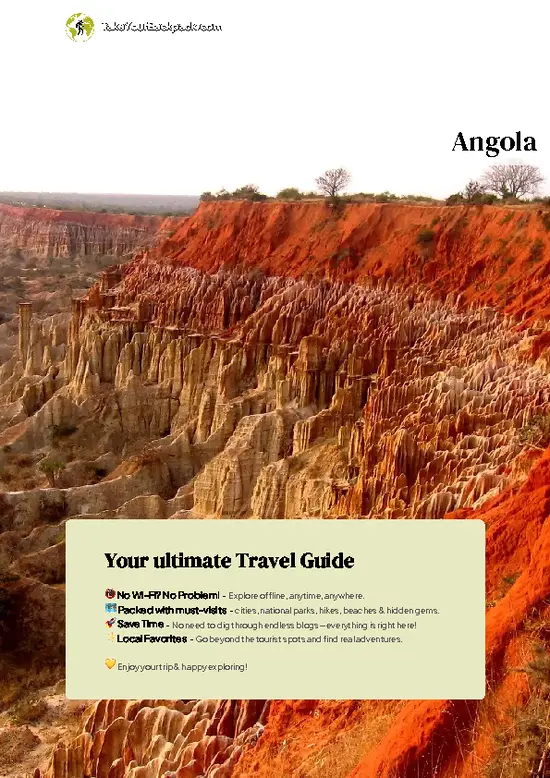
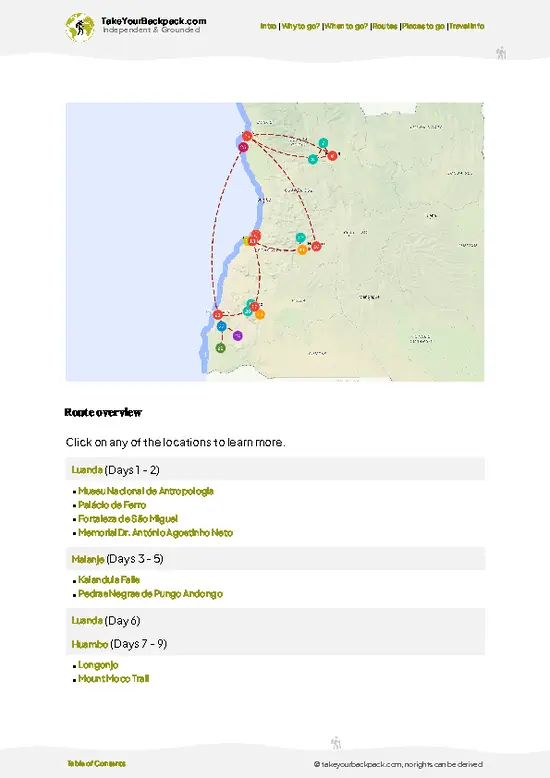
example page 0 from our offline Travel Guide for Angola
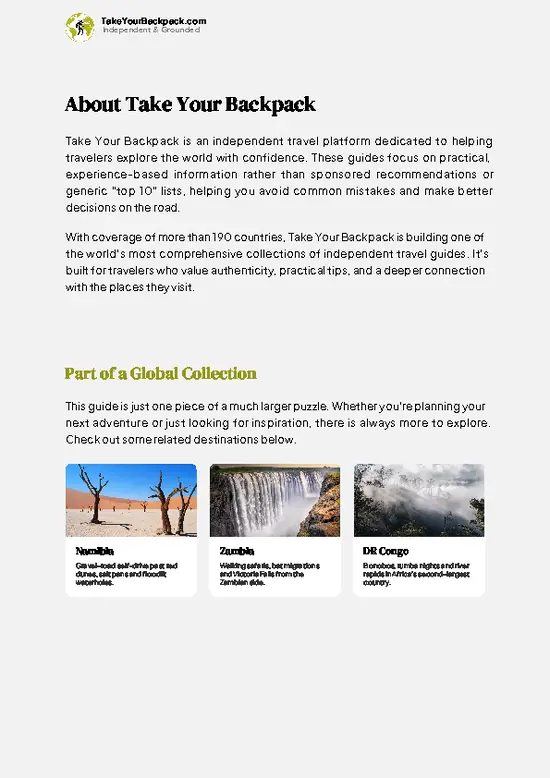
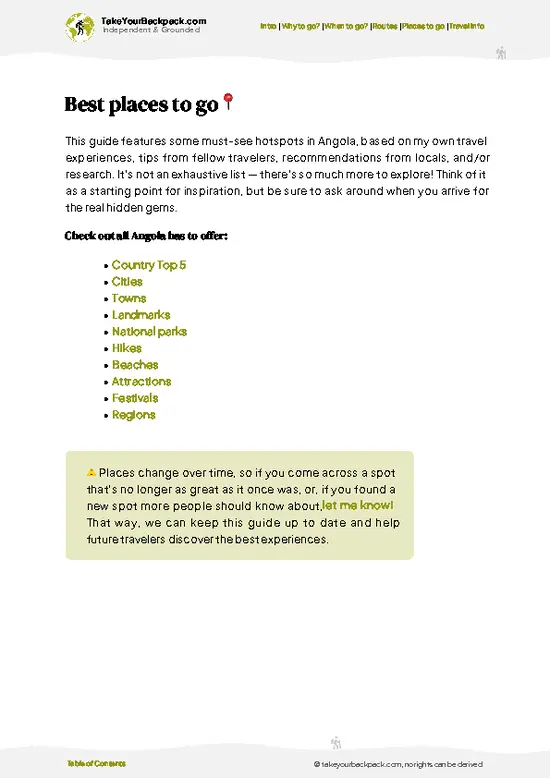
example page 1 from our offline Travel Guide for Angola
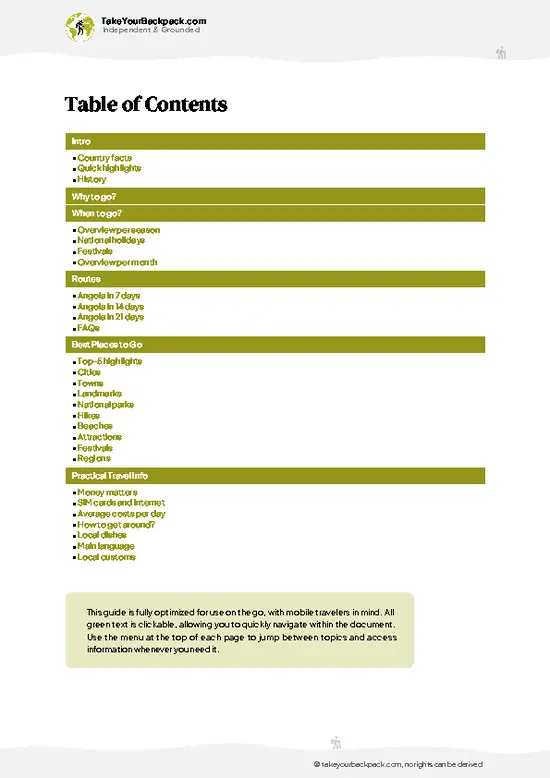
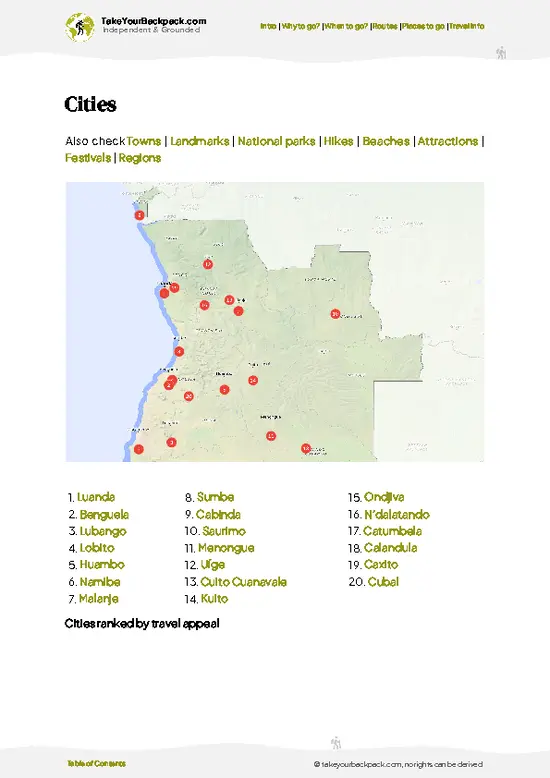
example page 2 from our offline Travel Guide for Angola
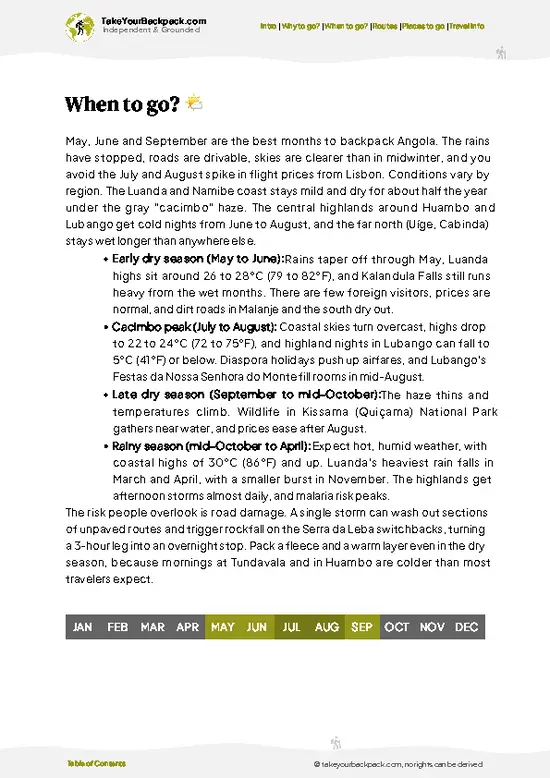
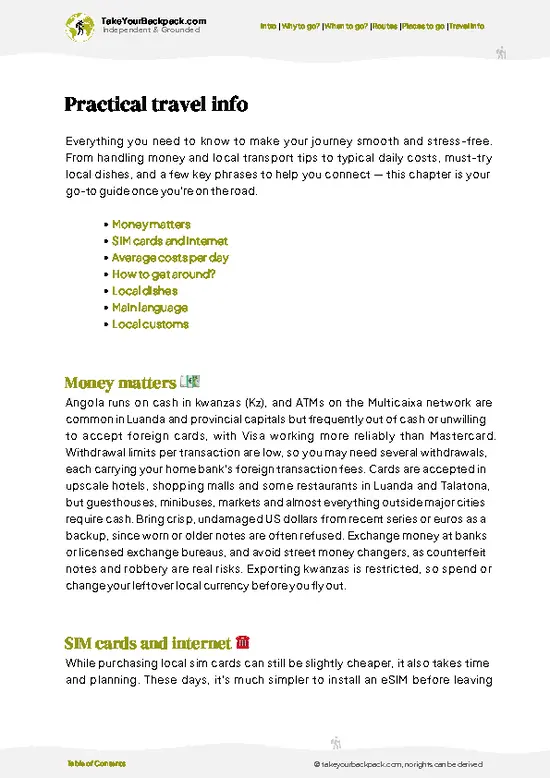
example page 3 from our offline Travel Guide for Angola
example page 4 from our offline Travel Guide for Angola
example page 5 from our offline Travel Guide for Angola
example page 6 from our offline Travel Guide for Angola
example page 7 from our offline Travel Guide for Angola
The digital guide (341 pages) contains:
90 highlights, ranked by travel appeal
Optimized 7, 14 & 21-day travel routes
Cities, national parks, landmarks, beaches
How to get around
Offline-friendly for travel without Wi-Fi
👉 Click to see all 30+ guide features

📅 Plan smarter in minutes, not weeks
Month by month travel advice
Festivals & national holidays
Budget expectations

🗺️ Go to the right places, skip the overrated ones
Honest pros & cons of destinations
Top hikes, parks & viewpoints
Lesser-known places most travelers miss
Clear “worth it vs skip it” guidance

🛏️ Travel smoothly without rookie mistakes
Best areas to stay
Transport systems explained simply
Common scams & safety advice
SIM cards, money & practical tips

🌍 Understand the country, not just visit it
Culture & traditions
52 Essential phrases & customs
Festivals worth planning around
Traveler-friendly historical context
Insights that make places more meaningful

📱 Built for real travel conditions
Fully downloadable PDF
Works completely offline
Optimized for phone use
Useful in remote areas & buses
Everything in one place
Save weeks of stressful planning
Get instant access to your full guide. 30‑day money-back guarantee.
+ Add another guide for just US$7.80

By proceeding you agree to our terms.
Sent to your inbox immediately after payment • 100% Secure Checkout
Best Backpacking Travel Advisor 2025 tourism awardBest Backpacking
Travel Advisor
2025
What others say about Take Your Backpack Guides:
⭐⭐⭐⭐⭐
Fantastic, amazing amount of information!
⭐⭐⭐⭐⭐
My goodness this is amazing, it's what I've been looking for hats off too you!
⭐⭐⭐⭐⭐
I think this is absolutely BRILLIANT
⭐⭐⭐⭐
Very complete and informative. It's still missing places, but I gotta to commend you
⭐⭐⭐⭐⭐
This is truly amazing, thank you, can't wait to explore it with my kids!
⭐⭐⭐⭐⭐
Awesome resource, thank you!
⭐⭐⭐⭐⭐
This is amazing! Can't wait to explore the ones I haven't seen
⭐⭐⭐⭐
I love this! Well done, great idea.
⭐⭐⭐⭐⭐
Thanks for taking the time to make this gem!
⭐⭐⭐⭐⭐
This might be the best website I've ever seen.
⭐⭐⭐⭐⭐
Congratulations, and thank you so much for your work; it's incredibly valuable.
⭐⭐⭐⭐
In all seriousness I think you did a great job pointing out the important spots
⭐⭐⭐⭐⭐
10/10 very good
⭐⭐⭐⭐⭐
As someone who's only just starting to visit regularly this is awesome, thank you.
⭐⭐⭐⭐
Thank you very much! I'm going to visit my dad, it's going to be very useful!
⭐⭐⭐⭐⭐
This is really cool! We'll be travelling for the first time and this definitely come in handy.
⭐⭐⭐⭐⭐
You are now our minister of culture, congratulations 👨‍💼
⭐⭐⭐⭐⭐
Just wanted to tell you that this is a pearl! Going to follow your recommendations.
⭐⭐⭐⭐⭐
This is so cool. I'll definitely be using the resource for my travels soon.
⭐⭐⭐⭐⭐
This is very impressive! Good work.
⭐⭐⭐⭐⭐
This is an amazing and informative site. Very well done!

🛏️ Where to stay?Best areas to stay in Angola

If you’re aiming to soak up the Teatro Nacional de Angola’s vibe without getting swallowed by tourist traps or sketchy zones, your best bet is to camp out in the Ingombota district. This area is the heartbeat of Luanda’s cultural pulse and offers a gritty, real-life slice of the city that’s far from sanitized. It’s where locals hang, street vendors shout over the noise, and the city’s energy is raw and unfiltered. Safety here isn’t a given, but it’s manageable if you stick to well-trodden streets and keep your wits about you.

For solo backpackers, Ingombota’s social scene is surprisingly lively. … read more 👉
If you’re aiming to soak up the Teatro Nacional de Angola’s vibe without getting swallowed by tourist traps or sketchy zones, your best bet is to camp out in the Ingombota district. This area is the heartbeat of Luanda’s cultural pulse and offers a gritty, real-life slice of the city that’s far from sanitized. It’s where locals hang, street vendors shout over the noise, and the city’s energy is raw and unfiltered. Safety here isn’t a given, but it’s manageable if you stick to well-trodden streets and keep your wits about you.

For solo backpackers, Ingombota’s social scene is surprisingly lively. You’ll find small cafés and bars where expats and travelers converge, making it easier to swap stories and get insider tips. The vibe is informal, no pretense, just people who want to connect without the inflated prices or forced friendliness of tourist zones.

If you want to stretch your legs beyond Ingombota, the nearby Maianga neighborhood offers a quieter, more residential feel with affordable guesthouses and a chance to see everyday Angolan life away from the main drag. It’s less buzzing but safer and still close enough to the Teatro Nacional to make a quick trip.

Bottom line: skip the flashy, expensive hotels near the theater. Instead, dive into Ingombota or Maianga for a stay that’s authentic, social, and budget-friendly—where the real Luanda lives.

👛 Costs (as of 3 September 2026)What things cost and how to budget

As of January 28, 2026, the average cost for two tickets to the theater in Luanda is approximately €66 to €132, depending on the venue and performance. ([expatistan.com](https://www.expatistan.com/price/theater/luanda?utm_source=openai))
⚠️ Prices can change and everyone travels differently, so take this as a rough guide. Hope it helps you plan your adventure!

FAQFrequently asked questions about Teatro Nacional de Angola

1 to 2 hours is sufficient to visit Teatro Nacional de Angola, enough time to explore the architecture and catch a performance if available. Check the schedule in advance as shows typically last around 90 minutes.
Yes, Teatro Nacional de Angola is worth the entrance fee, which is generally affordable, around 500 to 1000 Angolan Kwanza. The cultural experience and the chance to see local performances make it valuable for travelers interested in Angolan arts.
You can get to Teatro Nacional de Angola by taxi or local bus from central Luanda. It is located in the Ingombota district, about 5 kilometers from the city center, making it accessible within 15 to 30 minutes depending on traffic.
⚠️ Things can change over time, so always validate details locally before you go.

Other Angolan attractions near Teatro Nacional de Angola

Explore more nearby:

  • Elinga Teatro—Experimental theater, art installations, cultural debates
  • Museu da Moeda—Currency displays, rare coins, economic history| 0 km away
  • Palácio de Ferro—Iron architecture, Gustave Eiffel design, city landmark| 0 km away

💡 Not sure where to go next?
Create a personalized itinerary for Angola including Teatro Nacional de Angola and the places that fit your trip.

Generate my itinerary

👉 Discover all attractions

Or checkout all Angola has to offer (think cities, towns, villages, national parks, hikes, beaches, festivals)
Country photo of Angola

We 💚 feedbackFinal thoughts on visiting Teatro Nacional de Angola

The Teatro Nacional de Angola isn’t some polished, touristy showpiece—it’s raw, alive, and a bit rough around the edges. Expect crowds that aren’t just visitors but locals who come for the real deal: performances packed with passion and history you won’t find on Instagram. The surprise? The way the space hums with energy, like the city’s heartbeat pulsing through every seat. Just don’t expect luxury; this is culture stripped down to its guts, and that’s exactly why it’s worth your time.

✍️ Help improve this page!
The information on this page is based on in-depth research, insights shared by experienced travelers, and feedback from the local travel community in Angola. While every effort is made to keep the information accurate and current, conditions can change — so if you spot anything incorrect or outdated, please get in touch.


🙋‍♂️ Give feedback

👋 Meet the founderWho’s Behind Take Your Backpack?

Johan, backpacker and founder of TakeYourBackpackHi, I’m Johan (Netherlands 🇳🇱), the creator of TakeYourBackpack. Over the past decade, I’ve backpacked through 80+ countries across six continents, gaining extensive experience with independent travel, long-term trips, and overland routes.

This site is built on a combination of firsthand travel experience and carefully curated insights from other backpackers. Many guides are based on places I’ve personally visited, while others bring together tips, observations, and practical advice shared by trusted travelers I’ve met along the way.

The goal is to provide realistic, experience-driven guidance — not generic itineraries — so you can explore destinations with better context, clearer expectations, and more confidence.

Get full Angola guide •
Instant download • 90 highlights • Full Offline guide