×

Angola🇦🇴 | citiesUígecoffee plantations, forested hills, local markets | things to do and best time to go

Explore SaurimoExplore Ondjiva

Backpacking in Uíge
🌟 Highlightcity ranked #12
By Johan Kruseman 🇳🇱 | Updated September 3, 2026

A battered minibus door slams shut behind you, dust swirling as the driver shouts over the clatter of market stalls—roasted peanuts, diesel, and the metallic tang of rain on red earth all hit your nose at once. Uíge sits in Angola’s lush north, a city that feels both raw and quietly proud. For backpackers, Uíge is a curveball: cheap street food and lively markets, yes, but few hostels and even fewer fellow travelers. The colonial-era cathedral and the faded Grande Hotel Uíge hint at a layered past, but nightlife is sparse and English is rare. It’s safer than Luanda, less polished than Huambo, and the real reward is the sense of being somewhere most outsiders never see.

Discover everything you want to know in the 📖 Angola Travel Guide.


Get your Angola guide
90 ranked highlights, routes & tips, works offline (341 pages)
Loading the map 🌍
CLICK TO FILTER
cities
towns
landmarks
national parks
hikes
beaches
attractions
festivals
regions
SHOW COUNTRY’S BESTSHOW ALL

✨ Why go?
Ranked #12 city in Angola
The unique appeal for travelers

Uíge is a strategic stop on your Angolan backpacking route. It offers a solid basecamp for day trips into the surrounding nature, making it easy to explore without the hassle of constant packing. The hostels here are budget-friendly and often have a social vibe, perfect for meeting fellow travelers. You’ll find local food that’s both delicious and affordable, fueling your adventures. The city is walkable, allowing you to soak in the atmosphere without needing a taxi. While nightlife isn’t wild, it has its charm, making it a great place to unwind before heading onward.
Want to include Uíge in your Angola route?
Create a personalized Angola itinerary that includes Uíge and the places that fit your trip — based on your travel style, budget, and available time. Get your route in seconds.

Generate my trip

💡 HighlightsKey sights and experiences for travelers

  • Sé Catedral de Uíge (Uíge Cathedral) — The seat of the Roman Catholic Diocese of Uíge; a working cathedral that’s a focal point for local religious life and community events, with straightforward colonial-era architecture and regular services you can attend to see local culture in action.
  • Mercado Municipal (Central Market) — The busiest place in town for fresh produce, local snacks, textiles and everyday trading. Visiting the market gives a real, sensory look at Uíge life: bargaining, street food stalls, and sellers of regional coffee and crafts.
  • Palácio do Governo Provincial (Provincial Government Building) — The administrative heart of the city; the building and surrounding offices showcase Portuguese-era civic architecture and offer a useful anchor for walking tours through the older
read more 👉
  • Sé Catedral de Uíge (Uíge Cathedral) — The seat of the Roman Catholic Diocese of Uíge; a working cathedral that’s a focal point for local religious life and community events, with straightforward colonial-era architecture and regular services you can attend to see local culture in action.
  • Mercado Municipal (Central Market) — The busiest place in town for fresh produce, local snacks, textiles and everyday trading. Visiting the market gives a real, sensory look at Uíge life: bargaining, street food stalls, and sellers of regional coffee and crafts.
  • Palácio do Governo Provincial (Provincial Government Building) — The administrative heart of the city; the building and surrounding offices showcase Portuguese-era civic architecture and offer a useful anchor for walking tours through the older parts of town.
  • Central Praça and Colonial Streets — The main square and the nearby grid of colonial-era streets are compact and walkable. They’re best for seeing municipal life, absorbing everyday architecture, and finding small cafés and street vendors frequented by locals.
  • City coffee trading spots and cooperatives — Uíge is the provincial hub for the region’s Robusta coffee. Several trading houses, cooperative offices and small warehouses operate inside the city where you can observe coffee commerce, buy freshly processed beans, and talk to people involved in the trade.
Nearby day trips that are easy from Uíge include the coffee-producing zones around Negage, the market town of Maquela do Zombo, and the province’s rural coffee estates and small waterfalls that give a taste of Uíge’s countryside.
Spotted a mistake or missing something? Contact us.

🏘️ NeighborhoodsKey areas and districts to know

Uíge is a vibrant city that offers a mix of local culture and accessibility for backpackers. Here’s a breakdown of key neighborhoods to help you navigate your stay.

Centro: The heart of Uíge, this area buzzes with local markets and eateries. It’s walkable, making it easy to explore. Costs are moderate, and you’ll find a mix of nightlife and quiet spots. Perfect for short stays.

Quimbele: A bit quieter, this neighborhood offers a more residential vibe. It’s less touristy, which means lower prices. While transport access is decent, it’s better suited for longer stays where you can soak in the local life.

Uíge Norte: Known for its nightlife, this area is lively after dark. Expect higher prices for accommodations but great access to bars and clubs. Ideal for those looking to balance fun with short-term visits.

⌛️ 1 day1-day itinerary for Uíge

’Uíge’ is a vibrant city in Angola, rich in culture and history, often overlooked by travelers. Start your day in the bustling Mercado Municipal, where the aroma of fresh produce and local spices fills the air. Grab a breakfast of pão com chouriço from a nearby vendor—simple, yet delicious.

In the afternoon, head to the Parque da Independência. This green space is perfect for a leisurely stroll or a moment of reflection. You’ll find locals enjoying the shade, and it’s a great spot to soak in the city’s rhythm. Don’t miss the Igreja de São Paulo, an architectural gem that showcases the city’s colonial past.

As evening approaches, venture to the neighborhood of Bairro da Lunda. Here, you’ll discover a local eatery serving up traditional Angolan dishes. Try the funge, a staple made from cassava, … read more 👉
’Uíge’ is a vibrant city in Angola, rich in culture and history, often overlooked by travelers. Start your day in the bustling Mercado Municipal, where the aroma of fresh produce and local spices fills the air. Grab a breakfast of pão com chouriço from a nearby vendor—simple, yet delicious.

In the afternoon, head to the Parque da Independência. This green space is perfect for a leisurely stroll or a moment of reflection. You’ll find locals enjoying the shade, and it’s a great spot to soak in the city’s rhythm. Don’t miss the Igreja de São Paulo, an architectural gem that showcases the city’s colonial past.

As evening approaches, venture to the neighborhood of Bairro da Lunda. Here, you’ll discover a local eatery serving up traditional Angolan dishes. Try the funge, a staple made from cassava, paired with grilled fish. This area isn’t on the typical tourist path, but it offers an authentic taste of Uíge’s culinary scene. Wrap up your day with a walk through the lively streets, where the sounds of laughter and music fill the air, leaving you with a sense of connection to this unique city.
Turn your Uíge visit into an Angola adventure
Build a complete Angola route with Uíge, hidden gems, must-see destinations, and realistic travel times included.

Generate my trip

🌤️ When to go?Seasonal considerations and timing


  • Weather: Uíge’s dry season, from May to September, offers clear skies and minimal rain, making trails and roads more reliable for backpackers. The wet season (October to April) brings heavy rains that can turn paths into mud traps and disrupt plans.

  • Temperature: Expect daytime highs around 24-28°C (75-82°F) during the dry months, with cooler nights dipping to 15-18°C (59-64°F). The wet season is warmer and more humid, often pushing highs above 30°C (86°F), which can sap your energy.

  • Daylight Hours: Daylight remains fairly consistent year-round, roughly 11 to 12 hours daily, so timing your hikes or explorations won’t hinge on drastic changes in sunset or sunrise.

  • Crowds: Uíge isn’t a tourist hotspot, so crowds are generally light year-round. However, local festivals during the dry
read more 👉

  • Weather: Uíge’s dry season, from May to September, offers clear skies and minimal rain, making trails and roads more reliable for backpackers. The wet season (October to April) brings heavy rains that can turn paths into mud traps and disrupt plans.

  • Temperature: Expect daytime highs around 24-28°C (75-82°F) during the dry months, with cooler nights dipping to 15-18°C (59-64°F). The wet season is warmer and more humid, often pushing highs above 30°C (86°F), which can sap your energy.

  • Daylight Hours: Daylight remains fairly consistent year-round, roughly 11 to 12 hours daily, so timing your hikes or explorations won’t hinge on drastic changes in sunset or sunrise.

  • Crowds: Uíge isn’t a tourist hotspot, so crowds are generally light year-round. However, local festivals during the dry season can bring a spike in visitors, offering cultural richness but also busier accommodations.

  • Seasonal Activities: The dry season aligns with agricultural harvests and local markets bursting with fresh produce, adding a sensory layer to your trip. Wet months limit outdoor activities but enhance the lushness of the landscape if you don’t mind the mud.

  • Price Fluctuations: Accommodation and transport costs tend to rise slightly during the dry season due to increased demand. The wet season offers better deals but comes with the trade-off of less predictable conditions.


Pro-tip: Aim for the shoulder months of May or September to balance good weather, fewer crowds, and moderate prices—your sweet spot for an efficient, enjoyable Uíge experience.


source: climatestotravel.comJANJanuary: fair for travelingFEBFebruary: fair for travelingMARMarch: fair for travelingAPRApril: fair for travelingMAYMay: highly recommended for travelingJUNJune: excellent for travelingJULJuly: excellent for travelingAUGAugust: excellent for travelingSEPSeptember: highly recommended for travelingOCTOctober: fair for travelingNOVNovember: fair for travelingDECDecember: fair for traveling
when-to-go

✈️ The backpacker research shortcutAngola Travel Guide

An offline-friendly backpacking guide with optimized travel routes, ranked highlights, transport advice, and the best areas to stay.
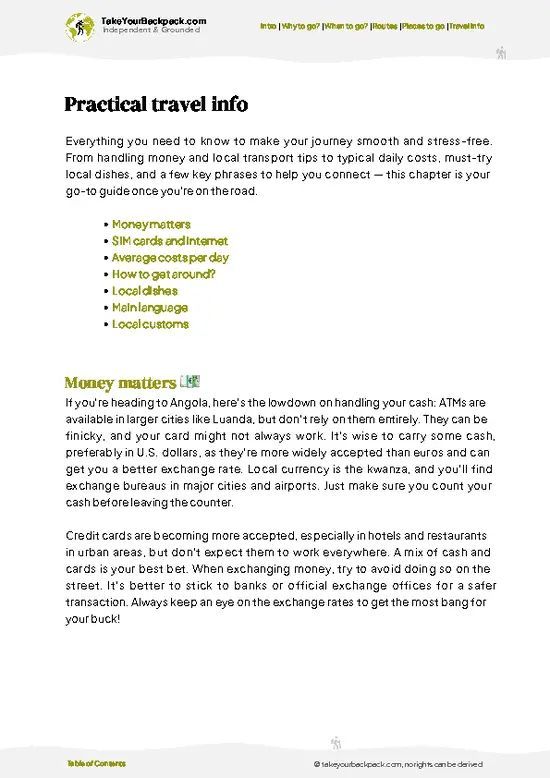
example page 0 from our offline Travel Guide for Angola
example page 1 from our offline Travel Guide for Angola
example page 2 from our offline Travel Guide for Angola
example page 3 from our offline Travel Guide for Angola
example page 4 from our offline Travel Guide for Angola
example page 5 from our offline Travel Guide for Angola
example page 6 from our offline Travel Guide for Angola
example page 7 from our offline Travel Guide for Angola
The digital guide (341 pages) contains:
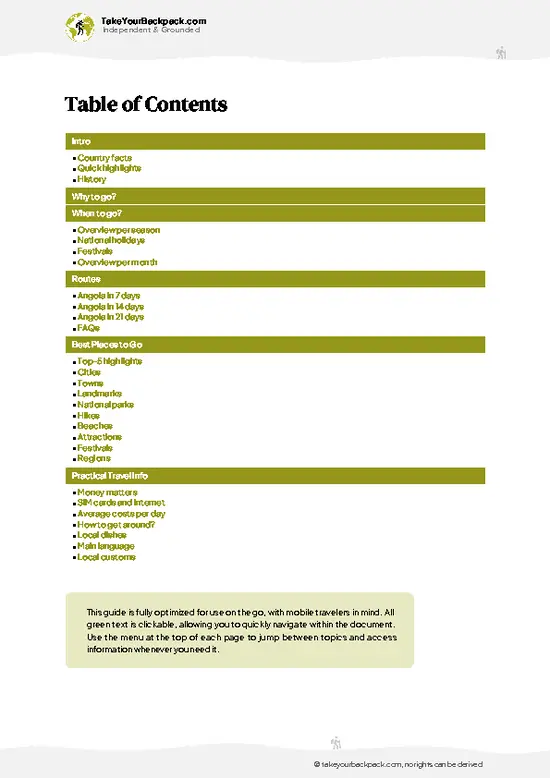
90 highlights, ranked by travel appeal
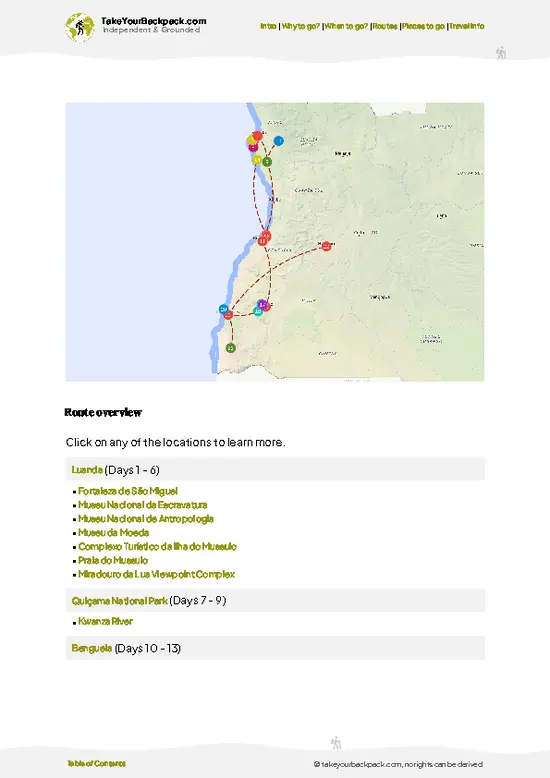
Optimized 7, 14 & 21-day travel routes
Cities, national parks, landmarks, beaches
How to get around
Offline-friendly for travel without Wi-Fi
👉 Click to see all 30+ guide features

📅 Plan smarter in minutes, not weeks
Month by month travel advice
Festivals & national holidays
Budget expectations

🗺️ Go to the right places, skip the overrated ones
Honest pros & cons of destinations
Top hikes, parks & viewpoints
Lesser-known places most travelers miss
Clear “worth it vs skip it” guidance

🛏️ Travel smoothly without rookie mistakes
Best areas to stay
Transport systems explained simply
Common scams & safety advice
SIM cards, money & practical tips

🌍 Understand the country, not just visit it
Culture & traditions
52 Essential phrases & customs
Festivals worth planning around
Traveler-friendly historical context
Insights that make places more meaningful

📱 Built for real travel conditions
Fully downloadable PDF
Works completely offline
Optimized for phone use
Useful in remote areas & buses
Everything in one place
Save weeks of stressful planning
Get instant access to your full guide. 30‑day money-back guarantee.
+ Add another guide for just US$7.80

By proceeding you agree to our terms.
Sent to your inbox immediately after payment • 100% Secure Checkout
Best Backpacking Travel Advisor 2025 tourism awardBest Backpacking
Travel Advisor
2025
What others say about Take Your Backpack Guides:
⭐⭐⭐⭐⭐
Fantastic, amazing amount of information!
⭐⭐⭐⭐⭐
My goodness this is amazing, it's what I've been looking for hats off too you!
⭐⭐⭐⭐⭐
I think this is absolutely BRILLIANT
⭐⭐⭐⭐
Very complete and informative. It's still missing places, but I gotta to commend you
⭐⭐⭐⭐⭐
This is truly amazing, thank you, can't wait to explore it with my kids!
⭐⭐⭐⭐⭐
Awesome resource, thank you!
⭐⭐⭐⭐⭐
This is amazing! Can't wait to explore the ones I haven't seen
⭐⭐⭐⭐
I love this! Well done, great idea.
⭐⭐⭐⭐⭐
Thanks for taking the time to make this gem!
⭐⭐⭐⭐⭐
This might be the best website I've ever seen.
⭐⭐⭐⭐⭐
Congratulations, and thank you so much for your work; it's incredibly valuable.
⭐⭐⭐⭐
In all seriousness I think you did a great job pointing out the important spots
⭐⭐⭐⭐⭐
10/10 very good
⭐⭐⭐⭐⭐
As someone who's only just starting to visit regularly this is awesome, thank you.
⭐⭐⭐⭐
Thank you very much! I'm going to visit my dad, it's going to be very useful!
⭐⭐⭐⭐⭐
This is really cool! We'll be travelling for the first time and this definitely come in handy.
⭐⭐⭐⭐⭐
You are now our minister of culture, congratulations 👨‍💼
⭐⭐⭐⭐⭐
Just wanted to tell you that this is a pearl! Going to follow your recommendations.
⭐⭐⭐⭐⭐
This is so cool. I'll definitely be using the resource for my travels soon.
⭐⭐⭐⭐⭐
This is very impressive! Good work.
⭐⭐⭐⭐⭐
This is an amazing and informative site. Very well done!

🛏️ Where to stay?Where staying makes the most sense

In Uíge, the best neighborhood for backpackers is the city center, where safety and social opportunities intersect with budget-friendly options. This area pulses with local life—markets, street food stalls, and small cafés create a natural meeting ground for solo travelers looking to connect without the touristy gloss. Compared to the quieter, more residential outskirts, the center offers a practical trade-off: you sacrifice some peace for access to community and convenience. Hostels here are modest but reliable, often run by locals who double as informal guides, which adds a layer of authenticity … read more 👉
In Uíge, the best neighborhood for backpackers is the city center, where safety and social opportunities intersect with budget-friendly options. This area pulses with local life—markets, street food stalls, and small cafés create a natural meeting ground for solo travelers looking to connect without the touristy gloss. Compared to the quieter, more residential outskirts, the center offers a practical trade-off: you sacrifice some peace for access to community and convenience. Hostels here are modest but reliable, often run by locals who double as informal guides, which adds a layer of authenticity and insider knowledge you won’t find elsewhere. Venturing into other districts means fewer budget accommodations and a more isolated experience, which can be a comfort trade-off but often at the cost of missing out on the city’s social fabric. For backpackers, staying central means embracing the city’s rhythm while keeping your wallet and safety in check—a smart balance that turns logistics into an advantage.

🚌 Getting aroundMoving around without the hassle

Uíge moves at its own rhythm—neither a strict clockwork nor a wild free-for-all. It’s a city where schedules exist but bend to local realities, where you’ll find a blend of patience and hustle. The flow here is shaped by a mix of informal networks and practical necessity, so your travel choices are a dance between time, money, and comfort. Understanding this balance is your secret weapon to mastering Uíge’s transit game.


  • Walking: The most straightforward and cost-free way to get around, especially within the central neighborhoods. It’s slow but gives you full control over your pace and route, letting you soak in the city’s texture. Ideal for short distances and when time isn’t tight.


  • Minibus Taxis: These are the backbone of Uíge’s public transport. Operating roughly from dawn until
read more 👉
Uíge moves at its own rhythm—neither a strict clockwork nor a wild free-for-all. It’s a city where schedules exist but bend to local realities, where you’ll find a blend of patience and hustle. The flow here is shaped by a mix of informal networks and practical necessity, so your travel choices are a dance between time, money, and comfort. Understanding this balance is your secret weapon to mastering Uíge’s transit game.


  • Walking: The most straightforward and cost-free way to get around, especially within the central neighborhoods. It’s slow but gives you full control over your pace and route, letting you soak in the city’s texture. Ideal for short distances and when time isn’t tight.


  • Minibus Taxis: These are the backbone of Uíge’s public transport. Operating roughly from dawn until early evening, fares are low—usually just a few kwanzas—but expect crowded conditions and stops on demand rather than fixed schedules. They’re fast compared to walking but sacrifice comfort and predictability.


  • Motorcycle Taxis (Motos): For a quicker, more flexible ride, motos zip through traffic and can take you anywhere on short notice. Prices vary but remain budget-friendly. They’re less safe and expose you to the elements, so weigh speed against comfort and risk.


  • Shared Taxis: These run on main routes with semi-fixed schedules, offering a middle ground between minibuses and private taxis. They cost more than minibuses but provide a bit more space and reliability. Departure times can be irregular, so some waiting is expected.


  • Private Taxis: The priciest option, reserved for when time is tight or comfort non-negotiable. They offer door-to-door service and flexibility but at a cost that quickly eats into a budget traveler’s funds.


In Uíge, every transit choice is a trade-off puzzle: save money and embrace unpredictability, or pay more for speed and ease. Your best move is to mix modes depending on your schedule and stamina, turning the city’s flow into your advantage rather than a hurdle.

👛 Costs (as of 3 September 2026)Travel costs and budget guide for Uíge

Backpacking in Uíge, Angola, demands a clear-eyed view of what your money buys—and what it doesn’t. Here’s the breakdown of daily costs you’ll face, so you can strategize your spending like a pro.
  • Dorm Accommodation (High Season): Expect to pay around €15-€20 per night. Options are limited and basic, but this is the going rate when demand peaks.
  • Dorm Accommodation (Off-Season): Prices drop to about €10-€13. Fewer travelers mean better bargaining power, but amenities remain simple.
  • Meals: Street food and local eateries will cost you roughly €3-€6 per day if you stick to traditional dishes. Western-style meals or dining at tourist spots can push this higher.
  • Local Transport: Short rides on moto-taxis or minibuses typically run €0.30-€0.50 each. Budget around €1.50-€3 for multiple trips daily.
read more 👉
Backpacking in Uíge, Angola, demands a clear-eyed view of what your money buys—and what it doesn’t. Here’s the breakdown of daily costs you’ll face, so you can strategize your spending like a pro.
  • Dorm Accommodation (High Season): Expect to pay around €15-€20 per night. Options are limited and basic, but this is the going rate when demand peaks.
  • Dorm Accommodation (Off-Season): Prices drop to about €10-€13. Fewer travelers mean better bargaining power, but amenities remain simple.
  • Meals: Street food and local eateries will cost you roughly €3-€6 per day if you stick to traditional dishes. Western-style meals or dining at tourist spots can push this higher.
  • Local Transport: Short rides on moto-taxis or minibuses typically run €0.30-€0.50 each. Budget around €1.50-€3 for multiple trips daily.
  • City Transport Pass: Not commonly available or necessary in Uíge; most rely on informal transport, so no fixed pass cost applies.
  • Basic Activities/Entry Fees: Cultural sites and local museums charge minimal fees, usually under €2. Expect to spend €1-€4 daily if you plan to explore.
  • Miscellaneous Expenses: This covers bottled water, snacks, occasional tips, and small purchases. Allocate about €2-€4 per day.

The total daily budget for backpacking in Uíge ranges from roughly €20 to €35, depending on season and lifestyle choices. You’re trading off comfort and convenience for a raw, authentic experience, but with careful planning, you keep costs manageable without sacrificing the essence of the place.


source: angola.org
⚠️ Prices can change and everyone travels differently, so take this as a rough guide. Hope it helps you plan your adventure!

🚌 Day tripsWhere to go beyond the main area

Using Uíge as your base opens up a world of day trips that balance adventure and authenticity. Here are some top picks that won’t drain your wallet or your energy.

Kalandula Falls
Just a couple of hours from Uíge, Kalandula Falls is a breathtaking sight. The roar of the water cascading down the cliffs is something you won’t forget. Bring a picnic and enjoy the lush surroundings. Expect to spend around $10 for transport and snacks. The best time to visit is during the rainy season when the falls are at their fullest. A common mistake? Underestimating the time needed to explore the area fully.
👉 Explore Kalandula Falls

Pico de Lico
For those craving a bit of a hike, Pico de Lico offers stunning views of the surrounding landscape. It’s about a 90-minute drive from Uíge, and the trek to … read more 👉
Using Uíge as your base opens up a world of day trips that balance adventure and authenticity. Here are some top picks that won’t drain your wallet or your energy.

Kalandula Falls
Just a couple of hours from Uíge, Kalandula Falls is a breathtaking sight. The roar of the water cascading down the cliffs is something you won’t forget. Bring a picnic and enjoy the lush surroundings. Expect to spend around $10 for transport and snacks. The best time to visit is during the rainy season when the falls are at their fullest. A common mistake? Underestimating the time needed to explore the area fully.
👉 Explore Kalandula Falls

Pico de Lico
For those craving a bit of a hike, Pico de Lico offers stunning views of the surrounding landscape. It’s about a 90-minute drive from Uíge, and the trek to the summit takes about two hours. Total costs can be around $15, including transport and a local guide. The dry season is ideal for this trip, as trails can get muddy. Don’t forget to bring plenty of water; dehydration is a rookie error.


Cangandala National Park
Just under two hours away, Cangandala National Park is a wildlife lover’s paradise. You might spot rare species like the giant sable antelope. Entry fees are minimal, around $5, but hiring a guide for about $10 is wise for a richer experience. The dry months are best for wildlife sightings. Many first-timers miss out by not planning their visit early in the day when animals are most active.
👉 Explore Cangandala National Park
Want to know what more Angola offers?
The Angola Travel Guide describes 90 highlights, from cities to national parks, from beaches to hikes

Get the Travel Guide -

🍲 FoodLocal Cuisine & Drinks

In Uíge, local cuisine is a vibrant tapestry of flavors. Dive into funge, a starchy staple made from cassava or corn, often paired with rich moamba de galinha, a chicken stew simmered in palm oil and spices. Street vendors serve up kizaca, a savory dish of sautéed greens that bursts with freshness.

For drinks, try cuca, a popular local beer, or palm wine, a sweet, fermented delight best enjoyed in good company. Eating here is communal; expect to share dishes and stories. Embrace the casual vibe of markets and roadside stalls, where the aroma of grilled meats fills the air, inviting you to savor every bite.

🛡️ SafetyTraveler Safety Guide

Uíge is generally safe for travelers, but staying aware is key. Stick to well-lit areas at night, especially if you’re solo. The local market can be bustling, so keep an eye on your belongings; pickpockets do exist, though they’re not rampant. Be cautious with taxi services; always negotiate fares upfront to avoid surprises. A friendly smile goes a long way, but don’t engage too deeply with overly persistent vendors. Trust your instincts, and you’ll navigate Uíge smoothly.

FAQTraveler FAQ

2 to 3 days are sufficient to explore Uíge, covering its main attractions and local markets. This allows time to visit the coffee plantations nearby and the local museums. Additional days may be needed if planning to explore the surrounding countryside.
Uíge is moderately safe for solo backpackers but requires caution, especially after dark. Petty crime can occur, so avoid isolated areas and keep valuables secure. Traveling during daylight and using trusted local guides or contacts is recommended.
Uíge is known for its coffee production, being one of Angola's primary coffee-growing regions. It also has historical significance from the colonial era and is recognized for its cultural festivals and traditional music.
⚠️ Things can change over time, so always validate details locally before you go.

Other Angolan cities near Uíge

Explore more nearby:

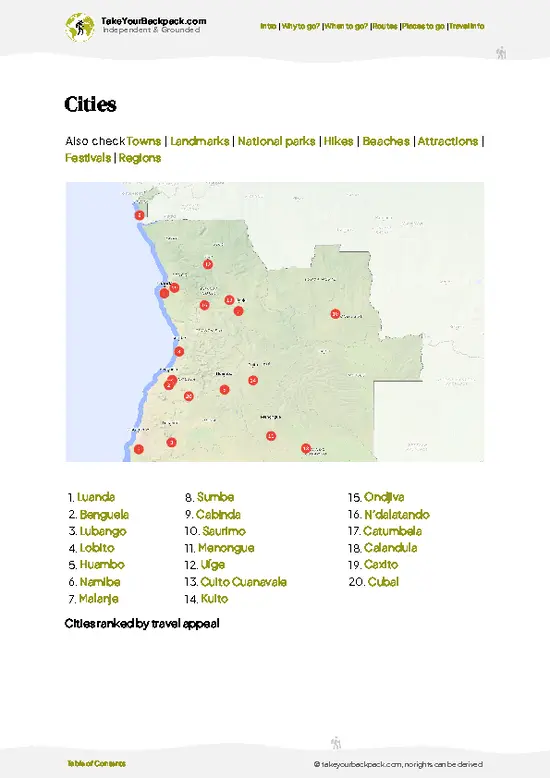
  • Caxito—river valley, agricultural center, roadside stalls| 188 km away
  • N’dalatando—botanical gardens, colonial-era grid, mountain backdrop| 188 km away
  • Calandula—waterfalls, river gorge, forested surroundings| 191 km away

💡 Not sure where to go next?
Create a personalized itinerary for Angola including Uíge and the places that fit your trip.

Generate my itinerary

👉 Discover all cities

Or checkout all Angola has to offer (think cities, towns, villages, national parks, hikes, beaches, festivals)
Country photo of Angola

We 💚 feedbackParting advice and final tips

Uíge has a raw, unfiltered vibe that feels like stepping into a living postcard. The best surprise? The warmth of the locals; they’ll share stories over a simple meal. Just watch your belongings in crowded areas—it’s a bustling place, and you want to soak it all in, not stress.

✍️ Help improve this page!
The information on this page is based on in-depth research, insights shared by experienced travelers, and feedback from the local travel community in Angola. While every effort is made to keep the information accurate and current, conditions can change — so if you spot anything incorrect or outdated, please get in touch.


🙋‍♂️ Give feedback

👋 Meet the founderWho’s Behind Take Your Backpack?

Johan, backpacker and founder of TakeYourBackpackHi, I’m Johan (Netherlands 🇳🇱), the creator of TakeYourBackpack. Over the past decade, I’ve backpacked through 80+ countries across six continents, gaining extensive experience with independent travel, long-term trips, and overland routes.

This site is built on a combination of firsthand travel experience and carefully curated insights from other backpackers. Many guides are based on places I’ve personally visited, while others bring together tips, observations, and practical advice shared by trusted travelers I’ve met along the way.

The goal is to provide realistic, experience-driven guidance — not generic itineraries — so you can explore destinations with better context, clearer expectations, and more confidence.

Get full Angola guide •
Instant download • 90 highlights • Full Offline guide