×
Iguazú National Park

Argentina🇦🇷 | national parksIguazú National ParkDevil’s Throat, waterfall catwalks, spray boats, coatis | things to do and best time to go

Explore Esteros del IberáExplore Ischigualasto Provincial Park

Backpacking in Iguazú
UNESCO World Heritage site
By Johan Kruseman 🇳🇱 | Updated October 19, 2026

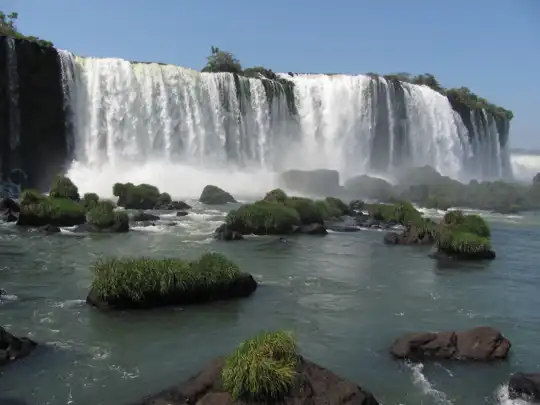
Here's the misconception: people think Iguazu is a quick photo stop you knock out in an afternoon. It isn't. The Argentine side alone takes a full day if you want to do it right, and it's genuinely one of the best hiking-and-waterfall combos in South America. The park sits in Misiones Province, in the far northeast corner of Argentina, hugging the borders of Brazil and Paraguay. For backpackers, the park offers well-marked trails, an elevated walkway system that puts you right above the cataracts, boat rides into the spray, and wildlife like coatis and toucans wandering the paths. The downsides are an entrance fee of around USD 40 for foreigners, midday crowds at Devil's Throat, and no budget camping inside the park, so you sleep in Puerto Iguazu. Compared to Los Glaciares or Talampaya, Iguazu is far more accessible and far more crowded. I remember standing on the Devil's Throat walkway, soaked from mist, watching the water just disappear into white noise below me, and thinking no photo had prepared me for that sound.

Discover everything you want to know in the 📖 Argentina Travel Guide.


example page 0 from our offline Travel Guide for Argentina
example page 1 from our offline Travel Guide for Argentina
example page 2 from our offline Travel Guide for Argentina
example page 3 from our offline Travel Guide for Argentina
example page 4 from our offline Travel Guide for Argentina
example page 5 from our offline Travel Guide for Argentina
example page 6 from our offline Travel Guide for Argentina
example page 7 from our offline Travel Guide for Argentina
Loading the map 🌍
CLICK TO FILTER
cities
towns
villages
landmarks
national parks
hikes
beaches
attractions
festivals
regions
SHOW COUNTRY’S BESTSHOW ALL

✨ Why go?
Ranked #99 national park in Argentina
Why visitors keep coming back

Backpackers gravitate here because the park rewards independent exploration without forcing you into guided packages. You can buy your ticket, grab a park map, and build your own day around the Upper and Lower Circuits at your own pace. Puerto Iguazu, the nearby town, runs on a backpacker budget: hostels with dorm beds, communal kitchens, and a steady flow of travelers swapping notes on trail routes and border crossings. The trail variety matters too. You get flat, easy circuits for a relaxed morning, a longer trek to Devil's Throat, and jungle paths where you'll spot wildlife without needing a specialist guide. This is a park that suits self-guided travelers better than most: signage is clear, the free train between circuits is straightforward, and there's no technical terrain requiring a … read more 👉
Backpackers gravitate here because the park rewards independent exploration without forcing you into guided packages. You can buy your ticket, grab a park map, and build your own day around the Upper and Lower Circuits at your own pace. Puerto Iguazu, the nearby town, runs on a backpacker budget: hostels with dorm beds, communal kitchens, and a steady flow of travelers swapping notes on trail routes and border crossings. The trail variety matters too. You get flat, easy circuits for a relaxed morning, a longer trek to Devil's Throat, and jungle paths where you'll spot wildlife without needing a specialist guide. This is a park that suits self-guided travelers better than most: signage is clear, the free train between circuits is straightforward, and there's no technical terrain requiring a professional. Add in the novelty of a tri-border location (Argentina, Brazil, Paraguay all visible or reachable from town) and you've got a stop that fits naturally into an overland South America route, not a detour that demands its own logistics.

💡 HighlightsPlaces and moments you shouldn't skip

  1. Devil's Throat (Garganta del Diablo): The signature moment of the park, a semicircular cliff where roughly half the river's flow drops 82 meters at once. The walkway train and footbridge put you directly over the edge, and the noise alone is worth the trip.
  2. Upper Circuit: A flat, easy trail running along the top of multiple falls, giving you wide views down onto the cascades rather than up at them. Good for photography and for pacing yourself early in the day.
  3. Lower Circuit: This one takes you down to river level, closer to the base of the falls where the spray actually reaches you. More stairs, more physical, but the perspective shift is worth the legwork.
  4. Isla San Martin: A short boat ride gets you to this island, from which a steep set of stairs leads to a viewpoint that's arguably the best
… read more 👉
  1. Devil's Throat (Garganta del Diablo): The signature moment of the park, a semicircular cliff where roughly half the river's flow drops 82 meters at once. The walkway train and footbridge put you directly over the edge, and the noise alone is worth the trip.
  2. Upper Circuit: A flat, easy trail running along the top of multiple falls, giving you wide views down onto the cascades rather than up at them. Good for photography and for pacing yourself early in the day.
  3. Lower Circuit: This one takes you down to river level, closer to the base of the falls where the spray actually reaches you. More stairs, more physical, but the perspective shift is worth the legwork.
  4. Isla San Martin: A short boat ride gets you to this island, from which a steep set of stairs leads to a viewpoint that's arguably the best vantage of the whole falls complex. Fewer people make the climb, so you often get it half to yourself.
  5. Macuco Trail: A jungle path through dense subtropical forest, flatter and shadier than the main circuits, ending at a smaller waterfall with a swimming hole. Good for spotting birds and butterflies away from the main crowds.
  6. Boat Safari under the Falls: Not a hike, but worth including: a motorboat takes you directly into the spray zone beneath several falls. It's genuinely soaking, genuinely loud, and gives you a scale reference no walkway view can match.
  7. Wildlife along the trails: Coatis are everywhere and will approach for food (don't feed them), while toucans, capuchin monkeys, and the occasional caiman show up along quieter stretches, particularly early morning.
  8. Train Ecologico: The park's free internal train connecting the visitor center to the main circuits and Devil's Throat station. It's not scenic by itself, but it's how you manage the park's size without exhausting yourself before the good parts.
Spotted a mistake or missing something? Contact us.

Things to do near Iguazú National Park

Ratings based on Tripadvisor reviews. When you book through this link, you support our work at no extra cost to you.

🌤️ When to go?Best time to explore Iguazú

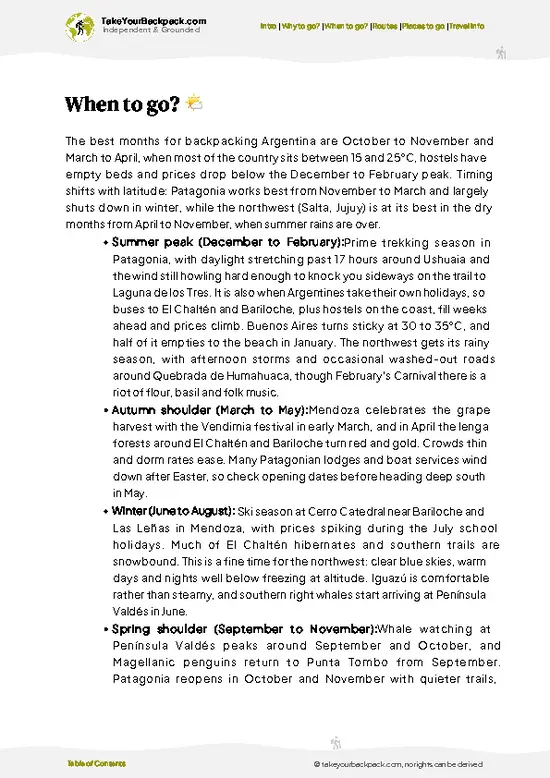
  • Dry Season (May to September): Cooler temperatures, roughly 15-25°C (59-77°F), lower water volume means clearer views of individual falls but less thunderous spray. Daylight runs shorter.
  • Wet/Hot Season (December to March): Hot and humid, 25-35°C (77-95°F), heavier rainfall swells the falls dramatically. This is peak visual drama but also peak crowds, especially around Argentine and Brazilian summer holidays.
  • Shoulder Months (April, October, November): Good balance of manageable heat, decent water flow, and fewer tour buses. Prices for hostels in Puerto Iguazu dip slightly compared to January's holiday surge.
  • Crowds: Arrive at park opening (8am) regardless of season to beat both heat and tour groups hitting Devil's Throat by mid-morning.
November is a good bet. The water's still strong from spring … read more 👉
  • Dry Season (May to September): Cooler temperatures, roughly 15-25°C (59-77°F), lower water volume means clearer views of individual falls but less thunderous spray. Daylight runs shorter.
  • Wet/Hot Season (December to March): Hot and humid, 25-35°C (77-95°F), heavier rainfall swells the falls dramatically. This is peak visual drama but also peak crowds, especially around Argentine and Brazilian summer holidays.
  • Shoulder Months (April, October, November): Good balance of manageable heat, decent water flow, and fewer tour buses. Prices for hostels in Puerto Iguazu dip slightly compared to January's holiday surge.
  • Crowds: Arrive at park opening (8am) regardless of season to beat both heat and tour groups hitting Devil's Throat by mid-morning.
November is a good bet. The water's still strong from spring rains, the heat hasn't peaked yet, and you'll have long stretches of walkway practically to yourself.


source: climatestotravel.comJANJanuary: fair for travelingFEBFebruary: fair for travelingMARMarch: good for travelingAPRApril: highly recommended for travelingMAYMay: highly recommended for travelingJUNJune: excellent for travelingJULJuly: excellent for travelingAUGAugust: excellent for travelingSEPSeptember: highly recommended for travelingOCTOctober: highly recommended for travelingNOVNovember: good for travelingDECDecember: fair for traveling
Argentina - Iguazú National Park

✈️ The backpacker research shortcutArgentina Travel Guide

An offline-friendly backpacking guide with optimized travel routes, ranked highlights, transport advice, and the best areas to stay.
example page 0 from our offline Travel Guide for Argentina
example page 1 from our offline Travel Guide for Argentina
example page 2 from our offline Travel Guide for Argentina
example page 3 from our offline Travel Guide for Argentina
example page 4 from our offline Travel Guide for Argentina
example page 5 from our offline Travel Guide for Argentina
example page 6 from our offline Travel Guide for Argentina
example page 7 from our offline Travel Guide for Argentina
The digital guide (393 pages) contains:
✅ 131 highlights, ranked by travel appeal
✅ Optimized 14, 21 & 30-day travel routes
✅ Cities, national parks, landmarks, beaches
✅ How to get around
✅ Offline-friendly for travel without Wi-Fi
👉 Click to see all 30+ guide features

📅 Plan smarter in minutes, not weeks
✅ Month by month travel advice
✅ Festivals & national holidays
✅ Budget expectations

🗺️ Go to the right places, skip the overrated ones
✅ Honest pros & cons of destinations
✅ Top hikes, parks & viewpoints
✅ Lesser-known places most travelers miss
✅ Clear “worth it vs skip it” guidance

🛏️ Travel smoothly without rookie mistakes
✅ Best areas to stay
✅ Transport systems explained simply
✅ Common scams & safety advice
✅ SIM cards, money & practical tips

🌍 Understand the country, not just visit it
✅ Culture & traditions
✅ 52 Essential phrases & customs
✅ Festivals worth planning around
✅ Traveler-friendly historical context
✅ Insights that make places more meaningful

📱 Built for real travel conditions
✅ Fully downloadable PDF
✅ Works completely offline
✅ Optimized for phone use
✅ Useful in remote areas & buses
✅ Everything in one place
Stop searching, start planning
Get instant access to your full guide. 30‑day money-back guarantee.
+ Add another guide for just

By proceeding you agree to our terms.
Sent to your inbox immediately after payment • 100% Secure Checkout
Best Backpacking Travel Advisor 2025 tourism awardBest Backpacking
Travel Advisor
2025
What others say about Take Your Backpack Guides:
⭐⭐⭐⭐⭐
Fantastic, amazing amount of information!
⭐⭐⭐⭐⭐
My goodness this is amazing, it's what I've been looking for hats off too you!
⭐⭐⭐⭐⭐
I think this is absolutely BRILLIANT
⭐⭐⭐⭐
Very complete and informative. It's still missing places, but I gotta to commend you
⭐⭐⭐⭐⭐
This is truly amazing, thank you, can't wait to explore it with my kids!
⭐⭐⭐⭐⭐
Awesome resource, thank you!
⭐⭐⭐⭐⭐
This is amazing! Can't wait to explore the ones I haven't seen
⭐⭐⭐⭐
I love this! Well done, great idea.
⭐⭐⭐⭐⭐
Thanks for taking the time to make this gem!
⭐⭐⭐⭐⭐
This might be the best website I've ever seen.
⭐⭐⭐⭐⭐
Congratulations, and thank you so much for your work; it's incredibly valuable.
⭐⭐⭐⭐
In all seriousness I think you did a great job pointing out the important spots
⭐⭐⭐⭐⭐
10/10 very good
⭐⭐⭐⭐⭐
As someone who's only just starting to visit regularly this is awesome, thank you.
⭐⭐⭐⭐
Thank you very much! I'm going to visit my dad, it's going to be very useful!
⭐⭐⭐⭐⭐
This is really cool! We'll be travelling for the first time and this definitely come in handy.
⭐⭐⭐⭐⭐
You are now our minister of culture, congratulations 👨‍💼
⭐⭐⭐⭐⭐
Just wanted to tell you that this is a pearl! Going to follow your recommendations.
⭐⭐⭐⭐⭐
This is so cool. I'll definitely be using the resource for my travels soon.
⭐⭐⭐⭐⭐
This is very impressive! Good work.
⭐⭐⭐⭐⭐
This is an amazing and informative site. Very well done!

🛏️ Where to stay?Best areas and accommodation options

There's no camping or lodging inside the park itself beyond one upscale hotel near the entrance, so backpackers base themselves in Puerto Iguazu, about 20 minutes away by bus. The town has a solid hostel scene with dorm beds, communal kitchens, and pools that feel very welcome after a sweaty day on the trails. Look for hostels clustered near the bus terminal, which also makes onward travel to Brazil or Paraguay simple. Some travelers base in Foz do Iguacu on the Brazilian side instead, which has a larger hostel selection and easy access to the Brazilian park (a different, shorter visit focused … read more 👉
There's no camping or lodging inside the park itself beyond one upscale hotel near the entrance, so backpackers base themselves in Puerto Iguazu, about 20 minutes away by bus. The town has a solid hostel scene with dorm beds, communal kitchens, and pools that feel very welcome after a sweaty day on the trails. Look for hostels clustered near the bus terminal, which also makes onward travel to Brazil or Paraguay simple. Some travelers base in Foz do Iguacu on the Brazilian side instead, which has a larger hostel selection and easy access to the Brazilian park (a different, shorter visit focused on panoramic views). Puerto Iguazu itself is quieter and smaller than Foz, with a more local feel and cheaper food. Budget travelers often split their stay: a couple of nights in Puerto Iguazu for the Argentine park, then a border hop to Foz for the Brazilian side and its more expansive hostel options. Either base works logistically since both connect to the park by frequent, cheap local buses.

👛 Costs (as of 19 October 2026)Travel costs and budget guide for Iguazú

Iguazú National Park is moderately priced by South American standards, with the entrance fee being the biggest fixed cost and accommodation in Puerto Iguazu offering genuine budget flexibility.
CategoryBudget RangeLocal Reality
Park Entrance FeeUSD 40Foreigners pay a higher rate than Argentine residents; payable in pesos or card at the gate, valid for one day (a discounted second-day ticket is available if purchased on your first visit).
Accommodation (Puerto Iguazu)USD 10 to 25 per nightHostel dorm beds sit at the low end, private rooms push toward the higher end; prices rise slightly during Argentine summer holidays (December to February).
Local TransportUSD 2 to 4 round tripRegular buses run from Puerto Iguazu bus terminal to the park entrance, roughly every 20 to 30 minutes.
Food/SuppliesUSD
… read more 👉
Iguazú National Park is moderately priced by South American standards, with the entrance fee being the biggest fixed cost and accommodation in Puerto Iguazu offering genuine budget flexibility.
CategoryBudget RangeLocal Reality
Park Entrance FeeUSD 40Foreigners pay a higher rate than Argentine residents; payable in pesos or card at the gate, valid for one day (a discounted second-day ticket is available if purchased on your first visit).
Accommodation (Puerto Iguazu)USD 10 to 25 per nightHostel dorm beds sit at the low end, private rooms push toward the higher end; prices rise slightly during Argentine summer holidays (December to February).
Local TransportUSD 2 to 4 round tripRegular buses run from Puerto Iguazu bus terminal to the park entrance, roughly every 20 to 30 minutes.
Food/SuppliesUSD 5 to 15 per daySupermarket self-catering keeps costs low; park cafeteria food is convenient but priced for tourists, so packing snacks and lunch saves noticeably.
Boat Safari (optional)USD 25 to 35Not required for the main circuits but a popular add-on for a closer, wetter perspective on the falls.
Overall daily costs for a budget backpacker, excluding the one-time park entrance fee, tend to land comfortably within a modest range once accommodation and food are factored together.


source: argentina.gob.ar
⚠️ Prices can change and everyone travels differently, so take this as a rough guide. Hope it helps you plan your adventure!

🥾 TrailsHiking Iguazú national park: highlights and difficulty

Iguazu's hiking is less about wilderness trekking and more about engineered walkways that put you in position for close-range waterfall views, though there's enough jungle trail mixed in to keep it interesting. Terrain is mostly flat with occasional stairs, metal grating over water, and short inclines. This is subtropical rainforest, humid year-round, with coatis, capuchin monkeys, toucans, and butterflies showing up regularly along quieter stretches. Difficulty is low overall; this park is built for broad accessibility, not technical hiking.
  • Upper Circuit: 1.75 km, about 1 to 1.5 hours, easy,
… read more 👉
Iguazu's hiking is less about wilderness trekking and more about engineered walkways that put you in position for close-range waterfall views, though there's enough jungle trail mixed in to keep it interesting. Terrain is mostly flat with occasional stairs, metal grating over water, and short inclines. This is subtropical rainforest, humid year-round, with coatis, capuchin monkeys, toucans, and butterflies showing up regularly along quieter stretches. Difficulty is low overall; this park is built for broad accessibility, not technical hiking.
  • Upper Circuit: 1.75 km, about 1 to 1.5 hours, easy, flat walkway with elevated views over the tops of multiple falls.
  • Lower Circuit: 1.6 km, about 1.5 to 2 hours, easy to moderate, includes stairs down to river level and closer proximity to spray zones.
  • Macuco Trail: about 7 km round trip, about 3 hours, easy, forest path through dense jungle ending at a smaller waterfall and swimming hole.
  • Devil's Throat Trail: 1.1 km via walkway and short train ride, about 1 hour round trip, easy, flat metal walkway ending at the main viewing platform over the largest single drop.
Public transport access is straightforward: regular buses run from Puerto Iguazu town to the park entrance, taking about 30 to 40 minutes, and tickets are cheap by regional standards. The park itself charges an entrance fee (around USD 40 for foreign visitors, less for Argentine residents), payable in pesos or card at the gate. Crowds peak between 10am and 2pm, especially near Devil's Throat, so early arrival or a late afternoon visit makes a real difference in trail congestion and photo quality.
⚠️ Hiking info can sometimes be outdated or inaccurate. Before you hit the trail, check the latest conditions with locals. If you do spot anything that's off, I'd love to hear from you, so I can update it for fellow travelers.

🛡️ SafetyScams, Hazards, and Annoyances

Iguazu is well-managed and straightforward for hikers of any experience level. The main hazards are heat and humidity rather than technical terrain: pace yourself, carry more water than feels necessary, and take breaks in shaded sections of the Macuco Trail if the midday sun gets heavy. Footing on the metal walkways can get slippery near spray zones, so watch your step rather than your camera when crossing bridges near the falls. Coatis are the main wildlife encounter and they're bold around food; keep snacks zipped away and don't hand-feed them, as bites happen when visitors ignore this. Rain can arrive suddenly in wet season, so a light rain layer is worth packing even on clear mornings. First-timers often underestimate how much walking is involved between circuits; comfortable shoes matter more than any other gear choice here.

FAQFrequently asked questions about Iguazú

Most backpackers spend one full day on the Argentine side to cover the Upper Circuit, Lower Circuit, and Devil's Throat comfortably, though two days lets you add the Macuco Trail and a boat safari without rushing. If you're also crossing to the Brazilian side for its panoramic views, add a half day for that separately.
Yes, the park is easy to visit without a car. Frequent local buses run from the Puerto Iguazu bus terminal to the park entrance in about 30 to 40 minutes, and a free internal train moves visitors between the main circuits and Devil's Throat once inside.
There is an entrance fee, around USD 40 for foreign visitors, payable in pesos or by card at the gate. No permit is needed beyond this ticket, and purchasing on your first day often qualifies you for a discounted rate on a second consecutive day.
⚠️ Things can change over time, so always validate details locally before you go.

Other Argentine national parks near Iguazú

Explore more nearby:


💡 Not sure where to go next?
Create a personalized itinerary for Argentina including Iguazú and the places that fit your trip.

Generate my itinerary

👉 Discover all national parks

Or checkout all Argentina has to offer (think cities, towns, villages, national parks, hikes, beaches, festivals)
Country photo of Argentina

We 💚 feedbackFinal thoughts on exploring Iguazú

Iguazu earns its reputation: the sheer scale of Devil's Throat, felt through sound and spray before you even see it, justifies the trip on its own. The drawback is crowd management around midday, when tour buses flood the main walkways. Go early, budget a full day, and you'll get the park at its best without the shuffle-and-wait experience everyone complains about.

✈️ When did I visit Argentina?
I have visited Argentina, together with Chile, in September 2012.

✍️ Help improve this page!
The information on this page is based on my own backpacking experience in Argentina, supplemented with up-to-date research and feedback from other travelers. Travel details can change, so if you notice anything outdated or incomplete, feel free to let me know.


🙋‍♂️ Give feedback

👋 Meet the founderWho’s Behind Take Your Backpack?

Johan, backpacker and founder of TakeYourBackpackHi, I’m Johan (Netherlands 🇳🇱), the creator of TakeYourBackpack. Over the past 3 decades, I’ve backpacked through 90+ countries across six continents, gaining extensive experience with independent travel, long-term trips, and overland routes.

This site is built on a combination of firsthand travel experience and carefully curated insights from other backpackers. Many guides are based on places I’ve personally visited, while others bring together tips, observations, and practical advice shared by trusted travelers I’ve met along the way.

The goal is to provide realistic, experience-driven guidance — not generic itineraries — so you can explore destinations with better context, clearer expectations, and more confidence.