
×

Aruba🇦🇼 | townsSan NicolasStreet art, refinery history, quiet beaches | things to do and best time to go

Explore OranjestadExplore Savaneta

Backpacking in San Nicolas
👌 Worth visitingtown ranked #3
By Johan Kruseman 🇳🇱 | Updated June 4, 2026

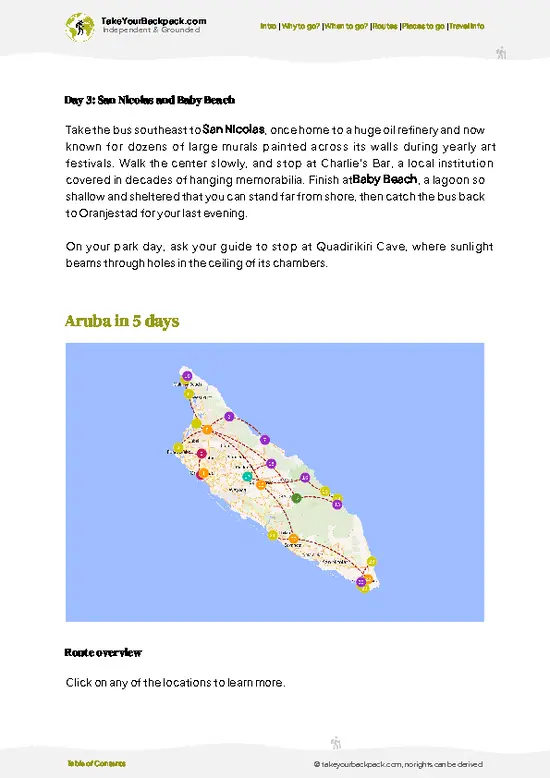
Years ago, San Nicolas was a rough-edged oil town: refinery smoke on the horizon, bars for shift workers, hardly a tourist in sight. Today, the smokestacks are mostly quiet, the air smells more of sea salt and street food, and travelers come for color-splashed murals instead of crude. San Nicolas sits at Aruba’s southern tip, far from the polished resorts of Palm and Eagle Beach, and it feels it: slower, more local, a bit worn but real. For backpackers, it works best as a base for exploring the wilder south coast—Baby Beach, Rodgers Beach, coastal walks—rather than as a destination for nightlife or big-city buzz. Buses from Oranjestad make it easy enough to reach, and the center is walkable, but you’ll feel the lack of hostels and backpacker bars; this is more “quiet room, early night” than “bar crawl.” It’s cheaper and more low-key than Oranjestad, generally safe with normal street smarts, and ideal if you want murals, sea wind, and local snacks instead of casinos and high-rises.

Discover everything you want to know in the 📖 Aruba Travel Guide.


Get your Aruba guide
37 ranked highlights, routes & tips, works offline (145 pages)
Loading the map 🌍
CLICK TO FILTER
towns
landmarks
national parks
hikes
beaches
attractions
festivals
SHOW COUNTRY’S BESTSHOW ALL

✨ Why go?
Ranked #3 town in Aruba
What makes this town worth visiting

San Nicolas is a backpacker’s hub that serves as a launchpad for exploring Aruba’s rugged beauty. It’s not just a stopover; it’s a place where the local vibe seeps into your bones. The town’s walkable streets are lined with small-scale hostels and guesthouses, making it easy to find a cozy spot to rest your head without breaking the bank.

From here, you can access some of the island’s best hiking trails and beaches. The nearby Arikok National Park offers stunning landscapes and a chance to sweat it out before diving into the turquoise waters. The local food scene is vibrant, with street vendors serving up fresh seafood and traditional dishes that will make your taste buds dance.

Travelers often linger a few days, soaking in the friendly atmosphere and connecting with fellow adventurers. … read more 👉
San Nicolas is a backpacker’s hub that serves as a launchpad for exploring Aruba’s rugged beauty. It’s not just a stopover; it’s a place where the local vibe seeps into your bones. The town’s walkable streets are lined with small-scale hostels and guesthouses, making it easy to find a cozy spot to rest your head without breaking the bank.

From here, you can access some of the island’s best hiking trails and beaches. The nearby Arikok National Park offers stunning landscapes and a chance to sweat it out before diving into the turquoise waters. The local food scene is vibrant, with street vendors serving up fresh seafood and traditional dishes that will make your taste buds dance.

Travelers often linger a few days, soaking in the friendly atmosphere and connecting with fellow adventurers. It’s ideal for solo travelers and small groups looking for a mix of exploration and relaxation. If you’re seeking a place that balances authenticity with the thrill of discovery, San Nicolas is your spot.
Want to include San Nicolas in your Aruba route?
Create a personalized Aruba itinerary that includes San Nicolas and the places that fit your trip — based on your travel style, budget, and available time. Get your route in seconds.

Generate my trip

💡 HighlightsMust-see experiences and standout moments

  1. San Nicolas Street Art (downtown murals) — A huge open-air gallery that turned the town into Aruba’s most colorful neighborhood: dozens of large murals by local and international artists cover shop fronts, alleyways and public walls, making walking the streets itself the main attraction and a great way to feel the town’s creative pulse.
  2. Lago Colony and refinery heritage — The former Lago Oil & Transport company left a visible imprint: old company houses, industrial architecture and refinery remnants tell the story of San Nicolas’ 20th-century boom. Walking the streets here gives real context to the town’s working-class, multinational history.
  3. San Nicolas Community Museum — A compact local museum that collects oral histories, photos and artifacts about the town’s oil-era past, immigrant
read more 👉
  1. San Nicolas Street Art (downtown murals) — A huge open-air gallery that turned the town into Aruba’s most colorful neighborhood: dozens of large murals by local and international artists cover shop fronts, alleyways and public walls, making walking the streets itself the main attraction and a great way to feel the town’s creative pulse.
  2. Lago Colony and refinery heritage — The former Lago Oil & Transport company left a visible imprint: old company houses, industrial architecture and refinery remnants tell the story of San Nicolas’ 20th-century boom. Walking the streets here gives real context to the town’s working-class, multinational history.
  3. San Nicolas Community Museum — A compact local museum that collects oral histories, photos and artifacts about the town’s oil-era past, immigrant communities and cultural life. It’s the best place to get grounded background before exploring the murals and neighborhood.
  4. Downtown paseo, shops and local markets — The pedestrian strips and small markets in the town center are where locals meet, eat and trade. Expect simple cafés, bakeries and hawker tables selling Aruban comfort food—perfect for people-watching and tasting everyday life away from resort zones.
  5. Fishermen’s pier and waterfront stretch — The working pier and nearby shoreline are active, low-key places to watch fishermen, see small boats, catch sunset light on the water, and get a gritty, authentic seaside vibe that contrasts with the island’s north-coast resorts.
For day trips outside San Nicolas but very close by, head to Baby Beach, Arikok National Park (including the Natural Pool/“Conchi”), and the Bushiribana gold-mill ruins — all easily visited from San Nicolas in a half-day or full-day outing.
Spotted a mistake or missing something? Contact us.

Things to do near San Nicolas

Ratings based on Tripadvisor reviews. When you book through this link, you support our work at no extra cost to you.

🏘️ NeighborhoodsHow different areas shape the experience

San Nicolas, Aruba, is a vibrant town that pulses with local culture and a laid-back atmosphere. It’s a perfect base for backpackers seeking authenticity beyond the resort scene. Here’s how to navigate its neighborhoods:

San Nicolas Centro: This is the heart of the town, where you’ll find colorful murals and local eateries. The vibe is lively, especially during the day, with street vendors and shops. It’s walkable, making it easy to explore on foot. Costs here are lower than in tourist-heavy areas, perfect for budget travelers. Nightlife is modest, with a few bars that come alive on weekends. Ideal for short stays, you can soak up the local flavor quickly.

Baby Beach Area: A bit further out, this area is known for its stunning beach and relaxed atmosphere. It’s quieter, making it great for … read more 👉
San Nicolas, Aruba, is a vibrant town that pulses with local culture and a laid-back atmosphere. It’s a perfect base for backpackers seeking authenticity beyond the resort scene. Here’s how to navigate its neighborhoods:

San Nicolas Centro: This is the heart of the town, where you’ll find colorful murals and local eateries. The vibe is lively, especially during the day, with street vendors and shops. It’s walkable, making it easy to explore on foot. Costs here are lower than in tourist-heavy areas, perfect for budget travelers. Nightlife is modest, with a few bars that come alive on weekends. Ideal for short stays, you can soak up the local flavor quickly.

Baby Beach Area: A bit further out, this area is known for its stunning beach and relaxed atmosphere. It’s quieter, making it great for those looking to unwind. While it’s not as walkable, you can rent bikes or scooters to get around. Prices for accommodations can be higher here, but the beach access is worth it. Perfect for longer stays if you want to blend beach time with local exploration.

Pos Chiquito: This neighborhood offers a more residential feel, with a mix of locals and expats. It’s less touristy, which means lower prices and a more authentic experience. Walkability is decent, but having a bike or car is beneficial. The nightlife is minimal, making it suitable for those seeking peace. Great for longer stays, you can immerse yourself in the local community.

Each area offers a unique slice of San Nicolas, allowing you to tailor your experience to your backpacking style.

⌛️ 1 day1-day itinerary for San Nicolas

San Nicolas, Aruba, is a town that pulses with local culture and vibrant street art, far removed from the typical tourist traps. Here, the air is thick with the scent of fresh seafood and the sound of laughter spills from colorful bars. It’s a place where you can truly feel the island’s spirit.

Start your day at the San Nicolas Market, where the sun spills golden light over stalls brimming with local produce and handmade crafts. Grab a fresh coconut to sip on as you wander. The locals are friendly, and you might even catch a glimpse of artisans at work, their hands skillfully crafting unique pieces. This is your chance to connect with the community and understand the heart of Aruba.

As the morning unfolds, head to the nearby Baby Beach. The water here is a stunning turquoise, and the soft … read more 👉
San Nicolas, Aruba, is a town that pulses with local culture and vibrant street art, far removed from the typical tourist traps. Here, the air is thick with the scent of fresh seafood and the sound of laughter spills from colorful bars. It’s a place where you can truly feel the island’s spirit.

Start your day at the San Nicolas Market, where the sun spills golden light over stalls brimming with local produce and handmade crafts. Grab a fresh coconut to sip on as you wander. The locals are friendly, and you might even catch a glimpse of artisans at work, their hands skillfully crafting unique pieces. This is your chance to connect with the community and understand the heart of Aruba.

As the morning unfolds, head to the nearby Baby Beach. The water here is a stunning turquoise, and the soft sand invites you to kick back. While it’s popular, it’s not overrun, especially in the early hours. Snorkeling here reveals a vibrant underwater world, so don’t forget your gear. The gentle waves and warm sun create a serene atmosphere, perfect for unwinding.

In the afternoon, make your way to the less-traveled neighborhood of Savaneta. Stop by the local eatery, Zeerovers, where you can feast on freshly caught fish and shrimp. The laid-back vibe, with picnic tables overlooking the water, makes for a perfect lunch spot. Afterward, stroll along the coast, where the salty breeze and the sound of waves crashing against the rocks invigorate your senses.

As evening approaches, return to San Nicolas for the famous street art. The murals tell stories of the island’s history and culture, each one a burst of color against the fading light. Grab a drink at a local bar, where the rhythm of live music fills the air. The warmth of the community wraps around you, making it clear that San Nicolas is not just a stop on the map; it’s a place that invites you to linger and connect.
Turn your San Nicolas visit into an Aruba adventure
Build a complete Aruba route with San Nicolas, hidden gems, must-see destinations, and realistic travel times included.

Generate my trip

🌤️ When to go?Weather, crowds, and seasonal trade-offs


  • Topic: Weather – Aruba’s dry climate means San Nicolas stays warm year-round, but from June to November, expect the Caribbean’s wet season with brief, heavy showers. These bursts clear fast, leaving the air fresh and the streets glistening under bright sun.

  • Topic: Temperature – Temperatures hover between 28°C and 32°C (82°F to 90°F) most of the year. The slight dip in January and February to around 26°C (79°F) offers a more comfortable heat, especially for daytime exploring.

  • Topic: Daylight Hours – Days are steady, with about 12 hours of daylight year-round. Sunrise around 6:30 AM and sunset near 6:30 PM give you a reliable window to pack in beach time and local art walks without rushing.

  • Topic: Crowds – Peak tourist season runs from mid-December to April. San Nicolas is quieter than
read more 👉

  • Topic: Weather – Aruba’s dry climate means San Nicolas stays warm year-round, but from June to November, expect the Caribbean’s wet season with brief, heavy showers. These bursts clear fast, leaving the air fresh and the streets glistening under bright sun.

  • Topic: Temperature – Temperatures hover between 28°C and 32°C (82°F to 90°F) most of the year. The slight dip in January and February to around 26°C (79°F) offers a more comfortable heat, especially for daytime exploring.

  • Topic: Daylight Hours – Days are steady, with about 12 hours of daylight year-round. Sunrise around 6:30 AM and sunset near 6:30 PM give you a reliable window to pack in beach time and local art walks without rushing.

  • Topic: Crowds – Peak tourist season runs from mid-December to April. San Nicolas is quieter than Aruba’s main hubs, but expect more visitors during holidays and Carnival in February, when the town pulses with color and music.

  • Topic: Seasonal Activities – Carnival season (January-February) is the cultural heartbeat here, with parades and street parties that transform the town’s industrial vibe into a celebration of life and color. Off-season, the pace slows, perfect for soaking in local murals and the salty sea breeze.

  • Topic: Price Fluctuations – Accommodation and flights spike during the dry season and Carnival. Booking just before or after these peaks can save you a chunk without sacrificing the warm sun or local charm.


Pro-tip: Visit San Nicolas in late April or early May—when the weather is still dry, crowds thin out, and prices dip—giving you the best balance of comfort, culture, and cost.


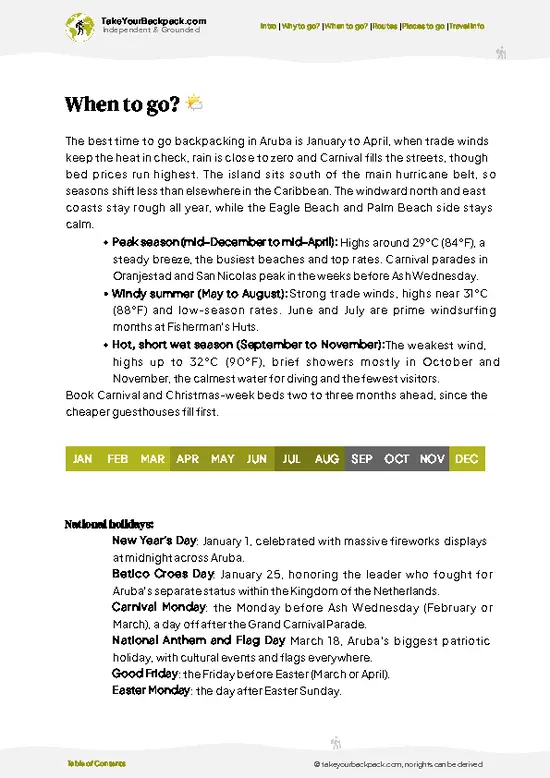
source: climatestotravel.comJANJanuary: highly recommended for travelingFEBFebruary: highly recommended for travelingMARMarch: highly recommended for travelingAPRApril: excellent for travelingMAYMay: excellent for travelingJUNJune: good for travelingJULJuly: good for travelingAUGAugust: good for travelingSEPSeptember: good for travelingOCTOctober: good for travelingNOVNovember: highly recommended for travelingDECDecember: highly recommended for traveling
when-to-go

✈️ The backpacker research shortcutAruba Travel Guide

An offline-friendly backpacking guide with optimized travel routes, ranked highlights, transport advice, and the best areas to stay.
example page 0 from our offline Travel Guide for Aruba
example page 1 from our offline Travel Guide for Aruba
example page 2 from our offline Travel Guide for Aruba
example page 3 from our offline Travel Guide for Aruba
example page 4 from our offline Travel Guide for Aruba
example page 5 from our offline Travel Guide for Aruba
example page 6 from our offline Travel Guide for Aruba
example page 7 from our offline Travel Guide for Aruba
The digital guide (145 pages) contains:
37 highlights, ranked by travel appeal
Optimized 2, 3 & 5-day travel routes
Cities, national parks, landmarks, beaches
How to get around
Offline-friendly for travel without Wi-Fi
👉 Click to see all 30+ guide features

📅 Plan smarter in minutes, not weeks
Month by month travel advice
Festivals & national holidays
Budget expectations

🗺️ Go to the right places, skip the overrated ones
Honest pros & cons of destinations
Top hikes, parks & viewpoints
Lesser-known places most travelers miss
Clear “worth it vs skip it” guidance

🛏️ Travel smoothly without rookie mistakes
Best areas to stay
Transport systems explained simply
Common scams & safety advice
SIM cards, money & practical tips

🌍 Understand the country, not just visit it
Culture & traditions
52 Essential phrases & customs
Festivals worth planning around
Traveler-friendly historical context
Insights that make places more meaningful

📱 Built for real travel conditions
Fully downloadable PDF
Works completely offline
Optimized for phone use
Useful in remote areas & buses
Everything in one place
Save weeks of stressful planning
Get instant access to your full guide. 30‑day money-back guarantee.


By proceeding you agree to our terms.
Sent to your inbox immediately after payment • 100% Secure Checkout
Best Backpacking Travel Advisor 2025 tourism awardBest Backpacking
Travel Advisor
2025
What others say about Take Your Backpack Guides:
⭐⭐⭐⭐⭐
Fantastic, amazing amount of information!
⭐⭐⭐⭐⭐
My goodness this is amazing, it's what I've been looking for hats off too you!
⭐⭐⭐⭐⭐
I think this is absolutely BRILLIANT
⭐⭐⭐⭐
Very complete and informative. It's still missing places, but I gotta to commend you
⭐⭐⭐⭐⭐
This is truly amazing, thank you, can't wait to explore it with my kids!
⭐⭐⭐⭐⭐
Awesome resource, thank you!
⭐⭐⭐⭐⭐
This is amazing! Can't wait to explore the ones I haven't seen
⭐⭐⭐⭐
I love this! Well done, great idea.
⭐⭐⭐⭐⭐
Thanks for taking the time to make this gem!
⭐⭐⭐⭐⭐
This might be the best website I've ever seen.
⭐⭐⭐⭐⭐
Congratulations, and thank you so much for your work; it's incredibly valuable.
⭐⭐⭐⭐
In all seriousness I think you did a great job pointing out the important spots
⭐⭐⭐⭐⭐
10/10 very good
⭐⭐⭐⭐⭐
As someone who's only just starting to visit regularly this is awesome, thank you.
⭐⭐⭐⭐
Thank you very much! I'm going to visit my dad, it's going to be very useful!
⭐⭐⭐⭐⭐
This is really cool! We'll be travelling for the first time and this definitely come in handy.
⭐⭐⭐⭐⭐
You are now our minister of culture, congratulations 👨‍💼
⭐⭐⭐⭐⭐
Just wanted to tell you that this is a pearl! Going to follow your recommendations.
⭐⭐⭐⭐⭐
This is so cool. I'll definitely be using the resource for my travels soon.
⭐⭐⭐⭐⭐
This is very impressive! Good work.
⭐⭐⭐⭐⭐
This is an amazing and informative site. Very well done!

🛏️ Where to stay?Best areas and accommodation options

San Nicolas is Aruba’s east-side heartbeat, a place where the Caribbean sun hits differently—more raw, less polished than the tourist-heavy west coast. For backpackers, the best spot to settle is the downtown area near the main street, where the local pulse is strongest. This neighborhood hums with a mix of working-class charm and emerging artsy energy, making it a natural magnet for solo travelers and budget adventurers who want to plug into authentic island life without the inflated prices.

Why here? Safety is solid, thanks to a tight-knit community vibe that keeps streets lively but not overwhelming. … read more 👉
San Nicolas is Aruba’s east-side heartbeat, a place where the Caribbean sun hits differently—more raw, less polished than the tourist-heavy west coast. For backpackers, the best spot to settle is the downtown area near the main street, where the local pulse is strongest. This neighborhood hums with a mix of working-class charm and emerging artsy energy, making it a natural magnet for solo travelers and budget adventurers who want to plug into authentic island life without the inflated prices.

Why here? Safety is solid, thanks to a tight-knit community vibe that keeps streets lively but not overwhelming. You’ll find hostels and guesthouses scattered around, offering simple, clean digs that encourage socializing—think communal kitchens and shared hammocks where stories flow as easily as the local rum. The scent of salty sea air mingles with the occasional grill smoke from street vendors, grounding you in the everyday rhythms of San Nicolas.

Compared to quieter residential pockets or the more touristy, expensive north, this area delivers a genuine, gritty charm. It’s where you can walk out your door and immediately feel part of the neighborhood, not just a visitor passing through. The payoff is a richer, more connected experience—one that rewards the effort of stepping off the beaten path.

🚌 Getting aroundMoving around without the hassle

San Nicolas moves at its own rhythm—less a clockwork town and more a pulse you feel underfoot. The streets hum with a mix of purposeful locals and wandering visitors, where schedules blur into the background noise of daily life. The air carries a faint salt tang from the nearby coast, mingling with the scent of street food stalls firing up at dusk. Here, transit isn’t about strict timetables but about reading the flow—when the buses fill, when the taxis circle, and when the sun’s angle makes walking a pleasure or a challenge. Understanding this flow means you don’t just get around—you glide through the town’s character.


  • Walking: San Nicolas is compact enough to explore on foot, especially in the cooler morning and late afternoon hours when the sun softens. Walking lets you catch the subtle
read more 👉
San Nicolas moves at its own rhythm—less a clockwork town and more a pulse you feel underfoot. The streets hum with a mix of purposeful locals and wandering visitors, where schedules blur into the background noise of daily life. The air carries a faint salt tang from the nearby coast, mingling with the scent of street food stalls firing up at dusk. Here, transit isn’t about strict timetables but about reading the flow—when the buses fill, when the taxis circle, and when the sun’s angle makes walking a pleasure or a challenge. Understanding this flow means you don’t just get around—you glide through the town’s character.


  • Walking: San Nicolas is compact enough to explore on foot, especially in the cooler morning and late afternoon hours when the sun softens. Walking lets you catch the subtle details—the cracked paint on colonial doors, the chatter spilling from open windows, the occasional waft of frying plantains. It’s free, flexible, and the best way to absorb the town’s texture.


  • Local Buses (Guaguas): These are the backbone of budget transit here. They run roughly from 6 a.m. to 9 p.m., with fares around $0.50 to $1.00. Buses can be crowded and slow during peak times, but they’re a direct, wallet-friendly way to reach neighborhoods beyond the center. The stops aren’t always clearly marked, so listen for the driver’s calls or watch for locals signaling.


  • Shared Taxis (Colectivos): Faster than buses and still affordable, colectivos operate on semi-fixed routes but leave when full. Expect to pay about $2-$3 depending on distance. They’re a good middle ground if you want to save time without the expense of a private taxi. The catch is timing—if you arrive just after one leaves, you might wait a bit.


  • Private Taxis: These offer door-to-door comfort and speed but at a premium—usually $5 and up within town limits. Negotiate the fare upfront, especially after dark when demand spikes. Taxis are best for late-night returns or when you’re hauling gear, but they’re not the go-to for budget travelers.


  • Bicycle Rentals: If you’re up for a bit of exercise, renting a bike is a smart way to cover more ground while staying flexible. Rentals typically cost around $10 per day. The town’s flat terrain and quiet side streets make cycling enjoyable, but watch for uneven pavement and occasional stray dogs.

👛 Costs (as of 29 May 2026)How expensive it really is

Backpacking in San Nicolas, Aruba, means balancing the island’s laid-back charm with the reality of its Caribbean price tag. Here’s what you can expect to spend day-to-day as an independent traveler.
  • Dorm Accommodation: San Nicolas is less touristy than Oranjestad, so dorm beds in guesthouses or hostels hover around $25 to $40 per night. Expect simple, clean rooms—nothing fancy, but enough to recharge after a day in the sun.
  • Meals: Local eateries and street food stalls offer the best value. You’ll find hearty plates of Aruban stews or fresh seafood for about $8 to $15. If you opt for casual restaurants, meals can push up to $20, especially if you want a drink or dessert.
  • Local Transport: Public buses are limited, so most travelers rely on shared taxis or renting a scooter. Shared rides
read more 👉
Backpacking in San Nicolas, Aruba, means balancing the island’s laid-back charm with the reality of its Caribbean price tag. Here’s what you can expect to spend day-to-day as an independent traveler.
  • Dorm Accommodation: San Nicolas is less touristy than Oranjestad, so dorm beds in guesthouses or hostels hover around $25 to $40 per night. Expect simple, clean rooms—nothing fancy, but enough to recharge after a day in the sun.
  • Meals: Local eateries and street food stalls offer the best value. You’ll find hearty plates of Aruban stews or fresh seafood for about $8 to $15. If you opt for casual restaurants, meals can push up to $20, especially if you want a drink or dessert.
  • Local Transport: Public buses are limited, so most travelers rely on shared taxis or renting a scooter. Shared rides cost around $3 to $5 per trip within town, while scooter rentals start at about $25 per day. Walking is also a solid option given the town’s compact size.
  • Basic Activities/Entry Fees: San Nicolas is known for its street art and cultural spots, many of which are free or ask for a small donation ($2 to $5). If you want to visit local museums or take part in guided tours, budget around $10 to $20.
  • Miscellaneous Expenses: Water, snacks, and occasional splurges like a cold drink or sunscreen will add roughly $5 to $10 daily. Keep in mind that Aruba’s imported goods can be pricier, so plan accordingly.

All told, a realistic daily budget for backpacking in San Nicolas lands between $50 and $90. This range covers the essentials without cutting corners, letting you soak in the town’s unique vibe without the sticker shock of Aruba’s more tourist-heavy areas.


source: aruba.com
⚠️ Prices can change and everyone travels differently, so take this as a rough guide. Hope it helps you plan your adventure!

🚌 Day tripsWhere to go beyond the main area

San Nicolas, Aruba, is a backpacker’s dream base for day trips, offering a blend of adventure and culture without the touristy fluff. The town’s laid-back vibe and local charm set the stage for exploring the island’s hidden treasures. Here are some day trips that will make you feel like a pro traveler.

Baby Beach
Just a 30-minute drive from San Nicolas, Baby Beach is a slice of paradise. The shallow, turquoise waters are perfect for swimming and snorkeling, making it ideal for all skill levels. Pack a picnic; the beach is less crowded in the morning, and you can savor the salty breeze while soaking in the sun. A rental car will cost around $40 for the day, but hitching a ride with locals can be a fun, budget-friendly option. Avoid the mistake of arriving too late; the best light for photos … read more 👉
San Nicolas, Aruba, is a backpacker’s dream base for day trips, offering a blend of adventure and culture without the touristy fluff. The town’s laid-back vibe and local charm set the stage for exploring the island’s hidden treasures. Here are some day trips that will make you feel like a pro traveler.

Baby Beach
Just a 30-minute drive from San Nicolas, Baby Beach is a slice of paradise. The shallow, turquoise waters are perfect for swimming and snorkeling, making it ideal for all skill levels. Pack a picnic; the beach is less crowded in the morning, and you can savor the salty breeze while soaking in the sun. A rental car will cost around $40 for the day, but hitching a ride with locals can be a fun, budget-friendly option. Avoid the mistake of arriving too late; the best light for photos is early morning.
👉 Explore Baby Beach

Arikok National Park
This rugged park is a must-see for nature lovers. A 20-minute drive from San Nicolas, it offers hiking trails that lead you through cacti, limestone cliffs, and stunning coastline views. Entrance is about $5, and you can easily spend half a day exploring. The trails can be rocky, so sturdy shoes are essential. Many first-timers underestimate the park’s size and end up rushing through; take your time to appreciate the unique flora and fauna.
👉 Explore Arikok National Park

Mangel Halto
A hidden gem for snorkeling enthusiasts, Mangel Halto is about a 25-minute drive away. The mangroves create a serene atmosphere, and the underwater life is vibrant. Bring your own gear to save money; the area is less commercialized, so you’ll avoid the crowds. The best time to visit is early afternoon when the sun illuminates the water. A common mistake is to overlook the entrance; it’s easy to miss, so keep an eye out for the small sign.
👉 Explore Mangel Halto

Savaneta
Just a 15-minute jaunt from San Nicolas, Savaneta is known for its local eateries and laid-back vibe. Grab a bite at a beachside shack and enjoy fresh seafood while watching the waves lap against the shore. The cost for a meal is around $10, making it a budget-friendly stop. Many backpackers rush through without tasting the local flavors; don’t miss out on the catch of the day.
👉 Explore Savaneta

Each of these trips offers a unique slice of Aruba, making your stay in San Nicolas not just a stopover, but a gateway to unforgettable experiences.
Want to know what more Aruba offers?
The Aruba Travel Guide describes 37 highlights, from cities to national parks, from beaches to hikes

Get the Travel Guide -

🛡️ SafetyScams, Hazards, and Annoyances

San Nicolas, Aruba, is generally safe, but a few practical tips can enhance your experience. The town has its charm, with vibrant street art and local eateries, but stay aware in less populated areas, especially after dark. Stick to well-lit streets and avoid wandering too far from the main thoroughfares when the sun dips below the horizon.

Solo travelers should embrace the lively atmosphere but keep your belongings close. A crossbody bag is ideal; it’s less cumbersome and more secure.

While scams are rare, be cautious of overly friendly strangers offering unsolicited help or deals that seem too good to be true. If someone approaches you with a pitch, trust your instincts.

Everyday annoyances can include aggressive vendors at markets. A polite but firm “no, thank you” usually does the … read more 👉
San Nicolas, Aruba, is generally safe, but a few practical tips can enhance your experience. The town has its charm, with vibrant street art and local eateries, but stay aware in less populated areas, especially after dark. Stick to well-lit streets and avoid wandering too far from the main thoroughfares when the sun dips below the horizon.

Solo travelers should embrace the lively atmosphere but keep your belongings close. A crossbody bag is ideal; it’s less cumbersome and more secure.

While scams are rare, be cautious of overly friendly strangers offering unsolicited help or deals that seem too good to be true. If someone approaches you with a pitch, trust your instincts.

Everyday annoyances can include aggressive vendors at markets. A polite but firm “no, thank you” usually does the trick. Approach your adventures with a relaxed confidence, and you’ll find the beauty of San Nicolas unfolds effortlessly.

Other Aruban towns near San Nicolas

Explore more nearby:

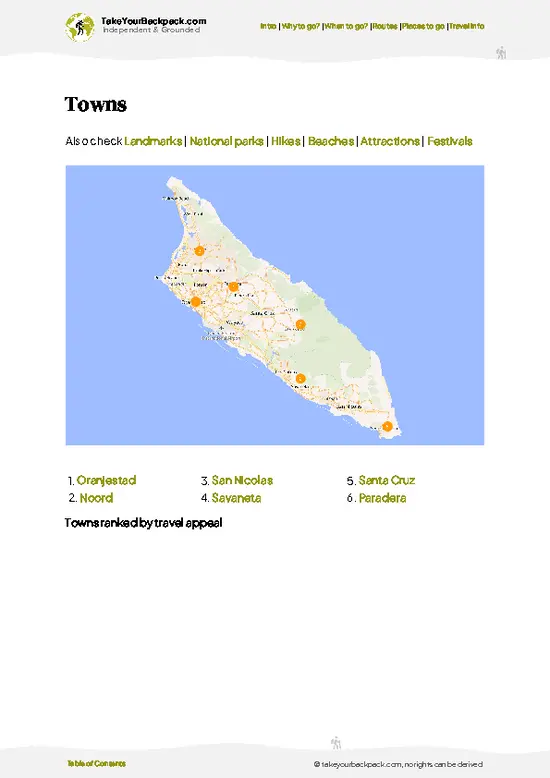
  • Savaneta—fishing docks, seaside shacks, mangrove coastline| 9 km away
  • Santa Cruz—Arikok trails, local bakeries, inland crossroads| 12 km away
  • Paradera—cactus hills, local bakeries, quiet neighborhoods| 19 km away

💡 Not sure where to go next?
Create a personalized itinerary for Aruba including San Nicolas and the places that fit your trip.

Generate my itinerary

👉 Discover all towns

Or checkout all Aruba has to offer (think cities, towns, villages, national parks, hikes, beaches, festivals)
Country photo of Aruba

We 💚 feedbackFinal thoughts on visiting San Nicolas

San Nicolas has a pulse that’s hard to ignore. The local art scene bursts with color, and the scent of fresh seafood wafts through the air, especially at the Sunday market. You’ll stumble upon friendly faces and lively conversations that make you feel at home. Just a heads-up: the beaches here are quieter but can be rocky, so pack some sturdy sandals. Embrace the imperfections; they lead to the best surprises, like finding a hidden beach bar with the coldest local brews.

✍️ Help improve this page!
The information on this page is based on in-depth research, insights shared by experienced travelers, and feedback from the local travel community in Aruba. While every effort is made to keep the information accurate and current, conditions can change — so if you spot anything incorrect or outdated, please get in touch.


🙋‍♂️ Give feedback

👋 Meet the founderWho’s Behind Take Your Backpack?

Johan, backpacker and founder of TakeYourBackpackHi, I’m Johan (Netherlands 🇳🇱), the creator of TakeYourBackpack. Over the past decade, I’ve backpacked through 80+ countries across six continents, gaining extensive experience with independent travel, long-term trips, and overland routes.

This site is built on a combination of firsthand travel experience and carefully curated insights from other backpackers. Many guides are based on places I’ve personally visited, while others bring together tips, observations, and practical advice shared by trusted travelers I’ve met along the way.

The goal is to provide realistic, experience-driven guidance — not generic itineraries — so you can explore destinations with better context, clearer expectations, and more confidence.

Get full Aruba guide •
Instant download • 37 highlights • Full Offline guide