×

Australia🇦🇺 | citiesDarwinMindil sunset stalls, Top End base, wartime tunnels, crocodile cage | things to do and best time to go

Explore CairnsExplore Newcastle

Backpacking in Darwin
👍 Recommendedcity ranked #9
By Johan Kruseman 🇳🇱 | Updated October 16, 2026

Darwin’s Mindil Beach Sunset Market runs on Thursdays and Sundays in the dry season, and locals arrive early to claim a patch of sand before the sun drops into the Timor Sea. That is Darwin at its best. The city sits on the north coast of Australia, closer to Jakarta than to Sydney, and it runs on tropical time. I expected a rough frontier outpost. What I found was a tidy, relaxed waterfront town where people eat laksa from paper bowls on the grass. Crocodiles are real, so swim in the pool, not the sea. Book Kakadu and Litchfield trips early, because the tour desks fill in the dry season. Darwin suits easygoing travelers who want a base for the Top End. It will bore anyone chasing big-city nightlife.

Discover everything you want to know in the 📖 Australia Travel Guide.


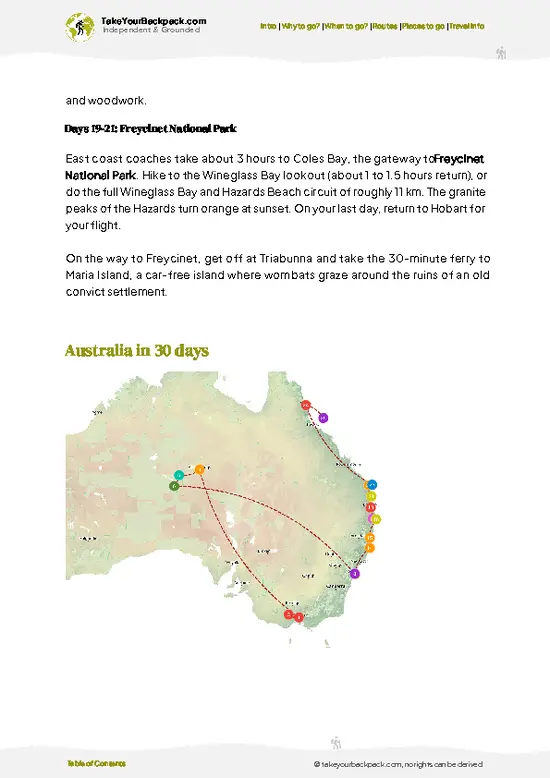
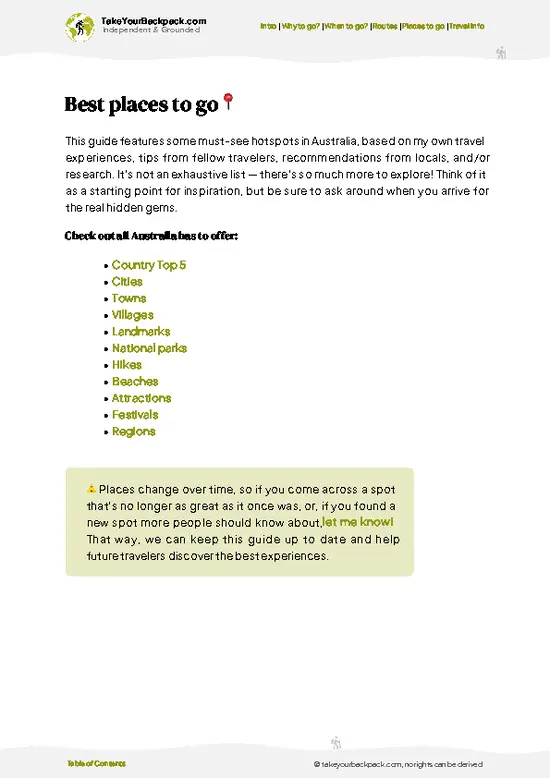
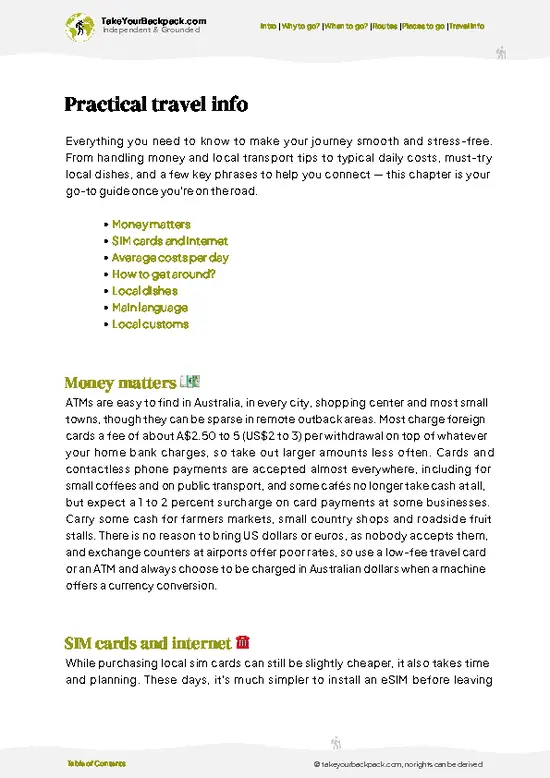
example page 0 from our offline Travel Guide for Australia
example page 1 from our offline Travel Guide for Australia
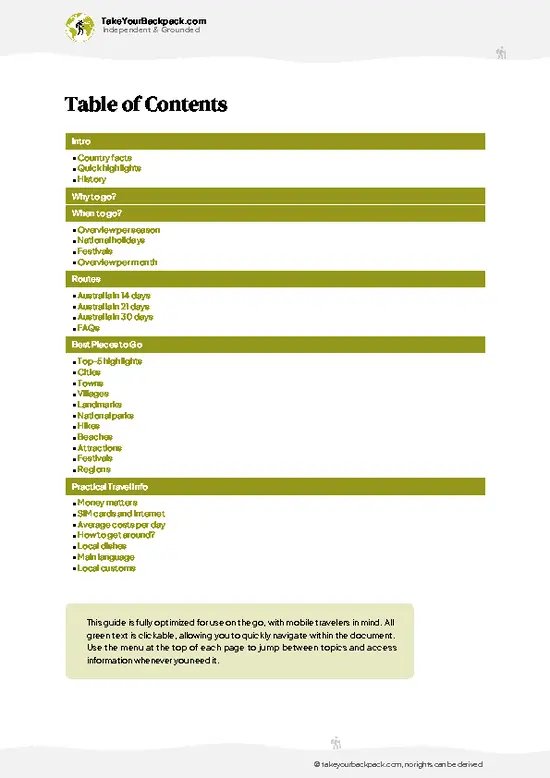
example page 2 from our offline Travel Guide for Australia
example page 3 from our offline Travel Guide for Australia
example page 4 from our offline Travel Guide for Australia
example page 5 from our offline Travel Guide for Australia
example page 6 from our offline Travel Guide for Australia
example page 7 from our offline Travel Guide for Australia
Loading the map 🌍
CLICK TO FILTER
cities
towns
villages
landmarks
national parks
hikes
beaches
attractions
festivals
regions
SHOW COUNTRY’S BESTSHOW ALL

✨ Why go?
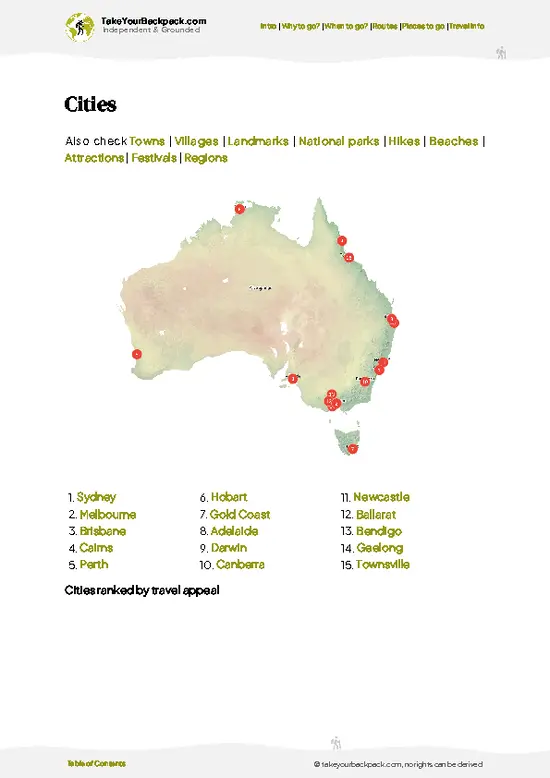
Ranked #9 city in Australia
Why visitors keep coming back

Most backpackers come to Darwin because it is the gateway to the Top End, and the city makes that easy. It has a compact center with a cluster of hostels on and around Mitchell Street, so you can sort a tour, a hire car and a beer within a few blocks. Tour operators here run Kakadu, Litchfield and Katherine trips with pickups from the door, which saves you from organizing a vehicle if you have none. The food is another draw, with Southeast Asian flavors well represented thanks to the city’s proximity to Asia and its mix of communities. Darwin is also a practical stepping stone. Flights to Bali and Southeast Asia leave from here, and the Stuart Highway runs south toward Alice Springs. As a destination in itself, it is a short stop, and two or three nights covers it.

💡 HighlightsDon't-miss highlights and experiences

  1. Mindil Beach Sunset Market: Food stalls, crafts and live music over the sand, with sunsets that draw the whole town. Thursdays and Sundays, roughly May to October. Free entry, meals about A$12 to 18. Arrive by 5 PM and plan on 2 to 3 hours.
  2. Museum and Art Gallery of the Northern Territory: Home to Cyclone Tracy displays, where you can sit in a dark room and hear the storm of 1974 recorded in sound, plus Aboriginal art and the stuffed crocodile Sweetheart. Free. Allow 1.5 to 2 hours, and go midday when it is hottest.
  3. Crocosaurus Cove: A city-center croc attraction where you can enter the Cage of Death, a clear tank, to share water with a large saltwater crocodile. Entry about A$40 to 45, cage extra. Allow 1.5 to 2 hours.
  4. Darwin Military Museum: At East Point, it covers the 1942 Japanese bombing
… read more 👉
  1. Mindil Beach Sunset Market: Food stalls, crafts and live music over the sand, with sunsets that draw the whole town. Thursdays and Sundays, roughly May to October. Free entry, meals about A$12 to 18. Arrive by 5 PM and plan on 2 to 3 hours.
  2. Museum and Art Gallery of the Northern Territory: Home to Cyclone Tracy displays, where you can sit in a dark room and hear the storm of 1974 recorded in sound, plus Aboriginal art and the stuffed crocodile Sweetheart. Free. Allow 1.5 to 2 hours, and go midday when it is hottest.
  3. Crocosaurus Cove: A city-center croc attraction where you can enter the Cage of Death, a clear tank, to share water with a large saltwater crocodile. Entry about A$40 to 45, cage extra. Allow 1.5 to 2 hours.
  4. Darwin Military Museum: At East Point, it covers the 1942 Japanese bombing raids on Darwin, with guns, vehicles and film. Entry about A$15 to 20. Allow 1.5 hours.
  5. East Point Reserve: Wallabies graze on the grass around dusk, and walking tracks lead through monsoon forest to the coast. Free. Allow 1 to 2 hours, best in the evening.
  6. WWII Oil Storage Tunnels: Tunnels dug under the city in 1943 hold photos from wartime Darwin. Entry about A$8 to 12. Allow 45 minutes, and go in the morning.
  7. Darwin Waterfront Precinct: A wave lagoon and a sheltered tidal swimming lagoon, safe from crocodiles and stingers. Free for the lagoon, a small fee for the wave pool. Allow 1 to 2 hours, best when it is hot.
  8. Parap Village Market: Saturday mornings, with laksa, Thai and Indonesian stalls and tropical fruit. Free entry, with breakfast around A$10 to 15. Allow 1 to 1.5 hours, and go early.
Together these fill about two full days at an easy pace. Outside the city, Litchfield National Park, Kakadu National Park and Adelaide River’s jumping crocodile cruises make the best day trips.
Spotted a mistake or missing something? Contact us.

Things to do in Darwin

Ratings based on Tripadvisor reviews. When you book through this link, you support our work at no extra cost to you.

🏘️ NeighborhoodsNeighborhood guide to Darwin

Darwin is compact, but the heat decides how much of it you actually see on foot. Smart travelers cluster their wandering into mornings and evenings, because the midday sun is not a suggestion.
  • CBD and Esplanade: A tight grid of pubs, backpacker bars and cafés on Mitchell Street, with the Esplanade park running along the cliff. Fully walkable, and the one place where you can skip the bus. Eat late, since kitchens close earlier than you expect.
  • Waterfront: Man-made lagoon, wave pool and restaurants a short stroll down from the center. The harbor has crocodiles and box jellyfish, so swimming happens in the enclosed lagoon, not the sea. Locals know this, which is why the lagoon is full and the beach is not.
  • Parap: Home to the Saturday morning market, with laksa, fruit shakes and Southeast Asian stalls.
… read more 👉
Darwin is compact, but the heat decides how much of it you actually see on foot. Smart travelers cluster their wandering into mornings and evenings, because the midday sun is not a suggestion.
  • CBD and Esplanade: A tight grid of pubs, backpacker bars and cafés on Mitchell Street, with the Esplanade park running along the cliff. Fully walkable, and the one place where you can skip the bus. Eat late, since kitchens close earlier than you expect.
  • Waterfront: Man-made lagoon, wave pool and restaurants a short stroll down from the center. The harbor has crocodiles and box jellyfish, so swimming happens in the enclosed lagoon, not the sea. Locals know this, which is why the lagoon is full and the beach is not.
  • Parap: Home to the Saturday morning market, with laksa, fruit shakes and Southeast Asian stalls. Go early, before the heat peaks. Short bus or bike ride from town.
  • Mindil Beach: Famous for Thursday and Sunday sunset markets in the dry season, with food stalls and crowds facing the water. Take the bus, because parking turns into a sport.
  • Fannie Bay: Quiet, leafy, with the Museum and Art Gallery of the Northern Territory and the old gaol. Distances stretch here, so ride a bike if you can.

⌛️ 1 daySeeing the highlights in 24 hours

7:30 AM: Waterfront Precinct Start with a walk along the harbor before the humidity builds, then grab coffee near the wharf. It is a flat 10-minute stroll to the next stop.
9:00 AM: WWII Oil Storage Tunnels Descend into the cool tunnels dug in 1943 and read the wartime photographs. It is short and shaded, and then you can wander up into the center.
10:30 AM: Crocosaurus Cove Watch the feeding shows and see saltwater crocs up close. Then walk along Mitchell Street for lunch at a laksa or noodle spot.
1:00 PM: Museum and Art Gallery of the Northern Territory Take a bus or short ride to Bullocky Point. The air-conditioned galleries cover Cyclone Tracy, Aboriginal art and Sweetheart the croc. Stay until the afternoon heat eases.
3:30 PM: Fannie Bay Gaol Hardly anyone goes here, though it is close … read more 👉
7:30 AM: Waterfront Precinct Start with a walk along the harbor before the humidity builds, then grab coffee near the wharf. It is a flat 10-minute stroll to the next stop.
9:00 AM: WWII Oil Storage Tunnels Descend into the cool tunnels dug in 1943 and read the wartime photographs. It is short and shaded, and then you can wander up into the center.
10:30 AM: Crocosaurus Cove Watch the feeding shows and see saltwater crocs up close. Then walk along Mitchell Street for lunch at a laksa or noodle spot.
1:00 PM: Museum and Art Gallery of the Northern Territory Take a bus or short ride to Bullocky Point. The air-conditioned galleries cover Cyclone Tracy, Aboriginal art and Sweetheart the croc. Stay until the afternoon heat eases.
3:30 PM: Fannie Bay Gaol Hardly anyone goes here, though it is close by. The old prison operated until 1979 and shows the hard side of frontier justice, including a gallows and cramped cells. Entry is free.
5:00 PM: East Point Reserve Ride or walk to the reserve and watch wallabies appear on the grass while the light turns orange.
6:30 PM: Mindil Beach On market nights, finish with dinner from the stalls and sunset over the water. On other nights, eat in town.

🌤️ When to go?When to go for the best experience

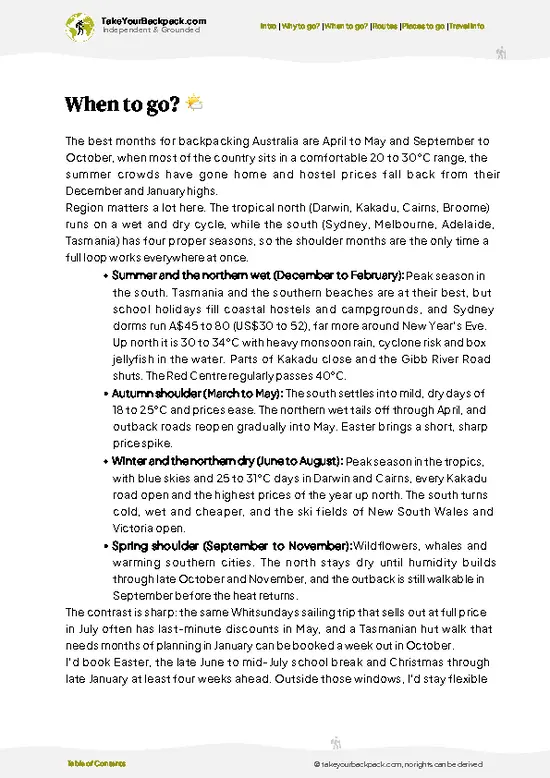
The dry season from May to October is the sweet spot, with clear skies and little rain.
  • Dry Season (May to October): Days of 30 to 33°C (86 to 91°F), cool nights near 20°C (68°F), and about 11 to 12 hours of daylight. Markets, festivals and day trips run at full tilt. Crowds and accommodation prices peak from June to August.
  • Build-up (September to November): Humidity climbs, with highs of 33 to 35°C (91 to 95°F), and storms start. Prices ease.
  • Wet Season (December to April): Hot and sticky at 31 to 33°C (88 to 91°F), with monsoon downpours, spectacular lightning and occasional cyclones. Some parks and roads close, but beds are cheapest.
Book Kakadu trips early if you arrive in July.

source: climatestotravel.comJANJanuary: fair for travelingFEBFebruary: fair for travelingMARMarch: fair for travelingAPRApril: highly recommended for travelingMAYMay: excellent for travelingJUNJune: excellent for travelingJULJuly: excellent for travelingAUGAugust: excellent for travelingSEPSeptember: excellent for travelingOCTOctober: highly recommended for travelingNOVNovember: fair for travelingDECDecember: fair for traveling
when-to-go

✈️ The backpacker research shortcutAustralia Travel Guide

An offline-friendly backpacking guide with optimized travel routes, ranked highlights, transport advice, and the best areas to stay.
example page 0 from our offline Travel Guide for Australia
example page 1 from our offline Travel Guide for Australia
example page 2 from our offline Travel Guide for Australia
example page 3 from our offline Travel Guide for Australia
example page 4 from our offline Travel Guide for Australia
example page 5 from our offline Travel Guide for Australia
example page 6 from our offline Travel Guide for Australia
example page 7 from our offline Travel Guide for Australia
The digital guide (414 pages) contains:
✅ 143 highlights, ranked by travel appeal
✅ Optimized 14, 21 & 30-day travel routes
✅ Cities, national parks, landmarks, beaches
✅ How to get around
✅ Offline-friendly for travel without Wi-Fi
👉 Click to see all 30+ guide features

📅 Plan smarter in minutes, not weeks
✅ Month by month travel advice
✅ Festivals & national holidays
✅ Budget expectations

🗺️ Go to the right places, skip the overrated ones
✅ Honest pros & cons of destinations
✅ Top hikes, parks & viewpoints
✅ Lesser-known places most travelers miss
✅ Clear “worth it vs skip it” guidance

🛏️ Travel smoothly without rookie mistakes
✅ Best areas to stay
✅ Transport systems explained simply
✅ Common scams & safety advice
✅ SIM cards, money & practical tips

🌍 Understand the country, not just visit it
✅ Culture & traditions
✅ Local customs
✅ Festivals worth planning around
✅ Traveler-friendly historical context
✅ Insights that make places more meaningful

📱 Built for real travel conditions
✅ Fully downloadable PDF
✅ Works completely offline
✅ Optimized for phone use
✅ Useful in remote areas & buses
✅ Everything in one place
Stop searching, start planning
Get instant access to your full guide. 30‑day money-back guarantee.
+ Add another guide for just

By proceeding you agree to our terms.
Sent to your inbox immediately after payment • 100% Secure Checkout
Best Backpacking Travel Advisor 2025 tourism awardBest Backpacking
Travel Advisor
2025
What others say about Take Your Backpack Guides:
⭐⭐⭐⭐⭐
Fantastic, amazing amount of information!
⭐⭐⭐⭐⭐
My goodness this is amazing, it's what I've been looking for hats off too you!
⭐⭐⭐⭐⭐
I think this is absolutely BRILLIANT
⭐⭐⭐⭐
Very complete and informative. It's still missing places, but I gotta to commend you
⭐⭐⭐⭐⭐
This is truly amazing, thank you, can't wait to explore it with my kids!
⭐⭐⭐⭐⭐
Awesome resource, thank you!
⭐⭐⭐⭐⭐
This is amazing! Can't wait to explore the ones I haven't seen
⭐⭐⭐⭐
I love this! Well done, great idea.
⭐⭐⭐⭐⭐
Thanks for taking the time to make this gem!
⭐⭐⭐⭐⭐
This might be the best website I've ever seen.
⭐⭐⭐⭐⭐
Congratulations, and thank you so much for your work; it's incredibly valuable.
⭐⭐⭐⭐
In all seriousness I think you did a great job pointing out the important spots
⭐⭐⭐⭐⭐
10/10 very good
⭐⭐⭐⭐⭐
As someone who's only just starting to visit regularly this is awesome, thank you.
⭐⭐⭐⭐
Thank you very much! I'm going to visit my dad, it's going to be very useful!
⭐⭐⭐⭐⭐
This is really cool! We'll be travelling for the first time and this definitely come in handy.
⭐⭐⭐⭐⭐
You are now our minister of culture, congratulations 👨‍💼
⭐⭐⭐⭐⭐
Just wanted to tell you that this is a pearl! Going to follow your recommendations.
⭐⭐⭐⭐⭐
This is so cool. I'll definitely be using the resource for my travels soon.
⭐⭐⭐⭐⭐
This is very impressive! Good work.
⭐⭐⭐⭐⭐
This is an amazing and informative site. Very well done!

🛏️ Where to stay?Best areas to stay in Australia

The CBD around Mitchell Street is the best base, with most hostel dorms in town within a few blocks of each other. You can walk to bars, the bus Interchange and tour pickup points, so you skip taxi costs entirely. Dorm beds usually run A$35 to 55 a night.
The trade-off is noise. Mitchell Street gets lively on weekends, so request a room away from the street or pack earplugs. After dark the center is manageable on foot in groups, though quieter side streets are best avoided alone.
Parap and Fannie Bay offer a calmer alternative with a few guesthouses and budget rooms, and they are close to the markets. … read more 👉
The CBD around Mitchell Street is the best base, with most hostel dorms in town within a few blocks of each other. You can walk to bars, the bus Interchange and tour pickup points, so you skip taxi costs entirely. Dorm beds usually run A$35 to 55 a night.
The trade-off is noise. Mitchell Street gets lively on weekends, so request a room away from the street or pack earplugs. After dark the center is manageable on foot in groups, though quieter side streets are best avoided alone.
Parap and Fannie Bay offer a calmer alternative with a few guesthouses and budget rooms, and they are close to the markets. Buses are less frequent there, so expect to rely on a bike or rideshare. For most first-timers the CBD wins on convenience, particularly if you are joining early-morning tours.

🚌 Getting aroundHow to get around Darwin

The center is walkable in about 15 minutes end to end, but beyond the Esplanade the heat and wide suburban spacing make walking a poor idea. Darwin is built for cars, so buses are infrequent and the smart move is to plan around the timetable, not against it.
  • Walking: Fine for the CBD and waterfront, free, and best before 10am or after 4pm. Carry water, because shade is optional and sweat is not.
  • Buses (Darwinbus): Cover Parap, Fannie Bay and the airport from the Interchange on Harry Chan Avenue. A single fare is about A$3, with day tickets near A$7 to 10. Services thin out in the evening and on Sundays, so check times before you commit to a late market dinner.
  • Bicycle: Flat terrain and shared paths to Fannie Bay and Nightcliff make this the sensible option. Hire runs about A$20 to 35 a day, and
… read more 👉
The center is walkable in about 15 minutes end to end, but beyond the Esplanade the heat and wide suburban spacing make walking a poor idea. Darwin is built for cars, so buses are infrequent and the smart move is to plan around the timetable, not against it.
  • Walking: Fine for the CBD and waterfront, free, and best before 10am or after 4pm. Carry water, because shade is optional and sweat is not.
  • Buses (Darwinbus): Cover Parap, Fannie Bay and the airport from the Interchange on Harry Chan Avenue. A single fare is about A$3, with day tickets near A$7 to 10. Services thin out in the evening and on Sundays, so check times before you commit to a late market dinner.
  • Bicycle: Flat terrain and shared paths to Fannie Bay and Nightcliff make this the sensible option. Hire runs about A$20 to 35 a day, and the heat makes early starts wise.
  • Taxis and rideshare: Short trips cost A$15 to 30. They are useful after dark, when buses give up, and splitting between a few people keeps it reasonable.
  • Rental car or tour: Kakadu, Litchfield and the Adelaide River need wheels. Rentals start around A$60 to 100 a day, or join a tour from roughly A$150 if you would rather not drive hours of straight road.

👛 Costs (as of 16 October 2026)Travel costs and budget guide for Darwin

Darwin costs most backpackers about US$95 to 125 a day, and the high-season figure below adds up to US$118. Prices are Australia-wide high, but dorm beds and market meals keep it manageable.
CategoryBudget RangeLocal Reality
Dorm accommodation (high season, May to September)US$32 to 45Beds fill fast in the Dry Season, so book ahead. Air-conditioning is standard.
Dorm accommodation (off-season, October to April)US$22 to 32Wet Season discounts are common and beds are easy to find.
MealsUS$30 to 45Market laksa or a Asian takeaway runs US$8 to 13. A pub meal costs US$18 to 28. Self-catering saves a lot.
Local transportUS$3 to 8Buses cost about US$2 to 3 per ride, and most of the compact center is walkable.
City transport passUS$6 to 8A Tap and Ride card for the Darwin bus network is capped at about
… read more 👉
Darwin costs most backpackers about US$95 to 125 a day, and the high-season figure below adds up to US$118. Prices are Australia-wide high, but dorm beds and market meals keep it manageable.
CategoryBudget RangeLocal Reality
Dorm accommodation (high season, May to September)US$32 to 45Beds fill fast in the Dry Season, so book ahead. Air-conditioning is standard.
Dorm accommodation (off-season, October to April)US$22 to 32Wet Season discounts are common and beds are easy to find.
MealsUS$30 to 45Market laksa or a Asian takeaway runs US$8 to 13. A pub meal costs US$18 to 28. Self-catering saves a lot.
Local transportUS$3 to 8Buses cost about US$2 to 3 per ride, and most of the compact center is walkable.
City transport passUS$6 to 8A Tap and Ride card for the Darwin bus network is capped at about US$6 to 7 a day.
Basic activities and entry feesUS$5 to 25Many sights are free, including the waterfront and Mindil Beach Sunset Market. Museum entry is often free or low, and Wave Lagoon costs about US$10 to 15.
MiscellaneousUS$8 to 15Sunscreen, repellent, a beer (US$7 to 10) and laundry.
Total Daily BudgetUS$118Based on a high-season dorm bed (US$38), meals (US$38), local transport (US$5), activities (US$15), pass (US$7) and miscellaneous (US$15).
Cook in the hostel kitchen and fill dinner plans around the free sunset markets, which can cut your food costs nearly in half.


source: australia.com
⚠️ Prices can change and everyone travels differently, so take this as a rough guide. Hope it helps you plan your adventure!

🚌 Day tripsExploring the surroundings

Darwin works well as a base for day trips, since several top sights lie within three hours, though most need a tour or rental car.
Litchfield National Park:
About 1.5 hours by road, with swimmable waterfalls at Wangi and Florence Falls and giant termite mounds. Tours cost around A$130 to 190, a rental car split between travelers is cheaper. Go in the dry season, since wet-season roads and pools can close. Many first-timers underestimate the distances inside the park.

Kakadu National Park:
About 2.5 to 3 hours to the park's northern edge, so a day trip is long but possible. Rock art at Ubirr and Yellow Water cruises are the draws. Tours run A$180 to 250. Skip the wet season, when access is limited. The common error is trying to see too much in one day.

Adelaide River Jumping Crocodile Cruise: … read more 👉
Darwin works well as a base for day trips, since several top sights lie within three hours, though most need a tour or rental car.
Litchfield National Park:
About 1.5 hours by road, with swimmable waterfalls at Wangi and Florence Falls and giant termite mounds. Tours cost around A$130 to 190, a rental car split between travelers is cheaper. Go in the dry season, since wet-season roads and pools can close. Many first-timers underestimate the distances inside the park.

Kakadu National Park:
About 2.5 to 3 hours to the park's northern edge, so a day trip is long but possible. Rock art at Ubirr and Yellow Water cruises are the draws. Tours run A$180 to 250. Skip the wet season, when access is limited. The common error is trying to see too much in one day.

Adelaide River Jumping Crocodile Cruise:
About 1 hour drive, then a cruise where saltwater crocodiles leap for bait. Expect A$50 to 70 for the cruise, plus transport. It works year-round, though dry-season mornings are comfortable.

Mary River and Window on the Wetlands:
About 1 hour to the viewing platform, with birdlife best seen in the dry season. Cheap if self-driven.

🍲 FoodWhat to Eat & Drink

Darwin's food leans on its location: barramundi is the local fish, often grilled or battered, and the city's strong Southeast Asian influence shows up in laksa and tropical fruit shakes. Look for buffalo, crocodile and kangaroo on pub menus, usually in burgers or skewers.
The night markets at Mindil Beach and the Parap Saturday market are where most backpackers eat, with stalls selling Thai, Indonesian, Sri Lankan and Greek dishes for roughly A$10 to 18. Eat while watching the sunset, which is the local ritual.
For drinks, Territory beer culture is strong, and the pubs along Mitchell Street are the place to join it. The humidity makes a cold beer or coconut water easy to justify. Dry-season evenings suit an outdoor table, and the Waterfront has relaxed eateries with harbor views.

🛡️ SafetyStaying Safe: What Travelers Should Know

Darwin is generally safe, and most problems come from nature rather than people. Stay out of the water at beaches and rivers, because saltwater crocodiles and box jellyfish are real, and heed every sign. In the evening, the Mitchell Street area can get rowdy around closing time, so keep your drinks close and walk back in a group. Solo travelers should use taxis or rideshare after midnight, particularly outside the CBD. Theft from bags left in sight is the typical nuisance, so lock valuables away. Heat and dehydration catch people out more than crime, so drink water constantly and use sunscreen.

FAQFrequently asked questions about Darwin

Three to four days covers the city and one big excursion. Spend one day on the Esplanade, Waterfront and Mindil Beach markets, then add Litchfield (about 1.5 hours away) and, if you can, a Kakadu trip of 2.5 to 3 hours each way. Allow five days if you want both parks without rushing.
Yes, Darwin is safe for solo backpackers. Hostels in the CBD make it easy to meet people and share tour costs. Use taxis after midnight, which cost about A$15 to 30, and never swim in open water because of crocodiles and jellyfish.
Darwin is known for its tropical climate, crocodiles, sunset markets and its role as the gateway to Kakadu and Litchfield national parks. Mindil Beach markets run on Thursdays and Sundays in the dry season. The city also has a significant WWII history, including Japanese air raids in 1942, and strong Aboriginal and Southeast Asian influences.
⚠️ Things can change over time, so always validate details locally before you go.

Other Australian cities near Darwin

Explore more nearby:

  • Cairns—Reef boats, Esplanade Lagoon, shorebird mudflats, Kuranda rail| 1679 km away
  • Townsville—Castle Hill granite, Strand rock pool, shipwreck museum, island gateway| 1866 km away
  • Adelaide—Central Market stalls, North Terrace museums, laneway bars, tram to Glenelg| 2617 km away

💡 Not sure where to go next?
Create a personalized itinerary for Australia including Darwin and the places that fit your trip.

Generate my itinerary

👉 Discover all cities

Or checkout all Australia has to offer (think cities, towns, villages, national parks, hikes, beaches, festivals)
Country photo of Australia

We 💚 feedbackFinal thoughts on visiting Darwin

Two nights is enough for the city, three if you want to catch both market nights or a Saturday at Parap. Anything longer only makes sense if you are using Darwin as a base for Kakadu and Litchfield. I would book the tours first, then fit the city around them.

✈️ When did I visit Australia?
On my trip to New Zealand in 1993, I had a short stop in Australia as well.

✍️ Help improve this page!
The information on this page is based on my own backpacking experience in Australia, supplemented with up-to-date research and feedback from other travelers. Travel details can change, so if you notice anything outdated or incomplete, feel free to let me know.


🙋‍♂️ Give feedback

👋 Meet the founderWho’s Behind Take Your Backpack?

Johan, backpacker and founder of TakeYourBackpackHi, I’m Johan (Netherlands 🇳🇱), the creator of TakeYourBackpack. Over the past 3 decades, I’ve backpacked through 90+ countries across six continents, gaining extensive experience with independent travel, long-term trips, and overland routes.

This site is built on a combination of firsthand travel experience and carefully curated insights from other backpackers. Many guides are based on places I’ve personally visited, while others bring together tips, observations, and practical advice shared by trusted travelers I’ve met along the way.

The goal is to provide realistic, experience-driven guidance — not generic itineraries — so you can explore destinations with better context, clearer expectations, and more confidence.