×

Australia🇦🇺 | beachesTurquoise BayDrift snorkel, coral current, shallow swim area, Cape Range dunes | things to do and best time to go

Explore YallingupExplore Hyams Beach

Backpacking in Turquoise Bay
🏆 Top pickbeach ranked #6
By Johan Kruseman 🇳🇱 | Updated October 15, 2026

The first thing in my mouth at Turquoise Bay was a lukewarm flat white from a thermos, poured on the sand while a stranger beside me argued with a crab over a sandwich. The crab won. Turquoise Bay sits on the western side of the Cape Range peninsula in Western Australia, in Australia’s west, reached by a long road from Exmouth. The sand is squeaky white, the water clear enough to make you suspicious, and the reef begins a few strides from your towel, so snorkeling here needs no boat and no tour. There are no shops, no cafes and no budget beds on the beach itself, so you bring everything, including shade and your own lunch. Parking fills by late morning, and the current can be strong. Compared with nearby Oyster Stacks, which demands tide timing and is rockier, Turquoise Bay is easier and far more forgiving.

Discover everything you want to know in the 📖 Australia Travel Guide.


example page 0 from our offline Travel Guide for Australia
example page 1 from our offline Travel Guide for Australia
example page 2 from our offline Travel Guide for Australia
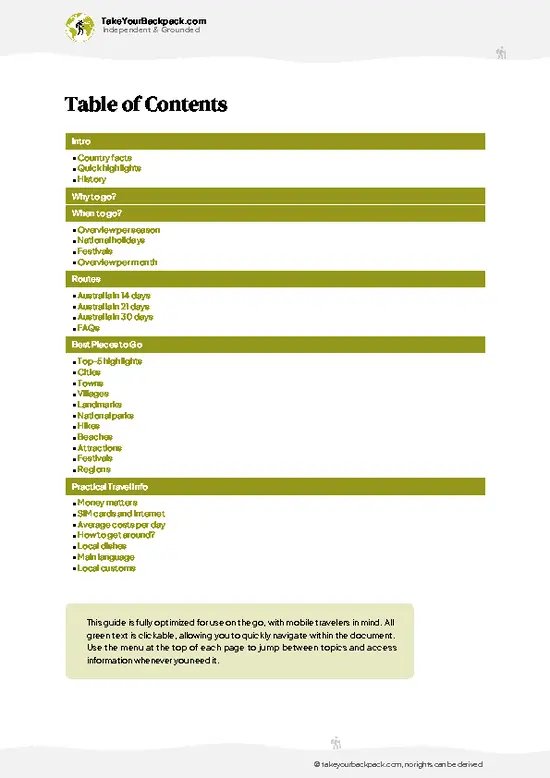
example page 3 from our offline Travel Guide for Australia
example page 4 from our offline Travel Guide for Australia
example page 5 from our offline Travel Guide for Australia
example page 6 from our offline Travel Guide for Australia
example page 7 from our offline Travel Guide for Australia
Loading the map 🌍
CLICK TO FILTER
cities
towns
villages
landmarks
national parks
hikes
beaches
attractions
festivals
regions
SHOW COUNTRY’S BESTSHOW ALL

✨ Why go?
Ranked #6 beach in Australia
What makes this beach worth visiting

Backpackers stop here because the Drift Snorkel turns an ordinary swim into a free ride over coral. You wade in at the southern end of the bay, float with the current along the reef edge, then climb out at the sandbar and walk back to do it again. Parrotfish, small reef sharks and turtles pass beneath you with zero gear beyond a mask and fins, which you can hire or buy cheaply in Exmouth.

The second pull is the setting. Turquoise Bay is inside Cape Range National Park, so the shoreline is dunes and low scrub with no resorts, and the campsites nearby let you sleep close enough to arrive before the day-trip cars do. That makes it a natural pause between Exmouth and the Ningaloo coast, a place where a whole afternoon disappears without any plan.

The third reason is simple: it is the beach other … read more 👉
Backpackers stop here because the Drift Snorkel turns an ordinary swim into a free ride over coral. You wade in at the southern end of the bay, float with the current along the reef edge, then climb out at the sandbar and walk back to do it again. Parrotfish, small reef sharks and turtles pass beneath you with zero gear beyond a mask and fins, which you can hire or buy cheaply in Exmouth.

The second pull is the setting. Turquoise Bay is inside Cape Range National Park, so the shoreline is dunes and low scrub with no resorts, and the campsites nearby let you sleep close enough to arrive before the day-trip cars do. That makes it a natural pause between Exmouth and the Ningaloo coast, a place where a whole afternoon disappears without any plan.

The third reason is simple: it is the beach other travelers talk about, so you will meet people at the car park comparing sightings, swapping masks and sharing sunscreen. Bring a packed lunch and plenty of water.

💡 HighlightsDon't-miss highlights and experiences

  1. The Drift Snorkel: The bay’s signature experience. Enter at the southern end, let the current carry you north along the coral, then exit at the sandbar. Expect colorful fish, and sometimes turtles or reef sharks, just a few meters below.
  2. The Bay swimming area: The northern section has gentle, shallow water protected by the reef. It is the calm option for children or nervous swimmers, and the sand underfoot is fine and white.
  3. Sandbar walk: At the end of the drift, you step out onto a pale sandbar and stroll back along the shore. It makes a loop you can repeat for hours, with the water changing from pale green to deep blue.
  4. Dune and shoreline photography: Low dunes backed by red Cape Range scrub frame the water. The color contrast between rust-colored land and bright sea is sharpest in the middle
… read more 👉
  1. The Drift Snorkel: The bay’s signature experience. Enter at the southern end, let the current carry you north along the coral, then exit at the sandbar. Expect colorful fish, and sometimes turtles or reef sharks, just a few meters below.
  2. The Bay swimming area: The northern section has gentle, shallow water protected by the reef. It is the calm option for children or nervous swimmers, and the sand underfoot is fine and white.
  3. Sandbar walk: At the end of the drift, you step out onto a pale sandbar and stroll back along the shore. It makes a loop you can repeat for hours, with the water changing from pale green to deep blue.
  4. Dune and shoreline photography: Low dunes backed by red Cape Range scrub frame the water. The color contrast between rust-colored land and bright sea is sharpest in the middle of the day, when the water is at its clearest.
  5. Sunset from the road back: Late in the day the car park empties and the light turns the sand gold. Linger for the quiet, then drive out slowly, as kangaroos and emus are common beside the road.
If time is short, skip the dune photography and spend every minute in the water.
Spotted a mistake or missing something? Contact us.

Things to do around Turquoise Bay

Ratings based on Tripadvisor reviews. When you book through this link, you support our work at no extra cost to you.

🌤️ When to go?Choosing the right time of year

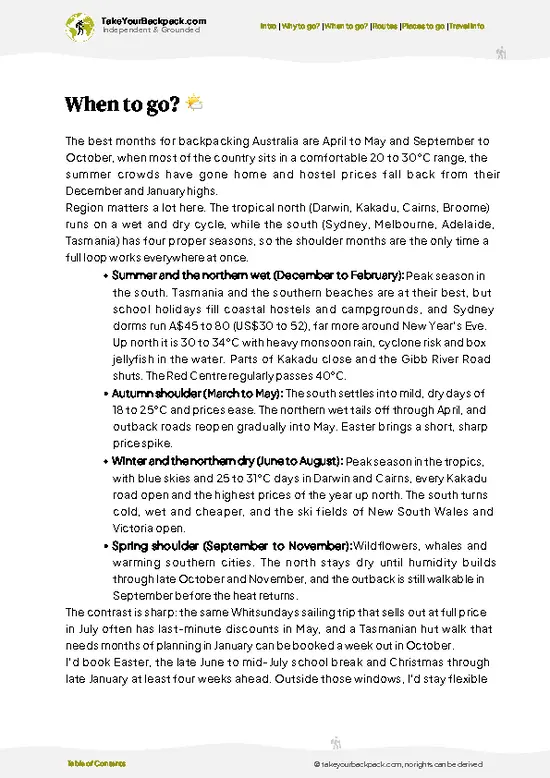
  • Winter (June to August): Dry, sunny and mild, with days of 22 to 25°C (72 to 77°F) and nights around 12 to 15°C (54 to 59°F). Water sits near 22°C (72°F), so a thin wetsuit helps for long snorkels. Daylight runs roughly 10.5 to 11 hours.
  • Spring (September to November): Days of 26 to 32°C (79 to 90°F), warming seas and whale sharks and humpbacks still passing offshore. Wind builds in the afternoons.
  • Summer (December to February): Hot, 32 to 38°C (90 to 100°F), with 13 or more hours of light. Cyclones are possible, mostly January to March. Crowds thin out, but midday heat is fierce.
  • Autumn (March to May): Warm at 28 to 32°C (82 to 90°F), calm water and clear visibility. School holidays (Easter, July, September) lift accommodation prices and fill the Exmouth area.
Arrive by 9 a.m. in peak months, … read more 👉
  • Winter (June to August): Dry, sunny and mild, with days of 22 to 25°C (72 to 77°F) and nights around 12 to 15°C (54 to 59°F). Water sits near 22°C (72°F), so a thin wetsuit helps for long snorkels. Daylight runs roughly 10.5 to 11 hours.
  • Spring (September to November): Days of 26 to 32°C (79 to 90°F), warming seas and whale sharks and humpbacks still passing offshore. Wind builds in the afternoons.
  • Summer (December to February): Hot, 32 to 38°C (90 to 100°F), with 13 or more hours of light. Cyclones are possible, mostly January to March. Crowds thin out, but midday heat is fierce.
  • Autumn (March to May): Warm at 28 to 32°C (82 to 90°F), calm water and clear visibility. School holidays (Easter, July, September) lift accommodation prices and fill the Exmouth area.
Arrive by 9 a.m. in peak months, when the small car park fills, and book Exmouth beds weeks ahead for school holidays.


source: climatestotravel.comJANJanuary: fair for travelingFEBFebruary: fair for travelingMARMarch: fair for travelingAPRApril: fair for travelingMAYMay: highly recommended for travelingJUNJune: excellent for travelingJULJuly: highly recommended for travelingAUGAugust: highly recommended for travelingSEPSeptember: excellent for travelingOCTOctober: highly recommended for travelingNOVNovember: fair for travelingDECDecember: fair for traveling
when-to-go

✈️ The backpacker research shortcutAustralia Travel Guide

An offline-friendly backpacking guide with optimized travel routes, ranked highlights, transport advice, and the best areas to stay.
example page 0 from our offline Travel Guide for Australia
example page 1 from our offline Travel Guide for Australia
example page 2 from our offline Travel Guide for Australia
example page 3 from our offline Travel Guide for Australia
example page 4 from our offline Travel Guide for Australia
example page 5 from our offline Travel Guide for Australia
example page 6 from our offline Travel Guide for Australia
example page 7 from our offline Travel Guide for Australia
The digital guide (414 pages) contains:
✅ 143 highlights, ranked by travel appeal
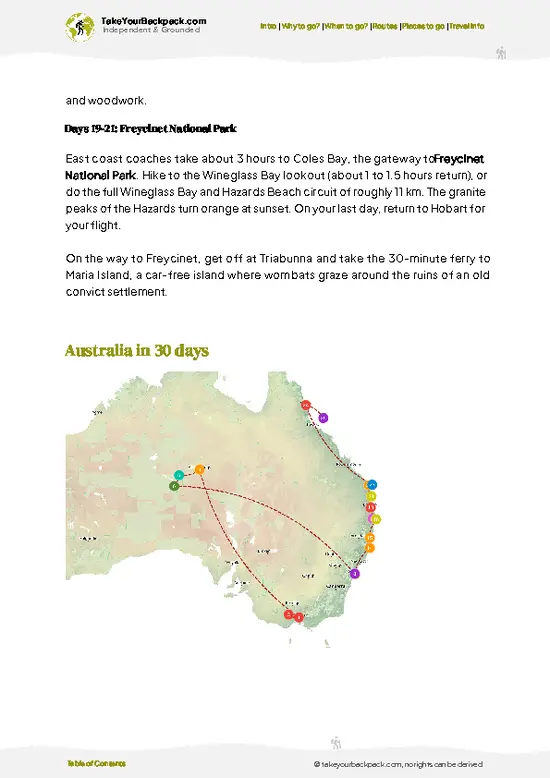
✅ Optimized 14, 21 & 30-day travel routes
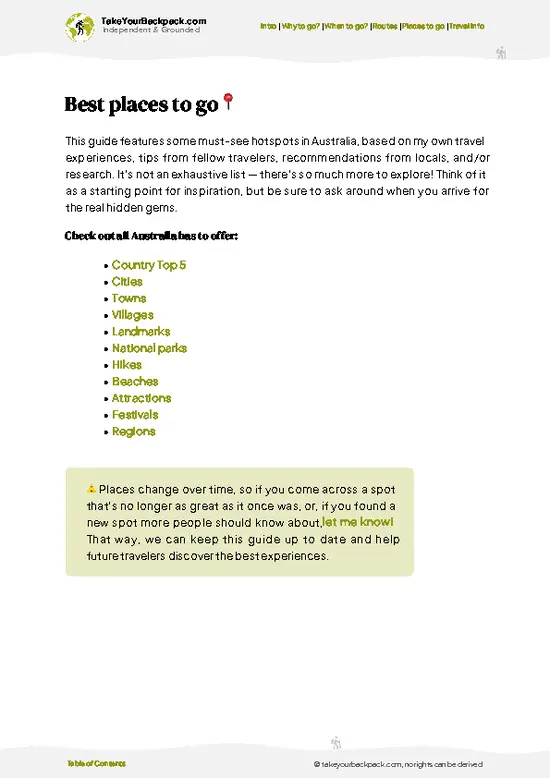
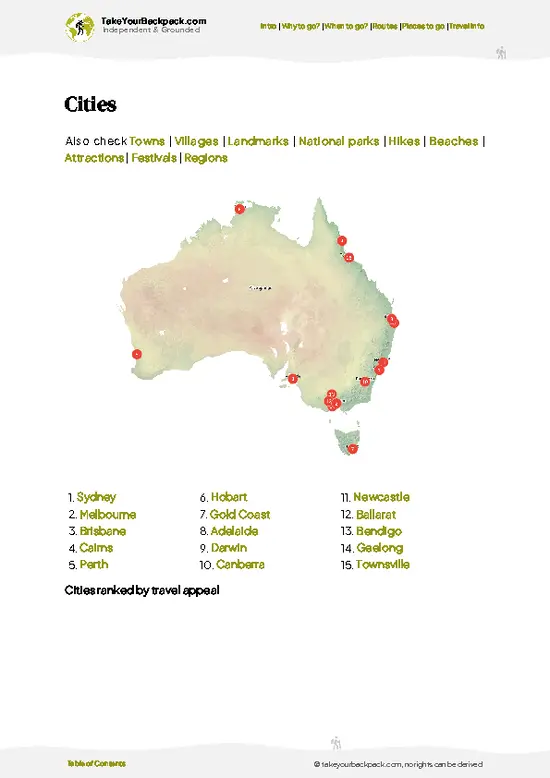
✅ Cities, national parks, landmarks, beaches
✅ How to get around
✅ Offline-friendly for travel without Wi-Fi
👉 Click to see all 30+ guide features

📅 Plan smarter in minutes, not weeks
✅ Month by month travel advice
✅ Festivals & national holidays
✅ Budget expectations

🗺️ Go to the right places, skip the overrated ones
✅ Honest pros & cons of destinations
✅ Top hikes, parks & viewpoints
✅ Lesser-known places most travelers miss
✅ Clear “worth it vs skip it” guidance

🛏️ Travel smoothly without rookie mistakes
✅ Best areas to stay
✅ Transport systems explained simply
✅ Common scams & safety advice
✅ SIM cards, money & practical tips

🌍 Understand the country, not just visit it
✅ Culture & traditions
✅ Local customs
✅ Festivals worth planning around
✅ Traveler-friendly historical context
✅ Insights that make places more meaningful

📱 Built for real travel conditions
✅ Fully downloadable PDF
✅ Works completely offline
✅ Optimized for phone use
✅ Useful in remote areas & buses
✅ Everything in one place
Stop searching, start planning
Get instant access to your full guide. 30‑day money-back guarantee.
+ Add another guide for just

By proceeding you agree to our terms.
Sent to your inbox immediately after payment • 100% Secure Checkout
Best Backpacking Travel Advisor 2025 tourism awardBest Backpacking
Travel Advisor
2025
What others say about Take Your Backpack Guides:
⭐⭐⭐⭐⭐
Fantastic, amazing amount of information!
⭐⭐⭐⭐⭐
My goodness this is amazing, it's what I've been looking for hats off too you!
⭐⭐⭐⭐⭐
I think this is absolutely BRILLIANT
⭐⭐⭐⭐
Very complete and informative. It's still missing places, but I gotta to commend you
⭐⭐⭐⭐⭐
This is truly amazing, thank you, can't wait to explore it with my kids!
⭐⭐⭐⭐⭐
Awesome resource, thank you!
⭐⭐⭐⭐⭐
This is amazing! Can't wait to explore the ones I haven't seen
⭐⭐⭐⭐
I love this! Well done, great idea.
⭐⭐⭐⭐⭐
Thanks for taking the time to make this gem!
⭐⭐⭐⭐⭐
This might be the best website I've ever seen.
⭐⭐⭐⭐⭐
Congratulations, and thank you so much for your work; it's incredibly valuable.
⭐⭐⭐⭐
In all seriousness I think you did a great job pointing out the important spots
⭐⭐⭐⭐⭐
10/10 very good
⭐⭐⭐⭐⭐
As someone who's only just starting to visit regularly this is awesome, thank you.
⭐⭐⭐⭐
Thank you very much! I'm going to visit my dad, it's going to be very useful!
⭐⭐⭐⭐⭐
This is really cool! We'll be travelling for the first time and this definitely come in handy.
⭐⭐⭐⭐⭐
You are now our minister of culture, congratulations 👨‍💼
⭐⭐⭐⭐⭐
Just wanted to tell you that this is a pearl! Going to follow your recommendations.
⭐⭐⭐⭐⭐
This is so cool. I'll definitely be using the resource for my travels soon.
⭐⭐⭐⭐⭐
This is very impressive! Good work.
⭐⭐⭐⭐⭐
This is an amazing and informative site. Very well done!

🛏️ Where to stay?Where staying makes the most sense

Exmouth town is the practical choice, about 60 km (37 miles) by sealed road from Turquoise Bay, and it is where nearly every budget traveler sleeps. It has the area’s hostels, caravan parks with cheap tent and cabin options, supermarkets, dive shops and bars, so you meet other travelers easily and can split rental car costs. Dorm beds usually run A$35 to 55 (US$23 to 36) a night, with powered or unpowered sites at A$35 to 60 in the caravan parks. The town is flat, safe at night and easy to move around by bike.
The alternative is camping inside Cape Range National Park. Sites such as Kurrajong and … read more 👉
Exmouth town is the practical choice, about 60 km (37 miles) by sealed road from Turquoise Bay, and it is where nearly every budget traveler sleeps. It has the area’s hostels, caravan parks with cheap tent and cabin options, supermarkets, dive shops and bars, so you meet other travelers easily and can split rental car costs. Dorm beds usually run A$35 to 55 (US$23 to 36) a night, with powered or unpowered sites at A$35 to 60 in the caravan parks. The town is flat, safe at night and easy to move around by bike.
The alternative is camping inside Cape Range National Park. Sites such as Kurrajong and Osprey Bay are a short drive from the bay, cost around A$15 to 20 (US$10 to 13) per person, and put you among wallabies and starry skies. Facilities are basic, with no power and limited water, and spots fill fast from June to September, so book through the park system well ahead. Camping is quieter and less social than town, but the early start beats the crowds at the beach. Nothing lies at the bay itself except toilets and a car park.

🛡️ SafetyScams, Hazards, and Annoyances

Turquoise Bay is a well-used, easygoing beach, but its currents are the one thing to respect. The northern end is a sheltered sandy lagoon for swimming. The famous Drift Snorkel starts at the signed spot to the south: you walk in, float north with the current over the reef, and must swim to shore before the sand point, since beyond it water runs out through a channel toward open sea. Rescue is not on call, so check the signs and watch locals first. Sun is strong all year, so wear a rash shirt, reef-safe sunscreen and a hat, and bring water, as there are no shops. Reef is shallow and sharp at low tide, so avoid standing on coral. Sharks and rays are present but rarely a problem. Cars are the theft target, so leave nothing visible.

FAQTraveler FAQ

Drive from Exmouth, which takes about 45 minutes along Murat Road and Yardie Creek Road to the signed turnoff inside Cape Range National Park. Exmouth is the nearest base, with a small airport serviced by Perth flights (about 2 hours), and Perth is a 12 to 14 hour drive. There is no public transport to the beach, so you need a rental car or a tour, and rentals run roughly A$80 to 150 a day.
It is excellent for snorkeling, especially the Drift Snorkel, which takes you over coral gardens with turtles, reef fish and sometimes reef sharks. The northern lagoon suits calm swimming, and there are no surfable waves because the Ningaloo Reef breaks them offshore. Bring your own mask and fins or rent gear in Exmouth for around A$20 to 40 a day, and check the current before entering.
No, but the park charges an entry fee of about A$15 to 25 (US$10 to 16) per car, paid at the Milyering Visitor Centre or by self-registration at the gate. Cape Range National Park fees apply per day, though multi-day passes exist. Parking, toilets and picnic shelters at the bay come with that fee. Camping inside the park costs extra.
⚠️ Things can change over time, so always validate details locally before you go.

Other Australian beaches near Turquoise Bay

Explore more nearby:

  • Shark Bay—World Heritage site, stromatolites, dugong habitat| 421 km away
  • Cottesloe Beach—Norfolk pine lawns, groyne snorkel, Indian Ocean sunset, March sculptures| 1116 km away
  • Yallingup—Reef left-hander, calm lagoon, Cape to Cape Track, Ngilgi Cave| 1288 km away

💡 Not sure where to go next?
Create a personalized itinerary for Australia including Turquoise Bay and the places that fit your trip.

Generate my itinerary

👉 Discover all beaches

Or checkout all Australia has to offer (think cities, towns, villages, national parks, hikes, beaches, festivals)
Country photo of Australia

We 💚 feedbackWhat to keep in mind

Most first-timers read the sign about the current and treat it as background noise. Don’t. Walk to the southern end first, watch where the water bends toward the sandbar, and plan your exit before you enter. I would also bring a rash shirt, since the reef is the point and the sun is fierce.

✈️ When did I visit Australia?
On my trip to New Zealand in 1993, I had a short stop in Australia as well.

✍️ Help improve this page!
The information on this page is based on my own backpacking experience in Australia, supplemented with up-to-date research and feedback from other travelers. Travel details can change, so if you notice anything outdated or incomplete, feel free to let me know.


🙋‍♂️ Give feedback

👋 Meet the founderWho’s Behind Take Your Backpack?

Johan, backpacker and founder of TakeYourBackpackHi, I’m Johan (Netherlands 🇳🇱), the creator of TakeYourBackpack. Over the past 3 decades, I’ve backpacked through 90+ countries across six continents, gaining extensive experience with independent travel, long-term trips, and overland routes.

This site is built on a combination of firsthand travel experience and carefully curated insights from other backpackers. Many guides are based on places I’ve personally visited, while others bring together tips, observations, and practical advice shared by trusted travelers I’ve met along the way.

The goal is to provide realistic, experience-driven guidance — not generic itineraries — so you can explore destinations with better context, clearer expectations, and more confidence.