×
Vienna

Austria🇦🇹 | citiesViennagrand boulevards, coffeehouses, art collections, opera houses, imperial architecture | things to do and best time to go

Explore SalzburgExplore Linz

Backpacking in Vienna
UNESCO World Heritage site
🏆 Top pickcity ranked #1
By Johan Kruseman 🇳🇱 | Updated June 13, 2026

Vienna’s curveball for backpackers: it has a reputation for being polished and pricey, but if you play it right, it’s actually one of the easiest capitals in Europe to explore cheaply thanks to walkable sights, cheap lunch deals, and excellent public transport. The city sits in eastern Austria, close to Slovakia and Hungary, which makes it a natural hub on a Central Europe loop. As a destination, it’s a trade between old-world grandeur and slightly restrained energy: you get palaces, the Ringstrasse, Prater park, world-class museums, and coffeehouses that double as your office, but nightlife can feel tamer than, say, Graz or Linz’s student scenes. It’s very safe, organized, and simple to navigate, but that orderliness can feel a bit formal. Hostels are social without being wild; you’ll meet travelers, just not in “instant best friends” quantities like in Budapest. Overall vibe: cultured, calm, and quietly efficient.

Discover everything you want to know in the 📖 Austria Travel Guide.


Get your Austria guide
94 ranked highlights, routes & tips, works offline (376 pages)
Loading the map 🌍
CLICK TO FILTER
cities
towns
villages
landmarks
national parks
hikes
beaches
attractions
festivals
regions
SHOW COUNTRY’S BESTSHOW ALL

✨ Why go?
Ranked #1 city in Austria
What sets this place apart

Vienna is a backpacker’s dream for several reasons. First, it’s a basecamp that offers a wealth of highlights and activities, making it easy to fill your days without feeling rushed. The city is incredibly walkable, allowing you to soak in the architecture and street life while saving on transport costs.

When it comes to accommodation, hostels here are not just affordable; they often have a vibrant atmosphere that fosters connections with fellow travelers. You’ll find options that cater to various budgets, ensuring you can stretch your funds without sacrificing comfort.

Food is another win. From street vendors to cozy cafes, you can indulge in local flavors without breaking the bank. Plus, the nightlife is lively yet manageable, offering everything from laid-back bars to energetic clubs, … read more 👉
Vienna is a backpacker’s dream for several reasons. First, it’s a basecamp that offers a wealth of highlights and activities, making it easy to fill your days without feeling rushed. The city is incredibly walkable, allowing you to soak in the architecture and street life while saving on transport costs.

When it comes to accommodation, hostels here are not just affordable; they often have a vibrant atmosphere that fosters connections with fellow travelers. You’ll find options that cater to various budgets, ensuring you can stretch your funds without sacrificing comfort.

Food is another win. From street vendors to cozy cafes, you can indulge in local flavors without breaking the bank. Plus, the nightlife is lively yet manageable, offering everything from laid-back bars to energetic clubs, perfect for unwinding after a day of exploration.

Finally, Vienna serves as a gateway for easy onward travel to other European destinations. Whether you’re heading to the Alps or exploring Eastern Europe, the connections are solid. This city fits seamlessly into a backpacking route, making it a worthwhile stop rather than just a fleeting visit.
Want to include Vienna in your Austria route?
Create a personalized Austria itinerary that includes Vienna and the places that fit your trip — based on your travel style, budget, and available time. Get your route in seconds.

Generate my trip

💡 HighlightsWhat this place is best known for

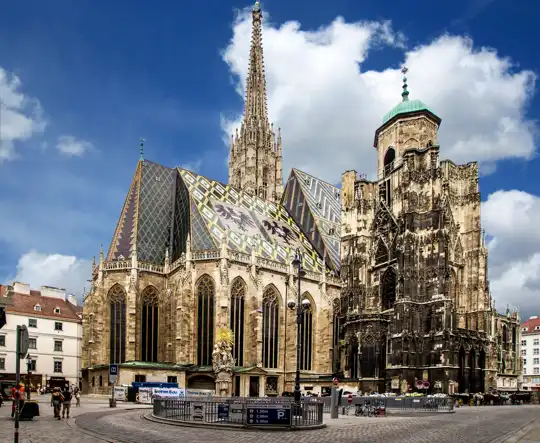
  1. St. Stephen’s Cathedral (Stephansdom) — The Gothic heart of Vienna: climb the South Tower for a sweaty-but-worth-it panorama, duck into the catacombs, and listen for the bell peal that still shapes the city’s rhythm.
  2. Schönbrunn Palace and Gardens — Imperial showpiece with opulent state rooms and vast landscaped gardens; stroll the maze, visit the Gloriette for a view, and don’t skip the modest but poignant children’s museum if you want a different take on Habsburg life.
  3. Hofburg Palace (Imperial Apartments & Sisi Museum) — A compact dose of imperial Vienna: see the emperor’s apartments, Sisi’s personal effects, and catch a morning exercise at the Spanish Riding School if you time it right.
  4. Belvedere Palace (Upper Belvedere) — Baroque palace set in leafy grounds that houses Austria’s best
read more 👉
  1. St. Stephen’s Cathedral (Stephansdom) — The Gothic heart of Vienna: climb the South Tower for a sweaty-but-worth-it panorama, duck into the catacombs, and listen for the bell peal that still shapes the city’s rhythm.
  2. Schönbrunn Palace and Gardens — Imperial showpiece with opulent state rooms and vast landscaped gardens; stroll the maze, visit the Gloriette for a view, and don’t skip the modest but poignant children’s museum if you want a different take on Habsburg life.
  3. Hofburg Palace (Imperial Apartments & Sisi Museum) — A compact dose of imperial Vienna: see the emperor’s apartments, Sisi’s personal effects, and catch a morning exercise at the Spanish Riding School if you time it right.
  4. Belvedere Palace (Upper Belvedere) — Baroque palace set in leafy grounds that houses Austria’s best Klimt collection (including The Kiss) — art, gardens, and one of those views that makes you forgive expensive coffee.
  5. Leopold Museum / MuseumsQuartier — Modern Austrian art anchored by Egon Schiele and Klimt works; the complex is also a lively public space where locals meet, sunbathe on the steps, and sip inexpensive wine from pop-up stands.
  6. Naschmarkt — Vienna’s busiest market strip: fresh produce, cheap eats, tiny ethnic stalls and a weekend flea market vibe — ideal for tasting local open-faced sandwiches (belegte Brote) and people-watching.
  7. Prater & Wiener Riesenrad — A green, old-school amusement area crowned by the 1897 Ferris wheel; take a slow cabin for nostalgic city views, then wander deeper for old beer gardens and a wilder side of Vienna.
  8. Hundertwasserhaus and Kunst Haus Wien — The eccentric, colorful facade by Friedensreich Hundertwasser is great street-level architecture; the nearby Kunst Haus is a hands-on museum about his eco-friendly, whimsical approach to design.
  9. Zentralfriedhof (Central Cemetery) — Vast, serene cemetery that tells Vienna’s musical story: graves of Beethoven, Schubert, Brahms and many others, plus grand mausolea and quiet walking lanes far from tourist crowds.
  10. Vienna State Opera (Wiener Staatsoper) — A top-tier opera house where you can either splurge on a performance or take an affordable guided tour to see the lavish auditorium and backstage history that shaped European music.
A few great day-trip options just outside Vienna: Melk Abbey and the Wachau Valley (vineyards and Dürnstein), the medieval streets of Bratislava (about an hour away), and the Vienna Woods with Heiligenkreuz Abbey for a quiet nature-and-history combo.
Spotted a mistake or missing something? Contact us.

Things to do in Vienna

Ratings based on Tripadvisor reviews. When you book through this link, you support our work at no extra cost to you.

🏘️ NeighborhoodsKey areas and districts to know

Vienna is a city where history meets modernity, and each neighborhood offers a unique flavor for backpackers. Here’s a breakdown to help you navigate your options.

Innere Stadt: This is the heart of Vienna, packed with iconic sights like St. Stephen’s Cathedral. Expect higher prices here, but the walkability is top-notch. Perfect for short stays if you want to soak in the culture quickly. Nightlife is vibrant, but it can get touristy.

Leopoldstadt: Just across the Danube Canal, this area has a laid-back vibe. It’s more affordable than the Innere Stadt and offers a mix of parks and local eateries. Great for longer stays, especially if you enjoy a quieter atmosphere. Public transport is easily accessible, making it simple to explore the rest of the city.

Mariahilf: Known for its shopping … read more 👉
Vienna is a city where history meets modernity, and each neighborhood offers a unique flavor for backpackers. Here’s a breakdown to help you navigate your options.

Innere Stadt: This is the heart of Vienna, packed with iconic sights like St. Stephen’s Cathedral. Expect higher prices here, but the walkability is top-notch. Perfect for short stays if you want to soak in the culture quickly. Nightlife is vibrant, but it can get touristy.

Leopoldstadt: Just across the Danube Canal, this area has a laid-back vibe. It’s more affordable than the Innere Stadt and offers a mix of parks and local eateries. Great for longer stays, especially if you enjoy a quieter atmosphere. Public transport is easily accessible, making it simple to explore the rest of the city.

Mariahilf: Known for its shopping street, Mariahilfer Straße, this neighborhood balances affordability with convenience. It’s lively but not overwhelming. Ideal for those who want to experience local life while still being close to major attractions. Good transport links make it easy to get around.

Neubau: This hipster haven is filled with quirky shops and cafes. It’s a bit more expensive but offers a unique local vibe. Perfect for longer stays if you want to immerse yourself in Vienna’s artsy side. The nightlife here is buzzing, with plenty of bars and live music.

Wieden: A charming area with a mix of historic and modern architecture. It’s quieter than the others but still has a good selection of cafes and bars. Ideal for those looking for a balance between relaxation and access to the city’s highlights. Public transport is reliable, making it easy to venture out.

⌛️ 1 dayHow to make the most of one day

Vienna is a city where history and modernity dance together, creating a vibrant atmosphere that’s both regal and approachable. From its imperial palaces to its lively coffee culture, every corner invites exploration. You can easily spend a week here, but let’s focus on crafting a memorable day that balances time, money, and comfort.

Start your morning in the historic Innere Stadt. Grab a coffee and a slice of Sachertorte at Café Central, a favorite of literary greats like Trotsky and Freud. The ambiance is a blend of elegance and warmth, perfect for fueling your day. After indulging, stroll over to St. Stephen’s Cathedral. Climb the tower for a panoramic view of the city—it’s a small investment of time for a big payoff in perspective.

As the clock strikes noon, make your way to the MuseumsQuartier. … read more 👉
Vienna is a city where history and modernity dance together, creating a vibrant atmosphere that’s both regal and approachable. From its imperial palaces to its lively coffee culture, every corner invites exploration. You can easily spend a week here, but let’s focus on crafting a memorable day that balances time, money, and comfort.

Start your morning in the historic Innere Stadt. Grab a coffee and a slice of Sachertorte at Café Central, a favorite of literary greats like Trotsky and Freud. The ambiance is a blend of elegance and warmth, perfect for fueling your day. After indulging, stroll over to St. Stephen’s Cathedral. Climb the tower for a panoramic view of the city—it’s a small investment of time for a big payoff in perspective.

As the clock strikes noon, make your way to the MuseumsQuartier. This area is a cultural hub, housing the Leopold Museum and the MUMOK. If you’re feeling adventurous, skip the mainstream exhibits and check out the Kunst Haus Wien, a quirky museum dedicated to the works of Friedensreich Hundertwasser. His colorful, organic designs are a feast for the eyes and a refreshing break from the classical art scene.

In the afternoon, wander through the Naschmarkt, a bustling market filled with local vendors. Sample some Austrian delicacies or grab a quick bite from one of the food stalls. This is a great way to experience local life without breaking the bank. Afterward, take a leisurely walk to the Belvedere Palace. The gardens are free to roam, and the views of the palace are stunning.

As evening approaches, head to the trendy district of Neubau. This area is less touristy but brimming with character. Find a cozy wine bar and sip on some local Grüner Veltliner while mingling with locals. If you’re up for it, catch a performance at the Volkstheater for a taste of Vienna’s vibrant arts scene.

This day in Vienna is a blend of iconic sights and local experiences, ensuring you leave with a deeper appreciation for the city’s charm. Each choice balances time, money, and comfort, allowing you to savor every moment.
Turn your Vienna visit into an Austria adventure
Build a complete Austria route with Vienna, hidden gems, must-see destinations, and realistic travel times included.

Generate my trip

🌤️ When to go?Best time to visit Vienna


  • Topic: Weather and Temperature – Vienna’s weather swings from cold winters around -1°C to 4°C (30°F to 39°F) to warm summers hitting 25°C to 30°C (77°F to 86°F). Spring and fall offer mild, comfortable temps perfect for walking without overheating or freezing.

  • Topic: Daylight Hours – Long summer days stretch up to 16 hours of light, giving you more time to explore. Winter days shrink to about 8 hours, which means less daylight for sightseeing but cozy evenings in cafes.

  • Topic: Crowds – Summer and Christmas season pack the streets with tourists, hiking prices and lines. Late spring (May) and early fall (September) strike a sweet spot with fewer crowds but still pleasant weather.

  • Topic: Seasonal Activities – Summer brings open-air concerts and festivals, while winter offers the famous
read more 👉

  • Topic: Weather and Temperature – Vienna’s weather swings from cold winters around -1°C to 4°C (30°F to 39°F) to warm summers hitting 25°C to 30°C (77°F to 86°F). Spring and fall offer mild, comfortable temps perfect for walking without overheating or freezing.

  • Topic: Daylight Hours – Long summer days stretch up to 16 hours of light, giving you more time to explore. Winter days shrink to about 8 hours, which means less daylight for sightseeing but cozy evenings in cafes.

  • Topic: Crowds – Summer and Christmas season pack the streets with tourists, hiking prices and lines. Late spring (May) and early fall (September) strike a sweet spot with fewer crowds but still pleasant weather.

  • Topic: Seasonal Activities – Summer brings open-air concerts and festivals, while winter offers the famous Christmas markets. Spring and fall showcase the city’s parks and gardens in full bloom or autumn hues, ideal for relaxed exploration.

  • Topic: Price Fluctuations – Peak tourist seasons (summer and December) push accommodation and flight costs up significantly. Shoulder seasons (April-May, September-October) offer better deals without sacrificing much on experience.


Pro-tip: Aim for late spring or early fall to maximize comfort, avoid crowds, and get the best bang for your buck—Vienna’s charm really shines when you’re not racing the tourist tide.


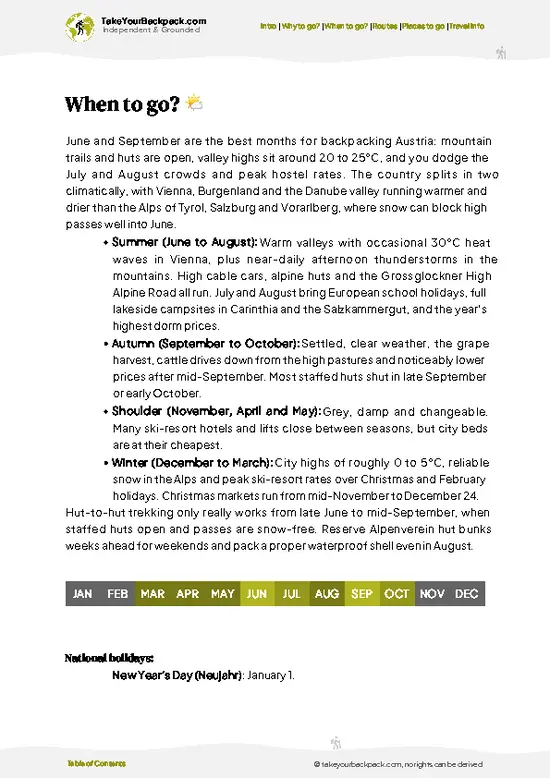
source: climatestotravel.comJANJanuary: fair for travelingFEBFebruary: fair for travelingMARMarch: good for travelingAPRApril: highly recommended for travelingMAYMay: excellent for travelingJUNJune: highly recommended for travelingJULJuly: good for travelingAUGAugust: good for travelingSEPSeptember: excellent for travelingOCTOctober: highly recommended for travelingNOVNovember: good for travelingDECDecember: fair for traveling
Austria - Vienna

✈️ The backpacker research shortcutAustria Travel Guide

An offline-friendly backpacking guide with optimized travel routes, ranked highlights, transport advice, and the best areas to stay.
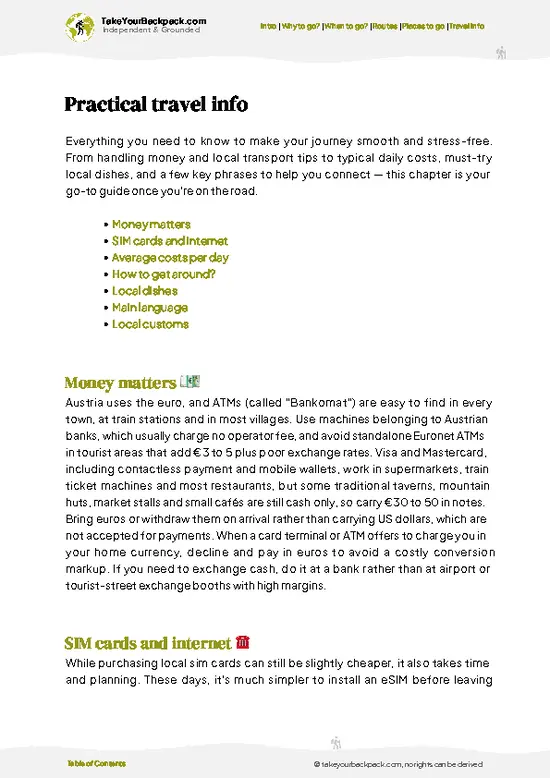
example page 0 from our offline Travel Guide for Austria
example page 1 from our offline Travel Guide for Austria
example page 2 from our offline Travel Guide for Austria
example page 3 from our offline Travel Guide for Austria
example page 4 from our offline Travel Guide for Austria
example page 5 from our offline Travel Guide for Austria
example page 6 from our offline Travel Guide for Austria
example page 7 from our offline Travel Guide for Austria
The digital guide (376 pages) contains:
94 highlights, ranked by travel appeal
Optimized 5, 10 & 15-day travel routes
Cities, national parks, landmarks, beaches
How to get around
Offline-friendly for travel without Wi-Fi
👉 Click to see all 30+ guide features

📅 Plan smarter in minutes, not weeks
Month by month travel advice
Festivals & national holidays
Budget expectations

🗺️ Go to the right places, skip the overrated ones
Honest pros & cons of destinations
Top hikes, parks & viewpoints
Lesser-known places most travelers miss
Clear “worth it vs skip it” guidance

🛏️ Travel smoothly without rookie mistakes
Best areas to stay
Transport systems explained simply
Common scams & safety advice
SIM cards, money & practical tips

🌍 Understand the country, not just visit it
Culture & traditions
52 Essential phrases & customs
Festivals worth planning around
Traveler-friendly historical context
Insights that make places more meaningful

📱 Built for real travel conditions
Fully downloadable PDF
Works completely offline
Optimized for phone use
Useful in remote areas & buses
Everything in one place
Save weeks of stressful planning
Get instant access to your full guide. 30‑day money-back guarantee.


By proceeding you agree to our terms.
Sent to your inbox immediately after payment • 100% Secure Checkout
Best Backpacking Travel Advisor 2025 tourism awardBest Backpacking
Travel Advisor
2025
What others say about Take Your Backpack Guides:
⭐⭐⭐⭐⭐
Fantastic, amazing amount of information!
⭐⭐⭐⭐⭐
My goodness this is amazing, it's what I've been looking for hats off too you!
⭐⭐⭐⭐⭐
I think this is absolutely BRILLIANT
⭐⭐⭐⭐
Very complete and informative. It's still missing places, but I gotta to commend you
⭐⭐⭐⭐⭐
This is truly amazing, thank you, can't wait to explore it with my kids!
⭐⭐⭐⭐⭐
Awesome resource, thank you!
⭐⭐⭐⭐⭐
This is amazing! Can't wait to explore the ones I haven't seen
⭐⭐⭐⭐
I love this! Well done, great idea.
⭐⭐⭐⭐⭐
Thanks for taking the time to make this gem!
⭐⭐⭐⭐⭐
This might be the best website I've ever seen.
⭐⭐⭐⭐⭐
Congratulations, and thank you so much for your work; it's incredibly valuable.
⭐⭐⭐⭐
In all seriousness I think you did a great job pointing out the important spots
⭐⭐⭐⭐⭐
10/10 very good
⭐⭐⭐⭐⭐
As someone who's only just starting to visit regularly this is awesome, thank you.
⭐⭐⭐⭐
Thank you very much! I'm going to visit my dad, it's going to be very useful!
⭐⭐⭐⭐⭐
This is really cool! We'll be travelling for the first time and this definitely come in handy.
⭐⭐⭐⭐⭐
You are now our minister of culture, congratulations 👨‍💼
⭐⭐⭐⭐⭐
Just wanted to tell you that this is a pearl! Going to follow your recommendations.
⭐⭐⭐⭐⭐
This is so cool. I'll definitely be using the resource for my travels soon.
⭐⭐⭐⭐⭐
This is very impressive! Good work.
⭐⭐⭐⭐⭐
This is an amazing and informative site. Very well done!

🛏️ Where to stay?Where staying makes the most sense

Leopoldstadt is the go-to for backpackers who want a solid balance of safety, social buzz, and budget options. It’s just across the Danube Canal from the city center, so you’re close enough to the action without paying the premium of Innere Stadt. Hostels here tend to attract a young, international crowd, making it easy to meet fellow travelers. The vibe is relaxed but lively, with plenty of green spaces like Prater Park for downtime or group hangouts. Public transport is excellent, so you can jump into the heart of Vienna quickly without sacrificing comfort.

Neubau is another smart pick, especially … read more 👉
Leopoldstadt is the go-to for backpackers who want a solid balance of safety, social buzz, and budget options. It’s just across the Danube Canal from the city center, so you’re close enough to the action without paying the premium of Innere Stadt. Hostels here tend to attract a young, international crowd, making it easy to meet fellow travelers. The vibe is relaxed but lively, with plenty of green spaces like Prater Park for downtime or group hangouts. Public transport is excellent, so you can jump into the heart of Vienna quickly without sacrificing comfort.

Neubau is another smart pick, especially if you want to lean into Vienna’s creative and alternative side. It’s a bit trendier and artsier, packed with quirky cafes, vintage shops, and street art. This neighborhood is safe and walkable, with hostels that cater to solo travelers looking for a social scene that’s a bit more offbeat. It’s not as touristy as the center, so prices for food and drinks tend to be friendlier on your wallet.

Compared to the historic Innere Stadt, these neighborhoods trade a bit of old-world grandeur for a more authentic, lived-in feel and better value. You’re sacrificing the immediate proximity to landmarks but gaining a more genuine local experience and a social atmosphere that’s perfect for backpackers who want to connect without breaking the bank.

🚌 Getting aroundHow to get around Vienna

Vienna moves with a rhythm that’s both deliberate and surprisingly fluid. It’s a city where the clockwork precision of its famed public transport meets the relaxed pace of café culture. You’ll find that schedules here are more than just numbers—they’re commitments, but not shackles. The city’s flow rewards those who respect its timing but also those who know when to pause and savor the space between stops. Vienna’s transit system is a chessboard of choices, each move balancing time, money, and comfort. Mastering this game means understanding what you’re trading off: a few extra minutes for a few euros saved, or a bit more comfort for a faster route. Here’s how to play it smart on a budget.


  • U-Bahn (Subway): Runs roughly from 5 AM to midnight, with trains every 2-5 minutes during peak hours.
read more 👉
Vienna moves with a rhythm that’s both deliberate and surprisingly fluid. It’s a city where the clockwork precision of its famed public transport meets the relaxed pace of café culture. You’ll find that schedules here are more than just numbers—they’re commitments, but not shackles. The city’s flow rewards those who respect its timing but also those who know when to pause and savor the space between stops. Vienna’s transit system is a chessboard of choices, each move balancing time, money, and comfort. Mastering this game means understanding what you’re trading off: a few extra minutes for a few euros saved, or a bit more comfort for a faster route. Here’s how to play it smart on a budget.


  • U-Bahn (Subway): Runs roughly from 5 AM to midnight, with trains every 2-5 minutes during peak hours. Tickets cost about €2.40 for a single ride, making it the fastest and most reliable way to cover long distances across the city. It’s clean, efficient, and comfortable, but expect some crowding during rush hour. Ideal if you value speed and predictability over a scenic route.


  • Trams: Operating from around 5 AM until midnight, trams are slower than the U-Bahn but offer a more scenic and atmospheric way to see the city. A single ticket is the same price as the subway (€2.40), but the ride takes longer, so you’re trading time for a bit of local flavor and a window seat. Trams are generally comfortable and less packed outside rush hours.


  • Buses: Cover areas less accessible by subway or tram, running from early morning until around midnight. Tickets cost the same as other public transport options. Buses are slower and less frequent, so they’re best for routes where other options don’t reach. Comfort varies, and delays can happen, so this is a choice for those prioritizing coverage over speed.


  • Walking: Vienna’s compact city center is a goldmine for pedestrians. Walking costs nothing and lets you absorb the city’s architecture and street life at your own pace. It’s slower than any vehicle but offers unmatched freedom and zero stress about schedules or tickets. Perfect for short distances or when you want to turn transit into exploration.


  • Bike Rentals: Vienna’s bike-sharing system is affordable (around €1 per half hour) and a great middle ground between walking and public transit. It’s faster than walking and lets you skip crowded vehicles, but weather and traffic can affect comfort and safety. A smart choice if you want flexibility and a bit of exercise without breaking the bank.

👛 Costs (as of 25 April 2026)Money, prices, and spending tips

Vienna’s backpacking costs reflect its blend of old-world charm and modern efficiency, where your choices shape the experience as much as the city itself.
  • Dorm Accommodation (High Season): Expect to pay between €25 and €40 per night. High season, typically spring through early fall, pushes prices up due to tourist demand and events.
  • Dorm Accommodation (Off-Season): In the quieter months, €15 to €25 is common. Vienna’s hostels drop prices but maintain quality, making off-season travel a smart money move.
  • Meals: Budget around €10 to €20 daily if you mix supermarket snacks, street food like Würstel stands, and occasional casual dining. Vienna’s café culture can be tempting but adds up quickly if you linger over coffee and cake.
  • Local Transport: Single tickets for trams, buses, and metro cost
read more 👉
Vienna’s backpacking costs reflect its blend of old-world charm and modern efficiency, where your choices shape the experience as much as the city itself.
  • Dorm Accommodation (High Season): Expect to pay between €25 and €40 per night. High season, typically spring through early fall, pushes prices up due to tourist demand and events.
  • Dorm Accommodation (Off-Season): In the quieter months, €15 to €25 is common. Vienna’s hostels drop prices but maintain quality, making off-season travel a smart money move.
  • Meals: Budget around €10 to €20 daily if you mix supermarket snacks, street food like Würstel stands, and occasional casual dining. Vienna’s café culture can be tempting but adds up quickly if you linger over coffee and cake.
  • Local Transport: Single tickets for trams, buses, and metro cost about €2.40 each. If you plan a few rides, this adds up fast.
  • City Transport Pass: A 24-hour pass runs about €8, offering unlimited rides on all public transport. For multi-day stays, a 72-hour pass at around €17 is a better deal, turning transport into a flat-rate convenience.
  • Basic Activities/Entry Fees: Museums and attractions typically charge €10 to €15. Some offer discounts for students or combined tickets, which can stretch your budget further.
  • Miscellaneous Expenses: Factor in about €5 to €10 for essentials like bottled water, occasional snacks, or small souvenirs. These add up quietly but noticeably.

Vienna’s daily backpacking budget usually lands between €50 and €90, depending on season and your appetite for comfort versus scrimping. The city rewards those who balance smart transport passes with selective splurges on food and culture. Knowing when to book and how to move around turns the cost puzzle into a winning strategy.


source: wien.info
⚠️ Prices can change and everyone travels differently, so take this as a rough guide. Hope it helps you plan your adventure!

🚌 Day tripsShort trips worth adding

Vienna is a fantastic launchpad for day trips that blend culture, nature, and history. Each destination offers a unique flavor, making it easy to step outside the city’s grandeur without sacrificing too much time or money.

Bratislava, Slovakia
Just an hour away by train, Bratislava is a delightful contrast to Vienna. You can stroll through the charming old town, visit the impressive Bratislava Castle, and enjoy a meal by the Danube. The round-trip fare is around €15, and you can easily explore the city in a day. Many first-timers miss the chance to try local specialties like bryndzové halušky (potato dumplings with sheep cheese) at a cozy eatery. Spring and early fall are ideal for pleasant weather and fewer crowds.


Wachau Valley
This UNESCO World Heritage site is a feast for the … read more 👉
Vienna is a fantastic launchpad for day trips that blend culture, nature, and history. Each destination offers a unique flavor, making it easy to step outside the city’s grandeur without sacrificing too much time or money.

Bratislava, Slovakia
Just an hour away by train, Bratislava is a delightful contrast to Vienna. You can stroll through the charming old town, visit the impressive Bratislava Castle, and enjoy a meal by the Danube. The round-trip fare is around €15, and you can easily explore the city in a day. Many first-timers miss the chance to try local specialties like bryndzové halušky (potato dumplings with sheep cheese) at a cozy eatery. Spring and early fall are ideal for pleasant weather and fewer crowds.


Wachau Valley
This UNESCO World Heritage site is a feast for the senses. A two-hour train ride takes you to the picturesque vineyards and quaint villages along the Danube. Rent a bike in Krems and pedal through stunning landscapes dotted with castles and wineries. Expect to spend about €30 for transport and bike rental. The best time to visit is during the grape harvest in late summer or early fall when the valley is alive with festivals. A common mistake is to rush through; take your time to savor the local wines and food.
👉 Explore Wachau Valley

Melk Abbey
A short train ride from Vienna, Melk Abbey is a baroque masterpiece perched above the Danube. The journey takes about an hour, and the entrance fee is around €12. The library and church inside are breathtaking, making it a perfect spot for history buffs. Many visitors overlook the scenic walk along the river leading to the abbey, which adds to the experience. Late spring or early fall offers the best weather for exploring the grounds.


Semmering
For a taste of the Alps, head to Semmering, just over an hour from Vienna. This mountain resort is perfect for hiking or skiing, depending on the season. A round-trip train ticket costs about €20. The area is stunning year-round, but summer offers lush trails, while winter transforms it into a snowy wonderland. First-timers often underestimate the weather; pack layers to stay comfortable.


Krems an der Donau
This charming town is another gem in the Wachau Valley, about an hour from Vienna. Known for its wine culture, Krems offers a relaxed vibe with beautiful architecture. You can explore the town’s cobblestone streets and visit local wineries for tastings. Budget around €15 for transport. The best time to visit is during the wine festivals in late summer. Many overlook the scenic views from the hilltop monasteries, which are well worth the hike.
👉 Explore Krems an der Donau
Want to know what more Austria offers?
The Austria Travel Guide describes 94 highlights, from cities to national parks, from beaches to hikes

Get the Travel Guide -

🍲 FoodWhat to Eat & Drink

In Vienna, food and drink are not just sustenance; they’re a way to connect with the city’s rich culture. Start with the Wiener Schnitzel, a breaded veal cutlet that’s crispy on the outside and tender within. Pair it with a side of potato salad for a classic experience. Don’t skip the Sachertorte, a decadent chocolate cake that’s a local legend. The layers of rich chocolate and apricot jam are a must-try.

For a more casual vibe, head to the Naschmarkt, a bustling market where you can sample everything from fresh produce to international street food. Grab a Käsekrainer, a sausage filled with cheese, and enjoy it with a dollop of mustard. The market buzzes with locals and travelers alike, making it a perfect spot to soak in the atmosphere.

When it comes to drinks, Austrian wine is often overlooked. … read more 👉
In Vienna, food and drink are not just sustenance; they’re a way to connect with the city’s rich culture. Start with the Wiener Schnitzel, a breaded veal cutlet that’s crispy on the outside and tender within. Pair it with a side of potato salad for a classic experience. Don’t skip the Sachertorte, a decadent chocolate cake that’s a local legend. The layers of rich chocolate and apricot jam are a must-try.

For a more casual vibe, head to the Naschmarkt, a bustling market where you can sample everything from fresh produce to international street food. Grab a Käsekrainer, a sausage filled with cheese, and enjoy it with a dollop of mustard. The market buzzes with locals and travelers alike, making it a perfect spot to soak in the atmosphere.

When it comes to drinks, Austrian wine is often overlooked. Try a glass of Grüner Veltliner; its crispness pairs beautifully with many local dishes. Cafés are a cornerstone of Viennese life. Order a coffee and linger over a pastry, but remember: it’s customary to wait for your drink before settling the bill.

Embrace the local pace, savor each bite, and let the flavors of Vienna guide your journey.

🛡️ SafetyTraveler Safety Guide

Vienna is generally a safe city, but like any urban area, a bit of awareness goes a long way. Stick to well-lit streets when wandering at night, especially in less crowded districts like Favoriten. Solo travelers should feel comfortable, but it’s wise to keep your belongings close, particularly in busy spots like Stephansplatz or on public transport.

Scams are rare, but watch for the classic “lost tourist” routine. Someone might approach you asking for directions, only to distract you while an accomplice swipes your bag. A simple rule: if someone seems overly friendly and persistent, keep your distance.

Everyday annoyances include the occasional aggressive street performer or overly persistent souvenir sellers. A polite but firm “no, thank you” usually does the trick.

Overall, carry yourself … read more 👉
Vienna is generally a safe city, but like any urban area, a bit of awareness goes a long way. Stick to well-lit streets when wandering at night, especially in less crowded districts like Favoriten. Solo travelers should feel comfortable, but it’s wise to keep your belongings close, particularly in busy spots like Stephansplatz or on public transport.

Scams are rare, but watch for the classic “lost tourist” routine. Someone might approach you asking for directions, only to distract you while an accomplice swipes your bag. A simple rule: if someone seems overly friendly and persistent, keep your distance.

Everyday annoyances include the occasional aggressive street performer or overly persistent souvenir sellers. A polite but firm “no, thank you” usually does the trick.

Overall, carry yourself confidently, stay aware of your surroundings, and you’ll navigate Vienna like a pro. Enjoy the city’s charm without letting minor distractions pull you off course.

Other Austrian cities near Vienna

Explore more nearby:

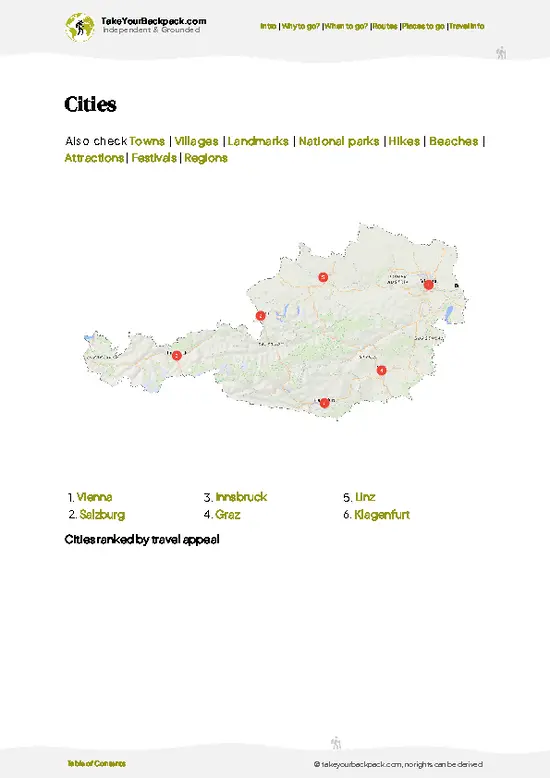
  • Graz—student districts, Mediterranean courtyards, hilltop fortress, design museums| 145 km away
  • Linz—industrial riverfront, digital art spaces, modernist buildings, steel industry| 155 km away
  • Klagenfurt—lakeside promenades, Renaissance courtyards, regional markets, southern climate| 234 km away

💡 Not sure where to go next?
Create a personalized itinerary for Austria including Vienna and the places that fit your trip.

Generate my itinerary

👉 Discover all cities

Or checkout all Austria has to offer (think cities, towns, villages, national parks, hikes, beaches, festivals)
Country photo of Austria

We 💚 feedbackIs it worth it?

Vienna is a treasure trove of history and culture, where every corner whispers tales of emperors and artists. The coffee culture? Absolutely worth the indulgence. Grab a slice of Sachertorte and soak in the ambiance. But here’s the kicker: it can be pricey. Dining and attractions add up quickly, so budget wisely. Embrace the splurge on experiences that resonate, but keep an eye on your wallet to avoid that post-trip regret.

✈️ When did I visit Austria?
Being so close to my home country, and me loving mountains, I have visited Austria almost every year. During my childhood during summer holidays for hiking in the Alps. Now I go yearly in February or March for skiing. One of the most beautiful countries in the world.

✍️ Help improve this page!
The information on this page is based on my own backpacking experience in Austria, supplemented with up-to-date research and feedback from other travelers. Travel details can change, so if you notice anything outdated or incomplete, feel free to let me know.


🙋‍♂️ Give feedback

👋 Meet the founderWho’s Behind Take Your Backpack?

Johan, backpacker and founder of TakeYourBackpackHi, I’m Johan (Netherlands 🇳🇱), the creator of TakeYourBackpack. Over the past decade, I’ve backpacked through 80+ countries across six continents, gaining extensive experience with independent travel, long-term trips, and overland routes.

This site is built on a combination of firsthand travel experience and carefully curated insights from other backpackers. Many guides are based on places I’ve personally visited, while others bring together tips, observations, and practical advice shared by trusted travelers I’ve met along the way.

The goal is to provide realistic, experience-driven guidance — not generic itineraries — so you can explore destinations with better context, clearer expectations, and more confidence.

Get full Austria guide •
Instant download • 94 highlights • Full Offline guide