×

Austria🇦🇹 | best citiesExplore the 6 Best cities in Austria

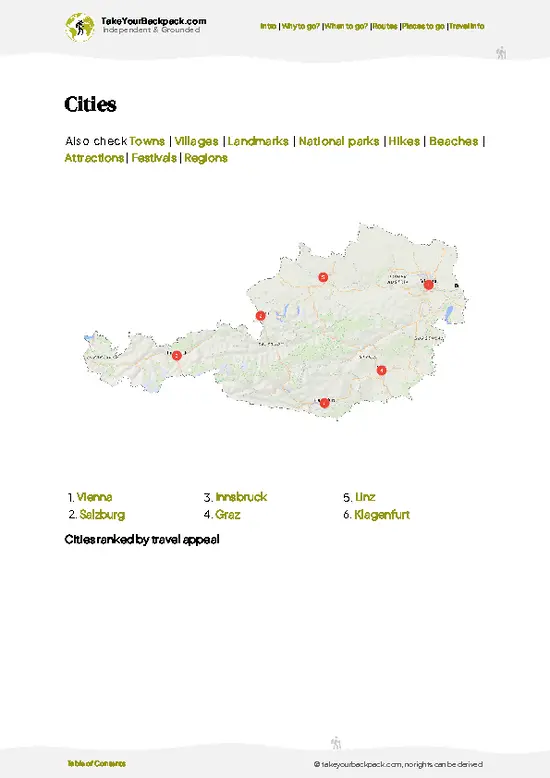
Cities in Austria are compact, orderly and far more varied than the small map suggests. The east holds imperial-scale architecture, coffeehouse culture and the country’s highest prices for beds. The Alpine west and south pair medieval centers with mountains at the end of the street, so cost and crowds track the ski and summer hiking seasons. Because rail links are dense and most centers are walkable, independent travel here is easy, and the real choice is between big-city museums and small-city access to nature. Hostels and transit passes keep costs manageable, while festival dates and weekends push demand up fast.

By Johan Kruseman 🇳🇱 | Updated October 19, 2026
Explore the best towns in Austria

Why go?Understanding Their Importance

Austria suits city travel because of how its history and geography fit together. For centuries the country was governed from a single imperial capital, which funded grand civic architecture, opera houses and museums far beyond what a nation of nine million people would otherwise build. Meanwhile the Alps divided the territory into valley and basin towns that kept their own regional identities, from salt-trade wealth to prince-archbishop rule. The result is cities with distinct characters that sit close together.

Infrastructure completes the picture. Rail (ÖBB and the private Westbahn on the main east-west line) is frequent and punctual, local transit in the larger cities is cheap relative to wages, and tap water from alpine springs is excellent and free. Centers are small enough that most … read more 👉
Austria suits city travel because of how its history and geography fit together. For centuries the country was governed from a single imperial capital, which funded grand civic architecture, opera houses and museums far beyond what a nation of nine million people would otherwise build. Meanwhile the Alps divided the territory into valley and basin towns that kept their own regional identities, from salt-trade wealth to prince-archbishop rule. The result is cities with distinct characters that sit close together.

Infrastructure completes the picture. Rail (ÖBB and the private Westbahn on the main east-west line) is frequent and punctual, local transit in the larger cities is cheap relative to wages, and tap water from alpine springs is excellent and free. Centers are small enough that most sights sit within a 20 to 30 minute walk.

Before choosing Austria for its cities, know the limits. It is not a budget destination by Central European standards: expect prices well above Czechia, Hungary or Slovenia. Shops close on Sundays and most public holidays, so groceries must be bought on Saturday. Nightlife is quieter and ends earlier than in Berlin or Budapest. The reward is dependable quality, safety and ease, with culture that is still alive in daily habits, such as the coffeehouse afternoon.
Behind the Scenes of Selection
The list of best cities in Austria is created based on culture, vibe, attractions, transport ease, and local charm. If you feel a city is missing in this list, please let us know.

When to go?Seasonal Guide to Visiting

Best months and why: The best months for Austrian cities are May, June and September, when daytime highs of 17 to 25°C allow long days outdoors, terraces are open and the main sights are not at their most crowded. July and August reach 25 to 30°C in the east, and the Danube basin around Vienna can pass 33°C in heat waves, with afternoon thunderstorms common in the Alpine west.

Shoulder seasons and winter: April and October bring 8 to 16°C with changeable skies, and prices for rooms drop noticeably, often 15 to 30 percent below summer peaks. November is gray and damp, and some attractions shorten their hours or close for maintenance. From December to February, daytime temperatures sit around -3 to 4°C, and Alpine cities such as Innsbruck and Salzburg see regular snow. The Christmas market … read more 👉
Best months and why: The best months for Austrian cities are May, June and September, when daytime highs of 17 to 25°C allow long days outdoors, terraces are open and the main sights are not at their most crowded. July and August reach 25 to 30°C in the east, and the Danube basin around Vienna can pass 33°C in heat waves, with afternoon thunderstorms common in the Alpine west.

Shoulder seasons and winter: April and October bring 8 to 16°C with changeable skies, and prices for rooms drop noticeably, often 15 to 30 percent below summer peaks. November is gray and damp, and some attractions shorten their hours or close for maintenance. From December to February, daytime temperatures sit around -3 to 4°C, and Alpine cities such as Innsbruck and Salzburg see regular snow. The Christmas market period (late November to December 23 or 24) is the winter peak, with high prices and booked-out hostels, so reserve weeks ahead.

Peaks that change decisions: In the west and south, ski season (late December to March) and school holidays lift accommodation costs, while the summer festival season, especially July and August in the Salzburg region, can double room rates. Rain peaks in summer in the Alps, around 120 to 200 mm a month, while the east is drier at 50 to 80 mm. Many castles and some outdoor sites operate only from roughly April to October.

city hoppingOptimizing Your Multi-Stop Itinerary

How many days to plan: A trip combining several Austrian cities needs 7 to 12 days, because the country is small but the best centers are strung across a long east-west line. Plan two to three nights in the largest city, where museums and neighborhoods take real time, and one to two nights in each smaller one, which can be seen well in a day and a half.

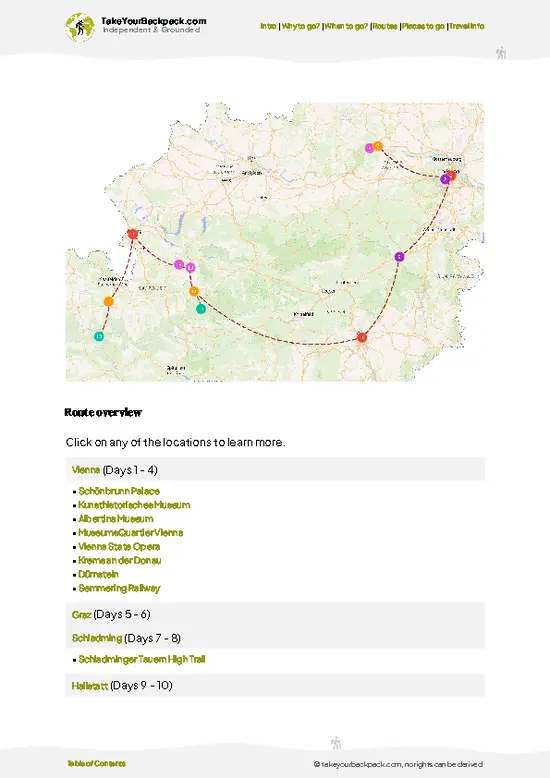
Regions and direction: Three clusters work well. The Danube east around Vienna, the central Alpine and lake belt around Salzburg, and the Tyrol and Vorarlberg west around Innsbruck. Travel in a single line, east to west or the reverse, so you finish near an airport. Vienna to Salzburg takes about 2.5 to 3 hours by direct train, Salzburg to Innsbruck about 2 hours, and Innsbruck to Bregenz about 2 to 2.5 hours. The southern Styrian and Carinthian … read more 👉
How many days to plan: A trip combining several Austrian cities needs 7 to 12 days, because the country is small but the best centers are strung across a long east-west line. Plan two to three nights in the largest city, where museums and neighborhoods take real time, and one to two nights in each smaller one, which can be seen well in a day and a half.

Regions and direction: Three clusters work well. The Danube east around Vienna, the central Alpine and lake belt around Salzburg, and the Tyrol and Vorarlberg west around Innsbruck. Travel in a single line, east to west or the reverse, so you finish near an airport. Vienna to Salzburg takes about 2.5 to 3 hours by direct train, Salzburg to Innsbruck about 2 hours, and Innsbruck to Bregenz about 2 to 2.5 hours. The southern Styrian and Carinthian side links more slowly, with Vienna to Graz around 2.5 hours, so treat it as a separate branch.

Planning mistakes: The commonest error is squeezing too many stops into a week, which turns the trip into a series of stations. Cap it at one move every two days. Another is returning to the starting point, which wastes a half day. Book advance rail fares on the main line, which can fall to a fraction of the flexible price, and avoid arriving on Sunday evenings in small cities where food options thin out.

The ListThe Best cities of Austria

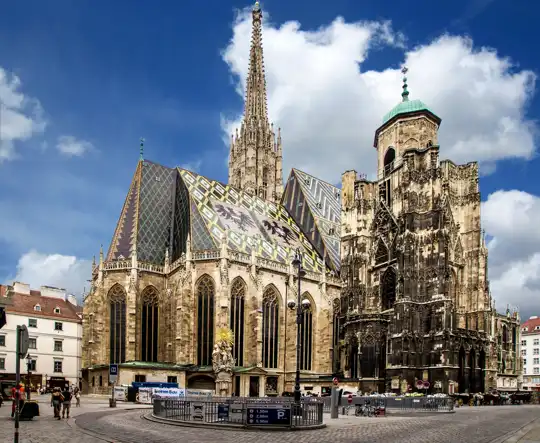
1 Vienna

grand boulevards, coffeehouses, art collections, opera houses, imperial architecture

Absorb a city where daily life unfolds among monumental buildings, layered history, and a deep-rooted tradition of public spaces and the arts.

Austria - Vienna

2 Salzburg

baroque domes, riverside promenades, fortress views, classical music venues

Trace the city’s musical legacy while moving between ornate architecture, riverside paths, and panoramic viewpoints above the rooftops.

3 Innsbruck

Alpine skyline, winter sports venues, imperial palaces, mountain cable cars

Experience a city where snow-capped peaks frame every street, and mountain access is woven into urban routines year-round.

austria-city-innsbruck
© Google | Stoyan Tzvetansky

4 Graz

student districts, Mediterranean courtyards, hilltop fortress, design museums

Wander through leafy squares and steep lanes, discovering a city where creative energy and relaxed outdoor living shape daily life.

austria-city-graz
© Google | Radek Skibinski

5 Linz

industrial riverfront, digital art spaces, modernist buildings, steel industry

Navigate a city defined by its working river, contemporary art installations, and a blend of industrial heritage with new creative projects.

6 Klagenfurt

lakeside promenades, Renaissance courtyards, regional markets, southern climate

Relax in a city where lakeside living, open-air markets, and a mild climate create a slower pace and strong sense of place.

austria-city-klagenfurt
© Google |
Loading the map 🌍

Expert viewInsights from Locals and Experts

How many cities: Three to four cities is the sensible ceiling for a 10 to 14 day trip. The reason is practical: each transfer eats half a day once you count checkout, the train and settling in, and Austrian cities reward lingering in cafés and old quarters rather than ticking off sights. Experienced travelers cut the list and add a day trip instead, since regional transit passes make nearby lakes and valleys cheap to reach.

Choosing between types: The big imperial city suits travelers who want museums, music and food variety, and it has the widest range of hostels. The mid-sized Alpine cities suit hikers and anyone who wants mountains within a tram or cable-car ride. The southern university cities cost less and feel more relaxed, which fits slow, budget-minded travel. If you only have time … read more 👉
How many cities: Three to four cities is the sensible ceiling for a 10 to 14 day trip. The reason is practical: each transfer eats half a day once you count checkout, the train and settling in, and Austrian cities reward lingering in cafés and old quarters rather than ticking off sights. Experienced travelers cut the list and add a day trip instead, since regional transit passes make nearby lakes and valleys cheap to reach.

Choosing between types: The big imperial city suits travelers who want museums, music and food variety, and it has the widest range of hostels. The mid-sized Alpine cities suit hikers and anyone who wants mountains within a tram or cable-car ride. The southern university cities cost less and feel more relaxed, which fits slow, budget-minded travel. If you only have time for one type, match it to your main interest, not to a famous name.

What it costs: Austria is pricey, but the spending is predictable. Budget US$70 to 110 a day (about €65 to 100) for a backpacker: dorm beds run €30 to 55 a night in summer and more at Christmas, a supermarket-based lunch €6 to 10 and a sit-down dinner €15 to 25. Single local transit tickets cost roughly €2.50 to 3.00 in the larger cities, and 24-hour passes €8 to 9, so day passes pay off only on busy days. Major museums and palaces charge €15 to 25 each, and combination tickets or city cards (€20 to 40 for 24 to 72 hours) pay back only if you visit three or more paid sights a day. Guided walking tours cost €15 to 30, and many cities offer tip-based tours. The cheapest hot meal is often a lunch menu at a local inn, which is much cheaper than dinner service.

Safety and etiquette: Austrian cities are among the safest in Europe. Pickpocketing exists around main stations, tourist squares and Christmas markets, so keep phones and wallets zipped. Public transit relies on honor-system ticketing: there are rarely barriers, but inspectors check often and fines are around €100, so validate paper tickets where required. Greet shopkeepers with “Grüß Gott” or “Servus”, and say it on entering small cafés. Quiet hours apply on Sundays and after about 10 pm in apartments and some hostels, and tipping is customary by rounding up 5 to 10 percent. In winter, wear boots with grip, since sidewalks ice over in the Alpine cities.

✈️ The backpacker research shortcutAustria Travel Guide

An offline-friendly backpacking guide with optimized travel routes, ranked highlights, transport advice, and the best areas to stay.
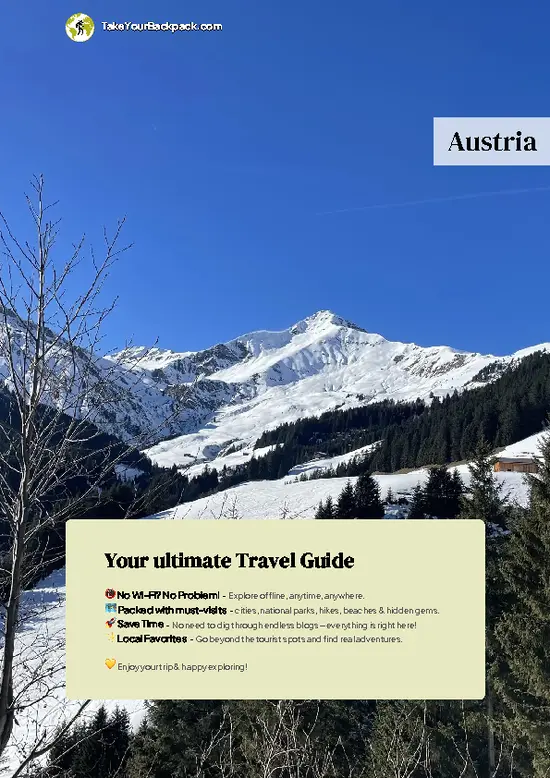
example page 0 from our offline Travel Guide for Austria
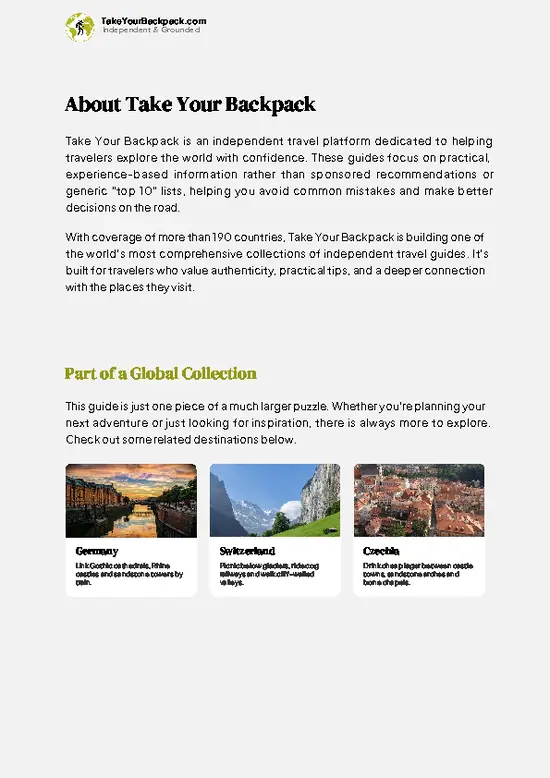
example page 1 from our offline Travel Guide for Austria
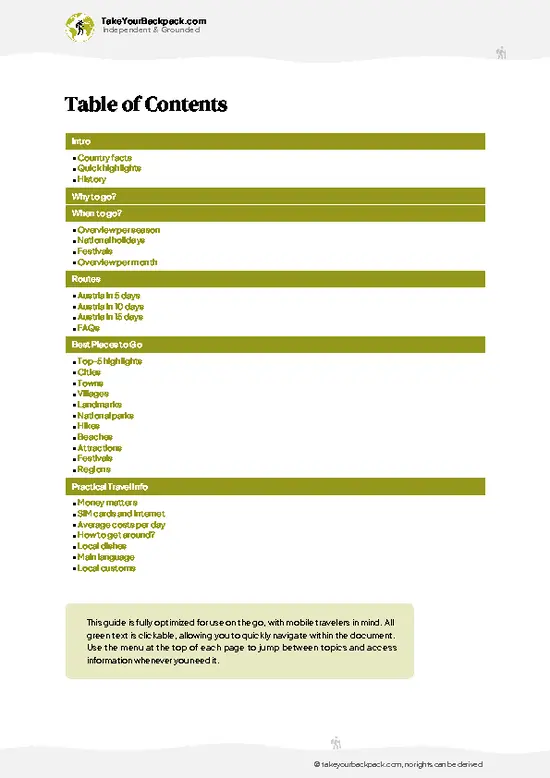
example page 2 from our offline Travel Guide for Austria
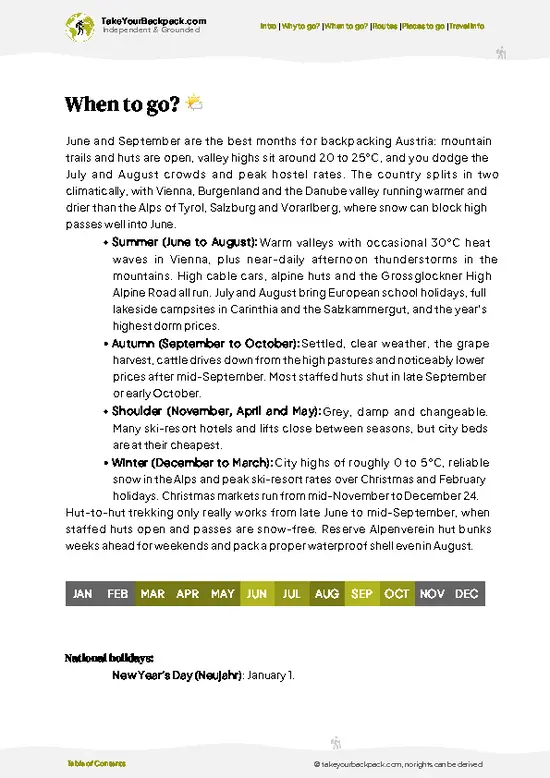
example page 3 from our offline Travel Guide for Austria
example page 4 from our offline Travel Guide for Austria
example page 5 from our offline Travel Guide for Austria
example page 6 from our offline Travel Guide for Austria
example page 7 from our offline Travel Guide for Austria
The digital guide (354 pages) contains:
✅ 90 highlights, ranked by travel appeal
✅ Optimized 5, 10 & 15-day travel routes
✅ Cities, national parks, landmarks, beaches
✅ How to get around
✅ Offline-friendly for travel without Wi-Fi
👉 Click to see all 30+ guide features

📅 Plan smarter in minutes, not weeks
✅ Month by month travel advice
✅ Festivals & national holidays
✅ Budget expectations

🗺️ Go to the right places, skip the overrated ones
✅ Honest pros & cons of destinations
✅ Top hikes, parks & viewpoints
✅ Lesser-known places most travelers miss
✅ Clear “worth it vs skip it” guidance

🛏️ Travel smoothly without rookie mistakes
✅ Best areas to stay
✅ Transport systems explained simply
✅ Common scams & safety advice
✅ SIM cards, money & practical tips

🌍 Understand the country, not just visit it
✅ Culture & traditions
✅ 52 Essential phrases & customs
✅ Festivals worth planning around
✅ Traveler-friendly historical context
✅ Insights that make places more meaningful

📱 Built for real travel conditions
✅ Fully downloadable PDF
✅ Works completely offline
✅ Optimized for phone use
✅ Useful in remote areas & buses
✅ Everything in one place
Stop searching, start planning
Get instant access to your full guide. 30‑day money-back guarantee.
+ Add another guide for just

By proceeding you agree to our terms.
Sent to your inbox immediately after payment • 100% Secure Checkout
Best Backpacking Travel Advisor 2025 tourism awardBest Backpacking
Travel Advisor
2025
What others say about Take Your Backpack Guides:
⭐⭐⭐⭐⭐
Fantastic, amazing amount of information!
⭐⭐⭐⭐⭐
My goodness this is amazing, it's what I've been looking for hats off too you!
⭐⭐⭐⭐⭐
I think this is absolutely BRILLIANT
⭐⭐⭐⭐
Very complete and informative. It's still missing places, but I gotta to commend you
⭐⭐⭐⭐⭐
This is truly amazing, thank you, can't wait to explore it with my kids!
⭐⭐⭐⭐⭐
Awesome resource, thank you!
⭐⭐⭐⭐⭐
This is amazing! Can't wait to explore the ones I haven't seen
⭐⭐⭐⭐
I love this! Well done, great idea.
⭐⭐⭐⭐⭐
Thanks for taking the time to make this gem!
⭐⭐⭐⭐⭐
This might be the best website I've ever seen.
⭐⭐⭐⭐⭐
Congratulations, and thank you so much for your work; it's incredibly valuable.
⭐⭐⭐⭐
In all seriousness I think you did a great job pointing out the important spots
⭐⭐⭐⭐⭐
10/10 very good
⭐⭐⭐⭐⭐
As someone who's only just starting to visit regularly this is awesome, thank you.
⭐⭐⭐⭐
Thank you very much! I'm going to visit my dad, it's going to be very useful!
⭐⭐⭐⭐⭐
This is really cool! We'll be travelling for the first time and this definitely come in handy.
⭐⭐⭐⭐⭐
You are now our minister of culture, congratulations 👨‍💼
⭐⭐⭐⭐⭐
Just wanted to tell you that this is a pearl! Going to follow your recommendations.
⭐⭐⭐⭐⭐
This is so cool. I'll definitely be using the resource for my travels soon.
⭐⭐⭐⭐⭐
This is very impressive! Good work.
⭐⭐⭐⭐⭐
This is an amazing and informative site. Very well done!

🛏️ Where to stay?Best Places to Stay in Austria

Hostels are plentiful in Austria, with dorm beds typically running €25 to €45 a night and the widest choice in Vienna, Salzburg, Innsbruck and Graz, plus youth hostels and budget guesthouses in smaller towns and alpine resorts. In Vienna, Neubau and Mariahilf near Westbahnhof put you in walking distance of the MuseumsQuartier and plenty of bars, while Favoriten around the Hauptbahnhof is cheaper and has excellent transport links but little character after dark; Leopoldstadt sits between the two, close to the Prater and the center but quieter at night. In Salzburg, beds near the station in Elisabeth-Vorstadt cost noticeably less than anything in the Altstadt (a 15 to 20 minute walk away), and … read more 👉
Hostels are plentiful in Austria, with dorm beds typically running €25 to €45 a night and the widest choice in Vienna, Salzburg, Innsbruck and Graz, plus youth hostels and budget guesthouses in smaller towns and alpine resorts. In Vienna, Neubau and Mariahilf near Westbahnhof put you in walking distance of the MuseumsQuartier and plenty of bars, while Favoriten around the Hauptbahnhof is cheaper and has excellent transport links but little character after dark; Leopoldstadt sits between the two, close to the Prater and the center but quieter at night. In Salzburg, beds near the station in Elisabeth-Vorstadt cost noticeably less than anything in the Altstadt (a 15 to 20 minute walk away), and in Innsbruck the area around the main station keeps you close to the old town and the Nordkette cable car.

If you enjoy meeting fellow travelers, consider choosing hostels with high ratings for atmosphere. On the other hand, if you prefer having your own space, a hotel might be a better option.

AustriaExplore Austria

👋 Meet the founderWho’s Behind Take Your Backpack?

Johan, backpacker and founder of TakeYourBackpackHi, I’m Johan (Netherlands 🇳🇱), the creator of TakeYourBackpack. Over the past 3 decades, I’ve backpacked through 90+ countries across six continents, gaining extensive experience with independent travel, long-term trips, and overland routes.

This site is built on a combination of firsthand travel experience and carefully curated insights from other backpackers. Many guides are based on places I’ve personally visited, while others bring together tips, observations, and practical advice shared by trusted travelers I’ve met along the way.

The goal is to provide realistic, experience-driven guidance — not generic itineraries — so you can explore destinations with better context, clearer expectations, and more confidence.