v2.webp)
The Façade: The Real Showstopper
Forget the endless Instagram shots—yes, the exterior is a riot of blue tiles and statues, but standing in front of it is a different animal. The six poets immortalized in stone aren’t just decoration; they’re a roll call of Azerbaijan’s literary legends, staring you down with the kind of gravitas that makes you put your phone away. The building itself is a mashup of Persian, Russian, and local architectural bravado. It’s not subtle, and that’s the point. This is Baku’s answer to the question: “How do you make a museum about poetry look like a palace?”
The Manuscript Room: Ink, Gold, and Human Obsession
This isn’t your average glass-case snooze fest. The manuscripts here are centuries old, some written in gold leaf, others in the cramped, feverish script of poets … read more 👉
Forget the endless Instagram shots—yes, the exterior is a riot of blue tiles and statues, but standing in front of it is a different animal. The six poets immortalized in stone aren’t just decoration; they’re a roll call of Azerbaijan’s literary legends, staring you down with the kind of gravitas that makes you put your phone away. The building itself is a mashup of Persian, Russian, and local architectural bravado. It’s not subtle, and that’s the point. This is Baku’s answer to the question: “How do you make a museum about poetry look like a palace?”
The Manuscript Room: Ink, Gold, and Human Obsession
This isn’t your average glass-case snooze fest. The manuscripts here are centuries old, some written in gold leaf, others in the cramped, feverish script of poets … read more 👉
The Façade: The Real Showstopper
Forget the endless Instagram shots—yes, the exterior is a riot of blue tiles and statues, but standing in front of it is a different animal. The six poets immortalized in stone aren’t just decoration; they’re a roll call of Azerbaijan’s literary legends, staring you down with the kind of gravitas that makes you put your phone away. The building itself is a mashup of Persian, Russian, and local architectural bravado. It’s not subtle, and that’s the point. This is Baku’s answer to the question: “How do you make a museum about poetry look like a palace?”
The Manuscript Room: Ink, Gold, and Human Obsession
This isn’t your average glass-case snooze fest. The manuscripts here are centuries old, some written in gold leaf, others in the cramped, feverish script of poets who probably never imagined their work would survive this long. You can practically smell the ink and ambition. If you want to see what obsession looks like on paper, this is it. The room is a time capsule of Azerbaijani language evolution, and the calligraphy alone is worth the price of admission.
Nizami’s Corner: The Legend Gets Personal
Nizami Ganjavi isn’t just a name on the door. His dedicated section is a crash course in why he’s the Shakespeare, Dante, and Rumi of Azerbaijan rolled into one. You’ll see rare editions of his “Khamsa,” illustrations that look like they were painted by someone hallucinating on saffron, and artifacts that make the legend feel human—his imagined writing desk, his influence mapped across centuries. It’s intimate, not reverential. You leave understanding why the country treats him like literary royalty.
The Poet Statues: More Than Marble Selfies
Inside and out, the museum is crawling with statues. But these aren’t generic busts. Each one is loaded with symbolism—look for the subtle details: a hand clutching a scroll, a sly smile, a furrowed brow. They’re conversation starters, not just photo ops. The sculptors managed to inject personality into stone, and if you pay attention, you’ll catch the inside jokes and historical nods.
The Interactive Exhibits: Literature That Fights Back
If you think a literature museum is just for bookworms, the digital installations will surprise you. Touchscreens let you flip through manuscripts, listen to poetry in the original Azerbaijani, and even try your hand at translating a couplet. It’s not a theme park, but it’s not a mausoleum either. The museum wants you to engage, not just observe.
The Hall of Portraits: Faces Behind the Words
This gallery is a parade of Azerbaijani writers, from medieval mystics to Soviet-era rebels. The portraits aren’t sanitized—some are brooding, others defiant. You get a sense of the stakes: writing here was never just a hobby. It was survival, protest, and sometimes, a dangerous game. The room hums with stories you won’t find in the English-language guidebooks.
The Gift Shop: Actually Worth Your Time
Skip the fridge magnets. The shop stocks facsimile manuscripts, poetry collections in English and Azerbaijani, and quirky souvenirs you won’t find in the Old City bazaar. If you want a piece of the museum that isn’t mass-produced, this is your spot.
Forget the endless Instagram shots—yes, the exterior is a riot of blue tiles and statues, but standing in front of it is a different animal. The six poets immortalized in stone aren’t just decoration; they’re a roll call of Azerbaijan’s literary legends, staring you down with the kind of gravitas that makes you put your phone away. The building itself is a mashup of Persian, Russian, and local architectural bravado. It’s not subtle, and that’s the point. This is Baku’s answer to the question: “How do you make a museum about poetry look like a palace?”
The Manuscript Room: Ink, Gold, and Human Obsession
This isn’t your average glass-case snooze fest. The manuscripts here are centuries old, some written in gold leaf, others in the cramped, feverish script of poets who probably never imagined their work would survive this long. You can practically smell the ink and ambition. If you want to see what obsession looks like on paper, this is it. The room is a time capsule of Azerbaijani language evolution, and the calligraphy alone is worth the price of admission.
Nizami’s Corner: The Legend Gets Personal
Nizami Ganjavi isn’t just a name on the door. His dedicated section is a crash course in why he’s the Shakespeare, Dante, and Rumi of Azerbaijan rolled into one. You’ll see rare editions of his “Khamsa,” illustrations that look like they were painted by someone hallucinating on saffron, and artifacts that make the legend feel human—his imagined writing desk, his influence mapped across centuries. It’s intimate, not reverential. You leave understanding why the country treats him like literary royalty.
The Poet Statues: More Than Marble Selfies
Inside and out, the museum is crawling with statues. But these aren’t generic busts. Each one is loaded with symbolism—look for the subtle details: a hand clutching a scroll, a sly smile, a furrowed brow. They’re conversation starters, not just photo ops. The sculptors managed to inject personality into stone, and if you pay attention, you’ll catch the inside jokes and historical nods.
The Interactive Exhibits: Literature That Fights Back
If you think a literature museum is just for bookworms, the digital installations will surprise you. Touchscreens let you flip through manuscripts, listen to poetry in the original Azerbaijani, and even try your hand at translating a couplet. It’s not a theme park, but it’s not a mausoleum either. The museum wants you to engage, not just observe.
The Hall of Portraits: Faces Behind the Words
This gallery is a parade of Azerbaijani writers, from medieval mystics to Soviet-era rebels. The portraits aren’t sanitized—some are brooding, others defiant. You get a sense of the stakes: writing here was never just a hobby. It was survival, protest, and sometimes, a dangerous game. The room hums with stories you won’t find in the English-language guidebooks.
The Gift Shop: Actually Worth Your Time
Skip the fridge magnets. The shop stocks facsimile manuscripts, poetry collections in English and Azerbaijani, and quirky souvenirs you won’t find in the Old City bazaar. If you want a piece of the museum that isn’t mass-produced, this is your spot.
Spotted a mistake or missing something? Contact us.

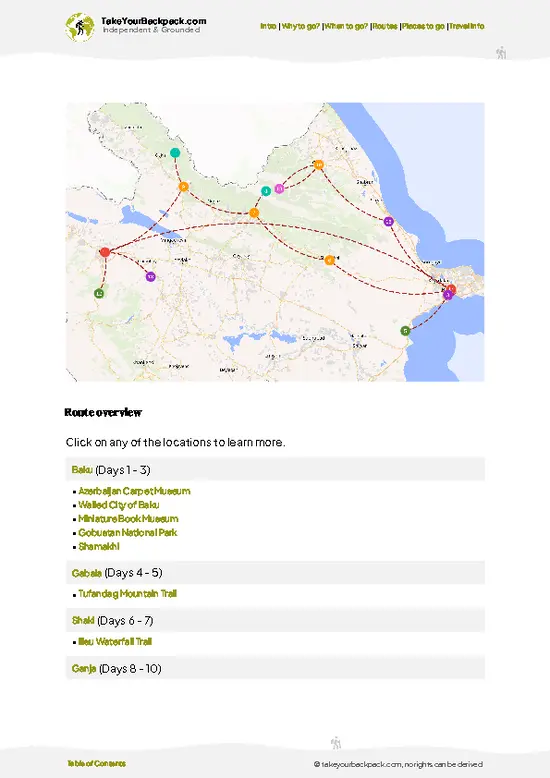
Baku Old City Tour

The Best Baku Walking Tour

Baku City Tour with Local Guide-Old City, Flame Towers, Boulevard

Baku Old Town Walking Tour with a Local

Baku City Tour: Sweet & Wine Tasting and Funicular Ride

Old City tour

Baku: Old & Modern City Tour, Wine Tasting & Funicular Ride

Azerbaijani Cooking Class + Old City Tour + Lunch

Private Baku City Tour


 Best Backpacking
.jpg) Hi, I’m Johan (Netherlands 🇳🇱), the creator of TakeYourBackpack. Over the past 3 decades, I’ve backpacked through 90+ countries across six continents, gaining extensive experience with independent travel, long-term trips, and overland routes.
Hi, I’m Johan (Netherlands 🇳🇱), the creator of TakeYourBackpack. Over the past 3 decades, I’ve backpacked through 90+ countries across six continents, gaining extensive experience with independent travel, long-term trips, and overland routes.