
×

The Bahamas🇧🇸 | regionsAbaco IslandsElbow Cay lighthouse, golf-cart cays, boat-building yards, Sunday pig roast | things to do and best time to go

Explore Little ExumaExplore Berry Islands

Backpacking in Abaco Islands
🏆 Top pickregion ranked #2
By Johan Kruseman 🇳🇱 | Updated October 20, 2026

Abaco Islands gives you a ferry-and-water-taxi chain of islands where a single rented golf cart can cover a whole village in an afternoon. The chain sits in the north of Bahamas, a short flight from Florida, with Marsh Harbour as the working hub and the cays strung out along the barrier reef to the east. The good side is plain: clear shallows, sailors’ bars, and pastel Loyalist cottages in Hope Town where you can walk the lanes in twenty minutes and end up at a dockside rum punch. The less shiny side is cost, since everything arrives by boat and prices show it, and the mainland road stretches long and empty with little to see between settlements. Go for the cays, not the highway. Mornings are calm and best for the water, so plan your boat hops early. Before you book, know that the ferries between Marsh Harbour and the cays run on a limited schedule and stop in the afternoon, so plan around the last departure.

Discover everything you want to know in the 📖 The Bahamas Travel Guide.


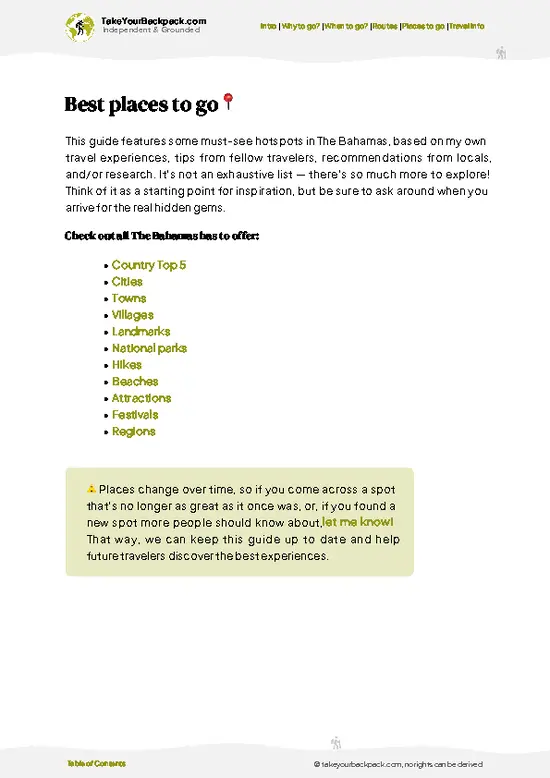
example page 0 from our offline Travel Guide for Bahamas
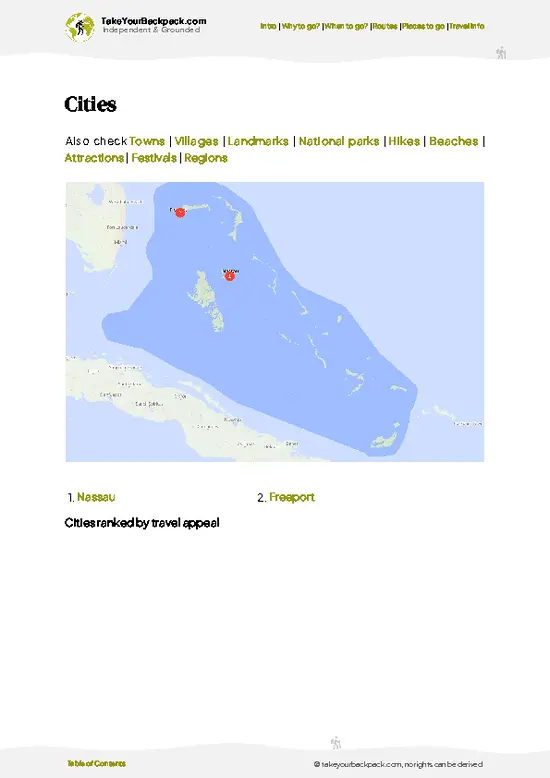
example page 1 from our offline Travel Guide for Bahamas
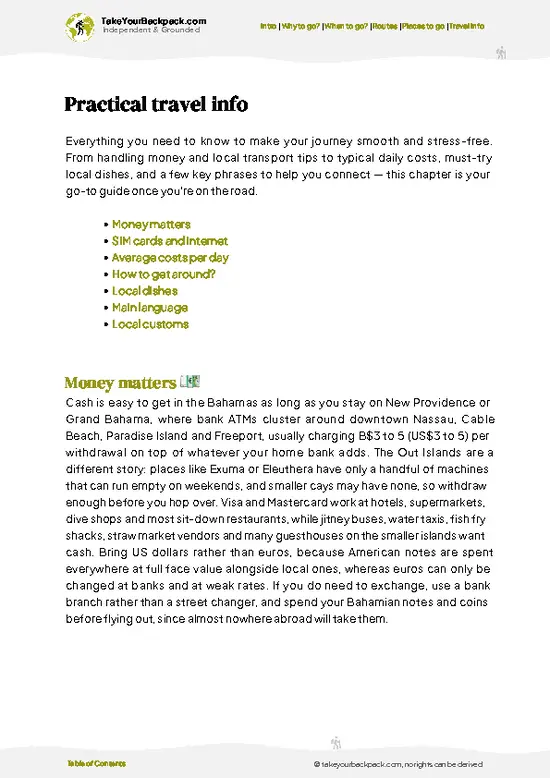
example page 2 from our offline Travel Guide for Bahamas
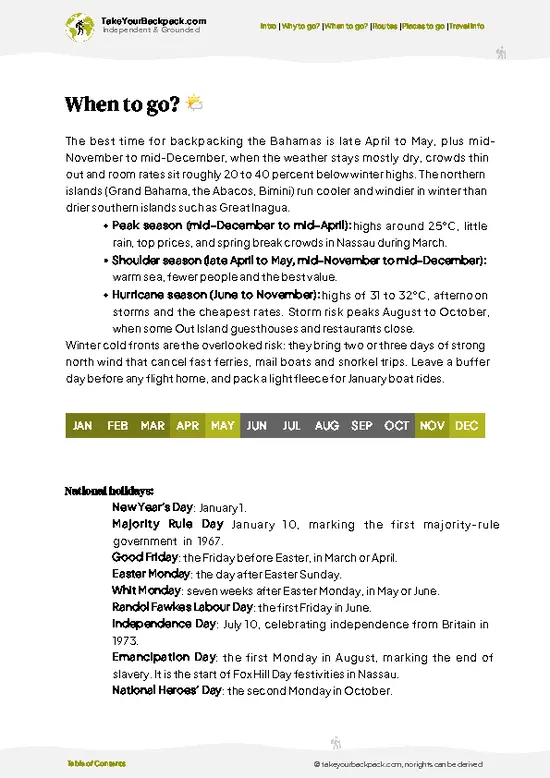
example page 3 from our offline Travel Guide for Bahamas
example page 4 from our offline Travel Guide for Bahamas
example page 5 from our offline Travel Guide for Bahamas
example page 6 from our offline Travel Guide for Bahamas
example page 7 from our offline Travel Guide for Bahamas
Loading the map 🌍
CLICK TO FILTER
cities
towns
villages
landmarks
national parks
hikes
beaches
attractions
festivals
regions
SHOW COUNTRY’S BESTSHOW ALL

✨ Why go?
Ranked #2 region in The Bahamas
Why Abaco Islands should be on your travel list

Abaco Islands works for backpackers because the best things sit close together on the water. From Marsh Harbour you can reach Elbow Cay and Hope Town by a short ferry hop, then add Great Guana Cay or Man-O-War Cay without repacking your life. That means a week of snorkeling, beach walks and boat-yard visits from one cheap-ish base, rather than constant flights between islands.

The second reason is the mix of nature and history. Pelican Cays Land and Sea Park gives you protected reef and sandbars to paddle, while the old settlements show boat-building traditions and Loyalist roots that are still lived rather than staged. Rent a kayak, a bicycle or a golf cart and you set your own pace, stopping when a beach looks empty or a bakery smells right.

On a budget, Abaco Islands asks for some planning, … read more 👉
Abaco Islands works for backpackers because the best things sit close together on the water. From Marsh Harbour you can reach Elbow Cay and Hope Town by a short ferry hop, then add Great Guana Cay or Man-O-War Cay without repacking your life. That means a week of snorkeling, beach walks and boat-yard visits from one cheap-ish base, rather than constant flights between islands.

The second reason is the mix of nature and history. Pelican Cays Land and Sea Park gives you protected reef and sandbars to paddle, while the old settlements show boat-building traditions and Loyalist roots that are still lived rather than staged. Rent a kayak, a bicycle or a golf cart and you set your own pace, stopping when a beach looks empty or a bakery smells right.

On a budget, Abaco Islands asks for some planning, since groceries and beds cost more than on the mainland chain, but that same slowness is the point. You swim before breakfast, walk to dinner and meet the boat captains who actually know the weather.

💡 HighlightsMust-see experiences and standout moments

  1. Hope Town Lighthouse: the red-and-white striped 1864 tower on Elbow Cay is one of the last hand-wound kerosene lighthouses in the world, and the climb up its 101 steps rewards you with a view over reef and harbor. A small donation is asked.
  2. Hope Town Harbour: pastel clapboard cottages, white picket fences and a sheltered harbor you can cross on foot in minutes, with ice cream and coffee at the water’s edge.
  3. Tahiti Beach: a sandbar crescent at the southern tip of Elbow Cay that shows at low tide, with shallow turquoise water that is easy for children and tired legs.
  4. Pelican Cays Land and Sea Park: a protected marine reserve south of Marsh Harbour with coral gardens, clear snorkeling water and sheltered cays, reached by a charter boat or your own small craft.
  5. Man-O-War Cay: a quiet boat-building
… read more 👉
  1. Hope Town Lighthouse: the red-and-white striped 1864 tower on Elbow Cay is one of the last hand-wound kerosene lighthouses in the world, and the climb up its 101 steps rewards you with a view over reef and harbor. A small donation is asked.
  2. Hope Town Harbour: pastel clapboard cottages, white picket fences and a sheltered harbor you can cross on foot in minutes, with ice cream and coffee at the water’s edge.
  3. Tahiti Beach: a sandbar crescent at the southern tip of Elbow Cay that shows at low tide, with shallow turquoise water that is easy for children and tired legs.
  4. Pelican Cays Land and Sea Park: a protected marine reserve south of Marsh Harbour with coral gardens, clear snorkeling water and sheltered cays, reached by a charter boat or your own small craft.
  5. Man-O-War Cay: a quiet boat-building settlement where family yards still shape wooden hulls, and Albury’s Sail Shop sews canvas bags by hand. Alcohol is not sold on the island, which says a lot about its character.
  6. Great Guana Cay beach: a long, empty stretch of pink-tinged sand on the Atlantic side, ideal for walking with almost no one around.
  7. Nipper’s Bar and Grill: a hilltop beach bar on Great Guana Cay famous for its Sunday pig roast and pool overlooking the ocean.
  8. Wyannie Malone Historical Museum: a small house museum in Hope Town that tells the story of the Loyalist widow who settled the island, with local photos and ship models.
  9. Treasure Cay Beach: a long, curved crescent of soft white sand on the mainland, calm and shallow with space to spread out.
  10. Lubbers Quarters Cay: a small, quiet cay reached by a short boat ride from Elbow Cay, loved by locals for peaceful water and few visitors.
Of everything listed, Great Guana Cay beach and Tahiti Beach cost nothing, so they are the cheapest way to spend a morning in Abaco Islands.
Spotted a mistake or missing something? Contact us.

⌛️ 5 daysHow to make the most of Abaco Islands

Start in Marsh Harbour early, because the cay ferries run on a short morning window and the harbor is calmer before the wind picks up. The ferries, water taxis and rented carts shape everything here, so you move in short hops and plan around the last boat back.

Day 1: Marsh Harbour: Spend the first day settling in and stocking up. Groceries cost more on the cays, so buy snacks and water here, then walk the waterfront and watch the boats come and go. It is the only place with a real supermarket and the easiest way to understand how supplies reach the islands.

Day 2: Hope Town: Take the morning ferry to Elbow Cay and climb the lighthouse before heat arrives. Then wander the harbor lanes and rent a golf cart for the afternoon to reach Tahiti Beach at low tide. Stay overnight so you see the … read more 👉
Start in Marsh Harbour early, because the cay ferries run on a short morning window and the harbor is calmer before the wind picks up. The ferries, water taxis and rented carts shape everything here, so you move in short hops and plan around the last boat back.

Day 1: Marsh Harbour: Spend the first day settling in and stocking up. Groceries cost more on the cays, so buy snacks and water here, then walk the waterfront and watch the boats come and go. It is the only place with a real supermarket and the easiest way to understand how supplies reach the islands.

Day 2: Hope Town: Take the morning ferry to Elbow Cay and climb the lighthouse before heat arrives. Then wander the harbor lanes and rent a golf cart for the afternoon to reach Tahiti Beach at low tide. Stay overnight so you see the harbor after the day trippers leave.

Day 3: Elbow Cay: Use a slow second morning for snorkeling and a visit to the small museum. A short boat ride to Lubbers Quarters Cay is the detour: it adds a quiet beach and clear water without changing your base or ferry plan.

Day 4: Man-O-War Cay: Head across by water taxi to walk the boat yards and buy canvas goods from the sail shop. The island is small, so a few hours is enough, and you can return to Marsh Harbour by late afternoon.

Day 5: Great Guana Cay: Finish on Great Guana Cay, walking the long Atlantic beach and timing lunch at Nipper’s. If you can only keep one day, make it this one: the empty sand, the pool bar and the late boat home sum up Abaco Islands.

🌤️ When to go?Choosing the right time of year

Mid-November through April is the window for dry, comfortable backpacking on Abaco, with daytime highs of 24 to 28°C (75 to 82°F) and water that is swimmable but cool in the early months.
  • Winter (December to March): Cold fronts can drop nights to 15 to 18°C (59 to 64°F) and kick up wind that cancels ferries and snorkel trips for a day or two. Daylight runs about 10.5 to 11.5 hours. Hotel and rental rates are at their highest.
  • Spring (April to May): Highs of 27 to 30°C (81 to 86°F), calm seas and lighter crowds. Fishing and sailing are excellent, and rates ease off.
  • Summer (June to August): Hot and humid at 30 to 33°C (86 to 91°F), with afternoon thunderstorms and about 13.5 hours of daylight. Prices fall, and the warm, glassy water is best for diving and snorkeling.
  • Hurricane Season (September
… read more 👉
Mid-November through April is the window for dry, comfortable backpacking on Abaco, with daytime highs of 24 to 28°C (75 to 82°F) and water that is swimmable but cool in the early months.
  • Winter (December to March): Cold fronts can drop nights to 15 to 18°C (59 to 64°F) and kick up wind that cancels ferries and snorkel trips for a day or two. Daylight runs about 10.5 to 11.5 hours. Hotel and rental rates are at their highest.
  • Spring (April to May): Highs of 27 to 30°C (81 to 86°F), calm seas and lighter crowds. Fishing and sailing are excellent, and rates ease off.
  • Summer (June to August): Hot and humid at 30 to 33°C (86 to 91°F), with afternoon thunderstorms and about 13.5 hours of daylight. Prices fall, and the warm, glassy water is best for diving and snorkeling.
  • Hurricane Season (September to October): Peak storm risk, with some businesses closed for the season. Deals are the best of the year, but plans can shift quickly.
Book refundable lodging if you travel between August and October, and watch the forecast a week out.


source: climatestotravel.comJANJanuary: excellent for travelingFEBFebruary: excellent for travelingMARMarch: excellent for travelingAPRApril: excellent for travelingMAYMay: highly recommended for travelingJUNJune: fair for travelingJULJuly: fair for travelingAUGAugust: fair for travelingSEPSeptember: below average for travelingOCTOctober: fair for travelingNOVNovember: highly recommended for travelingDECDecember: excellent for traveling
bahamas-region-abaco-islands v1
© Google |

✈️ The backpacker research shortcutThe Bahamas Travel Guide

An offline-friendly backpacking guide with optimized travel routes, ranked highlights, transport advice, and the best areas to stay.
example page 0 from our offline Travel Guide for Bahamas
example page 1 from our offline Travel Guide for Bahamas
example page 2 from our offline Travel Guide for Bahamas
example page 3 from our offline Travel Guide for Bahamas
example page 4 from our offline Travel Guide for Bahamas
example page 5 from our offline Travel Guide for Bahamas
example page 6 from our offline Travel Guide for Bahamas
example page 7 from our offline Travel Guide for Bahamas
The digital guide (185 pages) contains:
✅ 55 highlights, ranked by travel appeal
✅ Optimized 2, 3 & 5-day travel routes
✅ Cities, national parks, landmarks, beaches
✅ How to get around
✅ Offline-friendly for travel without Wi-Fi
👉 Click to see all 30+ guide features

📅 Plan smarter in minutes, not weeks
✅ Month by month travel advice
✅ Festivals & national holidays
✅ Budget expectations

🗺️ Go to the right places, skip the overrated ones
✅ Honest pros & cons of destinations
✅ Top hikes, parks & viewpoints
✅ Lesser-known places most travelers miss
✅ Clear “worth it vs skip it” guidance

🛏️ Travel smoothly without rookie mistakes
✅ Best areas to stay
✅ Transport systems explained simply
✅ Common scams & safety advice
✅ SIM cards, money & practical tips

🌍 Understand the country, not just visit it
✅ Culture & traditions
✅ Local customs
✅ Festivals worth planning around
✅ Traveler-friendly historical context
✅ Insights that make places more meaningful

📱 Built for real travel conditions
✅ Fully downloadable PDF
✅ Works completely offline
✅ Optimized for phone use
✅ Useful in remote areas & buses
✅ Everything in one place
Stop searching, start planning
Get instant access to your full guide. 30‑day money-back guarantee.
+ Add another guide for just

By proceeding you agree to our terms.
Sent to your inbox immediately after payment • 100% Secure Checkout
Best Backpacking Travel Advisor 2025 tourism awardBest Backpacking
Travel Advisor
2025
What others say about Take Your Backpack Guides:
⭐⭐⭐⭐⭐
Fantastic, amazing amount of information!
⭐⭐⭐⭐⭐
My goodness this is amazing, it's what I've been looking for hats off too you!
⭐⭐⭐⭐⭐
I think this is absolutely BRILLIANT
⭐⭐⭐⭐
Very complete and informative. It's still missing places, but I gotta to commend you
⭐⭐⭐⭐⭐
This is truly amazing, thank you, can't wait to explore it with my kids!
⭐⭐⭐⭐⭐
Awesome resource, thank you!
⭐⭐⭐⭐⭐
This is amazing! Can't wait to explore the ones I haven't seen
⭐⭐⭐⭐
I love this! Well done, great idea.
⭐⭐⭐⭐⭐
Thanks for taking the time to make this gem!
⭐⭐⭐⭐⭐
This might be the best website I've ever seen.
⭐⭐⭐⭐⭐
Congratulations, and thank you so much for your work; it's incredibly valuable.
⭐⭐⭐⭐
In all seriousness I think you did a great job pointing out the important spots
⭐⭐⭐⭐⭐
10/10 very good
⭐⭐⭐⭐⭐
As someone who's only just starting to visit regularly this is awesome, thank you.
⭐⭐⭐⭐
Thank you very much! I'm going to visit my dad, it's going to be very useful!
⭐⭐⭐⭐⭐
This is really cool! We'll be travelling for the first time and this definitely come in handy.
⭐⭐⭐⭐⭐
You are now our minister of culture, congratulations 👨‍💼
⭐⭐⭐⭐⭐
Just wanted to tell you that this is a pearl! Going to follow your recommendations.
⭐⭐⭐⭐⭐
This is so cool. I'll definitely be using the resource for my travels soon.
⭐⭐⭐⭐⭐
This is very impressive! Good work.
⭐⭐⭐⭐⭐
This is an amazing and informative site. Very well done!

🛏️ Where to stay?Choosing the right base

Marsh Harbour is the most practical base on Abaco Islands, with the island’s main grocery stores, ferry docks, banks and the widest range of budget beds. It is the safest bet for solo travelers who want to meet people at waterfront bars, sailing crews and dive shops, and every cay is a short boat ride away.
Hope Town on Elbow Cay is the one to splurge a night or two on. Candy-striped lighthouse views, golf cart lanes and beaches within a short walk make it social without any hustle, though beds are pricier, from about US$100 a night, so plan to share. Green Turtle Cay suits travelers who like a … read more 👉
Marsh Harbour is the most practical base on Abaco Islands, with the island’s main grocery stores, ferry docks, banks and the widest range of budget beds. It is the safest bet for solo travelers who want to meet people at waterfront bars, sailing crews and dive shops, and every cay is a short boat ride away.
Hope Town on Elbow Cay is the one to splurge a night or two on. Candy-striped lighthouse views, golf cart lanes and beaches within a short walk make it social without any hustle, though beds are pricier, from about US$100 a night, so plan to share. Green Turtle Cay suits travelers who like a small, friendly settlement where New Plymouth’s streets are walkable and neighbors greet you by name. Treasure Cay has a long, curving beach with calm water, a better fit for a quiet few days of rest and swimming.
Guana Cay and Man-O-War Cay are better as day stops, because lodging is limited and the pace is slow. Crowd-wise, Marsh Harbour is where you meet other budget travelers, and the cays are where you decompress.

🚌 Getting aroundTransportation options and practical tips

Abaco Islands trips go wrong when visitors assume the main road runs end to end and that rides appear on demand, so they land in Marsh Harbour without a car and discover that taxis are pricey and nothing runs to the cays. Most backpackers rent a golf cart for the cays and a car for the mainland, and use ferries for the water gaps. It works well, but it runs on island time, so confirm everything a day ahead.
  • Rental car: About US$70 to 110 a day, and the Great Abaco Highway is a smooth ribbon of pine forest running from Marsh Harbour toward Treasure Cay and Cooper’s Town. Drive with the windows down and stop at a roadside stand for fresh conch salad.
  • Golf cart: About US$50 to 70 a day on Elbow Cay, Man-O-War Cay and Green Turtle Cay, where roads are narrow and lined with pastel cottages. You roll
… read more 👉
Abaco Islands trips go wrong when visitors assume the main road runs end to end and that rides appear on demand, so they land in Marsh Harbour without a car and discover that taxis are pricey and nothing runs to the cays. Most backpackers rent a golf cart for the cays and a car for the mainland, and use ferries for the water gaps. It works well, but it runs on island time, so confirm everything a day ahead.
  • Rental car: About US$70 to 110 a day, and the Great Abaco Highway is a smooth ribbon of pine forest running from Marsh Harbour toward Treasure Cay and Cooper’s Town. Drive with the windows down and stop at a roadside stand for fresh conch salad.
  • Golf cart: About US$50 to 70 a day on Elbow Cay, Man-O-War Cay and Green Turtle Cay, where roads are narrow and lined with pastel cottages. You roll to a quiet beach or a harborside bar in minutes and park right at the door.
  • Ferry: Abaco Ferry and local boats link Marsh Harbour to Hope Town, Man-O-War and Guana Cay. Fares run about US$20 to 30 return and trips take 15 to 30 minutes. You arrive on the water, with the Hope Town lighthouse growing ahead of you.
  • Taxi: A ride from Leonard M. Thompson International Airport to Marsh Harbour is about US$15 to 25. Drivers know every shortcut and every opinion on where to eat, so ask.
  • Flights: Short hops from Nassau or Florida reach Marsh Harbour, Treasure Cay or Sandy Point, typically US$100 to 250. Seeing the pale blue shallows from a small plane is half the fun.
Book the ferry and your cart in the morning, since the last boats leave in the late afternoon and carts run out in high season.

🍲 FoodLocal Flavors for Backpackers

Start with conch in every form: cracked conch pounded and fried golden, and conch salad chopped to order with lime, sour orange, onion and a lick of hot pepper. The sharp, citrusy bite at a dockside shack makes it the best lunch on the island for about US$10 to 15.
Seafood is the backbone here. Try grouper fingers, rock lobster in season (August to March), and peas n’ rice, a smoky pigeon pea and rice side that comes with nearly every plate. Save room for guava duff, a soft rolled pudding served warm with rum sauce, and Johnnycake, a dense, slightly sweet bread baked fresh in settlements like Man-O-War Cay.
Drink a Kalik beer, the national lager, or a Goombay Smash, the rum and pineapple cocktail made famous in Green Turtle Cay. Rum punch at a beach bar arrives sweet and strong, so pace yourself. … read more 👉
Start with conch in every form: cracked conch pounded and fried golden, and conch salad chopped to order with lime, sour orange, onion and a lick of hot pepper. The sharp, citrusy bite at a dockside shack makes it the best lunch on the island for about US$10 to 15.
Seafood is the backbone here. Try grouper fingers, rock lobster in season (August to March), and peas n’ rice, a smoky pigeon pea and rice side that comes with nearly every plate. Save room for guava duff, a soft rolled pudding served warm with rum sauce, and Johnnycake, a dense, slightly sweet bread baked fresh in settlements like Man-O-War Cay.
Drink a Kalik beer, the national lager, or a Goombay Smash, the rum and pineapple cocktail made famous in Green Turtle Cay. Rum punch at a beach bar arrives sweet and strong, so pace yourself.
Backpackers eat best at roadside stands, dockside shacks and small bakeries, with plates often US$12 to 22. Grocery stores in Marsh Harbour help you cook for less. Friday night fish fries and Sunday pig roasts are casual and friendly. Greet people when you walk in, expect slow service, and tip about 15 to 18 percent since it is often not included.

FAQTraveler FAQ

Four to five days gives you a good taste of Abaco Islands, and a week lets you slow down. Base in Marsh Harbour for a day, then add Hope Town on Elbow Cay (a 20 minute ferry) and Green Turtle Cay, which takes about 5 hours with the ferry connection from Treasure Cay. Two days is enough for a quick snorkeling trip and one cay.
Getting around Abaco Islands without a car is doable with taxis, ferries and golf carts. Ferries from Marsh Harbour reach Hope Town, Man-O-War and Guana Cay in 15 to 30 minutes for about US$20 to 30 return, and carts rent for US$50 to 70 a day on the cays. Taxis cover the mainland, such as the airport to town for about US$15 to 25, but longer rides to Treasure Cay add up quickly.
Abaco Islands is known for sailing, boat-building heritage and calm, shallow turquoise water. The red-and-white Hope Town lighthouse on Elbow Cay, one of the last hand-wound kerosene lights, is the icon, and Pelican Cays Land and Sea Park and Guana Cay’s beaches draw snorkelers. The islands are also famous for Goombay Smash cocktails, conch salad and relaxed cays that sit about 4 to 6 km (2.5 to 4 miles) offshore.
⚠️ Things can change over time, so always validate details locally before you go.

Other Bahamian regions near Abaco Islands

Explore more nearby:

  • Berry Islands—Bullock’s Harbour, conch and grouper, tidal sandbars, empty cays| 102 km away
  • Harbour Island—Pink Sand Beach, Dunmore Town lanes, bicycle and golf cart, Briland bakeries| 109 km away
  • Eleuthera—Glass Window Bridge, Atlantic surf, pineapple farms, caves| 174 km away

💡 Not sure where to go next?
Create a personalized itinerary for The Bahamas including Abaco Islands and the places that fit your trip.

Generate my itinerary

👉 Discover all regions

Or checkout all The Bahamas has to offer (think cities, towns, villages, national parks, hikes, beaches, festivals)
Country photo of The Bahamas

We 💚 feedbackParting advice and final tips

Abaco Islands pairs well with a few nights in Nassau or Eleuthera, since the contrast between a big port town and these quiet cays shows you how different Bahamas can be. I would give the cays at least four nights, bring cash for small bars and boat captains, and skip rushing back to the mainland until the last ferry.

✍️ Help improve this page!
The information on this page is based on in-depth research, insights shared by experienced travelers, and feedback from the local travel community in The Bahamas. While every effort is made to keep the information accurate and current, conditions can change — so if you spot anything incorrect or outdated, please get in touch.


🙋‍♂️ Give feedback

👋 Meet the founderWho’s Behind Take Your Backpack?

Johan, backpacker and founder of TakeYourBackpackHi, I’m Johan (Netherlands 🇳🇱), the creator of TakeYourBackpack. Over the past 3 decades, I’ve backpacked through 90+ countries across six continents, gaining extensive experience with independent travel, long-term trips, and overland routes.

This site is built on a combination of firsthand travel experience and carefully curated insights from other backpackers. Many guides are based on places I’ve personally visited, while others bring together tips, observations, and practical advice shared by trusted travelers I’ve met along the way.

The goal is to provide realistic, experience-driven guidance — not generic itineraries — so you can explore destinations with better context, clearer expectations, and more confidence.