×

The Bahamas🇧🇸 | regionsBiminiAlice Town docks, Hemingway fishing lore, Sapona wreck, lemon sharks | things to do and best time to go

Explore Clifton Heritage National ParkExplore Harbour Island

Backpacking in Bimini
👍 Recommendedregion ranked #5
By Johan Kruseman 🇳🇱 | Updated October 22, 2026

Bimini once meant Prohibition rum runners, Hemingway fishing tales and a rowdy marlin crowd. Today it’s a quiet string of fishing settlements, with a few resort-driven changes on the north island. It sits in the west of the Bahamas, the closest point of the country to Florida, just across the Gulf Stream from Miami. You get clear flats, bonefishing, sea turtles, wrecks and a community that still knows who owns which boat. The downsides: few budget beds, no hostel scene, and golf carts and a single main road instead of nightlife sprawl. Rent a cart in Alice Town rather than taxiing everything, since distances are short but the sun is relentless. Book your bed before you book the ferry or flight, because rooms are limited and fill on holiday weekends.

Discover everything you want to know in the 📖 The Bahamas Travel Guide.


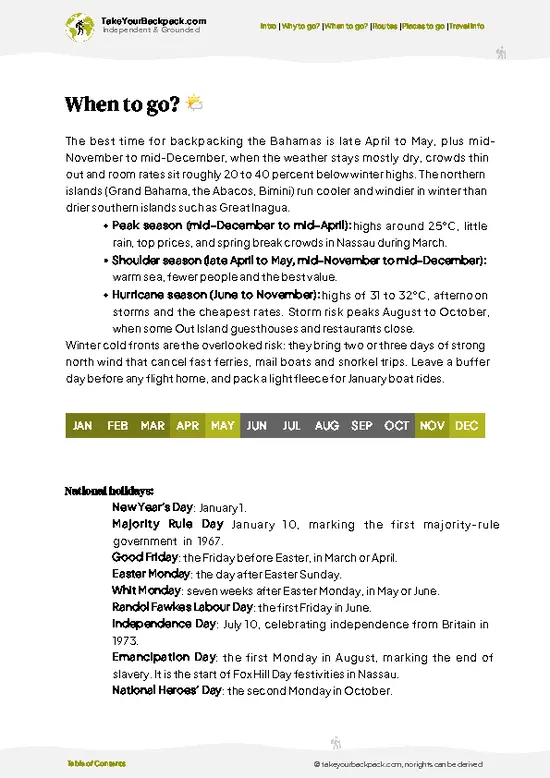
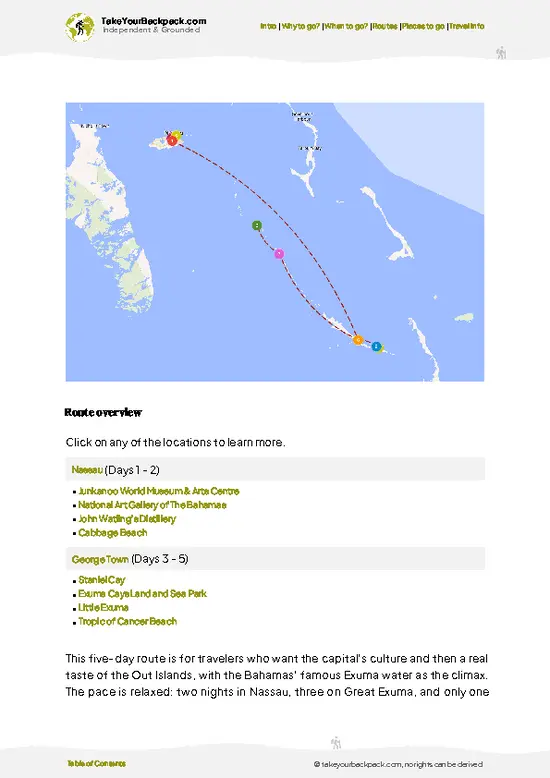
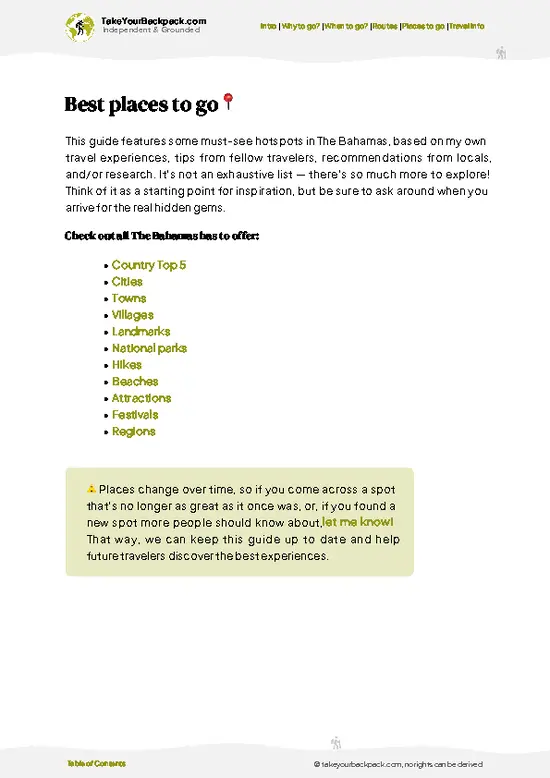
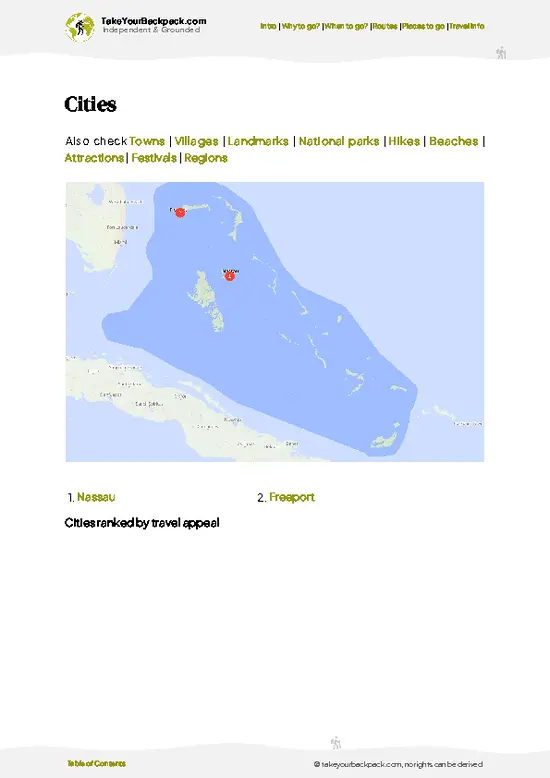
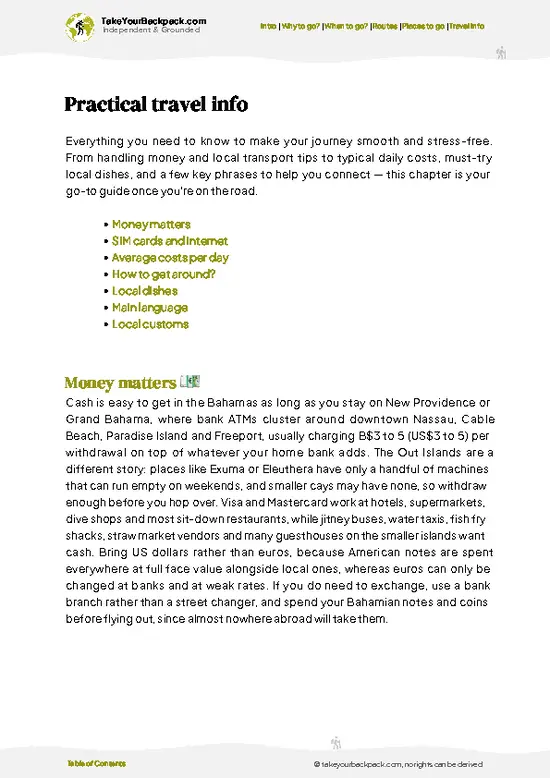
example page 0 from our offline Travel Guide for Bahamas
example page 1 from our offline Travel Guide for Bahamas
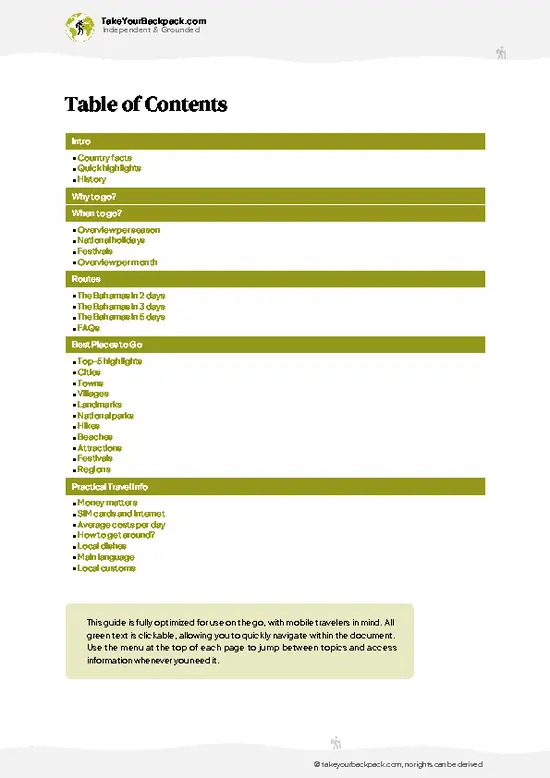
example page 2 from our offline Travel Guide for Bahamas
example page 3 from our offline Travel Guide for Bahamas
example page 4 from our offline Travel Guide for Bahamas
example page 5 from our offline Travel Guide for Bahamas
example page 6 from our offline Travel Guide for Bahamas
example page 7 from our offline Travel Guide for Bahamas
Loading the map 🌍
CLICK TO FILTER
cities
towns
villages
landmarks
national parks
beaches
attractions
festivals
regions
SHOW COUNTRY’S BESTSHOW ALL

✨ Why go?
Ranked #5 region in The Bahamas
Why visitors keep coming back

Bimini works for backpackers because everything sits on two slim islands, so you can swap North Bimini’s beaches and fishing docks for South Bimini’s quiet shores without packing a bag twice. The Gulf Stream pushes deep blue water close to land, so snorkeling, diving and sportfishing start minutes from the dock. Slow travel suits it: you can walk the main road, chat with captains at the marinas, and rent a cart for the beach side. Culture and nature overlap here. Local conch shacks sit beside the water, and the fishing heritage that drew Hemingway still shapes daily life. The short hop from Florida also makes Bimini an easy add-on to a longer island route, with little fuss and few crowds outside peak weekends.

💡 HighlightsThe experiences that define the visit

  1. Alice Town: the main settlement on North Bimini, where one road runs between docks, bars and pastel houses, and the fishing culture is on show.
  2. Bimini Road: a line of limestone blocks under shallow water off North Bimini, visited by snorkel boat and argued over for decades as a possible ancient structure.
  3. End of the World Bar: a weathered beachside bar in Alice Town, covered in business cards and graffiti, known for cold drinks and local characters.
  4. Bimini Museum: a small local-history stop in Alice Town, useful for the island’s rum-running, fishing and Hemingway era.
  5. Radio Beach: a broad sandy beach on North Bimini’s west side, calm, with shallow water and little development.
  6. Bimini Sands area: quiet southern shoreline near the marina, good for walking and swimming away from the main road.
  7. Sapona
… read more 👉
  1. Alice Town: the main settlement on North Bimini, where one road runs between docks, bars and pastel houses, and the fishing culture is on show.
  2. Bimini Road: a line of limestone blocks under shallow water off North Bimini, visited by snorkel boat and argued over for decades as a possible ancient structure.
  3. End of the World Bar: a weathered beachside bar in Alice Town, covered in business cards and graffiti, known for cold drinks and local characters.
  4. Bimini Museum: a small local-history stop in Alice Town, useful for the island’s rum-running, fishing and Hemingway era.
  5. Radio Beach: a broad sandy beach on North Bimini’s west side, calm, with shallow water and little development.
  6. Bimini Sands area: quiet southern shoreline near the marina, good for walking and swimming away from the main road.
  7. Sapona Shipwreck: a concrete ship from the early twentieth century, broken in shallow water, popular for snorkeling and photos.
  8. Healing Hole: a freshwater-fed pool on the island interior, locally known and rarely visited, with a strong local reputation for restorative swimming.
  9. Bimini Nature Trail and mangroves: kayak or paddle the tidal creeks to see rays, juvenile fish and herons in sheltered water.
  10. Shark dive and snorkel sites: local operators run trips to shallow sites where lemon sharks gather, a lesser-known draw for wildlife fans.
Bimini rewards a day that pairs Radio Beach in the morning with the End of the World Bar by late afternoon.
Spotted a mistake or missing something? Contact us.

⌛️ 5 days5-day itinerary for Bimini

A slow island day sets the tone, because Bimini’s single road and small footprint mean you walk, ride a cart or take a boat, and nothing is far.
Day 1: Alice Town: Arrive, drop your bag and walk the main street. The settlement is compact, so you see the docks, the museum and the End of the World Bar before dinner. Eating at a local conch spot gives you a feel for the community before you head farther.
Day 2: Radio Beach: Rent a golf cart and head to the west-side beach early, when the water is calm and the sand empty. The cart is the practical way to cover the island, since taxis add up and walking in midday heat tires you out. Return by late afternoon for a swim and a rest.
Day 3: Bimini Road and Sapona: Book a boat trip to snorkel the underwater limestone line and the concrete wreck. Boats … read more 👉
A slow island day sets the tone, because Bimini’s single road and small footprint mean you walk, ride a cart or take a boat, and nothing is far.
Day 1: Alice Town: Arrive, drop your bag and walk the main street. The settlement is compact, so you see the docks, the museum and the End of the World Bar before dinner. Eating at a local conch spot gives you a feel for the community before you head farther.
Day 2: Radio Beach: Rent a golf cart and head to the west-side beach early, when the water is calm and the sand empty. The cart is the practical way to cover the island, since taxis add up and walking in midday heat tires you out. Return by late afternoon for a swim and a rest.
Day 3: Bimini Road and Sapona: Book a boat trip to snorkel the underwater limestone line and the concrete wreck. Boats depart from the main docks, so you do not need to move your base. Weather decides sailings, so keep this day flexible.
Day 4: Mangroves and South Bimini: Paddle the tidal creeks in the morning, then cross to the quieter southern side. The detour to the Healing Hole adds a local, little-visited stop without breaking your base, since a cart or guide covers it in a few hours.
Day 5: Shark snorkel: Spend your last full day on the water with a shark snorkel trip. If one day justifies the whole trip, this is it: clear shallow water, lemon sharks gliding below, and a boat ride home with the island glowing ahead.

🌤️ When to go?Seasonal considerations and timing

  • Winter (December to April): Dry, breezy days of 24 to 28°C (75 to 82°F) make this the comfortable window, with nights near 18 to 21°C (64 to 70°F). Daylight runs about 10.5 to 12 hours. Rooms and boat charters cost the most, and weekends fill with Florida visitors.
  • Spring (May to June): Water warms to 27°C (81°F) or more and the fishing is superb. Days reach 28 to 31°C (82 to 88°F), and the Big Game Fishing tournaments bring crowds in some weeks.
  • Summer (July to September): Hot and humid at 31 to 33°C (88 to 91°F), with afternoon downpours and long days of about 13 hours. Prices soften, but mosquitoes and heat are real.
  • Hurricane Peak (August to October): Storms can shut ferries and flights for days. Bargains appear, and so does risk.
  • Fall (November): Humidity eases, crowds are thin, and rates
… read more 👉
  • Winter (December to April): Dry, breezy days of 24 to 28°C (75 to 82°F) make this the comfortable window, with nights near 18 to 21°C (64 to 70°F). Daylight runs about 10.5 to 12 hours. Rooms and boat charters cost the most, and weekends fill with Florida visitors.
  • Spring (May to June): Water warms to 27°C (81°F) or more and the fishing is superb. Days reach 28 to 31°C (82 to 88°F), and the Big Game Fishing tournaments bring crowds in some weeks.
  • Summer (July to September): Hot and humid at 31 to 33°C (88 to 91°F), with afternoon downpours and long days of about 13 hours. Prices soften, but mosquitoes and heat are real.
  • Hurricane Peak (August to October): Storms can shut ferries and flights for days. Bargains appear, and so does risk.
  • Fall (November): Humidity eases, crowds are thin, and rates sit below winter levels.
Book Bimini for a midweek stay in March or November and you get the calm water with lower rates.


source: climatestotravel.comJANJanuary: excellent for travelingFEBFebruary: excellent for travelingMARMarch: excellent for travelingAPRApril: excellent for travelingMAYMay: highly recommended for travelingJUNJune: fair for travelingJULJuly: fair for travelingAUGAugust: fair for travelingSEPSeptember: below average for travelingOCTOctober: fair for travelingNOVNovember: good for travelingDECDecember: excellent for traveling
when-to-go

✈️ The backpacker research shortcutThe Bahamas Travel Guide

An offline-friendly backpacking guide with optimized travel routes, ranked highlights, transport advice, and the best areas to stay.
example page 0 from our offline Travel Guide for Bahamas
example page 1 from our offline Travel Guide for Bahamas
example page 2 from our offline Travel Guide for Bahamas
example page 3 from our offline Travel Guide for Bahamas
example page 4 from our offline Travel Guide for Bahamas
example page 5 from our offline Travel Guide for Bahamas
example page 6 from our offline Travel Guide for Bahamas
example page 7 from our offline Travel Guide for Bahamas
The digital guide (185 pages) contains:
✅ 50 highlights, ranked by travel appeal
✅ Optimized 2, 3 & 5-day travel routes
✅ Cities, national parks, landmarks, beaches
✅ How to get around
✅ Offline-friendly for travel without Wi-Fi
👉 Click to see all 30+ guide features

📅 Plan smarter in minutes, not weeks
✅ Month by month travel advice
✅ Festivals & national holidays
✅ Budget expectations

🗺️ Go to the right places, skip the overrated ones
✅ Honest pros & cons of destinations
✅ Top hikes, parks & viewpoints
✅ Lesser-known places most travelers miss
✅ Clear “worth it vs skip it” guidance

🛏️ Travel smoothly without rookie mistakes
✅ Best areas to stay
✅ Transport systems explained simply
✅ Common scams & safety advice
✅ SIM cards, money & practical tips

🌍 Understand the country, not just visit it
✅ Culture & traditions
✅ Local customs
✅ Festivals worth planning around
✅ Traveler-friendly historical context
✅ Insights that make places more meaningful

📱 Built for real travel conditions
✅ Fully downloadable PDF
✅ Works completely offline
✅ Optimized for phone use
✅ Useful in remote areas & buses
✅ Everything in one place
Stop searching, start planning
Get instant access to your full guide. 30‑day money-back guarantee.
+ Add another guide for just

By proceeding you agree to our terms.
Sent to your inbox immediately after payment • 100% Secure Checkout
Best Backpacking Travel Advisor 2025 tourism awardBest Backpacking
Travel Advisor
2025
What others say about Take Your Backpack Guides:
⭐⭐⭐⭐⭐
Fantastic, amazing amount of information!
⭐⭐⭐⭐⭐
My goodness this is amazing, it's what I've been looking for hats off too you!
⭐⭐⭐⭐⭐
I think this is absolutely BRILLIANT
⭐⭐⭐⭐
Very complete and informative. It's still missing places, but I gotta to commend you
⭐⭐⭐⭐⭐
This is truly amazing, thank you, can't wait to explore it with my kids!
⭐⭐⭐⭐⭐
Awesome resource, thank you!
⭐⭐⭐⭐⭐
This is amazing! Can't wait to explore the ones I haven't seen
⭐⭐⭐⭐
I love this! Well done, great idea.
⭐⭐⭐⭐⭐
Thanks for taking the time to make this gem!
⭐⭐⭐⭐⭐
This might be the best website I've ever seen.
⭐⭐⭐⭐⭐
Congratulations, and thank you so much for your work; it's incredibly valuable.
⭐⭐⭐⭐
In all seriousness I think you did a great job pointing out the important spots
⭐⭐⭐⭐⭐
10/10 very good
⭐⭐⭐⭐⭐
As someone who's only just starting to visit regularly this is awesome, thank you.
⭐⭐⭐⭐
Thank you very much! I'm going to visit my dad, it's going to be very useful!
⭐⭐⭐⭐⭐
This is really cool! We'll be travelling for the first time and this definitely come in handy.
⭐⭐⭐⭐⭐
You are now our minister of culture, congratulations 👨‍💼
⭐⭐⭐⭐⭐
Just wanted to tell you that this is a pearl! Going to follow your recommendations.
⭐⭐⭐⭐⭐
This is so cool. I'll definitely be using the resource for my travels soon.
⭐⭐⭐⭐⭐
This is very impressive! Good work.
⭐⭐⭐⭐⭐
This is an amazing and informative site. Very well done!

🛏️ Where to stay?Best areas to stay in The Bahamas

Alice Town on North Bimini is where most backpackers should stay, because it holds the island’s ferry docks, bars, dive shops and the cheapest places to sleep within a ten minute walk. It is also the most social corner, with a small crowd of anglers, divers and sailors that mixes easily at the harbor in the evenings. Solo travelers find it safe and easy by daylight, and the lanes after dark are calm if you stick to the main road.

Bailey Town, a 15 to 20 minute walk north, is quieter and more residential. It suits anyone who wants a local feel, early nights and a real neighborhood rhythm, with … read more 👉
Alice Town on North Bimini is where most backpackers should stay, because it holds the island’s ferry docks, bars, dive shops and the cheapest places to sleep within a ten minute walk. It is also the most social corner, with a small crowd of anglers, divers and sailors that mixes easily at the harbor in the evenings. Solo travelers find it safe and easy by daylight, and the lanes after dark are calm if you stick to the main road.

Bailey Town, a 15 to 20 minute walk north, is quieter and more residential. It suits anyone who wants a local feel, early nights and a real neighborhood rhythm, with small shops and cookshops close by, though the nightlife is thin and you will walk back to Alice Town for company.

South Bimini is calmer again, reached by a short water taxi, and works for one night if you want the quiet, the mangroves and the flats. It has fewer services, so most budget travelers choose Alice Town as the base and visit the south on a day.

🚌 Getting aroundGetting around like a local

The main strip on North Bimini, Alice Town to Bailey Town, is walkable end to end in about 30 to 40 minutes, and walking stops making sense once you head toward the north end airport or the beaches past the road’s open stretches in midday heat. Most backpackers walk, rent a bike or golf cart, and use boats to cross the harbor. Everything runs on island time, so reliability is decent but loose.
  • Walking: Free, and the road is one lane of traffic with no sidewalks in places, so I’d go early morning or after 4 pm when the sun drops. Locals walk the shoulder facing oncoming traffic, and you should too.
  • Golf cart: Roughly US$50 to 80 a day, because cars are impractical on a 7 mile (11 km) long island with one main road. Split it among three or four people and book a day ahead in winter, since the
… read more 👉
The main strip on North Bimini, Alice Town to Bailey Town, is walkable end to end in about 30 to 40 minutes, and walking stops making sense once you head toward the north end airport or the beaches past the road’s open stretches in midday heat. Most backpackers walk, rent a bike or golf cart, and use boats to cross the harbor. Everything runs on island time, so reliability is decent but loose.
  • Walking: Free, and the road is one lane of traffic with no sidewalks in places, so I’d go early morning or after 4 pm when the sun drops. Locals walk the shoulder facing oncoming traffic, and you should too.
  • Golf cart: Roughly US$50 to 80 a day, because cars are impractical on a 7 mile (11 km) long island with one main road. Split it among three or four people and book a day ahead in winter, since the supply is small.
  • Bicycle: About US$15 to 25 a day when a rental shop or guesthouse has them. It suits the flat stretch from Alice Town to Bailey Town better than a cart, and you can stop where you like.
  • Water taxi: US$3 to 10 for a short hop between North and South Bimini, a 5 minute crossing. It runs on demand rather than a timetable, so catch it from the dock in the morning, when the boatmen are most likely to be around, or flag one down.
  • Ferry or flight from Florida: Fast ferries from Fort Lauderdale take about 2 hours, and cost about US$100 to 180 return. Flights from Fort Lauderdale or Miami take about 30 minutes, usually US$150 to 300 return. Ferry seats sell out on weekends, which is why seasoned travelers book midweek.
Carry some small cash for boatmen and carts, because few of them take cards, and ask at your guesthouse before you walk anywhere, since they know which boat is going where.

🚌 Day tripsBest day trips from Bimini

Bimini, a laid-back village in The Bahamas, is your perfect launchpad for unforgettable day trips. The island’s charm lies in its simplicity, making it easy to explore the surrounding beauty without the hassle of overnight stays.

Trip to the Sapona Wreck
Just a short boat ride from Bimini, the Sapona Wreck is a must-see. This sunken concrete ship, once a rum-running vessel, now serves as an artificial reef teeming with colorful fish. The trip takes about 30 minutes, and you can snag a round-trip boat ticket for around $40. Bring your snorkel gear to explore the wreck and the vibrant marine life that calls it home. The best time to visit is early morning when the water is calm and visibility is at its peak. A common mistake? Forgetting to apply reef-safe sunscreen; you’ll want to protect … read more 👉
Bimini, a laid-back village in The Bahamas, is your perfect launchpad for unforgettable day trips. The island’s charm lies in its simplicity, making it easy to explore the surrounding beauty without the hassle of overnight stays.

Trip to the Sapona Wreck
Just a short boat ride from Bimini, the Sapona Wreck is a must-see. This sunken concrete ship, once a rum-running vessel, now serves as an artificial reef teeming with colorful fish. The trip takes about 30 minutes, and you can snag a round-trip boat ticket for around $40. Bring your snorkel gear to explore the wreck and the vibrant marine life that calls it home. The best time to visit is early morning when the water is calm and visibility is at its peak. A common mistake? Forgetting to apply reef-safe sunscreen; you’ll want to protect both your skin and the ocean.

Day at the Blue Hole
The Bimini Blue Hole, a natural underwater sinkhole, is a diver’s paradise. It’s about a 20-minute boat ride from the village. For around $50, you can join a guided tour that includes gear rental. The deep blue water contrasts sharply with the surrounding shallows, creating a surreal experience. Dive in during the late morning when the sun illuminates the water, revealing the stunning depths. Many first-timers underestimate the current; it can be stronger than it looks, so stay close to your guide.

Visit to Honeymoon Harbor
Honeymoon Harbor is a secluded spot known for its soft sands and crystal-clear waters. A 30-minute boat ride will get you there, and you can find trips for about $30. This is the perfect place to relax, swim, or even spot some friendly stingrays. Aim for a weekday visit to avoid crowds and enjoy a more intimate experience. One mistake many make is not bringing enough water; it’s easy to get dehydrated under the sun.

Exploring the Bimini Nature Trail
For those who prefer land over sea, the Bimini Nature Trail offers a unique glimpse into the island’s flora and fauna. It’s a short walk from the village, taking about 15 minutes to reach. Free to explore, this trail winds through mangroves and offers birdwatching opportunities. Early mornings are best for spotting wildlife and enjoying cooler temperatures. A common oversight is not wearing sturdy shoes; the trail can be uneven and muddy.

🍲 FoodEating & Drinking in Bimini

Start with conch, the island’s anchor dish, served as sweet-sharp conch salad chopped fresh with lime, onion and hot pepper, or cracked and fried into crunchy fritters. Grilled snapper and lobster (in season, August to March) come off the fire smoky and salty, often with peas and rice and a scoop of mac and cheese baked until the edges crisp. Bimini bread, a soft, slightly sweet loaf, is the thing to buy warm from a local baker at breakfast.

For drinks, Kalik beer is the default, and rum punch and coconut water follow close behind. A Switcha, the island’s lime drink, cools you down on a hot afternoon.

Backpackers eat at cookshops, dockside bars and small takeaway counters in Alice Town and Bailey Town, where plates often run US$12 to 25. Bars on the water are the best places to fall into … read more 👉
Start with conch, the island’s anchor dish, served as sweet-sharp conch salad chopped fresh with lime, onion and hot pepper, or cracked and fried into crunchy fritters. Grilled snapper and lobster (in season, August to March) come off the fire smoky and salty, often with peas and rice and a scoop of mac and cheese baked until the edges crisp. Bimini bread, a soft, slightly sweet loaf, is the thing to buy warm from a local baker at breakfast.

For drinks, Kalik beer is the default, and rum punch and coconut water follow close behind. A Switcha, the island’s lime drink, cools you down on a hot afternoon.

Backpackers eat at cookshops, dockside bars and small takeaway counters in Alice Town and Bailey Town, where plates often run US$12 to 25. Bars on the water are the best places to fall into conversation with fishing crews.

Greet people when you walk in, and expect service at an unhurried pace. Plates can take 30 to 45 minutes when a kitchen is busy, so order early, bring cash, and tip 15 to 20 percent if service is not already included.

FAQCommon questions from travelers

Two to three days covers Bimini well for most backpackers. Spend one day on North Bimini’s Alice Town and Bailey Town, another on snorkeling or fishing, and a third on the beaches or a crossing to South Bimini. Add a fourth day if you plan a dive trip or want to join a boat for the nearby Bimini Road site.
Bimini works without a car, because the main road is short and everything sits close. You can walk the Alice Town to Bailey Town stretch in 30 to 40 minutes, rent a golf cart for roughly US$50 to 80 a day, or take a water taxi for US$3 to 10 to reach South Bimini. Bikes cost about US$15 to 25 a day when available.
Bimini is known for big game fishing, clear flats and its closeness to Florida, just about 50 miles (80 km) from Miami. Ernest Hemingway fished and wrote here in the 1930s, and the island draws divers for hammerheads in winter and for the Bimini Road rock formation. Conch salad and Bimini bread are local food staples you should try.
⚠️ Things can change over time, so always validate details locally before you go.

Other Bahamian regions near Bimini

Explore more nearby:

  • Berry Islands—Bonefish flats, marlin fishing, blue hole, empty beaches| 158 km away
  • Andros Island—Mangrove creeks, barrier reef, bonefish flats, inland blue holes| 200 km away
  • Abaco Islands—Elbow Cay lighthouse, golf-cart cays, boat-building yards, Sunday pig roast| 225 km away

💡 Not sure where to go next?
Create a personalized itinerary for The Bahamas including Bimini and the places that fit your trip.

Generate my itinerary

👉 Discover all regions

Or checkout all The Bahamas has to offer (think cities, towns, villages, national parks, hikes, beaches, festivals)
Country photo of The Bahamas

We 💚 feedbackParting advice and final tips

Bimini trips go wrong when travelers treat it like a Florida day trip and arrive without a bed or a cart reserved. Do both ahead, and plan at least two nights so weather can’t cancel your boat day. I would bring cash, reef-safe sunscreen and a loose schedule, then let the captains decide the best water.

✍️ Help improve this page!
The information on this page is based on in-depth research, insights shared by experienced travelers, and feedback from the local travel community in The Bahamas. While every effort is made to keep the information accurate and current, conditions can change — so if you spot anything incorrect or outdated, please get in touch.


🙋‍♂️ Give feedback

👋 Meet the founderWho’s Behind Take Your Backpack?

Johan, backpacker and founder of TakeYourBackpackHi, I’m Johan (Netherlands 🇳🇱), the creator of TakeYourBackpack. Over the past 3 decades, I’ve backpacked through 90+ countries across six continents, gaining extensive experience with independent travel, long-term trips, and overland routes.

This site is built on a combination of firsthand travel experience and carefully curated insights from other backpackers. Many guides are based on places I’ve personally visited, while others bring together tips, observations, and practical advice shared by trusted travelers I’ve met along the way.

The goal is to provide realistic, experience-driven guidance — not generic itineraries — so you can explore destinations with better context, clearer expectations, and more confidence.