×

The Bahamas🇧🇸 | national parksCrab Replenishment Reserveland crab habitat, mangrove flats, seasonal migration | things to do and best time to go

Explore Blue Holes National ParkExplore North and South Marine Parks

Backpacking in Crab Replenishment Reserve
👌 Worth visitingnational park ranked #5
By Johan Kruseman 🇳🇱 | Updated September 4, 2026

Most online blurbs make Crab Replenishment Reserve sound like a casual beach stop; in reality, it’s a tightly managed marine and coastal research zone where recreation is secondary to protection. It sits off Andros in The Bahamas, within the broader Andros reef and blue hole system. For a backpacker, it’s more about quiet observation than big adventure: limited trails, low-key shoreline walks, mangroves, and good chances to spot crabs, birds, and marine life if you’re patient. Access can be awkward, with boat logistics and sometimes informal fees rather than a clear national-park-style gate. Don’t expect camping, hostels, or crowds; you base yourself elsewhere on Andros. Compared with Exuma Cays Land and Sea Park or Lucayan National Park in The Bahamas, it’s less polished, less scenic on first glance, but more raw and research-focused.

Discover everything you want to know in the 📖 The Bahamas Travel Guide.


Get your Bahamas guide
58 ranked highlights, routes & tips, works offline (220 pages)
Loading the map 🌍
CLICK TO FILTER
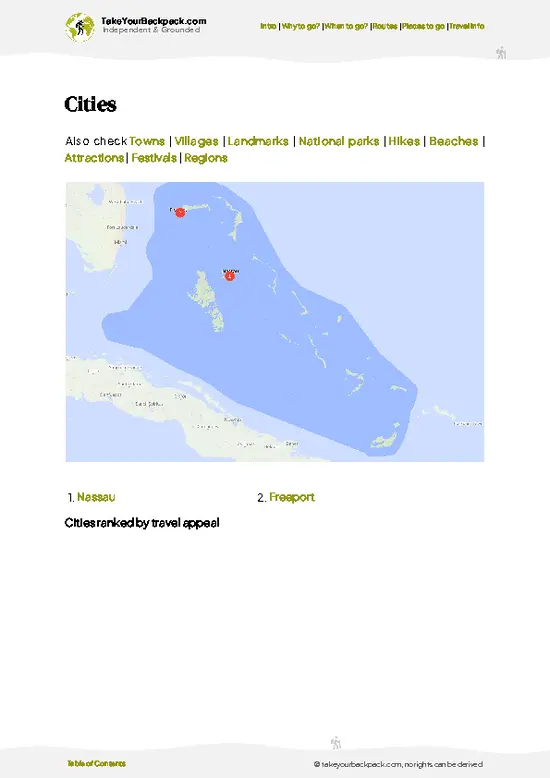
cities
towns
villages
landmarks
national parks
hikes
beaches
attractions
festivals
regions
SHOW COUNTRY’S BESTSHOW ALL

✨ Why go?
Ranked #5 national park in The Bahamas
What makes it a must-see national park

Backpackers flock to the Crab Replenishment Reserve in The Bahamas for its unique blend of independent exploration and budget-friendly options. The park offers campsites and nearby hostels that keep costs low, allowing you to stretch your budget for experiences that matter.

The trail variety is a major draw, catering to both casual walkers and seasoned hikers. You can wander through mangroves or hit the coastal paths, all while soaking in the local wildlife. This park is particularly suited for self-guided travelers; you won’t feel pressured to join a tour. Instead, you can set your own pace, discovering hidden spots and enjoying the solitude.

However, be mindful of the weather and insect activity—these can be game-changers for your trip. Pack accordingly to keep your energy up for the moments that truly count.
Want to include Crab Replenishment Reserve in your The Bahamas route?
Create a personalized The Bahamas itinerary that includes Crab Replenishment Reserve and the places that fit your trip — based on your travel style, budget, and available time. Get your route in seconds.

Generate my trip

💡 HighlightsTop highlights of Crab Replenishment Reserve

  • Mass Land Crab Migration — One of the park’s signature spectacles: thousands of red and yellow land crabs streaming across the forest floor toward the shoreline to spawn. It’s noisy, a little chaotic, and unforgettable; go during the rainy season at dawn and watch trails of crabs carve the landscape (and please stay on paths so you don’t squash the show).
  • Mangrove Boardwalk & Observation Platform — An elevated wooden trail that threads through dense mangroves, perfect for seeing juvenile fish, fiddler crabs, and nesting herons without getting your feet wet. The platform gives surprisingly panoramic views and is the best place for quiet wildlife watching and photos in the heat of the day.
  • Glass-Bottom Cove Snorkel — A sheltered cove with exceptionally clear water and shallow coral ledges
read more 👉
  • Mass Land Crab Migration — One of the park’s signature spectacles: thousands of red and yellow land crabs streaming across the forest floor toward the shoreline to spawn. It’s noisy, a little chaotic, and unforgettable; go during the rainy season at dawn and watch trails of crabs carve the landscape (and please stay on paths so you don’t squash the show).
  • Mangrove Boardwalk & Observation Platform — An elevated wooden trail that threads through dense mangroves, perfect for seeing juvenile fish, fiddler crabs, and nesting herons without getting your feet wet. The platform gives surprisingly panoramic views and is the best place for quiet wildlife watching and photos in the heat of the day.
  • Glass-Bottom Cove Snorkel — A sheltered cove with exceptionally clear water and shallow coral ledges where you can spot parrotfish, juvenile grouper, and seahorses from a short swim. It’s easy access from a sandy beach, so even tired hikers can slip into the water and see the reef life up close.
  • Sand Ridge Lookout (Dune Observatory) — A short climb up coastal dunes rewarded with wide, cinematic views of tidal flats and open ocean. Great at sunrise and sunset for light on the flats, and you’ll often see turtle tracks and coastal wildflowers that cling to the wind-scoured sand.
  • Salt Flat Birding Flats — Broad, shallow flats exposed at low tide that attract flocks of shorebirds and wading species: stilts, spoonbills, turnstones and the occasional terns. Bring binoculars and visit at low tide for the best feeding action and migrant species in spring and fall.
  • Coastal Trail (Salt Flat Loop) — A well-marked loop that moves through dry coppice, coastal scrub, and wetlands in under three hours. It’s compact but incredibly varied: expect different bird communities, crab burrows, interpretive signs, and a couple of short sandy scrambles that feel like proper hiking without hardcore effort.
  • Nighttime Bioluminescent Lagoon — On moonless nights the lagoon lights up with bioluminescent plankton when you paddle through it—an eerie, magical glow that highlights the park’s nighttime critters. Best experienced quietly by kayak or guided paddle to avoid disturbing the delicate ecosystem.
Spotted a mistake or missing something? Contact us.

Things to do near Crab Replenishment Reserve

Ratings based on Tripadvisor reviews. When you book through this link, you support our work at no extra cost to you.

🌤️ When to go?Choosing the right time of year


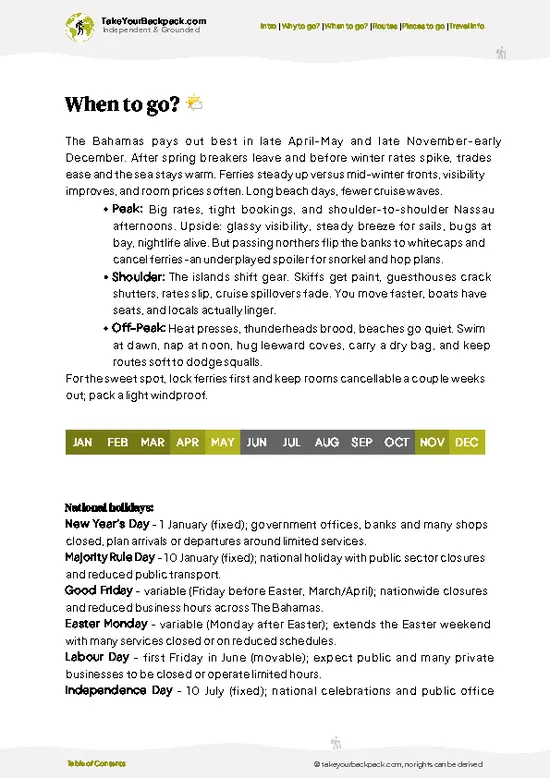
  • Weather: The Bahamas’ dry season from November to April offers the most reliable weather—less humidity, minimal rain, and lower hurricane risk. Avoid summer months when storms and heavy rains can disrupt plans.

  • Temperature: Expect comfortable highs around 24-28°C (75-82°F) in winter, climbing to 30-33°C (86-91°F) in summer. Nights stay mild year-round, but summer heat and humidity can drain your energy fast.

  • Daylight Hours: Daylight stretches about 10.5 to 12.5 hours annually, peaking in June. Longer days in spring and early summer mean more hiking time, but balance that with weather risks.

  • Crowds: Peak tourist season aligns with the dry months, especially December through March. Expect more visitors and higher prices then. Shoulder seasons offer quieter trails and better deals.

read more 👉

  • Weather: The Bahamas’ dry season from November to April offers the most reliable weather—less humidity, minimal rain, and lower hurricane risk. Avoid summer months when storms and heavy rains can disrupt plans.

  • Temperature: Expect comfortable highs around 24-28°C (75-82°F) in winter, climbing to 30-33°C (86-91°F) in summer. Nights stay mild year-round, but summer heat and humidity can drain your energy fast.

  • Daylight Hours: Daylight stretches about 10.5 to 12.5 hours annually, peaking in June. Longer days in spring and early summer mean more hiking time, but balance that with weather risks.

  • Crowds: Peak tourist season aligns with the dry months, especially December through March. Expect more visitors and higher prices then. Shoulder seasons offer quieter trails and better deals.

  • Seasonal Activities: Winter months bring clearer waters for snorkeling and diving, while spring and fall are ideal for birdwatching and spotting marine life during migration periods.

  • Price Fluctuations: Accommodation and transport costs spike in peak season. Booking in shoulder months can save you a significant chunk without sacrificing much on weather or experience quality.


Pro-tip: Aim for late spring or early fall to dodge crowds and high prices while still enjoying decent weather and daylight—perfect for stretching your budget and your legs.


source: climatestotravel.comJANJanuary: excellent for travelingFEBFebruary: excellent for travelingMARMarch: excellent for travelingAPRApril: highly recommended for travelingMAYMay: highly recommended for travelingJUNJune: fair for travelingJULJuly: below average for travelingAUGAugust: below average for travelingSEPSeptember: fair for travelingOCTOctober: highly recommended for travelingNOVNovember: highly recommended for travelingDECDecember: excellent for traveling
bahamas-national-park-crab-replenishment-reserve
© Google |

✈️ The backpacker research shortcutThe Bahamas Travel Guide

An offline-friendly backpacking guide with optimized travel routes, ranked highlights, transport advice, and the best areas to stay.
example page 0 from our offline Travel Guide for Bahamas
example page 1 from our offline Travel Guide for Bahamas
example page 2 from our offline Travel Guide for Bahamas
example page 3 from our offline Travel Guide for Bahamas
example page 4 from our offline Travel Guide for Bahamas
example page 5 from our offline Travel Guide for Bahamas
example page 6 from our offline Travel Guide for Bahamas
example page 7 from our offline Travel Guide for Bahamas
The digital guide (220 pages) contains:
58 highlights, ranked by travel appeal
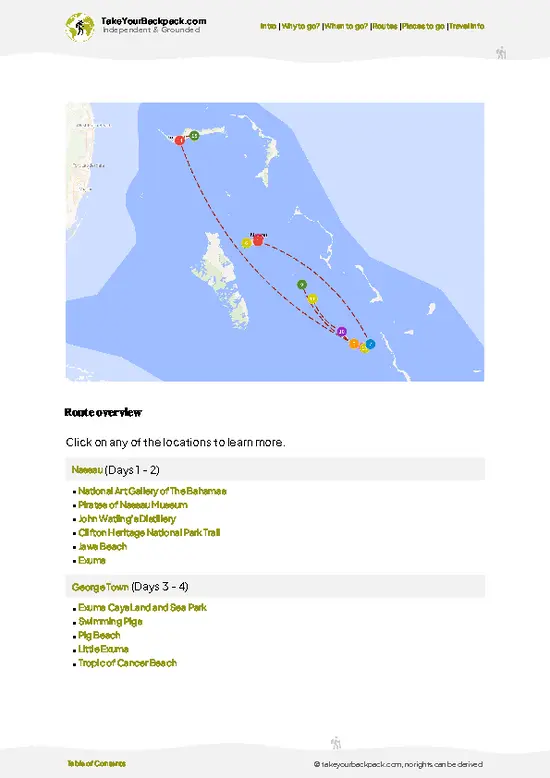
Optimized 2, 3 & 5-day travel routes
Cities, national parks, landmarks, beaches
How to get around
Offline-friendly for travel without Wi-Fi
👉 Click to see all 30+ guide features

📅 Plan smarter in minutes, not weeks
Month by month travel advice
Festivals & national holidays
Budget expectations

🗺️ Go to the right places, skip the overrated ones
Honest pros & cons of destinations
Top hikes, parks & viewpoints
Lesser-known places most travelers miss
Clear “worth it vs skip it” guidance

🛏️ Travel smoothly without rookie mistakes
Best areas to stay
Transport systems explained simply
Common scams & safety advice
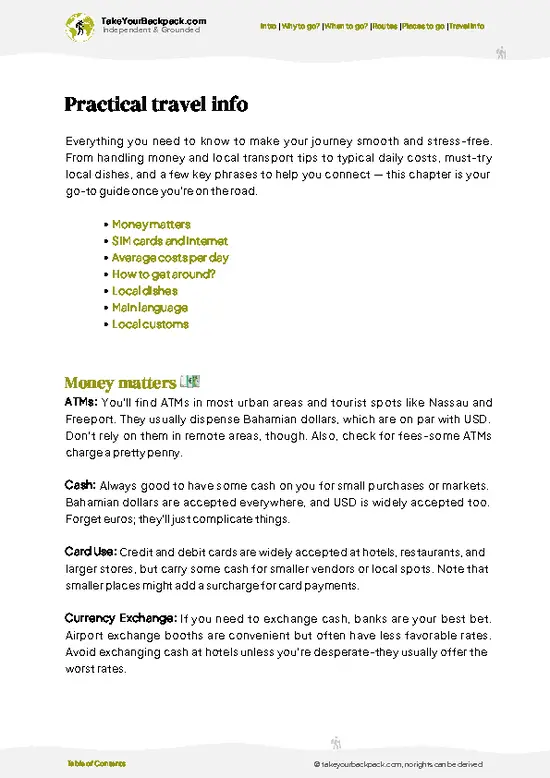
SIM cards, money & practical tips

🌍 Understand the country, not just visit it
Culture & traditions
Local customs
Festivals worth planning around
Traveler-friendly historical context
Insights that make places more meaningful

📱 Built for real travel conditions
Fully downloadable PDF
Works completely offline
Optimized for phone use
Useful in remote areas & buses
Everything in one place
Save weeks of stressful planning
Get instant access to your full guide. 30‑day money-back guarantee.
+ Add another guide for just US$7.80

By proceeding you agree to our terms.
Sent to your inbox immediately after payment • 100% Secure Checkout
Best Backpacking Travel Advisor 2025 tourism awardBest Backpacking
Travel Advisor
2025
What others say about Take Your Backpack Guides:
⭐⭐⭐⭐⭐
Fantastic, amazing amount of information!
⭐⭐⭐⭐⭐
My goodness this is amazing, it's what I've been looking for hats off too you!
⭐⭐⭐⭐⭐
I think this is absolutely BRILLIANT
⭐⭐⭐⭐
Very complete and informative. It's still missing places, but I gotta to commend you
⭐⭐⭐⭐⭐
This is truly amazing, thank you, can't wait to explore it with my kids!
⭐⭐⭐⭐⭐
Awesome resource, thank you!
⭐⭐⭐⭐⭐
This is amazing! Can't wait to explore the ones I haven't seen
⭐⭐⭐⭐
I love this! Well done, great idea.
⭐⭐⭐⭐⭐
Thanks for taking the time to make this gem!
⭐⭐⭐⭐⭐
This might be the best website I've ever seen.
⭐⭐⭐⭐⭐
Congratulations, and thank you so much for your work; it's incredibly valuable.
⭐⭐⭐⭐
In all seriousness I think you did a great job pointing out the important spots
⭐⭐⭐⭐⭐
10/10 very good
⭐⭐⭐⭐⭐
As someone who's only just starting to visit regularly this is awesome, thank you.
⭐⭐⭐⭐
Thank you very much! I'm going to visit my dad, it's going to be very useful!
⭐⭐⭐⭐⭐
This is really cool! We'll be travelling for the first time and this definitely come in handy.
⭐⭐⭐⭐⭐
You are now our minister of culture, congratulations 👨‍💼
⭐⭐⭐⭐⭐
Just wanted to tell you that this is a pearl! Going to follow your recommendations.
⭐⭐⭐⭐⭐
This is so cool. I'll definitely be using the resource for my travels soon.
⭐⭐⭐⭐⭐
This is very impressive! Good work.
⭐⭐⭐⭐⭐
This is an amazing and informative site. Very well done!

🛏️ Where to stay?Where staying makes the most sense

For backpackers heading to the Crab Replenishment Reserve in The Bahamas, options are limited but solid. There aren’t accommodations directly inside the reserve, so you’ll need to look at nearby towns.

The closest is Andros Town, about a 30-minute drive away. Here, you’ll find budget-friendly guesthouses and small hotels. Places like The Cove offer a cozy atmosphere without breaking the bank. Expect basic amenities and a chance to mingle with locals.

Another option is Fresh Creek, which has a few charming inns. These spots often provide a more authentic experience, with the chance to sample … read more 👉
For backpackers heading to the Crab Replenishment Reserve in The Bahamas, options are limited but solid. There aren’t accommodations directly inside the reserve, so you’ll need to look at nearby towns.

The closest is Andros Town, about a 30-minute drive away. Here, you’ll find budget-friendly guesthouses and small hotels. Places like The Cove offer a cozy atmosphere without breaking the bank. Expect basic amenities and a chance to mingle with locals.

Another option is Fresh Creek, which has a few charming inns. These spots often provide a more authentic experience, with the chance to sample local cuisine.

Keep in mind that transportation can be tricky. Renting a bike or a car is advisable to explore the area and reach the reserve. Also, factor in that some accommodations may charge extra for amenities like Wi-Fi or breakfast.

Plan ahead to avoid surprises, and you’ll have more energy and budget for the adventures that await in the reserve.

👛 Costs (as of 4 September 2026)Typical daily expenses

Visiting the Crab Replenishment Reserve in The Bahamas can be a rewarding experience, but it’s essential to be aware of the costs involved to avoid surprises.

Entrance fees for the reserve typically range from $5 to $10 USD per person. This fee grants you access to the park and its facilities. If you’re planning to camp, expect to pay around $20 to $30 USD per night for a campsite.

Guided tours are a popular option, especially for those wanting to learn more about the local ecosystem. These can range from $50 to $150 USD, depending on the length and inclusivity of the tour. Some tours may include equipment rental, which can add another $20 to $50 USD to your budget.

Transportation is another factor. If you’re renting a car, daily rates can vary from $40 to $80 USD. Alternatively, local … read more 👉
Visiting the Crab Replenishment Reserve in The Bahamas can be a rewarding experience, but it’s essential to be aware of the costs involved to avoid surprises.

Entrance fees for the reserve typically range from $5 to $10 USD per person. This fee grants you access to the park and its facilities. If you’re planning to camp, expect to pay around $20 to $30 USD per night for a campsite.

Guided tours are a popular option, especially for those wanting to learn more about the local ecosystem. These can range from $50 to $150 USD, depending on the length and inclusivity of the tour. Some tours may include equipment rental, which can add another $20 to $50 USD to your budget.

Transportation is another factor. If you’re renting a car, daily rates can vary from $40 to $80 USD. Alternatively, local taxis or shuttles may charge around $30 to $60 USD for a round trip from nearby accommodations.

Food costs should also be factored in. Expect to spend about $10 to $20 USD per meal at local eateries. If you’re camping, bringing your own supplies can save you money.

In summary, budgeting around $100 to $300 USD per person for a day trip, including entrance, food, and transportation, is a practical approach. This way, you can focus on enjoying the unique environment without worrying about unexpected expenses.


source: bahamas.com
⚠️ Prices can change and everyone travels differently, so take this as a rough guide. Hope it helps you plan your adventure!

🥾 TrailsWhere to hike in Crab Replenishment Reserve: trails for every level

The Crab Replenishment Reserve in the Bahamas isn’t your typical hiking destination, but it offers some unique opportunities to explore the natural beauty of the area. Picture yourself wandering through lush mangroves and along stunning coastlines. The terrain varies from sandy beaches to more rugged, uneven paths, giving you a nice mix of experiences. Wildlife is abundant here; you might spot colorful birds, crabs scuttling along the shore, and maybe even some playful dolphins in the distance.

There are a couple of designated trails to check out. One notable option is the Coastal Loop Trail:
  • Length:
read more 👉
The Crab Replenishment Reserve in the Bahamas isn’t your typical hiking destination, but it offers some unique opportunities to explore the natural beauty of the area. Picture yourself wandering through lush mangroves and along stunning coastlines. The terrain varies from sandy beaches to more rugged, uneven paths, giving you a nice mix of experiences. Wildlife is abundant here; you might spot colorful birds, crabs scuttling along the shore, and maybe even some playful dolphins in the distance.

There are a couple of designated trails to check out. One notable option is the Coastal Loop Trail:
  • Length: 2 miles
  • Estimated Duration: 1-2 hours
  • Difficulty Level: Easy
  • Key Features: Scenic views of the coastline, birdwatching opportunities
  • Terrain: Sandy paths with some rocky sections

Another option is the Mangrove Path:
  • Length: 1.5 miles
  • Estimated Duration: 1 hour
  • Difficulty Level: Moderate
  • Key Features: Dense mangrove forests, unique ecosystems
  • Terrain: Soft, muddy areas with occasional roots

Getting to the park can be a bit of an adventure. Public transport options might be limited, but you can usually find a taxi or shuttle service from nearby towns. As for crowds, it’s generally not overrun, so you can enjoy a bit of solitude while soaking in the scenery. Entrance fees are usually minimal, making it a budget-friendly outing. Just remember to bring plenty of water and maybe a snack or two to keep your energy up while you explore!
⚠️ Hiking info can sometimes be outdated or inaccurate. Before you hit the trail, check the latest conditions with locals. If you do spot anything that's off, I'd love to hear from you, so I can update it for fellow travelers.

🛡️ SafetyScams, Hazards, and Annoyances

The Bahamas’ Crab Replenishment Reserve offers a straightforward hiking experience, but a few practical tips can enhance your adventure. Weather can shift quickly, so pack a lightweight rain jacket and check forecasts before heading out. The terrain is generally flat, but some trails may have uneven footing or sandy stretches, so sturdy footwear is essential.

Wildlife encounters are rare, but it’s wise to respect their space. If you spot a crab or bird, observe quietly without approaching. Timing matters; early mornings or late afternoons are ideal for cooler temperatures and fewer crowds.

Stay hydrated and pace yourself, especially in the heat. Familiarize yourself with the trail map to avoid getting turned around. With these considerations, you’ll preserve your energy and budget for the moments that truly matter.

FAQTraveler FAQ

2 to 3 days are sufficient to explore Crab Replenishment Reserve thoroughly, allowing time for hiking, wildlife observation, and enjoying the coastal scenery.
Yes, you can visit Crab Replenishment Reserve without a car. Local taxis and shuttle services from nearby towns provide access, and some accommodations offer transport options.
No entrance fee or permit is required to enter Crab Replenishment Reserve, making it accessible for all visitors without additional costs.
⚠️ Things can change over time, so always validate details locally before you go.

Other Bahamian national parks near Crab Replenishment Reserve

Explore more nearby:


💡 Not sure where to go next?
Create a personalized itinerary for The Bahamas including Crab Replenishment Reserve and the places that fit your trip.

Generate my itinerary

👉 Discover all national parks

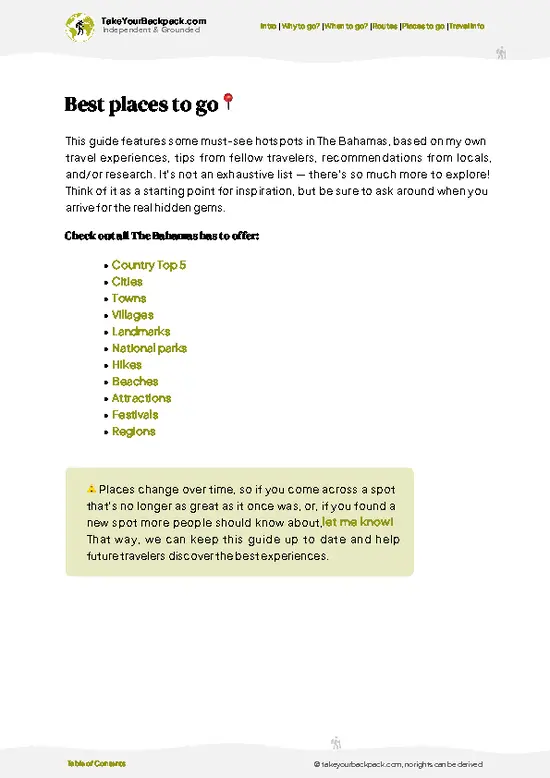
Or checkout all The Bahamas has to offer (think cities, towns, villages, national parks, hikes, beaches, festivals)
Country photo of The Bahamas

We 💚 feedbackIs it worth it?

The vibe at the Crab Replenishment Reserve is laid-back and genuine, a slice of The Bahamas that feels untouched. You’ll be surprised by how close you can get to the crabs—watching them scuttle is oddly mesmerizing. Just a heads-up: the trails can get muddy, so sturdy shoes are a must. Embrace the slow pace; it’s all about soaking in the natural beauty without the tourist rush. Trust me, it’s worth every step.

✍️ Help improve this page!
The information on this page is based on in-depth research, insights shared by experienced travelers, and feedback from the local travel community in The Bahamas. While every effort is made to keep the information accurate and current, conditions can change — so if you spot anything incorrect or outdated, please get in touch.


🙋‍♂️ Give feedback

👋 Meet the founderWho’s Behind Take Your Backpack?

Johan, backpacker and founder of TakeYourBackpackHi, I’m Johan (Netherlands 🇳🇱), the creator of TakeYourBackpack. Over the past decade, I’ve backpacked through 80+ countries across six continents, gaining extensive experience with independent travel, long-term trips, and overland routes.

This site is built on a combination of firsthand travel experience and carefully curated insights from other backpackers. Many guides are based on places I’ve personally visited, while others bring together tips, observations, and practical advice shared by trusted travelers I’ve met along the way.

The goal is to provide realistic, experience-driven guidance — not generic itineraries — so you can explore destinations with better context, clearer expectations, and more confidence.

Get full country guide •
Instant download • 58 highlights • Full Offline guide