×

The Bahamas🇧🇸 | regionsRum CayCoral wall diving, HMS Conqueror wreck, Port Nelson, salt flats | things to do and best time to go

Explore Long IslandExplore Exuma

Backpacking in Rum Cay
👀 For curious travelersregion ranked #8
By Johan Kruseman 🇳🇱 | Updated October 20, 2026

Most people come to Rum Cay for the diving: the wall drop-offs, the wreck of the HMS Conqueror, and reefs that see a handful of boats on a busy day. What gets overlooked is how few people live here, roughly 80, so a bar stool at Kaye’s or a ride from a local turns into a real conversation. The island sits in the southeast of Bahamas, in the Out Islands between Long Island and San Salvador. Getting here costs more in money and flexibility than Exuma does, since flights are small and infrequent, but a short flight beats a long mail-boat wait if your time is tight. Go midweek, rent the golf cart or car early, and bring cash. Compared with Long Island, Rum Cay is quieter, flatter and far less set up for visitors.

Discover everything you want to know in the 📖 The Bahamas Travel Guide.


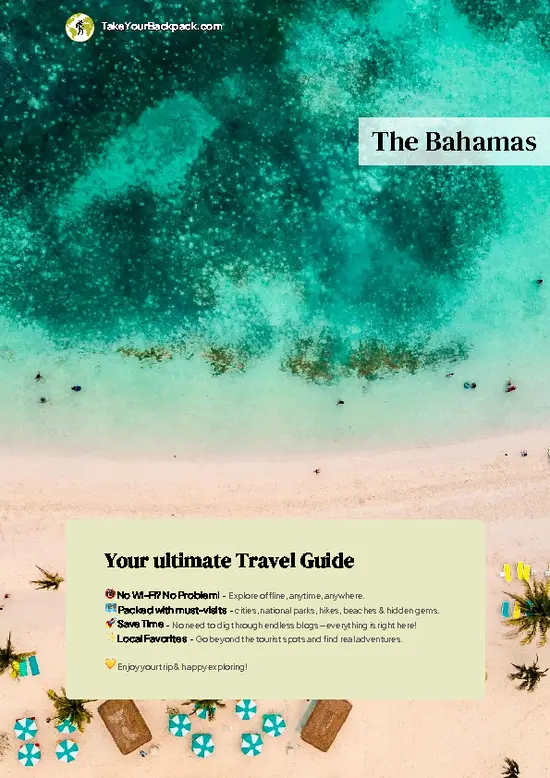
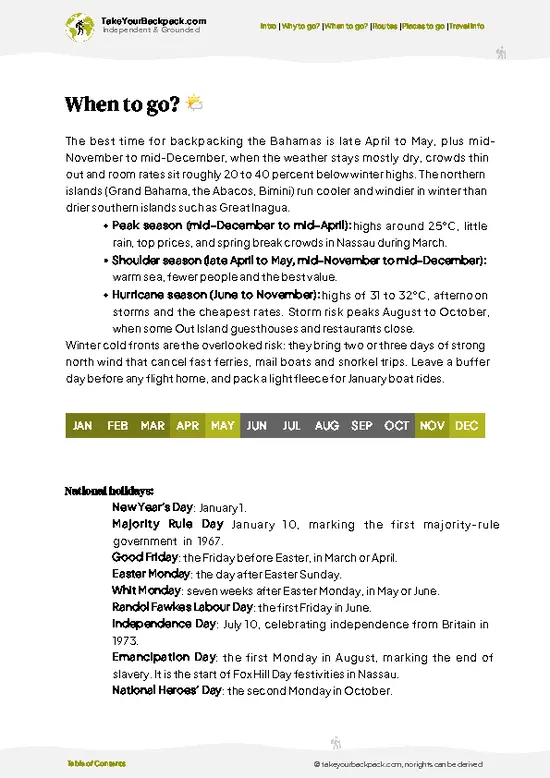
example page 0 from our offline Travel Guide for Bahamas
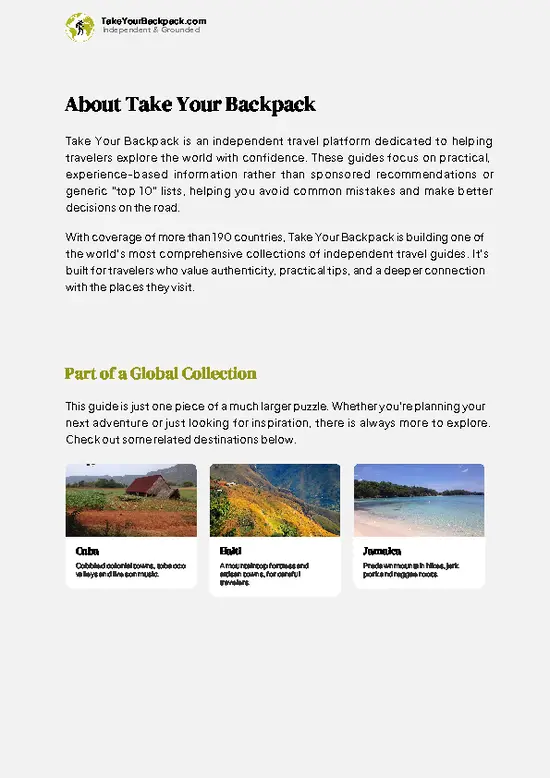
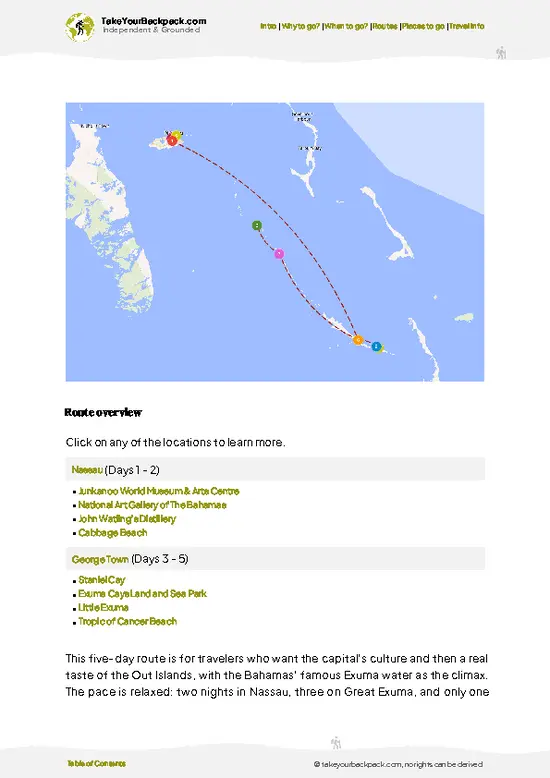
example page 1 from our offline Travel Guide for Bahamas
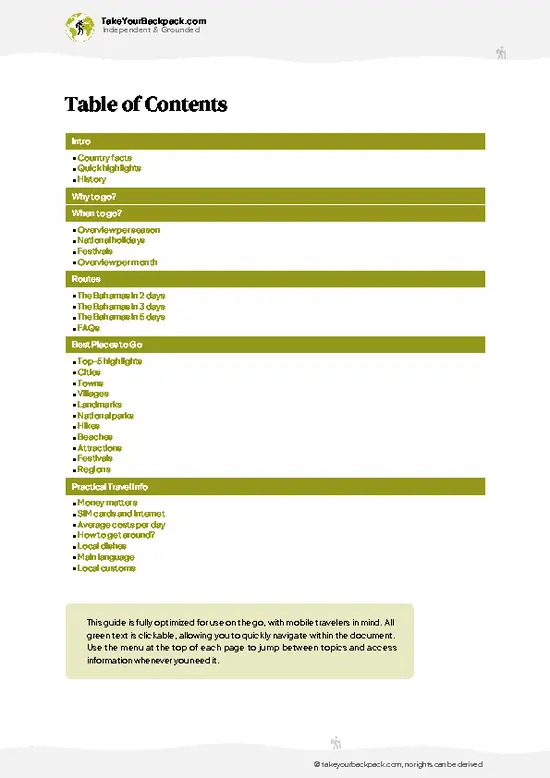
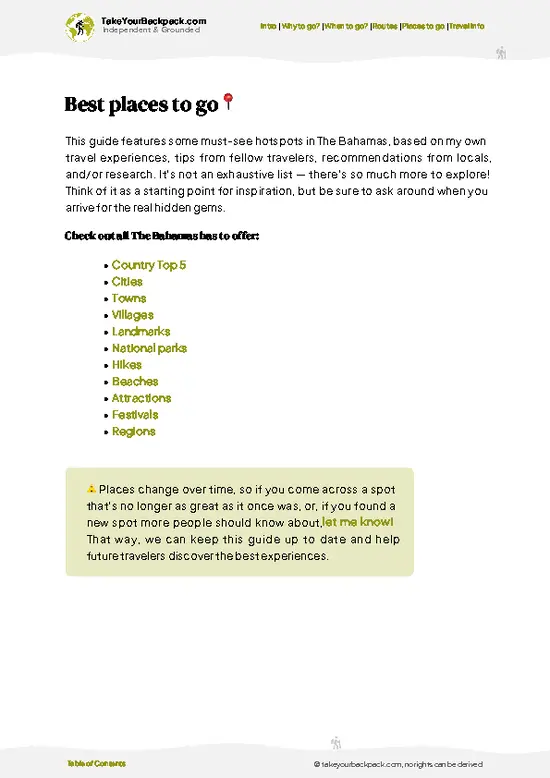
example page 2 from our offline Travel Guide for Bahamas
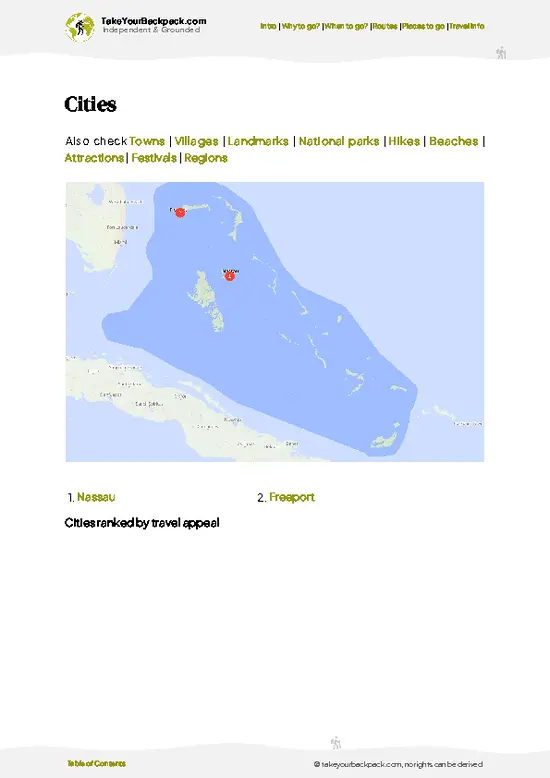
example page 3 from our offline Travel Guide for Bahamas
example page 4 from our offline Travel Guide for Bahamas
example page 5 from our offline Travel Guide for Bahamas
example page 6 from our offline Travel Guide for Bahamas
example page 7 from our offline Travel Guide for Bahamas
Loading the map 🌍
CLICK TO FILTER
cities
towns
villages
landmarks
national parks
hikes
beaches
attractions
festivals
regions
SHOW COUNTRY’S BESTSHOW ALL

✨ Why go?
Ranked #8 region in The Bahamas
What makes it a must-see region

Rum Cay rewards backpackers who want to slow down in one place rather than chase a circuit. The island is only about 30 miles around, so a single base covers it. You can snorkel the reefs near Sumner Point one morning and walk empty Port Nelson beaches the next without ever changing lodging. The diving is the real draw, with the HMS Conqueror wreck and sheer coral walls that dive operators reach in short boat rides. Culture comes in small doses: old salt-raking ruins, a tiny settlement and a few friendly bars where the owner knows your name by day two. Transport is simple because there is not much of it. You rent a vehicle, drive the one main road and stop wherever looks good.

💡 HighlightsMust-see experiences and standout moments

  1. Diving the Rum Cay wall: steep coral drop-offs close to shore, with big pelagic fish and few other divers around.
  2. HMS Conqueror wreck: the remains of an 1861 British ship lie in shallow water, good for snorkelers.
  3. Port Nelson: the main settlement, with a small harbor, a church and the island’s social life in a few buildings.
  4. Sumner Point: rocky headland with reef snorkeling and wide views over open sea.
  5. Kaye’s Bar and Grill area: a local gathering spot where island news travels fastest.
  6. Old salt pond areas: flat salt flats left from the island’s raking past, good for wading birds at dawn.
  7. Hartford Cave: a limestone cave on the island, best explored with a local who knows the access.
  8. Ocean beaches along the north coast: long, empty sand where footprints are often only yours.
  9. Signal Point lookout: a
… read more 👉
  1. Diving the Rum Cay wall: steep coral drop-offs close to shore, with big pelagic fish and few other divers around.
  2. HMS Conqueror wreck: the remains of an 1861 British ship lie in shallow water, good for snorkelers.
  3. Port Nelson: the main settlement, with a small harbor, a church and the island’s social life in a few buildings.
  4. Sumner Point: rocky headland with reef snorkeling and wide views over open sea.
  5. Kaye’s Bar and Grill area: a local gathering spot where island news travels fastest.
  6. Old salt pond areas: flat salt flats left from the island’s raking past, good for wading birds at dawn.
  7. Hartford Cave: a limestone cave on the island, best explored with a local who knows the access.
  8. Ocean beaches along the north coast: long, empty sand where footprints are often only yours.
  9. Signal Point lookout: a quiet rise with sweeping views over the sea and reefs, rarely visited.
  10. Sunset Beach: quiet sand on the western side for evening swims and sunsets.
Rum Cay’s beaches and wading spots are free, while snorkeling from shore costs nothing beyond your own gear.
Spotted a mistake or missing something? Contact us.

Things to do near Rum Cay

Ratings based on Tripadvisor reviews. When you book through this link, you support our work at no extra cost to you.

⌛️ 5 daysA smart one-week plan

Keep the pace slow and mostly by golf cart or rental car, with a long pause at midday when the heat flattens everything. Flights are limited, so the island runs on its own clock.
Day 1: Port Nelson: Arrive, drop your bag and walk the harbor. Everything is close, and an evening at a local bar tells you where to go next.
Day 2: HMS Conqueror and the reefs: Do the wreck snorkel early while the water is calm. Spend the hot hours in shade, then ride the coast road.
Day 3: Sumner Point: Head to the headland for reef snorkeling and open views. A drive along the north coast gives you beaches with no footprints.
Day 4: Salt ponds and Hartford Cave: Detour inland at dawn for the salt flats and birds, then the cave with a local guide. It adds a lot and needs no extra transport.
Day 5: Diving the wall: Book … read more 👉
Keep the pace slow and mostly by golf cart or rental car, with a long pause at midday when the heat flattens everything. Flights are limited, so the island runs on its own clock.
Day 1: Port Nelson: Arrive, drop your bag and walk the harbor. Everything is close, and an evening at a local bar tells you where to go next.
Day 2: HMS Conqueror and the reefs: Do the wreck snorkel early while the water is calm. Spend the hot hours in shade, then ride the coast road.
Day 3: Sumner Point: Head to the headland for reef snorkeling and open views. A drive along the north coast gives you beaches with no footprints.
Day 4: Salt ponds and Hartford Cave: Detour inland at dawn for the salt flats and birds, then the cave with a local guide. It adds a lot and needs no extra transport.
Day 5: Diving the wall: Book a dive boat for your last full day. This is the day that justifies the whole trip: the wall drops away beneath you into blue water, and few places in Bahamas offer it so uncrowded.

🌤️ When to go?Best time to visit Rum Cay

  • Winter (December to April): Dry, breezy and the easiest season for a visit, with highs of 24 to 28°C (75 to 82°F) and cooler nights near 18°C (64°F). Days are shorter, about 10.5 to 12 hours of light. Rooms and flights cost the most, and boaters fill the anchorage.
  • Spring (May to June): Warmer at 27 to 31°C (81 to 88°F), with calm seas and the best diving visibility. Prices ease and the island feels empty.
  • Summer (July to September): Hot and humid at 30 to 33°C (86 to 91°F), with long days of about 13 hours and sudden squalls. Some places close.
  • Hurricane Peak (August to October): Highest storm risk, lowest prices, and flights can be canceled.
  • Late Fall (November): Settled weather returns at 26 to 29°C (79 to 84°F) before the winter rush.
Book the small plane a few weeks ahead for March, when seats fill quickly.

source: climatestotravel.comJANJanuary: excellent for travelingFEBFebruary: excellent for travelingMARMarch: excellent for travelingAPRApril: highly recommended for travelingMAYMay: fair for travelingJUNJune: below average for travelingJULJuly: below average for travelingAUGAugust: below average for travelingSEPSeptember: fair for travelingOCTOctober: fair for travelingNOVNovember: highly recommended for travelingDECDecember: highly recommended for traveling
bahamas-region-rum-cay
© Google |

✈️ The backpacker research shortcutThe Bahamas Travel Guide

An offline-friendly backpacking guide with optimized travel routes, ranked highlights, transport advice, and the best areas to stay.
example page 0 from our offline Travel Guide for Bahamas
example page 1 from our offline Travel Guide for Bahamas
example page 2 from our offline Travel Guide for Bahamas
example page 3 from our offline Travel Guide for Bahamas
example page 4 from our offline Travel Guide for Bahamas
example page 5 from our offline Travel Guide for Bahamas
example page 6 from our offline Travel Guide for Bahamas
example page 7 from our offline Travel Guide for Bahamas
The digital guide (185 pages) contains:
✅ 55 highlights, ranked by travel appeal
✅ Optimized 2, 3 & 5-day travel routes
✅ Cities, national parks, landmarks, beaches
✅ How to get around
✅ Offline-friendly for travel without Wi-Fi
👉 Click to see all 30+ guide features

📅 Plan smarter in minutes, not weeks
✅ Month by month travel advice
✅ Festivals & national holidays
✅ Budget expectations

🗺️ Go to the right places, skip the overrated ones
✅ Honest pros & cons of destinations
✅ Top hikes, parks & viewpoints
✅ Lesser-known places most travelers miss
✅ Clear “worth it vs skip it” guidance

🛏️ Travel smoothly without rookie mistakes
✅ Best areas to stay
✅ Transport systems explained simply
✅ Common scams & safety advice
✅ SIM cards, money & practical tips

🌍 Understand the country, not just visit it
✅ Culture & traditions
✅ Local customs
✅ Festivals worth planning around
✅ Traveler-friendly historical context
✅ Insights that make places more meaningful

📱 Built for real travel conditions
✅ Fully downloadable PDF
✅ Works completely offline
✅ Optimized for phone use
✅ Useful in remote areas & buses
✅ Everything in one place
Stop searching, start planning
Get instant access to your full guide. 30‑day money-back guarantee.
+ Add another guide for just

By proceeding you agree to our terms.
Sent to your inbox immediately after payment • 100% Secure Checkout
Best Backpacking Travel Advisor 2025 tourism awardBest Backpacking
Travel Advisor
2025
What others say about Take Your Backpack Guides:
⭐⭐⭐⭐⭐
Fantastic, amazing amount of information!
⭐⭐⭐⭐⭐
My goodness this is amazing, it's what I've been looking for hats off too you!
⭐⭐⭐⭐⭐
I think this is absolutely BRILLIANT
⭐⭐⭐⭐
Very complete and informative. It's still missing places, but I gotta to commend you
⭐⭐⭐⭐⭐
This is truly amazing, thank you, can't wait to explore it with my kids!
⭐⭐⭐⭐⭐
Awesome resource, thank you!
⭐⭐⭐⭐⭐
This is amazing! Can't wait to explore the ones I haven't seen
⭐⭐⭐⭐
I love this! Well done, great idea.
⭐⭐⭐⭐⭐
Thanks for taking the time to make this gem!
⭐⭐⭐⭐⭐
This might be the best website I've ever seen.
⭐⭐⭐⭐⭐
Congratulations, and thank you so much for your work; it's incredibly valuable.
⭐⭐⭐⭐
In all seriousness I think you did a great job pointing out the important spots
⭐⭐⭐⭐⭐
10/10 very good
⭐⭐⭐⭐⭐
As someone who's only just starting to visit regularly this is awesome, thank you.
⭐⭐⭐⭐
Thank you very much! I'm going to visit my dad, it's going to be very useful!
⭐⭐⭐⭐⭐
This is really cool! We'll be travelling for the first time and this definitely come in handy.
⭐⭐⭐⭐⭐
You are now our minister of culture, congratulations 👨‍💼
⭐⭐⭐⭐⭐
Just wanted to tell you that this is a pearl! Going to follow your recommendations.
⭐⭐⭐⭐⭐
This is so cool. I'll definitely be using the resource for my travels soon.
⭐⭐⭐⭐⭐
This is very impressive! Good work.
⭐⭐⭐⭐⭐
This is an amazing and informative site. Very well done!

🛏️ Where to stay?Where staying makes the most sense

Port Nelson is the place to stay on Rum Cay, because it holds nearly everything the island offers in one small cluster. It is the only real settlement, so you can walk to the harbor, the little shops and the local bar, and you will meet the people who run the island within a day. Expect budget rooms and guesthouses rather than dorms, usually US$100 to 180 a night, with prices rising in winter.

The quiet stretches of shoreline around the island suit travelers who want solitude, though they are a short drive from the settlement and demand a rental vehicle. Staying near the marina puts you among … read more 👉
Port Nelson is the place to stay on Rum Cay, because it holds nearly everything the island offers in one small cluster. It is the only real settlement, so you can walk to the harbor, the little shops and the local bar, and you will meet the people who run the island within a day. Expect budget rooms and guesthouses rather than dorms, usually US$100 to 180 a night, with prices rising in winter.

The quiet stretches of shoreline around the island suit travelers who want solitude, though they are a short drive from the settlement and demand a rental vehicle. Staying near the marina puts you among sailors, who are the most social crowd here and happy to trade stories, rides and fresh fish. Solo travelers will feel safe, since crime is rare and everybody notices a newcomer. Book ahead, because rooms are few and a single dive group can fill the island.

🚌 Getting aroundHow to get from A to B

Renting a golf cart or small car in Port Nelson is the easiest way to get around Rum Cay, because the island is only about 30 miles (48 km) around and there is no public bus, no taxi rank and no ride-hailing. Most backpackers arrive by air or mail boat, then sort out wheels on the spot. Roads are mostly a single paved loop with sandy spurs, and everything is quiet, so it is reliable if you plan ahead.
  • Rental car or jeep: Expect roughly US$90 to 130 a day plus fuel, which is pricey for one person but sensible when split between three or four. It gives you shade, a cooler for drinks and the ability to reach the sandy tracks to Sumner Point and the far beaches. Ring ahead, since the fleet is tiny.
  • Golf cart: Some local operators rent them for around US$70 to 100 a day. Carts are slower and open
… read more 👉
Renting a golf cart or small car in Port Nelson is the easiest way to get around Rum Cay, because the island is only about 30 miles (48 km) around and there is no public bus, no taxi rank and no ride-hailing. Most backpackers arrive by air or mail boat, then sort out wheels on the spot. Roads are mostly a single paved loop with sandy spurs, and everything is quiet, so it is reliable if you plan ahead.
  • Rental car or jeep: Expect roughly US$90 to 130 a day plus fuel, which is pricey for one person but sensible when split between three or four. It gives you shade, a cooler for drinks and the ability to reach the sandy tracks to Sumner Point and the far beaches. Ring ahead, since the fleet is tiny.
  • Golf cart: Some local operators rent them for around US$70 to 100 a day. Carts are slower and open to the sun, but they cost less and suit the short hops around Port Nelson. Skip them for the rougher tracks, where a jeep copes better.
  • Bicycle and walking: If you stay in Port Nelson, the settlement’s shops, bars and the harbor are a short walk apart, so you pay nothing at all. Cycling the flat loop road is possible, but the heat and long empty stretches make it slow going, and I would only do it early in the morning.
  • Mail boat from Nassau: A one-way fare is typically US$60 to 90, and the trip takes roughly a day or more with an overnight stretch. It is the cheapest way in but the least comfortable, and schedules shift with weather, so it suits travelers with spare days.
  • Scheduled or charter flight: Small planes land at the Rum Cay airstrip from Nassau and sometimes Florida, with one-way fares usually from US$150 to 250. It is the quickest and most comfortable choice, and for most backpackers short on time it gives the best return for the extra money.
Before you land, arrange your wheels and your first night’s bed with the same call, since hosts often know who rents what and can meet you at the airstrip. Fill the tank whenever you pass Port Nelson, because fuel stops are scarce.

🍲 FoodLocal Flavors for Backpackers

Rum Cay food is built on the sea, so start with fresh conch, eaten raw in a salad with lime, onion and hot pepper, or cracked and fried until golden. Grilled grouper and snapper come with peas and rice and sweet, buttery johnnycake, while lobster turns up in season from August to March. Wash it down with a cold Kalik beer or a rum punch with a heavy hand of nutmeg.

Eating options are few. Expect the local bar and restaurant in Port Nelson, small home kitchens that cook for guests, and simple dockside grills when boats are in. There is no street food scene and no market, so bring snacks and stock up on groceries from the small store when supplies arrive.

Customs are friendly and unhurried. Greet people with a good morning or afternoon before you order, expect meals to take time, and call … read more 👉
Rum Cay food is built on the sea, so start with fresh conch, eaten raw in a salad with lime, onion and hot pepper, or cracked and fried until golden. Grilled grouper and snapper come with peas and rice and sweet, buttery johnnycake, while lobster turns up in season from August to March. Wash it down with a cold Kalik beer or a rum punch with a heavy hand of nutmeg.

Eating options are few. Expect the local bar and restaurant in Port Nelson, small home kitchens that cook for guests, and simple dockside grills when boats are in. There is no street food scene and no market, so bring snacks and stock up on groceries from the small store when supplies arrive.

Customs are friendly and unhurried. Greet people with a good morning or afternoon before you order, expect meals to take time, and call ahead for dinner, since kitchens often cook only what they have prepared. Cash is handy.

FAQTraveler FAQ

Two to four days is enough for Rum Cay if you dive or snorkel, and a long weekend suits most backpackers. Spend one day around Port Nelson and the beaches, one on a boat for the reefs, and one exploring by rental vehicle. Flights from Nassau take about an hour.
On Rum Cay you can walk around Port Nelson and hitch a ride on the longer roads, which locals often offer. A rental car or golf cart costs roughly US$60 to 100 a day and reaches the remote beaches. Boat charters cover the dive sites from about US$80 to 150 a person.
Rum Cay is known for quiet beaches, clear water and diving, with walls, reefs and wrecks close to shore. Its history includes Columbus naming it Santa Maria de la Concepción in 1492. It has a tiny population centered on Port Nelson and gets very few visitors, apart from boaters and divers.
⚠️ Things can change over time, so always validate details locally before you go.

Other Bahamian regions near Rum Cay

Explore more nearby:

  • Long Island—Dean’s Blue Hole, Father Jerome churches, Queens Highway, straw work| 56 km away
  • Little Exuma—Tropic of Cancer line, salt ponds, Loyalist ruins, beach shacks| 84 km away
  • Exuma—Swimming pigs, nurse sharks, Thunderball Grotto, Georgetown fish fry| 103 km away

💡 Not sure where to go next?
Create a personalized itinerary for The Bahamas including Rum Cay and the places that fit your trip.

Generate my itinerary

👉 Discover all regions

Or checkout all The Bahamas has to offer (think cities, towns, villages, national parks, hikes, beaches, festivals)
Country photo of The Bahamas

We 💚 feedbackKey takeaways before you go

Rum Cay catches travelers out when they arrive without cash, fuel plans or a booked vehicle, then spend half a day sorting it. Reserve your cart or car before you fly, carry enough small bills for the week, and ask your host about boat schedules early.

✍️ Help improve this page!
The information on this page is based on in-depth research, insights shared by experienced travelers, and feedback from the local travel community in The Bahamas. While every effort is made to keep the information accurate and current, conditions can change — so if you spot anything incorrect or outdated, please get in touch.


🙋‍♂️ Give feedback

👋 Meet the founderWho’s Behind Take Your Backpack?

Johan, backpacker and founder of TakeYourBackpackHi, I’m Johan (Netherlands 🇳🇱), the creator of TakeYourBackpack. Over the past 3 decades, I’ve backpacked through 90+ countries across six continents, gaining extensive experience with independent travel, long-term trips, and overland routes.

This site is built on a combination of firsthand travel experience and carefully curated insights from other backpackers. Many guides are based on places I’ve personally visited, while others bring together tips, observations, and practical advice shared by trusted travelers I’ve met along the way.

The goal is to provide realistic, experience-driven guidance — not generic itineraries — so you can explore destinations with better context, clearer expectations, and more confidence.