v2.webp)
1. The Camel Herd: Up Close and Personal
Forget the filtered, solitary camel shots you’ve seen online. The Royal Camel Farm is a living, breathing sea of camels—hundreds of them, in every shade from sandy beige to deep chestnut. You’re not peering at them from behind glass; you’re walking among them. The sheer scale is surreal. You’ll see calves wobbling on new legs, grumpy elders chewing with the slow confidence of royalty, and the occasional adolescent camel trying to start a drama. This is the raw, unedited camel experience—no handlers rushing you along, no staged photo ops. Just you, the camels, and the earthy, unmistakable aroma of the real deal.
2. Feeding Time: The Social Hour
Bring your sense of humor and a strong grip. For a few dinars, you can buy a bundle of greens and hand-feed … read more 👉
Forget the filtered, solitary camel shots you’ve seen online. The Royal Camel Farm is a living, breathing sea of camels—hundreds of them, in every shade from sandy beige to deep chestnut. You’re not peering at them from behind glass; you’re walking among them. The sheer scale is surreal. You’ll see calves wobbling on new legs, grumpy elders chewing with the slow confidence of royalty, and the occasional adolescent camel trying to start a drama. This is the raw, unedited camel experience—no handlers rushing you along, no staged photo ops. Just you, the camels, and the earthy, unmistakable aroma of the real deal.
2. Feeding Time: The Social Hour
Bring your sense of humor and a strong grip. For a few dinars, you can buy a bundle of greens and hand-feed … read more 👉
1. The Camel Herd: Up Close and Personal
Forget the filtered, solitary camel shots you’ve seen online. The Royal Camel Farm is a living, breathing sea of camels—hundreds of them, in every shade from sandy beige to deep chestnut. You’re not peering at them from behind glass; you’re walking among them. The sheer scale is surreal. You’ll see calves wobbling on new legs, grumpy elders chewing with the slow confidence of royalty, and the occasional adolescent camel trying to start a drama. This is the raw, unedited camel experience—no handlers rushing you along, no staged photo ops. Just you, the camels, and the earthy, unmistakable aroma of the real deal.
2. Feeding Time: The Social Hour
Bring your sense of humor and a strong grip. For a few dinars, you can buy a bundle of greens and hand-feed the camels. They know the drill, and they’re not shy about it. Expect a gentle nudge or a full-on camel face in your personal space. There’s a wild, communal energy here—kids giggling, adults pretending not to flinch, and camels working the crowd like seasoned street performers. It’s messy, unpredictable, and way more fun than any sanitized petting zoo.
3. Camel Personalities: The Real Entertainment
Here’s the secret sauce: camels have attitude. Some are curious, some are aloof, and a few are downright comedians. Watch for the one that tries to untie your shoelaces or the diva who poses for every camera. The farm isn’t about polished presentations; it’s about unscripted moments. If you’re patient, you’ll catch the subtle social dynamics—jealousy over snacks, a mother nudging her calf, or a grumpy old-timer grumbling at the young bucks.
4. The Royal Backstory: A Slice of Bahraini Culture
This isn’t a commercial tourist trap. The farm is owned by the royal family, and it’s not here to sell you souvenirs or camel rides. It’s a working farm, a nod to Bahrain’s deep-rooted relationship with camels—symbols of endurance, wealth, and tradition. You’re stepping into a piece of living heritage, not a theme park. That authenticity is rare, and it’s what makes the visit stick with you long after the camel spit has dried.
Forget the filtered, solitary camel shots you’ve seen online. The Royal Camel Farm is a living, breathing sea of camels—hundreds of them, in every shade from sandy beige to deep chestnut. You’re not peering at them from behind glass; you’re walking among them. The sheer scale is surreal. You’ll see calves wobbling on new legs, grumpy elders chewing with the slow confidence of royalty, and the occasional adolescent camel trying to start a drama. This is the raw, unedited camel experience—no handlers rushing you along, no staged photo ops. Just you, the camels, and the earthy, unmistakable aroma of the real deal.
2. Feeding Time: The Social Hour
Bring your sense of humor and a strong grip. For a few dinars, you can buy a bundle of greens and hand-feed the camels. They know the drill, and they’re not shy about it. Expect a gentle nudge or a full-on camel face in your personal space. There’s a wild, communal energy here—kids giggling, adults pretending not to flinch, and camels working the crowd like seasoned street performers. It’s messy, unpredictable, and way more fun than any sanitized petting zoo.
3. Camel Personalities: The Real Entertainment
Here’s the secret sauce: camels have attitude. Some are curious, some are aloof, and a few are downright comedians. Watch for the one that tries to untie your shoelaces or the diva who poses for every camera. The farm isn’t about polished presentations; it’s about unscripted moments. If you’re patient, you’ll catch the subtle social dynamics—jealousy over snacks, a mother nudging her calf, or a grumpy old-timer grumbling at the young bucks.
4. The Royal Backstory: A Slice of Bahraini Culture
This isn’t a commercial tourist trap. The farm is owned by the royal family, and it’s not here to sell you souvenirs or camel rides. It’s a working farm, a nod to Bahrain’s deep-rooted relationship with camels—symbols of endurance, wealth, and tradition. You’re stepping into a piece of living heritage, not a theme park. That authenticity is rare, and it’s what makes the visit stick with you long after the camel spit has dried.
Spotted a mistake or missing something? Contact us.

Muharraq Cultural Walking Tour (Summer Version)

From BAHRAIN to Saudi Arabia Day Tour

Full-Day Bahrain Guided Tour

Bahrain Full Day With Traditional Lunch

Half Day Desert Tour

Manama : Day from South to North to Discover Bahrain

Bahrain Must-Try Food Tour (Manama Souq)

Discover Bahrain in half day

Catch the Essence of Manama - Half Day City Tour

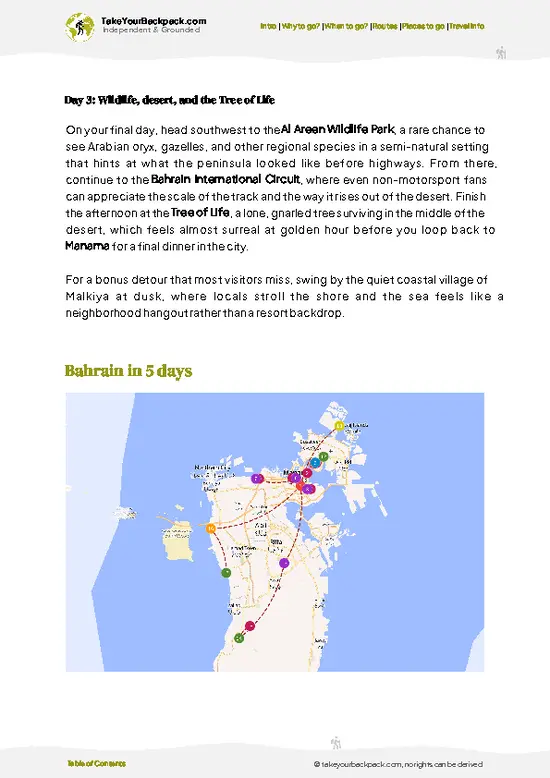

 Best Backpacking
.jpg) Hi, I’m Johan (Netherlands 🇳🇱), the creator of TakeYourBackpack. Over the past decade, I’ve backpacked through 80+ countries across six continents, gaining extensive experience with independent travel, long-term trips, and overland routes.
Hi, I’m Johan (Netherlands 🇳🇱), the creator of TakeYourBackpack. Over the past decade, I’ve backpacked through 80+ countries across six continents, gaining extensive experience with independent travel, long-term trips, and overland routes.