×

Bangladesh🇧🇩 | regionsBandarbanhill tribes, forested ridges, remote villages | things to do and best time to go

Explore Ratargul Swamp ForestExplore Maheshkhali

Backpacking in Bandarban
🌟 Highlightregion ranked #2
By Johan Kruseman 🇳🇱 | Updated June 7, 2026

Your boots are caked in red mud, sweat stings your eyes, and the distant clang of a tribal drum cuts through the mist as you round a bend—then, suddenly, the Sangu River glints below, and a woman in a riot of pink sarong waves from a bamboo bridge. That’s Bandarban: deep in the southeastern hills of Bangladesh, wedged against the Myanmar border, where the air smells of cardamom and woodsmoke and the world feels a million miles from Dhaka’s chaos.

Bandarban is the wild card of Bangladeshi backpacking—lush, steep, and stubbornly untamed. You get endless green, waterfalls that actually require a hike, and hill tribe villages where the only English you’ll hear is your own. It’s cheap, but getting between towns is slow and bumpy, and you’ll trade comfort for authenticity every time. Unlike the Sundarbans or Sylhet, there’s no tourist conveyor belt here; you’ll earn every view, but you’ll share it with locals, not selfie sticks. If you want beaches, head south to Cox’s Bazar. If you want stories, stay here.

Discover everything you want to know in the 📖 Bangladesh Travel Guide.
Loading the map 🌍
CLICK TO FILTER
cities
towns
landmarks
national parks
hikes
beaches
attractions
festivals
regions
SHOW COUNTRY’S BESTSHOW ALL

✨ Why go?
Ranked #2 region in Bangladesh
Why Bandarban should be on your travel list

In Bandarban, backpackers find a sweet spot where time, money, and comfort align beautifully. The variety of landscapes is staggering. You’ve got rolling hills, lush forests, and serene lakes all within a stone’s throw. This means you can soak in multiple experiences without the hassle of constant relocation.

Transport here is surprisingly flexible. You can hop on a local bus or rent a motorbike to explore at your own pace. This freedom lets you dive deeper into the culture. You can visit tribal villages, sip tea with locals, and even join in on traditional festivals.

What’s the kicker? It’s all about slow travel. You can spend a few days hiking through the hills, then unwind by a river, blending nature and culture seamlessly. This isn’t just a checklist; it’s about savoring each moment. … read more 👉
In Bandarban, backpackers find a sweet spot where time, money, and comfort align beautifully. The variety of landscapes is staggering. You’ve got rolling hills, lush forests, and serene lakes all within a stone’s throw. This means you can soak in multiple experiences without the hassle of constant relocation.

Transport here is surprisingly flexible. You can hop on a local bus or rent a motorbike to explore at your own pace. This freedom lets you dive deeper into the culture. You can visit tribal villages, sip tea with locals, and even join in on traditional festivals.

What’s the kicker? It’s all about slow travel. You can spend a few days hiking through the hills, then unwind by a river, blending nature and culture seamlessly. This isn’t just a checklist; it’s about savoring each moment.

So, if you’re looking to stretch your travel budget while maximizing your experiences, Bandarban is your playground. You’ll leave feeling like a savvy local, not just another tourist.
Want to include Bandarban in your Bangladesh route?
Create a personalized Bangladesh itinerary that includes Bandarban and the places that fit your trip — based on your travel style, budget, and available time. Get your route in seconds.

Generate my trip

💡 HighlightsEssential experiences to have while visiting Bandarban

  1. Boga Lake (Boga Taal) — A high-altitude crater lake tucked in steep forested ridges in Ruma; crystal-clear water, starry nights and the Mro villages on the trek make it a proper overnight wilderness experience you won’t find on flatland Bangladesh.
  2. Keokradong — One of the most popular trekking peaks in the country: mossy trails, pine pockets and an adrenaline-ok summit that delivers wide hill-country panoramas and proper camping. It’s classic Bandarban hill trekking, muddy and magnificent.
  3. Tajingdong / Tazing Dong (border highlands) — A long, remote multi-day trek to one of Bangladesh’s highest ridges near the Myanmar frontier. Big, wide views, tribal villages and that rare feeling of standing above everything — prepare for guides, permits and real remoteness.
  4. Hum Hum (Hamham) Waterfall
read more 👉
  1. Boga Lake (Boga Taal) — A high-altitude crater lake tucked in steep forested ridges in Ruma; crystal-clear water, starry nights and the Mro villages on the trek make it a proper overnight wilderness experience you won’t find on flatland Bangladesh.
  2. Keokradong — One of the most popular trekking peaks in the country: mossy trails, pine pockets and an adrenaline-ok summit that delivers wide hill-country panoramas and proper camping. It’s classic Bandarban hill trekking, muddy and magnificent.
  3. Tajingdong / Tazing Dong (border highlands) — A long, remote multi-day trek to one of Bangladesh’s highest ridges near the Myanmar frontier. Big, wide views, tribal villages and that rare feeling of standing above everything — prepare for guides, permits and real remoteness.
  4. Hum Hum (Hamham) Waterfall — A dramatic, multi-tier waterfall in Ruma reached by boat and hike; the scale and roar are memorable and it’s still less crowded than the usual spots — a genuine hidden-gem waterfall adventure.
  5. Chimbuk Hill Viewpoint — Road-accessible but still stunning: cloud-sea mornings, long sunsets and winding roads down into tribal valleys. Good for quick day trips if you don’t have time for long treks.
  6. Buddha Dhatu Jadi (Golden Temple) — The large Theravada Buddhist shrine outside Bandarban town: gilded stupa, quiet prayer terraces and sweeping views of the hills. It’s a cultural anchor that shows the Marma community’s religious life up close.
  7. Remakri & the Sangu River boat route — Stone gorges, cliffside tea stalls and bamboo rafts on the Sangu between Thanchi and Remakri: slow river travel, riverside village life and real back-country vibe. Great for camping on riverbanks and watching local river culture.
  8. Bandarban (Burmese) Market and town life — The market behind the town is a cross-border mashup: Burmese snacks, woodenware, tribal textiles and honest local food stalls. Not a glossy tourist bazaar — a real place to people-watch and pick up unusual bits.
  9. Nilgiri — A quieter summit/viewpoint with layered valleys, tea pockets and a pleasantly low tourist count. The sunrise/sunsets are special and the nearby village homestays make it a peaceful escape from the busier trails.
  10. Tribal village homestays and craft experiences (Mro, Marma, Chakma) — Staying with a Marma or Mro family, learning jhum farming rhythms, tasting fermented bamboo or handwoven shawls: this is where the region’s culture is lived, not packaged. These homestays are scattered across Ruma/Lama and the Boga Lake trail — real, local and often overlooked.
Spotted a mistake or missing something? Contact us.

Things to do near Bandarban

Ratings based on Tripadvisor reviews. When you book through this link, you support our work at no extra cost to you.

⌛️ 5 daysWhat you can realistically do in a week

Day 1: Bandarban

You’ll kick off your adventure in Bandarban, the gateway to the hills. The bus ride from Dhaka takes about 10-12 hours, so plan to leave early. This journey is a rite of passage, winding through lush landscapes and local villages. Arriving in the afternoon gives you time to settle in and explore the town. Grab a meal at a local eatery; the flavors here are a revelation.

Day 2: Ruma

On Day 2, you’ll head to Ruma, a small village that serves as a base for treks. The local transport options are limited, so you’ll want to catch a shared jeep early in the morning. This ride is bumpy but scenic, taking about 2-3 hours. Ruma is your launchpad for trekking, and the vibe is relaxed. Spend the afternoon acclimatizing and chatting with locals; they have stories that will enrich your … read more 👉
Day 1: Bandarban

You’ll kick off your adventure in Bandarban, the gateway to the hills. The bus ride from Dhaka takes about 10-12 hours, so plan to leave early. This journey is a rite of passage, winding through lush landscapes and local villages. Arriving in the afternoon gives you time to settle in and explore the town. Grab a meal at a local eatery; the flavors here are a revelation.

Day 2: Ruma

On Day 2, you’ll head to Ruma, a small village that serves as a base for treks. The local transport options are limited, so you’ll want to catch a shared jeep early in the morning. This ride is bumpy but scenic, taking about 2-3 hours. Ruma is your launchpad for trekking, and the vibe is relaxed. Spend the afternoon acclimatizing and chatting with locals; they have stories that will enrich your experience.

Day 3: Trek to Boga Lake

This is where the magic happens. The trek to Boga Lake is a full-day affair, about 6-8 hours depending on your pace. You’ll sacrifice some comfort for the stunning views and the sense of achievement. The lake is a tranquil spot, perfect for reflection. Set up camp and soak in the atmosphere.

Day 4: Return to Ruma

Head back to Ruma, retracing your steps. It’s a chance to appreciate the landscape from a different angle. The return trip is quicker, and you’ll likely find yourself chatting with fellow trekkers. Enjoy a hearty meal in Ruma; you’ve earned it.

Day 5: Off-Path Reward – Thanchi

On your last day, take a detour to Thanchi. It’s a hidden spot where you can experience local culture without the tourist crowds. The journey is a bit longer, but the authenticity is worth it.

The must-do day? Day 3 at Boga Lake. It encapsulates the essence of Bandarban: breathtaking nature, a sense of adventure, and the thrill of stepping off the beaten path.
Turn your Bandarban visit into an Bangladesh adventure
Build a complete Bangladesh route with Bandarban, hidden gems, must-see destinations, and realistic travel times included.

Generate my trip

🌤️ When to go?When to go for the best experience


  • Weather: The sweet spot is between October and March. This is when the monsoon has packed up, leaving behind clear skies and dry trails. Avoid June to September unless you’re into mudslides and soggy socks.

  • Temperature: Expect a comfortable 15-25°C (59-77°F) during the best months. Nights can dip to a crisp 10°C (50°F), so pack a light jacket. Summer months push it up to a sweaty 30°C+ (86°F+), which can drain your energy fast.

  • Daylight Hours: Around 11 to 12 hours of daylight during peak season. Enough time to squeeze in those epic hikes and sunset views without rushing, but not so much that you’re burning out by 9 pm.

  • Crowds: Post-monsoon is when locals and savvy travelers flood in, but it’s still chill compared to other hotspots. If you want near solitude, hit the shoulder months
read more 👉

  • Weather: The sweet spot is between October and March. This is when the monsoon has packed up, leaving behind clear skies and dry trails. Avoid June to September unless you’re into mudslides and soggy socks.

  • Temperature: Expect a comfortable 15-25°C (59-77°F) during the best months. Nights can dip to a crisp 10°C (50°F), so pack a light jacket. Summer months push it up to a sweaty 30°C+ (86°F+), which can drain your energy fast.

  • Daylight Hours: Around 11 to 12 hours of daylight during peak season. Enough time to squeeze in those epic hikes and sunset views without rushing, but not so much that you’re burning out by 9 pm.

  • Crowds: Post-monsoon is when locals and savvy travelers flood in, but it’s still chill compared to other hotspots. If you want near solitude, hit the shoulder months of late September or early April.

  • Seasonal Activities: Autumn and winter bring clear skies perfect for stargazing and trekking. Spring offers blooming hillsides but watch for unpredictable showers. Monsoon season is for hardcore adventurers only.

  • Price Fluctuations: Peak season means higher prices on guesthouses and guides, but the trade-off is worth it for dry trails and reliable transport. Off-season drops rates significantly but expect limited services and rough conditions.


Pro-tip: Arrive just after the monsoon ends—trails are fresh, waterfalls are roaring, and you’ll beat the main rush while still enjoying perfect weather.


source: climatestotravel.comJANJanuary: excellent for travelingFEBFebruary: excellent for travelingMARMarch: excellent for travelingAPRApril: highly recommended for travelingMAYMay: fair for travelingJUNJune: below average for travelingJULJuly: below average for travelingAUGAugust: below average for travelingSEPSeptember: fair for travelingOCTOctober: excellent for travelingNOVNovember: excellent for travelingDECDecember: excellent for traveling
when-to-go

✈️ The backpacker research shortcutBangladesh Travel Guide

An offline-friendly backpacking guide with optimized travel routes, ranked highlights, transport advice, and the best areas to stay.
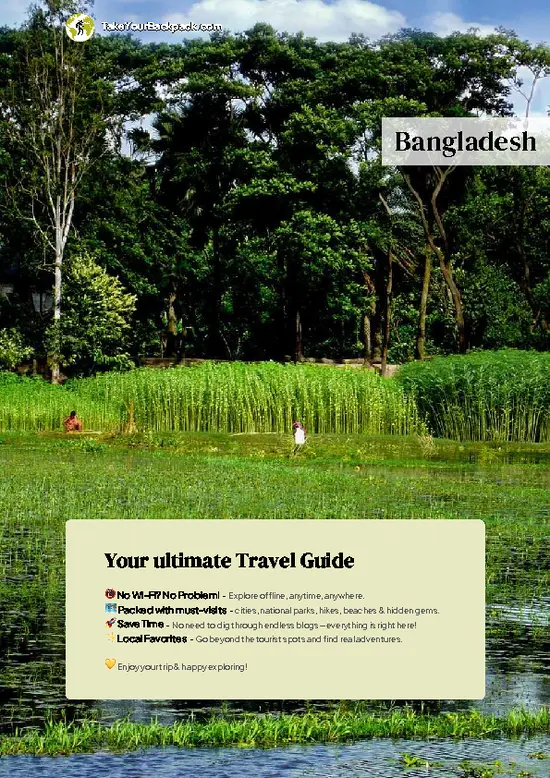
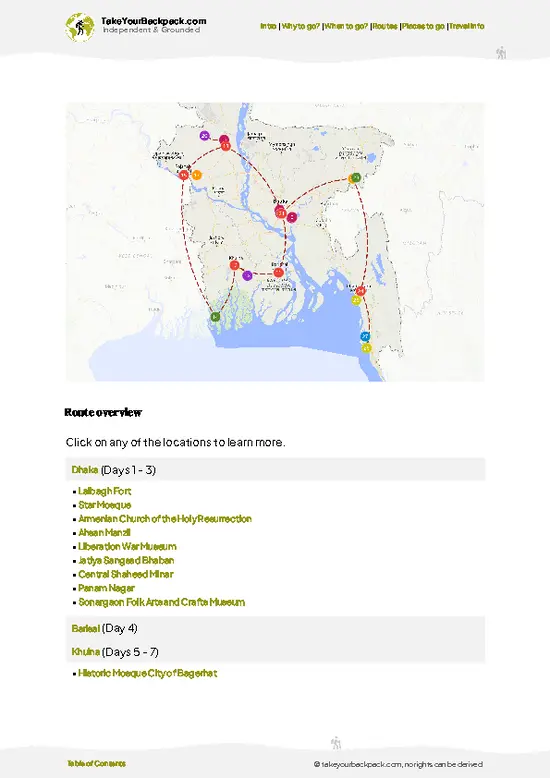
example page 0 from our offline Travel Guide for Bangladesh
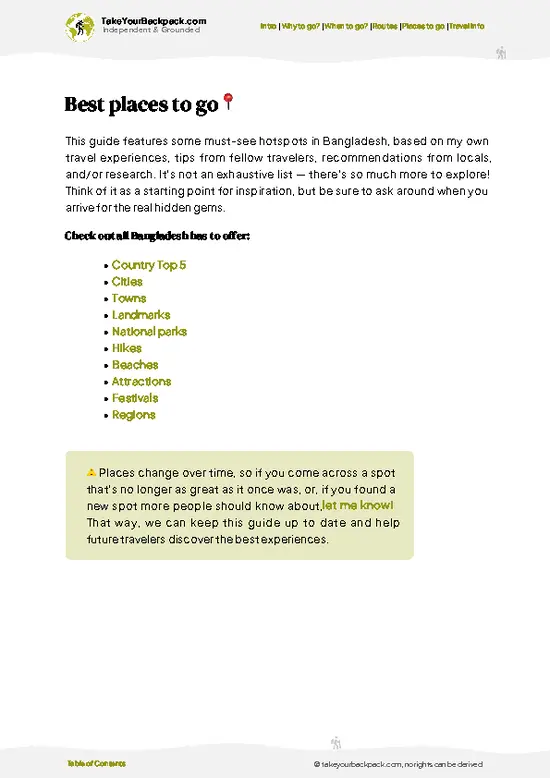
example page 1 from our offline Travel Guide for Bangladesh
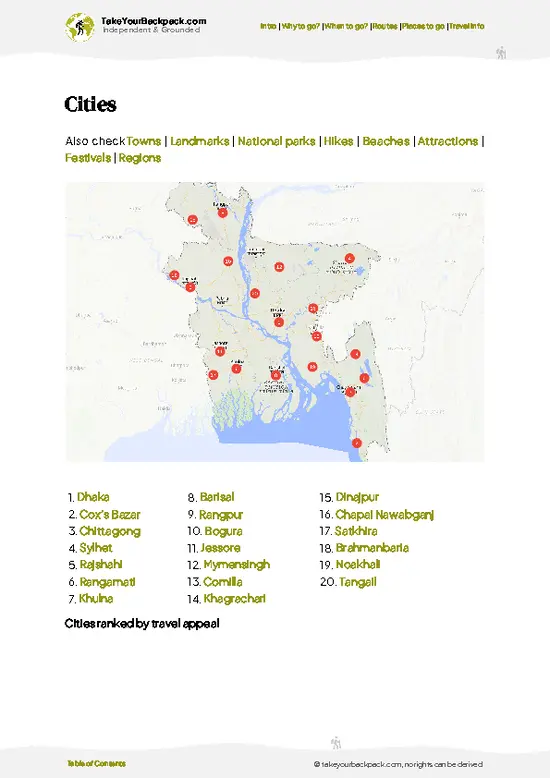
example page 2 from our offline Travel Guide for Bangladesh
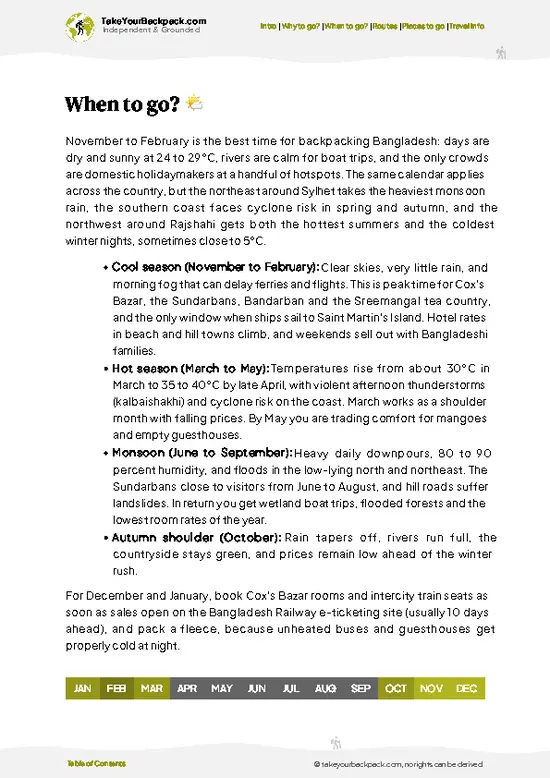
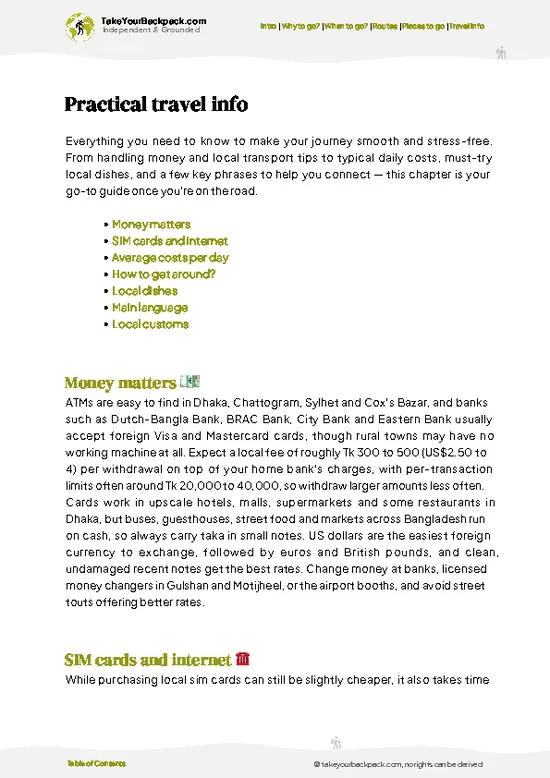
example page 3 from our offline Travel Guide for Bangladesh
example page 4 from our offline Travel Guide for Bangladesh
example page 5 from our offline Travel Guide for Bangladesh
example page 6 from our offline Travel Guide for Bangladesh
example page 7 from our offline Travel Guide for Bangladesh
The digital guide (369 pages) contains:
107 highlights, ranked by travel appeal
Optimized 7, 14 & 21-day travel routes
Cities, national parks, landmarks, beaches
How to get around
Offline-friendly for travel without Wi-Fi
👉 Click to see all 30+ guide features

📅 Plan smarter in minutes, not weeks
Month by month travel advice
Festivals & national holidays
Budget expectations

🗺️ Go to the right places, skip the overrated ones
Honest pros & cons of destinations
Top hikes, parks & viewpoints
Lesser-known places most travelers miss
Clear “worth it vs skip it” guidance

🛏️ Travel smoothly without rookie mistakes
Best areas to stay
Transport systems explained simply
Common scams & safety advice
SIM cards, money & practical tips

🌍 Understand the country, not just visit it
Culture & traditions
52 Essential phrases & customs
Festivals worth planning around
Traveler-friendly historical context
Insights that make places more meaningful

📱 Built for real travel conditions
Fully downloadable PDF
Works completely offline
Optimized for phone use
Useful in remote areas & buses
Everything in one place
Save weeks of stressful planning
Get instant access to your full guide. 30‑day money-back guarantee.


By proceeding you agree to our terms.
Sent to your inbox immediately after payment • 100% Secure Checkout
Best Backpacking Travel Advisor 2025 tourism awardBest Backpacking
Travel Advisor
2025
What others say about Take Your Backpack Guides:
⭐⭐⭐⭐⭐
Fantastic, amazing amount of information!
⭐⭐⭐⭐⭐
My goodness this is amazing, it's what I've been looking for hats off too you!
⭐⭐⭐⭐⭐
I think this is absolutely BRILLIANT
⭐⭐⭐⭐
Very complete and informative. It's still missing places, but I gotta to commend you
⭐⭐⭐⭐⭐
This is truly amazing, thank you, can't wait to explore it with my kids!
⭐⭐⭐⭐⭐
Awesome resource, thank you!
⭐⭐⭐⭐⭐
This is amazing! Can't wait to explore the ones I haven't seen
⭐⭐⭐⭐
I love this! Well done, great idea.
⭐⭐⭐⭐⭐
Thanks for taking the time to make this gem!
⭐⭐⭐⭐⭐
This might be the best website I've ever seen.
⭐⭐⭐⭐⭐
Congratulations, and thank you so much for your work; it's incredibly valuable.
⭐⭐⭐⭐
In all seriousness I think you did a great job pointing out the important spots
⭐⭐⭐⭐⭐
10/10 very good
⭐⭐⭐⭐⭐
As someone who's only just starting to visit regularly this is awesome, thank you.
⭐⭐⭐⭐
Thank you very much! I'm going to visit my dad, it's going to be very useful!
⭐⭐⭐⭐⭐
This is really cool! We'll be travelling for the first time and this definitely come in handy.
⭐⭐⭐⭐⭐
You are now our minister of culture, congratulations 👨‍💼
⭐⭐⭐⭐⭐
Just wanted to tell you that this is a pearl! Going to follow your recommendations.
⭐⭐⭐⭐⭐
This is so cool. I'll definitely be using the resource for my travels soon.
⭐⭐⭐⭐⭐
This is very impressive! Good work.
⭐⭐⭐⭐⭐
This is an amazing and informative site. Very well done!

🛏️ Where to stay?How to pick the right area

In Bandarban, the choice of where to stay can shape your entire experience. Let’s break it down.

First up, Bandarban Town. This is the heartbeat of the region. It’s where you’ll find a mix of locals and travelers, making it easy to strike up conversations. The vibe is laid-back, and you can grab a meal or a cup of tea while swapping stories with fellow backpackers. Plus, it’s a great base for day trips to nearby hills and waterfalls.

Next, consider Ruma, a small village that’s a gateway to some of the best trekking in the area. Staying here means you’re close to nature, and you’ll wake up to … read more 👉
In Bandarban, the choice of where to stay can shape your entire experience. Let’s break it down.

First up, Bandarban Town. This is the heartbeat of the region. It’s where you’ll find a mix of locals and travelers, making it easy to strike up conversations. The vibe is laid-back, and you can grab a meal or a cup of tea while swapping stories with fellow backpackers. Plus, it’s a great base for day trips to nearby hills and waterfalls.

Next, consider Ruma, a small village that’s a gateway to some of the best trekking in the area. Staying here means you’re close to nature, and you’ll wake up to the sound of birds rather than traffic. It’s quieter, which is perfect if you want to recharge. Just be aware that options are limited, so plan ahead.

Then there’s Thanchi, a bit off the beaten path but worth it for the stunning views. It’s a social hub for trekkers, and you’ll find plenty of opportunities to connect with others. The trade-off? Fewer amenities, but the scenery makes it worthwhile.

Each area has its own charm. Choose wisely based on what you value most: social interaction, access to nature, or a lively atmosphere.

🚌 Getting aroundTransportation options and practical tips

In Bandarban, the rhythm of travel dances between the structured and the spontaneous. You’ll find that schedules are more like suggestions, with local transport humming along to its own beat. The roads twist through lush hills, and the air is thick with the scent of adventure. Here, you’ll need to embrace the chaos. It’s not about rigid timetables; it’s about feeling the pulse of the region. The locals know when to go, and if you’re lucky, you’ll catch a ride just as the sun dips behind the hills, casting a golden glow over everything.

Here’s the lowdown on getting around Bandarban without breaking the bank:


  • Shared Jeep: These are your best bet for a mix of speed and cost. They run from Bandarban to various hill tracts, like Ruma and Thanchi. Expect to pay around 100-200 BDT per person.
read more 👉
In Bandarban, the rhythm of travel dances between the structured and the spontaneous. You’ll find that schedules are more like suggestions, with local transport humming along to its own beat. The roads twist through lush hills, and the air is thick with the scent of adventure. Here, you’ll need to embrace the chaos. It’s not about rigid timetables; it’s about feeling the pulse of the region. The locals know when to go, and if you’re lucky, you’ll catch a ride just as the sun dips behind the hills, casting a golden glow over everything.

Here’s the lowdown on getting around Bandarban without breaking the bank:


  • Shared Jeep: These are your best bet for a mix of speed and cost. They run from Bandarban to various hill tracts, like Ruma and Thanchi. Expect to pay around 100-200 BDT per person. They usually leave when full, so be ready to squeeze in with fellow travelers. The ride is bumpy but exhilarating, taking about 1-2 hours depending on your destination.


  • Local Bus: A classic choice for budget travelers. Buses connect Bandarban to major towns like Cox’s Bazar and Rangamati. Prices range from 150-300 BDT, and they typically leave in the morning, around 7 AM, with the last bus around 2 PM. The journey can take 3-5 hours, so pack snacks and enjoy the views. Comfort is basic, but the camaraderie is real.


  • Motorbike Rentals: For the adventurous spirit, renting a motorbike is a game-changer. Prices hover around 800-1200 BDT per day. You can explore at your own pace, hitting the less-traveled paths. Just be cautious; the roads can be tricky. Make sure to wear a helmet and keep your wits about you.


  • Bicycle Rentals: If you’re feeling energetic, grab a bike for about 300-500 BDT per day. It’s a fantastic way to soak in the scenery and interact with locals. Just be prepared for some steep climbs. Early mornings are best for cooler temperatures and fewer crowds.


  • Rickshaw: For short distances within Bandarban town, rickshaws are a fun and affordable option. Fares are usually around 30-50 BDT. They’re perfect for hopping between local eateries or markets, but negotiate the price beforehand.


Master Tactical Tip: Always ask locals for the latest transport updates. They know the best times to travel and can help you avoid the long waits. Embrace the unpredictability, and you’ll find that the journey is just as rewarding as the destination.

🍲 FoodWhat to Eat & Drink

In Bandarban, the food scene is a vibrant tapestry of flavors that tells the story of its diverse cultures. Dive into Burmese curry, a local favorite that’s rich and aromatic, often served with fluffy rice. The pork curry here is a must-try, marinated with spices that dance on your palate. Don’t miss the hill tripe, a unique dish that showcases the region’s culinary creativity.

For drinks, seek out local tea—it’s not just a beverage; it’s a ritual. Sip it in a small roadside stall, where the aroma of freshly brewed leaves mingles with the chatter of locals. If you’re feeling adventurous, try panta bhat, fermented rice soaked overnight, often enjoyed with green chilies and onion.

When it comes to dining, embrace the street food culture. Markets buzz with energy, offering everything from … read more 👉
In Bandarban, the food scene is a vibrant tapestry of flavors that tells the story of its diverse cultures. Dive into Burmese curry, a local favorite that’s rich and aromatic, often served with fluffy rice. The pork curry here is a must-try, marinated with spices that dance on your palate. Don’t miss the hill tripe, a unique dish that showcases the region’s culinary creativity.

For drinks, seek out local tea—it’s not just a beverage; it’s a ritual. Sip it in a small roadside stall, where the aroma of freshly brewed leaves mingles with the chatter of locals. If you’re feeling adventurous, try panta bhat, fermented rice soaked overnight, often enjoyed with green chilies and onion.

When it comes to dining, embrace the street food culture. Markets buzz with energy, offering everything from grilled skewers to sweet treats. Grab a seat at a casual café, where you can savor your meal while soaking in the laid-back vibe.

Etiquette is simple: share your food and enjoy communal dining. It’s common to see people eating with their hands, so don’t hesitate to join in. Just remember to wash your hands before digging in—it’s part of the experience.

Other Bangladeshi regions near Bandarban

Explore more nearby:

  • Maheshkhali—salt pans, mangrove creeks, temple hills| 70 km away
  • St Martin’s Island—coral beaches, fishing villages, tidal flats| 175 km away
  • Moulvibazar—tea estates, rolling valleys, tribal markets| 243 km away

💡 Not sure where to go next?
Create a personalized itinerary for Bangladesh including Bandarban and the places that fit your trip.

Generate my itinerary

👉 Discover all regions

Or checkout all Bangladesh has to offer (think cities, towns, villages, national parks, hikes, beaches, festivals)
Country photo of Bangladesh

We 💚 feedbackSumming up the experience

Bandarban is a wild card. The misty hills and vibrant tribal culture pull you in. Don’t miss the sunrise at Nilgiri; it’ll knock your socks off. But here’s the kicker: the roads can be a real test. If you’re prone to motion sickness, stock up on ginger candies. Embrace the chaos, though. It’s part of the charm. You’ll leave with stories that outshine any postcard. Just remember, the best moments often come when you least expect them.

✍️ Help improve this page!
The information on this page is based on in-depth research, insights shared by experienced travelers, and feedback from the local travel community in Bangladesh. While every effort is made to keep the information accurate and current, conditions can change — so if you spot anything incorrect or outdated, please get in touch.


🙋‍♂️ Give feedback

👋 Meet the founderWho’s Behind Take Your Backpack?

Johan, backpacker and founder of TakeYourBackpackHi, I’m Johan (Netherlands 🇳🇱), the creator of TakeYourBackpack. Over the past decade, I’ve backpacked through 80+ countries across six continents, gaining extensive experience with independent travel, long-term trips, and overland routes.

This site is built on a combination of firsthand travel experience and carefully curated insights from other backpackers. Many guides are based on places I’ve personally visited, while others bring together tips, observations, and practical advice shared by trusted travelers I’ve met along the way.

The goal is to provide realistic, experience-driven guidance — not generic itineraries — so you can explore destinations with better context, clearer expectations, and more confidence.

Get full Bangladesh guide •
Instant download • 107 highlights • Full Offline guide