×

Bangladesh🇧🇩 | citiesJhalokaticanal networks, floating bazaars, betel nut groves | things to do and best time to go

Explore MaguraExplore Madaripur

Backpacking in Jhalokati
👀 For curious travelerscity ranked #43
By Johan Kruseman 🇳🇱 | Updated July 19, 2026

You’ll face a real fork in the road when planning a trip through southern Bangladesh: do you breeze past Jhalokati on the way to Barisal or Kuakata, or do you pause here and let the slower, river-woven pace of the town shape your journey? That choice matters, because Jhalokati isn’t a headline act—it’s a mood, a place where the air smells faintly of river silt and woodsmoke, and the mornings begin with the slap of oars on water. Tucked in the Barisal Division, southwest of Dhaka and north of the Bay of Bengal, Jhalokati is a modest river port that rewards patience more than adrenaline. For backpackers, it’s less a destination than a gentle interlude: a base for exploring the backwater canals by boat, sampling market snacks under banyan trees, or catching the launch to Barisal before sunrise. The old town is walkable, but you’ll need rickshaws for the outskirts. Social life is subdued—expect tea stalls and slow evenings, not hostels or backpacker bars. Costs are low, safety is typical for rural Bangladesh, and the vibe is far more relaxed than Barisal’s bustle or Kuakata’s beach crowds. Jhalokati is for those who want to feel the pulse of river life, not just tick off sights.

Discover everything you want to know in the 📖 Bangladesh Travel Guide.
Loading the map 🌍
CLICK TO FILTER
cities
towns
landmarks
national parks
hikes
beaches
attractions
festivals
regions
SHOW COUNTRY’S BESTSHOW ALL

✨ Why go?
Ranked #43 city in Bangladesh
Why visitors keep coming back

Backpackers flock to Jhalokati for its convenience as a gateway to nearby hikes and cultural sites. The walkable streets invite exploration, while small-scale guesthouses offer a cozy, friendly atmosphere that feels like home. You can savor local food experiences that burst with flavor, making every meal a delight. Travelers often stay a few days, soaking in the laid-back vibe, perfect for slow travelers and solo adventurers. It’s not a party hub, but rather a place to connect with fellow wanderers and recharge before heading to the beaches or deeper into the countryside.
Want to include Jhalokati in your Bangladesh route?
Create a personalized Bangladesh itinerary that includes Jhalokati and the places that fit your trip — based on your travel style, budget, and available time. Get your route in seconds.

Generate my trip

💡 HighlightsKey sights and experiences for travelers

  1. Jhalokati Launch Ghat (riverfront) — The town’s pulse lives on the river: wood-and-steel launches, small cargo boats, and local ferries make for an immediate, sensory slice of everyday life. Best at dawn or sunset for photo ops and watching river trade and boat repair.
  2. Main Haat (central market) — A lively market where you can sample regional snacks, buy fresh fish straight off the boats, and see local commerce in action. Great for street food, cheap groceries, and people-watching that tells you how the town operates.
  3. Old Zamindar Houses (Rajbari remains) — Scattered historic mansions and remnants of zamindar-era architecture give a glimpse of the region’s colonial and pre-colonial social history; they’re atmospheric spots for slow wandering and local photography.
  4. Local Boatyards and
read more 👉
  1. Jhalokati Launch Ghat (riverfront) — The town’s pulse lives on the river: wood-and-steel launches, small cargo boats, and local ferries make for an immediate, sensory slice of everyday life. Best at dawn or sunset for photo ops and watching river trade and boat repair.
  2. Main Haat (central market) — A lively market where you can sample regional snacks, buy fresh fish straight off the boats, and see local commerce in action. Great for street food, cheap groceries, and people-watching that tells you how the town operates.
  3. Old Zamindar Houses (Rajbari remains) — Scattered historic mansions and remnants of zamindar-era architecture give a glimpse of the region’s colonial and pre-colonial social history; they’re atmospheric spots for slow wandering and local photography.
  4. Local Boatyards and Carpentry Quarters — Small-scale boatbuilding and repair sheds along the riverbanks showcase traditional skills: watch craftsmen shape hulls, work teak, and assemble launches — a hands-on cultural experience you won’t get in a city museum.
  5. Jhalokati Eidgah and Community Squares — Open gathering spaces used for major festivals, public meetings, and weekend social life; visiting during a market day or festival gives real insight into communal rituals and local rhythms.
  6. District Museum / Local History Corners — Small exhibits, plaques, or rooms (often within civic buildings or colleges) that preserve local biographies, independence-era items, and agrarian history; concise, tangible context for the area’s past.
A few real, visitable highlights outside Jhalokati but easy as day trips: Barisal city’s Durga Sagar and riverside life, the Kuakata beach area for open-sea views, and the nearby Barguna/Patharghata coastal islands and riverine landscapes.
Spotted a mistake or missing something? Contact us.

🏘️ NeighborhoodsHow different areas shape the experience

Jhalokati is a vibrant hub that offers a unique blend of culture and accessibility for backpackers.

Town Center: This area buzzes with local life. Street vendors fill the air with the scent of fried snacks. It’s walkable, with affordable guesthouses and eateries. Perfect for short stays, you can easily explore on foot.

Shahid Minar Road: A quieter stretch, ideal for those seeking a peaceful retreat. The vibe is laid-back, with cozy cafes and parks. It’s a bit further from transport hubs, but worth it for longer stays.

Railway Station Area: This is the transport lifeline of Jhalokati. Expect a lively atmosphere with a mix of travelers and locals. It’s bustling, so if you enjoy nightlife, this is your spot. Budget accommodations are plentiful, making it suitable for both short and extended visits.

⌛️ 1 daySeeing the highlights in 24 hours

Jhalokati, a charming town in Bangladesh, offers a blend of rich culture and serene landscapes, making it a delightful stop for those seeking authenticity. Start your morning at the bustling local market, where the air is thick with the scent of spices and fresh produce. Grab a steaming cup of chai from a street vendor and soak in the vibrant energy around you.

As the sun climbs higher, head to the nearby Kirtankhola River. Rent a small boat and glide along the water, enjoying the lush greenery that lines the banks. This peaceful ride is a perfect way to connect with the local environment and witness daily life unfold along the river.

In the afternoon, explore the lesser-known neighborhood of Kachua, where you’ll find traditional homes and friendly locals. Visit the historic mosque, a hidden … read more 👉
Jhalokati, a charming town in Bangladesh, offers a blend of rich culture and serene landscapes, making it a delightful stop for those seeking authenticity. Start your morning at the bustling local market, where the air is thick with the scent of spices and fresh produce. Grab a steaming cup of chai from a street vendor and soak in the vibrant energy around you.

As the sun climbs higher, head to the nearby Kirtankhola River. Rent a small boat and glide along the water, enjoying the lush greenery that lines the banks. This peaceful ride is a perfect way to connect with the local environment and witness daily life unfold along the river.

In the afternoon, explore the lesser-known neighborhood of Kachua, where you’ll find traditional homes and friendly locals. Visit the historic mosque, a hidden treasure that showcases intricate architecture and offers a quiet moment of reflection.

As evening approaches, return to the town center for a delicious dinner at a local eatery. Savor the flavors of freshly cooked fish curry, paired with fragrant rice. The day wraps up with a leisurely stroll through the streets, where the warm glow of lanterns illuminates the path, leaving you with a sense of connection to this vibrant community.
Turn your Jhalokati visit into an Bangladesh adventure
Build a complete Bangladesh route with Jhalokati, hidden gems, must-see destinations, and realistic travel times included.

Generate my trip

🌤️ When to go?Choosing the right time of year


  • Weather: Jhalokati’s climate swings between a hot, humid monsoon season and a cooler dry season. The best window is from November to February when the air is crisp, the skies clear, and the relentless rain pauses, making every step outside feel fresh rather than sticky.

  • Temperature: During the dry season, expect daytime highs around 25-30°C (77-86°F), perfect for exploring without overheating. Nights drop to a comfortable 15-20°C (59-68°F), letting you sleep without the fan blasting.

  • Daylight Hours: Days are fairly consistent year-round, with roughly 11 to 12 hours of daylight. However, the dry season’s clearer skies mean you’ll get more usable light for wandering markets and riverbanks without the threat of sudden downpours.

  • Crowds: Jhalokati isn’t a tourist hotspot, but local festivals
read more 👉

  • Weather: Jhalokati’s climate swings between a hot, humid monsoon season and a cooler dry season. The best window is from November to February when the air is crisp, the skies clear, and the relentless rain pauses, making every step outside feel fresh rather than sticky.

  • Temperature: During the dry season, expect daytime highs around 25-30°C (77-86°F), perfect for exploring without overheating. Nights drop to a comfortable 15-20°C (59-68°F), letting you sleep without the fan blasting.

  • Daylight Hours: Days are fairly consistent year-round, with roughly 11 to 12 hours of daylight. However, the dry season’s clearer skies mean you’ll get more usable light for wandering markets and riverbanks without the threat of sudden downpours.

  • Crowds: Jhalokati isn’t a tourist hotspot, but local festivals in winter can bring a lively buzz. Visiting just before or after these events offers a quieter, more authentic vibe without missing the cultural pulse.

  • Seasonal Activities: The dry season aligns with harvest time and local fairs, giving you a chance to witness traditional celebrations and sample fresh, local produce at its peak.

  • Price Fluctuations: Accommodation and transport costs dip during the monsoon, but the trade-off is soggy trails and limited outdoor options. The dry season sees a slight price bump, but the value is in the ease of movement and richer experiences.


Pro-tip: Aim for late November—when the monsoon’s memory fades, the air smells of earth and spice, and the town hums quietly with life, setting the stage for a backpacking trip that feels both effortless and deeply connected.


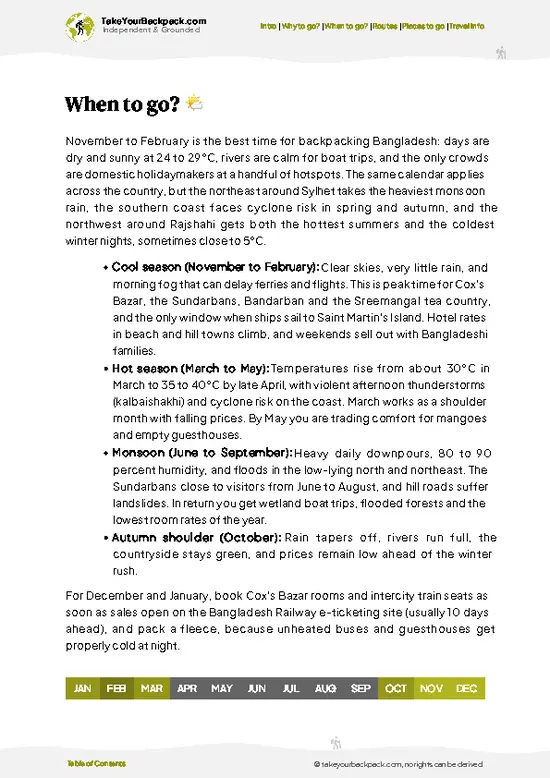
source: climatestotravel.comJANJanuary: excellent for travelingFEBFebruary: excellent for travelingMARMarch: good for travelingAPRApril: fair for travelingMAYMay: below average for travelingJUNJune: below average for travelingJULJuly: below average for travelingAUGAugust: below average for travelingSEPSeptember: fair for travelingOCTOctober: good for travelingNOVNovember: excellent for travelingDECDecember: excellent for traveling
when-to-go

✈️ The backpacker research shortcutBangladesh Travel Guide

An offline-friendly backpacking guide with optimized travel routes, ranked highlights, transport advice, and the best areas to stay.
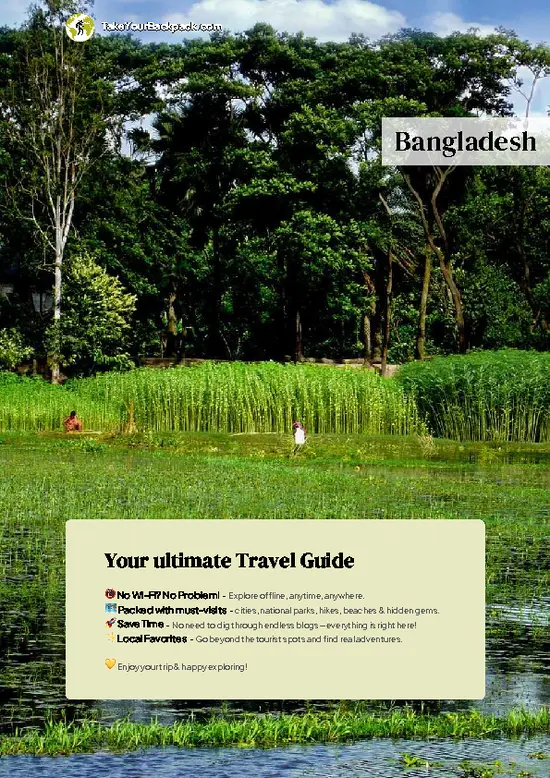
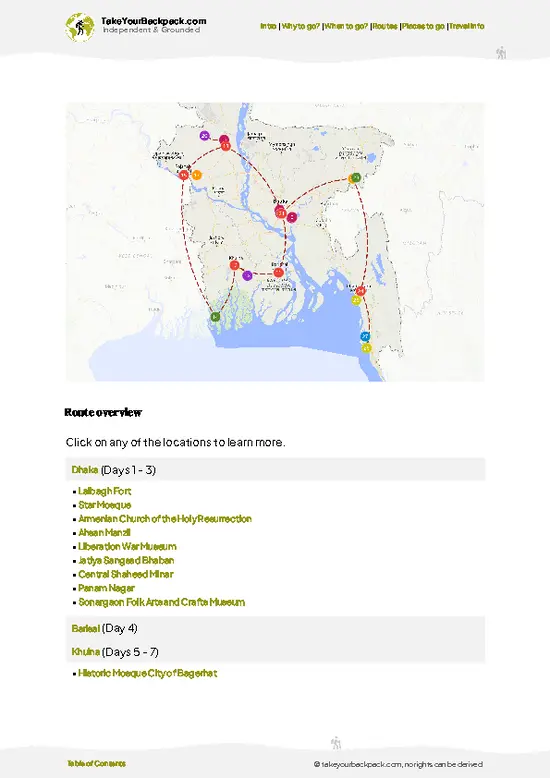
example page 0 from our offline Travel Guide for Bangladesh
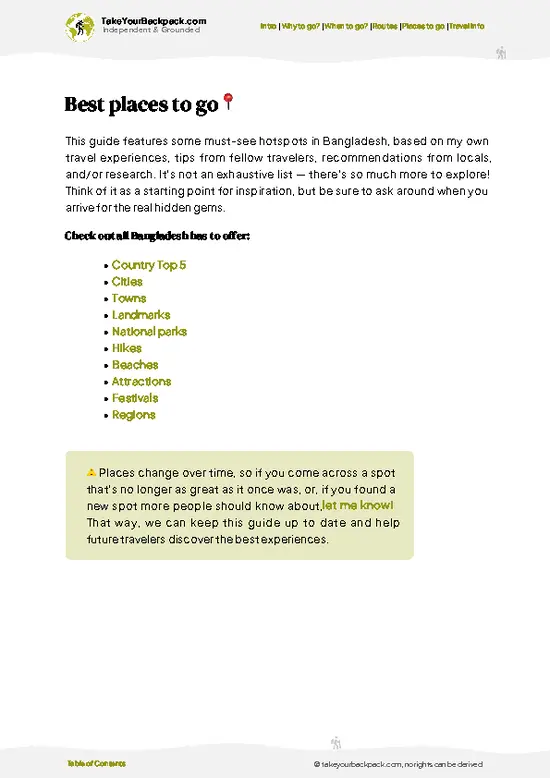
example page 1 from our offline Travel Guide for Bangladesh
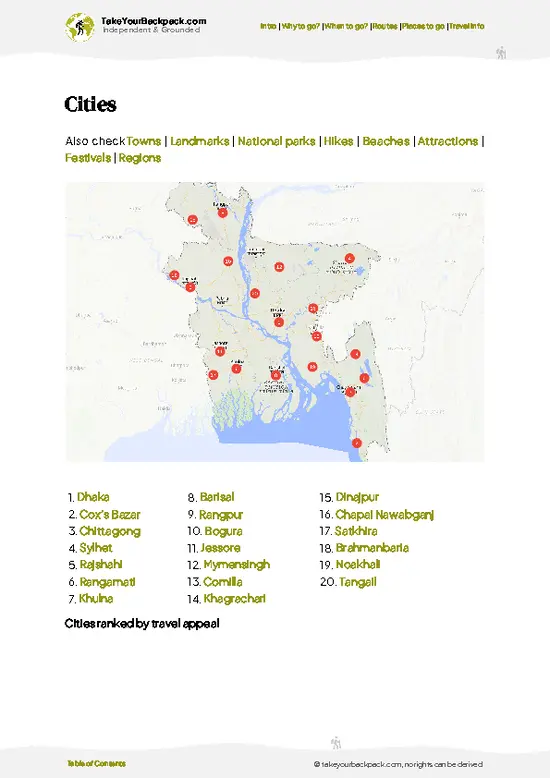
example page 2 from our offline Travel Guide for Bangladesh
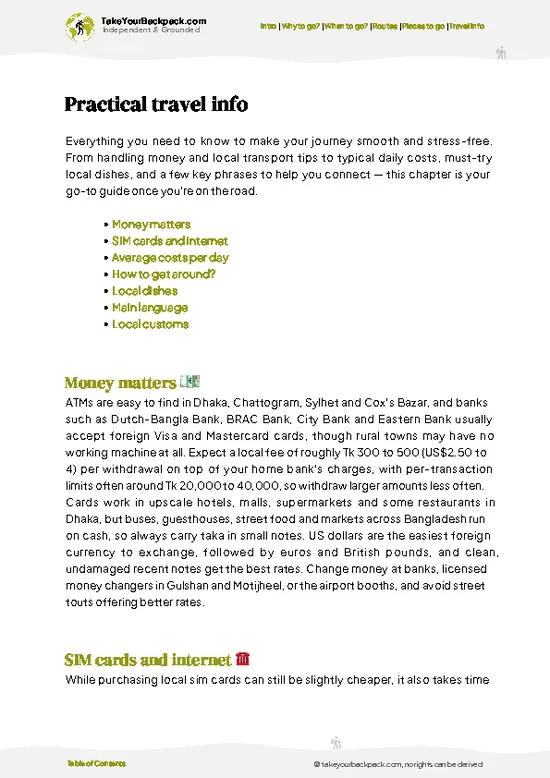
example page 3 from our offline Travel Guide for Bangladesh
example page 4 from our offline Travel Guide for Bangladesh
example page 5 from our offline Travel Guide for Bangladesh
example page 6 from our offline Travel Guide for Bangladesh
example page 7 from our offline Travel Guide for Bangladesh
The digital guide (358 pages) contains:
107 highlights, ranked by travel appeal
Optimized 7, 14 & 21-day travel routes
Cities, national parks, landmarks, beaches
How to get around
Offline-friendly for travel without Wi-Fi
👉 Click to see all 30+ guide features

📅 Plan smarter in minutes, not weeks
Month by month travel advice
Festivals & national holidays
Budget expectations

🗺️ Go to the right places, skip the overrated ones
Honest pros & cons of destinations
Top hikes, parks & viewpoints
Lesser-known places most travelers miss
Clear “worth it vs skip it” guidance

🛏️ Travel smoothly without rookie mistakes
Best areas to stay
Transport systems explained simply
Common scams & safety advice
SIM cards, money & practical tips

🌍 Understand the country, not just visit it
Culture & traditions
52 Essential phrases & customs
Festivals worth planning around
Traveler-friendly historical context
Insights that make places more meaningful

📱 Built for real travel conditions
Fully downloadable PDF
Works completely offline
Optimized for phone use
Useful in remote areas & buses
Everything in one place
Save weeks of stressful planning
Get instant access to your full guide. 30‑day money-back guarantee.


By proceeding you agree to our terms.
Sent to your inbox immediately after payment • 100% Secure Checkout
Best Backpacking Travel Advisor 2025 tourism awardBest Backpacking
Travel Advisor
2025
What others say about Take Your Backpack Guides:
⭐⭐⭐⭐⭐
Fantastic, amazing amount of information!
⭐⭐⭐⭐⭐
My goodness this is amazing, it's what I've been looking for hats off too you!
⭐⭐⭐⭐⭐
I think this is absolutely BRILLIANT
⭐⭐⭐⭐
Very complete and informative. It's still missing places, but I gotta to commend you
⭐⭐⭐⭐⭐
This is truly amazing, thank you, can't wait to explore it with my kids!
⭐⭐⭐⭐⭐
Awesome resource, thank you!
⭐⭐⭐⭐⭐
This is amazing! Can't wait to explore the ones I haven't seen
⭐⭐⭐⭐
I love this! Well done, great idea.
⭐⭐⭐⭐⭐
Thanks for taking the time to make this gem!
⭐⭐⭐⭐⭐
This might be the best website I've ever seen.
⭐⭐⭐⭐⭐
Congratulations, and thank you so much for your work; it's incredibly valuable.
⭐⭐⭐⭐
In all seriousness I think you did a great job pointing out the important spots
⭐⭐⭐⭐⭐
10/10 very good
⭐⭐⭐⭐⭐
As someone who's only just starting to visit regularly this is awesome, thank you.
⭐⭐⭐⭐
Thank you very much! I'm going to visit my dad, it's going to be very useful!
⭐⭐⭐⭐⭐
This is really cool! We'll be travelling for the first time and this definitely come in handy.
⭐⭐⭐⭐⭐
You are now our minister of culture, congratulations 👨‍💼
⭐⭐⭐⭐⭐
Just wanted to tell you that this is a pearl! Going to follow your recommendations.
⭐⭐⭐⭐⭐
This is so cool. I'll definitely be using the resource for my travels soon.
⭐⭐⭐⭐⭐
This is very impressive! Good work.
⭐⭐⭐⭐⭐
This is an amazing and informative site. Very well done!

🛏️ Where to stay?Best areas to stay in Bangladesh

In Jhalokati, the best spot for backpackers is the area around the town center, especially near the bus terminal and local markets. This zone hums with everyday life—vendors shouting over the scent of fresh fish and spices, rickshaws weaving through narrow lanes, and the steady pulse of locals going about their day. Staying here means you’re plugged into the town’s rhythm, not stuck on the outskirts where the quiet can feel isolating and the options for food and socializing thin.

Safety here is solid, thanks to the constant flow of people and the watchful eyes of shopkeepers. It’s a place where … read more 👉
In Jhalokati, the best spot for backpackers is the area around the town center, especially near the bus terminal and local markets. This zone hums with everyday life—vendors shouting over the scent of fresh fish and spices, rickshaws weaving through narrow lanes, and the steady pulse of locals going about their day. Staying here means you’re plugged into the town’s rhythm, not stuck on the outskirts where the quiet can feel isolating and the options for food and socializing thin.

Safety here is solid, thanks to the constant flow of people and the watchful eyes of shopkeepers. It’s a place where you can wander after dark without feeling like you’re stepping into a shadow. For solo travelers, this area offers a natural social scene—small tea stalls and roadside eateries become informal meeting points, perfect for striking up conversations with locals or fellow travelers.

Hostels are sparse but tend to cluster near the main roads, offering basic but clean accommodations. The vibe is unpretentious and grounded, a real slice of Bangladeshi small-town life. Compared to quieter residential neighborhoods, this central zone delivers both convenience and connection, making it the smart choice for backpackers who want to feel part of the town’s pulse rather than just passing through.

🚌 Getting aroundMoving around without the hassle

Jhalokati moves at its own pace—neither frantic nor sluggish, but a steady rhythm shaped by the river’s flow and the daily pulse of markets and mosques. The air carries a mix of fresh earth, spices from street stalls, and the faint hum of boats cutting through the water. Here, time is flexible, not rigid. You won’t find strict timetables or shiny transit hubs; instead, you navigate by intuition, local cues, and a bit of patience. Understanding this flow is your key to unlocking smooth travel: embrace the organic, and you’ll find the town’s charm unfolding naturally.


  • Walking: The heart of Jhalokati is compact enough to explore on foot. Streets are narrow, often shaded by mango and jackfruit trees, with the scent of wet soil after rain. Walking lets you soak in the sensory details—vendors
read more 👉
Jhalokati moves at its own pace—neither frantic nor sluggish, but a steady rhythm shaped by the river’s flow and the daily pulse of markets and mosques. The air carries a mix of fresh earth, spices from street stalls, and the faint hum of boats cutting through the water. Here, time is flexible, not rigid. You won’t find strict timetables or shiny transit hubs; instead, you navigate by intuition, local cues, and a bit of patience. Understanding this flow is your key to unlocking smooth travel: embrace the organic, and you’ll find the town’s charm unfolding naturally.


  • Walking: The heart of Jhalokati is compact enough to explore on foot. Streets are narrow, often shaded by mango and jackfruit trees, with the scent of wet soil after rain. Walking lets you soak in the sensory details—vendors calling out, children playing cricket, and the occasional stray cow. It’s free, flexible, and the best way to catch the town’s authentic vibe.


  • Rickshaws: These three-wheeled workhorses are everywhere and perfect for short hops. Fares are negotiable but usually hover around 20-40 BDT per ride. Rickshaws don’t run on a schedule; they wait for passengers, so you can flag one down anytime between dawn and dusk. They’re slow but offer a breezy, open-air experience that’s part of the local rhythm.


  • Local Buses: For longer distances or trips to nearby towns like Barisal, local buses are your budget go-to. They start early, around 6 AM, and run until early evening. Tickets cost roughly 30-50 BDT depending on distance. Buses can be crowded and noisy, but they’re reliable and give you a real sense of regional life, with stops dictated by passenger demand rather than a strict timetable.


  • Motorbike Taxis: If you want to move faster without breaking the bank, motorbike taxis offer a zippy alternative. They’re less common than rickshaws but can weave through traffic and narrow lanes quickly. Expect to pay about 50-70 BDT for short rides. Helmets aren’t always provided, so bring your own if safety matters to you.


  • Boat Transport: Given Jhalokati’s riverine setting, boats are more than just scenic—they’re practical. Small passenger boats connect to nearby villages and markets along the rivers. Departure times are flexible, often leaving when enough passengers gather. Prices vary but are generally low, around 20-40 BDT. The ride offers a cool breeze and a unique vantage point on the town’s daily life.

👛 Costs (as of 25 March 2026)Money, prices, and spending tips

Backpacking in Jhalokati, Bangladesh, offers a raw and authentic experience where costs stay modest but the local rhythm demands a bit of savvy budgeting to keep things smooth.
  • Dorm Accommodation: Options here are limited and basic, often guesthouses rather than formal hostels. Expect to pay around $5 to $10 per night. Rooms might be simple, with a fan rather than AC, and shared bathrooms. The key is to find places near the town center for convenience.
  • Meals: Street food and small local eateries dominate. A filling meal of rice, lentils, and fish or chicken will run you about $1 to $3. Fresh fruit and snacks are even cheaper. Avoiding tourist spots means better prices and more authentic flavors, but watch for hygiene to avoid any stomach trouble.
  • Local Transport: Rickshaws and auto-rickshaws
read more 👉
Backpacking in Jhalokati, Bangladesh, offers a raw and authentic experience where costs stay modest but the local rhythm demands a bit of savvy budgeting to keep things smooth.
  • Dorm Accommodation: Options here are limited and basic, often guesthouses rather than formal hostels. Expect to pay around $5 to $10 per night. Rooms might be simple, with a fan rather than AC, and shared bathrooms. The key is to find places near the town center for convenience.
  • Meals: Street food and small local eateries dominate. A filling meal of rice, lentils, and fish or chicken will run you about $1 to $3. Fresh fruit and snacks are even cheaper. Avoiding tourist spots means better prices and more authentic flavors, but watch for hygiene to avoid any stomach trouble.
  • Local Transport: Rickshaws and auto-rickshaws are the go-to modes. Short rides cost roughly $0.20 to $0.50. For longer trips around the district, you might spend up to $2. Walking is often the best way to soak in the atmosphere and save money.
  • Basic Activities/Entry Fees: Jhalokati isn’t a hotspot for pricey tourist attractions. Visiting local markets or riverside spots is free. If you want to explore nearby cultural sites or natural areas, budget around $1 to $3 for entry or small guide fees.
  • Miscellaneous Expenses: This covers bottled water, snacks, phone credit, and occasional small purchases. Around $1 to $2 daily should cover these essentials. Bottled water is crucial due to local tap water quality.

All told, you’re looking at roughly $8 to $20 per day to backpack comfortably in Jhalokati. This range lets you stay in decent basic accommodation, eat well, and move around without stress. The town’s simplicity means your budget stretches further, but the trade-off is fewer tourist conveniences—so plan for a bit of rugged charm in exchange for genuine local flavor.
⚠️ Prices can change and everyone travels differently, so take this as a rough guide. Hope it helps you plan your adventure!

🚌 Day tripsShort trips worth adding

Jhalokati is a backpacker’s dream base, offering easy access to unique experiences that capture the essence of Bangladesh.

Trip to Kuakata Beach
A two-hour bus ride from Jhalokati, Kuakata Beach is where the Bay of Bengal greets the horizon. The salty air fills your lungs as you stroll along the sandy shore, watching fishermen haul in their morning catch. This spot is famous for its sunrise and sunset views, so plan to linger. Expect to spend around 200 BDT on transport and a few hundred more for a meal. Avoid the mistake of rushing back; the evening light transforms the beach into a painter’s palette.


Trip to the Sundarbans
Just a short boat ride away, the Sundarbans offer a chance to explore the world’s largest mangrove forest. The air is thick with the scent of brackish water … read more 👉
Jhalokati is a backpacker’s dream base, offering easy access to unique experiences that capture the essence of Bangladesh.

Trip to Kuakata Beach
A two-hour bus ride from Jhalokati, Kuakata Beach is where the Bay of Bengal greets the horizon. The salty air fills your lungs as you stroll along the sandy shore, watching fishermen haul in their morning catch. This spot is famous for its sunrise and sunset views, so plan to linger. Expect to spend around 200 BDT on transport and a few hundred more for a meal. Avoid the mistake of rushing back; the evening light transforms the beach into a painter’s palette.


Trip to the Sundarbans
Just a short boat ride away, the Sundarbans offer a chance to explore the world’s largest mangrove forest. The air is thick with the scent of brackish water and the calls of exotic birds. A day trip typically costs about 1,500 BDT, including a guide. Best visited during the dry season, you’ll want to book ahead to secure a spot. Many first-timers underestimate the time needed to truly soak in the wildlife; take your time and breathe it all in.
👉 Explore Sundarbans

Trip to Barisal City
Barisal, a vibrant city just an hour away, is a hub of culture and history. The bustling markets and riverside views offer a sensory overload. You can explore local cuisine for under 300 BDT and hop on a ferry to see the city from the water. The best time to visit is during the winter months when the weather is cooler. A common pitfall is sticking to the tourist spots; dive into the local eateries for an authentic taste of life here.
Want to know what more Bangladesh offers?
The Bangladesh Travel Guide describes 107 highlights, from cities to national parks, from beaches to hikes

Get the Travel Guide -

🍲 FoodLocal Cuisine & Drinks

In Jhalokati, food is a lively negotiation between bold flavors and simple, fresh ingredients. The city’s signature dish, *panta bhat*—fermented rice soaked overnight and served cold—might sound odd, but it’s a local treasure, especially when paired with fried hilsa fish, a regional pride. The sharp tang of mustard oil and the crunch of fresh onions cut through the mellow rice, creating a balance that’s both refreshing and grounding. Don’t miss the *bhuna khichuri*, a spiced rice and lentil dish that’s hearty enough to fuel a day of wandering.

Backpackers will find themselves drawn to the bustling street markets where food stalls sizzle with fresh catches and spices. These open-air kitchens are the pulse of Jhalokati’s eating culture—no menus, just the rhythm of calls and clattering pans. … read more 👉
In Jhalokati, food is a lively negotiation between bold flavors and simple, fresh ingredients. The city’s signature dish, *panta bhat*—fermented rice soaked overnight and served cold—might sound odd, but it’s a local treasure, especially when paired with fried hilsa fish, a regional pride. The sharp tang of mustard oil and the crunch of fresh onions cut through the mellow rice, creating a balance that’s both refreshing and grounding. Don’t miss the *bhuna khichuri*, a spiced rice and lentil dish that’s hearty enough to fuel a day of wandering.

Backpackers will find themselves drawn to the bustling street markets where food stalls sizzle with fresh catches and spices. These open-air kitchens are the pulse of Jhalokati’s eating culture—no menus, just the rhythm of calls and clattering pans. Casual eateries nearby offer a chance to sit and watch the world go by, often with a cup of *chai* brewed strong and sweet, a local ritual that’s as much about connection as caffeine.

Drinking here is straightforward: expect fresh sugarcane juice or *borhani*, a spicy yogurt drink that cleanses the palate and wakes up the senses. Sharing food is common, and modesty in eating is appreciated—don’t rush, and savor the communal vibe. Jhalokati’s food scene isn’t about luxury; it’s about authenticity, where every bite tells a story of place and tradition.

🛡️ SafetySafety Tips and Common Scams in Jhalokati

Jhalokati is generally safe, but a few practical tips can enhance your experience. Stay aware in crowded markets; pickpockets can be a nuisance. If you’re solo, avoid wandering too far after dark—stick to well-lit areas and main roads.

Common scams are rare, but be cautious with overly friendly locals offering unsolicited help; they might expect a tip. Carry yourself confidently, and don’t hesitate to say no. Trust your instincts, and you’ll navigate this charming town smoothly.

Other Bangladeshi cities near Jhalokati

Explore more nearby:

  • Barisal—floating markets, river deltas, launch terminals| 17 km away
  • Barguna—coastal villages, fishing ports, tidal rivers| 54 km away
  • Gopalganj—ancestral estates, political history, roadside eateries| 55 km away

💡 Not sure where to go next?
Create a personalized itinerary for Bangladesh including Jhalokati and the places that fit your trip.

Generate my itinerary

👉 Discover all cities

Or checkout all Bangladesh has to offer (think cities, towns, villages, national parks, hikes, beaches, festivals)
Country photo of Bangladesh

We 💚 feedbackFinal thoughts on visiting Jhalokati

Jhalokati’s charm sneaks up on you. The air is thick with the scent of fresh fish and spices, and the locals are genuinely warm. Just be ready for the heat—hydrate early. The best surprise? The river views at sunset; they’ll linger in your memory.

✍️ Help improve this page!
The information on this page is based on in-depth research, insights shared by experienced travelers, and feedback from the local travel community in Bangladesh. While every effort is made to keep the information accurate and current, conditions can change — so if you spot anything incorrect or outdated, please get in touch.


🙋‍♂️ Give feedback

👋 Meet the founderWho’s Behind Take Your Backpack?

Johan, backpacker and founder of TakeYourBackpackHi, I’m Johan (Netherlands 🇳🇱), the creator of TakeYourBackpack. Over the past decade, I’ve backpacked through 80+ countries across six continents, gaining extensive experience with independent travel, long-term trips, and overland routes.

This site is built on a combination of firsthand travel experience and carefully curated insights from other backpackers. Many guides are based on places I’ve personally visited, while others bring together tips, observations, and practical advice shared by trusted travelers I’ve met along the way.

The goal is to provide realistic, experience-driven guidance — not generic itineraries — so you can explore destinations with better context, clearer expectations, and more confidence.

Get full Bangladesh guide •
Instant download • 107 highlights • Full Offline guide