×

Bangladesh🇧🇩 | best citiesWhere to Find the 10 Best cities in Bangladesh

Bangladesh is a tapestry of urban experiences, where each city pulses with its own unique rhythm. The major hubs like Dhaka and Chittagong offer a whirlwind of cultural richness and vibrant nightlife, but they can also be overwhelming for the unprepared backpacker. In contrast, smaller urban centers like Sylhet and Rajshahi provide a more laid-back atmosphere, perfect for those seeking authentic immersion without the chaos.

Traveling through Bangladesh, you’ll notice how regional nuances shape each city’s vibe. The monsoon season can transform bustling streets into rivers, while winter brings a crispness that invites exploration. Choosing the right city impacts not just your budget and safety, but also your overall experience. For independent travelers, understanding local transport connections is crucial; some cities are well-linked, while others require more effort to navigate. Each choice you make will deepen your connection to this vibrant country.

By Johan Kruseman 🇳🇱 | Updated June 9, 2026
Explore the best towns in Bangladesh

Why go?What Makes Them Special

Bangladesh’s cities pulse with a cultural diversity that sets them apart in South Asia. Each urban center reflects a rich tapestry of historical depth, shaped by centuries of trade, colonial influences, and vibrant local traditions. This complexity offers travelers a chance to engage with a mosaic of regional identities, from the bustling markets of Dhaka to the serene waterways of Barisal.

The transport networks in Bangladesh can be both a blessing and a challenge. While major cities are connected by a mix of roads, railways, and waterways, the infrastructure can be inconsistent. Travelers may find themselves navigating congested streets or waiting for ferries, which can eat into exploration time. However, this often leads to unexpected encounters and a deeper understanding of daily life, … read more 👉
Bangladesh’s cities pulse with a cultural diversity that sets them apart in South Asia. Each urban center reflects a rich tapestry of historical depth, shaped by centuries of trade, colonial influences, and vibrant local traditions. This complexity offers travelers a chance to engage with a mosaic of regional identities, from the bustling markets of Dhaka to the serene waterways of Barisal.

The transport networks in Bangladesh can be both a blessing and a challenge. While major cities are connected by a mix of roads, railways, and waterways, the infrastructure can be inconsistent. Travelers may find themselves navigating congested streets or waiting for ferries, which can eat into exploration time. However, this often leads to unexpected encounters and a deeper understanding of daily life, making the journey itself a part of the experience.

Geographically, Bangladesh is a land of contrasts, with the Bengal delta creating a unique climate that influences urban life. The heat and humidity can be intense, especially during the summer months, but this also means lush greenery and vibrant street life. The monsoon season brings its own challenges, with flooding affecting accessibility, yet it also transforms the landscape into a lush paradise.

Travelers should weigh the trade-offs of accessibility versus immersive experiences. While some cities may require more effort to reach, the rewards often lie in the authenticity of the experience. The slower pace of life in smaller towns can provide a richer cultural immersion, while larger cities offer a dynamic blend of modernity and tradition.

In essence, the cities of Bangladesh are not just destinations; they are living narratives shaped by their past and present. Understanding these dynamics enhances the journey, making the effort to explore them worthwhile.
How the List Was Created
The list of best cities in Bangladesh is created based on culture, vibe, attractions, transport ease, and local charm. If you feel a city is missing in this list, please let us know.

When to go?Timing Your Visit for the Best Experience

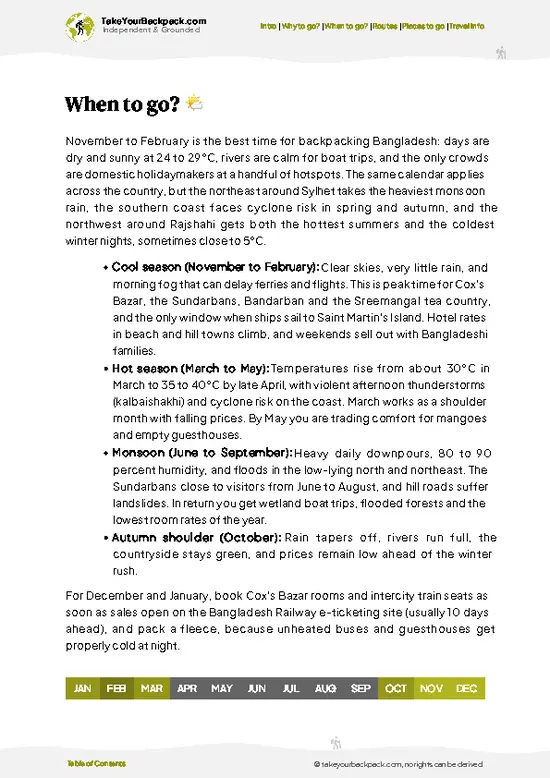
Seasonality plays a crucial role in shaping the experience of cities in Bangladesh. The country experiences three main seasons: the hot, humid summer; the monsoon; and the cooler, drier winter. Each season brings its own character, affecting crowds, temperatures, and local events.

Summer can be intense, with temperatures soaring and humidity levels rising. This period, typically from March to June, sees fewer tourists. While this means less crowded streets, the heat can be oppressive. Early mornings or late afternoons become the best times to explore, as the sun’s intensity eases. However, the vibrant energy of local life continues, with street vendors and markets bustling despite the heat.

Monsoon season, from June to September, transforms the landscape. Rainfall can be heavy, leading to … read more 👉
Seasonality plays a crucial role in shaping the experience of cities in Bangladesh. The country experiences three main seasons: the hot, humid summer; the monsoon; and the cooler, drier winter. Each season brings its own character, affecting crowds, temperatures, and local events.

Summer can be intense, with temperatures soaring and humidity levels rising. This period, typically from March to June, sees fewer tourists. While this means less crowded streets, the heat can be oppressive. Early mornings or late afternoons become the best times to explore, as the sun’s intensity eases. However, the vibrant energy of local life continues, with street vendors and markets bustling despite the heat.

Monsoon season, from June to September, transforms the landscape. Rainfall can be heavy, leading to occasional flooding in urban areas. While this might deter some travelers, the lush greenery and vibrant life that emerges can be captivating. Crowds thin out, and prices often drop, making it a budget-friendly option. Yet, navigating the streets can be tricky, and outdoor activities may be limited.

Winter, from October to February, is often considered the ideal time to visit. The weather is cooler and more comfortable, drawing both local and international visitors. Festivals and cultural events flourish during this period, adding a rich layer to the experience. However, this peak season brings larger crowds and higher prices. Planning ahead becomes essential to secure accommodations and enjoy the festivities.

Shoulder seasons—the transitions between these main periods—offer a mix of benefits and challenges. Late February to early March can provide pleasant weather with fewer tourists, but the risk of unexpected rain remains. Similarly, late September to early October may see lingering monsoon effects, yet the promise of clearer skies can be enticing.

Understanding these seasonal rhythms allows for a more informed travel experience, balancing the desire for comfort with the richness of cultural engagement.

city hoppingOptimizing Your Multi-Stop Itinerary

Bangladesh’s cities offer a rich tapestry of experiences, but combining them efficiently requires strategic planning. Start by clustering cities by region. The capital, Dhaka, serves as a natural hub. From there, consider heading north to the historic city of Bogura or west to the vibrant Rajshahi. Each of these cities is roughly a 5-6 hour bus ride from Dhaka, making them manageable day trips or overnight stops.

Next, move east towards Sylhet, known for its lush tea gardens and serene landscapes. This leg typically takes about 6-7 hours by bus or train. The journey is scenic, with rolling hills and the scent of tea leaves wafting through the air. After Sylhet, consider heading south to Chittagong, which is about 8 hours away. This coastal city offers a different vibe, with its bustling port … read more 👉
Bangladesh’s cities offer a rich tapestry of experiences, but combining them efficiently requires strategic planning. Start by clustering cities by region. The capital, Dhaka, serves as a natural hub. From there, consider heading north to the historic city of Bogura or west to the vibrant Rajshahi. Each of these cities is roughly a 5-6 hour bus ride from Dhaka, making them manageable day trips or overnight stops.

Next, move east towards Sylhet, known for its lush tea gardens and serene landscapes. This leg typically takes about 6-7 hours by bus or train. The journey is scenic, with rolling hills and the scent of tea leaves wafting through the air. After Sylhet, consider heading south to Chittagong, which is about 8 hours away. This coastal city offers a different vibe, with its bustling port and access to the stunning Cox’s Bazar beach.

Time management is crucial. Allocate at least two full days in each city to soak in the local culture, cuisine, and sights. Rushing through will rob the experience of its depth. A common mistake is trying to cram too many cities into a short timeframe, leading to fatigue and missed connections.

Trade-offs are inherent in travel. Speed often sacrifices comfort; overnight buses can save time but may leave travelers exhausted. Conversely, taking a slower pace allows for deeper engagement but can strain budgets and schedules. Flexibility is key; unexpected delays can happen, so having a buffer in plans is wise.

Ultimately, the reward lies in the moments between cities—the conversations with locals, the flavors of street food, and the breathtaking views that make the effort worthwhile.

The ListThe Best cities of Bangladesh

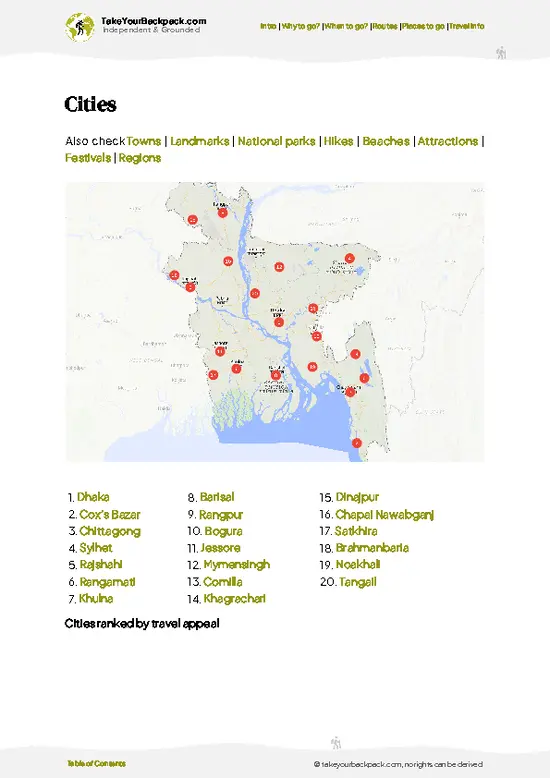
1 Dhaka

rickshaw traffic, Mughal relics, street food

Navigate crowded streets by rickshaw, visit centuries-old forts, and sample snacks from vendors in every neighborhood.

bangladesh-city-dhaka v1
© Google |

2 Cox’s Bazar

long beach, fishing boats, seaside resorts

Walk the world’s longest natural beach, watch fishermen at work, and explore the town’s lively beachfront scene.

3 Puthia

temple cluster, palace grounds, ornamental ponds

Stroll through a compact area dotted with ornate temples and water features, where architectural detail rewards slow exploration.

bangladesh-city-puthia
© Google |

4 Chittagong

port city, hill tracks, seafood markets

Navigate a city built around its port, venture into nearby hills, and sample seafood at bustling local markets.

5 Gopalganj

ancestral estates, political history, roadside eateries

Trace the legacy of national leaders and sample local food along highways that cut through a region steeped in political significance.

6 Sylhet

tea estates, Sufi shrines, rolling hills

Visit tea gardens, explore Sufi pilgrimage sites, and travel through a landscape of hills and rivers.

7 Jhalokati

canal networks, floating bazaars, betel nut groves

Travel by boat to reach waterside markets and discover a town where commerce and daily life unfold along narrow, tree-lined canals.

8 Srimangal

tea plantations, rainforests, wildlife sanctuaries

Hike through tea estates, spot rare monkeys in Lawachara forest, and enjoy the region’s cool, green landscape.

9 Madaripur

ferry crossings, rice mills, rural temples

Cross rivers by local ferry and explore the agricultural heartland, where religious sites and rice processing shape the landscape.

10 Rajshahi

silk weaving, mango orchards, river sunsets

Tour silk workshops, visit during mango season, and watch the sun set over the Padma River.

11 Narail

river islands, folk art, fishing villages

Wander through a landscape shaped by waterways, where local artists and riverside communities offer a window into rural Bangladeshi life.

12 Khulna

Sundarbans access, shrimp industry, riverfront

Use Khulna as a base for Sundarbans trips, observe shrimp farming, and stroll along the Bhairab River’s busy banks.

13 Magura

weekly markets, jute fields, local crafts

Experience the rhythm of market days and the patchwork of agricultural land, with artisans and farmers shaping the town’s daily pulse.

14 Rangamati

lake islands, tribal villages, hanging bridges

Take boats to island villages, cross suspension bridges, and meet indigenous communities in the Chittagong Hill Tracts.

15 Habiganj

tea gardens, low hills, tribal villages

Walk among rolling tea estates and visit indigenous settlements, where the terrain shifts from flat plains to gentle uplands.

16 Barisal

floating markets, river deltas, launch terminals

Travel by launch through river networks, visit floating vegetable markets, and experience life in the southern delta.

17 Chuadanga

rail junction, mango orchards, border trade

Arrive by train to a town known for seasonal fruit harvests and cross-border commerce, with a pace set by agriculture and transit.

18 Jessore

flower markets, border roads, rural temples

Browse flower stalls, travel roads leading to India, and visit temples scattered across the countryside.

19 Laxmipur

river port, fish markets, rural mosques

Navigate a riverside town where daily life centers on the docks, with fresh catches and prayer calls marking the day’s rhythm.

20 Dinajpur

Kantaji Temple, rice fields, colonial relics

Visit the ornate Kantaji Temple, walk through rice fields, and see remnants of colonial-era buildings.

21 Comilla

war cemetery, ancient ruins, border highways

Tour a World War II cemetery, explore Buddhist archaeological sites, and travel highways connecting to eastern India.

22 Khagrachari

hilltop villages, bamboo bridges, indigenous markets

Hike to remote villages, cross bamboo bridges, and shop at markets run by local hill communities.

23 Narayanganj

industrial docks, textile mills, riverfront eateries

Watch cargo boats unload at busy docks, sample street food by the Shitalakshya, and see the city’s industrial heritage up close.

24 Gazipur

factory zones, national park, roadside eateries

Explore the edge of Dhaka’s sprawl, visit a forested national park, and see how industry and nature coexist on the city’s outskirts.

25 Bogura

archaeological mounds, pottery villages, river trade

Explore Mahasthangarh’s ruins, visit pottery-making villages, and see how river commerce shapes the city.

26 Mymensingh

river promenade, university campus, folk art

Stroll along the Brahmaputra, visit the historic university, and see traditional art in local museums.

27 Chapai Nawabganj

mango orchards, border crossings, river trade

Travel during mango season for local harvests, watch trade at the Padma’s edge, and see the influence of nearby India.

28 Brahmanbaria

canal networks, folk musicians, village mosques

Travel by boat through canals, listen for traditional music, and visit mosques that anchor rural communities.

29 Faridpur

jute processing, river islands, local sweets

Observe jute being processed, visit river islands by boat, and try sweets unique to this central Bangladeshi town.

30 Noakhali

char islands, cyclone shelters, delta landscapes

Navigate shifting river islands, observe disaster preparedness, and see how communities adapt to the ever-changing Meghna delta.

31 Feni

road junctions, small factories, river crossings

Pass through a key transport hub, visit small-scale factories, and cross rivers that connect the region’s towns.

32 Jhenaidah

rural temples, vegetable markets, quiet roads

Cycle past small temples, visit bustling vegetable markets, and experience a slower pace in this southwestern town.

33 Satkhira

Sundarbans gateway, shrimp farms, mangrove edges

Enter the Sundarbans from the west, watch shrimp farming in tidal flats, and explore villages shaped by proximity to mangrove forests.

34 Tangail

handloom sarees, rural markets, river crossings

Browse textile workshops, cross the Jamuna by local ferry, and experience the pace of life in a town shaped by weaving traditions.

35 Narsingdi

loom factories, fruit orchards, rural highways

Tour textile workshops, sample seasonal fruit, and travel along highways connecting villages to the capital’s markets.

36 Joypurhat

rice mills, archaeological sites, borderland fields

Visit ancient ruins, walk through rice-processing towns, and see how agriculture and history intersect near the Indian border.

37 Naogaon

archaeological ruins, mango markets, riverbanks

Explore ancient Buddhist sites, browse bustling fruit markets, and follow rivers that shape the region’s agricultural life.

38 Jamalpur

floodplains, jute fields, folk music

Experience agricultural rhythms along the Brahmaputra, listen for local music, and see how flood cycles shape daily routines.

39 Lalmonirhat

rail junctions, open fields, border rivers

Travel through a landscape defined by railway lines and riverbanks, where rural life unfolds close to the Indian border.

40 Sherpur

forest edges, ethnic villages, river valleys

Walk forest trails, meet indigenous communities, and explore valleys shaped by the Someshwari and Brahmaputra rivers.

41 Panchagarh

tea estates, Himalayan views, border posts

Travel north for glimpses of distant mountains, visit tea gardens, and see the influence of nearby India and Bhutan.

42 Meherpur

historic declaration site, mango orchards, borderland roads

Stand where Bangladesh’s independence was first declared, walk through mango groves, and explore quiet roads near the Indian border.

43 Manikganj

river ferries, brass workshops, rural bazaars

Ride ferries across the Padma, browse brassware in local markets, and see how rivers shape trade and daily life.

44 Thakurgaon

tea gardens, borderland villages, winter fairs

Visit remote settlements, sample local tea, and time your trip for seasonal fairs that draw communities from across the northern plains.

45 Gaibandha

river erosion, clay villages, rural homesteads

Witness the impact of riverbank erosion, visit homesteads built from local clay, and observe adaptation in flood-prone communities.

46 Barguna

coastal villages, fishing ports, tidal rivers

Watch fishing boats return at dawn, explore tidal riverbanks, and see how coastal life adapts to changing water levels.

47 Netrakona

wetland haors, folk festivals, rural homesteads

Travel during monsoon to see flooded wetlands, join local festivals, and visit villages surrounded by water.

48 Chandpur

hilsa markets, river confluence, ferry terminals

Sample fresh hilsa at the riverside, watch ferries depart from the busy terminal, and see where major rivers meet.

Think you know Bangladesh?

Prove you’re a true local — uncover 38 lesser-known cities in Bangladesh that locals tend to keep to themselves.
Loading the map 🌍

Expert viewInsights from Locals and Experts

Transport Hubs


Bangladesh’s transport network is a patchwork of bustling hubs and chaotic streets. Major cities serve as gateways, but the journey between them can be a test of patience. Buses, trains, and rickshaws are the lifeblood of urban movement. Buses range from the cramped, local options to more comfortable long-distance services. Expect to share your space with a mix of locals, goods, and the occasional stray chicken. Trains offer a slower, more scenic route, but delays are common.

The trade-off here is time versus experience. If you’re in a hurry, buses can get you from point A to B faster, but you’ll miss the chance to soak in the landscape and local life. If you choose the train, you’ll witness the vibrant tapestry of rural Bangladesh, but be prepared for a longer journey. … read more 👉

Transport Hubs


Bangladesh’s transport network is a patchwork of bustling hubs and chaotic streets. Major cities serve as gateways, but the journey between them can be a test of patience. Buses, trains, and rickshaws are the lifeblood of urban movement. Buses range from the cramped, local options to more comfortable long-distance services. Expect to share your space with a mix of locals, goods, and the occasional stray chicken. Trains offer a slower, more scenic route, but delays are common.

The trade-off here is time versus experience. If you’re in a hurry, buses can get you from point A to B faster, but you’ll miss the chance to soak in the landscape and local life. If you choose the train, you’ll witness the vibrant tapestry of rural Bangladesh, but be prepared for a longer journey.

Urban Pacing


Cities pulse with energy, but the pace can be overwhelming. The streets are alive with the sounds of vendors hawking their wares, the scent of street food wafting through the air, and the constant honking of rickshaws. You’ll find that each city has its own rhythm. Some are frenetic, while others offer a more laid-back vibe.

Plan to spend at least a couple of days in each city to truly absorb the atmosphere. Rushing through will leave you with a superficial understanding of the culture. The trade-off is clear: a quick visit might allow you to tick off more cities, but you’ll miss the nuances of local life.

Local Costs


Bangladesh is generally budget-friendly, but costs can vary significantly between urban centers. Street food is a steal, offering delicious meals for just a few takas. However, dining in nicer restaurants can quickly add up. Accommodation ranges from basic hostels to mid-range hotels, and while you can find decent options for little money, the quality can be hit or miss.

When budgeting, consider that the more you immerse yourself in local experiences, the more you’ll spend on transport and food. If you’re trying to stretch your budget, stick to local eateries and public transport. The trade-off here is comfort versus authenticity. Opting for a more comfortable hotel might mean sacrificing the chance to mingle with locals in a bustling market.

Exploring More Cities Quickly


The temptation to hop from city to city is strong, especially with the allure of diverse experiences. However, the reality is that travel in Bangladesh can be time-consuming. Distances may seem short on a map, but the roads can be unpredictable.

If you aim to visit four to five cities, expect to dedicate at least two weeks. This allows for travel time and a couple of days in each city. The trade-off is between breadth and depth. You can cover more ground, but you’ll miss the chance to connect with the local culture.

Deeper Immersion


For those who want to dive deeper, consider focusing on two or three cities. This approach allows you to explore neighborhoods, engage with locals, and discover hidden spots that aren’t in the guidebooks. You’ll find that the slower pace reveals the soul of the city.

However, this means sacrificing the variety of experiences that come with visiting multiple locations. You might miss out on the unique flavors of each region, but the connections you build will be more meaningful. The trade-off here is the richness of experience versus the breadth of exploration.

Safety & Cultural Considerations


Safety is generally not a major concern, but it’s wise to stay aware of your surroundings. Dress modestly, especially in rural areas, to respect local customs. Engaging with locals can enhance your experience, but be mindful of cultural sensitivities.

Traveling in Bangladesh requires a flexible mindset. Plans may change, and delays are common. Embrace the unpredictability; it’s part of the adventure. The trade-off is between control and spontaneity. If you let go of rigid plans, you might stumble upon unexpected experiences that become the highlights of your journey.

In summary, Bangladesh offers a rich tapestry of urban experiences, but the key is to balance your desire for exploration with the need for immersion. Whether you choose to race through cities or take your time, the rewards will be worth the effort.

✈️ The backpacker research shortcutBangladesh Travel Guide

An offline-friendly backpacking guide with optimized travel routes, ranked highlights, transport advice, and the best areas to stay.
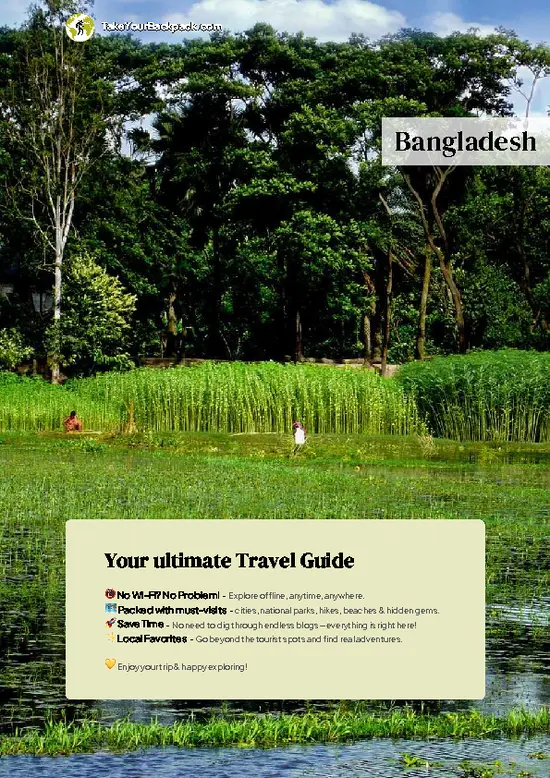
example page 0 from our offline Travel Guide for Bangladesh
example page 1 from our offline Travel Guide for Bangladesh
example page 2 from our offline Travel Guide for Bangladesh
example page 3 from our offline Travel Guide for Bangladesh
example page 4 from our offline Travel Guide for Bangladesh
example page 5 from our offline Travel Guide for Bangladesh
example page 6 from our offline Travel Guide for Bangladesh
example page 7 from our offline Travel Guide for Bangladesh
The digital guide (369 pages) contains:
107 highlights, ranked by travel appeal
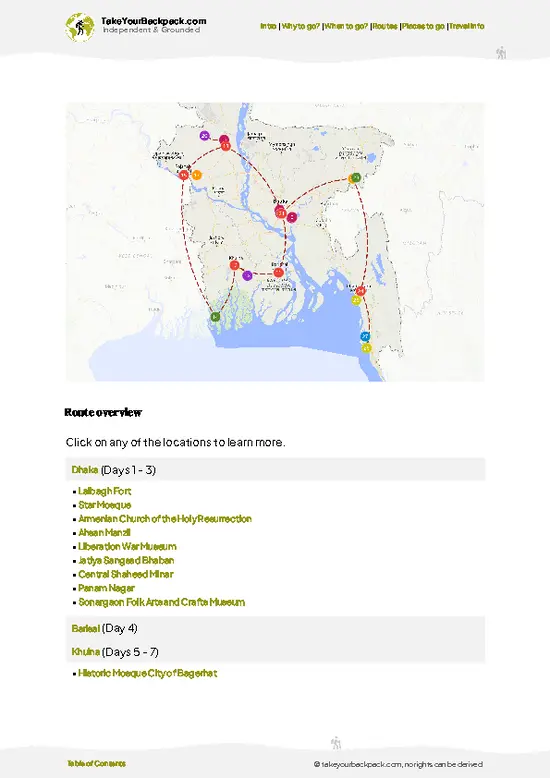
Optimized 7, 14 & 21-day travel routes
Cities, national parks, landmarks, beaches
How to get around
Offline-friendly for travel without Wi-Fi
👉 Click to see all 30+ guide features

📅 Plan smarter in minutes, not weeks
Month by month travel advice
Festivals & national holidays
Budget expectations

🗺️ Go to the right places, skip the overrated ones
Honest pros & cons of destinations
Top hikes, parks & viewpoints
Lesser-known places most travelers miss
Clear “worth it vs skip it” guidance

🛏️ Travel smoothly without rookie mistakes
Best areas to stay
Transport systems explained simply
Common scams & safety advice
SIM cards, money & practical tips

🌍 Understand the country, not just visit it
Culture & traditions
52 Essential phrases & customs
Festivals worth planning around
Traveler-friendly historical context
Insights that make places more meaningful

📱 Built for real travel conditions
Fully downloadable PDF
Works completely offline
Optimized for phone use
Useful in remote areas & buses
Everything in one place
Save weeks of stressful planning
Get instant access to your full guide. 30‑day money-back guarantee.


By proceeding you agree to our terms.
Sent to your inbox immediately after payment • 100% Secure Checkout
Best Backpacking Travel Advisor 2025 tourism awardBest Backpacking
Travel Advisor
2025
What others say about Take Your Backpack Guides:
⭐⭐⭐⭐⭐
Fantastic, amazing amount of information!
⭐⭐⭐⭐⭐
My goodness this is amazing, it's what I've been looking for hats off too you!
⭐⭐⭐⭐⭐
I think this is absolutely BRILLIANT
⭐⭐⭐⭐
Very complete and informative. It's still missing places, but I gotta to commend you
⭐⭐⭐⭐⭐
This is truly amazing, thank you, can't wait to explore it with my kids!
⭐⭐⭐⭐⭐
Awesome resource, thank you!
⭐⭐⭐⭐⭐
This is amazing! Can't wait to explore the ones I haven't seen
⭐⭐⭐⭐
I love this! Well done, great idea.
⭐⭐⭐⭐⭐
Thanks for taking the time to make this gem!
⭐⭐⭐⭐⭐
This might be the best website I've ever seen.
⭐⭐⭐⭐⭐
Congratulations, and thank you so much for your work; it's incredibly valuable.
⭐⭐⭐⭐
In all seriousness I think you did a great job pointing out the important spots
⭐⭐⭐⭐⭐
10/10 very good
⭐⭐⭐⭐⭐
As someone who's only just starting to visit regularly this is awesome, thank you.
⭐⭐⭐⭐
Thank you very much! I'm going to visit my dad, it's going to be very useful!
⭐⭐⭐⭐⭐
This is really cool! We'll be travelling for the first time and this definitely come in handy.
⭐⭐⭐⭐⭐
You are now our minister of culture, congratulations 👨‍💼
⭐⭐⭐⭐⭐
Just wanted to tell you that this is a pearl! Going to follow your recommendations.
⭐⭐⭐⭐⭐
This is so cool. I'll definitely be using the resource for my travels soon.
⭐⭐⭐⭐⭐
This is very impressive! Good work.
⭐⭐⭐⭐⭐
This is an amazing and informative site. Very well done!

🛏️ Where to stay?Best Stay Options in Bangladesh

Yes — affordable hostels and guesthouses are common across Bangladesh, with the most and best options concentrated in Dhaka (Gulshan/Banani for convenience, Dhanmondi for cheaper stays), the beach town of Cox’s Bazar, the port city Chattogram (central neighborhoods), Sylhet and nearby Sreemangal, and hill hubs like Bandarban and Rangamati.

Choose Dhaka neighborhoods for transport links, restaurants and nightlife but expect higher prices and heavy traffic; Cox’s Bazar for immediate beach access and heavy seasonal crowds; Chattogram for cheaper city stays with decent access to hikes and ferries; Sylhet/Sreemangal for tea‑garden guesthouses and quiet nature trips but fewer formal hostels; Bandarban/Rangamati … read more 👉
Yes — affordable hostels and guesthouses are common across Bangladesh, with the most and best options concentrated in Dhaka (Gulshan/Banani for convenience, Dhanmondi for cheaper stays), the beach town of Cox’s Bazar, the port city Chattogram (central neighborhoods), Sylhet and nearby Sreemangal, and hill hubs like Bandarban and Rangamati.

Choose Dhaka neighborhoods for transport links, restaurants and nightlife but expect higher prices and heavy traffic; Cox’s Bazar for immediate beach access and heavy seasonal crowds; Chattogram for cheaper city stays with decent access to hikes and ferries; Sylhet/Sreemangal for tea‑garden guesthouses and quiet nature trips but fewer formal hostels; Bandarban/Rangamati for basic, scenic guesthouses suited to trekkers with limited services and transport.

For safety and convenience pick centrally located districts in cities, keep cash and a power bank handy, and expect more basic facilities and harder transport logistics in hill areas and during peak season.

If you enjoy meeting fellow travelers, consider choosing hostels with high ratings for atmosphere. On the other hand, if you prefer having your own space, a hotel might be a better option.

BangladeshWhere to Go Next

👋 Meet the founderWho’s Behind Take Your Backpack?

Johan, backpacker and founder of TakeYourBackpackHi, I’m Johan (Netherlands 🇳🇱), the creator of TakeYourBackpack. Over the past decade, I’ve backpacked through 80+ countries across six continents, gaining extensive experience with independent travel, long-term trips, and overland routes.

This site is built on a combination of firsthand travel experience and carefully curated insights from other backpackers. Many guides are based on places I’ve personally visited, while others bring together tips, observations, and practical advice shared by trusted travelers I’ve met along the way.

The goal is to provide realistic, experience-driven guidance — not generic itineraries — so you can explore destinations with better context, clearer expectations, and more confidence.

Get full Bangladesh guide •
Instant download • 107 highlights • Full Offline guide