×

Bangladesh🇧🇩 | citiesSylhettea estates, Sufi shrines, rolling hills | things to do and best time to go

Explore SrimangalExplore Rajshahi

Backpacking in Sylhet
🏆 Top pickcity ranked #4
By Johan Kruseman 🇳🇱 | Updated June 6, 2026

Most people think Sylhet is just tea gardens and Instagram swings; the misconception is that there’s “nothing to do” beyond a day trip. In reality, this northeastern city, close to the Indian border and part of Bangladesh’s hill-and-tea country, is a compact base with its own rhythm. For backpackers, Sylhet is cheap, friendly, and easy to navigate, with CNGs and rickshaws everywhere and quick access to places like Ratargul Swamp Forest, Jaflong’s river border zone, and the rolling estates around Sreemangal. The city itself is conservative but curious; you’ll find shrines like Hazrat Shah Jalal’s dargah, busy markets, and low-key cafés rather than wild nightlife. It’s safer and calmer than Dhaka or Chittagong, but also less social for solo travelers, with fewer hostels and backpacker bars. Think soft landing and nature gateway, not urban adrenaline.

Discover everything you want to know in the 📖 Bangladesh Travel Guide.
Loading the map 🌍
CLICK TO FILTER
cities
towns
landmarks
national parks
hikes
beaches
attractions
festivals
regions
SHOW COUNTRY’S BESTSHOW ALL

✨ Why go?
Ranked #4 city in Bangladesh
Why visitors keep coming back

Sylhet is a strategic stop for backpackers weaving through Bangladesh. It’s not just about the highlights; it’s about how they fit into your journey. The city serves as a basecamp for day trips to lush tea gardens and stunning waterfalls, making it easy to explore without the hassle of constant packing.

Accommodations here are affordable and cater to the backpacker vibe, with hostels that encourage mingling and sharing stories. The food scene is a delightful mix of local flavors and street eats, perfect for refueling after a day of exploration.

Walkability is a major plus; you can easily navigate the city on foot, soaking in the sights and sounds without needing to rely on transport. When the sun sets, the nightlife offers a laid-back atmosphere, ideal for winding down with fellow travelers. … read more 👉
Sylhet is a strategic stop for backpackers weaving through Bangladesh. It’s not just about the highlights; it’s about how they fit into your journey. The city serves as a basecamp for day trips to lush tea gardens and stunning waterfalls, making it easy to explore without the hassle of constant packing.

Accommodations here are affordable and cater to the backpacker vibe, with hostels that encourage mingling and sharing stories. The food scene is a delightful mix of local flavors and street eats, perfect for refueling after a day of exploration.

Walkability is a major plus; you can easily navigate the city on foot, soaking in the sights and sounds without needing to rely on transport. When the sun sets, the nightlife offers a laid-back atmosphere, ideal for winding down with fellow travelers.

Plus, onward travel is a breeze, connecting you to other parts of Bangladesh or even across borders. If you’re looking for a place that balances comfort and adventure, Sylhet is worth more than just a quick stop.
Want to include Sylhet in your Bangladesh route?
Create a personalized Bangladesh itinerary that includes Sylhet and the places that fit your trip — based on your travel style, budget, and available time. Get your route in seconds.

Generate my trip

💡 HighlightsEssential experiences to have while visiting Sylhet

  • Hazrat Shah Jalal Mazar (Shrine of Shah Jalal) — The spiritual heart of Sylhet: a busy, atmospheric complex where pilgrims, local life and history meet. Good for observing Sufi devotion, old architecture and the steady hum of vendors and tea stalls around the gate.
  • Hazrat Shah Paran Mazar — A quieter but important companion shrine to Shah Jalal’s: known for its local rituals, weekly qawwali sessions and the lanes of small shops selling devotional items and local snacks. It gives a more intimate view of Sylheti religious life.
  • Keane Bridge — The long, arched iron bridge across the Surma is Sylhet’s visual signature. Walk it at sunrise or dusk, watch river traffic, and use the bridge as a cheap vantage point to photograph the city and the riverine hustle.
  • Ali Amjad’s Clock Tower — Tiny,
read more 👉
  • Hazrat Shah Jalal Mazar (Shrine of Shah Jalal) — The spiritual heart of Sylhet: a busy, atmospheric complex where pilgrims, local life and history meet. Good for observing Sufi devotion, old architecture and the steady hum of vendors and tea stalls around the gate.
  • Hazrat Shah Paran Mazar — A quieter but important companion shrine to Shah Jalal’s: known for its local rituals, weekly qawwali sessions and the lanes of small shops selling devotional items and local snacks. It gives a more intimate view of Sylheti religious life.
  • Keane Bridge — The long, arched iron bridge across the Surma is Sylhet’s visual signature. Walk it at sunrise or dusk, watch river traffic, and use the bridge as a cheap vantage point to photograph the city and the riverine hustle.
  • Ali Amjad’s Clock Tower — Tiny, photogenic and centrally placed on the riverbank, this 19th-century clock tower is an easy landmark and a reminder of Sylhet’s colonial-era merchant families. Great for quick photos and people-watching.
  • Shahi Eidgah — An old open prayer ground with historical importance; during big festivals it becomes a sea of worshippers and offers a raw, memorable look at communal religious life in Sylhet. The surrounding streets are lively and full of food stalls on event days.
  • Zindabazar & Bandar Bazar (old market quarter) — Tight lanes, brilliant street food, tea shops and long-running small businesses: this is where Sylhet’s daily life is most visible. Taste roasted nuts, local sweets and the informal riverside cafés for real city flavor.
  • Sylhet Railway Station (heritage platform) — The station still carries echoes of the colonial rail era and is worth a quick visit for its old brick-and-iron architecture, the rhythms of arrivals/departures and the vendors who keep the platform alive.
  • Sylhet Museum — Compact but useful: displays on local history, crafts and archaeology that put Sylhet’s tribal, tea-plantation and Sufi past into context. Handy if you want a short, indoor cultural primer before exploring the city on foot.
  • Surma Riverfront (Sadarghat & riverside promenades) — Not a single monument but a stretch of riverbank where boat traffic, fish markets, and evening stalls converge. Take a short boat ride from here to see riverside life and local boatbuilders up close.
  • Ambarkhana & the Old City Quarter — A maze of older streets near the shrines with small mosques, traditional homes and hidden bakeries. Wandering here rewards you with everyday architecture, friendly shopkeepers and low-key photographic opportunities away from the main sights.
For a few easy day trips just outside Sylhet, don’t miss Jaflong (stone-picked river views and Khasi villages), Ratargul Swamp Forest (the walk-in freshwater swamp) and the tea country around Lawachara / Sreemangal for hills, long tea gardens and birding.
Spotted a mistake or missing something? Contact us.

Things to do in Sylhet

Ratings based on Tripadvisor reviews. When you book through this link, you support our work at no extra cost to you.

🏘️ NeighborhoodsHow different areas shape the experience

Sylhet is a vibrant city that offers a unique blend of culture, nature, and hospitality. Here’s a breakdown of key neighborhoods to help you navigate your stay.

Shahjalal University Area: This area buzzes with youthful energy, thanks to the nearby university. Expect affordable guesthouses and a lively atmosphere. Walkability is high, with cafes and street food stalls lining the streets. It’s perfect for short stays, especially if you want to mingle with students and locals. Nightlife is low-key but enjoyable.

Jalalabad: A quieter neighborhood, Jalalabad is ideal for those seeking a more relaxed vibe. It’s slightly more upscale, with comfortable accommodations and a few nice restaurants. Public transport is accessible, but you might prefer a rickshaw for convenience. This area suits longer … read more 👉
Sylhet is a vibrant city that offers a unique blend of culture, nature, and hospitality. Here’s a breakdown of key neighborhoods to help you navigate your stay.

Shahjalal University Area: This area buzzes with youthful energy, thanks to the nearby university. Expect affordable guesthouses and a lively atmosphere. Walkability is high, with cafes and street food stalls lining the streets. It’s perfect for short stays, especially if you want to mingle with students and locals. Nightlife is low-key but enjoyable.

Jalalabad: A quieter neighborhood, Jalalabad is ideal for those seeking a more relaxed vibe. It’s slightly more upscale, with comfortable accommodations and a few nice restaurants. Public transport is accessible, but you might prefer a rickshaw for convenience. This area suits longer stays, allowing you to unwind and explore the surrounding nature.

Bandarbazar: The heart of Sylhet’s commerce, Bandarbazar is bustling and vibrant. It’s a great spot for budget travelers, with plenty of cheap eats and shops. The area is walkable, but be prepared for crowds. Nightlife is minimal, making it better for short stays focused on shopping and local experiences.

Mirzapur: This neighborhood offers a mix of tranquility and accessibility. It’s less touristy, providing a more authentic experience. Accommodations are reasonable, and you can easily access transport to other parts of the city. Ideal for longer stays, it’s a great base for exploring nearby attractions.

⌛️ 1 daySeeing the highlights in 24 hours

Sylhet, Bangladesh, is a city where lush tea gardens meet vibrant culture, creating a unique tapestry of experiences. It’s often overshadowed by its more famous neighbors, but this is where you’ll find the heart of Bangladeshi hospitality and stunning landscapes.

Start your day in the peaceful neighborhood of Jaflong, just a short drive from the city center. Here, the Dawki River flows with crystal-clear waters, framed by rolling hills. Rent a small boat for a serene ride, soaking in the morning mist and watching local fishermen at work. This isn’t just a scenic spot; it’s a glimpse into daily life that many tourists miss.

Afterward, head back to the city and grab a traditional breakfast at a local eatery. Try the “panta bhat” (fermented rice) with fried hilsa fish. It’s a hearty meal that … read more 👉
Sylhet, Bangladesh, is a city where lush tea gardens meet vibrant culture, creating a unique tapestry of experiences. It’s often overshadowed by its more famous neighbors, but this is where you’ll find the heart of Bangladeshi hospitality and stunning landscapes.

Start your day in the peaceful neighborhood of Jaflong, just a short drive from the city center. Here, the Dawki River flows with crystal-clear waters, framed by rolling hills. Rent a small boat for a serene ride, soaking in the morning mist and watching local fishermen at work. This isn’t just a scenic spot; it’s a glimpse into daily life that many tourists miss.

Afterward, head back to the city and grab a traditional breakfast at a local eatery. Try the “panta bhat” (fermented rice) with fried hilsa fish. It’s a hearty meal that will fuel your adventures ahead.

In the afternoon, make your way to the Sylhet Tea Garden. The sprawling green hills are not only picturesque but also offer a chance to learn about tea production. Take a guided tour through the plantations, and don’t forget to sample some fresh tea. This experience is both educational and relaxing, a perfect balance to your day.

As evening approaches, visit the historic Hazrat Shah Jalal Mazar Sharif. This shrine is a spiritual hub, drawing visitors from all walks of life. The atmosphere is electric, filled with prayers and offerings. Spend some time here, absorbing the energy and connecting with the local culture.

Wrap up your day with dinner at a nearby restaurant, where you can savor local dishes like “biryani” or “bhuna khichuri.” Reflect on your day in Sylhet, knowing you’ve experienced both the well-trodden paths and the hidden corners of this captivating city.
Turn your Sylhet visit into an Bangladesh adventure
Build a complete Bangladesh route with Sylhet, hidden gems, must-see destinations, and realistic travel times included.

Generate my trip

🌤️ When to go?Seasonal considerations and timing


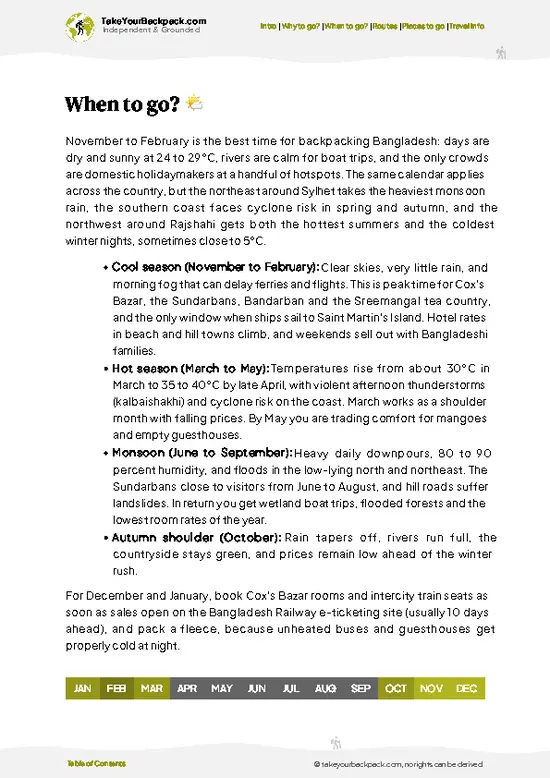
  • Topic: Weather – Sylhet’s climate swings between a wet monsoon season and a dry winter. The monsoon (June to September) drenches the region with heavy rain, making trails slippery and transport unpredictable. The dry season (October to May) offers clearer skies and easier hiking conditions.

  • Topic: Temperature – From October to March, temperatures hover between 15°C and 25°C (59°F to 77°F), ideal for trekking and exploring without overheating. The summer months can push highs to 35°C (95°F), which drains your energy fast.

  • Topic: Daylight Hours – Daylight is fairly consistent year-round, roughly 11 to 12 hours daily. However, the clearer skies in winter mean more reliable daylight for longer excursions.

  • Topic: Crowds – Tourist numbers peak during the dry season, especially December
read more 👉

  • Topic: Weather – Sylhet’s climate swings between a wet monsoon season and a dry winter. The monsoon (June to September) drenches the region with heavy rain, making trails slippery and transport unpredictable. The dry season (October to May) offers clearer skies and easier hiking conditions.

  • Topic: Temperature – From October to March, temperatures hover between 15°C and 25°C (59°F to 77°F), ideal for trekking and exploring without overheating. The summer months can push highs to 35°C (95°F), which drains your energy fast.

  • Topic: Daylight Hours – Daylight is fairly consistent year-round, roughly 11 to 12 hours daily. However, the clearer skies in winter mean more reliable daylight for longer excursions.

  • Topic: Crowds – Tourist numbers peak during the dry season, especially December and January, when the weather is perfect. Expect busier trails and higher prices. The monsoon sees fewer visitors, offering solitude but at the cost of comfort and accessibility.

  • Topic: Seasonal Activities – The tea gardens and waterfalls are at their lushest post-monsoon (October-November), making this a prime time for photography and nature walks. Festivals like the Bishwa Ijtema in January attract crowds but offer a cultural spectacle.

  • Topic: Price Fluctuations – Accommodation and transport costs rise during peak dry months due to demand. Booking ahead is smart. Off-season travel can save money but expect some services to be limited or closed.


Pro-tip: Aim for late October to early December to balance pleasant weather, manageable crowds, and vibrant landscapes—your best bet to maximize comfort without overspending.


source: climatestotravel.comJANJanuary: highly recommended for travelingFEBFebruary: highly recommended for travelingMARMarch: highly recommended for travelingAPRApril: good for travelingMAYMay: fair for travelingJUNJune: below average for travelingJULJuly: below average for travelingAUGAugust: below average for travelingSEPSeptember: fair for travelingOCTOctober: excellent for travelingNOVNovember: excellent for travelingDECDecember: highly recommended for traveling
when-to-go

✈️ The backpacker research shortcutBangladesh Travel Guide

An offline-friendly backpacking guide with optimized travel routes, ranked highlights, transport advice, and the best areas to stay.
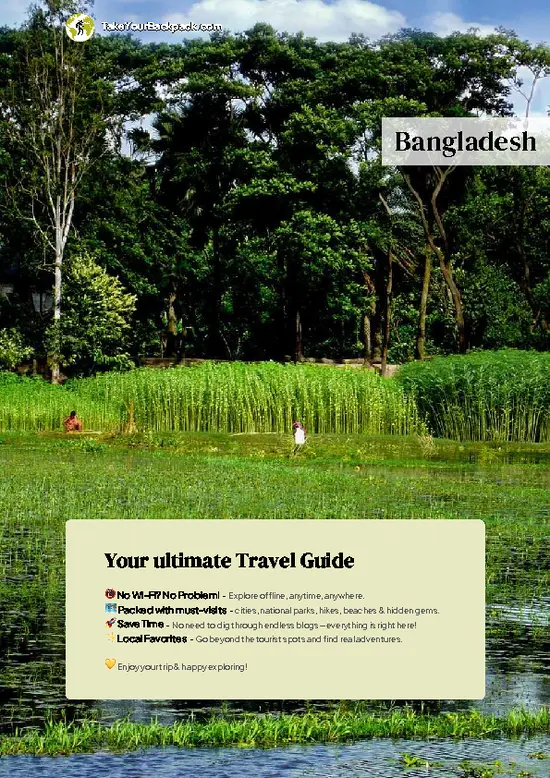
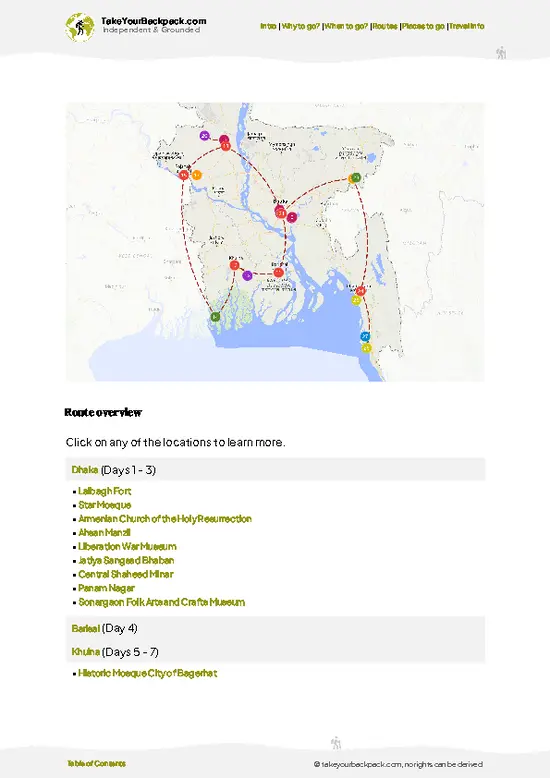
example page 0 from our offline Travel Guide for Bangladesh
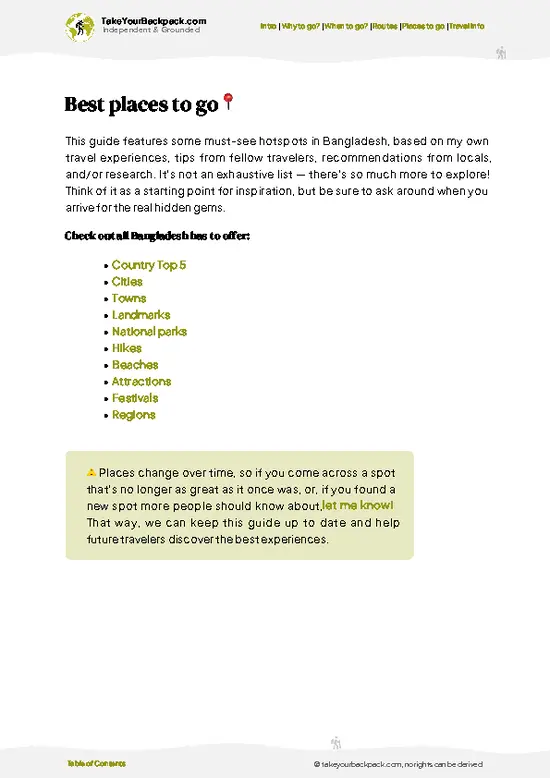
example page 1 from our offline Travel Guide for Bangladesh
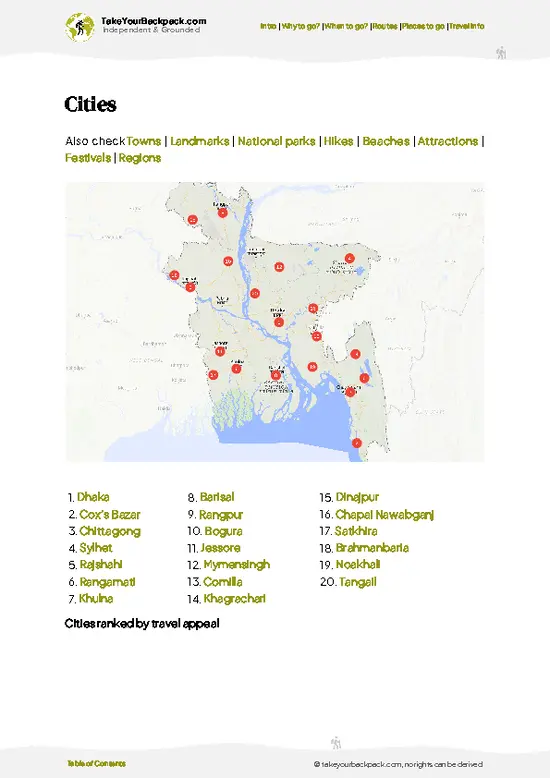
example page 2 from our offline Travel Guide for Bangladesh
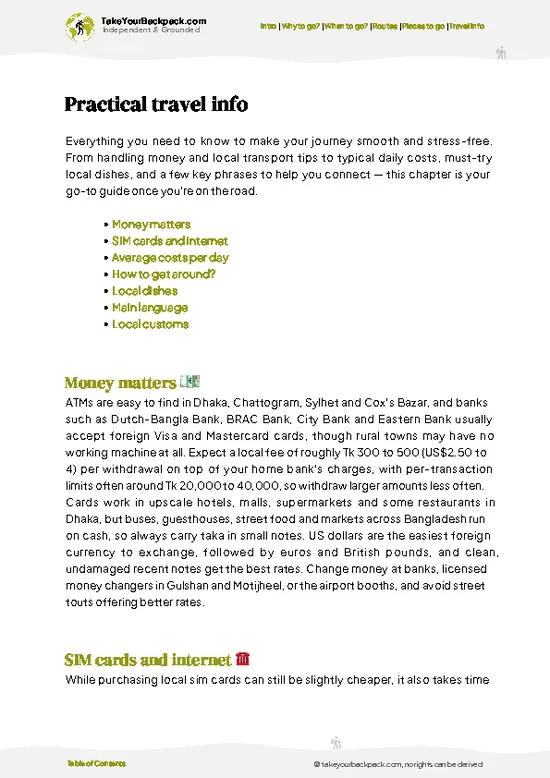
example page 3 from our offline Travel Guide for Bangladesh
example page 4 from our offline Travel Guide for Bangladesh
example page 5 from our offline Travel Guide for Bangladesh
example page 6 from our offline Travel Guide for Bangladesh
example page 7 from our offline Travel Guide for Bangladesh
The digital guide (369 pages) contains:
107 highlights, ranked by travel appeal
Optimized 7, 14 & 21-day travel routes
Cities, national parks, landmarks, beaches
How to get around
Offline-friendly for travel without Wi-Fi
👉 Click to see all 30+ guide features

📅 Plan smarter in minutes, not weeks
Month by month travel advice
Festivals & national holidays
Budget expectations

🗺️ Go to the right places, skip the overrated ones
Honest pros & cons of destinations
Top hikes, parks & viewpoints
Lesser-known places most travelers miss
Clear “worth it vs skip it” guidance

🛏️ Travel smoothly without rookie mistakes
Best areas to stay
Transport systems explained simply
Common scams & safety advice
SIM cards, money & practical tips

🌍 Understand the country, not just visit it
Culture & traditions
52 Essential phrases & customs
Festivals worth planning around
Traveler-friendly historical context
Insights that make places more meaningful

📱 Built for real travel conditions
Fully downloadable PDF
Works completely offline
Optimized for phone use
Useful in remote areas & buses
Everything in one place
Save weeks of stressful planning
Get instant access to your full guide. 30‑day money-back guarantee.


By proceeding you agree to our terms.
Sent to your inbox immediately after payment • 100% Secure Checkout
Best Backpacking Travel Advisor 2025 tourism awardBest Backpacking
Travel Advisor
2025
What others say about Take Your Backpack Guides:
⭐⭐⭐⭐⭐
Fantastic, amazing amount of information!
⭐⭐⭐⭐⭐
My goodness this is amazing, it's what I've been looking for hats off too you!
⭐⭐⭐⭐⭐
I think this is absolutely BRILLIANT
⭐⭐⭐⭐
Very complete and informative. It's still missing places, but I gotta to commend you
⭐⭐⭐⭐⭐
This is truly amazing, thank you, can't wait to explore it with my kids!
⭐⭐⭐⭐⭐
Awesome resource, thank you!
⭐⭐⭐⭐⭐
This is amazing! Can't wait to explore the ones I haven't seen
⭐⭐⭐⭐
I love this! Well done, great idea.
⭐⭐⭐⭐⭐
Thanks for taking the time to make this gem!
⭐⭐⭐⭐⭐
This might be the best website I've ever seen.
⭐⭐⭐⭐⭐
Congratulations, and thank you so much for your work; it's incredibly valuable.
⭐⭐⭐⭐
In all seriousness I think you did a great job pointing out the important spots
⭐⭐⭐⭐⭐
10/10 very good
⭐⭐⭐⭐⭐
As someone who's only just starting to visit regularly this is awesome, thank you.
⭐⭐⭐⭐
Thank you very much! I'm going to visit my dad, it's going to be very useful!
⭐⭐⭐⭐⭐
This is really cool! We'll be travelling for the first time and this definitely come in handy.
⭐⭐⭐⭐⭐
You are now our minister of culture, congratulations 👨‍💼
⭐⭐⭐⭐⭐
Just wanted to tell you that this is a pearl! Going to follow your recommendations.
⭐⭐⭐⭐⭐
This is so cool. I'll definitely be using the resource for my travels soon.
⭐⭐⭐⭐⭐
This is very impressive! Good work.
⭐⭐⭐⭐⭐
This is an amazing and informative site. Very well done!

🛏️ Where to stay?Where staying makes the most sense

Sylhet’s backpacker sweet spot is the area around the city center, especially near the Keane Bridge and the adjacent neighborhoods. This zone strikes a rare balance: it’s safe without feeling sterile, and it hums with enough local life to keep you engaged without overwhelming a solo traveler. You’ll find a handful of budget guesthouses and hostels here, which means you’re not just paying less—you’re plugging into a social scene that’s low-key but genuine.

Compared to the outskirts or more residential parts of Sylhet, staying near the center means you’re within walking distance of markets, eateries, … read more 👉
Sylhet’s backpacker sweet spot is the area around the city center, especially near the Keane Bridge and the adjacent neighborhoods. This zone strikes a rare balance: it’s safe without feeling sterile, and it hums with enough local life to keep you engaged without overwhelming a solo traveler. You’ll find a handful of budget guesthouses and hostels here, which means you’re not just paying less—you’re plugging into a social scene that’s low-key but genuine.

Compared to the outskirts or more residential parts of Sylhet, staying near the center means you’re within walking distance of markets, eateries, and transport hubs. This saves you time and money on taxis or rickshaws, which can add up fast. The vibe is relaxed but lively—locals going about their day, street vendors calling out, and fellow travelers swapping tips over tea. It’s not a backpacker ghetto, but it’s welcoming enough that you won’t feel like an outsider.

If you stray too far into the quieter suburbs, you’ll gain comfort and calm but lose the pulse of the city and the chance to meet other travelers. The trade-off is clear: central Sylhet offers the best mix of safety, social energy, and budget options, making it the smartest base for backpackers who want to maximize their experience without unnecessary hassle.

🚌 Getting aroundHow to get from A to B

Sylhet moves at its own rhythm—neither a frantic rush nor a laid-back dawdle. It’s a city where time bends to the flow of local life, shaped by the calls of street vendors, the hum of rickshaws, and the occasional honk slicing through the humid air. Here, schedules exist but flex, and intuition often trumps strict timetables. If you want to master Sylhet’s transit, you need to think less about rigid plans and more about reading the pulse of the streets. Your choices will be a dance between saving time, spending less, or grabbing a bit more comfort—and knowing exactly what you’re giving up in the process is the real win.


  • Walking: The ultimate zero-cost option, perfect for short distances around the city center and markets. It’s slow but immersive—expect 10-15 minutes to cover a kilometer.
read more 👉
Sylhet moves at its own rhythm—neither a frantic rush nor a laid-back dawdle. It’s a city where time bends to the flow of local life, shaped by the calls of street vendors, the hum of rickshaws, and the occasional honk slicing through the humid air. Here, schedules exist but flex, and intuition often trumps strict timetables. If you want to master Sylhet’s transit, you need to think less about rigid plans and more about reading the pulse of the streets. Your choices will be a dance between saving time, spending less, or grabbing a bit more comfort—and knowing exactly what you’re giving up in the process is the real win.


  • Walking: The ultimate zero-cost option, perfect for short distances around the city center and markets. It’s slow but immersive—expect 10-15 minutes to cover a kilometer. No schedules, just your pace and the city’s textures. Ideal if you want to soak in the local vibe without spending a dime or worrying about traffic.


  • Cycle Rickshaw: A classic Sylhet staple, these pedal-powered taxis are cheap (around 20-50 BDT per ride) and flexible, weaving through narrow lanes where motorized vehicles hesitate. They’re slower than motorbikes but offer a breeze and a close-up view of daily life. Best for short to medium distances when you want to save money but avoid walking under the sun.


  • Auto Rickshaw (CNG): Faster and more comfortable than cycle rickshaws, CNGs run from early morning until late evening (roughly 6 AM to 10 PM). Fares start around 50 BDT, depending on distance. They’re a solid middle ground—quicker transit with some air circulation, but expect occasional stops to pick up other passengers. Great for budget travelers who value time over a few extra bucks.


  • Local Buses: The cheapest motorized option, with fares as low as 10-20 BDT. Buses run frequently but can be unpredictable—crowded, noisy, and prone to traffic jams. They operate roughly from 6 AM to 8 PM. If you’re on a tight budget and have time to spare, buses offer a genuine slice of local life but sacrifice comfort and punctuality.


  • Private Car Hire: The priciest choice, starting around 1500 BDT per day, but unmatched for comfort and flexibility. Ideal if you’re traveling with a group or want to explore beyond Sylhet’s core without juggling multiple rides. Saves time and hassle but demands a bigger chunk of your budget—worth it only if convenience is your top priority.

👛 Costs (as of 28 March 2026)Typical daily expenses

Backpacking in Sylhet, Bangladesh, offers a fascinating blend of affordability and cultural richness, but understanding the cost trade-offs is key to mastering your budget.
  • Dorm Accommodation (High Season): Expect to pay around $8 to $12 per night. High season sees a slight bump due to demand, especially near popular spots like Jaflong or tea gardens.
  • Dorm Accommodation (Off-Season): Prices drop to about $5 to $8. Off-season travelers can snag quieter, cheaper stays, though options might be more limited.
  • Meals: Street food and local eateries serve filling meals for $1 to $3 each. A mix of rice, lentils, and fresh vegetables dominates, with occasional fish or chicken dishes. Western-style meals or cafes push closer to $5 to $7.
  • Local Transport: Rickshaws and CNG auto-rickshaws are the go-to,
read more 👉
Backpacking in Sylhet, Bangladesh, offers a fascinating blend of affordability and cultural richness, but understanding the cost trade-offs is key to mastering your budget.
  • Dorm Accommodation (High Season): Expect to pay around $8 to $12 per night. High season sees a slight bump due to demand, especially near popular spots like Jaflong or tea gardens.
  • Dorm Accommodation (Off-Season): Prices drop to about $5 to $8. Off-season travelers can snag quieter, cheaper stays, though options might be more limited.
  • Meals: Street food and local eateries serve filling meals for $1 to $3 each. A mix of rice, lentils, and fresh vegetables dominates, with occasional fish or chicken dishes. Western-style meals or cafes push closer to $5 to $7.
  • Local Transport: Rickshaws and CNG auto-rickshaws are the go-to, costing roughly $0.30 to $1 per short ride within the city. Bargaining is common and expected.
  • City Transport Pass: Sylhet doesn’t have a formal city transport pass system. Budget around $1 to $2 daily if you rely heavily on rickshaws or shared autos.
  • Basic Activities/Entry Fees: Entry to tea gardens, natural parks, or cultural sites typically costs between $1 and $3. Guided tours or boat rides can push this to $5 to $10, depending on the experience.
  • Miscellaneous Expenses: Budget $1 to $3 for essentials like bottled water, snacks, or small souvenirs. Internet cafes or SIM cards are inexpensive, around $1 to $2 for daily use.

In total, a backpacker in Sylhet can expect to spend roughly $10 to $20 per day, depending on season and lifestyle choices. This range balances basic comfort with the freedom to explore without breaking the bank, letting you decide where to save and where to splurge for a richer experience.
⚠️ Prices can change and everyone travels differently, so take this as a rough guide. Hope it helps you plan your adventure!

🚌 Day tripsBest day trips from Sylhet

Sylhet, Bangladesh, is a backpacker’s dream base for day trips, offering a rich tapestry of culture, nature, and adventure. Here’s how to make the most of your time without breaking the bank.

Ratargul Swamp Forest
Just a 30-minute drive from Sylhet, Ratargul is a freshwater swamp forest that feels like stepping into another world. Paddle through the serene waters in a canoe, surrounded by lush greenery and the sounds of nature. The best time to visit is during the monsoon season when the water levels rise, creating a magical atmosphere. Expect to spend around 300 BDT for a canoe ride and entry fees. A common mistake is underestimating the weather; bring a raincoat and waterproof gear.
👉 Explore Ratargul Swamp Forest

Jaflong
About an hour from Sylhet, Jaflong is a bustling border town … read more 👉
Sylhet, Bangladesh, is a backpacker’s dream base for day trips, offering a rich tapestry of culture, nature, and adventure. Here’s how to make the most of your time without breaking the bank.

Ratargul Swamp Forest
Just a 30-minute drive from Sylhet, Ratargul is a freshwater swamp forest that feels like stepping into another world. Paddle through the serene waters in a canoe, surrounded by lush greenery and the sounds of nature. The best time to visit is during the monsoon season when the water levels rise, creating a magical atmosphere. Expect to spend around 300 BDT for a canoe ride and entry fees. A common mistake is underestimating the weather; bring a raincoat and waterproof gear.
👉 Explore Ratargul Swamp Forest

Jaflong
About an hour from Sylhet, Jaflong is a bustling border town known for its stunning views of the Khasi hills and the Dawki River. You can take a boat ride on the crystal-clear waters, which is a refreshing escape. The trip costs around 500 BDT, including transport and a boat ride. The best time to visit is between November and February when the weather is cooler. Many first-timers miss out on the local food stalls; don’t skip the fresh fish and rice!
👉 Explore Jaflong

Lawachara National Park
Roughly an hour and a half from Sylhet, Lawachara is a biodiversity hotspot. Trek through the lush rainforest, where you might spot rare species like the hoolock gibbons. Entry fees are about 150 BDT, and a guided tour can be arranged for around 500 BDT. The dry season, from November to March, is ideal for hiking. A common pitfall is not hiring a guide; they can enhance your experience with local knowledge.


Shreemangal
Just a two-hour ride from Sylhet, Shreemangal is the tea capital of Bangladesh. Visit the sprawling tea gardens and learn about the tea-making process. A tea estate tour typically costs around 200 BDT. The best time to visit is during the tea-picking season, from March to April. Many travelers overlook the local tea shops; grab a cup of the freshest brew you’ll ever taste!


Each of these trips offers a unique slice of Bangladesh, making Sylhet a strategic hub for exploration. Choose wisely, and you’ll create lasting memories without the hassle.
Want to know what more Bangladesh offers?
The Bangladesh Travel Guide describes 107 highlights, from cities to national parks, from beaches to hikes

Get the Travel Guide -

🍲 FoodWhat to Eat & Drink

In Sylhet, food is a vibrant tapestry of flavors that tells the story of the region. You can’t miss trying panta bhat, a fermented rice dish often served with fried hilsa fish. The tangy, earthy taste is a breakfast staple, especially during the Pohela Boishakh celebrations. Pair it with shutki, dried fish that packs a punch, and you’ll understand why locals rave about it.

Street food is where the magic happens. Wander through bustling markets, and you’ll find vendors serving fuchka—crispy, hollow puris filled with spicy tamarind water. The thrill of biting into one, feeling the burst of flavors, is unmatched. For something heartier, seek out biryani stalls; the fragrant rice layered with marinated meat is a must-try, especially when enjoyed with a side of salad and raita.

Drinking culture … read more 👉
In Sylhet, food is a vibrant tapestry of flavors that tells the story of the region. You can’t miss trying panta bhat, a fermented rice dish often served with fried hilsa fish. The tangy, earthy taste is a breakfast staple, especially during the Pohela Boishakh celebrations. Pair it with shutki, dried fish that packs a punch, and you’ll understand why locals rave about it.

Street food is where the magic happens. Wander through bustling markets, and you’ll find vendors serving fuchka—crispy, hollow puris filled with spicy tamarind water. The thrill of biting into one, feeling the burst of flavors, is unmatched. For something heartier, seek out biryani stalls; the fragrant rice layered with marinated meat is a must-try, especially when enjoyed with a side of salad and raita.

Drinking culture here is equally engaging. Sip on cha, the local tea, often brewed with spices and served in small cups. It’s more than a drink; it’s a social ritual. Don’t be surprised if you’re invited to share a cup with locals, as hospitality runs deep.

Remember, meals are often communal, so embrace the sharing culture. It’s not just about the food; it’s about the connections you make over a shared plate.

🛡️ SafetyScams, Hazards, and Annoyances

Sylhet is generally safe for backpackers, but a few smart strategies can enhance your experience. Stay aware in crowded markets like the Sylhet Sadar, where pickpockets might lurk. Keep your valuables close and avoid flashy displays of wealth.

If you’re traveling solo, especially at night, stick to well-lit areas and consider using rideshare apps instead of hailing a taxi. This adds a layer of security and helps avoid potential fare disputes.

Common scams are rare, but some locals may try to overcharge for services or goods. Always agree on a price before accepting anything, whether it’s a taxi ride or a meal.

Annoyances can include persistent street vendors; a polite “no, thank you” usually does the trick. Embrace the local culture, and you’ll find that most interactions are friendly … read more 👉
Sylhet is generally safe for backpackers, but a few smart strategies can enhance your experience. Stay aware in crowded markets like the Sylhet Sadar, where pickpockets might lurk. Keep your valuables close and avoid flashy displays of wealth.

If you’re traveling solo, especially at night, stick to well-lit areas and consider using rideshare apps instead of hailing a taxi. This adds a layer of security and helps avoid potential fare disputes.

Common scams are rare, but some locals may try to overcharge for services or goods. Always agree on a price before accepting anything, whether it’s a taxi ride or a meal.

Annoyances can include persistent street vendors; a polite “no, thank you” usually does the trick. Embrace the local culture, and you’ll find that most interactions are friendly and genuine. Stay alert, and you’ll navigate Sylhet like a pro.

Other Bangladeshi cities near Sylhet

Explore more nearby:

  • Srimangal—tea plantations, rainforests, wildlife sanctuaries| 67 km away
  • Habiganj—tea gardens, low hills, tribal villages| 73 km away
  • Netrakona—wetland haors, folk festivals, rural homesteads| 115 km away

💡 Not sure where to go next?
Create a personalized itinerary for Bangladesh including Sylhet and the places that fit your trip.

Generate my itinerary

👉 Discover all cities

Or checkout all Bangladesh has to offer (think cities, towns, villages, national parks, hikes, beaches, festivals)
Country photo of Bangladesh

We 💚 feedbackParting advice and final tips

Sylhet has a vibe that’s both laid-back and vibrant, a rare combo. You’ll find lush tea gardens that feel like stepping into a postcard. The best surprise? The warmth of the locals; they’ll invite you for tea and share stories that make you feel at home. Just a heads-up: the roads can be bumpy, so brace yourself for some jolting rides. But trust me, the journey is part of the charm. Embrace it, and you’ll leave with memories that linger.

✍️ Help improve this page!
The information on this page is based on in-depth research, insights shared by experienced travelers, and feedback from the local travel community in Bangladesh. While every effort is made to keep the information accurate and current, conditions can change — so if you spot anything incorrect or outdated, please get in touch.


🙋‍♂️ Give feedback

👋 Meet the founderWho’s Behind Take Your Backpack?

Johan, backpacker and founder of TakeYourBackpackHi, I’m Johan (Netherlands 🇳🇱), the creator of TakeYourBackpack. Over the past decade, I’ve backpacked through 80+ countries across six continents, gaining extensive experience with independent travel, long-term trips, and overland routes.

This site is built on a combination of firsthand travel experience and carefully curated insights from other backpackers. Many guides are based on places I’ve personally visited, while others bring together tips, observations, and practical advice shared by trusted travelers I’ve met along the way.

The goal is to provide realistic, experience-driven guidance — not generic itineraries — so you can explore destinations with better context, clearer expectations, and more confidence.

Get full Bangladesh guide •
Instant download • 107 highlights • Full Offline guide