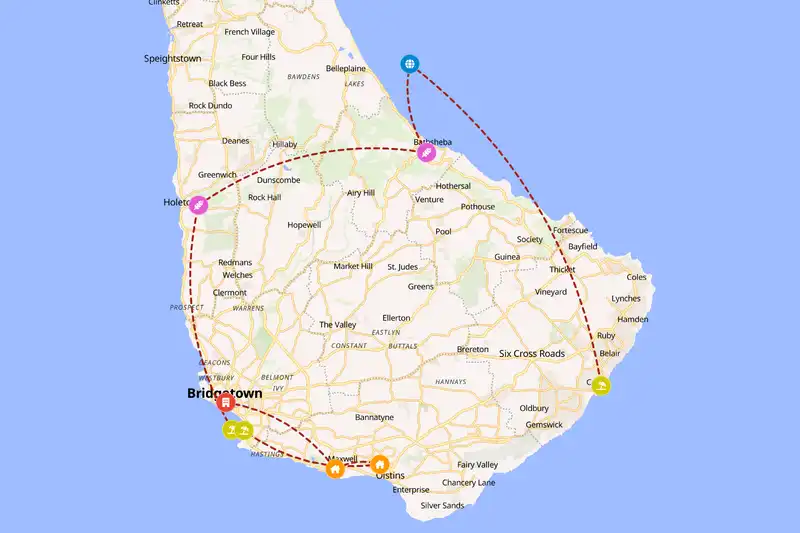
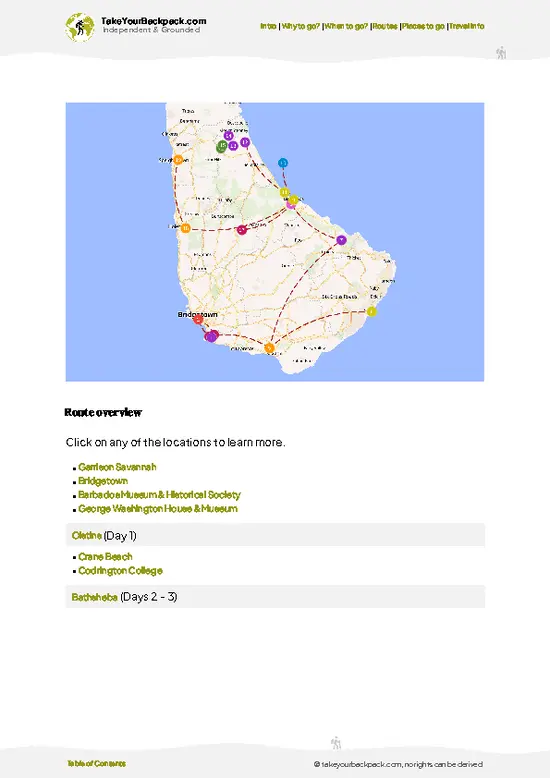
This five-day loop of Barbados suits travelers who want to see the whole island: the colonial south, the wild Atlantic east, the green hills of the north and the calm Caribbean west. The pace is relaxed but varied, with three bases and no single transfer longer than about 90 minutes. Use the blue government buses, yellow minibuses and white ZR vans (BDS$3.50, US$1.75, per ride) on the coasts, and budget for two taxi days in the hilly interior, where buses thin out.
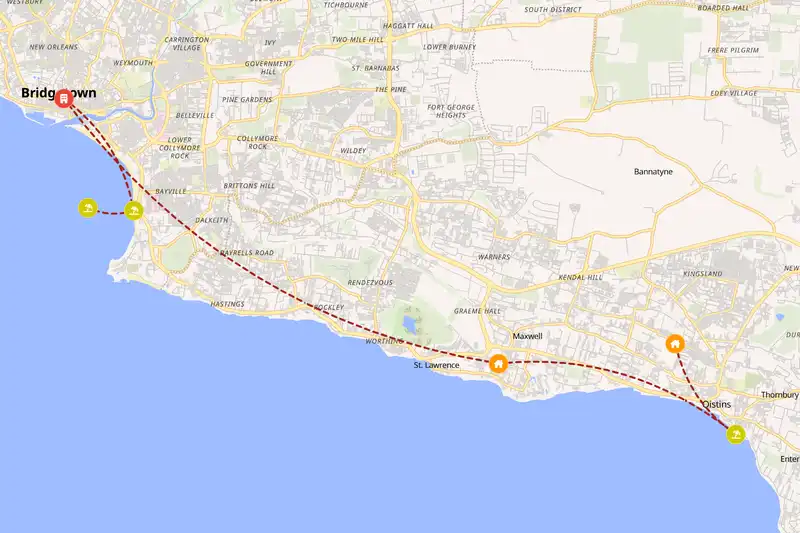
Day 1: Bridgetown’s Garrison and Oistins
Start where the British military did. The
Garrison Savannah, on the southern edge of
Bridgetown, is a grassy former parade ground now used as a horse racing track, ringed by 18th- and 19th-century barracks. The whole area is part of the UNESCO-listed Historic Bridgetown and its Garrison. In the old military prison next to it, the
Barbados Museum & Historical Society walks you through Amerindian finds, the sugar and slavery era, and a cell block you can step into. Five minutes away, the …
read more 👉This five-day loop of Barbados suits travelers who want to see the whole island: the colonial south, the wild Atlantic east, the green hills of the north and the calm Caribbean west. The pace is relaxed but varied, with three bases and no single transfer longer than about 90 minutes. Use the blue government buses, yellow minibuses and white ZR vans (BDS$3.50, US$1.75, per ride) on the coasts, and budget for two taxi days in the hilly interior, where buses thin out.
Day 1: Bridgetown’s Garrison and Oistins
Start where the British military did. The Garrison Savannah, on the southern edge of Bridgetown, is a grassy former parade ground now used as a horse racing track, ringed by 18th- and 19th-century barracks. The whole area is part of the UNESCO-listed Historic Bridgetown and its Garrison. In the old military prison next to it, the Barbados Museum & Historical Society walks you through Amerindian finds, the sugar and slavery era, and a cell block you can step into. Five minutes away, the George Washington House & Museum is where a 19-year-old Washington stayed in 1751, his only trip outside mainland North America. It is small and narrow in focus, but it costs you no extra travel. By late afternoon, hop a south coast bus to Oistins for your first night. If it’s a Friday, the fish fry fills the waterfront with grills, sound systems and plates of flying fish or marlin for BDS$30 to 50 (US$15 to 25).Days 2-3: Crane Beach, Codrington College and Bathsheba
Head east in the morning to Crane Beach, a cove of pinkish sand under limestone cliffs, where the Atlantic rolls in harder than on the south coast and bodyboarders take advantage. Swim early, before the wind picks up. From here a taxi up the southeast coast (around US$40 to 60) lets you stop at Codrington College, an 18th-century Anglican seminary at the end of an avenue of cabbage palms, with a lily pond and a view straight down to the ocean. It is quiet, a little odd and very photogenic. You land in Bathsheba for two nights. The village is a scatter of fishing houses and guesthouses above Bathsheba Beach, where huge mushroom-shaped boulders sit in the surf and the Soup Bowl reef break draws surfers from across the Caribbean. Swim only in the rock pools at low tide; the open sea here has strong currents. Spend the evening on a rum shop bench watching the swell.Day 3: Scotland District
Day three is for the hills. Bathsheba sits at the bottom of the Scotland District, the eroded, hilly northeast where the coral cap has worn away to clay ridges and gullies. If your day falls on a Sunday, join one of the Barbados National Trust Walks, free group hikes through villages, cane fields and gullies that leave early in the morning or mid-afternoon at a choice of paces. On any other day, walk north along the East Coast Road to Cattlewash Beach, a long, empty stretch of sand and sea grape where locals come to sit in the shallows; again, no deep swimming. Then book a taxi for a half-day loop of three sites within a few kilometers of each other. Morgan Lewis Sugar Mill is the largest intact sugar windmill in the Caribbean, with its sails and grinding gear still in place. Cherry Tree Hill is a roadside lookout over the whole Scotland District, approached through an avenue of mahogany trees. Just past it, St. Nicholas Abbey is a Jacobean plantation house from the 1650s with its own rum distillery and a heritage steam railway; entry runs about US$35 to 45, and the rum tasting is where the money goes furthest.Day 4: Wildlife, ruins and the cave, ending in Holetown
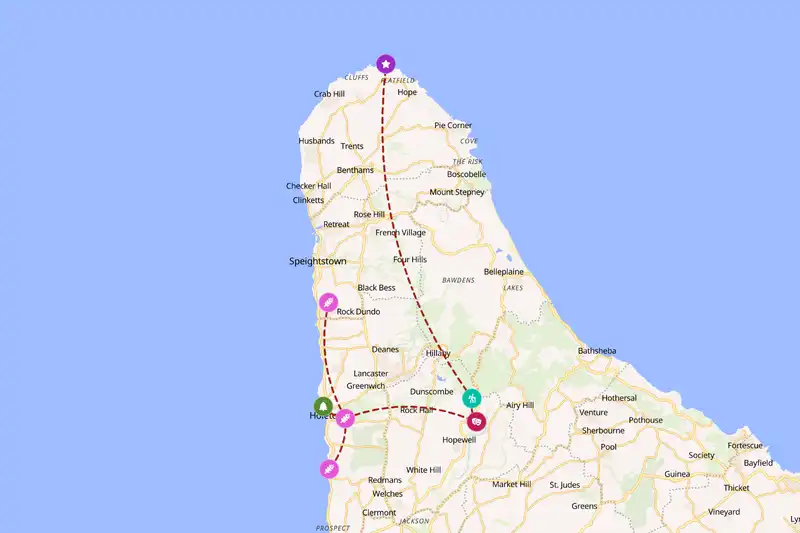
Move west across the island, taking the interior on the way. Start at the Barbados Wildlife Reserve, a mahogany forest where green monkeys, red-footed tortoises and deer move freely around you; go mid-afternoon if you can, when the monkeys come in to feed, or early when it’s cool. Directly across the road, Farley Hill National Park holds the roofless shell of a grand 19th-century mansion and a lawn with views to the Atlantic, a good picnic stop. Your taxi then drops south to Harrison’s Cave Eco-Adventure Park, where an electric tram takes you through limestone caverns full of stalactites, flowing streams and a 12-meter waterfall; expect roughly US$50 to 65 for the standard tram tour. Finish in Holetown, where the first English settlers landed in 1627, for your last night. Dinner along First Street or Second Street makes a calmer bookend to Oistins.Day 5: Speightstown
Before the airport run, take a 15-minute bus north to Speightstown, the island’s second town and once its main sugar port. It has a shaded esplanade over the water, balconied wooden shopfronts and a handful of cafés where you’ll eat breakfast among fishermen rather than tourists. Swim off the small town beach, then head back south; the airport is about an hour from Holetown by taxi.
For one last detour, ask your Bathsheba taxi to pass through Martin’s Bay, a tiny east coast fishing village where boats are hauled up on the rocks and a single beach bar fries the morning catch.
 Best Backpacking