
×

Belgium🇧🇪 | hikesDe Panne Nature Reservecoastal dunes, salt marshes, migratory birds | things to do and best time to go

Explore ArdennesExplore Ninglinspo River Hike

Backpacking in De Panne Nature Reserve
By Johan Kruseman 🇳🇱 | Updated October 15, 2026

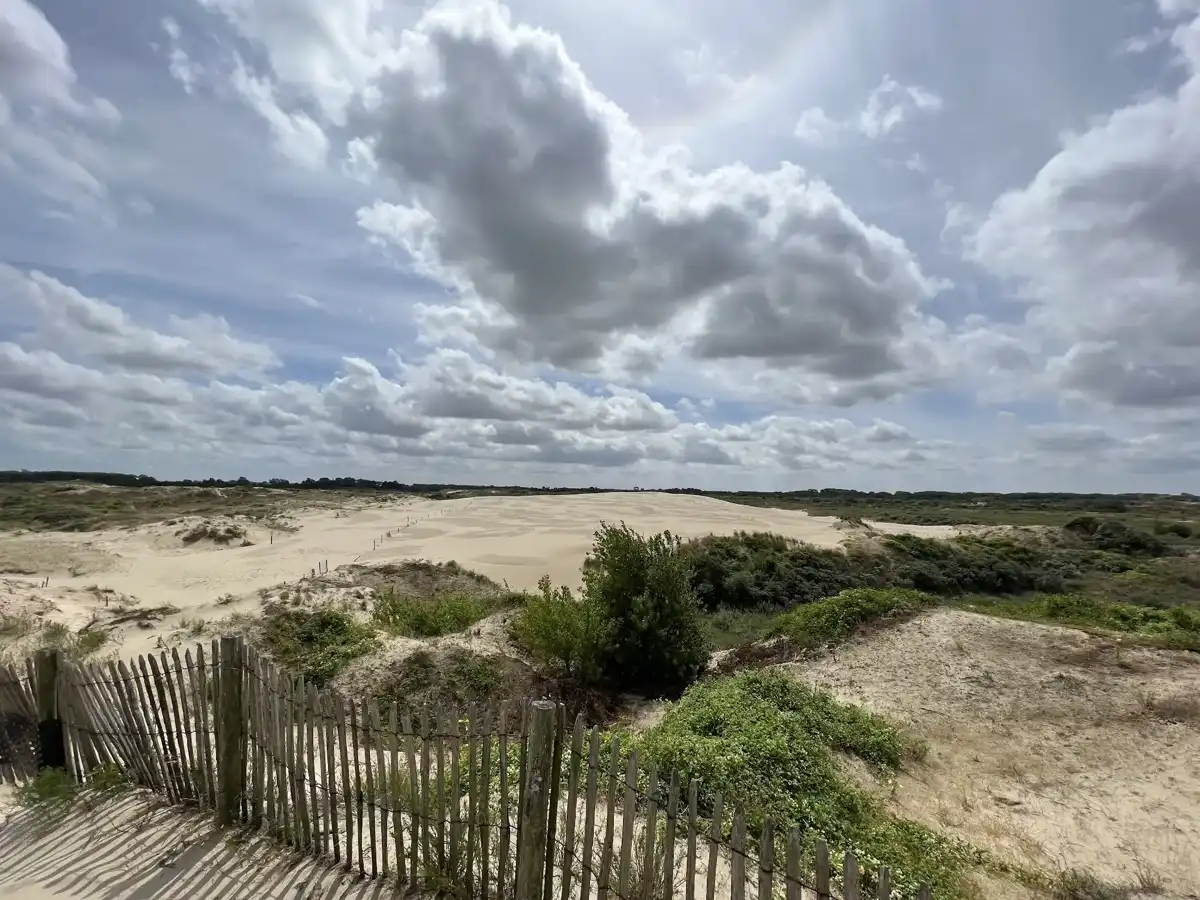
Your boots sink an inch into cool, squeaky sand, marram grass slaps your shins, and the wind comes in sideways with a hit of salt and pine as a sand lark bursts out from under your feet. This is De Panne Nature Reserve, pressed against the French border on Belgium’s far west coast, and it feels wilder than its flat map profile suggests. The loop trails are short-to-moderate and mostly easy, but the soft dunes work your calves harder than you expect. Trains and trams drop you close, so access is simple, and it beats most nearby coastal walks for raw dune scenery, though you won’t get the drama of the Ardennes—just big skies, shifting sand, and that first post-hike beer in town hitting perfectly.

Discover everything you want to know in the 📖 Belgium Travel Guide.
Best time to go: March - June, September - October
Duration: 4 to 5 hours
Distance: 20 kilometers
Total ascent: 100 meters


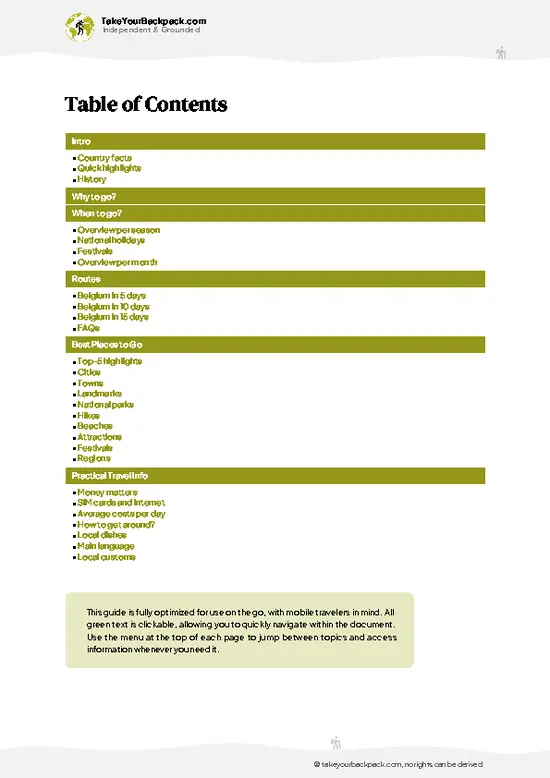
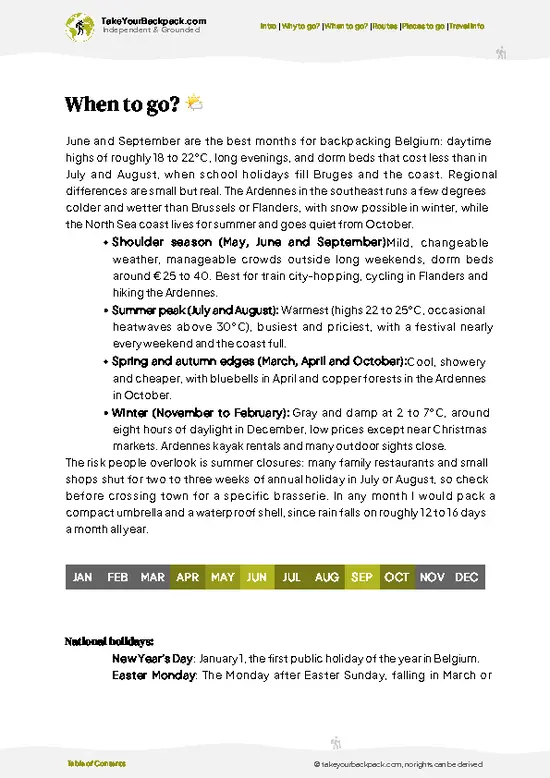
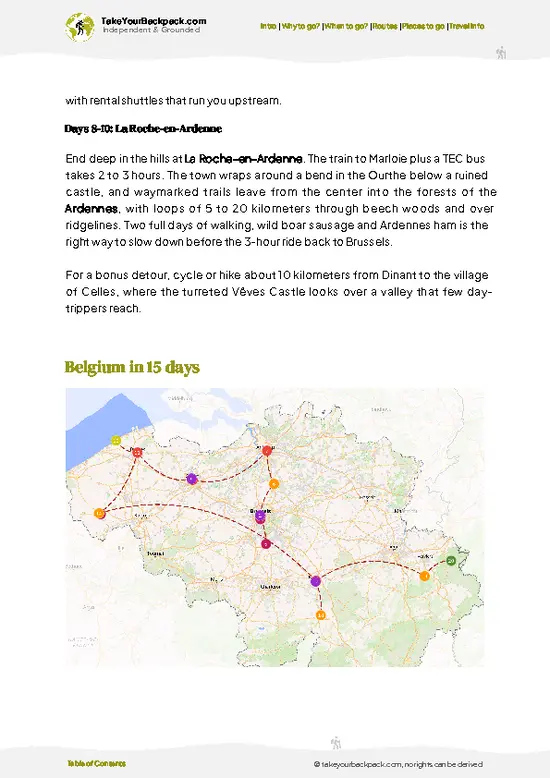
example page 0 from our offline Travel Guide for Belgium
example page 1 from our offline Travel Guide for Belgium
example page 2 from our offline Travel Guide for Belgium
example page 3 from our offline Travel Guide for Belgium
example page 4 from our offline Travel Guide for Belgium
example page 5 from our offline Travel Guide for Belgium
example page 6 from our offline Travel Guide for Belgium
example page 7 from our offline Travel Guide for Belgium
Loading the map 🌍
CLICK TO FILTER
cities
towns
landmarks
national parks
hikes
beaches
attractions
festivals
regions
SHOW COUNTRY’S BESTSHOW ALL

✨ Why go?
Ranked #99 hike in Belgium
Reasons people choose to hike the here

The De Panne Nature Reserve is a backpacker’s playground, where every step is a dance with nature. The scenery-to-effort ratio is off the charts; you’ll find yourself surrounded by stunning dunes, lush forests, and the rhythmic sound of waves crashing nearby. It’s a place where the burn of the trails is rewarded with breathtaking views of the North Sea.

Getting here is a breeze. Public transport access is seamless, making it easy to hop on a train or bus and dive into the wild. Plus, the low cost means you can explore without breaking the bank.

You can tailor your hike to fit your vibe, whether you want a quick jaunt or an all-day adventure. This flexibility makes it a perfect pit stop on a longer backpacking route. After the trek, treat yourself to a cold beer at a local café, savoring the moment when all that effort pays off.

💡 HighlightsThe experiences that define the visit

  1. Hoge Blekker viewpoint — The highest dune in Flanders (about 33 m), a short climb that suddenly opens up broad views over the rippling dunes and the North Sea. Best for sunrise or late-afternoon light — you feel like you’ve escaped the coast without leaving it.
  2. Shifting dune ridges — Walk along serrated dune crests where wind-carved patterns and loose sand make the terrain change hour by hour. It’s a radically different hiking feel than a wooded trail: exposed, raw, and constantly moving under your feet.
  3. Tidal flats and birdlife — The reserve borders wide mudflats and shallow water channels that attract migratory waders and gulls; you’ll often spot oystercatchers, terns and, if you’re lucky, seals hauled out on sandbanks. Great for low-tide wildlife watching from relatively close.
  4. Dune
… read more 👉
  1. Hoge Blekker viewpoint — The highest dune in Flanders (about 33 m), a short climb that suddenly opens up broad views over the rippling dunes and the North Sea. Best for sunrise or late-afternoon light — you feel like you’ve escaped the coast without leaving it.
  2. Shifting dune ridges — Walk along serrated dune crests where wind-carved patterns and loose sand make the terrain change hour by hour. It’s a radically different hiking feel than a wooded trail: exposed, raw, and constantly moving under your feet.
  3. Tidal flats and birdlife — The reserve borders wide mudflats and shallow water channels that attract migratory waders and gulls; you’ll often spot oystercatchers, terns and, if you’re lucky, seals hauled out on sandbanks. Great for low-tide wildlife watching from relatively close.
  4. Dune flora and orchid meadows — In spring and early summer the dunes light up with specialised plants — marram grass, heather and occasional dune orchids. It’s a nice counterpoint to the monochrome sand: small, stubborn pockets of colour and interesting insects.
  5. Bunkers and coastal heritage — Scattered concrete bunkers and wartime traces sit half-swallowed by sand, adding a stark, human-made counterpoint to the wild landscape. They’re easy to find from the paths and make for moody photos and a reminder that this peaceful place has a gritty past.
Spotted a mistake or missing something? Contact us.

Things to do near De Panne Nature Reserve

Ratings based on Tripadvisor reviews. When you book through this link, you support our work at no extra cost to you.

🌤️ When to go?Choosing the right time of year

  • Weather: Spring and early autumn deliver the best balance—cool breezes and crisp air without the summer humidity or winter chill. Expect 10-18°C (50-64°F) in spring and 12-17°C (54-63°F) in autumn, perfect for steady hiking without overheating or freezing.
  • Daylight Hours: Late April to early October offers long days, with up to 16 hours of light in summer. This means more trail time and less rush, letting you savor the shifting landscapes as the sun arcs low over the dunes.
  • Crowds: Peak summer (July-August) draws beachgoers and day-trippers, turning trails into busy corridors. Shoulder seasons keep the reserve quieter, letting you move at your own pace without dodging selfie sticks.
  • Seasonal Activities: Spring brings wildflowers and bird migrations, while autumn showcases migrating geese
… read more 👉
  • Weather: Spring and early autumn deliver the best balance—cool breezes and crisp air without the summer humidity or winter chill. Expect 10-18°C (50-64°F) in spring and 12-17°C (54-63°F) in autumn, perfect for steady hiking without overheating or freezing.
  • Daylight Hours: Late April to early October offers long days, with up to 16 hours of light in summer. This means more trail time and less rush, letting you savor the shifting landscapes as the sun arcs low over the dunes.
  • Crowds: Peak summer (July-August) draws beachgoers and day-trippers, turning trails into busy corridors. Shoulder seasons keep the reserve quieter, letting you move at your own pace without dodging selfie sticks.
  • Seasonal Activities: Spring brings wildflowers and bird migrations, while autumn showcases migrating geese and a quieter, reflective mood. Summer adds lively coastal festivals but also more noise and traffic.
  • Price Fluctuations: Accommodation and transport costs spike in summer. Booking in shoulder seasons can save you a chunk, freeing up cash for a cold beer after the hike.
Pro-tip: Aim for late May or early September—cool, calm, and uncrowded, with daylight stretching long enough to chase the horizon without racing the clock.


source: climatestotravel.comJANJanuary: below average for travelingFEBFebruary: below average for travelingMARMarch: good for travelingAPRApril: highly recommended for travelingMAYMay: excellent for travelingJUNJune: highly recommended for travelingJULJuly: fair for travelingAUGAugust: fair for travelingSEPSeptember: excellent for travelingOCTOctober: highly recommended for travelingNOVNovember: fair for travelingDECDecember: below average for traveling
belgium-hike-de-panne-nature-reserve
© Google | Sandra Reichler

✈️ The backpacker research shortcutBelgium Travel Guide

An offline-friendly backpacking guide with optimized travel routes, ranked highlights, transport advice, and the best areas to stay.
example page 0 from our offline Travel Guide for Belgium
example page 1 from our offline Travel Guide for Belgium
example page 2 from our offline Travel Guide for Belgium
example page 3 from our offline Travel Guide for Belgium
example page 4 from our offline Travel Guide for Belgium
example page 5 from our offline Travel Guide for Belgium
example page 6 from our offline Travel Guide for Belgium
example page 7 from our offline Travel Guide for Belgium
The digital guide (337 pages) contains:
✅ 85 highlights, ranked by travel appeal
✅ Optimized 5, 10 & 15-day travel routes
✅ Cities, national parks, landmarks, beaches
✅ How to get around
✅ Offline-friendly for travel without Wi-Fi
👉 Click to see all 30+ guide features

📅 Plan smarter in minutes, not weeks
✅ Month by month travel advice
✅ Festivals & national holidays
✅ Budget expectations

🗺️ Go to the right places, skip the overrated ones
✅ Honest pros & cons of destinations
✅ Top hikes, parks & viewpoints
✅ Lesser-known places most travelers miss
✅ Clear “worth it vs skip it” guidance

🛏️ Travel smoothly without rookie mistakes
✅ Best areas to stay
✅ Transport systems explained simply
✅ Common scams & safety advice
✅ SIM cards, money & practical tips

🌍 Understand the country, not just visit it
✅ Culture & traditions
✅ 52 Essential phrases & customs
✅ Festivals worth planning around
✅ Traveler-friendly historical context
✅ Insights that make places more meaningful

📱 Built for real travel conditions
✅ Fully downloadable PDF
✅ Works completely offline
✅ Optimized for phone use
✅ Useful in remote areas & buses
✅ Everything in one place
Stop searching, start planning
Get instant access to your full guide. 30‑day money-back guarantee.
+ Add another guide for just

By proceeding you agree to our terms.
Sent to your inbox immediately after payment • 100% Secure Checkout
Best Backpacking Travel Advisor 2025 tourism awardBest Backpacking
Travel Advisor
2025
What others say about Take Your Backpack Guides:
⭐⭐⭐⭐⭐
Fantastic, amazing amount of information!
⭐⭐⭐⭐⭐
My goodness this is amazing, it's what I've been looking for hats off too you!
⭐⭐⭐⭐⭐
I think this is absolutely BRILLIANT
⭐⭐⭐⭐
Very complete and informative. It's still missing places, but I gotta to commend you
⭐⭐⭐⭐⭐
This is truly amazing, thank you, can't wait to explore it with my kids!
⭐⭐⭐⭐⭐
Awesome resource, thank you!
⭐⭐⭐⭐⭐
This is amazing! Can't wait to explore the ones I haven't seen
⭐⭐⭐⭐
I love this! Well done, great idea.
⭐⭐⭐⭐⭐
Thanks for taking the time to make this gem!
⭐⭐⭐⭐⭐
This might be the best website I've ever seen.
⭐⭐⭐⭐⭐
Congratulations, and thank you so much for your work; it's incredibly valuable.
⭐⭐⭐⭐
In all seriousness I think you did a great job pointing out the important spots
⭐⭐⭐⭐⭐
10/10 very good
⭐⭐⭐⭐⭐
As someone who's only just starting to visit regularly this is awesome, thank you.
⭐⭐⭐⭐
Thank you very much! I'm going to visit my dad, it's going to be very useful!
⭐⭐⭐⭐⭐
This is really cool! We'll be travelling for the first time and this definitely come in handy.
⭐⭐⭐⭐⭐
You are now our minister of culture, congratulations 👨‍💼
⭐⭐⭐⭐⭐
Just wanted to tell you that this is a pearl! Going to follow your recommendations.
⭐⭐⭐⭐⭐
This is so cool. I'll definitely be using the resource for my travels soon.
⭐⭐⭐⭐⭐
This is very impressive! Good work.
⭐⭐⭐⭐⭐
This is an amazing and informative site. Very well done!

🛏️ Where to stay?How to pick the right area

If you enjoy meeting fellow travelers, consider choosing hostels with high ratings for atmosphere. On the other hand, if you prefer having your own space, a hotel might be a better option.

🥾 Hike detailsA practical overview of the hike

Total Distance: Approximately 8 kilometers, making it a manageable trek for most hikers.

Estimated Duration: Expect to spend around 2 to 3 hours on the trail, depending on your pace and how often you stop to soak in the scenery.

Difficulty Level: This trail is rated as easy to moderate. It’s suitable for beginners, but some sections might be a bit uneven, so watch your step.

Starting Point: The trailhead begins at the De Panne Nature Reserve entrance. To get there by public transport, take a train to the nearest station, which is either Adinkerke or De Panne. From there, local buses run frequently … read more 👉
Total Distance: Approximately 8 kilometers, making it a manageable trek for most hikers.

Estimated Duration: Expect to spend around 2 to 3 hours on the trail, depending on your pace and how often you stop to soak in the scenery.

Difficulty Level: This trail is rated as easy to moderate. It’s suitable for beginners, but some sections might be a bit uneven, so watch your step.

Starting Point: The trailhead begins at the De Panne Nature Reserve entrance. To get there by public transport, take a train to the nearest station, which is either Adinkerke or De Panne. From there, local buses run frequently to the reserve, or you can enjoy a short walk if you’re feeling energetic.

Major Landmarks Along the Route:
  • Observation Tower: A great spot to catch panoramic views of the surrounding dunes and forest.
  • Visitor Center: A handy place to pick up maps and learn about the local wildlife.
  • Sand Dunes: Unique geological formations that are a highlight of the reserve.

Type of Terrain and Scenery: The trail offers a mix of sandy paths, wooded areas, and open fields. You’ll find yourself wandering through beautiful coastal dunes, with the sound of the sea in the background, and shady spots under tall trees.

Typical Vegetation and Wildlife:
  • Vegetation: Expect to see a variety of plants, including heather, pine trees, and wildflowers that bloom in spring and summer.
  • Wildlife: Keep your eyes peeled for birds like the Eurasian skylark and maybe even a deer or two if you’re lucky!

This trail is perfect for a leisurely day hike. Just pack some snacks, stay hydrated, and enjoy the natural beauty of Belgium’s coastline!
⚠️ Hiking info can sometimes be outdated or inaccurate. Before you hit the trail, check the latest conditions with locals. If you do spot anything that's off, I'd love to hear from you, so I can update it for fellow travelers.

🛡️ SafetySafety Tips and Common Scams in De Panne Nature Reserve

The De Panne Nature Reserve is a playground for those who crave the raw beauty of nature. The trails here are well-marked and generally easy to navigate, but don’t let that lull you into complacency. Weather can shift unexpectedly, especially in spring and autumn. A sunny morning can morph into a chilly drizzle by noon. Dress in layers, and pack a lightweight rain jacket. You’ll thank yourself when the clouds roll in.

The terrain is mostly flat, but you’ll encounter sandy paths that can be a bit tricky. Footing can be loose, especially after rain, so keep your eyes peeled and your pace steady. There are no steep climbs, but the occasional root or rock might trip you up if you’re not paying attention. Stay alert, and you’ll be fine.

Wildlife is part of the charm here. You might spot deer … read more 👉
The De Panne Nature Reserve is a playground for those who crave the raw beauty of nature. The trails here are well-marked and generally easy to navigate, but don’t let that lull you into complacency. Weather can shift unexpectedly, especially in spring and autumn. A sunny morning can morph into a chilly drizzle by noon. Dress in layers, and pack a lightweight rain jacket. You’ll thank yourself when the clouds roll in.

The terrain is mostly flat, but you’ll encounter sandy paths that can be a bit tricky. Footing can be loose, especially after rain, so keep your eyes peeled and your pace steady. There are no steep climbs, but the occasional root or rock might trip you up if you’re not paying attention. Stay alert, and you’ll be fine.

Wildlife is part of the charm here. You might spot deer or rabbits, and the birdwatching is top-notch. If you see a deer, keep your distance and don’t approach. They’re more skittish than they look. Respect their space, and they’ll often return the favor by letting you enjoy the moment.

As for preparation, don’t underestimate the power of good footwear. A sturdy pair of hiking boots will keep your feet happy on those sandy trails. Bring enough water; it’s easy to forget to hydrate when you’re absorbed in the scenery. A small snack can also work wonders for your energy levels.

Timing your hike is key. Early mornings or late afternoons offer the best light and fewer crowds. Plus, you’ll get to enjoy the tranquility of the reserve, where the only sounds are the rustling leaves and the occasional call of a bird.

In essence, De Panne is a welcoming space for both seasoned hikers and newcomers. Embrace the challenge of the trails, and let the experience unfold. The reward? That first cold beer at the end, with the sunset painting the sky in hues of orange and pink.

FAQFrequently asked questions about De Panne Nature Reserve

The De Panne Nature Reserve hike typically takes about 2 to 3 hours to complete, covering roughly 6 to 8 kilometers depending on the chosen route. It is suitable for a half-day outing.
The hike is easy to moderate in difficulty, with mostly flat terrain and well-marked paths. It is accessible for most fitness levels, including families and casual hikers.
No guide or permit is required to hike in the De Panne Nature Reserve. Visitors can freely explore the area during daylight hours, but should respect local regulations and protected zones.
⚠️ Things can change over time, so always validate details locally before you go.

Other Belgian hikes near De Panne Nature Reserve

Explore more nearby:

  • GR 126 Trail—Lesse river, limestone plateaus, forest corridors| 116 km away
  • GR 129 Trail—rural farmland, small towns, east-west traverse| 153 km away
  • GR 57 Trail—Ourthe valley, river cliffs, medieval villages| 223 km away

💡 Not sure where to go next?
Create a personalized itinerary for Belgium including De Panne Nature Reserve and the places that fit your trip.

Generate my itinerary

👉 Discover all hikes

Or checkout all Belgium has to offer (think cities, towns, villages, national parks, hikes, beaches, festivals)
Country photo of Belgium

We 💚 feedbackSumming up the experience

De Panne Nature Reserve is a breath of fresh air, where the dunes whisper tales of the sea. The wild beauty here is worth every step, especially when you hit that sandy stretch and feel the ocean breeze. But be ready for the crowds, especially on weekends; solitude can be hard to find. Still, the reward of a cold beer at the beach after a long hike makes it all worthwhile.

✈️ When did I visit Belgium?
Belgium being my neighbour country, I have visited it many times, mainly for weekend city trips.

✍️ Help improve this page!
The information on this page is based on my own backpacking experience in Belgium, supplemented with up-to-date research and feedback from other travelers. Travel details can change, so if you notice anything outdated or incomplete, feel free to let me know.


🙋‍♂️ Give feedback

👋 Meet the founderWho’s Behind Take Your Backpack?

Johan, backpacker and founder of TakeYourBackpackHi, I’m Johan (Netherlands 🇳🇱), the creator of TakeYourBackpack. Over the past 3 decades, I’ve backpacked through 90+ countries across six continents, gaining extensive experience with independent travel, long-term trips, and overland routes.

This site is built on a combination of firsthand travel experience and carefully curated insights from other backpackers. Many guides are based on places I’ve personally visited, while others bring together tips, observations, and practical advice shared by trusted travelers I’ve met along the way.

The goal is to provide realistic, experience-driven guidance — not generic itineraries — so you can explore destinations with better context, clearer expectations, and more confidence.