v2.webp)




Magritte Museum
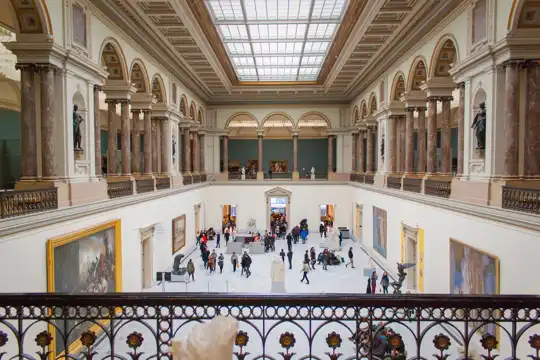
Let’s get real: most people come for Magritte, and with good reason. This isn’t a token room with a few bowler hats and apples. It’s three floors of the world’s largest Magritte collection, from his early experiments to the iconic mind-benders. You’ll see the famous pipe (that isn’t a pipe), but also the weird, lesser-known sketches and letters that reveal the man behind the mustache. The curation is sharp—no endless walls of sameness. If you want to understand surrealism’s bite and wit, this is the place. (Personal favorite: the room where his commercial work sits next to his “serious” art. It’s a punchline and a revelation.)
Old Masters Museum
Here’s where the Instagram crowd thins out. The Old Masters wing is a crash course in Flemish painting, and it’s not just for art … read more 👉
Let’s get real: most people come for Magritte, and with good reason. This isn’t a token room with a few bowler hats and apples. It’s three floors of the world’s largest Magritte collection, from his early experiments to the iconic mind-benders. You’ll see the famous pipe (that isn’t a pipe), but also the weird, lesser-known sketches and letters that reveal the man behind the mustache. The curation is sharp—no endless walls of sameness. If you want to understand surrealism’s bite and wit, this is the place. (Personal favorite: the room where his commercial work sits next to his “serious” art. It’s a punchline and a revelation.)
Old Masters Museum
Here’s where the Instagram crowd thins out. The Old Masters wing is a crash course in Flemish painting, and it’s not just for art … read more 👉
Magritte Museum
Let’s get real: most people come for Magritte, and with good reason. This isn’t a token room with a few bowler hats and apples. It’s three floors of the world’s largest Magritte collection, from his early experiments to the iconic mind-benders. You’ll see the famous pipe (that isn’t a pipe), but also the weird, lesser-known sketches and letters that reveal the man behind the mustache. The curation is sharp—no endless walls of sameness. If you want to understand surrealism’s bite and wit, this is the place. (Personal favorite: the room where his commercial work sits next to his “serious” art. It’s a punchline and a revelation.)
Old Masters Museum
Here’s where the Instagram crowd thins out. The Old Masters wing is a crash course in Flemish painting, and it’s not just for art history nerds. Rubens, Bruegel, Bosch—these are the heavyweights, and the museum doesn’t bury them in dusty halls. Bruegel’s “The Fall of the Rebel Angels” is a fever dream of monsters and chaos, and it’s hung at eye level so you can get lost in the details. The Rubens room is pure drama: oversized, theatrical, and unapologetically grand. If you’ve ever wanted to see what “epic” looks like before CGI, this is it.
Fin-de-Siècle Museum
This is the wildcard. Most people skip it, but that’s a mistake. The Fin-de-Siècle Museum dives into the wild, decadent turn-of-the-century Brussels—think Art Nouveau, Symbolism, and the kind of moody, atmospheric art that makes you want to write poetry (or at least brood in a café). The design is immersive, with winding corridors and clever lighting that pull you into the era. It’s less about single masterpieces and more about the vibe: you feel the city’s creative explosion, not just see it.
Wiertz Museum
This one’s for the oddballs and the brave. Antoine Wiertz was a 19th-century painter with a flair for the dramatic and the grotesque. His works are huge—physically and emotionally. You’ll find heroic nudes, wild allegories, and a few paintings that will haunt your dreams. The museum itself feels like a mad scientist’s lair, tucked away from the main complex. It’s not for everyone, but if you like your art with a side of weird, it’s a must.
Musée Meunier
A quieter spot, dedicated to Constantin Meunier, the sculptor and painter who chronicled the dignity and grit of industrial Belgium. This isn’t a parade of marble gods; it’s working people, miners, and laborers, rendered with empathy and muscle. The museum is set in Meunier’s old house and studio, which adds a layer of intimacy you won’t find in the grander galleries. It’s a reminder that art isn’t just about beauty—it’s about real life, sweat, and struggle.
Let’s get real: most people come for Magritte, and with good reason. This isn’t a token room with a few bowler hats and apples. It’s three floors of the world’s largest Magritte collection, from his early experiments to the iconic mind-benders. You’ll see the famous pipe (that isn’t a pipe), but also the weird, lesser-known sketches and letters that reveal the man behind the mustache. The curation is sharp—no endless walls of sameness. If you want to understand surrealism’s bite and wit, this is the place. (Personal favorite: the room where his commercial work sits next to his “serious” art. It’s a punchline and a revelation.)
Old Masters Museum
Here’s where the Instagram crowd thins out. The Old Masters wing is a crash course in Flemish painting, and it’s not just for art history nerds. Rubens, Bruegel, Bosch—these are the heavyweights, and the museum doesn’t bury them in dusty halls. Bruegel’s “The Fall of the Rebel Angels” is a fever dream of monsters and chaos, and it’s hung at eye level so you can get lost in the details. The Rubens room is pure drama: oversized, theatrical, and unapologetically grand. If you’ve ever wanted to see what “epic” looks like before CGI, this is it.
Fin-de-Siècle Museum
This is the wildcard. Most people skip it, but that’s a mistake. The Fin-de-Siècle Museum dives into the wild, decadent turn-of-the-century Brussels—think Art Nouveau, Symbolism, and the kind of moody, atmospheric art that makes you want to write poetry (or at least brood in a café). The design is immersive, with winding corridors and clever lighting that pull you into the era. It’s less about single masterpieces and more about the vibe: you feel the city’s creative explosion, not just see it.
Wiertz Museum
This one’s for the oddballs and the brave. Antoine Wiertz was a 19th-century painter with a flair for the dramatic and the grotesque. His works are huge—physically and emotionally. You’ll find heroic nudes, wild allegories, and a few paintings that will haunt your dreams. The museum itself feels like a mad scientist’s lair, tucked away from the main complex. It’s not for everyone, but if you like your art with a side of weird, it’s a must.
Musée Meunier
A quieter spot, dedicated to Constantin Meunier, the sculptor and painter who chronicled the dignity and grit of industrial Belgium. This isn’t a parade of marble gods; it’s working people, miners, and laborers, rendered with empathy and muscle. The museum is set in Meunier’s old house and studio, which adds a layer of intimacy you won’t find in the grander galleries. It’s a reminder that art isn’t just about beauty—it’s about real life, sweat, and struggle.
Spotted a mistake or missing something? Contact us.

European Quarter Comedy Tour

Navigate through Brussels and Discover Beer and Chocolate

Prescription for Beer Lovers: Private Tasting with Doctor Beer

Brussels: micro brewery & distillery tour + beer tasting

Explore Brussels by foot with François

Brussels Private Family Tour: Highlights, Tasting and Museum

Brussels Highlights and Secrets: Private Tour with Beer Stop

Discovery of the La Senne Brewery

The Battle of The Bulge tour

 Best Backpacking
.jpg) Hi, I’m Johan (Netherlands 🇳🇱), the creator of TakeYourBackpack. Over the past 3 decades, I’ve backpacked through 90+ countries across six continents, gaining extensive experience with independent travel, long-term trips, and overland routes.
Hi, I’m Johan (Netherlands 🇳🇱), the creator of TakeYourBackpack. Over the past 3 decades, I’ve backpacked through 90+ countries across six continents, gaining extensive experience with independent travel, long-term trips, and overland routes.