
- Village Meeting House / Church — The social heart of Blue Creek: plain, wooden or simple brick architecture, regular services and gatherings. Visiting a service (with permission) is the clearest way to see communal life, dress norms, and hear Plautdietsch and German spoken.
- Community Schoolhouse — Small classrooms where local children learn the basics and community language skills. A quick visit (by arrangement) gives you a window into day-to-day family priorities and how education fits into Mennonite life here.
- Cooperative Store & Produce Stand — The village shop(s) and stacked produce stands sell fresh vegetables, staples, seeds and tools; great for tasting home-baked goods, buying fresh farm produce, or seeing the local micro-economy in action.
- Carpentry Yards & Sawmill — Visible workshops
- Village Meeting House / Church — The social heart of Blue Creek: plain, wooden or simple brick architecture, regular services and gatherings. Visiting a service (with permission) is the clearest way to see communal life, dress norms, and hear Plautdietsch and German spoken.
- Community Schoolhouse — Small classrooms where local children learn the basics and community language skills. A quick visit (by arrangement) gives you a window into day-to-day family priorities and how education fits into Mennonite life here.
- Cooperative Store & Produce Stand — The village shop(s) and stacked produce stands sell fresh vegetables, staples, seeds and tools; great for tasting home-baked goods, buying fresh farm produce, or seeing the local micro-economy in action.
- Carpentry Yards & Sawmill — Visible workshops where timber is milled and furniture or doors are made. The craftsmanship is practical and unadorned, and watching the process tells you a lot about local trades and self-reliance (ask before filming or stepping close).
- Blacksmith and Harness Workshops — Small forges and repair shops that keep buggies, plows and wagons running. They’re noisy and hands-on; watching a blacksmith at work gives context to the horse-and-buggy culture.
- Horse-and-Buggy Lanes — Not a single spot but an essential, visitable feature: the village lanes where buggies and horses move goods and people. Walking or politely arranging a short ride with a local is the best way to experience daily rhythm here.
- Family Farmsteads & Market Gardens — Patchwork fields, row crops and vegetable gardens surrounding homes: you can walk the outer lanes to see crop rotation, irrigation, and small-scale dairy or poultry setups—real, working agriculture rather than staged displays (always ask before entering private plots).
- Mennonite Cemetery — A modest, well-tended graveyard where names and dates reflect migration patterns and family ties. It’s quiet and revealing for those interested in local history and genealogy.
- Local Bakery & Homemade Goods — Small, family-run baking spots where you can buy dense breads, pies or cookies straight from the oven. Food is a simple but honest way to connect with locals and support household economies.
- Main Street & Village Lanes (Everyday Life) — The unglamorous but indispensable highlight: simply wandering the main street and side lanes gives you the clearest picture of Blue Creek’s culture—children playing, people fixing tools, stacked wood, and the general quiet industriousness that defines the place. Be respectful, ask before photographing, and you’ll get more authentic interactions.
Spotted a mistake or missing something? Contact us.
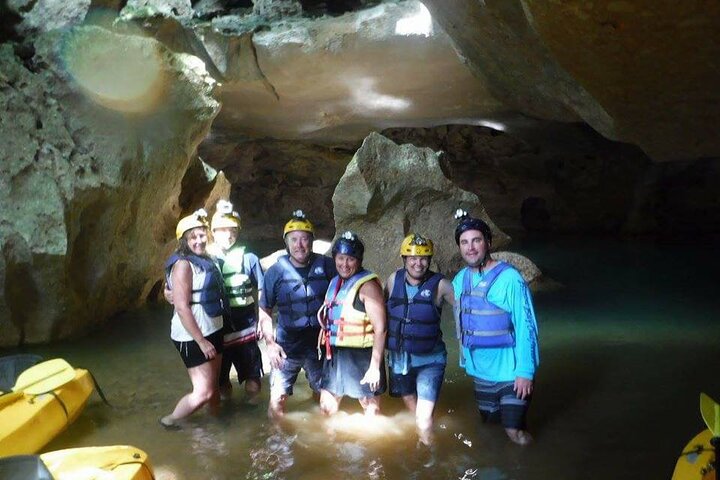
Cave Kayaking or tubing, Ziplines and Altun Ha V.i.V.

Jungle Horseback & Cave Tube Adventure

Belize Cave Tubing and Zipline Jungle Adventure with Lunch

Belize Airport to San Ignacio Shuttle Service Private

Xunantunich, Cave Tubing and Zipline tour from Belize City

Altun Ha Mayan Ruins and Cave Tubing With Belize Landquest

Altun Ha and Belize City Tour

Xunantunich Mayan Temples and Cave Tubing Paradise

Combo Tour Cave Tubing and Xunantunich Mayan Site - fun day in Belize


 Best Backpacking
 Hi, I’m Johan (Netherlands 🇳🇱), the creator of TakeYourBackpack. Over the past 3 decades, I’ve backpacked through 90+ countries across six continents, gaining extensive experience with independent travel, long-term trips, and overland routes.