×

Benin🇧🇯 | townsGanviéTeak stilt houses, Lake Nokoué pirogues, floating market, acadja fish parks | things to do and best time to go

Explore KoutammakouExplore Ouidah

Backpacking in Ganvié
🏆 Top picktown ranked #1
By Johan Kruseman 🇳🇱 | Updated October 22, 2026

Houses at Ganvié stand on teak stilts roughly two meters above the lake, and the stilts are streaked with a pale line of dried algae that marks the water level of the last rainy season. Look at the poles when your boat idles beside a home. This stilt village sits on Lake Nokoué in southern Benin, north of Cotonou, and the only road in is a dusty track to the landing at Abomey-Calavi. There are no streets here. Canoes carry everything: schoolchildren in blue uniforms, women selling fish and fuel, and you. Because the village is a working community, the experienced move is to hire a paddled pirogue rather than a loud motor boat, and to agree the route and stops before boarding, since guides otherwise steer you to paid stalls. Expect heat, woodsmoke, drying fish and slow evenings with few other backpackers. Unlike Nokoué’s other stilt village, So-Ava, Ganvié is far easier to reach and set up for visitors, so it is busier and more commercial.

Discover everything you want to know in the 📖 Benin Travel Guide.


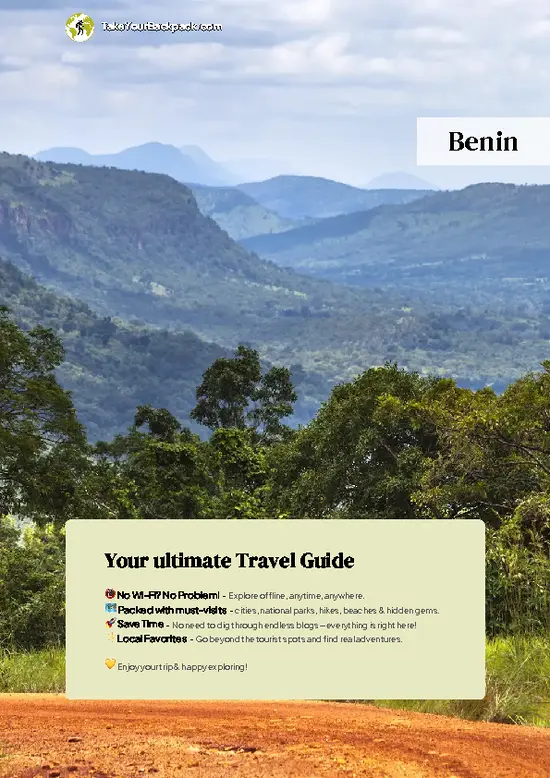
example page 0 from our offline Travel Guide for Benin
example page 1 from our offline Travel Guide for Benin
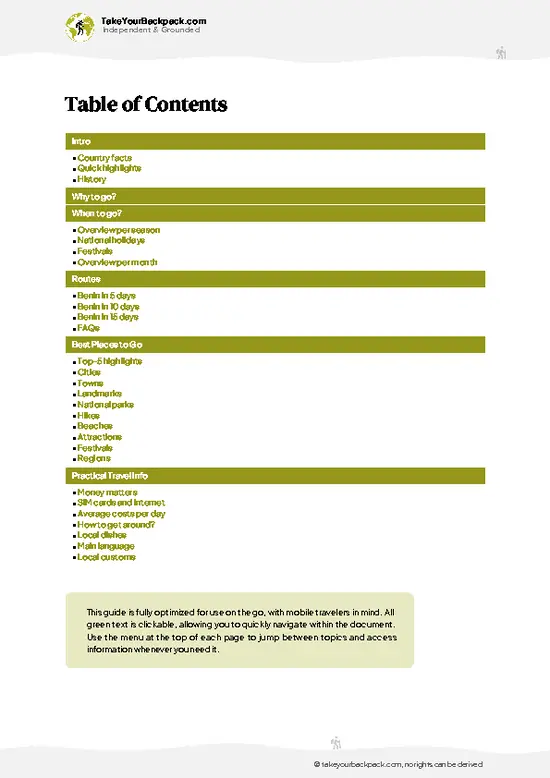
example page 2 from our offline Travel Guide for Benin
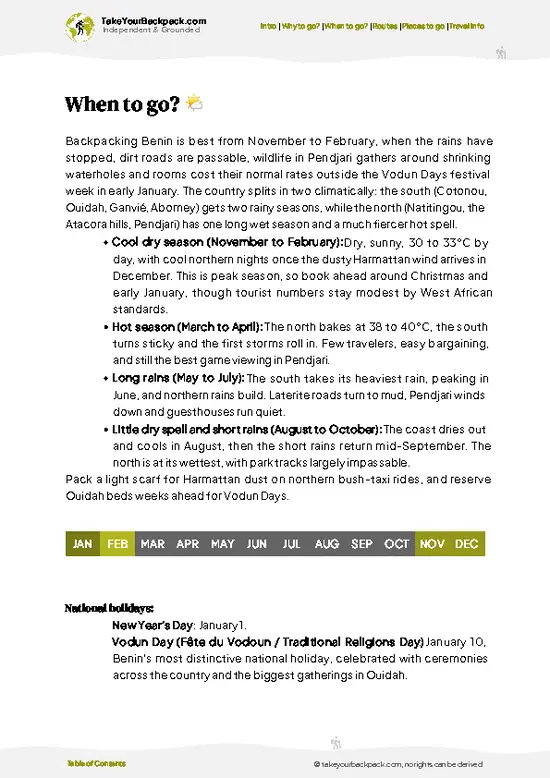
example page 3 from our offline Travel Guide for Benin
example page 4 from our offline Travel Guide for Benin
example page 5 from our offline Travel Guide for Benin
example page 6 from our offline Travel Guide for Benin
example page 7 from our offline Travel Guide for Benin
Loading the map 🌍
CLICK TO FILTER
cities
towns
landmarks
national parks
hikes
beaches
attractions
festivals
regions
SHOW COUNTRY’S BESTSHOW ALL

✨ Why go?
Ranked #1 town in Benin
What makes this town worth visiting

Ganvié is the reason to leave Cotonou for a day: a lake community of Tofinu people whose ancestors built on the water to escape slave raiders who would not enter it. You get a lived-in place, not a museum, with a floating market where women trade from canoes, fish farms made of brush fences, and schoolchildren paddling past. Most travelers come for a few hours, and that is enough for the main sights. A handful of simple lodgings, including stilted guesthouses, let you linger overnight, when the lake goes quiet except for frogs, motors and distant radios. That is when the place feels most real, and it is also when you meet the few other travelers who stay. It suits curious solo travelers and small groups who like to watch daily life, ask questions through a guide and take photographs with permission. … read more 👉
Ganvié is the reason to leave Cotonou for a day: a lake community of Tofinu people whose ancestors built on the water to escape slave raiders who would not enter it. You get a lived-in place, not a museum, with a floating market where women trade from canoes, fish farms made of brush fences, and schoolchildren paddling past. Most travelers come for a few hours, and that is enough for the main sights. A handful of simple lodgings, including stilted guesthouses, let you linger overnight, when the lake goes quiet except for frogs, motors and distant radios. That is when the place feels most real, and it is also when you meet the few other travelers who stay. It suits curious solo travelers and small groups who like to watch daily life, ask questions through a guide and take photographs with permission. If you need nightlife, hikes or cafés, skip the overnight and treat it as a half-day trip. Bring small cash for the pirogue fee, snacks and drinks, and a hat, because the water gives no shade.

💡 HighlightsMust-see experiences and standout moments

  1. Paddling the Lake Nokoué Canals by Pirogue: This is why anyone comes. A guide poles or paddles you through the main channels, past stilt houses of bamboo and thatch, and the water is the only street. Go in the morning, when the light is soft and fishermen are working their nets. Expect about €10 to 20 per boat, shared between passengers, for 1.5 to 3 hours. Bring a hat, because there is no shade out on the water.
  2. Ganvié Floating Market: Women paddle their own canoes between each other, trading fish, vegetables, soap, fruit and cooking oil boat to boat. Prices are settled over the gunwale, and the language is Fon. Arrive early, as trading thins out by late morning. Watching is free once you have a boat, and a small purchase of fruit costs under €2. Allow about 45 minutes to 1 hour.
  3. Acadja Fish
… read more 👉
  1. Paddling the Lake Nokoué Canals by Pirogue: This is why anyone comes. A guide poles or paddles you through the main channels, past stilt houses of bamboo and thatch, and the water is the only street. Go in the morning, when the light is soft and fishermen are working their nets. Expect about €10 to 20 per boat, shared between passengers, for 1.5 to 3 hours. Bring a hat, because there is no shade out on the water.
  2. Ganvié Floating Market: Women paddle their own canoes between each other, trading fish, vegetables, soap, fruit and cooking oil boat to boat. Prices are settled over the gunwale, and the language is Fon. Arrive early, as trading thins out by late morning. Watching is free once you have a boat, and a small purchase of fruit costs under €2. Allow about 45 minutes to 1 hour.
  3. Acadja Fish Parks: These are the brush-pile enclosures of branches planted in the lake bed, where fish gather and are harvested. Guides will explain how the method works, and you can see the stakes poking out of the shallows in neat rectangles. The visit is part of the boat tour, so it costs nothing extra and takes 20 to 30 minutes. Mornings give the best view of harvesting.
  4. Ganvié Village Stilt Houses and Walkways: Many boat tours stop at a platform where you can step onto planks and see how homes, a school and small shops sit on stilts. Look at the wood posts, the smoky kitchens and the laundry hung over the water. Pay respect by asking before photographing people. Allow 30 to 45 minutes. A small contribution of about €1 to 3 is normal at stops.
  5. Local Church and Mosque on the Water: The lake community has places of worship reached only by boat, and your guide can point them out as you pass. Services and prayers add a sound layer to the village, with singing or the call to prayer carrying across the water. Seeing them takes 10 to 15 minutes within the tour and costs nothing extra. Sundays and Fridays are the liveliest.
From Ganvié, day trips by road can reach Ouidah with its Route des Esclaves and Python Temple, the Pendjari-unrelated but nearby Porto-Novo museums and the Grand-Popo beaches along the coast. Boat tours are best arranged at the Abomey-Calavi embarkation point, and a guide or a negotiated boat is needed in advance on busy weekends.
Spotted a mistake or missing something? Contact us.

Things to do near Ganvié

Ratings based on Tripadvisor reviews. When you book through this link, you support our work at no extra cost to you.

🏘️ NeighborhoodsKey areas and districts to know

Ganvié is a stilt village of roughly 20,000 people on Lake Nokoué, and its areas are defined by water channels rather than streets. Every trip between them is by pirogue, so budget your time by paddling distance, not by map distance.
  • Main Channel and Market Quarter: This is the busiest water lane, where women in canoes sell fish, vegetables, and bottled drinks from boat to boat. You hear paddles knocking on hulls and haggling in Fon, and smell smoked fish and wet wood. Bring small coins, because sellers cannot break large notes while balanced on a canoe. Mornings are best, before the heat flattens everything.
  • Residential Stilt Neighborhoods: Houses of weathered wood and thatch or tin stand on poles above brown-green water. Laundry hangs from railings and children paddle small dugouts with startling
… read more 👉
Ganvié is a stilt village of roughly 20,000 people on Lake Nokoué, and its areas are defined by water channels rather than streets. Every trip between them is by pirogue, so budget your time by paddling distance, not by map distance.
  • Main Channel and Market Quarter: This is the busiest water lane, where women in canoes sell fish, vegetables, and bottled drinks from boat to boat. You hear paddles knocking on hulls and haggling in Fon, and smell smoked fish and wet wood. Bring small coins, because sellers cannot break large notes while balanced on a canoe. Mornings are best, before the heat flattens everything.
  • Residential Stilt Neighborhoods: Houses of weathered wood and thatch or tin stand on poles above brown-green water. Laundry hangs from railings and children paddle small dugouts with startling skill. Your guide steers you through here because the narrow lanes are private, and photographing people without asking causes friction. Ask first, and offer a tip if someone poses.
  • Church, School, and Mosque Islands: Ganvié has floating-style public buildings on stilts, including a church and schools. They are quiet, and the tin roofs ring loudly in rain. Guides usually point these out from the boat, so ask to stop if you want a closer look.
  • Lakeside Fish Parks (Acadjas): Brush enclosures of branches planted in the lake bed trap fish for farming. They look like ragged green fences in the water, and the smell is sharp and muddy. Fishermen work them early, so go in the first hours to watch.
  • Abomey-Calavi Departure Point: The mainland jetty at Ganvié’s edge is a dusty, noisy scrum of boat touts. Agree the price and route before boarding, because the ticket office price is the one that counts.
Nightlife does not exist here, and the lake is silent after dark except for frogs and distant generators.

⌛️ 1 dayA smart one-day plan

7:30 AM, Abomey-Calavi landing: Arrive early at the lake landing before the heat builds. Agree on a paddled pirogue, the route and the total price before you step in. A guide will join you, and the quiet start is worth it.
8:15 AM, Floating market: Glide into the market zone, where canoes bump hulls and women sell fish, vegetables and charcoal. Buy a small item such as bananas or soap to show goodwill, then drift on after about an hour.
9:30 AM, Fish parks: Your boatman will paddle beside the brushwood acadja enclosures. Ask how the fish are harvested and how long a park lasts. It is a short, calm stretch.
10:30 AM, Stilted church, mosque and school: Pass the village’s places of worship and a school, then ask your guide about daily routines. Keep cameras lowered near people unless they invite … read more 👉
7:30 AM, Abomey-Calavi landing: Arrive early at the lake landing before the heat builds. Agree on a paddled pirogue, the route and the total price before you step in. A guide will join you, and the quiet start is worth it.
8:15 AM, Floating market: Glide into the market zone, where canoes bump hulls and women sell fish, vegetables and charcoal. Buy a small item such as bananas or soap to show goodwill, then drift on after about an hour.
9:30 AM, Fish parks: Your boatman will paddle beside the brushwood acadja enclosures. Ask how the fish are harvested and how long a park lasts. It is a short, calm stretch.
10:30 AM, Stilted church, mosque and school: Pass the village’s places of worship and a school, then ask your guide about daily routines. Keep cameras lowered near people unless they invite photos.
12:00 PM, Lunch on the water: Stop at a simple lakeside restaurant for grilled fish with pounded yam or rice. Shade and a cold drink matter here, and the meal gives your boatman a rest.
2:00 PM, Quiet back channels: Ask to be paddled into the narrow residential channels away from the main tour loop, where children swim and nets dry on poles. This is the part most tours skip, and it is the most human.
4:30 PM, Return to the landing: Slide back across the open lake as the heat softens. Tip your boatman and guide fairly, then catch transport back toward Cotonou.

🌤️ When to go?Best time to visit Ganvié

  • Long Dry Season (November to March): Skies are mostly clear, with highs around 30 to 33°C (86 to 91°F) and cooler nights near 23°C (73°F). The harmattan haze can dull photos and bring dust, but the lake is calm and pirogue rides are comfortable. Crowds are thickest around December and January, and guides raise prices a little.
  • Main Rainy Season (April to July): Heavy downpours arrive, and temperatures sit around 27 to 31°C (81 to 88°F). Humidity is high, and storms can cancel boat trips for an afternoon. Visitors are few, so you can bargain easily. Mosquitoes multiply.
  • Short Dry Spell (August to September): Rain eases and the lake is a glassy green, with quieter boat lanes. Highs are near 28 to 30°C (82 to 86°F), and this is a good window for photography.
  • Short Rainy Season (October to November):
… read more 👉
  • Long Dry Season (November to March): Skies are mostly clear, with highs around 30 to 33°C (86 to 91°F) and cooler nights near 23°C (73°F). The harmattan haze can dull photos and bring dust, but the lake is calm and pirogue rides are comfortable. Crowds are thickest around December and January, and guides raise prices a little.
  • Main Rainy Season (April to July): Heavy downpours arrive, and temperatures sit around 27 to 31°C (81 to 88°F). Humidity is high, and storms can cancel boat trips for an afternoon. Visitors are few, so you can bargain easily. Mosquitoes multiply.
  • Short Dry Spell (August to September): Rain eases and the lake is a glassy green, with quieter boat lanes. Highs are near 28 to 30°C (82 to 86°F), and this is a good window for photography.
  • Short Rainy Season (October to November): Showers return but are shorter and less intense.
Daylight stays close to twelve hours all year, so start your boat trip by 8 AM for the coolest air and the busiest market scenes.


source: climatestotravel.comJANJanuary: excellent for travelingFEBFebruary: excellent for travelingMARMarch: highly recommended for travelingAPRApril: good for travelingMAYMay: fair for travelingJUNJune: fair for travelingJULJuly: fair for travelingAUGAugust: fair for travelingSEPSeptember: good for travelingOCTOctober: good for travelingNOVNovember: highly recommended for travelingDECDecember: excellent for traveling
when-to-go

✈️ The backpacker research shortcutBenin Travel Guide

An offline-friendly backpacking guide with optimized travel routes, ranked highlights, transport advice, and the best areas to stay.
example page 0 from our offline Travel Guide for Benin
example page 1 from our offline Travel Guide for Benin
example page 2 from our offline Travel Guide for Benin
example page 3 from our offline Travel Guide for Benin
example page 4 from our offline Travel Guide for Benin
example page 5 from our offline Travel Guide for Benin
example page 6 from our offline Travel Guide for Benin
example page 7 from our offline Travel Guide for Benin
The digital guide (213 pages) contains:
✅ 48 highlights, ranked by travel appeal
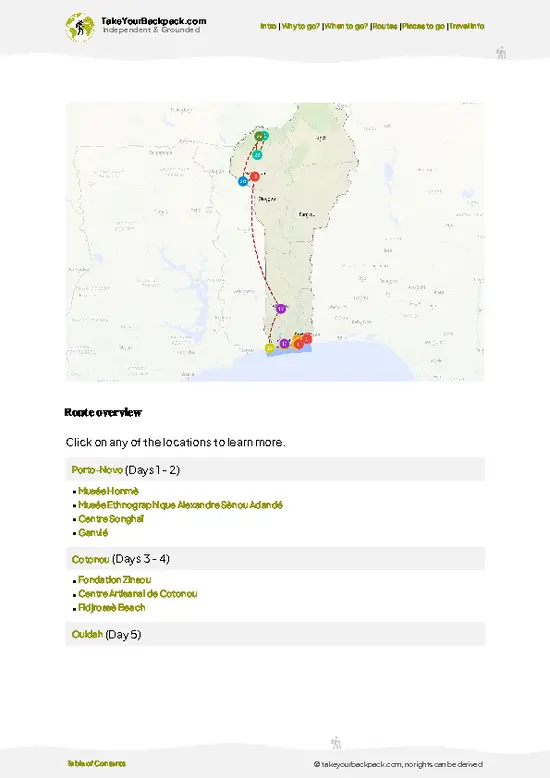
✅ Optimized 5, 10 & 15-day travel routes
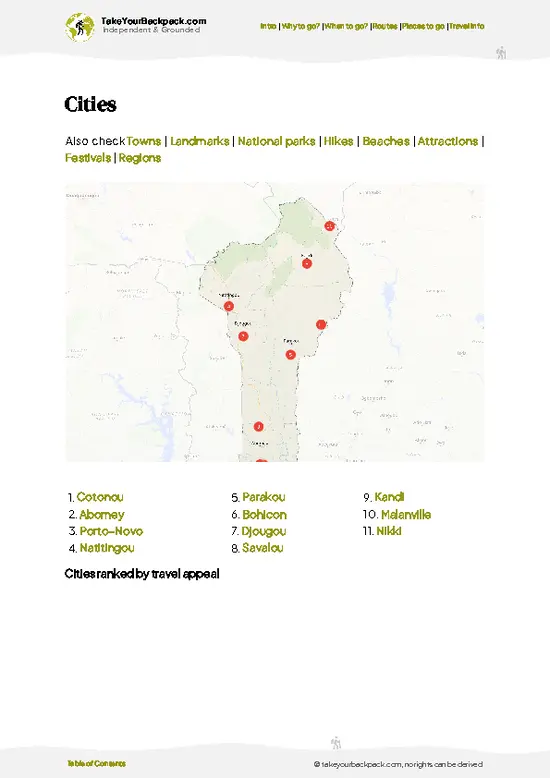
✅ Cities, national parks, landmarks, beaches
✅ How to get around
✅ Offline-friendly for travel without Wi-Fi
👉 Click to see all 30+ guide features

📅 Plan smarter in minutes, not weeks
✅ Month by month travel advice
✅ Festivals & national holidays
✅ Budget expectations

🗺️ Go to the right places, skip the overrated ones
✅ Honest pros & cons of destinations
✅ Top hikes, parks & viewpoints
✅ Lesser-known places most travelers miss
✅ Clear “worth it vs skip it” guidance

🛏️ Travel smoothly without rookie mistakes
✅ Best areas to stay
✅ Transport systems explained simply
✅ Common scams & safety advice
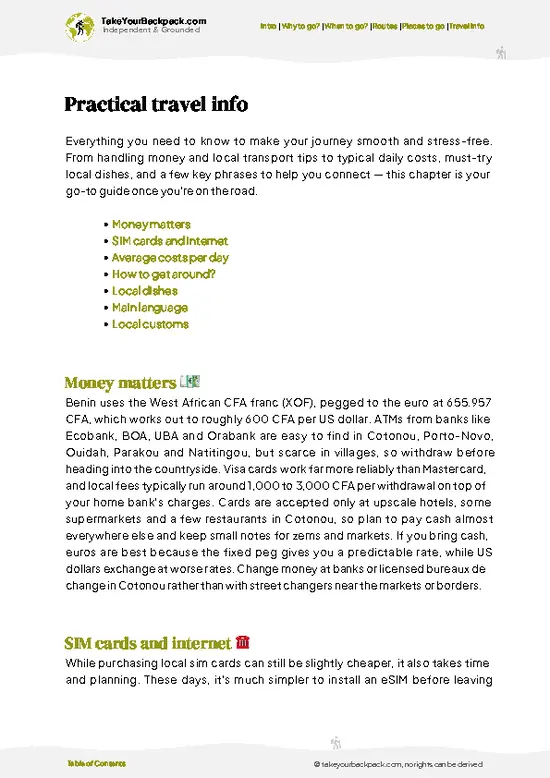
✅ SIM cards, money & practical tips

🌍 Understand the country, not just visit it
✅ Culture & traditions
✅ 52 Essential phrases & customs
✅ Festivals worth planning around
✅ Traveler-friendly historical context
✅ Insights that make places more meaningful

📱 Built for real travel conditions
✅ Fully downloadable PDF
✅ Works completely offline
✅ Optimized for phone use
✅ Useful in remote areas & buses
✅ Everything in one place
Stop searching, start planning
Get instant access to your full guide. 30‑day money-back guarantee.
+ Add another guide for just

By proceeding you agree to our terms.
Sent to your inbox immediately after payment • 100% Secure Checkout
Best Backpacking Travel Advisor 2025 tourism awardBest Backpacking
Travel Advisor
2025
What others say about Take Your Backpack Guides:
⭐⭐⭐⭐⭐
Fantastic, amazing amount of information!
⭐⭐⭐⭐⭐
My goodness this is amazing, it's what I've been looking for hats off too you!
⭐⭐⭐⭐⭐
I think this is absolutely BRILLIANT
⭐⭐⭐⭐
Very complete and informative. It's still missing places, but I gotta to commend you
⭐⭐⭐⭐⭐
This is truly amazing, thank you, can't wait to explore it with my kids!
⭐⭐⭐⭐⭐
Awesome resource, thank you!
⭐⭐⭐⭐⭐
This is amazing! Can't wait to explore the ones I haven't seen
⭐⭐⭐⭐
I love this! Well done, great idea.
⭐⭐⭐⭐⭐
Thanks for taking the time to make this gem!
⭐⭐⭐⭐⭐
This might be the best website I've ever seen.
⭐⭐⭐⭐⭐
Congratulations, and thank you so much for your work; it's incredibly valuable.
⭐⭐⭐⭐
In all seriousness I think you did a great job pointing out the important spots
⭐⭐⭐⭐⭐
10/10 very good
⭐⭐⭐⭐⭐
As someone who's only just starting to visit regularly this is awesome, thank you.
⭐⭐⭐⭐
Thank you very much! I'm going to visit my dad, it's going to be very useful!
⭐⭐⭐⭐⭐
This is really cool! We'll be travelling for the first time and this definitely come in handy.
⭐⭐⭐⭐⭐
You are now our minister of culture, congratulations 👨‍💼
⭐⭐⭐⭐⭐
Just wanted to tell you that this is a pearl! Going to follow your recommendations.
⭐⭐⭐⭐⭐
This is so cool. I'll definitely be using the resource for my travels soon.
⭐⭐⭐⭐⭐
This is very impressive! Good work.
⭐⭐⭐⭐⭐
This is an amazing and informative site. Very well done!

🛏️ Where to stay?Where staying makes the most sense

Most backpackers sleep in Cotonou or Abomey-Calavi, not in Ganvié itself, because the village has very little formal budget accommodation and no hostel scene. Staying on the mainland gives you power, running water, and reliable food.
Cotonou is the better choice for most. Its hostels and guesthouses cluster around Haie Vive, Cadjehoun, and near the Dantokpa area, with dorm beds and basic rooms at a wide range of prices. Haie Vive is calmer at night, with restaurants and taxis easy to find, and zems pass constantly. Streets can be dark and uneven after midnight, so book somewhere within a short … read more 👉
Most backpackers sleep in Cotonou or Abomey-Calavi, not in Ganvié itself, because the village has very little formal budget accommodation and no hostel scene. Staying on the mainland gives you power, running water, and reliable food.
Cotonou is the better choice for most. Its hostels and guesthouses cluster around Haie Vive, Cadjehoun, and near the Dantokpa area, with dorm beds and basic rooms at a wide range of prices. Haie Vive is calmer at night, with restaurants and taxis easy to find, and zems pass constantly. Streets can be dark and uneven after midnight, so book somewhere within a short ride of where you eat. Noise from motorbikes and generators is steady, so earplugs help.
Abomey-Calavi is the second option if you want an early start. It sits close to the Ganvié jetty, so you can reach the boats within minutes of waking. Budget options are limited to guesthouses, which are quieter and cheaper than Cotonou but offer fewer food and nightlife choices. Transport back to Cotonou thins out after dark, so plan your return before the evening.
Book ahead from December to January, when rooms fill. At other times, you can often negotiate a better rate in person.

🚌 Getting aroundGetting around like a local

Ganvié has no streets at all, so walking is limited to the few wooden platforms and the dusty jetty at Abomey-Calavi where you board. Beyond that, every journey is on water, and the lake’s calm brown surface carries the creak of paddles and the occasional outboard putter. Expect to arrange boat transport before leaving the mainland, and expect the price to be negotiated.
  • Motorized Pirogue from the Jetty: This is how most visitors reach the village, a ride of about 20 to 30 minutes across Lake Nokoué. A shared or private boat costs around €10 to 25 per boat, depending on group size and how hard you bargain. The boat is open, with plank benches and no shade, so bring a hat and sunscreen because the glare off the water is strong. Boats run during daylight, and mornings are calmer.
  • Paddled Pirogue
… read more 👉
Ganvié has no streets at all, so walking is limited to the few wooden platforms and the dusty jetty at Abomey-Calavi where you board. Beyond that, every journey is on water, and the lake’s calm brown surface carries the creak of paddles and the occasional outboard putter. Expect to arrange boat transport before leaving the mainland, and expect the price to be negotiated.
  • Motorized Pirogue from the Jetty: This is how most visitors reach the village, a ride of about 20 to 30 minutes across Lake Nokoué. A shared or private boat costs around €10 to 25 per boat, depending on group size and how hard you bargain. The boat is open, with plank benches and no shade, so bring a hat and sunscreen because the glare off the water is strong. Boats run during daylight, and mornings are calmer.
  • Paddled Pirogue Inside the Village: Once in Ganvié, guides switch to paddled canoes for the narrow channels. Tours of one to two hours typically cost €5 to 15 per person, often bundled with the boat ride. It is slow, quiet, and smells of wet wood and fish. Agree on the total price first, since extras like market stops are sometimes added later.
  • Zem (Motorbike Taxi) to the Jetty: From Cotonou, zemidjans cover the distance to Abomey-Calavi in roughly 30 to 60 minutes depending on traffic. Fares run about €2 to 5. The road is dusty and loud, so tie your bag down and wear closed shoes. Settle the fare before climbing on.
  • Shared Taxi or Minibus to Abomey-Calavi: Minibuses and shared taxis from Cotonou cost roughly €0.50 to 1.50 and fill up before leaving. They are packed, hot, and unscheduled, so start early to catch the cool air and boats that depart in the morning. Ask the driver to drop you near the Ganvié embarkation point.
Carry small bills for every leg. Boatmen rarely have change, and a €10 note often turns into an awkward negotiation.

👛 Costs (as of 22 October 2026)What things cost and how to budget

Ganvié can be done on about €29 to 58 a day for a backpacker based in Cotonou or Abomey-Calavi, with the boat tour as the biggest single cost. Prices are paid in local currency, but the figures below are in euros.
CategoryBudget RangeLocal Reality
Dorm accommodation€8 to 15 (high season)Dorm beds are scarce, so many travelers take a basic private room in Cotonou at the higher end.
Meals€5 to 10Street rice, grilled fish, and pâte with sauce are cheap; restaurants cost more.
Local transport€3 to 8Shared taxis and zems cover the road to Abomey-Calavi, with fares negotiated.
Basic activities/entry fees€10 to 20The boat and guided village tour make up most of this, often split among a group.
Miscellaneous expenses€3 to 5Water, tips, and small purchases from the floating market.
Total Daily Budget€29 to
… read more 👉
Ganvié can be done on about €29 to 58 a day for a backpacker based in Cotonou or Abomey-Calavi, with the boat tour as the biggest single cost. Prices are paid in local currency, but the figures below are in euros.
CategoryBudget RangeLocal Reality
Dorm accommodation€8 to 15 (high season)Dorm beds are scarce, so many travelers take a basic private room in Cotonou at the higher end.
Meals€5 to 10Street rice, grilled fish, and pâte with sauce are cheap; restaurants cost more.
Local transport€3 to 8Shared taxis and zems cover the road to Abomey-Calavi, with fares negotiated.
Basic activities/entry fees€10 to 20The boat and guided village tour make up most of this, often split among a group.
Miscellaneous expenses€3 to 5Water, tips, and small purchases from the floating market.
Total Daily Budget€29 to 58Roughly €40 on a typical day.
To save money, share the boat with other travelers at the jetty, since the cost is per boat and not per person.
⚠️ Prices can change and everyone travels differently, so take this as a rough guide. Hope it helps you plan your adventure!

🚌 Day tripsWhere to go beyond the main area

Ganvié sits close to Cotonou and Ouidah, so combining it with other sights is easy if you leave early and use shared transport.Cotonou Markets and Fetish Stalls: Cotonou’s Dantokpa Market is one of West Africa’s largest, and a half-day wander is rewarding if you enjoy chaos, spices, and fabrics. It is about 45 to 90 minutes from Ganvié by boat and zem, with costs near €5 to 10 including transport. Go before 11 AM, because heat and crowds build fast. Keep your phone in a front pocket.
Ouidah: Ouidah holds the Route of Slaves, the Python Temple, and the historical museum in the old Portuguese fort. It is a very meaningful trip, taking about 1.5 to 2 hours each way by shared taxi from Cotonou, with a total cost around €10 to 20 including entries. Visit between November and March for easier travel … read more 👉
Ganvié sits close to Cotonou and Ouidah, so combining it with other sights is easy if you leave early and use shared transport.Cotonou Markets and Fetish Stalls: Cotonou’s Dantokpa Market is one of West Africa’s largest, and a half-day wander is rewarding if you enjoy chaos, spices, and fabrics. It is about 45 to 90 minutes from Ganvié by boat and zem, with costs near €5 to 10 including transport. Go before 11 AM, because heat and crowds build fast. Keep your phone in a front pocket.
Ouidah: Ouidah holds the Route of Slaves, the Python Temple, and the historical museum in the old Portuguese fort. It is a very meaningful trip, taking about 1.5 to 2 hours each way by shared taxi from Cotonou, with a total cost around €10 to 20 including entries. Visit between November and March for easier travel on dry roads. A common mistake is trying to see everything in a rush, so start by 8 AM.
👉 Explore OuidahPorto-Novo: Benin’s capital has a quiet, colonial-era center with the Ethnographic Museum and the Royal Palace of Honmé. Allow about 2 hours each way by shared taxi, with costs around €8 to 15 including entries. The museums close on some weekdays, so confirm the opening times and bring small bills for guides.
👉 Explore Porto-NovoGrand-Popo: This quiet Atlantic beach town offers palm-lined sand and a slow riverside atmosphere. It is roughly 2 to 2.5 hours from Cotonou by road, so it works as a long day, with total costs near €10 to 20. Swim carefully, since currents are strong, and the best time is November to March.

🛡️ SafetySafety Tips and Common Scams in Ganvié

Ganvié is calm and low-risk, and the main problems are money and pushiness rather than violence. Touts at the Abomey-Calavi jetty are persistent, and some quote inflated boat prices or add fees for the village chief’s permit or photographing. Agree the full price and what it includes before boarding, and pay at the end rather than upfront. Small bills prevent disputes. Photographing residents without asking draws irritation, so ask first and expect a small tip request. Carry valuables in a dry bag, because boats can tip or splash. Mosquitoes carry malaria and dengue, so use repellent and check your prophylaxis. Solo travelers are generally fine on the water in daytime, but there is no reason to be on the lake after dark. The road to Cotonou is the riskier part, with heavy motorbike traffic, … read more 👉
Ganvié is calm and low-risk, and the main problems are money and pushiness rather than violence. Touts at the Abomey-Calavi jetty are persistent, and some quote inflated boat prices or add fees for the village chief’s permit or photographing. Agree the full price and what it includes before boarding, and pay at the end rather than upfront. Small bills prevent disputes. Photographing residents without asking draws irritation, so ask first and expect a small tip request. Carry valuables in a dry bag, because boats can tip or splash. Mosquitoes carry malaria and dengue, so use repellent and check your prophylaxis. Solo travelers are generally fine on the water in daytime, but there is no reason to be on the lake after dark. The road to Cotonou is the riskier part, with heavy motorbike traffic, so use a helmet when riding a zem and avoid night rides. Keep your phone out of sight in crowded markets.

FAQTraveler FAQ

Ganvié is worth visiting if you want to see a lake village built entirely on stilts, one of West Africa’s most distinctive settlements. The pirogue ride from Abomey-Calavi takes 20 to 30 minutes, and a tour with the guide costs roughly €15 to 40 including the boat. It works best as a half-day highlight alongside Cotonou or Ouidah, not as a place to linger.
Ganvié needs about half a day, roughly 3 to 4 hours including the boat ride and a village tour. Add a night in Cotonou before or after, since it is the usual base, and a second day if you want Ouidah or Porto-Novo. Starting by 8 AM gives the calmest water and the liveliest market.
Ganvié is easily visited as a day trip from Cotonou, about 45 to 90 minutes to the Abomey-Calavi jetty by zem or shared taxi, then 20 to 30 minutes by boat. A round trip typically costs €20 to 45 in total, depending on how the boat is shared. Leave Cotonou by 8 AM and plan to be back before dark.
⚠️ Things can change over time, so always validate details locally before you go.

Other Beninese towns near Ganvié

Explore more nearby:

  • Ouidah—Slave Route, Vodun temples, colonial relics| 36 km away
  • Tanougou—Atakora foothills, waterfall access, Somba villages| 494 km away

💡 Not sure where to go next?
Create a personalized itinerary for Benin including Ganvié and the places that fit your trip.

Generate my itinerary

👉 Discover all towns

Or checkout all Benin has to offer (think cities, towns, villages, national parks, hikes, beaches, festivals)
Country photo of Benin

We 💚 feedbackKey takeaways before you go

Ganvié disappoints travelers who treat it as a quick photo stop and rush the paddle. Spend the extra time, pay for a quiet pirogue and ask your guide to turn into the back channels. I would also bring small bills for the boat and market, and skip hard bargaining with people who earn little.

✍️ Help improve this page!
The information on this page is based on in-depth research, insights shared by experienced travelers, and feedback from the local travel community in Benin. While every effort is made to keep the information accurate and current, conditions can change — so if you spot anything incorrect or outdated, please get in touch.


🙋‍♂️ Give feedback

👋 Meet the founderWho’s Behind Take Your Backpack?

Johan, backpacker and founder of TakeYourBackpackHi, I’m Johan (Netherlands 🇳🇱), the creator of TakeYourBackpack. Over the past 3 decades, I’ve backpacked through 90+ countries across six continents, gaining extensive experience with independent travel, long-term trips, and overland routes.

This site is built on a combination of firsthand travel experience and carefully curated insights from other backpackers. Many guides are based on places I’ve personally visited, while others bring together tips, observations, and practical advice shared by trusted travelers I’ve met along the way.

The goal is to provide realistic, experience-driven guidance — not generic itineraries — so you can explore destinations with better context, clearer expectations, and more confidence.