

×

Benin🇧🇯 | townsOuidahSlave route, Vodun temples, Portuguese fort, sandy coastal lanes | things to do and best time to go

Explore GanviéExplore Tanougou

Backpacking in Ouidah
🌟 Highlighttown ranked #2
By Johan Kruseman 🇳🇱 | Updated October 22, 2026

Ouidah is the spiritual capital of Vodun and the endpoint of the Route des Esclaves, and most people come for that history. What gets overlooked is how easy and sociable a base it is: a calm coastal town of sandy lanes, red laterite dust and the smell of woodsmoke and salt, with a few small guesthouses and a handful of travelers at any time. It sits on Benin’s Atlantic coast, west of Cotonou, an easy hop by road. The Route des Esclaves is worth a full morning, and the Python Temple and the Musée d’Histoire are worth your time as well. The main street is dusty, hot and short on shade, and the beach is better for the drumbeat of surf than for swimming, so skip any plan to laze there. Evenings are slow, with cold drinks and grilled fish. For a first day, walk the slave route at 8 a.m., eat a long lunch, then wander the old Brazilian quarter as the heat lifts.

Discover everything you want to know in the 📖 Benin Travel Guide.


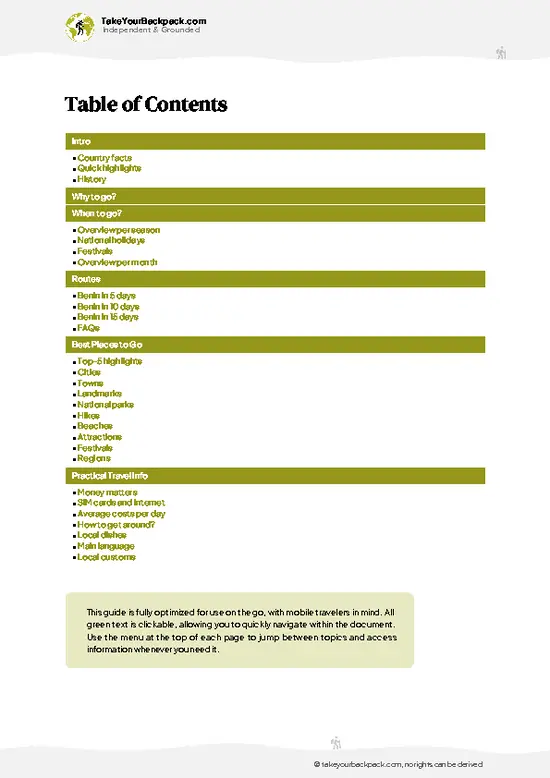
example page 0 from our offline Travel Guide for Benin
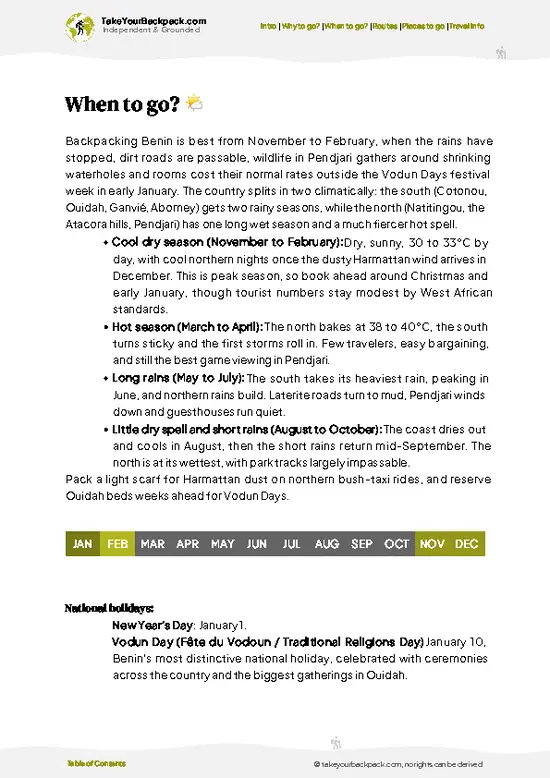
example page 1 from our offline Travel Guide for Benin
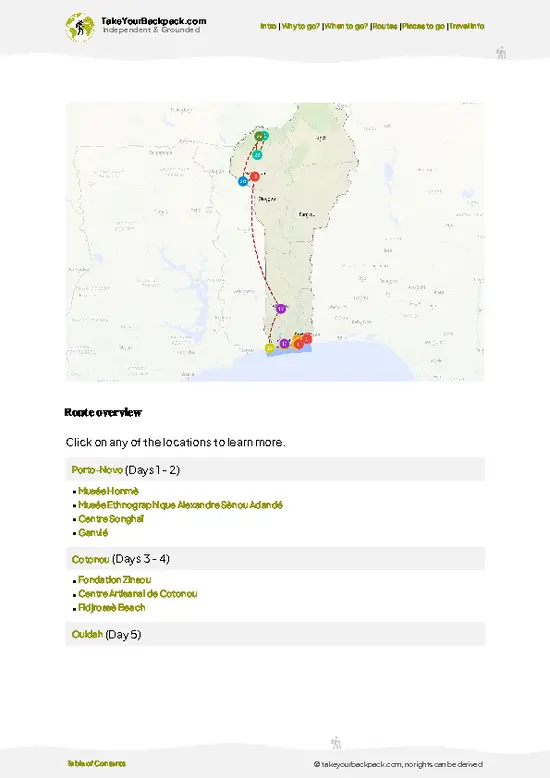
example page 2 from our offline Travel Guide for Benin
example page 3 from our offline Travel Guide for Benin
example page 4 from our offline Travel Guide for Benin
example page 5 from our offline Travel Guide for Benin
example page 6 from our offline Travel Guide for Benin
example page 7 from our offline Travel Guide for Benin
Loading the map 🌍
CLICK TO FILTER
cities
towns
landmarks
national parks
hikes
beaches
attractions
festivals
regions
SHOW COUNTRY’S BESTSHOW ALL

✨ Why go?
Ranked #2 town in Benin
What makes this town worth visiting

Ouidah gives you the heart of Benin’s Vodun culture in a town small enough to cover on foot, which is the main reason to go. Most travelers stay one to two nights, though slow travelers and history readers easily stretch it to three. The Route des Esclaves, the 4 kilometer track to the beach ending at the Gate of No Return, makes the history physical in a way museums rarely manage. Then there is the old Brazilian quarter, where returned freed people built pastel colonial houses whose names still echo in local families. Add the Vodun festival energy in January and you have a place that rewards curiosity more than a checklist. It is quiet and social in a low-key way: guesthouse terraces, a few cafés, and conversations with guides who grew up here. It suits solo travelers, culture-minded couples … read more 👉
Ouidah gives you the heart of Benin’s Vodun culture in a town small enough to cover on foot, which is the main reason to go. Most travelers stay one to two nights, though slow travelers and history readers easily stretch it to three. The Route des Esclaves, the 4 kilometer track to the beach ending at the Gate of No Return, makes the history physical in a way museums rarely manage. Then there is the old Brazilian quarter, where returned freed people built pastel colonial houses whose names still echo in local families. Add the Vodun festival energy in January and you have a place that rewards curiosity more than a checklist. It is quiet and social in a low-key way: guesthouse terraces, a few cafés, and conversations with guides who grew up here. It suits solo travelers, culture-minded couples and anyone tired of big-city rush. If you want nightlife or hiking, look elsewhere, because Ouidah is about slow walking, listening and learning.

💡 HighlightsMust-see experiences and standout moments

  1. Route des Esclaves and Gate of No Return: The 4 kilometer sandy route runs from the old slave auction square, the Place Chacha, past the Tree of Forgetfulness and a mass-grave memorial to the beachfront arch. Go early in the morning before the heat. Walking takes 1.5 to 2 hours, or less by moto. A guide is helpful and costs about €5 to 10.
  2. Musée d’Histoire de Ouidah: Housed in the 18th-century Portuguese fort of São João Baptista de Ajudá, it explains the slave trade, the Dahomey kings and the Brazilian returnees. Plan on 1 hour. Entry is about €2 to 3. Mornings are cooler.
  3. Temple des Pythons: A small sacred temple where dozens of royal pythons are kept and revered. Visitors may drape one over their shoulders. Allow 30 to 45 minutes. Entry is roughly €2 to 3, plus a small tip for the guide.
  4. Basilique
… read more 👉
  1. Route des Esclaves and Gate of No Return: The 4 kilometer sandy route runs from the old slave auction square, the Place Chacha, past the Tree of Forgetfulness and a mass-grave memorial to the beachfront arch. Go early in the morning before the heat. Walking takes 1.5 to 2 hours, or less by moto. A guide is helpful and costs about €5 to 10.
  2. Musée d’Histoire de Ouidah: Housed in the 18th-century Portuguese fort of São João Baptista de Ajudá, it explains the slave trade, the Dahomey kings and the Brazilian returnees. Plan on 1 hour. Entry is about €2 to 3. Mornings are cooler.
  3. Temple des Pythons: A small sacred temple where dozens of royal pythons are kept and revered. Visitors may drape one over their shoulders. Allow 30 to 45 minutes. Entry is roughly €2 to 3, plus a small tip for the guide.
  4. Basilique de l’Immaculée Conception: This Catholic basilica stands opposite the Python Temple, a pairing that shows how Vodun and Christianity share the town. It takes 15 to 20 minutes, is free, and is best in soft morning light.
  5. Forêt Sacrée de Kpassè: A small sacred forest with statues made from the memorial to a deified king, Kpassè, who is said to live in a tree. Plan for 45 minutes to 1 hour, about €2 to 4 with a guide. Morning or late afternoon is best.
Ouidah also works as a base for day trips to the stilt village of Ganvié, the Possotomé lake area and the Grand-Popo beaches. The Route des Esclaves and the Musée d’Histoire combine well in a single morning, since the museum sits at the start of the route.
Spotted a mistake or missing something? Contact us.

Things to do near Ouidah

Ratings based on Tripadvisor reviews. When you book through this link, you support our work at no extra cost to you.

🏘️ NeighborhoodsUnderstanding the local layout

Ouidah is small enough that its three areas run into each other, and you can cover all of them on foot or by a short zemidjan hop. Spend your time in the first two and treat the third as a quick stop.
  • Historic center and Route des Esclaves start: This is where Ouidah earns its reputation. Old Brazilian-style houses with peeling ochre and pink plaster line the quiet streets around the Place Chacha and the Python Temple, and the Musée d’Histoire sits in the 18th-century Portuguese fort. Mornings are best, when the light is soft and the red dust has not yet been kicked up. Walk it all in two to three hours.
  • Zomaï and the Place des Enchères: The Route des Esclaves heads south from the old slave auction square through Zomaï toward the sea, about 4 km. The first stretch is shaded and walkable, but
… read more 👉
Ouidah is small enough that its three areas run into each other, and you can cover all of them on foot or by a short zemidjan hop. Spend your time in the first two and treat the third as a quick stop.
  • Historic center and Route des Esclaves start: This is where Ouidah earns its reputation. Old Brazilian-style houses with peeling ochre and pink plaster line the quiet streets around the Place Chacha and the Python Temple, and the Musée d’Histoire sits in the 18th-century Portuguese fort. Mornings are best, when the light is soft and the red dust has not yet been kicked up. Walk it all in two to three hours.
  • Zomaï and the Place des Enchères: The Route des Esclaves heads south from the old slave auction square through Zomaï toward the sea, about 4 km. The first stretch is shaded and walkable, but the sun on the bare road is fierce by late morning, so ride a zemidjan and walk back. Sculptures and the Tree of Forgetfulness mark the way. It is sobering and worth every step.
  • Grand Marché and the main road: Loud, smoky and chaotic, with grilled fish, palm oil, stacked fetish stalls and motorbike horns. Good for a coffee, a plate of pâte with sauce and a look at how locals shop, but there is little to see beyond that, so do not plan more than an hour.
  • Ouidah Plage: The Atlantic beach is lined with palms and strong surf. Swimming is dangerous because of the currents, but sunset beers on the sand are an easy, quiet end to the day.

⌛️ 1 dayWhat you can realistically do in a day

This is a history-and-spirits day, best started early before the coastal heat flattens everything.
8:00 AM, Place du Marché and breakfast
Start where the town wakes up, with motorbike taxis (zemidjans) buzzing past and women frying bean fritters and pouring millet porridge. Eat standing up, then walk ten minutes downhill toward the old center, past faded colonial facades with peeling ochre paint.
9:00 AM, Python Temple and Cathedral
The Temple of Pythons sits across from the cathedral, and the contrast is the point. Inside, a guide shows you the sacred snakes of the Dangbé tradition lying coiled in a dim room. You can drape one around your shoulders if you like, and nobody will judge you for declining. Allow an hour.
10:30 AM, Museum of Ouidah History
Walk a few minutes to the old Portuguese fort, … read more 👉
This is a history-and-spirits day, best started early before the coastal heat flattens everything.
8:00 AM, Place du Marché and breakfast
Start where the town wakes up, with motorbike taxis (zemidjans) buzzing past and women frying bean fritters and pouring millet porridge. Eat standing up, then walk ten minutes downhill toward the old center, past faded colonial facades with peeling ochre paint.
9:00 AM, Python Temple and Cathedral
The Temple of Pythons sits across from the cathedral, and the contrast is the point. Inside, a guide shows you the sacred snakes of the Dangbé tradition lying coiled in a dim room. You can drape one around your shoulders if you like, and nobody will judge you for declining. Allow an hour.
10:30 AM, Museum of Ouidah History
Walk a few minutes to the old Portuguese fort, now a museum. Its rooms cover the Atlantic slave trade, Vodun and the Afro-Brazilian families who returned to the coast. Give it ninety minutes and read the Brazilian sections closely.
12:30 PM, Lunch near the fort
Sit at a simple maquis for grilled fish or chicken with pâte and spicy tomato sauce, and drink something cold in the shade. Rest through the worst heat.
2:30 PM, Brazilian quarter
This is the part off the usual circuit. Wander the lanes around the old Afro-Brazilian houses, where pastel arcades, carved doorways and a small chapel hint at returnee families who arrived in the nineteenth century. Locals are happy to point out which houses are original, so ask.
4:00 PM, Route des Esclaves
Take a zemidjan down the four-kilometer sandy road toward the sea, stopping at the Tree of Forgetfulness and the Gate of No Return. Walk the last stretch slowly, with the Atlantic roaring ahead and the wind carrying salt.
5:30 PM, Beach at the Gate
Finish with your feet near the surf and palm trunks silhouetted behind you. Arrange a ride back before dark, then spend the evening over grilled fish in town.

🌤️ When to go?Weather, crowds, and seasonal trade-offs

The long dry season from November to March is the easiest window for Ouidah, with sunny days and less humidity.
  • Main dry season (Nov to Mar): Highs of 30 to 33°C (86 to 91°F), cooler nights near 23°C (73°F), and some Harmattan haze that dims the sun. Roads and the Route des Esclaves are easiest to walk. Expect more visitors and slightly higher room rates, especially around Voodoo Day.
  • Big rains (Apr to Jul): Humid, 27 to 31°C (81 to 88°F), with heavy downpours that flood side streets and turn laterite roads to mud. Rooms are cheaper and crowds are thin.
  • Short dry spell (Aug to Sep): Cloudier and slightly cooler, with fewer storms and a good balance of low prices and manageable weather.
  • Short rains (Oct to Nov): Brief but intense showers, with green countryside.
  • Voodoo Day (10 January): The national
… read more 👉
The long dry season from November to March is the easiest window for Ouidah, with sunny days and less humidity.
  • Main dry season (Nov to Mar): Highs of 30 to 33°C (86 to 91°F), cooler nights near 23°C (73°F), and some Harmattan haze that dims the sun. Roads and the Route des Esclaves are easiest to walk. Expect more visitors and slightly higher room rates, especially around Voodoo Day.
  • Big rains (Apr to Jul): Humid, 27 to 31°C (81 to 88°F), with heavy downpours that flood side streets and turn laterite roads to mud. Rooms are cheaper and crowds are thin.
  • Short dry spell (Aug to Sep): Cloudier and slightly cooler, with fewer storms and a good balance of low prices and manageable weather.
  • Short rains (Oct to Nov): Brief but intense showers, with green countryside.
  • Voodoo Day (10 January): The national festival draws large crowds, drumming and ceremonies. Beds fill quickly.
Daylight stays near 12 hours all year, so plan walks before 11 a.m. and book beds early for January.


source: climatestotravel.comJANJanuary: highly recommended for travelingFEBFebruary: good for travelingMARMarch: good for travelingAPRApril: highly recommended for travelingMAYMay: fair for travelingJUNJune: fair for travelingJULJuly: fair for travelingAUGAugust: fair for travelingSEPSeptember: fair for travelingOCTOctober: highly recommended for travelingNOVNovember: good for travelingDECDecember: highly recommended for traveling
when-to-go

✈️ The backpacker research shortcutBenin Travel Guide

An offline-friendly backpacking guide with optimized travel routes, ranked highlights, transport advice, and the best areas to stay.
example page 0 from our offline Travel Guide for Benin
example page 1 from our offline Travel Guide for Benin
example page 2 from our offline Travel Guide for Benin
example page 3 from our offline Travel Guide for Benin
example page 4 from our offline Travel Guide for Benin
example page 5 from our offline Travel Guide for Benin
example page 6 from our offline Travel Guide for Benin
example page 7 from our offline Travel Guide for Benin
The digital guide (213 pages) contains:
✅ 48 highlights, ranked by travel appeal
✅ Optimized 5, 10 & 15-day travel routes
✅ Cities, national parks, landmarks, beaches
✅ How to get around
✅ Offline-friendly for travel without Wi-Fi
👉 Click to see all 30+ guide features

📅 Plan smarter in minutes, not weeks
✅ Month by month travel advice
✅ Festivals & national holidays
✅ Budget expectations

🗺️ Go to the right places, skip the overrated ones
✅ Honest pros & cons of destinations
✅ Top hikes, parks & viewpoints
✅ Lesser-known places most travelers miss
✅ Clear “worth it vs skip it” guidance

🛏️ Travel smoothly without rookie mistakes
✅ Best areas to stay
✅ Transport systems explained simply
✅ Common scams & safety advice
✅ SIM cards, money & practical tips

🌍 Understand the country, not just visit it
✅ Culture & traditions
✅ 52 Essential phrases & customs
✅ Festivals worth planning around
✅ Traveler-friendly historical context
✅ Insights that make places more meaningful

📱 Built for real travel conditions
✅ Fully downloadable PDF
✅ Works completely offline
✅ Optimized for phone use
✅ Useful in remote areas & buses
✅ Everything in one place
Stop searching, start planning
Get instant access to your full guide. 30‑day money-back guarantee.
+ Add another guide for just

By proceeding you agree to our terms.
Sent to your inbox immediately after payment • 100% Secure Checkout
Best Backpacking Travel Advisor 2025 tourism awardBest Backpacking
Travel Advisor
2025
What others say about Take Your Backpack Guides:
⭐⭐⭐⭐⭐
Fantastic, amazing amount of information!
⭐⭐⭐⭐⭐
My goodness this is amazing, it's what I've been looking for hats off too you!
⭐⭐⭐⭐⭐
I think this is absolutely BRILLIANT
⭐⭐⭐⭐
Very complete and informative. It's still missing places, but I gotta to commend you
⭐⭐⭐⭐⭐
This is truly amazing, thank you, can't wait to explore it with my kids!
⭐⭐⭐⭐⭐
Awesome resource, thank you!
⭐⭐⭐⭐⭐
This is amazing! Can't wait to explore the ones I haven't seen
⭐⭐⭐⭐
I love this! Well done, great idea.
⭐⭐⭐⭐⭐
Thanks for taking the time to make this gem!
⭐⭐⭐⭐⭐
This might be the best website I've ever seen.
⭐⭐⭐⭐⭐
Congratulations, and thank you so much for your work; it's incredibly valuable.
⭐⭐⭐⭐
In all seriousness I think you did a great job pointing out the important spots
⭐⭐⭐⭐⭐
10/10 very good
⭐⭐⭐⭐⭐
As someone who's only just starting to visit regularly this is awesome, thank you.
⭐⭐⭐⭐
Thank you very much! I'm going to visit my dad, it's going to be very useful!
⭐⭐⭐⭐⭐
This is really cool! We'll be travelling for the first time and this definitely come in handy.
⭐⭐⭐⭐⭐
You are now our minister of culture, congratulations 👨‍💼
⭐⭐⭐⭐⭐
Just wanted to tell you that this is a pearl! Going to follow your recommendations.
⭐⭐⭐⭐⭐
This is so cool. I'll definitely be using the resource for my travels soon.
⭐⭐⭐⭐⭐
This is very impressive! Good work.
⭐⭐⭐⭐⭐
This is an amazing and informative site. Very well done!

🛏️ Where to stay?Choosing the right base

The old center near the Place Chacha and the fort is the best area for a budget bed in Ouidah, with simple guesthouses and a few small hostel-style places at roughly €8 to 25 a night. Everything you want to see is within a ten-minute walk, and the streets are quiet after dark apart from the occasional motorbike. Zemidjans pass constantly, and shared taxis to Cotonou leave from the main road close by. Noise is mostly roosters at dawn and the odd drumming rehearsal, so earplugs are cheap insurance.

The second option is the beach strip at Ouidah Plage, about 5 km south of the center. It suits you … read more 👉
The old center near the Place Chacha and the fort is the best area for a budget bed in Ouidah, with simple guesthouses and a few small hostel-style places at roughly €8 to 25 a night. Everything you want to see is within a ten-minute walk, and the streets are quiet after dark apart from the occasional motorbike. Zemidjans pass constantly, and shared taxis to Cotonou leave from the main road close by. Noise is mostly roosters at dawn and the odd drumming rehearsal, so earplugs are cheap insurance.

The second option is the beach strip at Ouidah Plage, about 5 km south of the center. It suits you if you want sea breezes, bungalows and a slower rhythm, and prices are similar or slightly higher. The trade-off is isolation. After dark, the road is poorly lit and the only way back to town is a zemidjan, so you will be eating where you sleep. Dorm beds are scarce in both areas, so most budget travelers end up in private rooms with a fan, and sharing a double cuts the per-person price. In January around Voodoo Day, book ahead.

🚌 Getting aroundMoving around without the hassle

Ouidah’s historic center is compact enough to cross on foot in 15 minutes, but walking stops making sense once you head for the beach or the far end of the Route des Esclaves, where the road is hot, dusty and shadeless. Traffic is mostly motorbikes, so expect a constant buzz and exhaust smell around the market. Public transport is informal but dependable.
  • Walking: Best for the old center, the Python Temple, the fort museum and the market, with uneven sandy and cobbled streets. Go early, before the midday glare.
  • Zemidjan (motorbike taxis): The default way to get around, in yellow or green shirts. Short rides cost about €0.40 to 0.80, and the trip to the beach is about €1 to 1.50. Agree on the price first, ask for a helmet, and hold on through the potholes.
  • Shared taxis and minibuses: Cars to Cotonou
… read more 👉
Ouidah’s historic center is compact enough to cross on foot in 15 minutes, but walking stops making sense once you head for the beach or the far end of the Route des Esclaves, where the road is hot, dusty and shadeless. Traffic is mostly motorbikes, so expect a constant buzz and exhaust smell around the market. Public transport is informal but dependable.
  • Walking: Best for the old center, the Python Temple, the fort museum and the market, with uneven sandy and cobbled streets. Go early, before the midday glare.
  • Zemidjan (motorbike taxis): The default way to get around, in yellow or green shirts. Short rides cost about €0.40 to 0.80, and the trip to the beach is about €1 to 1.50. Agree on the price first, ask for a helmet, and hold on through the potholes.
  • Shared taxis and minibuses: Cars to Cotonou leave from the main road once full, take 45 to 90 minutes depending on traffic, and cost around €1.50 to 2.50. Departures run from early morning until early evening, and the last ones get scarce after dark.
  • Private taxi or hired driver: Useful for a Route des Esclaves round trip, Grand-Popo or Possotomé. Expect about €25 to 40 for a half day, with the price set before you leave.
  • Bicycle: Occasionally rented through guesthouses for about €3 to 5 a day. It works on the flat roads, but the heat and trucks make it a niche choice.
Carry small coins for fares, since drivers rarely have change, and pay in local currency.

👛 Costs (as of 22 October 2026)Money, prices, and spending tips

Ouidah costs about €22 to 41 a day for a backpacker, with a private fan room as the main expense.
CategoryBudget RangeLocal Reality
Dorm accommodation€8 to 15 (high season)Dorms are rare, so expect a simple private room with a fan. Rates run lower from April to July.
Meals€6 to 10Street rice with fish, grilled chicken, or pâte with sauce cost €1.50 to 3, and a sit-down meal is €4 to 7.
Local transport€2 to 5Zemidjan rides cost €0.40 to 1.50, and a shared taxi to Cotonou is about €2.
Basic activities/entry fees€3 to 6The history museum costs about €3, and the Python Temple a similar amount, with extra for a guide.
Miscellaneous expenses€3 to 5Water, SIM data, drinks and small tips. Carry cash, since cards are rarely accepted.
Total Daily Budget€22 to 41Roughly €32 for a comfortable day.
Buy lunch at … read more 👉
Ouidah costs about €22 to 41 a day for a backpacker, with a private fan room as the main expense.
CategoryBudget RangeLocal Reality
Dorm accommodation€8 to 15 (high season)Dorms are rare, so expect a simple private room with a fan. Rates run lower from April to July.
Meals€6 to 10Street rice with fish, grilled chicken, or pâte with sauce cost €1.50 to 3, and a sit-down meal is €4 to 7.
Local transport€2 to 5Zemidjan rides cost €0.40 to 1.50, and a shared taxi to Cotonou is about €2.
Basic activities/entry fees€3 to 6The history museum costs about €3, and the Python Temple a similar amount, with extra for a guide.
Miscellaneous expenses€3 to 5Water, SIM data, drinks and small tips. Carry cash, since cards are rarely accepted.
Total Daily Budget€22 to 41Roughly €32 for a comfortable day.
Buy lunch at the market and eat dinner in local canteens to keep food costs near the bottom of the range.
⚠️ Prices can change and everyone travels differently, so take this as a rough guide. Hope it helps you plan your adventure!

🚌 Day tripsWhere to go beyond the main area

Ouidah sits on the coastal road between Cotonou and Grand-Popo, which makes day trips easy by shared taxi and zemidjan.
Ganvié Stilt Village:
The lake village is built on stilts over Lake Nokoué, and a visit shows how a community of about 20,000 lives and trades from wooden pirogues. Allow about 2 hours each way via Cotonou and Abomey-Calavi, then a boat ride from Calavi. Budget €20 to 35 including transport and the boat, with a better light in the morning. First-timers often accept inflated boat prices at the dock, so agree on the full fee first.
👉 Explore Ganvié
Grand-Popo:
Quiet beaches, a river lagoon and palm groves make this a calm break from the market towns. It is about 45 minutes west by shared taxi, with a change at Comè. Total cost is around €8 to 15 with a pirogue trip on the Mono … read more 👉
Ouidah sits on the coastal road between Cotonou and Grand-Popo, which makes day trips easy by shared taxi and zemidjan.
Ganvié Stilt Village:
The lake village is built on stilts over Lake Nokoué, and a visit shows how a community of about 20,000 lives and trades from wooden pirogues. Allow about 2 hours each way via Cotonou and Abomey-Calavi, then a boat ride from Calavi. Budget €20 to 35 including transport and the boat, with a better light in the morning. First-timers often accept inflated boat prices at the dock, so agree on the full fee first.
👉 Explore Ganvié
Grand-Popo:
Quiet beaches, a river lagoon and palm groves make this a calm break from the market towns. It is about 45 minutes west by shared taxi, with a change at Comè. Total cost is around €8 to 15 with a pirogue trip on the Mono River, best from November to March. The common mistake is swimming at the main beach, where rip currents are strong.

Possotomé and Lake Ahémé:
This lakeside area has fishing villages, honey producers and thermal springs. It takes about 1.5 hours by taxi and zemidjan, and a full day with a boat ride costs about €10 to 20. The lake is calmest in the dry months. Bring cash, since there are no ATMs.

Abomey:
The royal palaces, UNESCO-listed, show the history of the Dahomey kings with bas-reliefs and throne rooms. It is roughly 2.5 to 3 hours each way, so start by 6 a.m. Budget €15 to 25 including the museum entry. Aim for the dry season when the roads are fast.
👉 Explore Abomey

🛡️ SafetyStaying Safe: What Travelers Should Know

Ouidah is calm by West African standards, and most problems are small ones: pickpocketing in the Grand Marché, inflated prices for foreigners, and persistent guides near the Route des Esclaves. Keep your phone and wallet in a front pocket in the crowds, and carry small bills so nobody can claim they have no change. Agree on zemidjan fares before you climb on, and wear the helmet, because motorbike accidents are the most likely way to get hurt. Solo travelers, including women, usually find the center relaxed during the day, though unwanted attention and marriage proposals happen. After dark, stay in the center, take a zemidjan instead of walking the poorly lit roads, and avoid the beach at night. Do not swim at Ouidah Plage because of the strong currents. Ask before photographing people, voodoo … read more 👉
Ouidah is calm by West African standards, and most problems are small ones: pickpocketing in the Grand Marché, inflated prices for foreigners, and persistent guides near the Route des Esclaves. Keep your phone and wallet in a front pocket in the crowds, and carry small bills so nobody can claim they have no change. Agree on zemidjan fares before you climb on, and wear the helmet, because motorbike accidents are the most likely way to get hurt. Solo travelers, including women, usually find the center relaxed during the day, though unwanted attention and marriage proposals happen. After dark, stay in the center, take a zemidjan instead of walking the poorly lit roads, and avoid the beach at night. Do not swim at Ouidah Plage because of the strong currents. Ask before photographing people, voodoo ceremonies or shrines, since a small fee or refusal is common. Drink bottled or filtered water, and use mosquito protection in the evenings.

FAQFrequently asked questions about Ouidah

Ouidah is well worth a night or two, especially if you care about the history of the Atlantic slave trade and Vodun. The Route des Esclaves runs about 4 km from the old Portuguese fort to the Door of No Return on the beach, the Python Temple sits in the center, and the Vodun festival on 10 January fills the town with drumming and masked dancers. Entry to the main sites is usually €2 to 6 each, so a full day of sightseeing stays under €20.
Ouidah needs one full day for the core sights and two days if you want a slower pace or a beach afternoon. In one day you can cover the Route des Esclaves, the Historical Museum in the old fort, the Python Temple and the Kpassé sacred forest. A second day lets you add a lagoon boat trip or the nearby villages, and a motorbike taxi between sights costs about €0.50 to 1.50 per ride.
Yes, Ouidah works well as a day trip from Cotonou, about 40 km west along the coastal road, and takes 1 to 1.5 hours each way. Shared minibuses and bush taxis from Cotonou cost roughly €1.50 to 3, while a private driver for the day runs about €35 to 60. Leave Cotonou by 8 am to reach the sights while it is cool and be back before the evening traffic builds; staying one night lets you catch the sunset at the beach and the quieter streets.
⚠️ Things can change over time, so always validate details locally before you go.

Other Beninese towns near Ouidah

Explore more nearby:

  • Ganvié—Teak stilt houses, Lake Nokoué pirogues, floating market, acadja fish parks| 36 km away
  • Tanougou—Waterfall basin, Atacora plateau, mud-walled village, red dirt tracks| 499 km away

💡 Not sure where to go next?
Create a personalized itinerary for Benin including Ouidah and the places that fit your trip.

Generate my itinerary

👉 Discover all towns

Or checkout all Benin has to offer (think cities, towns, villages, national parks, hikes, beaches, festivals)
Country photo of Benin

We 💚 feedbackIs it worth it?

Ouidah is at its best in the early morning, when the Route des Esclaves is cool, quiet and empty of other visitors. I would plan around January for the Vodun Festival if you want drums and masquerades, though book a bed early. Bring a hat, small bills for tips and a lot of patience for the heat.

✍️ Help improve this page!
The information on this page is based on in-depth research, insights shared by experienced travelers, and feedback from the local travel community in Benin. While every effort is made to keep the information accurate and current, conditions can change — so if you spot anything incorrect or outdated, please get in touch.


🙋‍♂️ Give feedback

👋 Meet the founderWho’s Behind Take Your Backpack?

Johan, backpacker and founder of TakeYourBackpackHi, I’m Johan (Netherlands 🇳🇱), the creator of TakeYourBackpack. Over the past 3 decades, I’ve backpacked through 90+ countries across six continents, gaining extensive experience with independent travel, long-term trips, and overland routes.

This site is built on a combination of firsthand travel experience and carefully curated insights from other backpackers. Many guides are based on places I’ve personally visited, while others bring together tips, observations, and practical advice shared by trusted travelers I’ve met along the way.

The goal is to provide realistic, experience-driven guidance — not generic itineraries — so you can explore destinations with better context, clearer expectations, and more confidence.