×

Bhutan🇧🇹 | hikesDruk Pathancient trade route, blue pine forests, ridge-top dzongs | things to do and best time to go

Explore Bumthang Owl TrekExplore Jomolhari

Backpacking in Druk Path
🏆 Top pickhike ranked #2
By Johan Kruseman 🇳🇱 | Updated September 4, 2026

Most people only realize on day one that the Druk Path’s biggest gift is logistical: you hike point‑to‑point between Paro and Thimphu, two main hubs, so transport, gear rental, and post‑trek beds are absurdly easy compared with remote Bhutan routes. The trail runs along the high ridge between these cities in western Bhutan, climbing fast out of pine forest into open yak pastures, cold blue lakes, and, on clear days, big Himalayan teeth on the horizon. It’s usually done in 4–6 days, short by Bhutan standards, but the altitude, steep ups and downs, and fickle weather make it a solid intermediate challenge, not a casual stroll. You can reach the trailheads by short drives from town, but not by simple public buses; you’ll rely on arranged jeeps. Compared with longer treks like Jomolhari, Druk Path is less remote and epic, but far more accessible and time‑efficient.

Discover everything you want to know in the 📖 Bhutan Travel Guide.
Best time to go: March - May, September - November
Duration: 6 to 8 days
Distance: 50 kilometers
Total ascent: 1,200 meters


Get your Bhutan guide
54 ranked highlights, routes & tips, works offline (222 pages)
Loading the map 🌍
CLICK TO FILTER
cities
towns
villages
landmarks
national parks
hikes
attractions
festivals
regions
SHOW COUNTRY’S BESTSHOW ALL

✨ Why go?
Ranked #2 hike in Bhutan
What sets this place apart

The Druk Path in Bhutan is a magnet for backpackers craving a mix of stunning scenery and manageable effort. Picture this: you’re trekking through lush forests, with the Himalayas looming in the background, and the air is crisp and invigorating. The scenery-to-effort ratio is off the charts; you’ll sweat, but the views from the ridgelines are worth every drop.

Accessing the trail is a breeze. Public transport whisks you from Thimphu to Paro, where the adventure begins. The trek is flexible, allowing you to tailor distances to fit your pace—perfect for both seasoned hikers and those still finding their legs.

Cost-wise, Bhutan’s trekking permits are reasonable, especially when you consider the cultural richness you’re stepping into. The Druk Path seamlessly fits into a longer backpacking … read more 👉
The Druk Path in Bhutan is a magnet for backpackers craving a mix of stunning scenery and manageable effort. Picture this: you’re trekking through lush forests, with the Himalayas looming in the background, and the air is crisp and invigorating. The scenery-to-effort ratio is off the charts; you’ll sweat, but the views from the ridgelines are worth every drop.

Accessing the trail is a breeze. Public transport whisks you from Thimphu to Paro, where the adventure begins. The trek is flexible, allowing you to tailor distances to fit your pace—perfect for both seasoned hikers and those still finding their legs.

Cost-wise, Bhutan’s trekking permits are reasonable, especially when you consider the cultural richness you’re stepping into. The Druk Path seamlessly fits into a longer backpacking route, making it an ideal stop before diving deeper into Bhutan’s wonders.

After a day on the trail, nothing beats that first cold beer at a local lodge, celebrating the grit of the journey and the breathtaking moments that make it all worthwhile.
Want to include Druk Path in your Bhutan route?
Create a personalized Bhutan itinerary that includes Druk Path and the places that fit your trip — based on your travel style, budget, and available time. Get your route in seconds.

Generate my trip

💡 HighlightsDon't-miss highlights and experiences

  1. Panoramic ridge views over Paro and Thimphu valleys — The trail rides the spine between two major valleys, so you get wide-open, changing vistas in a few hours: deep Paro on one side, thinning into Thimphu on the other. It’s rare to be able to see two different Bhutanese valleys in one short trek, and the light at dawn or late afternoon turns the whole scene cinematic.
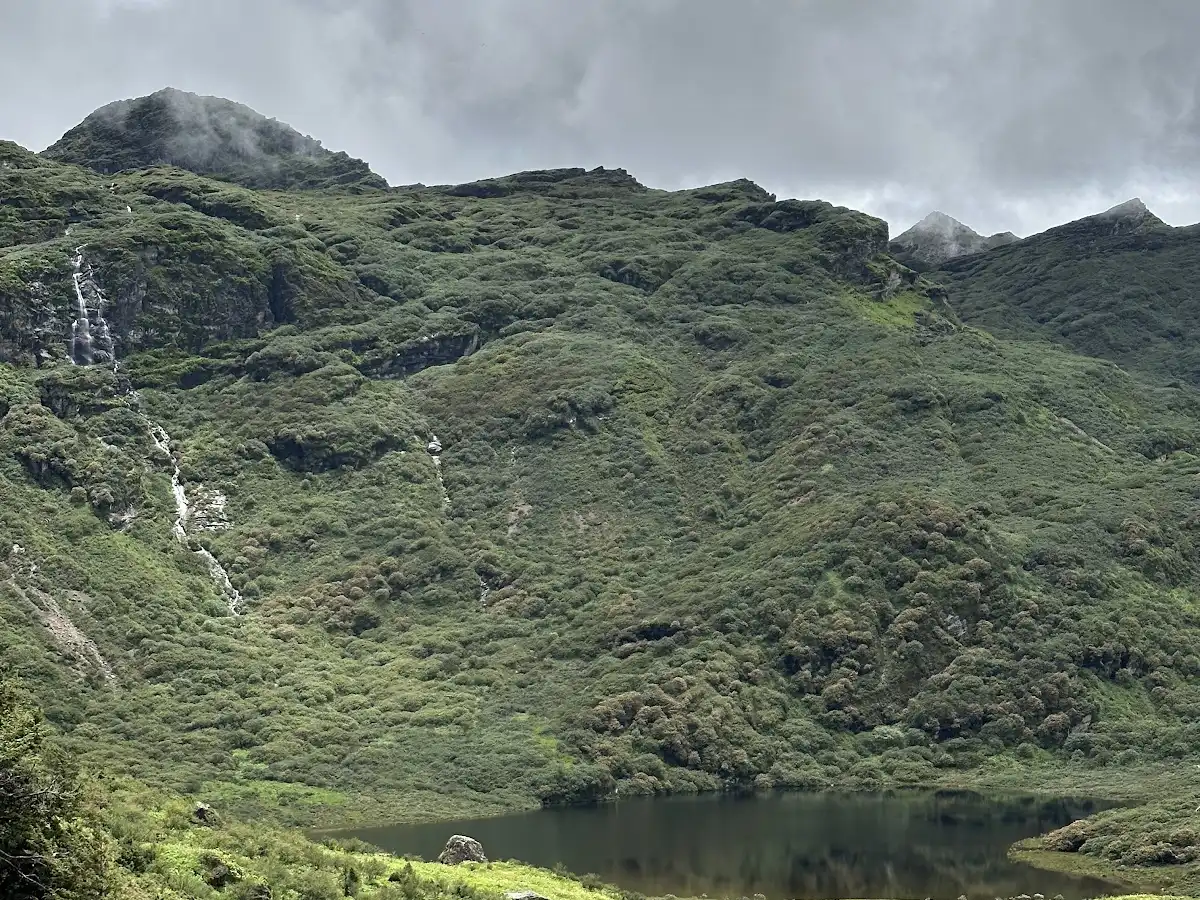
  2. High-altitude alpine lakes — Scattered small glacial lakes dot the route; some sit like glass bowls reflecting the surrounding ridges. They’re compact, photogenic, and concentrated enough that you keep finding new ones each day, which is more satisfying than a single “big” lake on longer treks.
  3. Rhododendron and mountain meadows — In spring the slopes explode with rhododendrons and primulas; in summer the meadows are a quilt
read more 👉
  1. Panoramic ridge views over Paro and Thimphu valleys — The trail rides the spine between two major valleys, so you get wide-open, changing vistas in a few hours: deep Paro on one side, thinning into Thimphu on the other. It’s rare to be able to see two different Bhutanese valleys in one short trek, and the light at dawn or late afternoon turns the whole scene cinematic.
  2. High-altitude alpine lakes — Scattered small glacial lakes dot the route; some sit like glass bowls reflecting the surrounding ridges. They’re compact, photogenic, and concentrated enough that you keep finding new ones each day, which is more satisfying than a single “big” lake on longer treks.
  3. Rhododendron and mountain meadows — In spring the slopes explode with rhododendrons and primulas; in summer the meadows are a quilt of grasses and wildflowers. The color, scent, and close-up flora make the trail feel intimate—different from the rock-and-scree alpine routes where vegetation is sparse.
  4. Good birdlife and a chance at high-altitude mammals — The mix of forests and open ridges attracts pheasants, raptors, and a variety of montane birds; hikers sometimes glimpse shy mammals too. It’s not a guaranteed safari, but the density and variety of birds are noticeably better than many lower-elevation hikes in the region.
  5. Cultural markers: mani walls, chortens and yak-herder camps — Prayer flags, stone mani walls and small chortens are woven into the landscape, and you’ll pass seasonal herder camps. The human touches are subtle but constant—reminders that this is a lived-in landscape, not just a scenic backdrop, which gives the trek a quiet cultural depth few short treks offer.
Spotted a mistake or missing something? Contact us.

Things to do near Druk Path

Ratings based on Tripadvisor reviews. When you book through this link, you support our work at no extra cost to you.

🌤️ When to go?Seasonal considerations and timing


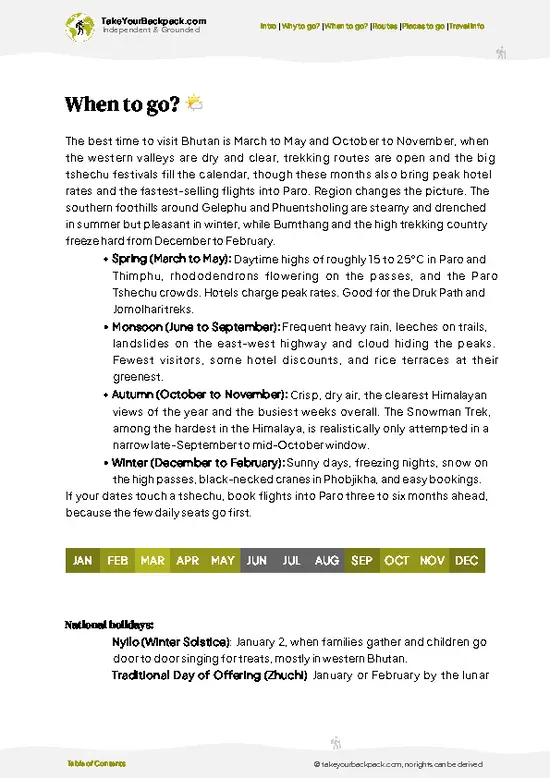
  • Weather: The best window is late September to early November and March to May. These months dodge the monsoon’s soggy grip and the harsh winter freeze. Expect clear skies and dry trails, perfect for steady footing and uninterrupted views.

  • Temperature: Daytime highs hover around 15-20°C (59-68°F), comfortable for hiking without overheating. Nights dip sharply, especially above 3,000 meters, often dropping to 0-5°C (32-41°F), so pack layers to stay warm at camp.

  • Daylight Hours: You get roughly 10-12 hours of daylight during peak seasons, enough to push hard on the trail but not so long that you lose track of time. Start early to catch the crisp morning light on the ridges.

  • Crowds: The trail sees a surge during peak seasons, especially October. It’s busy but manageable—expect company
read more 👉

  • Weather: The best window is late September to early November and March to May. These months dodge the monsoon’s soggy grip and the harsh winter freeze. Expect clear skies and dry trails, perfect for steady footing and uninterrupted views.

  • Temperature: Daytime highs hover around 15-20°C (59-68°F), comfortable for hiking without overheating. Nights dip sharply, especially above 3,000 meters, often dropping to 0-5°C (32-41°F), so pack layers to stay warm at camp.

  • Daylight Hours: You get roughly 10-12 hours of daylight during peak seasons, enough to push hard on the trail but not so long that you lose track of time. Start early to catch the crisp morning light on the ridges.

  • Crowds: The trail sees a surge during peak seasons, especially October. It’s busy but manageable—expect company at campsites and teahouses. Off-peak months offer solitude but risk slippery paths and limited services.

  • Seasonal Activities: Autumn brings harvest festivals and vibrant local life in villages along the path, adding cultural spice to your trek. Spring bursts with rhododendrons and blooming valleys, a visual payoff for the uphill grind.

  • Price Fluctuations: Peak season means higher permit fees and accommodation costs. Booking ahead is essential. Off-season rates drop but factor in the trade-off with weather and trail conditions.


Pro-tip: Aim for early October—clear skies, blooming rhododendrons, and just enough crowd buzz to keep the energy alive without feeling like a herd.


source: climatestotravel.comJANJanuary: fair for travelingFEBFebruary: fair for travelingMARMarch: highly recommended for travelingAPRApril: excellent for travelingMAYMay: highly recommended for travelingJUNJune: below average for travelingJULJuly: below average for travelingAUGAugust: below average for travelingSEPSeptember: highly recommended for travelingOCTOctober: excellent for travelingNOVNovember: highly recommended for travelingDECDecember: fair for traveling
bhutan-hike-druk-path
© Google |

✈️ The backpacker research shortcutBhutan Travel Guide

An offline-friendly backpacking guide with optimized travel routes, ranked highlights, transport advice, and the best areas to stay.
example page 0 from our offline Travel Guide for Bhutan
example page 1 from our offline Travel Guide for Bhutan
example page 2 from our offline Travel Guide for Bhutan
example page 3 from our offline Travel Guide for Bhutan
example page 4 from our offline Travel Guide for Bhutan
example page 5 from our offline Travel Guide for Bhutan
example page 6 from our offline Travel Guide for Bhutan
example page 7 from our offline Travel Guide for Bhutan
The digital guide (222 pages) contains:
54 highlights, ranked by travel appeal
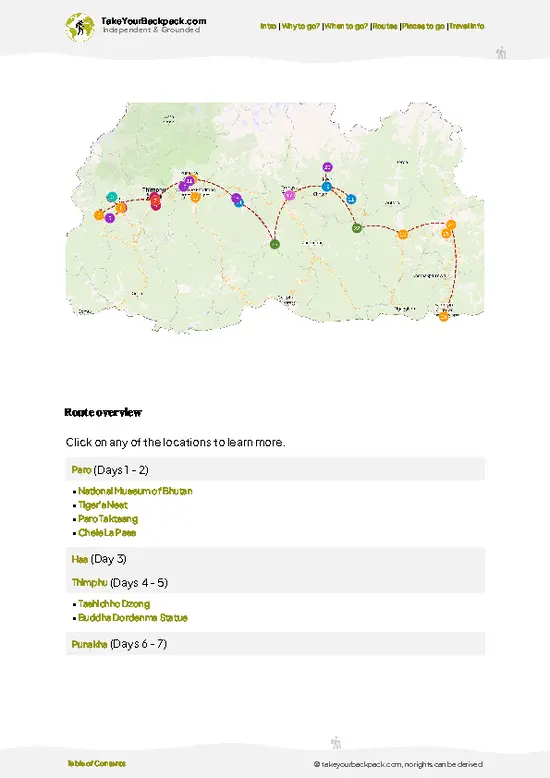
Optimized 5, 10 & 15-day travel routes
Cities, national parks, landmarks, beaches
How to get around
Offline-friendly for travel without Wi-Fi
👉 Click to see all 30+ guide features

📅 Plan smarter in minutes, not weeks
Month by month travel advice
Festivals & national holidays
Budget expectations

🗺️ Go to the right places, skip the overrated ones
Honest pros & cons of destinations
Top hikes, parks & viewpoints
Lesser-known places most travelers miss
Clear “worth it vs skip it” guidance

🛏️ Travel smoothly without rookie mistakes
Best areas to stay
Transport systems explained simply
Common scams & safety advice
SIM cards, money & practical tips

🌍 Understand the country, not just visit it
Culture & traditions
52 Essential phrases & customs
Festivals worth planning around
Traveler-friendly historical context
Insights that make places more meaningful

📱 Built for real travel conditions
Fully downloadable PDF
Works completely offline
Optimized for phone use
Useful in remote areas & buses
Everything in one place
Save weeks of stressful planning
Get instant access to your full guide. 30‑day money-back guarantee.
+ Add another guide for just £5.98

By proceeding you agree to our terms.
Sent to your inbox immediately after payment • 100% Secure Checkout
Best Backpacking Travel Advisor 2025 tourism awardBest Backpacking
Travel Advisor
2025
What others say about Take Your Backpack Guides:
⭐⭐⭐⭐⭐
Fantastic, amazing amount of information!
⭐⭐⭐⭐⭐
My goodness this is amazing, it's what I've been looking for hats off too you!
⭐⭐⭐⭐⭐
I think this is absolutely BRILLIANT
⭐⭐⭐⭐
Very complete and informative. It's still missing places, but I gotta to commend you
⭐⭐⭐⭐⭐
This is truly amazing, thank you, can't wait to explore it with my kids!
⭐⭐⭐⭐⭐
Awesome resource, thank you!
⭐⭐⭐⭐⭐
This is amazing! Can't wait to explore the ones I haven't seen
⭐⭐⭐⭐
I love this! Well done, great idea.
⭐⭐⭐⭐⭐
Thanks for taking the time to make this gem!
⭐⭐⭐⭐⭐
This might be the best website I've ever seen.
⭐⭐⭐⭐⭐
Congratulations, and thank you so much for your work; it's incredibly valuable.
⭐⭐⭐⭐
In all seriousness I think you did a great job pointing out the important spots
⭐⭐⭐⭐⭐
10/10 very good
⭐⭐⭐⭐⭐
As someone who's only just starting to visit regularly this is awesome, thank you.
⭐⭐⭐⭐
Thank you very much! I'm going to visit my dad, it's going to be very useful!
⭐⭐⭐⭐⭐
This is really cool! We'll be travelling for the first time and this definitely come in handy.
⭐⭐⭐⭐⭐
You are now our minister of culture, congratulations 👨‍💼
⭐⭐⭐⭐⭐
Just wanted to tell you that this is a pearl! Going to follow your recommendations.
⭐⭐⭐⭐⭐
This is so cool. I'll definitely be using the resource for my travels soon.
⭐⭐⭐⭐⭐
This is very impressive! Good work.
⭐⭐⭐⭐⭐
This is an amazing and informative site. Very well done!

🛏️ Where to stay?Choosing the right base

If you enjoy meeting fellow travelers, consider choosing hostels with high ratings for atmosphere. On the other hand, if you prefer having your own space, a hotel might be a better option.

🥾 Hike detailsHike details: route, duration, and difficulty of Druk Path

Total Distance: The Druk Path trail stretches about 50 kilometers (31 miles) from Paro to Thimphu.

Estimated Duration: Most hikers take around 5 to 7 days to complete the trek, depending on your pace and how much time you spend soaking in the views.

Difficulty Level: This trail is generally considered moderate. While it’s accessible for those with some hiking experience, be prepared for some steep sections and altitude changes.

Starting Point: The trek kicks off in Paro. To get there by public transport, you can take a bus from Thimphu, which takes about an hour and a half. Once in Paro, you … read more 👉
Total Distance: The Druk Path trail stretches about 50 kilometers (31 miles) from Paro to Thimphu.

Estimated Duration: Most hikers take around 5 to 7 days to complete the trek, depending on your pace and how much time you spend soaking in the views.

Difficulty Level: This trail is generally considered moderate. While it’s accessible for those with some hiking experience, be prepared for some steep sections and altitude changes.

Starting Point: The trek kicks off in Paro. To get there by public transport, you can take a bus from Thimphu, which takes about an hour and a half. Once in Paro, you can either walk to the trailhead or arrange a taxi to take you to the starting point at the base of the path.

Major Landmarks Along the Route:
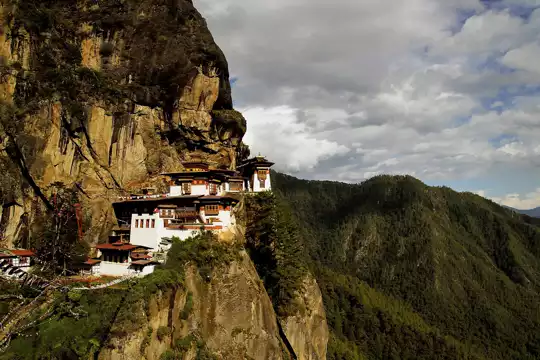
  • Paro Taktsang (Tiger’s Nest Monastery): A stunning cliffside monastery that’s a must-see, usually visited before or after the trek.
  • Jele Dzong: An ancient fortress that offers breathtaking views and a glimpse into Bhutanese history.
  • Simkotra Tsho: A beautiful high-altitude lake where you can rest and enjoy the serene surroundings.
  • Thimphu: The capital city, where the trek ends, with plenty of cultural sites to explore.

Type of Terrain and Scenery: The trail features a mix of rocky paths, forested sections, and open ridges. You’ll hike through lush pine forests, cross high mountain passes, and enjoy panoramic views of the Himalayas. The scenery changes with altitude, so expect to see everything from verdant valleys to rugged mountain landscapes.

Typical Vegetation and Wildlife:
  • Vegetation: You’ll see a variety of flora, including rhododendrons, blue pines, and medicinal herbs. The higher you go, the more alpine flora you’ll encounter.
  • Wildlife: Keep your eyes peeled for blue sheep, yaks, and various bird species, including the colorful national bird, the takin.

This trail is a fantastic way to experience Bhutan’s natural beauty and rich culture, so pack your gear and get ready for an adventure!
⚠️ Hiking info can sometimes be outdated or inaccurate. Before you hit the trail, check the latest conditions with locals. If you do spot anything that's off, I'd love to hear from you, so I can update it for fellow travelers.

🛡️ SafetyScams, Hazards, and Annoyances

The Druk Path is a stunning trek, but it demands respect. Weather can shift quickly; sunny mornings can turn into chilly afternoons. Layer up. A good windbreaker and moisture-wicking base layers will keep you comfortable as temperatures fluctuate.

The terrain is a mix of well-trodden paths and rocky sections. Steep ascents test your legs, but the views at each summit are worth every drop of sweat. Watch your footing, especially near river crossings; slippery stones can catch you off guard.

Altitude can be a factor, so pace yourself. Hydrate and take breaks to acclimatize. Wildlife encounters are rare, but if you spot a yak or a blue sheep, keep your distance. They’re part of the landscape, not your hiking buddies.

Preparation is key. First-timers often underestimate the need for sturdy … read more 👉
The Druk Path is a stunning trek, but it demands respect. Weather can shift quickly; sunny mornings can turn into chilly afternoons. Layer up. A good windbreaker and moisture-wicking base layers will keep you comfortable as temperatures fluctuate.

The terrain is a mix of well-trodden paths and rocky sections. Steep ascents test your legs, but the views at each summit are worth every drop of sweat. Watch your footing, especially near river crossings; slippery stones can catch you off guard.

Altitude can be a factor, so pace yourself. Hydrate and take breaks to acclimatize. Wildlife encounters are rare, but if you spot a yak or a blue sheep, keep your distance. They’re part of the landscape, not your hiking buddies.

Preparation is key. First-timers often underestimate the need for sturdy boots and trekking poles. Trust me, your knees will thank you. Embrace the challenge, and the rewards will be spectacular.

FAQFrequently asked questions about Druk Path

The Druk Path hike typically takes 5 to 6 days to complete, covering around 50 kilometers between Paro and Thimphu. It is best done during the spring (March to May) or autumn (September to November) for favorable weather.
The Druk Path hike is moderately difficult, suitable for hikers with a good level of fitness. It involves daily trekking of 5 to 7 hours with altitude gains up to 4,100 meters, requiring acclimatization to avoid altitude sickness.
Yes, you need both a guide and a permit to hike the Druk Path. Permits are arranged through registered Bhutanese tour operators, and guides are mandatory for safety and navigation on this trail.
⚠️ Things can change over time, so always validate details locally before you go.

Other Bhutanese hikes near Druk Path

Explore more nearby:


💡 Not sure where to go next?
Create a personalized itinerary for Bhutan including Druk Path and the places that fit your trip.

Generate my itinerary

👉 Discover all hikes

Or checkout all Bhutan has to offer (think cities, towns, villages, national parks, hikes, beaches, festivals)
Country photo of Bhutan

We 💚 feedbackSumming up the experience

The Druk Path is a wild ride—think steep ascents and breathtaking views that make every drop of sweat worth it. The best surprise? Stumbling upon a hidden lake, its surface like glass, reflecting the sky. It’s a moment that stops you in your tracks. Just a heads-up: the altitude can hit hard, so pace yourself. Embrace the challenge, and when you finally crack open that cold beer at the end, it’ll taste like victory. Trust me, you’ll savor every sip.

✍️ Help improve this page!
The information on this page is based on in-depth research, insights shared by experienced travelers, and feedback from the local travel community in Bhutan. While every effort is made to keep the information accurate and current, conditions can change — so if you spot anything incorrect or outdated, please get in touch.


🙋‍♂️ Give feedback

👋 Meet the founderWho’s Behind Take Your Backpack?

Johan, backpacker and founder of TakeYourBackpackHi, I’m Johan (Netherlands 🇳🇱), the creator of TakeYourBackpack. Over the past decade, I’ve backpacked through 80+ countries across six continents, gaining extensive experience with independent travel, long-term trips, and overland routes.

This site is built on a combination of firsthand travel experience and carefully curated insights from other backpackers. Many guides are based on places I’ve personally visited, while others bring together tips, observations, and practical advice shared by trusted travelers I’ve met along the way.

The goal is to provide realistic, experience-driven guidance — not generic itineraries — so you can explore destinations with better context, clearer expectations, and more confidence.

Get full Bhutan guide •
Instant download • 54 highlights • Full Offline guide