×
Jigme Dorji National Park

Bhutan🇧🇹 | national parksJigme Dorji National Parksnow-capped peaks, medicinal hot springs, yak herders | things to do and best time to go

Explore Bumdeling Wildlife SanctuaryExplore Jigme Singye Wangchuck National Park

Backpacking in Jigme Dorji
🏆 Top picknational park ranked #1
By Johan Kruseman 🇳🇱 | Updated July 8, 2026

Many travelers assume Jigme Dorji National Park is an easy day-trip from Thimphu with casual viewpoints and cafés. It isn’t. This is Bhutan’s big, serious mountain park in the northwest, stretching from Punakha and Gasa up toward the Tibetan border, and it behaves more like a high-altitude expedition zone than a roadside attraction. For backpackers, the payoff is huge: multi-day treks like the Laya–Gasa route, raw Himalayan scenery, real chances (not guarantees) of seeing blue sheep and takin, and a sense of space you rarely get in Asia. The trade-offs are real too: access usually requires a guide and permits, trailheads are a mission to reach, entrance and trekking fees add up, and camping is the norm, not a cute eco-lodge. Compared with more accessible parks like Jigme Singye Wangchuck or Royal Manas, Jigme Dorji is wilder, colder, less crowded, and better suited to trekkers who prioritize big mountains over easy logistics.

Discover everything you want to know in the 📖 Bhutan Travel Guide.


Get your Bhutan guide
54 ranked highlights, routes & tips, works offline (222 pages)
Loading the map 🌍
CLICK TO FILTER
cities
towns
villages
landmarks
national parks
hikes
attractions
festivals
regions
SHOW COUNTRY’S BESTSHOW ALL

✨ Why go?
Ranked #1 national park in Bhutan
What sets this place apart

Jigme Dorji National Park attracts backpackers for several compelling reasons. First, independent exploration is a major draw. The park’s extensive trail system allows you to wander at your own pace, soaking in the stunning landscapes without the constraints of a guided tour.

Budget-conscious travelers appreciate the camping options and nearby hostels. Pitching a tent under the stars or staying in a simple lodge keeps costs down, letting you allocate funds for experiences that matter, like local food or cultural encounters.

The trail variety is another highlight. Whether you’re looking for a challenging trek or a leisurely stroll, the park has something for everyone. You can tackle steep ascents that reward you with breathtaking views or meander through lush valleys filled with vibrant … read more 👉
Jigme Dorji National Park attracts backpackers for several compelling reasons. First, independent exploration is a major draw. The park’s extensive trail system allows you to wander at your own pace, soaking in the stunning landscapes without the constraints of a guided tour.

Budget-conscious travelers appreciate the camping options and nearby hostels. Pitching a tent under the stars or staying in a simple lodge keeps costs down, letting you allocate funds for experiences that matter, like local food or cultural encounters.

The trail variety is another highlight. Whether you’re looking for a challenging trek or a leisurely stroll, the park has something for everyone. You can tackle steep ascents that reward you with breathtaking views or meander through lush valleys filled with vibrant flora and fauna.

For those who prefer self-guided adventures, this park is ideal. The well-marked paths and available maps make it easy to navigate without a guide, allowing you to connect with the environment on your own terms. Just be prepared for changing weather and pack accordingly. This park isn’t just a destination; it’s an invitation to discover Bhutan’s natural beauty on your own terms.
Want to include Jigme Dorji National Park in your Bhutan route?
Create a personalized Bhutan itinerary that includes Jigme Dorji National Park and the places that fit your trip — based on your travel style, budget, and available time. Get your route in seconds.

Generate my trip

💡 HighlightsDon't-miss highlights and experiences

  • Lunana’s Glaciated Highlands: A raw, otherworldly landscape of glaciers, moraine fields and ice-fed streams — the headwaters of Bhutan’s major rivers. It feels remote and enormous; perfect if you want big sky, tough hikes and glacier views without crowds.
  • Laya Valley and Layap Culture: High-altitude villages where yak caravans still trudge the passes and stone houses cling to slopes. The cultural contrast — prayer flags, traditional dress, yak cheese — makes the scenery feel lived-in, not just postcard-pretty.
  • Snow Leopard and High-Himalayan Wildlife: One of the few places in Bhutan where you might glimpse elusive snow leopards, plus bharal (blue sheep), Himalayan tahr and musk deer. Wildlife encounters are rare but unforgettable — bring patience and good optics.
  • Red Pandas and Temperate
read more 👉
  • Lunana’s Glaciated Highlands: A raw, otherworldly landscape of glaciers, moraine fields and ice-fed streams — the headwaters of Bhutan’s major rivers. It feels remote and enormous; perfect if you want big sky, tough hikes and glacier views without crowds.
  • Laya Valley and Layap Culture: High-altitude villages where yak caravans still trudge the passes and stone houses cling to slopes. The cultural contrast — prayer flags, traditional dress, yak cheese — makes the scenery feel lived-in, not just postcard-pretty.
  • Snow Leopard and High-Himalayan Wildlife: One of the few places in Bhutan where you might glimpse elusive snow leopards, plus bharal (blue sheep), Himalayan tahr and musk deer. Wildlife encounters are rare but unforgettable — bring patience and good optics.
  • Red Pandas and Temperate Forests: Lower, wooded valleys in the park hide lush rhododendron and fir forests that are prime habitat for red pandas and many pheasants. Spring rhodo blooms turn the hills into a riot of color.
  • Huge Altitudinal Range and Habitat Variety: The park spans everything from temperate foothills up to alpine tundra, so in a single hike you can move from dense forest to open meadows and rocky scree. That variety packs lots of scenery and species into one protected area.
  • Gasa Hot Springs: Natural thermal pools tucked into the mountains — steam rising, crisp air, and panoramic views. Locals use them for healing rituals; after a long day on the trail they’re a simple, blissful reward.
  • Remote Treks and Classic Routes: Tough, seldom-crowded trails (including approaches used on the famed Snowman route) cut through jagged ridgelines, high passes and isolated valleys. Expect long days, wild scenery and real wilderness — not a luxury lodge in sight.
Spotted a mistake or missing something? Contact us.

Things to do near Jigme Dorji National Park

Ratings based on Tripadvisor reviews. When you book through this link, you support our work at no extra cost to you.

🌤️ When to go?When to go for the best experience


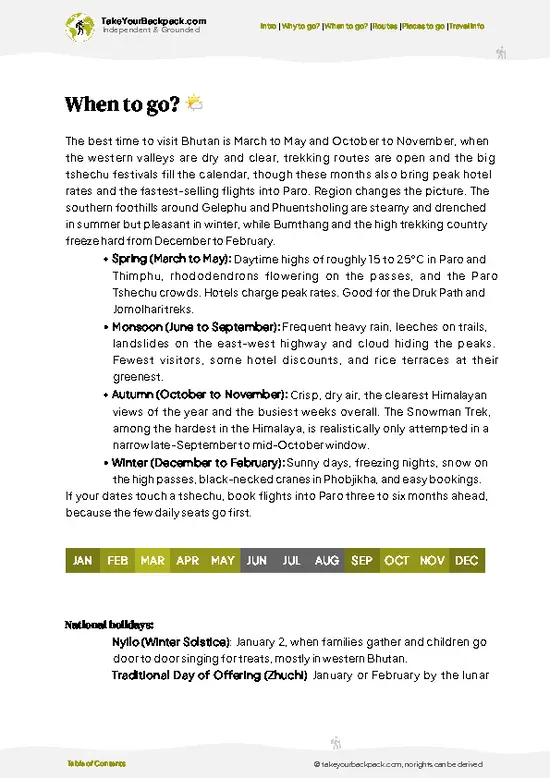
  • Weather: The best window is late spring (April to June) and early autumn (September to November). These months avoid the heavy monsoon rains that turn trails into mud traps and obscure mountain views. Winter can be brutally cold, especially at higher elevations, with temperatures often dropping below freezing.

  • Temperature: In spring and autumn, daytime temps range from 10°C to 20°C (50°F to 68°F), comfortable for hiking. Nights can dip to near freezing, so pack layers. Summer monsoon months push temps higher but bring relentless rain and slippery paths.

  • Daylight Hours: Around 10 to 12 hours of daylight during the prime seasons, enough to cover long treks without rushing. Winter days shorten significantly, limiting hiking time and increasing risk.

  • Crowds: Jigme Dorji is off the beaten
read more 👉

  • Weather: The best window is late spring (April to June) and early autumn (September to November). These months avoid the heavy monsoon rains that turn trails into mud traps and obscure mountain views. Winter can be brutally cold, especially at higher elevations, with temperatures often dropping below freezing.

  • Temperature: In spring and autumn, daytime temps range from 10°C to 20°C (50°F to 68°F), comfortable for hiking. Nights can dip to near freezing, so pack layers. Summer monsoon months push temps higher but bring relentless rain and slippery paths.

  • Daylight Hours: Around 10 to 12 hours of daylight during the prime seasons, enough to cover long treks without rushing. Winter days shorten significantly, limiting hiking time and increasing risk.

  • Crowds: Jigme Dorji is off the beaten path, so crowds are generally light year-round. However, spring and autumn see a slight uptick as trekkers chase clear skies and mild weather.

  • Seasonal Activities: Spring offers rhododendron blooms and birdwatching, while autumn brings harvest festivals and clearer mountain vistas. Winter and monsoon seasons limit outdoor activities due to weather constraints.

  • Price Fluctuations: Peak seasons (spring and autumn) come with higher permit fees and accommodation costs. Off-season travel can save money but expect tougher conditions and fewer services.


Pro-tip: Prioritize clear weather and moderate temps over low prices—getting stuck in mud or freezing cold will cost you more in time, energy, and morale than a seasonal price bump ever will.


source: climatestotravel.comJANJanuary: fair for travelingFEBFebruary: fair for travelingMARMarch: good for travelingAPRApril: excellent for travelingMAYMay: excellent for travelingJUNJune: excellent for travelingJULJuly: below average for travelingAUGAugust: below average for travelingSEPSeptember: excellent for travelingOCTOctober: excellent for travelingNOVNovember: highly recommended for travelingDECDecember: fair for traveling
Bhutan - Jigme Dorji National Park

✈️ The backpacker research shortcutBhutan Travel Guide

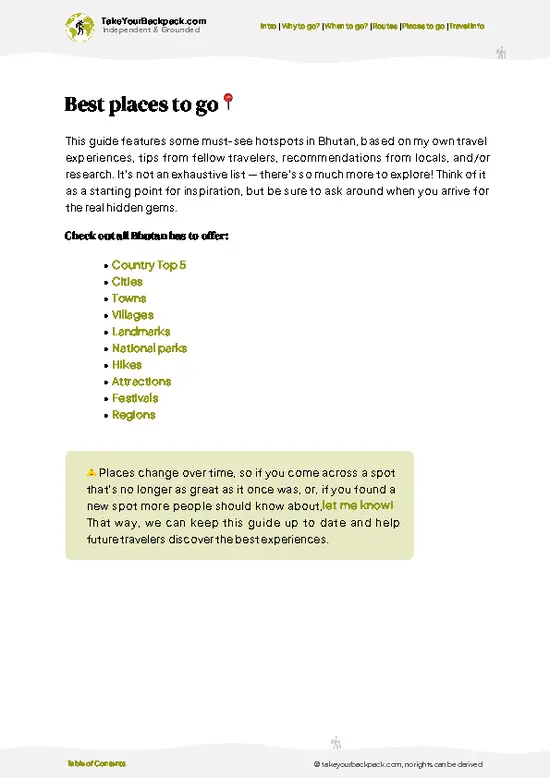
An offline-friendly backpacking guide with optimized travel routes, ranked highlights, transport advice, and the best areas to stay.
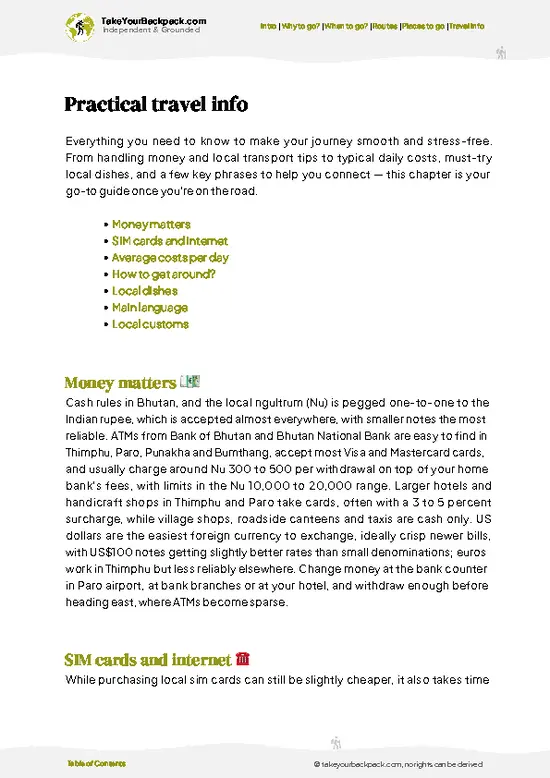
example page 0 from our offline Travel Guide for Bhutan
example page 1 from our offline Travel Guide for Bhutan
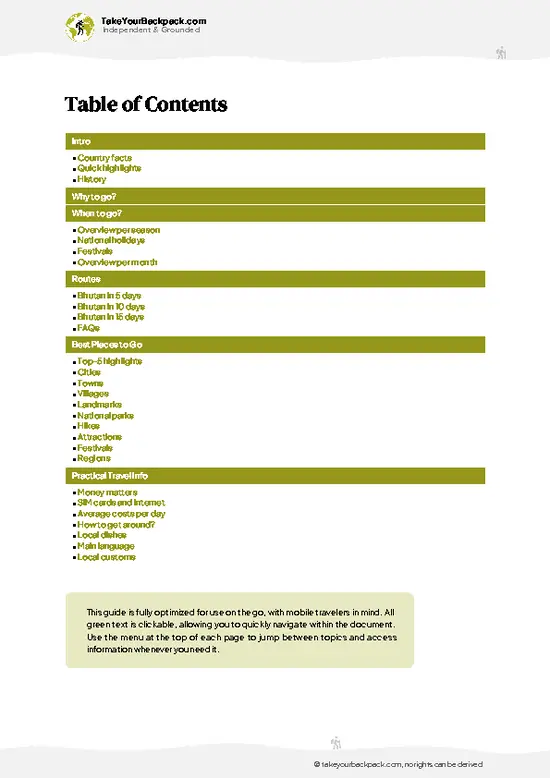
example page 2 from our offline Travel Guide for Bhutan
example page 3 from our offline Travel Guide for Bhutan
example page 4 from our offline Travel Guide for Bhutan
example page 5 from our offline Travel Guide for Bhutan
example page 6 from our offline Travel Guide for Bhutan
example page 7 from our offline Travel Guide for Bhutan
The digital guide (222 pages) contains:
54 highlights, ranked by travel appeal
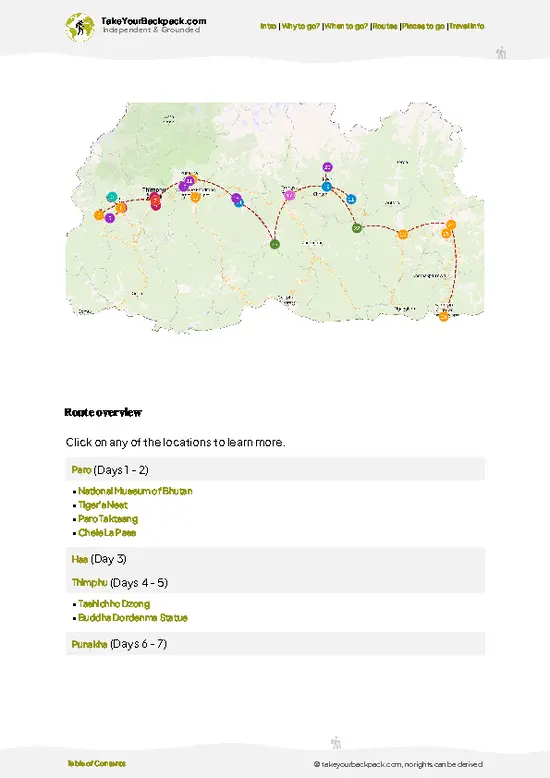
Optimized 5, 10 & 15-day travel routes
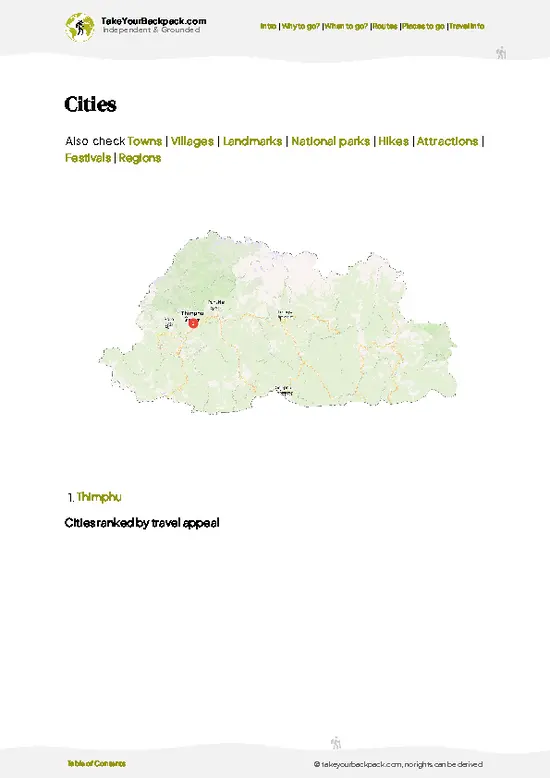
Cities, national parks, landmarks, beaches
How to get around
Offline-friendly for travel without Wi-Fi
👉 Click to see all 30+ guide features

📅 Plan smarter in minutes, not weeks
Month by month travel advice
Festivals & national holidays
Budget expectations

🗺️ Go to the right places, skip the overrated ones
Honest pros & cons of destinations
Top hikes, parks & viewpoints
Lesser-known places most travelers miss
Clear “worth it vs skip it” guidance

🛏️ Travel smoothly without rookie mistakes
Best areas to stay
Transport systems explained simply
Common scams & safety advice
SIM cards, money & practical tips

🌍 Understand the country, not just visit it
Culture & traditions
52 Essential phrases & customs
Festivals worth planning around
Traveler-friendly historical context
Insights that make places more meaningful

📱 Built for real travel conditions
Fully downloadable PDF
Works completely offline
Optimized for phone use
Useful in remote areas & buses
Everything in one place
Save weeks of stressful planning
Get instant access to your full guide. 30‑day money-back guarantee.


By proceeding you agree to our terms.
Sent to your inbox immediately after payment • 100% Secure Checkout
Best Backpacking Travel Advisor 2025 tourism awardBest Backpacking
Travel Advisor
2025
What others say about Take Your Backpack Guides:
⭐⭐⭐⭐⭐
Fantastic, amazing amount of information!
⭐⭐⭐⭐⭐
My goodness this is amazing, it's what I've been looking for hats off too you!
⭐⭐⭐⭐⭐
I think this is absolutely BRILLIANT
⭐⭐⭐⭐
Very complete and informative. It's still missing places, but I gotta to commend you
⭐⭐⭐⭐⭐
This is truly amazing, thank you, can't wait to explore it with my kids!
⭐⭐⭐⭐⭐
Awesome resource, thank you!
⭐⭐⭐⭐⭐
This is amazing! Can't wait to explore the ones I haven't seen
⭐⭐⭐⭐
I love this! Well done, great idea.
⭐⭐⭐⭐⭐
Thanks for taking the time to make this gem!
⭐⭐⭐⭐⭐
This might be the best website I've ever seen.
⭐⭐⭐⭐⭐
Congratulations, and thank you so much for your work; it's incredibly valuable.
⭐⭐⭐⭐
In all seriousness I think you did a great job pointing out the important spots
⭐⭐⭐⭐⭐
10/10 very good
⭐⭐⭐⭐⭐
As someone who's only just starting to visit regularly this is awesome, thank you.
⭐⭐⭐⭐
Thank you very much! I'm going to visit my dad, it's going to be very useful!
⭐⭐⭐⭐⭐
This is really cool! We'll be travelling for the first time and this definitely come in handy.
⭐⭐⭐⭐⭐
You are now our minister of culture, congratulations 👨‍💼
⭐⭐⭐⭐⭐
Just wanted to tell you that this is a pearl! Going to follow your recommendations.
⭐⭐⭐⭐⭐
This is so cool. I'll definitely be using the resource for my travels soon.
⭐⭐⭐⭐⭐
This is very impressive! Good work.
⭐⭐⭐⭐⭐
This is an amazing and informative site. Very well done!

🛏️ Where to stay?How to pick the right area

Jigme Dorji National Park is a treasure for backpackers, but finding the right place to stay can be tricky. Inside the park, options are limited. There are a few basic campsites, but they require prior arrangements. If you’re up for it, consider trekking to these sites. It’s a chance to immerse yourself in the stunning landscapes, but be prepared for the lack of amenities.

For more comfort, head to nearby towns like Paro or Thimphu. Paro is about an hour from the park and offers a range of accommodations, from budget guesthouses to mid-range hotels. The town has a vibrant atmosphere, with local … read more 👉
Jigme Dorji National Park is a treasure for backpackers, but finding the right place to stay can be tricky. Inside the park, options are limited. There are a few basic campsites, but they require prior arrangements. If you’re up for it, consider trekking to these sites. It’s a chance to immerse yourself in the stunning landscapes, but be prepared for the lack of amenities.

For more comfort, head to nearby towns like Paro or Thimphu. Paro is about an hour from the park and offers a range of accommodations, from budget guesthouses to mid-range hotels. The town has a vibrant atmosphere, with local eateries where you can refuel after a day of hiking. Thimphu, the capital, is about two hours away and provides even more options, including hostels that cater to backpackers.

Keep in mind that Bhutan has a daily tariff for tourists, which covers accommodation, meals, and a guide. This can feel steep, but it ensures you experience the country’s rich culture and pristine nature without hidden costs. Plan ahead, and you’ll preserve your energy and budget for the moments that truly matter in this breathtaking park.

👛 Costs (as of 6 January 2026)Travel costs and budget guide for Jigme Dorji

Visiting Jigme Dorji National Park in Bhutan comes with specific costs that can catch you off guard if you’re not prepared.

First, there’s the mandatory entrance fee. Expect to pay around €10 to €15 (or $10 to $15) per day for access. This fee helps maintain the park and its facilities, but it’s essential to factor it into your budget.

Next, consider the cost of a guide. Bhutan requires visitors to hire a local guide for trekking. Rates typically range from €30 to €50 ($30 to $50) per day. This expense is worth it; a knowledgeable guide enhances your experience and ensures you don’t miss key sights.

Accommodation options vary widely. Basic guesthouses can cost around €20 to €40 ($20 to $40) per night, while more comfortable lodges may run you €50 to €100 ($50 to $100) or more. Booking … read more 👉
Visiting Jigme Dorji National Park in Bhutan comes with specific costs that can catch you off guard if you’re not prepared.

First, there’s the mandatory entrance fee. Expect to pay around €10 to €15 (or $10 to $15) per day for access. This fee helps maintain the park and its facilities, but it’s essential to factor it into your budget.

Next, consider the cost of a guide. Bhutan requires visitors to hire a local guide for trekking. Rates typically range from €30 to €50 ($30 to $50) per day. This expense is worth it; a knowledgeable guide enhances your experience and ensures you don’t miss key sights.

Accommodation options vary widely. Basic guesthouses can cost around €20 to €40 ($20 to $40) per night, while more comfortable lodges may run you €50 to €100 ($50 to $100) or more. Booking in advance is advisable, especially during peak seasons.

Transportation is another factor. If you’re traveling from Thimphu or Paro, expect to pay around €50 to €100 ($50 to $100) for a private taxi. Public transport is cheaper but less convenient.

Lastly, meals can add up. Budget about €5 to €15 ($5 to $15) per meal, depending on whether you’re dining at local eateries or more upscale restaurants.

In summary, a daily budget of around €70 to €150 ($70 to $150) should cover entrance fees, a guide, accommodation, meals, and transportation. Being aware of these costs will help you allocate your resources wisely, allowing you to focus on the breathtaking landscapes and rich biodiversity that the park offers.


source: bhutan.travel
⚠️ Prices can change and everyone travels differently, so take this as a rough guide. Hope it helps you plan your adventure!

🥾 TrailsBest hikes in Jigme Dorji national park

Jigme Dorji National Park is a gem in Bhutan, offering a mix of breathtaking landscapes, diverse wildlife, and a range of hiking opportunities. The park’s terrain varies from lush valleys to rugged mountains, with views that can leave you speechless. You might spot blue sheep, takins, or even a snow leopard if you’re lucky. The trails can be challenging, but the rewards are worth every step.

One of the standout hikes is the Jigme Dorji Trek. Here are some details:
  • Length: 10 days
  • Estimated Duration: 10-12 hours per day
  • Difficulty Level: Moderate to Challenging
  • Key Features: Stunning views of the
read more 👉
Jigme Dorji National Park is a gem in Bhutan, offering a mix of breathtaking landscapes, diverse wildlife, and a range of hiking opportunities. The park’s terrain varies from lush valleys to rugged mountains, with views that can leave you speechless. You might spot blue sheep, takins, or even a snow leopard if you’re lucky. The trails can be challenging, but the rewards are worth every step.

One of the standout hikes is the Jigme Dorji Trek. Here are some details:
  • Length: 10 days
  • Estimated Duration: 10-12 hours per day
  • Difficulty Level: Moderate to Challenging
  • Key Features: Stunning views of the Himalayas, traditional villages, and serene lakes
  • Terrain: A mix of steep ascents, forest paths, and rocky trails

Getting to the park isn’t too tricky. You can catch a bus from Thimphu to Paro and then hire a local guide or taxi to the park entrance. Crowds can vary, but it’s generally less touristy compared to other parks, giving you a chance to enjoy the solitude of nature. There’s usually an entrance fee, so be prepared for that when you plan your visit. Just remember, it’s all about the journey, not just the destination!
⚠️ Hiking info can sometimes be outdated or inaccurate. Before you hit the trail, check the latest conditions with locals. If you do spot anything that's off, I'd love to hear from you, so I can update it for fellow travelers.

🛡️ SafetyTraveler Safety Guide

Jigme Dorji National Park offers a rewarding experience, but it’s wise to be prepared. Weather can shift quickly, so layering is key. Mornings might start crisp, but afternoons can bring rain or even snow at higher elevations.

The terrain varies; some trails are steep and rocky, demanding good footing and careful navigation. Pay attention to your pace, especially if you’re not acclimatized to the altitude. Take breaks to hydrate and adjust. River crossings can be tricky after rain, so scout for the safest spots.

Wildlife encounters are rare but possible. If you spot a blue sheep or a takin, keep your distance and observe quietly. Avoid feeding animals; it disrupts their natural behavior.

First-timers often underestimate the importance of a good map and compass. GPS can fail in remote areas, … read more 👉
Jigme Dorji National Park offers a rewarding experience, but it’s wise to be prepared. Weather can shift quickly, so layering is key. Mornings might start crisp, but afternoons can bring rain or even snow at higher elevations.

The terrain varies; some trails are steep and rocky, demanding good footing and careful navigation. Pay attention to your pace, especially if you’re not acclimatized to the altitude. Take breaks to hydrate and adjust. River crossings can be tricky after rain, so scout for the safest spots.

Wildlife encounters are rare but possible. If you spot a blue sheep or a takin, keep your distance and observe quietly. Avoid feeding animals; it disrupts their natural behavior.

First-timers often underestimate the importance of a good map and compass. GPS can fail in remote areas, so familiarize yourself with the trails beforehand. Respect trail etiquette by yielding to those ascending and keeping noise to a minimum. This way, you’ll preserve the park’s tranquility and enjoy your adventure fully.

Other Bhutanese national parks near Jigme Dorji

Explore more nearby:


💡 Not sure where to go next?
Create a personalized itinerary for Bhutan including Jigme Dorji and the places that fit your trip.

Generate my itinerary

👉 Discover all national parks

Or checkout all Bhutan has to offer (think cities, towns, villages, national parks, hikes, beaches, festivals)
Country photo of Bhutan

We 💚 feedbackIs it worth it?

Jigme Dorji National Park is a breath of fresh air, but don’t underestimate its challenges. The trails can be steep and the weather unpredictable. Bring layers and a solid pair of boots. The best surprise? Stumbling upon a local festival in a remote village; it’s a slice of life you won’t find in guidebooks. Keep your camera ready, but also your patience—this park rewards those who take their time. Embrace the quiet; it’s where the magic happens.

✍️ Help improve this page!
The information on this page is based on in-depth research, insights shared by experienced travelers, and feedback from the local travel community in Bhutan. While every effort is made to keep the information accurate and current, conditions can change — so if you spot anything incorrect or outdated, please get in touch.


🙋‍♂️ Give feedback

👋 Meet the founderWho’s Behind Take Your Backpack?

Johan, backpacker and founder of TakeYourBackpackHi, I’m Johan (Netherlands 🇳🇱), the creator of TakeYourBackpack. Over the past decade, I’ve backpacked through 80+ countries across six continents, gaining extensive experience with independent travel, long-term trips, and overland routes.

This site is built on a combination of firsthand travel experience and carefully curated insights from other backpackers. Many guides are based on places I’ve personally visited, while others bring together tips, observations, and practical advice shared by trusted travelers I’ve met along the way.

The goal is to provide realistic, experience-driven guidance — not generic itineraries — so you can explore destinations with better context, clearer expectations, and more confidence.

Get full Bhutan guide •
Instant download • 54 highlights • Full Offline guide