×

Bhutan🇧🇹 | townsMongarridge-top dzong, hospital center, eastern gateway | things to do and best time to go

Explore TrashigangExplore Samdrup Jongkhar

Backpacking in Mongar
👍 Recommendedtown ranked #7
By Johan Kruseman 🇳🇱 | Updated September 4, 2026

Your first real decision in Mongar is whether to linger or just pass through on the long east–west road. That choice matters, because this is where eastern Bhutan starts to feel more lived‑in than postcard‑perfect, and that shift changes how you travel. Mongar sits in eastern Bhutan, east of Bumthang and west of Trashigang, clinging to a hillside above terraced fields and misty valleys. For backpackers, it’s more of a practical hub than a dream destination: a good overnight stop between regions, or a base for short walks to villages and the modern-but-atmospheric dzong. Buses and shared taxis roll through, the town is compact and walkable, and evenings are quiet—think tea shops, not nightlife—so meeting other travelers is hit‑or‑miss. Compared with Bumthang it’s less pretty but more “real,” cheaper, and just as safe, with simple guesthouses and a workaday, small‑town feel.

Discover everything you want to know in the 📖 Bhutan Travel Guide.


Get your Bhutan guide
54 ranked highlights, routes & tips, works offline (222 pages)
Loading the map 🌍
CLICK TO FILTER
cities
towns
villages
landmarks
national parks
hikes
attractions
festivals
regions
SHOW COUNTRY’S BESTSHOW ALL

✨ Why go?
Ranked #7 town in Bhutan
The unique appeal for travelers

Mongar is a strategic waypoint for backpackers exploring Bhutan’s eastern region. Its walkable streets invite you to meander, soaking in the local vibe without the chaos of larger towns. The small-scale guesthouses offer a cozy atmosphere, perfect for solo travelers or small groups looking to connect. You’ll find local food stalls serving up hearty dishes that warm you from the inside out, with the aroma of spices mingling in the crisp mountain air.

This town serves as a gateway to nearby hikes, like the stunning trails leading to Kuri Chhu, where the landscape shifts dramatically. Many travelers stay a few days, enjoying the friendly social atmosphere that encourages sharing stories over a cup of butter tea. It’s not a party hub, but rather a place for slow travelers to recharge and immerse … read more 👉
Mongar is a strategic waypoint for backpackers exploring Bhutan’s eastern region. Its walkable streets invite you to meander, soaking in the local vibe without the chaos of larger towns. The small-scale guesthouses offer a cozy atmosphere, perfect for solo travelers or small groups looking to connect. You’ll find local food stalls serving up hearty dishes that warm you from the inside out, with the aroma of spices mingling in the crisp mountain air.

This town serves as a gateway to nearby hikes, like the stunning trails leading to Kuri Chhu, where the landscape shifts dramatically. Many travelers stay a few days, enjoying the friendly social atmosphere that encourages sharing stories over a cup of butter tea. It’s not a party hub, but rather a place for slow travelers to recharge and immerse themselves in Bhutanese culture. If you’re seeking a blend of adventure and authenticity, Mongar is a solid choice, whether as a brief stop or a longer retreat.
Want to include Mongar in your Bhutan route?
Create a personalized Bhutan itinerary that includes Mongar and the places that fit your trip — based on your travel style, budget, and available time. Get your route in seconds.

Generate my trip

💡 HighlightsWhat this place is best known for

  1. Mongar Dzong — The hilltop fortress and administrative temple that dominates the town; visit to see traditional Bhutanese dzong architecture up close, the prayer halls, and great views over Mongar and the Kuri Chhu valley.
  2. Mongar Bazaar (Main Market) — The town’s pulse: a compact market where farmers, traders, and weavers sell fresh produce, eastern-Bhutan textiles, and everyday goods; best experienced in the morning when stalls and local life are busiest.
  3. Kuri Chhu Riverside & Suspension Bridge — The riverside area inside town with a pedestrian suspension bridge and riverside viewpoints; the sound of the river, riverbank activity and simple walks along the edge capture the local landscape and pace of life.
  4. Local Weavers’/Handicraft Shops — Small, local workshops and shops in town where
read more 👉
  1. Mongar Dzong — The hilltop fortress and administrative temple that dominates the town; visit to see traditional Bhutanese dzong architecture up close, the prayer halls, and great views over Mongar and the Kuri Chhu valley.
  2. Mongar Bazaar (Main Market) — The town’s pulse: a compact market where farmers, traders, and weavers sell fresh produce, eastern-Bhutan textiles, and everyday goods; best experienced in the morning when stalls and local life are busiest.
  3. Kuri Chhu Riverside & Suspension Bridge — The riverside area inside town with a pedestrian suspension bridge and riverside viewpoints; the sound of the river, riverbank activity and simple walks along the edge capture the local landscape and pace of life.
  4. Local Weavers’/Handicraft Shops — Small, local workshops and shops in town where you can watch or buy handwoven textiles and Eastern Bhutan-style fabrics; more intimate and authentic than the big tourist centers.
  5. Town Viewpoint / Short Ridge Walks — Short, accessible walks up the ridgelines immediately around Mongar that give panoramic views of the town, terraced fields and the winding Kuri Chhu—perfect for sunset photos and to feel the geography of eastern Bhutan.
Nearby day-trip highlights outside Mongar but very visitable from town include Drametse Monastery, the markets and heritage sights of Trashigang town, and the scenic Kuri Chhu valley viewpoints along the highway.
Spotted a mistake or missing something? Contact us.

Things to do near Mongar

Ratings based on Tripadvisor reviews. When you book through this link, you support our work at no extra cost to you.

🏘️ NeighborhoodsHow different areas shape the experience

Mongar is a vibrant hub in Bhutan, where the blend of tradition and modernity creates a unique atmosphere for backpackers. Here’s how to navigate its neighborhoods:

Town Center: This is the heartbeat of Mongar. You’ll find local shops, eateries, and the bustling market. The vibe is lively, especially in the evenings when locals gather. It’s walkable, making it easy to explore on foot. Costs are moderate, with budget-friendly guesthouses nearby. Perfect for short stays, as you can soak in the local culture quickly.

Chaskhar: A quieter area, Chaskhar offers a more laid-back experience. The streets are lined with traditional houses, and you can catch the scent of local cuisine wafting from small kitchens. It’s a bit further from the main attractions, but the tranquility is worth it. Ideal for … read more 👉
Mongar is a vibrant hub in Bhutan, where the blend of tradition and modernity creates a unique atmosphere for backpackers. Here’s how to navigate its neighborhoods:

Town Center: This is the heartbeat of Mongar. You’ll find local shops, eateries, and the bustling market. The vibe is lively, especially in the evenings when locals gather. It’s walkable, making it easy to explore on foot. Costs are moderate, with budget-friendly guesthouses nearby. Perfect for short stays, as you can soak in the local culture quickly.

Chaskhar: A quieter area, Chaskhar offers a more laid-back experience. The streets are lined with traditional houses, and you can catch the scent of local cuisine wafting from small kitchens. It’s a bit further from the main attractions, but the tranquility is worth it. Ideal for longer stays if you want to immerse yourself in the local rhythm. Transport options are limited, so be prepared to walk.

Yangbari: This neighborhood is known for its stunning views and lush surroundings. It’s a bit of a trek from the center, but the peace and natural beauty are rewarding. Costs can be higher here due to the scenic spots, but it’s a great place for those seeking solitude. Perfect for longer stays if you want to recharge in nature, but nightlife is virtually non-existent.

⌛️ 1 daySeeing the highlights in 24 hours

Mongar, Bhutan, is a tapestry of vibrant culture and stunning landscapes, where the air is crisp and the scent of pine lingers. This town is often overlooked, but it offers a genuine glimpse into Bhutanese life, far from the usual tourist trails.

Start your day with a visit to the Mongar Dzong, an architectural marvel that stands as a testament to Bhutan’s rich history. The early morning light casts a warm glow on its intricate woodwork, and the sound of monks chanting fills the air. Spend some time wandering the grounds, absorbing the peaceful atmosphere.

After soaking in the dzong’s serenity, head to the local market. The lively chatter of vendors and the colorful displays of fresh produce create a sensory feast. Grab a traditional breakfast of ema datshi, a spicy cheese and chili dish, … read more 👉
Mongar, Bhutan, is a tapestry of vibrant culture and stunning landscapes, where the air is crisp and the scent of pine lingers. This town is often overlooked, but it offers a genuine glimpse into Bhutanese life, far from the usual tourist trails.

Start your day with a visit to the Mongar Dzong, an architectural marvel that stands as a testament to Bhutan’s rich history. The early morning light casts a warm glow on its intricate woodwork, and the sound of monks chanting fills the air. Spend some time wandering the grounds, absorbing the peaceful atmosphere.

After soaking in the dzong’s serenity, head to the local market. The lively chatter of vendors and the colorful displays of fresh produce create a sensory feast. Grab a traditional breakfast of ema datshi, a spicy cheese and chili dish, at a nearby eatery. The warmth of the food will energize you for the day ahead.

In the afternoon, venture to the nearby village of Chaskhar. This is where you’ll find the lesser-known Chaskhar Lhakhang, a small temple that often gets missed by tourists. The hike there is invigorating, with the scent of wildflowers and the sound of a bubbling stream accompanying you. The temple itself is a quiet sanctuary, perfect for reflection.

As evening approaches, return to Mongar and stroll through the town’s charming streets. The sunset paints the sky in hues of orange and pink, creating a perfect backdrop for your dinner. Choose a local restaurant to savor more Bhutanese dishes, perhaps some fried rice or a hearty stew.

End your day by soaking in the atmosphere, chatting with locals, and feeling the pulse of this unique town. Mongar is not just a stop; it’s an experience that lingers long after you leave.
Turn your Mongar visit into an Bhutan adventure
Build a complete Bhutan route with Mongar, hidden gems, must-see destinations, and realistic travel times included.

Generate my trip

🌤️ When to go?Choosing the right time of year


  • Weather: Mongar’s best weather hits in spring (March to May) and autumn (September to November). These months dodge the heavy monsoon rains that drench the region from June through August, turning trails slippery and views misty.

  • Temperature: Spring and autumn days hover around 15-22°C (59-72°F), perfect for hiking without overheating or freezing. Nights dip to 5-10°C (41-50°F), so pack layers to stay cozy.

  • Daylight Hours: Expect roughly 11 to 12 hours of daylight during these seasons, giving you ample time to explore without rushing but not so much that you lose the magic of dusk.

  • Crowds: Mongar stays relatively quiet year-round, but spring and autumn see a slight uptick in visitors drawn by festivals and clear skies. Still, it’s far from tourist-packed, preserving that authentic
read more 👉

  • Weather: Mongar’s best weather hits in spring (March to May) and autumn (September to November). These months dodge the heavy monsoon rains that drench the region from June through August, turning trails slippery and views misty.

  • Temperature: Spring and autumn days hover around 15-22°C (59-72°F), perfect for hiking without overheating or freezing. Nights dip to 5-10°C (41-50°F), so pack layers to stay cozy.

  • Daylight Hours: Expect roughly 11 to 12 hours of daylight during these seasons, giving you ample time to explore without rushing but not so much that you lose the magic of dusk.

  • Crowds: Mongar stays relatively quiet year-round, but spring and autumn see a slight uptick in visitors drawn by festivals and clear skies. Still, it’s far from tourist-packed, preserving that authentic Bhutanese vibe.

  • Seasonal Activities: Spring bursts with rhododendron blooms, painting the hillsides red and pink. Autumn offers crisp air and harvest festivals, where you can catch local dances and markets alive with color and sound.

  • Price Fluctuations: Peak seasons (spring and autumn) bring slightly higher prices for accommodation and guides, but the trade-off is worth it for stable weather and vibrant cultural experiences.


Pro-tip: Aim for early spring or late autumn to catch the sweet spot of good weather, fewer crowds, and wallet-friendly rates—plus, the light at dawn and dusk feels like a private show.


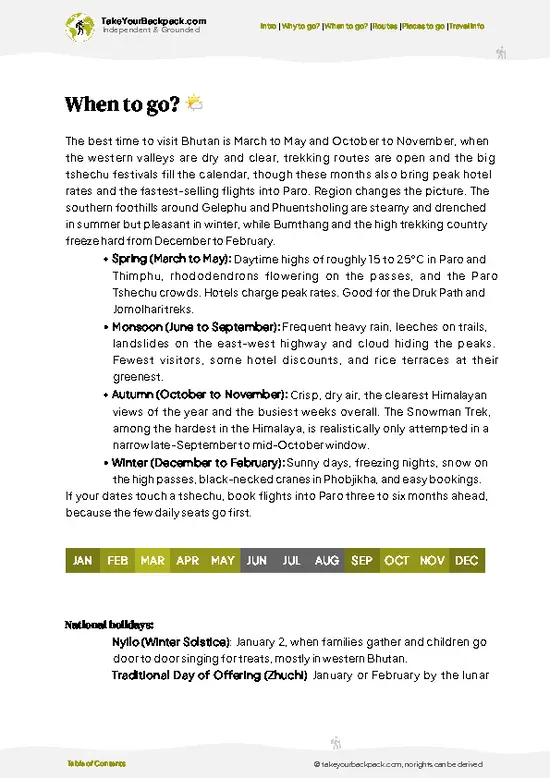
source: climatestotravel.comJANJanuary: fair for travelingFEBFebruary: good for travelingMARMarch: excellent for travelingAPRApril: excellent for travelingMAYMay: excellent for travelingJUNJune: below average for travelingJULJuly: below average for travelingAUGAugust: below average for travelingSEPSeptember: excellent for travelingOCTOctober: excellent for travelingNOVNovember: excellent for travelingDECDecember: fair for traveling
bhutan-city-mongar
© Google |

✈️ The backpacker research shortcutBhutan Travel Guide

An offline-friendly backpacking guide with optimized travel routes, ranked highlights, transport advice, and the best areas to stay.
example page 0 from our offline Travel Guide for Bhutan
example page 1 from our offline Travel Guide for Bhutan
example page 2 from our offline Travel Guide for Bhutan
example page 3 from our offline Travel Guide for Bhutan
example page 4 from our offline Travel Guide for Bhutan
example page 5 from our offline Travel Guide for Bhutan
example page 6 from our offline Travel Guide for Bhutan
example page 7 from our offline Travel Guide for Bhutan
The digital guide (222 pages) contains:
54 highlights, ranked by travel appeal
Optimized 5, 10 & 15-day travel routes
Cities, national parks, landmarks, beaches
How to get around
Offline-friendly for travel without Wi-Fi
👉 Click to see all 30+ guide features

📅 Plan smarter in minutes, not weeks
Month by month travel advice
Festivals & national holidays
Budget expectations

🗺️ Go to the right places, skip the overrated ones
Honest pros & cons of destinations
Top hikes, parks & viewpoints
Lesser-known places most travelers miss
Clear “worth it vs skip it” guidance

🛏️ Travel smoothly without rookie mistakes
Best areas to stay
Transport systems explained simply
Common scams & safety advice
SIM cards, money & practical tips

🌍 Understand the country, not just visit it
Culture & traditions
52 Essential phrases & customs
Festivals worth planning around
Traveler-friendly historical context
Insights that make places more meaningful

📱 Built for real travel conditions
Fully downloadable PDF
Works completely offline
Optimized for phone use
Useful in remote areas & buses
Everything in one place
Save weeks of stressful planning
Get instant access to your full guide. 30‑day money-back guarantee.
+ Add another guide for just US$7.80

By proceeding you agree to our terms.
Sent to your inbox immediately after payment • 100% Secure Checkout
Best Backpacking Travel Advisor 2025 tourism awardBest Backpacking
Travel Advisor
2025
What others say about Take Your Backpack Guides:
⭐⭐⭐⭐⭐
Fantastic, amazing amount of information!
⭐⭐⭐⭐⭐
My goodness this is amazing, it's what I've been looking for hats off too you!
⭐⭐⭐⭐⭐
I think this is absolutely BRILLIANT
⭐⭐⭐⭐
Very complete and informative. It's still missing places, but I gotta to commend you
⭐⭐⭐⭐⭐
This is truly amazing, thank you, can't wait to explore it with my kids!
⭐⭐⭐⭐⭐
Awesome resource, thank you!
⭐⭐⭐⭐⭐
This is amazing! Can't wait to explore the ones I haven't seen
⭐⭐⭐⭐
I love this! Well done, great idea.
⭐⭐⭐⭐⭐
Thanks for taking the time to make this gem!
⭐⭐⭐⭐⭐
This might be the best website I've ever seen.
⭐⭐⭐⭐⭐
Congratulations, and thank you so much for your work; it's incredibly valuable.
⭐⭐⭐⭐
In all seriousness I think you did a great job pointing out the important spots
⭐⭐⭐⭐⭐
10/10 very good
⭐⭐⭐⭐⭐
As someone who's only just starting to visit regularly this is awesome, thank you.
⭐⭐⭐⭐
Thank you very much! I'm going to visit my dad, it's going to be very useful!
⭐⭐⭐⭐⭐
This is really cool! We'll be travelling for the first time and this definitely come in handy.
⭐⭐⭐⭐⭐
You are now our minister of culture, congratulations 👨‍💼
⭐⭐⭐⭐⭐
Just wanted to tell you that this is a pearl! Going to follow your recommendations.
⭐⭐⭐⭐⭐
This is so cool. I'll definitely be using the resource for my travels soon.
⭐⭐⭐⭐⭐
This is very impressive! Good work.
⭐⭐⭐⭐⭐
This is an amazing and informative site. Very well done!

🛏️ Where to stay?Choosing the right base

Mongar’s heart for backpackers pulses strongest around the town center, where the streets hum with local life and the scent of wood smoke drifts through the crisp mountain air. This area is your best bet—not just for safety, which is solid thanks to the close-knit community, but for the chance to plug into the social rhythm of Mongar. Here, guesthouses and small hostels cluster, offering budget-friendly beds and a chance to swap stories with fellow travelers over butter tea or a plate of ema datshi.

Compared to the quieter outskirts, which feel more like a slow exhale of rural Bhutan, the center … read more 👉
Mongar’s heart for backpackers pulses strongest around the town center, where the streets hum with local life and the scent of wood smoke drifts through the crisp mountain air. This area is your best bet—not just for safety, which is solid thanks to the close-knit community, but for the chance to plug into the social rhythm of Mongar. Here, guesthouses and small hostels cluster, offering budget-friendly beds and a chance to swap stories with fellow travelers over butter tea or a plate of ema datshi.

Compared to the quieter outskirts, which feel more like a slow exhale of rural Bhutan, the center buzzes with enough energy to keep you connected without overwhelming your senses. It’s where you’ll find the pulse of local markets and the occasional impromptu gathering, perfect for solo backpackers craving company without the tourist trap vibe. Staying here means waking up to the clatter of daily life, the chatter of neighbors, and the chance to step out your door into the genuine Mongar experience—no frills, just the real deal.

🚌 Getting aroundGetting around like a local

Mongar moves at its own pace—neither frantic nor sluggish, but deliberate, like the slow unfurling of mist over the hills at dawn. The town’s rhythm is shaped by the rugged terrain and the steady pulse of daily life, where schedules exist but bend to the realities of mountain roads and weather. You won’t find a strict timetable nailed to a bus stop, but a pattern emerges if you watch closely: locals gathering at key points, engines revving, and the occasional shout signaling departure. The air carries the scent of pine and earth, mingling with diesel and the faint aroma of roadside snacks. This is a place where intuition and patience pay off, and understanding the flow means you’re not just passing through—you’re syncing with the town’s heartbeat.


  • Local Buses: These are the backbone of
read more 👉
Mongar moves at its own pace—neither frantic nor sluggish, but deliberate, like the slow unfurling of mist over the hills at dawn. The town’s rhythm is shaped by the rugged terrain and the steady pulse of daily life, where schedules exist but bend to the realities of mountain roads and weather. You won’t find a strict timetable nailed to a bus stop, but a pattern emerges if you watch closely: locals gathering at key points, engines revving, and the occasional shout signaling departure. The air carries the scent of pine and earth, mingling with diesel and the faint aroma of roadside snacks. This is a place where intuition and patience pay off, and understanding the flow means you’re not just passing through—you’re syncing with the town’s heartbeat.


  • Local Buses: These are the backbone of Mongar’s transit, running between the town center and nearby villages. They start around 7:00 AM and taper off by 6:00 PM. Expect a fare under 50 ngultrum, with rides that can be bumpy but offer a genuine window into local life. They don’t always leave on the dot, but once full, they roll out—so timing is flexible, but you’ll want to arrive early to snag a seat.


  • Shared Taxis: Faster and more direct than buses, shared taxis operate along main routes and can be flagged down at popular spots like the market or bus stand. Prices hover around 100-150 ngultrum depending on distance. They leave when full, which means a bit of waiting but a quicker, more comfortable ride than the bus. Ideal if you’re carrying gear or want to cover ground before dusk.


  • Walking: Mongar’s compact center is best explored on foot. The air is crisp, and the uneven stone paths demand steady shoes. Walking lets you soak in the scent of wood smoke from homes and the chatter of vendors setting up stalls. It’s free, flexible, and the best way to catch the subtle shifts in light and shadow that define the town’s character.


  • Motorbike Rentals: For the adventurous, renting a motorbike offers unmatched freedom. Rates start around 300 ngultrum per day. Roads can be narrow and winding, so experience is key. This option lets you chase the sun over ridges and dive into side trails that buses and taxis can’t reach, but it demands respect for the terrain and weather.

👛 Costs (as of 4 September 2026)How expensive it really is

Backpacking in Mongar, Bhutan, offers a unique blend of rugged charm and cultural depth, but it’s not a place where you’ll find ultra-cheap options around every corner. The costs reflect the remote location and the country’s controlled tourism approach, so expect prices that balance value with the experience.
  • Dorm Accommodation: Mongar’s guesthouses and small lodges rarely offer true dorm-style rooms like you’d find in bigger backpacker hubs. Instead, budget travelers usually find shared rooms or basic double rooms costing around $15 to $25 per night. The rooms are simple, often with shared bathrooms, but clean and comfortable enough to recharge after a day of trekking or exploring.
  • Meals: Food in Mongar leans on local Bhutanese staples—rice, buckwheat, and spicy chilies. A typical meal
read more 👉
Backpacking in Mongar, Bhutan, offers a unique blend of rugged charm and cultural depth, but it’s not a place where you’ll find ultra-cheap options around every corner. The costs reflect the remote location and the country’s controlled tourism approach, so expect prices that balance value with the experience.
  • Dorm Accommodation: Mongar’s guesthouses and small lodges rarely offer true dorm-style rooms like you’d find in bigger backpacker hubs. Instead, budget travelers usually find shared rooms or basic double rooms costing around $15 to $25 per night. The rooms are simple, often with shared bathrooms, but clean and comfortable enough to recharge after a day of trekking or exploring.
  • Meals: Food in Mongar leans on local Bhutanese staples—rice, buckwheat, and spicy chilies. A typical meal at a local eatery will run you about $3 to $6. Western-style dishes or imported items push prices higher, so sticking to local fare is both authentic and budget-friendly. Breakfasts are usually simple, like porridge or eggs, costing around $2 to $4.
  • Local Transport: Public transport options are limited and not very frequent. Shared jeeps or minibuses between towns cost roughly $2 to $5 for short hops. Hiring a private taxi for a day can run $30 to $50, which is often necessary if you want to explore beyond the town or reach trailheads without hassle. Walking is common within town, but the hills can be steep.
  • Basic Activities/Entry Fees: Bhutan’s government requires a daily sustainable tourism fee for independent travelers, which covers permits and access to most cultural sites. This fee is around $40 to $50 per day, a significant chunk of your budget but unavoidable. Individual entry fees to dzongs or museums are usually included or minimal, around $1 to $3.
  • Miscellaneous Expenses: Internet access is patchy and often costs $2 to $5 per hour at local cafes or guesthouses. Bottled water and snacks add a few dollars daily. Souvenirs or small local crafts can vary but plan for $5 to $10 if you want to bring something home. Medical supplies or toiletries might be pricier due to limited availability.

The reality is that Mongar’s daily costs for an independent backpacker hover between $60 and $90, largely driven by the mandatory tourism fee and transport logistics. This isn’t a place for ultra-budget travel, but the price buys you access to a culture and landscape that feel untouched and deeply rewarding once you’re there.


source: bhutan.travel
⚠️ Prices can change and everyone travels differently, so take this as a rough guide. Hope it helps you plan your adventure!

🚌 Day tripsWhere to go beyond the main area

Mongar, Bhutan, is a backpacker’s dream base, offering a blend of rich culture and stunning landscapes. The town itself is a vibrant hub, but the real magic lies in the day trips that unfold from here.

1. Kuri Gongri Trek
This trek is a must for those craving a taste of Bhutan’s rugged beauty. Just a 30-minute drive from Mongar, it leads you through lush forests and terraced fields, with the scent of pine filling the air. The trek takes about 4-5 hours round trip, and you’ll be rewarded with breathtaking views of the Kuri Gongri mountain. Pack a lunch to enjoy at the summit, where the silence is only broken by the whisper of the wind. A budget traveler can do this for around $10, including transport. Avoid the mistake of underestimating the trail; sturdy shoes are essential.


2. Drametse read more 👉
Mongar, Bhutan, is a backpacker’s dream base, offering a blend of rich culture and stunning landscapes. The town itself is a vibrant hub, but the real magic lies in the day trips that unfold from here.

1. Kuri Gongri Trek
This trek is a must for those craving a taste of Bhutan’s rugged beauty. Just a 30-minute drive from Mongar, it leads you through lush forests and terraced fields, with the scent of pine filling the air. The trek takes about 4-5 hours round trip, and you’ll be rewarded with breathtaking views of the Kuri Gongri mountain. Pack a lunch to enjoy at the summit, where the silence is only broken by the whisper of the wind. A budget traveler can do this for around $10, including transport. Avoid the mistake of underestimating the trail; sturdy shoes are essential.


2. Drametse Goemba
A 45-minute drive from Mongar, this monastery is steeped in history and culture. The vibrant murals and intricate woodwork will leave you in awe. Spend a couple of hours exploring the site, soaking in the atmosphere, and perhaps catching a glimpse of monks in prayer. Entry is typically free, but a small donation is appreciated. The best time to visit is during the morning when the light filters through the windows, illuminating the artwork. Don’t rush; take your time to absorb the serenity.


3. Mongar Dzong
Just a short walk from the town center, this fortress is a stunning example of traditional Bhutanese architecture. Spend an hour or two wandering the grounds, where the scent of incense wafts through the air. The Dzong is particularly beautiful at sunset, casting a warm glow over the landscape. Entry is free, but be mindful of the dress code—no shorts or sleeveless tops. Many first-timers miss the chance to chat with local monks who often share fascinating stories about the Dzong’s history.


4. Yadi Village
A 30-minute drive from Mongar, Yadi offers a glimpse into rural Bhutanese life. The village is surrounded by terraced fields and offers a chance to interact with locals. Spend a few hours here, enjoying a simple meal at a local home for about $5. The best time to visit is during the harvest season when the fields are alive with activity. Many backpackers overlook this experience, but it’s a chance to connect with the heart of Bhutan.


Each of these trips enriches your experience in Bhutan, making the journey feel like a rewarding adventure rather than just a checklist.
Want to know what more Bhutan offers?
The Bhutan Travel Guide describes 54 highlights, from cities to national parks, from beaches to hikes

Get the Travel Guide -

🛡️ SafetySafety Tips and Common Scams in Mongar

Mongar is generally safe, but a few practical tips can enhance your experience. The town’s main streets are well-trodden, but stray into quieter alleys, especially at night, and keep your wits about you. Solo travelers should avoid wandering too far after dark; stick to well-lit areas and stay aware of your surroundings.

While scams are rare, be cautious with overly friendly locals offering unsolicited help. Politely decline and trust your instincts. Everyday annoyances might include the occasional stray dog or a vendor who won’t take no for an answer. A firm but friendly demeanor usually does the trick.

Carry a small amount of cash for local purchases, as card acceptance can be hit or miss. By staying alert and confident, you’ll navigate Mongar smoothly, soaking in its unique atmosphere without a hitch.

FAQFrequently asked questions about Mongar

Mongar is worth visiting for its authentic Bhutanese culture and the impressive Mongar Dzong, but it is often used as a stopover on the way to eastern Bhutan. The town offers a quieter, less touristy experience compared to more popular destinations like Paro or Thimphu.
You need 1 to 2 days in Mongar to explore the Dzong, local markets, and nearby villages. This allows enough time to appreciate the cultural sites and the scenic surroundings without rushing.
No, Mongar cannot be easily visited as a day trip from a nearby city due to its remote location and the mountainous roads. Travel from the nearest larger town, Trashigang, takes around 3 to 4 hours one way, making day trips impractical.
⚠️ Things can change over time, so always validate details locally before you go.

Other Bhutanese towns near Mongar

Explore more nearby:

  • Kanglung—college campus, hillside settlement, student life| 28 km away
  • Trashigang—eastern hub, hillside bazaar, university town| 32 km away
  • Lhuentse—textile weaving, ancestral monasteries, eastern hills| 44 km away

💡 Not sure where to go next?
Create a personalized itinerary for Bhutan including Mongar and the places that fit your trip.

Generate my itinerary

👉 Discover all towns

Or checkout all Bhutan has to offer (think cities, towns, villages, national parks, hikes, beaches, festivals)
Country photo of Bhutan

We 💚 feedbackFinal thoughts on visiting Mongar

Mongar has a vibe that feels like a secret handshake among travelers. The crisp mountain air carries the scent of pine and the distant sound of prayer flags fluttering. Don’t miss the local market; it’s a sensory overload of colors and flavors, and you’ll find the best homemade chili paste there. Just be ready for the altitude—it can sneak up on you. Embrace the slow pace; it’s part of the charm. Trust me, it’s worth every step.

✍️ Help improve this page!
The information on this page is based on in-depth research, insights shared by experienced travelers, and feedback from the local travel community in Bhutan. While every effort is made to keep the information accurate and current, conditions can change — so if you spot anything incorrect or outdated, please get in touch.


🙋‍♂️ Give feedback

👋 Meet the founderWho’s Behind Take Your Backpack?

Johan, backpacker and founder of TakeYourBackpackHi, I’m Johan (Netherlands 🇳🇱), the creator of TakeYourBackpack. Over the past decade, I’ve backpacked through 80+ countries across six continents, gaining extensive experience with independent travel, long-term trips, and overland routes.

This site is built on a combination of firsthand travel experience and carefully curated insights from other backpackers. Many guides are based on places I’ve personally visited, while others bring together tips, observations, and practical advice shared by trusted travelers I’ve met along the way.

The goal is to provide realistic, experience-driven guidance — not generic itineraries — so you can explore destinations with better context, clearer expectations, and more confidence.

Get full Bhutan guide •
Instant download • 54 highlights • Full Offline guide