×

Bhutan🇧🇹 | townsParoairport gateway, cliffside monastery, riverside town | things to do and best time to go

Explore KanglungExplore Punakha

Backpacking in Paro
🏆 Top picktown ranked #1
By Johan Kruseman 🇳🇱 | Updated September 4, 2026

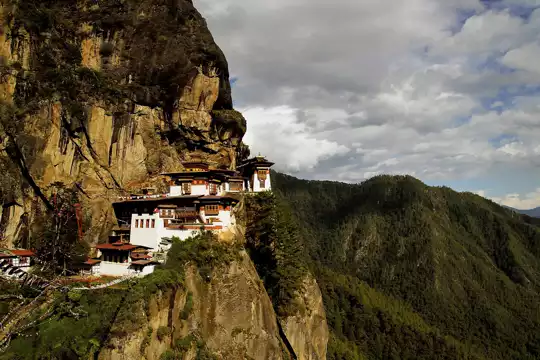
Most people only realize in the departure lounge that Paro is the one place in Bhutan where you can actually slow down and still tick off the big sights without spending half your trip in a car. It sits in a broad, green valley in western Bhutan, about an hour’s drive from Thimphu, and it’s home to the country’s only international airport, so almost every journey starts and ends here anyway. As a backpacker base, Paro is more small town than city: a low strip of painted shopfronts, prayer flags snapping in the wind, woodsmoke in the evenings. It’s perfect for day hikes and temple visits, especially Taktsang (Tiger’s Nest) and the gentler valley walks, but nightlife is basically momos, tea, and an early bed. It’s walkable in the center, with taxis for the scattered monasteries, and it feels safer and more relaxed than Thimphu, though also more overtly touristic and slightly pricier.

Discover everything you want to know in the 📖 Bhutan Travel Guide.


Get your Bhutan guide
54 ranked highlights, routes & tips, works offline (222 pages)
Loading the map 🌍
CLICK TO FILTER
cities
towns
villages
landmarks
national parks
hikes
attractions
festivals
regions
SHOW COUNTRY’S BESTSHOW ALL

✨ Why go?
Ranked #1 town in Bhutan
Why visitors keep coming back

Paro is a backpacker’s hub in Bhutan, serving as a vital link in your journey through the Himalayas. Its convenient location makes it the perfect launchpad for nearby hikes, like the iconic trek to Tiger’s Nest Monastery. You can breathe in the crisp mountain air while savoring local dishes at small eateries, where the aroma of spicy curries mingles with the scent of fresh herbs.

The town’s walkable streets invite exploration, whether you’re wandering through local markets or chatting with friendly shopkeepers. Accommodations range from cozy guesthouses to budget-friendly hostels, fostering a sense of community among travelers. Expect a mix of solo adventurers and small groups, all drawn to the town’s laid-back vibe.

Most backpackers tend to linger a few days, soaking in the culture and … read more 👉
Paro is a backpacker’s hub in Bhutan, serving as a vital link in your journey through the Himalayas. Its convenient location makes it the perfect launchpad for nearby hikes, like the iconic trek to Tiger’s Nest Monastery. You can breathe in the crisp mountain air while savoring local dishes at small eateries, where the aroma of spicy curries mingles with the scent of fresh herbs.

The town’s walkable streets invite exploration, whether you’re wandering through local markets or chatting with friendly shopkeepers. Accommodations range from cozy guesthouses to budget-friendly hostels, fostering a sense of community among travelers. Expect a mix of solo adventurers and small groups, all drawn to the town’s laid-back vibe.

Most backpackers tend to linger a few days, soaking in the culture and preparing for the next leg of their journey. Paro isn’t about nightlife; it’s about connection—both with the landscape and fellow travelers. If you’re a slow traveler or a hiker, Paro offers a rich experience that feels earned, making it a worthwhile stop on your Bhutanese adventure.
Want to include Paro in your Bhutan route?
Create a personalized Bhutan itinerary that includes Paro and the places that fit your trip — based on your travel style, budget, and available time. Get your route in seconds.

Generate my trip

💡 HighlightsMust-see experiences and standout moments

  • Rinpung Dzong (Paro Dzong) — The fortress-monastery that anchors Paro: dramatic Bhutanese architecture, prayer halls, murals and the best place to feel the town’s spiritual and administrative heart (and catch a tsechu if you’re lucky).
  • Ta Dzong (National Museum) — The circular watchtower-turned-museum above the dzong; great displays of Bhutanese art, arms and textiles, plus one of the nicest panoramic viewpoints over Paro valley.
  • Kyichu Lhakhang — One of Bhutan’s oldest and most venerated temples (7th century origins). Quiet courtyards, layered history and a constant ritual life make it essential for understanding Bhutanese devotion close to town.
  • Tachog Lhakhang — A compact, atmospheric shrine associated with the great bridge-builder Thangtong Gyalpo; smaller and less crowded than Kyichu,
read more 👉
  • Rinpung Dzong (Paro Dzong) — The fortress-monastery that anchors Paro: dramatic Bhutanese architecture, prayer halls, murals and the best place to feel the town’s spiritual and administrative heart (and catch a tsechu if you’re lucky).
  • Ta Dzong (National Museum) — The circular watchtower-turned-museum above the dzong; great displays of Bhutanese art, arms and textiles, plus one of the nicest panoramic viewpoints over Paro valley.
  • Kyichu Lhakhang — One of Bhutan’s oldest and most venerated temples (7th century origins). Quiet courtyards, layered history and a constant ritual life make it essential for understanding Bhutanese devotion close to town.
  • Tachog Lhakhang — A compact, atmospheric shrine associated with the great bridge-builder Thangtong Gyalpo; smaller and less crowded than Kyichu, but full of local devotion and interesting legends.
  • Paro Town Main Street & Local Market — Not Instagram-perfect, but where you’ll meet shopkeepers, try local snacks, buy woven scarves and see daily life; excellent for people-watching and cheap hearty food.
  • Paro Riverside Walk & Old Bridge — A short, pleasant stroll along the Paro Chhu with prayer flags, mani walls and a traditional wooden/cantilever bridge; peaceful, photogenic and a slice of village rhythm inside town.
  • Paro Airport Viewpoint — A small roadside spot where you can safely watch those famously tricky landings (and appreciate the valley’s scale). Good for sunrise/sunset light on the mountains.
  • Local Handicraft & Woodcarving Workshops — Small family-run workshops in and around town where you can watch weavers, mask painters and woodcarvers at work — much more authentic than a glossy souvenir stall.
  • Heritage Alleyways & Traditional Houses — Wander the narrow lanes behind the main street to see old merchant houses, carved windows and neighborhood chortens; gives a real feel for traditional Paro life away from the main sights.
  • Mani Walls, Neighborhood Lhakhangs & Daily Ritual Spots — Scattered prayer wheels, mani stone walls and tiny temples that locals use every day — low-key but culturally rich places to observe devotion, incense rituals and community rhythms.
A few excellent day-trip highlights just outside Paro: the iconic Paro Taktsang/Tiger’s Nest, the ruins of Drukgyel Dzong (with views of Mount Chomolhari on clear days) and the high Chele La pass — all easily reachable from Paro for a full-day outing.
Spotted a mistake or missing something? Contact us.

Things to do around Paro

Ratings based on Tripadvisor reviews. When you book through this link, you support our work at no extra cost to you.

🏘️ NeighborhoodsUnderstanding the local layout

Paro is a charming gateway to Bhutan’s cultural treasures, where every corner tells a story. Here’s how to navigate its neighborhoods like a pro.

Paro Town
This is the heart of the action. You’ll find a mix of local shops and eateries, with the scent of momos wafting through the air. It’s walkable, making it easy to explore on foot. Prices here are reasonable, catering to backpackers and travelers alike. The nightlife is low-key, perfect for winding down after a day of trekking. Ideal for short stays, but you might want to linger longer to soak in the atmosphere.

Rinpung Dzong Area
Home to the iconic fortress, this area is steeped in history. The vibe is tranquil, with stunning views of the surrounding mountains. It’s a bit quieter than Paro Town, making it suitable for those seeking … read more 👉
Paro is a charming gateway to Bhutan’s cultural treasures, where every corner tells a story. Here’s how to navigate its neighborhoods like a pro.

Paro Town
This is the heart of the action. You’ll find a mix of local shops and eateries, with the scent of momos wafting through the air. It’s walkable, making it easy to explore on foot. Prices here are reasonable, catering to backpackers and travelers alike. The nightlife is low-key, perfect for winding down after a day of trekking. Ideal for short stays, but you might want to linger longer to soak in the atmosphere.

Rinpung Dzong Area
Home to the iconic fortress, this area is steeped in history. The vibe is tranquil, with stunning views of the surrounding mountains. It’s a bit quieter than Paro Town, making it suitable for those seeking peace. Accommodations range from budget guesthouses to mid-range hotels. Walkability is excellent, and you can easily access the dzong and nearby trails. Perfect for both short visits and extended stays.

Drukgyel Dzong
A bit further out, this area offers a more remote feel. The ruins of the dzong are a must-see, surrounded by lush landscapes. It’s less touristy, so you’ll experience a more authentic side of Bhutan. Transport options are limited, but the hike to the dzong is rewarding. Stay here if you’re looking for solitude and a deeper connection with nature, ideal for longer stays.

Shaba
This residential area is a hidden treasure. It’s quieter, with a local vibe that feels genuine. Accommodations are more affordable, making it a great choice for budget travelers. While nightlife is minimal, the peaceful atmosphere is perfect for unwinding. Walkability is decent, but you’ll need to rely on local transport for major attractions. Best for longer stays where you can immerse yourself in daily life.

⌛️ 1 daySeeing the highlights in 24 hours

Paro, Bhutan, is a town where the air feels lighter and the mountains loom like ancient guardians. Nestled in a lush valley, it’s not just a gateway to the iconic Paro Taktsang (Tiger’s Nest) but a canvas of culture, history, and stunning landscapes. Spend a day here, and you’ll find that every corner has a story to tell.

Start your morning with a visit to the Paro Dzong, a fortress that stands as a testament to Bhutanese architecture. The sun filters through the ornate windows, casting intricate shadows on the stone walls. Wander through the courtyards, breathe in the scent of incense wafting from the prayer halls, and soak in the serene atmosphere. This is where you’ll feel the pulse of the town.

Afterward, head to the local market, just a short walk away. The vibrant stalls are filled … read more 👉
Paro, Bhutan, is a town where the air feels lighter and the mountains loom like ancient guardians. Nestled in a lush valley, it’s not just a gateway to the iconic Paro Taktsang (Tiger’s Nest) but a canvas of culture, history, and stunning landscapes. Spend a day here, and you’ll find that every corner has a story to tell.

Start your morning with a visit to the Paro Dzong, a fortress that stands as a testament to Bhutanese architecture. The sun filters through the ornate windows, casting intricate shadows on the stone walls. Wander through the courtyards, breathe in the scent of incense wafting from the prayer halls, and soak in the serene atmosphere. This is where you’ll feel the pulse of the town.

Afterward, head to the local market, just a short walk away. The vibrant stalls are filled with colorful textiles and handmade crafts. Engage with the vendors; their smiles are as warm as the sun. Grab a quick bite at a nearby café—try the ema datshi, a spicy cheese and chili dish that will awaken your taste buds.

In the afternoon, take a less-traveled path to the Drukgyel Dzong ruins. The hike is gentle, with wildflowers lining the trail and the sound of a nearby stream providing a soothing backdrop. The ruins offer a panoramic view of the valley, and the history here feels palpable. It’s a spot often overlooked by tourists, but the tranquility is worth the trek.

As evening approaches, return to town and stroll through the charming streets of Paro. The light softens, casting a golden hue over the traditional wooden houses. Find a cozy restaurant for dinner; the local dishes are a celebration of flavors. End your day by watching the sunset paint the sky over the mountains, a perfect capstone to a day well spent in this enchanting town.
Turn your Paro visit into an Bhutan adventure
Build a complete Bhutan route with Paro, hidden gems, must-see destinations, and realistic travel times included.

Generate my trip

🌤️ When to go?Choosing the right time of year


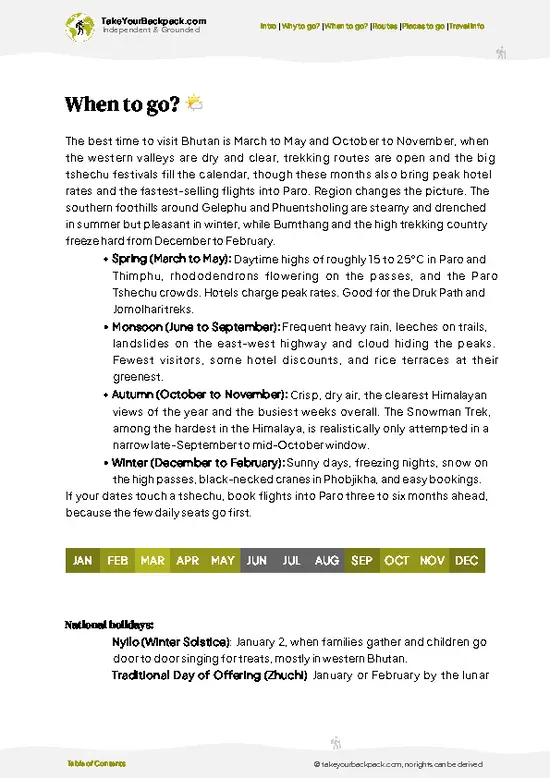
  • Weather: Paro’s best weather hits in spring (March to May) and autumn (September to November). These months bring clear skies and crisp air, perfect for trekking and temple visits. Avoid the monsoon season (June to August) when heavy rains turn trails muddy and visibility drops.

  • Temperature: Spring and autumn days hover between 15-22°C (59-72°F), cool but comfortable for hiking. Nights can dip to near freezing, so pack layers. Winter (December to February) gets colder, often below 0°C (32°F) at night, which can be harsh without proper gear.

  • Daylight Hours: Around 10-12 hours of daylight in spring and autumn give you ample time to explore without rushing. Winter days shorten, limiting outdoor activities, while summer days stretch longer but come with the monsoon’s cloud cover.

  • Crowds:
read more 👉

  • Weather: Paro’s best weather hits in spring (March to May) and autumn (September to November). These months bring clear skies and crisp air, perfect for trekking and temple visits. Avoid the monsoon season (June to August) when heavy rains turn trails muddy and visibility drops.

  • Temperature: Spring and autumn days hover between 15-22°C (59-72°F), cool but comfortable for hiking. Nights can dip to near freezing, so pack layers. Winter (December to February) gets colder, often below 0°C (32°F) at night, which can be harsh without proper gear.

  • Daylight Hours: Around 10-12 hours of daylight in spring and autumn give you ample time to explore without rushing. Winter days shorten, limiting outdoor activities, while summer days stretch longer but come with the monsoon’s cloud cover.

  • Crowds: Peak tourist flow aligns with spring and autumn festivals, especially the Paro Tshechu in spring. Expect more visitors then, which means lively atmospheres but pricier accommodations and busier trails.

  • Seasonal Activities: Spring bursts with rhododendron blooms, painting the hillsides red and pink. Autumn offers clear mountain views and harvest festivals. Winter’s stark landscape is quieter but less forgiving for outdoor adventures.

  • Price Fluctuations: High season (spring and autumn) sees a spike in prices for lodging and flights. Booking early can save you from last-minute surges. Off-season (monsoon and winter) offers lower rates but fewer services and limited access to some trails.


Pro-tip: Aim for early autumn to catch clear skies, manageable crowds, and vibrant festivals—this sweet spot balances comfort, culture, and cost for a truly immersive Paro experience.


source: climatestotravel.comJANJanuary: fair for travelingFEBFebruary: fair for travelingMARMarch: excellent for travelingAPRApril: excellent for travelingMAYMay: excellent for travelingJUNJune: below average for travelingJULJuly: below average for travelingAUGAugust: below average for travelingSEPSeptember: excellent for travelingOCTOctober: excellent for travelingNOVNovember: highly recommended for travelingDECDecember: fair for traveling
when-to-go

✈️ The backpacker research shortcutBhutan Travel Guide

An offline-friendly backpacking guide with optimized travel routes, ranked highlights, transport advice, and the best areas to stay.
example page 0 from our offline Travel Guide for Bhutan
example page 1 from our offline Travel Guide for Bhutan
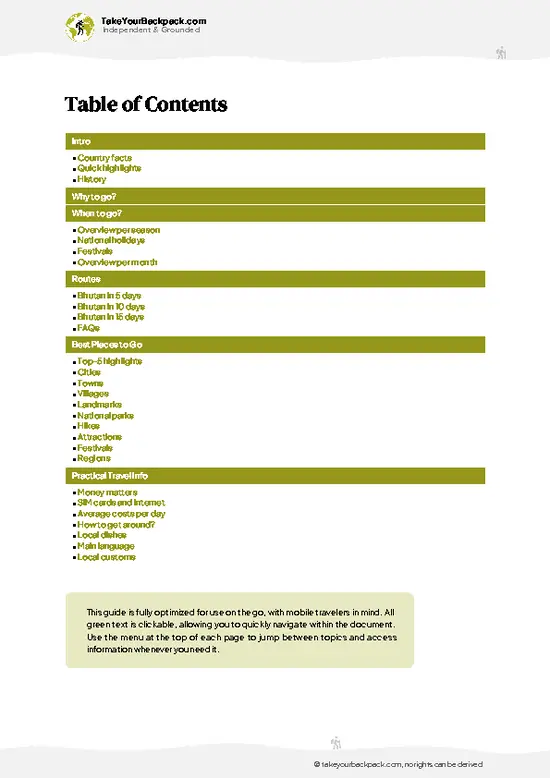
example page 2 from our offline Travel Guide for Bhutan
example page 3 from our offline Travel Guide for Bhutan
example page 4 from our offline Travel Guide for Bhutan
example page 5 from our offline Travel Guide for Bhutan
example page 6 from our offline Travel Guide for Bhutan
example page 7 from our offline Travel Guide for Bhutan
The digital guide (222 pages) contains:
54 highlights, ranked by travel appeal
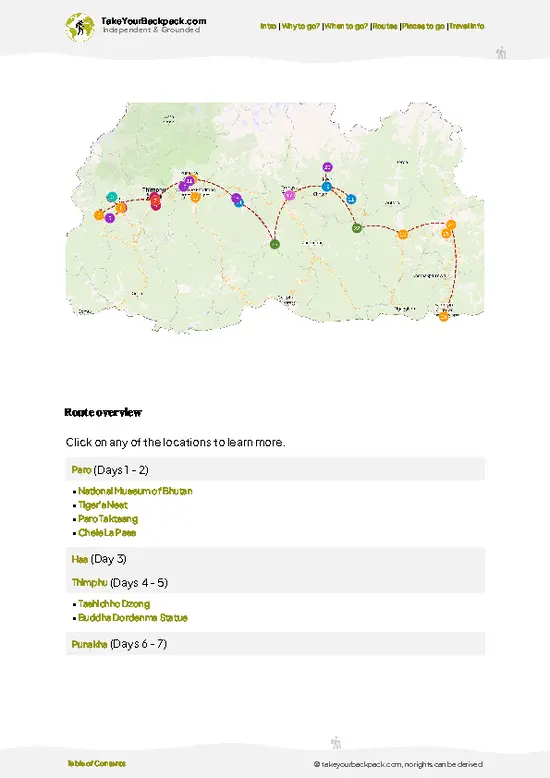
Optimized 5, 10 & 15-day travel routes
Cities, national parks, landmarks, beaches
How to get around
Offline-friendly for travel without Wi-Fi
👉 Click to see all 30+ guide features

📅 Plan smarter in minutes, not weeks
Month by month travel advice
Festivals & national holidays
Budget expectations

🗺️ Go to the right places, skip the overrated ones
Honest pros & cons of destinations
Top hikes, parks & viewpoints
Lesser-known places most travelers miss
Clear “worth it vs skip it” guidance

🛏️ Travel smoothly without rookie mistakes
Best areas to stay
Transport systems explained simply
Common scams & safety advice
SIM cards, money & practical tips

🌍 Understand the country, not just visit it
Culture & traditions
52 Essential phrases & customs
Festivals worth planning around
Traveler-friendly historical context
Insights that make places more meaningful

📱 Built for real travel conditions
Fully downloadable PDF
Works completely offline
Optimized for phone use
Useful in remote areas & buses
Everything in one place
Save weeks of stressful planning
Get instant access to your full guide. 30‑day money-back guarantee.
+ Add another guide for just US$7.80

By proceeding you agree to our terms.
Sent to your inbox immediately after payment • 100% Secure Checkout
Best Backpacking Travel Advisor 2025 tourism awardBest Backpacking
Travel Advisor
2025
What others say about Take Your Backpack Guides:
⭐⭐⭐⭐⭐
Fantastic, amazing amount of information!
⭐⭐⭐⭐⭐
My goodness this is amazing, it's what I've been looking for hats off too you!
⭐⭐⭐⭐⭐
I think this is absolutely BRILLIANT
⭐⭐⭐⭐
Very complete and informative. It's still missing places, but I gotta to commend you
⭐⭐⭐⭐⭐
This is truly amazing, thank you, can't wait to explore it with my kids!
⭐⭐⭐⭐⭐
Awesome resource, thank you!
⭐⭐⭐⭐⭐
This is amazing! Can't wait to explore the ones I haven't seen
⭐⭐⭐⭐
I love this! Well done, great idea.
⭐⭐⭐⭐⭐
Thanks for taking the time to make this gem!
⭐⭐⭐⭐⭐
This might be the best website I've ever seen.
⭐⭐⭐⭐⭐
Congratulations, and thank you so much for your work; it's incredibly valuable.
⭐⭐⭐⭐
In all seriousness I think you did a great job pointing out the important spots
⭐⭐⭐⭐⭐
10/10 very good
⭐⭐⭐⭐⭐
As someone who's only just starting to visit regularly this is awesome, thank you.
⭐⭐⭐⭐
Thank you very much! I'm going to visit my dad, it's going to be very useful!
⭐⭐⭐⭐⭐
This is really cool! We'll be travelling for the first time and this definitely come in handy.
⭐⭐⭐⭐⭐
You are now our minister of culture, congratulations 👨‍💼
⭐⭐⭐⭐⭐
Just wanted to tell you that this is a pearl! Going to follow your recommendations.
⭐⭐⭐⭐⭐
This is so cool. I'll definitely be using the resource for my travels soon.
⭐⭐⭐⭐⭐
This is very impressive! Good work.
⭐⭐⭐⭐⭐
This is an amazing and informative site. Very well done!

🛏️ Where to stay?Where staying makes the most sense

In Paro, the best spot for backpackers is the area around the town center, especially near the Paro Dzong and the main market street. This neighborhood hums with life during the day—vendors selling fresh produce, locals chatting over butter tea, and the scent of wood smoke curling through narrow alleys. It’s safe, compact, and easy to navigate on foot, which is a blessing when you’re carrying a pack and want to avoid unnecessary taxi rides.

Why this area? Because it’s where you’ll find the pulse of Paro’s daily rhythm without the tourist bubble feeling too thick. Budget travelers and solo backpackers … read more 👉
In Paro, the best spot for backpackers is the area around the town center, especially near the Paro Dzong and the main market street. This neighborhood hums with life during the day—vendors selling fresh produce, locals chatting over butter tea, and the scent of wood smoke curling through narrow alleys. It’s safe, compact, and easy to navigate on foot, which is a blessing when you’re carrying a pack and want to avoid unnecessary taxi rides.

Why this area? Because it’s where you’ll find the pulse of Paro’s daily rhythm without the tourist bubble feeling too thick. Budget travelers and solo backpackers gravitate here for the social vibe—small guesthouses and hostels cluster around the market, making it easy to meet fellow travelers over a shared meal or a cup of local tea. The hostels here tend to be modest but clean, with communal spaces that encourage swapping stories and planning hikes.

Compared to the quieter outskirts or the luxury resorts near the airport, staying in the town center means you’re plugged into the authentic flow of Bhutanese life. The light in the late afternoon filters through prayer flags strung between buildings, casting a warm glow that feels earned after a day of trekking or temple visits. This is where you get the full sensory experience of Paro without the hassle of long commutes or feeling isolated.

🚌 Getting aroundHow to get around Paro

Paro moves at a pace that feels like a slow breath in a mountain morning—deliberate, calm, but never stagnant. The air carries a faint scent of pine and wood smoke, a reminder that this is a town where tradition still shapes daily life. You won’t find a frenzy of honking cars or a strict timetable dictating every move. Instead, there’s a rhythm to Paro’s flow, a blend of old-world patience and the occasional burst of energy when a market opens or a festival fills the streets. This isn’t a place where you rush; it’s a place where you sync with the natural cadence of the valley, and that’s exactly how you unlock its charm.


  • Walking: Paro’s compact size makes walking the most practical and immersive way to get around. The town’s streets are narrow and often cobbled, with gentle slopes that
read more 👉
Paro moves at a pace that feels like a slow breath in a mountain morning—deliberate, calm, but never stagnant. The air carries a faint scent of pine and wood smoke, a reminder that this is a town where tradition still shapes daily life. You won’t find a frenzy of honking cars or a strict timetable dictating every move. Instead, there’s a rhythm to Paro’s flow, a blend of old-world patience and the occasional burst of energy when a market opens or a festival fills the streets. This isn’t a place where you rush; it’s a place where you sync with the natural cadence of the valley, and that’s exactly how you unlock its charm.


  • Walking: Paro’s compact size makes walking the most practical and immersive way to get around. The town’s streets are narrow and often cobbled, with gentle slopes that keep your legs engaged but not exhausted. Walking lets you catch the scent of incense from the temples, the chatter of locals, and the occasional stray dog weaving through the alleys. It’s free, flexible, and the best way to absorb the town’s atmosphere at your own pace.


  • Local Buses: These are the budget traveler’s backbone for trips beyond the town center. Buses run roughly from 7 AM to 6 PM, though don’t expect a strict schedule—departures often depend on when the bus fills up. Fares hover around 20-30 ngultrum (about 25-40 cents), making them incredibly affordable. The buses are basic, sometimes crowded, but they offer a genuine slice of Bhutanese daily life, with stops at key points like the airport and nearby villages.


  • Shared Taxis: For destinations not covered by buses or for a quicker trip, shared taxis are your go-to. They gather passengers until full, then head out, which means you might wait a bit but pay less than a private ride. Prices vary by distance but expect around 100-200 ngultrum for trips to places like the Tiger’s Nest Monastery trailhead. The vehicles are usually small SUVs or jeeps, offering a bumpier but faster ride than the bus.


  • Airport Shuttle: If you’re arriving or departing via Paro Airport, the shuttle service connects the airport to the town center. It runs on flight schedules, so timing is tight but reliable. The cost is around 150 ngultrum, and the ride takes about 15 minutes. It’s a smooth, hassle-free option that saves you from negotiating taxis right after a long flight.


  • Bicycle Rentals: For the adventurous and fit, renting a bicycle can be a rewarding way to explore the outskirts of Paro. Rentals cost about 200-300 ngultrum per day. The terrain is a mix of flat stretches and gentle hills, with crisp mountain air that makes pedaling a sensory delight. Just be ready for occasional traffic and uneven road surfaces.

👛 Costs (as of 4 September 2026)What things cost and how to budget

Backpacking in Paro, Bhutan, comes with a unique cost structure shaped by the country’s controlled tourism policies and the blend of traditional and modern influences in this Himalayan town.
  • Dorm Accommodation: Dorm-style hostels are rare in Paro, as Bhutan favors more regulated, mid-range guesthouses and hotels. Budget travelers can find simple guesthouses starting around $20 to $30 USD per night, but true dorms are uncommon, so expect to pay slightly more for shared rooms or budget double rooms.
  • Meals: Eating local is both a cultural and budget win. A meal at a local eatery or market stall typically costs between $3 and $7 USD. Western-style cafes and restaurants push that up to $10-$15 USD per meal. The food is hearty, often featuring rice, buckwheat, and local vegetables, with a smoky,
read more 👉
Backpacking in Paro, Bhutan, comes with a unique cost structure shaped by the country’s controlled tourism policies and the blend of traditional and modern influences in this Himalayan town.
  • Dorm Accommodation: Dorm-style hostels are rare in Paro, as Bhutan favors more regulated, mid-range guesthouses and hotels. Budget travelers can find simple guesthouses starting around $20 to $30 USD per night, but true dorms are uncommon, so expect to pay slightly more for shared rooms or budget double rooms.
  • Meals: Eating local is both a cultural and budget win. A meal at a local eatery or market stall typically costs between $3 and $7 USD. Western-style cafes and restaurants push that up to $10-$15 USD per meal. The food is hearty, often featuring rice, buckwheat, and local vegetables, with a smoky, earthy aroma that lingers in the air.
  • Local Transport: Paro is compact, and many sights are walkable, but for longer trips, shared taxis or local buses cost around $1 to $3 USD per ride. Renting a bicycle is another option, usually about $5 to $8 USD per day, letting you soak in the crisp mountain air and the scent of pine forests.
  • Basic Activities/Entry Fees: Bhutan’s tourism model includes a mandatory daily tariff for independent travelers, but for those outside the official tour system, expect to pay entrance fees for key sites like Paro Dzong and museums, typically $5 to $10 USD each. Hiking to Tiger’s Nest Monastery is free, but guides, which are recommended, cost around $20 to $30 USD for the day.
  • Miscellaneous Expenses: This covers bottled water, snacks, occasional internet access, and small souvenirs. Budget around $5 to $10 USD daily. Water has a crisp mountain freshness, but bottled is safer for travelers unused to the local source.

All told, a realistic daily budget for backpacking in Paro ranges from about $35 to $60 USD. This covers the essentials without skimping on the experience, letting you breathe in the mountain air and absorb the town’s quiet rhythms without constant money stress.


source: bhutan.travel
⚠️ Prices can change and everyone travels differently, so take this as a rough guide. Hope it helps you plan your adventure!

🚌 Day tripsBest day trips from Paro

Paro, Bhutan, is a backpacker’s dream base, offering a blend of rich culture and breathtaking landscapes. The town itself is charming, with its traditional wooden architecture and the scent of incense wafting through the air. From here, you can easily embark on day trips that reveal the heart of Bhutan.

Hike to Tiger’s Nest Monastery
This iconic trek is a must-do. The trail winds through pine forests, and as you ascend, the air grows crisp and invigorating. It takes about 2-3 hours to reach the monastery, perched dramatically on a cliff. The entrance fee is around 1,200 Ngultrum, but the views and spiritual ambiance are priceless. Early mornings are best to avoid crowds and catch the sunrise illuminating the monastery. Many first-timers underestimate the hike’s intensity; pace yourself … read more 👉
Paro, Bhutan, is a backpacker’s dream base, offering a blend of rich culture and breathtaking landscapes. The town itself is charming, with its traditional wooden architecture and the scent of incense wafting through the air. From here, you can easily embark on day trips that reveal the heart of Bhutan.

Hike to Tiger’s Nest Monastery
This iconic trek is a must-do. The trail winds through pine forests, and as you ascend, the air grows crisp and invigorating. It takes about 2-3 hours to reach the monastery, perched dramatically on a cliff. The entrance fee is around 1,200 Ngultrum, but the views and spiritual ambiance are priceless. Early mornings are best to avoid crowds and catch the sunrise illuminating the monastery. Many first-timers underestimate the hike’s intensity; pace yourself and enjoy the journey.


Explore Paro Dzong
Just a short walk from the town center, Paro Dzong is a stunning fortress that showcases Bhutanese architecture. Spend a couple of hours wandering its courtyards and temples, absorbing the history and tranquility. Entry is free, making it a budget-friendly option. Visit in the late afternoon when the light casts a golden hue on the walls, enhancing its beauty. A common mistake is rushing through; take your time to appreciate the intricate details and serene atmosphere.


Visit the National Museum of Bhutan
Housed in a former watchtower, this museum offers a deep dive into Bhutanese culture and history. It’s only a 30-minute hike from Paro, and the entry fee is about 200 Ngultrum. Plan for 1-2 hours to explore the exhibits, which range from traditional textiles to ancient artifacts. The best time to visit is during the day when natural light floods the galleries. Many backpackers overlook this gem, but it’s a fantastic way to understand the local heritage.


Day Trip to Chele La Pass
A scenic drive of about 40 minutes takes you to Chele La Pass, the highest motorable road in Bhutan. The views of the Himalayas are jaw-dropping, especially in spring when the rhododendrons bloom. Bring a packed lunch to enjoy amidst the stunning vistas. The trip is free except for transportation costs, which can be shared with fellow travelers. A common error is not checking the weather; it can change rapidly, so dress in layers.
👉 Explore Chele La Pass

Each of these trips offers a unique glimpse into Bhutan’s soul, making your stay in Paro not just a stopover, but an enriching experience.
Want to know what more Bhutan offers?
The Bhutan Travel Guide describes 54 highlights, from cities to national parks, from beaches to hikes

Get the Travel Guide -

🛡️ SafetyTraveler Safety Guide

Paro is generally safe, but like any place, a little awareness goes a long way. The main street is lively, filled with shops and eateries, but keep an eye on your belongings, especially in crowded spots. Solo travelers should feel comfortable, but it’s wise to stick to well-lit areas after dark. The atmosphere shifts at night; the quiet can feel eerie, so consider heading back to your accommodation before the sun dips too low.

While scams are rare, some vendors might try to upsell you on souvenirs or tours. If something feels off, trust your gut. Bargaining is part of the culture, so don’t hesitate to negotiate prices.

Annoyances can include the occasional overly persistent shopkeeper or a taxi driver who doesn’t quite understand your destination. A friendly smile and a firm but polite … read more 👉
Paro is generally safe, but like any place, a little awareness goes a long way. The main street is lively, filled with shops and eateries, but keep an eye on your belongings, especially in crowded spots. Solo travelers should feel comfortable, but it’s wise to stick to well-lit areas after dark. The atmosphere shifts at night; the quiet can feel eerie, so consider heading back to your accommodation before the sun dips too low.

While scams are rare, some vendors might try to upsell you on souvenirs or tours. If something feels off, trust your gut. Bargaining is part of the culture, so don’t hesitate to negotiate prices.

Annoyances can include the occasional overly persistent shopkeeper or a taxi driver who doesn’t quite understand your destination. A friendly smile and a firm but polite “no, thank you” usually do the trick. Carry yourself confidently, and you’ll navigate Paro like a pro, soaking in its charm without unnecessary distractions.

FAQTraveler FAQ

Yes, Paro is worth visiting for its rich cultural heritage and stunning natural scenery, not just as a stopover. It hosts Bhutan's only international airport and key attractions like Paro Taktsang (Tiger's Nest Monastery), which is a must-see. The town offers a unique blend of traditional Bhutanese architecture and vibrant local markets.
You need at least 2 to 3 days in Paro to explore the main sites comfortably. This allows time for the Tiger's Nest hike, visits to Rinpung Dzong and the National Museum, and some leisure time to enjoy the town. Longer stays are recommended if you want to explore nearby valleys or attend local festivals.
No, Paro cannot be effectively visited as a day trip from a nearby city because it is relatively remote and the nearest major city, Thimphu, is about 1.5 hours away by car. Travel times and the effort required to hike major attractions like Tiger's Nest make day trips impractical. Staying overnight in Paro is essential to fully experience the area.
⚠️ Things can change over time, so always validate details locally before you go.

Other Bhutanese towns near Paro

Explore more nearby:

  • Haa—alpine valley, military presence, remote villages| 14 km away
  • Wangdue Phodrang—river confluence, dzong reconstruction, market town| 48 km away
  • Punakha—river junction, winter capital, terraced fields| 49 km away

💡 Not sure where to go next?
Create a personalized itinerary for Bhutan including Paro and the places that fit your trip.

Generate my itinerary

👉 Discover all towns

Or checkout all Bhutan has to offer (think cities, towns, villages, national parks, hikes, beaches, festivals)
Country photo of Bhutan

We 💚 feedbackSumming up the experience

Paro is a place where the air feels lighter, almost electric with possibility. The best surprise? Stumbling upon a local festival, where the colors and laughter wrap around you like a warm blanket. But a heads-up: the altitude can hit hard. Take it slow, sip on some butter tea, and let the mountains work their magic. Embrace the stillness, and you’ll find that every step is a meditation. This isn’t just a destination; it’s a journey into the heart of Bhutan.

✍️ Help improve this page!
The information on this page is based on in-depth research, insights shared by experienced travelers, and feedback from the local travel community in Bhutan. While every effort is made to keep the information accurate and current, conditions can change — so if you spot anything incorrect or outdated, please get in touch.


🙋‍♂️ Give feedback

👋 Meet the founderWho’s Behind Take Your Backpack?

Johan, backpacker and founder of TakeYourBackpackHi, I’m Johan (Netherlands 🇳🇱), the creator of TakeYourBackpack. Over the past decade, I’ve backpacked through 80+ countries across six continents, gaining extensive experience with independent travel, long-term trips, and overland routes.

This site is built on a combination of firsthand travel experience and carefully curated insights from other backpackers. Many guides are based on places I’ve personally visited, while others bring together tips, observations, and practical advice shared by trusted travelers I’ve met along the way.

The goal is to provide realistic, experience-driven guidance — not generic itineraries — so you can explore destinations with better context, clearer expectations, and more confidence.

Get full Bhutan guide •
Instant download • 54 highlights • Full Offline guide