v2.webp)
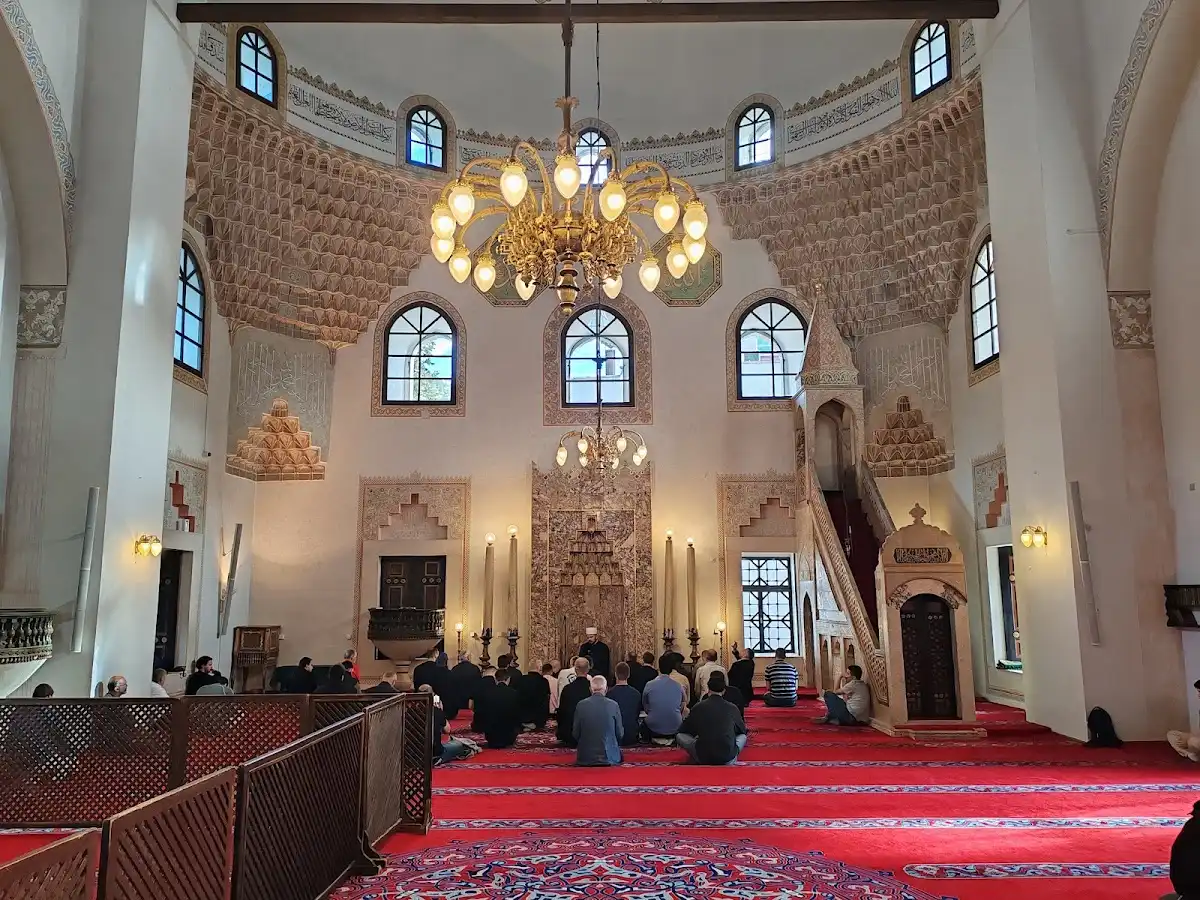
The Main Prayer Hall
Let’s cut through the Instagram haze: the main prayer hall isn’t just a pretty dome for your feed. Step inside and you’re hit with a hush that’s almost physical—call it centuries of devotion pressed into the air. The geometry is Ottoman perfection, but the real magic is in the light. Sunbeams filter through stained glass, painting the carpets in shifting colors. You’ll see locals actually using the space, not just posing. This is living heritage, not a museum set piece.
The Courtyard Fountain (Šadrvan)
You’ll see a lot of people snapping photos of the fountain, but most miss the point. This isn’t just a decorative relic; it’s where worshippers perform ablutions before prayer. The sound of water, the shade of the plane trees, and the rhythm of people coming and going—it’s … read more 👉
Let’s cut through the Instagram haze: the main prayer hall isn’t just a pretty dome for your feed. Step inside and you’re hit with a hush that’s almost physical—call it centuries of devotion pressed into the air. The geometry is Ottoman perfection, but the real magic is in the light. Sunbeams filter through stained glass, painting the carpets in shifting colors. You’ll see locals actually using the space, not just posing. This is living heritage, not a museum set piece.
The Courtyard Fountain (Šadrvan)
You’ll see a lot of people snapping photos of the fountain, but most miss the point. This isn’t just a decorative relic; it’s where worshippers perform ablutions before prayer. The sound of water, the shade of the plane trees, and the rhythm of people coming and going—it’s … read more 👉
The Main Prayer Hall
Let’s cut through the Instagram haze: the main prayer hall isn’t just a pretty dome for your feed. Step inside and you’re hit with a hush that’s almost physical—call it centuries of devotion pressed into the air. The geometry is Ottoman perfection, but the real magic is in the light. Sunbeams filter through stained glass, painting the carpets in shifting colors. You’ll see locals actually using the space, not just posing. This is living heritage, not a museum set piece.
The Courtyard Fountain (Šadrvan)
You’ll see a lot of people snapping photos of the fountain, but most miss the point. This isn’t just a decorative relic; it’s where worshippers perform ablutions before prayer. The sound of water, the shade of the plane trees, and the rhythm of people coming and going—it’s the heartbeat of the complex. Sit here for ten minutes and you’ll witness a cross-section of Sarajevo: old men in wool caps, teenagers on their phones, women in headscarves, all weaving through the same ritual. It’s a masterclass in coexistence.
The Clock Tower (Sahat Kula)
Here’s where the myth-busting gets fun. The clock tower isn’t just another Ottoman leftover—it’s the only public clock in the world that still keeps lunar time, set by the phases of the moon to mark Islamic prayer hours. Forget your phone; this clock is a stubborn, analog rebel in a digital world. If you catch the caretaker resetting it, you’re watching a tradition that’s survived empires and wars. That’s entertainment you can’t script.
Gazi Husrev-beg’s Turbe (Mausoleum)
Most visitors breeze past the small domed structure near the mosque, but this is where the founder himself is buried. The turbe is understated, almost austere, but the devotion is palpable—locals still leave prayers and flowers. It’s a rare chance to stand at the crossroads of legend and reality. You’re not just looking at a tomb; you’re seeing how a city remembers its heroes.
The Bezistan (Covered Market)
Skip the touristy stalls around Baščaršija and duck into the Bezistan, built as part of the original complex. This isn’t a sanitized shopping arcade; it’s a living, breathing bazaar where you can haggle for copperware, Turkish coffee sets, or just people-watch as Sarajevans do their daily shopping. The stone corridors echo with centuries of commerce. It’s gritty, it’s chaotic, and it’s the opposite of curated—exactly why it’s worth your time.
The Madrasa (Islamic School)
You won’t find glossy brochures for this one, but the Gazi Husrev-beg Madrasa is the oldest in Bosnia and still functions as a school. If you’re lucky enough to catch an open day or a public lecture, go. The energy is electric—students debating, teachers lecturing, the future of Bosnian Islam being shaped in real time. It’s not a photo op; it’s a window into the intellectual life of Sarajevo.
Let’s cut through the Instagram haze: the main prayer hall isn’t just a pretty dome for your feed. Step inside and you’re hit with a hush that’s almost physical—call it centuries of devotion pressed into the air. The geometry is Ottoman perfection, but the real magic is in the light. Sunbeams filter through stained glass, painting the carpets in shifting colors. You’ll see locals actually using the space, not just posing. This is living heritage, not a museum set piece.
The Courtyard Fountain (Šadrvan)
You’ll see a lot of people snapping photos of the fountain, but most miss the point. This isn’t just a decorative relic; it’s where worshippers perform ablutions before prayer. The sound of water, the shade of the plane trees, and the rhythm of people coming and going—it’s the heartbeat of the complex. Sit here for ten minutes and you’ll witness a cross-section of Sarajevo: old men in wool caps, teenagers on their phones, women in headscarves, all weaving through the same ritual. It’s a masterclass in coexistence.
The Clock Tower (Sahat Kula)
Here’s where the myth-busting gets fun. The clock tower isn’t just another Ottoman leftover—it’s the only public clock in the world that still keeps lunar time, set by the phases of the moon to mark Islamic prayer hours. Forget your phone; this clock is a stubborn, analog rebel in a digital world. If you catch the caretaker resetting it, you’re watching a tradition that’s survived empires and wars. That’s entertainment you can’t script.
Gazi Husrev-beg’s Turbe (Mausoleum)
Most visitors breeze past the small domed structure near the mosque, but this is where the founder himself is buried. The turbe is understated, almost austere, but the devotion is palpable—locals still leave prayers and flowers. It’s a rare chance to stand at the crossroads of legend and reality. You’re not just looking at a tomb; you’re seeing how a city remembers its heroes.
The Bezistan (Covered Market)
Skip the touristy stalls around Baščaršija and duck into the Bezistan, built as part of the original complex. This isn’t a sanitized shopping arcade; it’s a living, breathing bazaar where you can haggle for copperware, Turkish coffee sets, or just people-watch as Sarajevans do their daily shopping. The stone corridors echo with centuries of commerce. It’s gritty, it’s chaotic, and it’s the opposite of curated—exactly why it’s worth your time.
The Madrasa (Islamic School)
You won’t find glossy brochures for this one, but the Gazi Husrev-beg Madrasa is the oldest in Bosnia and still functions as a school. If you’re lucky enough to catch an open day or a public lecture, go. The energy is electric—students debating, teachers lecturing, the future of Bosnian Islam being shaped in real time. It’s not a photo op; it’s a window into the intellectual life of Sarajevo.
Spotted a mistake or missing something? Contact us.

Sarajevo: 2 Hours Old Town Walking Tour With Local Guide
✓ Free cancellation

Private Walking Tour, Food Tasting and Bosnian Coffee in Sarajevo
✓ Free cancellation

Sarajevo Essential Full Walking Tour
✓ Free cancellation

Discover Sarajevo Walking Tour with Local Guide
✓ Free cancellation

Sarajevo Grand Tour: The Most Complete Sarajevo Tour In 5 Hours
✓ Free cancellation

Sarajevo Full Day Tour: Pick-Up, Entrance Fee's & Lunch Included
✓ Free cancellation

Eat, Pray, Love Tour
✓ Free cancellation

Sarajevo Old Town Walking Tour with Local Guide: Coffee & Stories
✓ Free cancellation

Best of Sarajevo - Ultimate Full-Day Experience
✓ Free cancellation

Sarajevo City SIghtseeing / War Bike Tour
✓ Free cancellation
 Best Backpacking
.jpg) Hi, I’m Johan (Netherlands 🇳🇱), the creator of TakeYourBackpack. Over the past decade, I’ve backpacked through 80+ countries across six continents, gaining extensive experience with independent travel, long-term trips, and overland routes.
Hi, I’m Johan (Netherlands 🇳🇱), the creator of TakeYourBackpack. Over the past decade, I’ve backpacked through 80+ countries across six continents, gaining extensive experience with independent travel, long-term trips, and overland routes.