v2.webp)
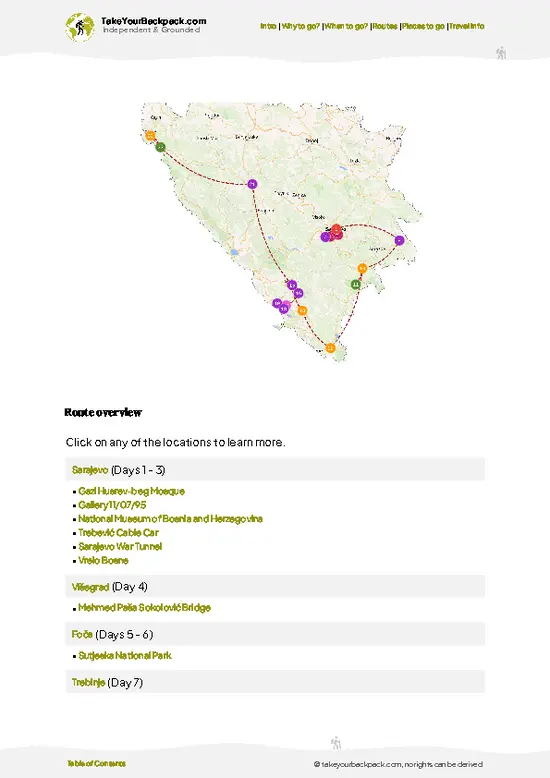
- Travnik Fortress (Stari Grad) — The hilltop citadel that defines the town: climb the ramparts for sweeping views of the Vrbas valley, wander ruined Ottoman and Austro-Hungarian walls, and feel why Travnik was a strategic seat for centuries.
- Ivo Andrić Birth House (House-Museum) — Small, unpretentious museum in the Nobel laureate’s childhood home; worth visiting to see period furnishings, local context for his writing, and the modest streets that shaped his early life.
- Sulejmanija Mosque — One of Travnik’s principal Ottoman-era mosques with a graceful dome and minaret; visiting during non-prayer hours gives a calm glimpse into the town’s Islamic architectural heritage.
- Šarena džamija (the Colorful/Decorated Mosque) — Famous for its painted interior and distinct decorative style; a quieter,
- Travnik Fortress (Stari Grad) — The hilltop citadel that defines the town: climb the ramparts for sweeping views of the Vrbas valley, wander ruined Ottoman and Austro-Hungarian walls, and feel why Travnik was a strategic seat for centuries.
- Ivo Andrić Birth House (House-Museum) — Small, unpretentious museum in the Nobel laureate’s childhood home; worth visiting to see period furnishings, local context for his writing, and the modest streets that shaped his early life.
- Sulejmanija Mosque — One of Travnik’s principal Ottoman-era mosques with a graceful dome and minaret; visiting during non-prayer hours gives a calm glimpse into the town’s Islamic architectural heritage.
- Šarena džamija (the Colorful/Decorated Mosque) — Famous for its painted interior and distinct decorative style; a quieter, visually rich stop that showcases local artisanship and devotional aesthetics.
- Sahat-kula (Clock Tower) — The old clock tower anchors the town center; it’s an easy landmark to find, great for photos, and a nice spot to pause and watch daily Travnik life unfold around the market streets.
- Travnik Čaršija (Old Bazaar / Ottoman Quarter) — A compact web of narrow streets, traditional wooden houses and family-run shops and cafes; real life happens here—burek shops, small bakeries and craft stalls give the place its character.
- Stari Hamam (Old Turkish Bath) — The surviving hamam building is an evocative piece of Ottoman social life; even if it’s not operating as a bath today, the architecture and tilework speak loudly about community rhythms of the past.
- Museum of Travnik (Muzej Travnik) — Small regional museum with archeological finds, Ottoman-era objects and local history exhibits; good for understanding the layered past beyond just the visible monuments.
- Traditional Ottoman-period Houses (Podgrađe & residential quarters) — Scattered, well-preserved family homes with timber eaves and inner courtyards; they give a real sense of how people used to (and sometimes still do) live in Travnik’s narrow lanes.
- Franciscan Monastery and Church — A quietly important Catholic presence that reflects Travnik’s multi-faith history; the church interior and cloister offer contrast to the mosques and add depth to the town’s cultural map.
Spotted a mistake or missing something? Contact us.

Lukomir Highland Village Hike

War Times Experience in Sarajevo - Half Day Tour

Private transfer Dubrovnik and Mostar

Planet Sarajevo Multimedia Museum

Sarajevo to Dubrovnik: Transfer With Herzegovina Tour

Utopia of Tito’s Yugoslavia, Tito’s Bunker & Siege of Sarajevo
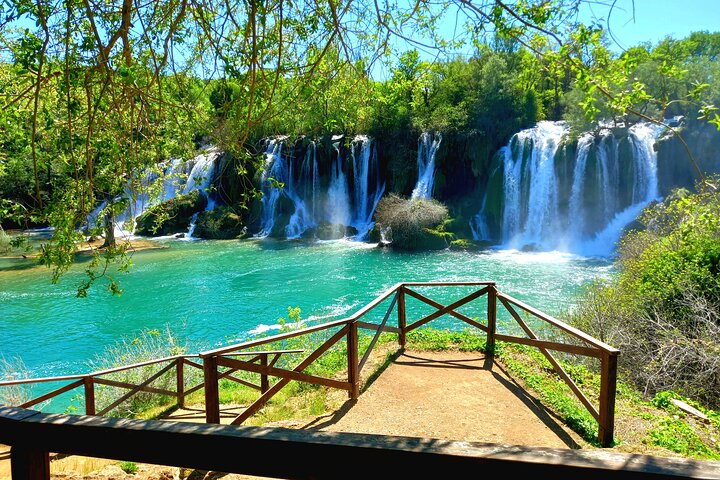
Full-Day Herzegovina Tour with Blagaj, Pocitel and Kravice Waterfalls

PROFESSIONAL SARAJEVO WALKING TOUR - With guide who guided STING!

Tandem Paragliding Experience in Sarajevo, Bosnia and Herzegovina

 Best Backpacking
.jpg) Hi, I’m Johan (Netherlands 🇳🇱), the creator of TakeYourBackpack. Over the past 3 decades, I’ve backpacked through 90+ countries across six continents, gaining extensive experience with independent travel, long-term trips, and overland routes.
Hi, I’m Johan (Netherlands 🇳🇱), the creator of TakeYourBackpack. Over the past 3 decades, I’ve backpacked through 90+ countries across six continents, gaining extensive experience with independent travel, long-term trips, and overland routes.