×

Bosnia and Herzegovina🇧🇦 | best townsThe Must-See 10 towns in Bosnia and Herzegovina

Towns in Bosnia and Herzegovina sit in river gorges and karst valleys, where the call to prayer, church bells and the clatter of copper coffee sets share the same stone lanes. The Ottoman-influenced south and center smell of grilled meat, wood smoke and fresh somun bread, while the Austro-Hungarian north and Sarajevo have pastel facades and tram rattle. Costs are low, often US$30 to 50 a day, and crowds thin out fast beyond the few famous names. Buses are slow and winding, so independent travelers should count on mountain roads and long, scenic hours.

By Johan Kruseman 🇳🇱 | Updated October 18, 2026
Explore the best villages in Bosnia and Herzegovina

Why go?Key Factors That Shape the Experience

Bosnia and Herzegovina packs several empires into one small country, and the towns show it. Mosques, Orthodox and Catholic churches, and synagogues often stand within a few hundred meters, and the sounds change by the hour: a muezzin at dusk, bells on Sunday, the scrape of a tram. This layering comes from centuries of Ottoman and Austro-Hungarian rule, and it gives towns a distinct character you will not find in neighboring countries.

Geography does the rest. Steep gorges, limestone plateaus and fast green rivers like the Neretva, Una and Vrbas squeeze settlements into narrow pockets, so many towns feel compact and walkable, with river air and the smell of coffee and charcoal. Mountains make distances deceptive: 100 kilometers can take three hours by bus or minibus.

Before choosing the country … read more 👉
Bosnia and Herzegovina packs several empires into one small country, and the towns show it. Mosques, Orthodox and Catholic churches, and synagogues often stand within a few hundred meters, and the sounds change by the hour: a muezzin at dusk, bells on Sunday, the scrape of a tram. This layering comes from centuries of Ottoman and Austro-Hungarian rule, and it gives towns a distinct character you will not find in neighboring countries.

Geography does the rest. Steep gorges, limestone plateaus and fast green rivers like the Neretva, Una and Vrbas squeeze settlements into narrow pockets, so many towns feel compact and walkable, with river air and the smell of coffee and charcoal. Mountains make distances deceptive: 100 kilometers can take three hours by bus or minibus.

Before choosing the country for towns, know that the war of the 1990s left visible marks. Bullet-pocked walls, rebuilt bridges and cemetery hillsides are part of the streetscape, and conversations can turn serious. The country is also split into two entities, so you may notice different flags, scripts (Latin and Cyrillic) and even currency habits. The convertible mark (KM) is used everywhere. Rail is limited, buses are the backbone, and a rental car opens up far more. In return you get low prices, hospitality with plenty of coffee, and very few tour groups outside the best-known spots.
Our Approach to Ranking
The list of best towns in Bosnia and Herzegovina is created based on charm, local culture, atmosphere, hidden gems, and visitor appeal. If you feel a town is missing in this list, please let us know.

When to go?Seasonal Guide to Visiting

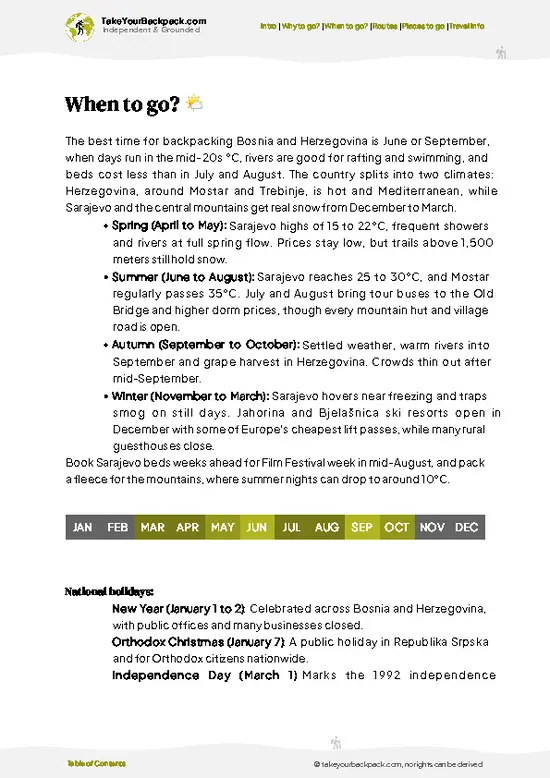
Best months for towns: The best months for towns in Bosnia and Herzegovina are May to June and September to early October, when daytime highs run about 18 to 27°C and the stone lanes are warm without being oppressive. Spring brings green hillsides and swollen rivers, while autumn smells of woodsmoke, ripe plums and roasting peppers.

Summer and shoulder seasons: July and August are hot in the south, in the Neretva valley and Herzegovina, where afternoons often reach 35 to 40°C and cobbles radiate heat after sunset. Central and northern towns stay milder, around 28 to 32°C, with sudden thunderstorms. Peak summer also brings the highest prices: expect rooms 20 to 40 percent above spring and autumn rates in the best-known destinations, plus tour buses from the coast.

April and November are cooler … read more 👉
Best months for towns: The best months for towns in Bosnia and Herzegovina are May to June and September to early October, when daytime highs run about 18 to 27°C and the stone lanes are warm without being oppressive. Spring brings green hillsides and swollen rivers, while autumn smells of woodsmoke, ripe plums and roasting peppers.

Summer and shoulder seasons: July and August are hot in the south, in the Neretva valley and Herzegovina, where afternoons often reach 35 to 40°C and cobbles radiate heat after sunset. Central and northern towns stay milder, around 28 to 32°C, with sudden thunderstorms. Peak summer also brings the highest prices: expect rooms 20 to 40 percent above spring and autumn rates in the best-known destinations, plus tour buses from the coast.

April and November are cooler and wetter, with rain of roughly 80 to 120 mm a month in many areas and fog in valleys. Some smaller guesthouses and seasonal river activities close, though cafes and markets keep running.

Winter: December to February is cold, with Sarajevo and the central highlands often hovering between -5 and 4°C, and snow muffling the streets. Coal and wood smoke hang in the valleys, which can sting the throat. Winter prices are lowest, and some mountain roads need chains or careful driving. Northern towns stay damp and gray, while the coast-facing south is milder.

town hoppingPlanning Your Route Efficiently

How many days to plan: A trip combining several towns in Bosnia and Herzegovina needs 7 to 12 days, because roads are winding and buses rarely run faster than 50 to 60 km/h on average.

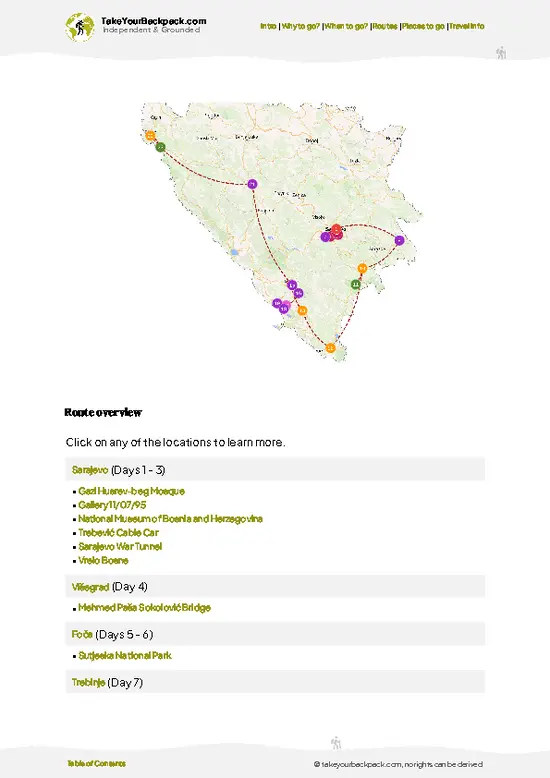
Regions and direction: The country groups naturally into three clusters: Sarajevo and the central valleys, Herzegovina in the south around the Neretva, and the northwest along the Una and Vrbas rivers. A sensible loop starts in Sarajevo, drops south through the Neretva canyon toward Herzegovina, then continues by road north-west or returns via central Bosnia. Many travelers also enter or exit through Croatia or Montenegro, which makes a one-way route from the coast up to Sarajevo (or the reverse) efficient. Sarajevo, Mostar and Banja Luka are the main transport hubs.

Time per stop and transit: Give larger … read more 👉
How many days to plan: A trip combining several towns in Bosnia and Herzegovina needs 7 to 12 days, because roads are winding and buses rarely run faster than 50 to 60 km/h on average.

Regions and direction: The country groups naturally into three clusters: Sarajevo and the central valleys, Herzegovina in the south around the Neretva, and the northwest along the Una and Vrbas rivers. A sensible loop starts in Sarajevo, drops south through the Neretva canyon toward Herzegovina, then continues by road north-west or returns via central Bosnia. Many travelers also enter or exit through Croatia or Montenegro, which makes a one-way route from the coast up to Sarajevo (or the reverse) efficient. Sarajevo, Mostar and Banja Luka are the main transport hubs.

Time per stop and transit: Give larger towns 2 to 3 nights and smaller ones 1 to 2. Sarajevo to the south takes roughly 2.5 to 3 hours by bus or car, and Sarajevo to the northwest 4 to 6 hours. The Sarajevo to Mostar train is scenic and takes about 2.5 to 3 hours, but runs only a few times a day.

Planning mistakes: The classic error is trusting map distances: a 120 km hop can eat half a day with mountain curves, border queues and slow minibuses. Another is cramming one town a day, which leaves you in bus stations and hot terminals more than on the streets. Choose fewer bases, use day trips, and check the last bus time, as many services end by late afternoon.

The ListHighly Recommended towns of Bosnia and Herzegovina

1 Jajce

waterfall center, medieval citadel, lakeside mills

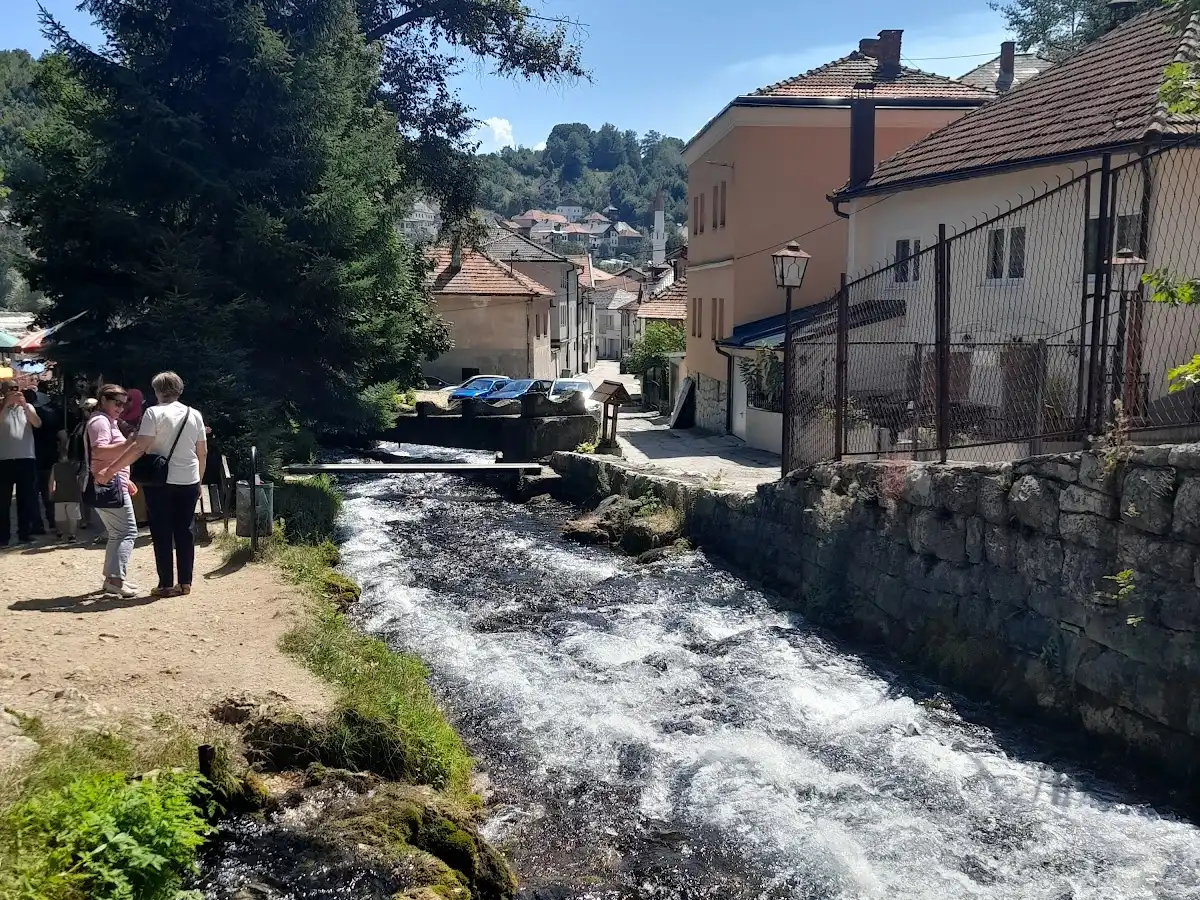
Stand above a roaring waterfall at the town’s heart, then climb to a fortress with sweeping views and visit wooden watermills by the lake.

2 Trebinje

stone bridges, Adriatic proximity, wine cellars

Wander shaded riverbanks and discover a Mediterranean-influenced town where local vineyards and Ottoman architecture shape daily life.

3 Konjic

Neretva rafting, Tito’s bunker, stone bridge

Paddle turquoise rapids, tour a Cold War-era shelter, and cross a centuries-old bridge in a town surrounded by forested mountains.

4 Višegrad

Drina bridge, literary heritage, riverside promenade

Stroll along the Drina and visit the iconic bridge immortalized in literature, then explore a town shaped by river trade and writers.

5 Travnik

colorful mosques, Ottoman fortress, mountain backdrop

Sample strong coffee in a town framed by hills, where blue-domed mosques and a hilltop castle reflect a multicultural past.

bosnia-and-herzegovina-city-travnik
© Google |

6 Bihać

Una river rapids, riverside cafes, city ramparts

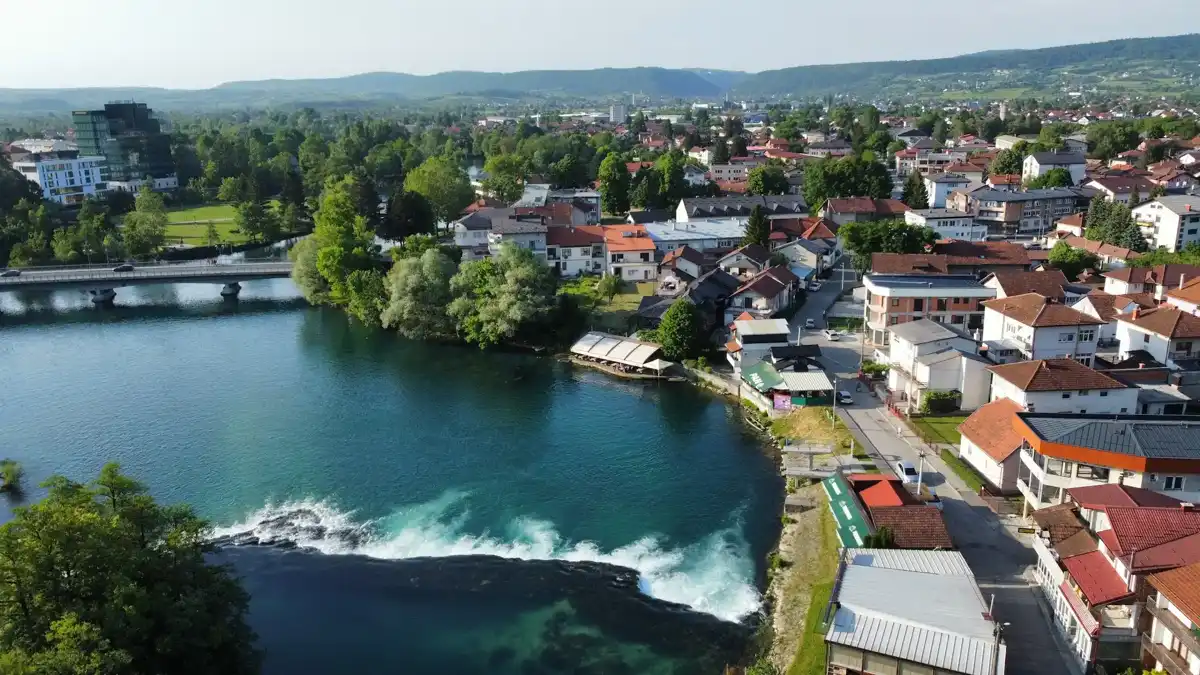
Kayak clear waters, relax by the river, and walk ancient walls that enclose a lively center on the edge of a national park.

bosnia-and-herzegovina-city-bihac
© Google | Rijad Kilim

7 Stolac

medieval necropolis, river cascades, Ottoman fortress

Trace centuries of layered history among riverside ruins, ancient tombstones, and a fortress overlooking quiet streets and rural landscapes.

8 Foča

rafting hub, Tara canyon, Orthodox monasteries

Launch into whitewater adventures or hike deep canyons, then visit centuries-old monasteries set in remote, forested valleys.

bosnia-and-herzegovina-city-foca
© Google |

9 Ljubuški

waterfall park, fortress ruins, fig orchards

Swim beneath a multi-tiered waterfall, climb to a ruined fortress, and taste fresh figs in a sunlit, agricultural valley.

bosnia-and-herzegovina-city-ljubuski
© Google |

10 Čapljina

wetland reserves, Roman ruins, market town

Spot rare birds in protected marshes, wander ancient ruins, and browse lively markets that reflect the region’s agricultural roots.

11 Prijedor

city parks, mining legacy, art installations

Experience a town marked by industrial history and public art, with green spaces providing a break from urban bustle.

12 Gradačac

castle tower, thermal baths, lakeside walks

Climb a prominent fortress, unwind in spa waters, and stroll around peaceful lakes that draw locals and travelers alike.

13 Sanski Most

river confluence, Ottoman bridge, cave springs

Follow rivers meeting beneath an old bridge, then venture to nearby caves and springs that shape the town’s natural rhythm.

14 Doboj

hilltop citadel, railway junction, riverside park

Tour a fortress with panoramic views, then watch trains pass through a key crossroads town with leafy riverside paths.

15 Livno

karst plateau, wild horses, cheese markets

Roam open plains dotted with herds and taste regional cheeses in a town where rural traditions meet dramatic limestone scenery.

bosnia-and-herzegovina-city-livno
© Google |

16 Široki Brijeg

Franciscan monastery, limestone plateau, vineyards

Visit a hilltop monastery, sample local wines, and explore a town where stone landscapes and religious heritage define the pace.

17 Bugojno

river valley, pine woods, postwar murals

Walk wooded paths along a gentle river and spot murals that hint at the town’s recent history and creative spirit.

18 Srebrenica

memorial center, spa springs, forested hills

Reflect at a major memorial, then explore wooded hills and mineral springs that offer a quieter side to this historically significant town.

19 Cazin

hilltop fortress, borderland markets, rolling farmland

Climb to a commanding castle, shop at cross-border markets, and explore a landscape of fields and gentle hills.

20 Goražde

river islands, bridge crossings, local festivals

Cross the Drina on footbridges, relax on small islands, and time your visit with community events that reveal the town’s resilience.

21 Maglaj

riverside fortress, Ottoman mosque, steep alleys

Climb narrow lanes to a riverside castle, then visit a centuries-old mosque set among houses clinging to the hillside.

22 Teslić

thermal spa, forest trails, industrial heritage

Unwind in spa complexes, hike wooded hills, and notice traces of industry that shaped the town’s modern character.

23 Kiseljak

mineral springs, spa hotels, roadside bakeries

Sample mineral water at public fountains, relax in spa resorts, and grab fresh pastries from bakeries lining the main road.

24 Vareš

mountain mining, pine forests, medieval church

Hike through dense forests to discover mining relics and a rare medieval church, all set in a cool, highland environment.

25 Kotor Varoš

timber houses, trout streams, Orthodox churches

Fish in cool streams, visit wooden homes, and explore a town where religious sites and rural life blend seamlessly.

26 Gračanica

artisan workshops, mosque minarets, small-town bazaars

Browse local crafts and mingle in compact markets, where a mix of religious sites and workshops shape the town’s daily life.

27 Zvornik

Drina lakeshore, fortress ruins, border crossing

Walk lakeside paths, climb to a ruined fortress, and experience a town shaped by its river border and changing frontiers.

bosnia-and-herzegovina-city-zvornik
© Google | Beloica S.

Think you know Bosnia and Herzegovina?

Prove you’re a true local — uncover 17 lesser-known towns in Bosnia and Herzegovina that locals tend to keep to themselves.
Loading the map 🌍

Expert viewExpert Commentary on towns

How many towns to visit: I would advise four to six towns on a trip of one to two weeks. Roads twist through gorges and passes, so each transfer costs half a day, and more stops mean you spend your time on buses instead of at a riverside table with a small cup of thick coffee. Four to six lets you linger, wander at dusk when the light turns copper on the stone, and still have room for a day trip.

Which kind to prioritize: If you love history and architecture, favor Ottoman-era towns, where you get cobbled bazaars, tinsmiths tapping copper and the smell of grilled cevapi. If you want nature and activity, pick river and mountain towns for rafting, canyoning and hiking, where you get cold green water and quiet trails. If you like slower, local life, choose smaller inland towns, with market stalls, … read more 👉
How many towns to visit: I would advise four to six towns on a trip of one to two weeks. Roads twist through gorges and passes, so each transfer costs half a day, and more stops mean you spend your time on buses instead of at a riverside table with a small cup of thick coffee. Four to six lets you linger, wander at dusk when the light turns copper on the stone, and still have room for a day trip.

Which kind to prioritize: If you love history and architecture, favor Ottoman-era towns, where you get cobbled bazaars, tinsmiths tapping copper and the smell of grilled cevapi. If you want nature and activity, pick river and mountain towns for rafting, canyoning and hiking, where you get cold green water and quiet trails. If you like slower, local life, choose smaller inland towns, with market stalls, plum brandy and people who want to talk. A mix of one big city, one or two heritage towns and one outdoors base suits most travelers.

What it costs: Budget about US$30 to 50 a day (roughly 55 to 90 KM) for hostels or simple guesthouses, local meals and buses. Dorm beds run about 20 to 35 KM, private rooms 50 to 100 KM, a burek or cevapi meal 5 to 12 KM, and a coffee 2 to 3 KM. Museum and mosque entry is usually 3 to 15 KM, local guides for a half day 50 to 120 KM, and city-to-town buses typically 8 to 25 KM per leg. Rafting or canyoning days cost around 60 to 100 KM. Cash is still common, especially in small cafes and family guesthouses, so carry notes.

Safety and cultural considerations: Towns are generally safe, with low violent crime, but landmines remain in some rural areas. Stay on marked paths and never step off a road or trail into overgrown land, especially near former front lines. Dress modestly in mosques and churches, cover shoulders and knees, and remove shoes where asked. Ask before photographing people. Conversation about the 1990s war is sensitive, so let locals lead and avoid taking sides. Many people will offer coffee or food, and accepting is polite. In return you get invitations to sit, taste and listen, which is the best part of a stop. In summer, carry water and sun protection, as stone streets reflect heat strongly.

Getting the most from each stop: Arrive early or stay after day-trippers leave. Evening streets cool down, the light softens and lanterns come on, giving you the quiet that makes a town memorable.

✈️ The backpacker research shortcutBosnia and Herzegovina Travel Guide

An offline-friendly backpacking guide with optimized travel routes, ranked highlights, transport advice, and the best areas to stay.
example page 0 from our offline Travel Guide for Bosnia and Herzegovina
example page 1 from our offline Travel Guide for Bosnia and Herzegovina
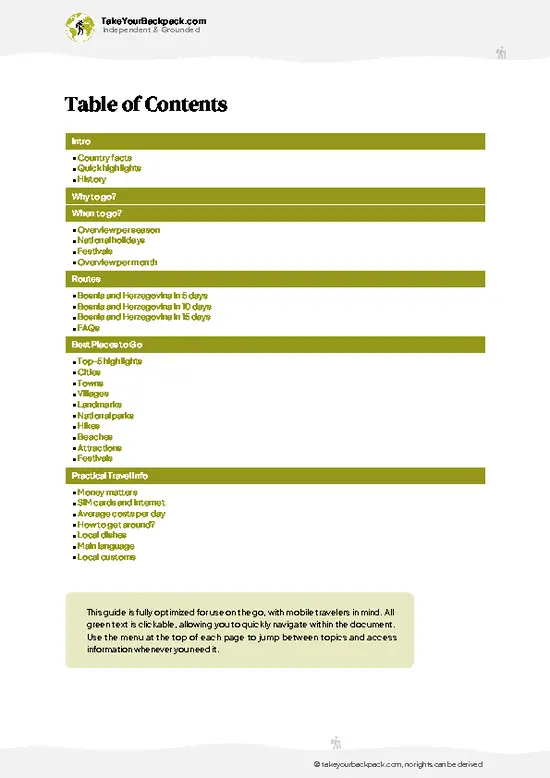
example page 2 from our offline Travel Guide for Bosnia and Herzegovina
example page 3 from our offline Travel Guide for Bosnia and Herzegovina
example page 4 from our offline Travel Guide for Bosnia and Herzegovina
example page 5 from our offline Travel Guide for Bosnia and Herzegovina
example page 6 from our offline Travel Guide for Bosnia and Herzegovina
example page 7 from our offline Travel Guide for Bosnia and Herzegovina
The digital guide (311 pages) contains:
✅ 82 highlights, ranked by travel appeal
✅ Optimized 5, 10 & 15-day travel routes
✅ Cities, national parks, landmarks, beaches
✅ How to get around
✅ Offline-friendly for travel without Wi-Fi
👉 Click to see all 30+ guide features

📅 Plan smarter in minutes, not weeks
✅ Month by month travel advice
✅ Festivals & national holidays
✅ Budget expectations

🗺️ Go to the right places, skip the overrated ones
✅ Honest pros & cons of destinations
✅ Top hikes, parks & viewpoints
✅ Lesser-known places most travelers miss
✅ Clear “worth it vs skip it” guidance

🛏️ Travel smoothly without rookie mistakes
✅ Best areas to stay
✅ Transport systems explained simply
✅ Common scams & safety advice
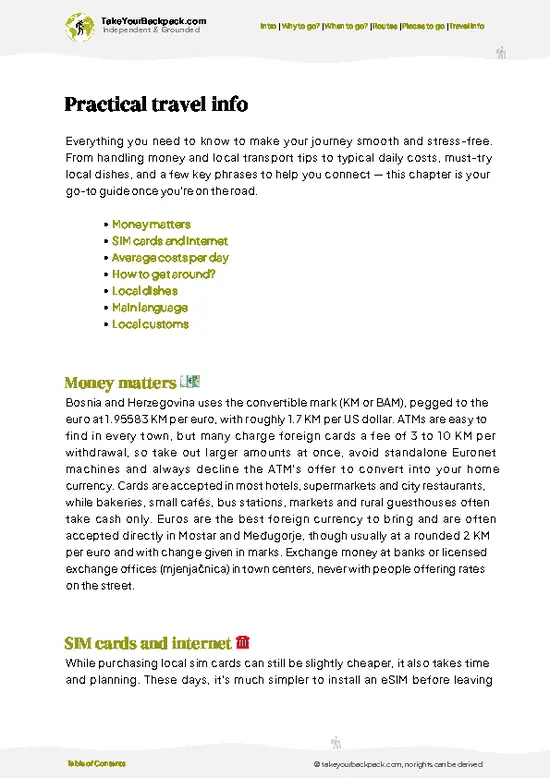
✅ SIM cards, money & practical tips

🌍 Understand the country, not just visit it
✅ Culture & traditions
✅ 52 Essential phrases & customs
✅ Festivals worth planning around
✅ Traveler-friendly historical context
✅ Insights that make places more meaningful

📱 Built for real travel conditions
✅ Fully downloadable PDF
✅ Works completely offline
✅ Optimized for phone use
✅ Useful in remote areas & buses
✅ Everything in one place
Stop searching, start planning
Get instant access to your full guide. 30‑day money-back guarantee.
+ Add another guide for just

By proceeding you agree to our terms.
Sent to your inbox immediately after payment • 100% Secure Checkout
Best Backpacking Travel Advisor 2025 tourism awardBest Backpacking
Travel Advisor
2025
What others say about Take Your Backpack Guides:
⭐⭐⭐⭐⭐
Fantastic, amazing amount of information!
⭐⭐⭐⭐⭐
My goodness this is amazing, it's what I've been looking for hats off too you!
⭐⭐⭐⭐⭐
I think this is absolutely BRILLIANT
⭐⭐⭐⭐
Very complete and informative. It's still missing places, but I gotta to commend you
⭐⭐⭐⭐⭐
This is truly amazing, thank you, can't wait to explore it with my kids!
⭐⭐⭐⭐⭐
Awesome resource, thank you!
⭐⭐⭐⭐⭐
This is amazing! Can't wait to explore the ones I haven't seen
⭐⭐⭐⭐
I love this! Well done, great idea.
⭐⭐⭐⭐⭐
Thanks for taking the time to make this gem!
⭐⭐⭐⭐⭐
This might be the best website I've ever seen.
⭐⭐⭐⭐⭐
Congratulations, and thank you so much for your work; it's incredibly valuable.
⭐⭐⭐⭐
In all seriousness I think you did a great job pointing out the important spots
⭐⭐⭐⭐⭐
10/10 very good
⭐⭐⭐⭐⭐
As someone who's only just starting to visit regularly this is awesome, thank you.
⭐⭐⭐⭐
Thank you very much! I'm going to visit my dad, it's going to be very useful!
⭐⭐⭐⭐⭐
This is really cool! We'll be travelling for the first time and this definitely come in handy.
⭐⭐⭐⭐⭐
You are now our minister of culture, congratulations 👨‍💼
⭐⭐⭐⭐⭐
Just wanted to tell you that this is a pearl! Going to follow your recommendations.
⭐⭐⭐⭐⭐
This is so cool. I'll definitely be using the resource for my travels soon.
⭐⭐⭐⭐⭐
This is very impressive! Good work.
⭐⭐⭐⭐⭐
This is an amazing and informative site. Very well done!

🛏️ Where to stay?Where to Stay: Bosnia and Herzegovina Edition

Bosnia and Herzegovina has plenty of hostels and guesthouses, with dorm beds usually running 20 to 35 KM (about €10 to 18) and private rooms in family-run pansions from roughly 50 KM (about €25). In Sarajevo, Baščaršija and the surrounding Old Town hold the densest cluster of hostels, putting you within walking distance of the main sights and the bars, though the streets stay noisy late and the lanes climbing the hillsides are steep, while Marijin Dvor is calmer, better connected by tram and a 20-minute walk from the old center. In Mostar, the area around the Old Town near the bridge has the most budget beds and the liveliest evenings, but the quieter streets on the west bank often give you … read more 👉
Bosnia and Herzegovina has plenty of hostels and guesthouses, with dorm beds usually running 20 to 35 KM (about €10 to 18) and private rooms in family-run pansions from roughly 50 KM (about €25). In Sarajevo, Baščaršija and the surrounding Old Town hold the densest cluster of hostels, putting you within walking distance of the main sights and the bars, though the streets stay noisy late and the lanes climbing the hillsides are steep, while Marijin Dvor is calmer, better connected by tram and a 20-minute walk from the old center. In Mostar, the area around the Old Town near the bridge has the most budget beds and the liveliest evenings, but the quieter streets on the west bank often give you more space for the money and an easy 10 to 15-minute walk in.

If you enjoy meeting fellow travelers, consider choosing hostels with high ratings for atmosphere. On the other hand, if you prefer having your own space, a hotel might be a better option.

Bosnia and HerzegovinaExplore Beyond This Category

👋 Meet the founderWho’s Behind Take Your Backpack?

Johan, backpacker and founder of TakeYourBackpackHi, I’m Johan (Netherlands 🇳🇱), the creator of TakeYourBackpack. Over the past 3 decades, I’ve backpacked through 90+ countries across six continents, gaining extensive experience with independent travel, long-term trips, and overland routes.

This site is built on a combination of firsthand travel experience and carefully curated insights from other backpackers. Many guides are based on places I’ve personally visited, while others bring together tips, observations, and practical advice shared by trusted travelers I’ve met along the way.

The goal is to provide realistic, experience-driven guidance — not generic itineraries — so you can explore destinations with better context, clearer expectations, and more confidence.