×

Botswana🇧🇼 | attractionsGcwihaba CavesDolomite caverns, sinkhole entrance, bat roosts, Aha Hills, remote Kalahari track | things to do and best time to go

Explore Tsodilo Hills Rock Art SitesExplore Kubu Island

Backpacking in Gcwihaba Caves
🌟 Highlightattraction ranked #8
By Johan Kruseman 🇳🇱 | Updated October 22, 2026

Gcwihaba Caves are best known for their dolomite chambers of stalactites, stalagmites and flowstone, set in a landscape that otherwise shows no sign of them. What matters just as much, and gets overlooked, is the journey: the caves sit far out on sandy tracks, so the drive is the larger part of the effort. They lie in the northwest of Botswana, in the Kalahari west of the Okavango, near the Namibian border. Expect no crowds, no lighting, no railings and no ticket booth, only a quiet hillside and a dark opening. The caverns themselves are modest next to famous show caves, but the silence, the bats and the sense of being alone are worth the trouble. Skip this if you want a guided, polished attraction. Self-reliant travelers with a 4x4 and a headlamp will like it most.

Discover everything you want to know in the 📖 Botswana Travel Guide.


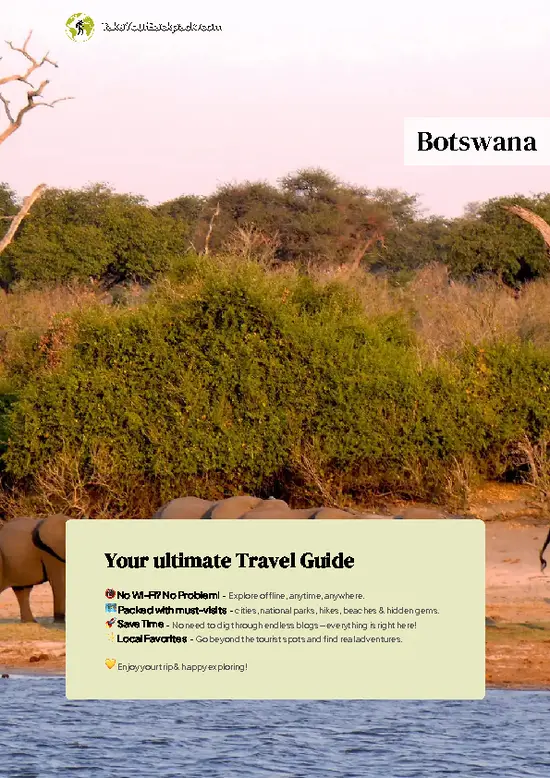
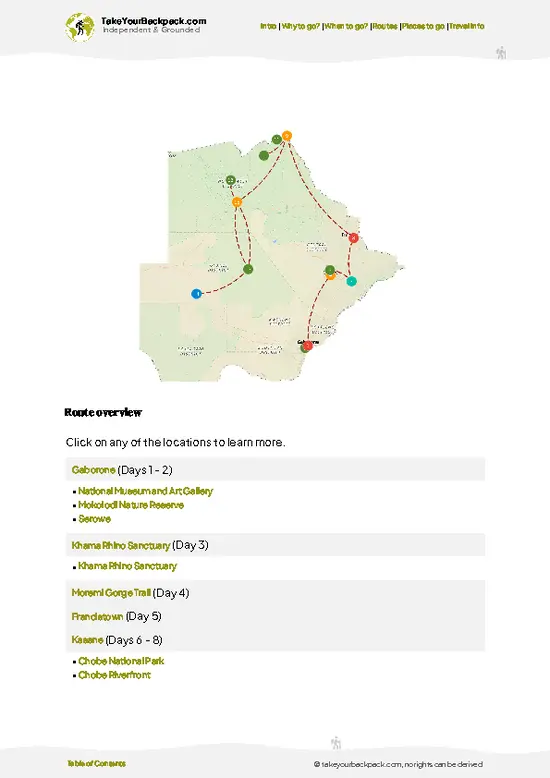
example page 0 from our offline Travel Guide for Botswana
example page 1 from our offline Travel Guide for Botswana
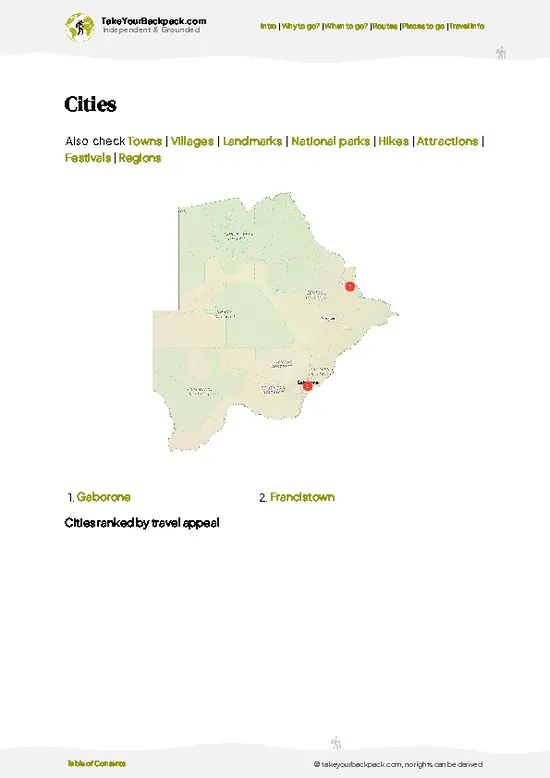
example page 2 from our offline Travel Guide for Botswana
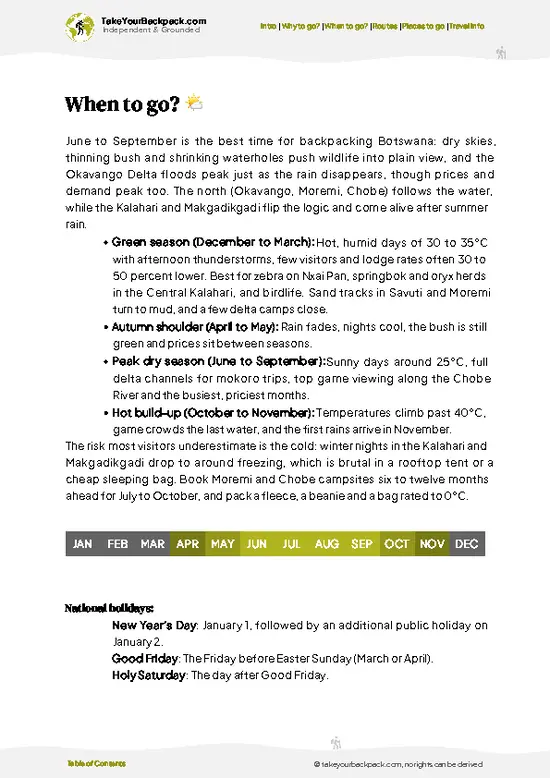
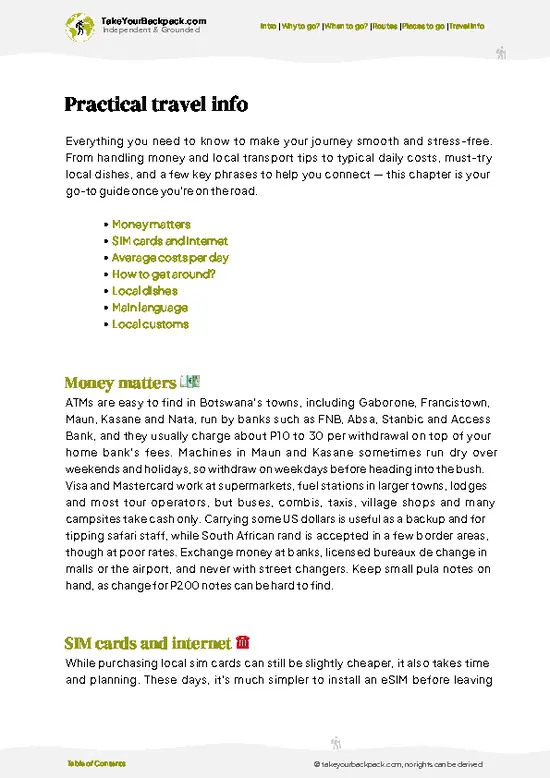
example page 3 from our offline Travel Guide for Botswana
example page 4 from our offline Travel Guide for Botswana
example page 5 from our offline Travel Guide for Botswana
example page 6 from our offline Travel Guide for Botswana
example page 7 from our offline Travel Guide for Botswana
Loading the map 🌍
CLICK TO FILTER
cities
towns
villages
landmarks
national parks
hikes
attractions
festivals
regions
SHOW COUNTRY’S BESTSHOW ALL

✨ Why go?
Ranked #8 attraction in Botswana
What makes this attraction worth visiting

Gcwihaba Caves reward people who prefer places that still feel unclaimed. Nobody queues here. You walk down into the Drotsky’s Cave opening with your own light, and the only sounds are your boots and the chatter of roosting bats in the dark. That kind of solitude is rare in southern Africa, where most natural sights come with a parking lot.

The second reason is the route. Reaching the caves means a long, sandy drive through the dry Kalahari and the remote Aha Hills, with little traffic and wide, flat horizons. Few visitors push this far west, so you cross a part of Botswana that most itineraries skip.

The name itself is worth the trip. Gcwihaba comes from the Ju/’hoansi language and is often rendered as “Hyena’s Hole”, a reminder that this land has been inhabited and named long before any road reached it.

💡 HighlightsKey sights and experiences for travelers

  1. Drotsky’s Cave: the main cave and the reason for the journey. A steep opening leads into dark chambers with calcite formations, columns and draperies. Bring a strong headlamp, since there is no lighting.
  2. The cave entrance sinkhole: the descent from the surface is the most dramatic moment, a drop into a cool, still world while the heat of the Kalahari stays above you.
  3. Stalactites and stalagmites: the dolomite chambers hold slow-grown formations, some joined into pillars. Look at them with a light held low to bring out the texture.
  4. The bat colonies: several species roost deep inside. Their calls and the smell of guano tell you how alive the cave is. Keep noise and light off the roosts.
  5. Aha Hills: the low ridge around the caves is a rare rise in flat country. Walking its edge gives wide views over
… read more 👉
  1. Drotsky’s Cave: the main cave and the reason for the journey. A steep opening leads into dark chambers with calcite formations, columns and draperies. Bring a strong headlamp, since there is no lighting.
  2. The cave entrance sinkhole: the descent from the surface is the most dramatic moment, a drop into a cool, still world while the heat of the Kalahari stays above you.
  3. Stalactites and stalagmites: the dolomite chambers hold slow-grown formations, some joined into pillars. Look at them with a light held low to bring out the texture.
  4. The bat colonies: several species roost deep inside. Their calls and the smell of guano tell you how alive the cave is. Keep noise and light off the roosts.
  5. Aha Hills: the low ridge around the caves is a rare rise in flat country. Walking its edge gives wide views over scrub and sand.
  6. Kalahari drive in: the sandy track passes baobab-free thornveld, quiet pans and occasional signs of game. It counts as an experience on its own.
  7. Night sky at the campsite: with no towns for a very long distance, the stars are dense and bright. This is a good reason to stay overnight rather than return the same day.
Allow two to three hours for the caves and the hills, and a full day more if you want to camp and enjoy the sky.
Spotted a mistake or missing something? Contact us.

🌤️ When to go?When to go for the best experience

  • May to August (cool dry season): Days run 24 to 28°C (75 to 82°F) and nights in the Kalahari can fall to 2 to 8°C (36 to 46°F), so bring a real sleeping bag. Cave interiors stay steady and cool, and tracks are firmest. Daylight lasts roughly 11 hours.
  • September to October (hot, dry): Afternoons reach 34 to 40°C (93 to 104°F). Sand tracks stay driveable, but the walk from the parking area to the cave mouths is brutal after midday. Few visitors come.
  • November to March (rainy season): Highs of 30 to 36°C (86 to 97°F) arrive with thunderstorms. Deep sand turns to mud in places and the pans can flood, so access from Maun or Nokaneng gets risky. Camping spots are quiet and lodges offer lower rates, but you will need a robust 4x4.
Aim for June or July and set off from your camp at first light to keep the cave visit unhurried.

source: climatestotravel.comJANJanuary: fair for travelingFEBFebruary: fair for travelingMARMarch: fair for travelingAPRApril: fair for travelingMAYMay: excellent for travelingJUNJune: excellent for travelingJULJuly: excellent for travelingAUGAugust: excellent for travelingSEPSeptember: excellent for travelingOCTOctober: highly recommended for travelingNOVNovember: fair for travelingDECDecember: fair for traveling
when-to-go

✈️ The backpacker research shortcutBotswana Travel Guide

An offline-friendly backpacking guide with optimized travel routes, ranked highlights, transport advice, and the best areas to stay.
example page 0 from our offline Travel Guide for Botswana
example page 1 from our offline Travel Guide for Botswana
example page 2 from our offline Travel Guide for Botswana
example page 3 from our offline Travel Guide for Botswana
example page 4 from our offline Travel Guide for Botswana
example page 5 from our offline Travel Guide for Botswana
example page 6 from our offline Travel Guide for Botswana
example page 7 from our offline Travel Guide for Botswana
The digital guide (172 pages) contains:
✅ 38 highlights, ranked by travel appeal
✅ Optimized 5, 10 & 15-day travel routes
✅ Cities, national parks, landmarks, beaches
✅ How to get around
✅ Offline-friendly for travel without Wi-Fi
👉 Click to see all 30+ guide features

📅 Plan smarter in minutes, not weeks
✅ Month by month travel advice
✅ Festivals & national holidays
✅ Budget expectations

🗺️ Go to the right places, skip the overrated ones
✅ Honest pros & cons of destinations
✅ Top hikes, parks & viewpoints
✅ Lesser-known places most travelers miss
✅ Clear “worth it vs skip it” guidance

🛏️ Travel smoothly without rookie mistakes
✅ Best areas to stay
✅ Transport systems explained simply
✅ Common scams & safety advice
✅ SIM cards, money & practical tips

🌍 Understand the country, not just visit it
✅ Culture & traditions
✅ 52 Essential phrases & customs
✅ Festivals worth planning around
✅ Traveler-friendly historical context
✅ Insights that make places more meaningful

📱 Built for real travel conditions
✅ Fully downloadable PDF
✅ Works completely offline
✅ Optimized for phone use
✅ Useful in remote areas & buses
✅ Everything in one place
Stop searching, start planning
Get instant access to your full guide. 30‑day money-back guarantee.
+ Add another guide for just

By proceeding you agree to our terms.
Sent to your inbox immediately after payment • 100% Secure Checkout
Best Backpacking Travel Advisor 2025 tourism awardBest Backpacking
Travel Advisor
2025
What others say about Take Your Backpack Guides:
⭐⭐⭐⭐⭐
Fantastic, amazing amount of information!
⭐⭐⭐⭐⭐
My goodness this is amazing, it's what I've been looking for hats off too you!
⭐⭐⭐⭐⭐
I think this is absolutely BRILLIANT
⭐⭐⭐⭐
Very complete and informative. It's still missing places, but I gotta to commend you
⭐⭐⭐⭐⭐
This is truly amazing, thank you, can't wait to explore it with my kids!
⭐⭐⭐⭐⭐
Awesome resource, thank you!
⭐⭐⭐⭐⭐
This is amazing! Can't wait to explore the ones I haven't seen
⭐⭐⭐⭐
I love this! Well done, great idea.
⭐⭐⭐⭐⭐
Thanks for taking the time to make this gem!
⭐⭐⭐⭐⭐
This might be the best website I've ever seen.
⭐⭐⭐⭐⭐
Congratulations, and thank you so much for your work; it's incredibly valuable.
⭐⭐⭐⭐
In all seriousness I think you did a great job pointing out the important spots
⭐⭐⭐⭐⭐
10/10 very good
⭐⭐⭐⭐⭐
As someone who's only just starting to visit regularly this is awesome, thank you.
⭐⭐⭐⭐
Thank you very much! I'm going to visit my dad, it's going to be very useful!
⭐⭐⭐⭐⭐
This is really cool! We'll be travelling for the first time and this definitely come in handy.
⭐⭐⭐⭐⭐
You are now our minister of culture, congratulations 👨‍💼
⭐⭐⭐⭐⭐
Just wanted to tell you that this is a pearl! Going to follow your recommendations.
⭐⭐⭐⭐⭐
This is so cool. I'll definitely be using the resource for my travels soon.
⭐⭐⭐⭐⭐
This is very impressive! Good work.
⭐⭐⭐⭐⭐
This is an amazing and informative site. Very well done!

🛏️ Where to stay?How to pick the right area

The best base for most backpackers is the rustic public campsite near the caves themselves, because Gcwihaba sits roughly 110 km (70 miles) of rough sand track from the nearest tarred road and no towns lie close by. It is basic, with no shop and limited facilities, so carry all your water, food and fuel. Camping here puts you next to the entrance for an early start, and the night sky over the Kalahari is spectacular. Expect to share the site with few other groups, so it is quiet rather than social.

For company, stay in Maun, the safest and most backpacker-friendly town in the region, with hostels, … read more 👉
The best base for most backpackers is the rustic public campsite near the caves themselves, because Gcwihaba sits roughly 110 km (70 miles) of rough sand track from the nearest tarred road and no towns lie close by. It is basic, with no shop and limited facilities, so carry all your water, food and fuel. Camping here puts you next to the entrance for an early start, and the night sky over the Kalahari is spectacular. Expect to share the site with few other groups, so it is quiet rather than social.

For company, stay in Maun, the safest and most backpacker-friendly town in the region, with hostels, campsites and trip organizers where you can find others to split a 4x4 rental. Sehithwa and Nokaneng are useful stopovers on the western route, with simple guesthouses and fuel, but little nightlife. Gumare is another option for a night with basic stays and supplies. Most budget travelers join a guided overland trip from Maun or Nata and camp wild along the way.

👛 Costs (as of 22 October 2026)Money, prices, and spending tips

Gcwihaba Caves costs roughly US$136 to 238 per person per day for a self-drive trip, and the 4x4 is by far the largest expense. Entry fees are low, but supplies and fuel need planning, since nothing can be bought near the site.
CategoryBudget RangeLocal Reality
Park entry and cavesUS$3 to 8Small fee for non-citizens, paid in pula to the community or park office.
CampingUS$8 to 15 (low season US$6 to 12)Basic bush sites with no shop. Facilities are minimal.
4x4 rental from MaunUS$90 to 140 per vehicleSplit between passengers. Essential, since sand tracks block normal cars.
FuelUS$15 to 30Fill up in Maun or Nokaneng. Fuel is not sold near the caves.
Food and waterUS$10 to 20Stock up in Maun supermarkets. Carry at least 5 liters of water per person daily.
Guide (optional)US$10 to 25Helpful for the cave
… read more 👉
Gcwihaba Caves costs roughly US$136 to 238 per person per day for a self-drive trip, and the 4x4 is by far the largest expense. Entry fees are low, but supplies and fuel need planning, since nothing can be bought near the site.
CategoryBudget RangeLocal Reality
Park entry and cavesUS$3 to 8Small fee for non-citizens, paid in pula to the community or park office.
CampingUS$8 to 15 (low season US$6 to 12)Basic bush sites with no shop. Facilities are minimal.
4x4 rental from MaunUS$90 to 140 per vehicleSplit between passengers. Essential, since sand tracks block normal cars.
FuelUS$15 to 30Fill up in Maun or Nokaneng. Fuel is not sold near the caves.
Food and waterUS$10 to 20Stock up in Maun supermarkets. Carry at least 5 liters of water per person daily.
Guide (optional)US$10 to 25Helpful for the cave chambers, and tips are appreciated.
Total Daily BudgetUS$136 to 238Lower end assumes sharing a vehicle among four people.
⚠️ Prices can change and everyone travels differently, so take this as a rough guide. Hope it helps you plan your adventure!

FAQFrequently asked questions about Gcwihaba Caves

Plan on one full day at Gcwihaba Caves, though two days works better given the distance. The cave visit itself takes 1 to 2 hours, and the drive from Maun runs around 6 to 8 hours in dry sand. Many travelers camp one night nearby so the drive is not rushed.
Gcwihaba Caves is worth the small fee, roughly US$3 to 8, for anyone who enjoys remote Kalahari travel and geology. You get stalactites, bat colonies and a quiet, uncrowded site with almost no facilities. The real cost is the 4x4 hire, so split it between three or four people.
A high-clearance 4x4 is required to reach Gcwihaba Caves, which lie in the far northwest near the Namibian border. Most people drive from Maun via Sehithwa and Nokaneng, then follow sand tracks for 110 km (70 miles) or so, taking 6 to 8 hours. Fuel is available in Maun and Nokaneng only, so fill up before leaving.
⚠️ Things can change over time, so always validate details locally before you go.

Other Botswanan attractions near Gcwihaba Caves

Explore more nearby:


💡 Not sure where to go next?
Create a personalized itinerary for Botswana including Gcwihaba Caves and the places that fit your trip.

Generate my itinerary

👉 Discover all attractions

Or checkout all Botswana has to offer (think cities, towns, villages, national parks, hikes, beaches, festivals)
Country photo of Botswana

We 💚 feedbackParting advice and final tips

The mistake at Gcwihaba Caves is arriving with one weak phone light and a single vehicle. The track is deep sand, and the cave is pitch dark. I would bring a second vehicle or recovery gear, two headlamps with spare batteries, and enough water and fuel for the return. Then stay the night and enjoy the quiet.

✍️ Help improve this page!
The information on this page is based on in-depth research, insights shared by experienced travelers, and feedback from the local travel community in Botswana. While every effort is made to keep the information accurate and current, conditions can change — so if you spot anything incorrect or outdated, please get in touch.


🙋‍♂️ Give feedback

👋 Meet the founderWho’s Behind Take Your Backpack?

Johan, backpacker and founder of TakeYourBackpackHi, I’m Johan (Netherlands 🇳🇱), the creator of TakeYourBackpack. Over the past 3 decades, I’ve backpacked through 90+ countries across six continents, gaining extensive experience with independent travel, long-term trips, and overland routes.

This site is built on a combination of firsthand travel experience and carefully curated insights from other backpackers. Many guides are based on places I’ve personally visited, while others bring together tips, observations, and practical advice shared by trusted travelers I’ve met along the way.

The goal is to provide realistic, experience-driven guidance — not generic itineraries — so you can explore destinations with better context, clearer expectations, and more confidence.