v2.webp)
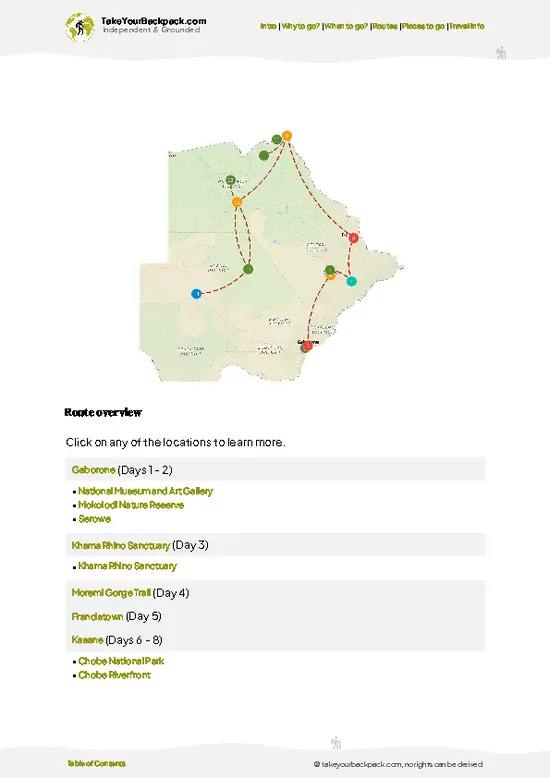
- Ntwetwe Pan sunset trip: The sunset outing onto the edge of Ntwetwe Pan is what Gweta is known for. Guides drive you across the cracked white clay to a spot where the horizon disappears and the shadows stretch for hundreds of meters. Quad bike options exist at some lodges for those who want to cross the surface faster. Go in the dry months, roughly May to October, when the pan is firm. Expect to pay US$40 to 120 depending on whether you choose a standard vehicle or quad bikes, and plan on 3 to 4 hours.
- Makgadikgadi meerkat sunrise: Guided visits take you to meet a group of habituated meerkats in the early morning, as they emerge from their burrows and climb onto your shoulders or the guide’s hat to scan for predators. It is hard to feel jaded when a small animal uses you as a lookout post.
- Ntwetwe Pan sunset trip: The sunset outing onto the edge of Ntwetwe Pan is what Gweta is known for. Guides drive you across the cracked white clay to a spot where the horizon disappears and the shadows stretch for hundreds of meters. Quad bike options exist at some lodges for those who want to cross the surface faster. Go in the dry months, roughly May to October, when the pan is firm. Expect to pay US$40 to 120 depending on whether you choose a standard vehicle or quad bikes, and plan on 3 to 4 hours.
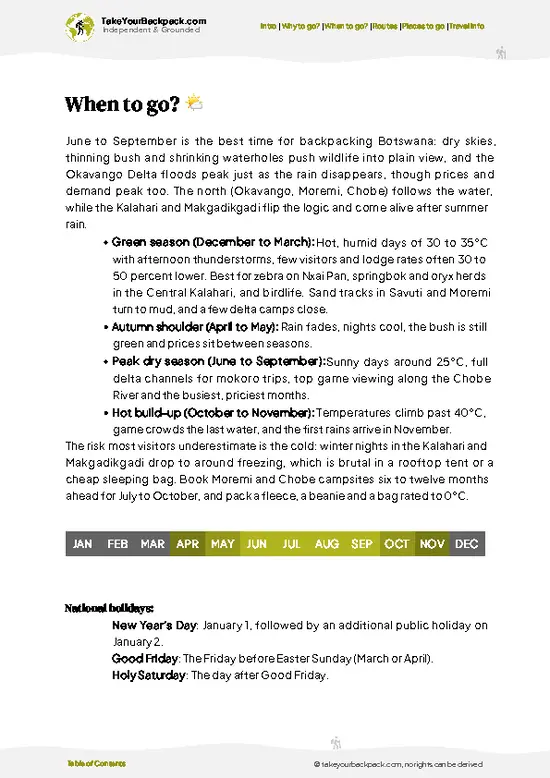
- Makgadikgadi meerkat sunrise: Guided visits take you to meet a group of habituated meerkats in the early morning, as they emerge from their burrows and climb onto your shoulders or the guide’s hat to scan for predators. It is hard to feel jaded when a small animal uses you as a lookout post. Tours leave before dawn and run 3 to 4 hours, costing roughly US$45 to 90 per person. Winter mornings are cold, so wear layers, and book through your lodge the day before.
- Planet Baobab: Just outside the village on the A3, this camp is recognizable by its giant baobab-shaped entrance and the round thatched huts set among real baobabs. You can stop for a cold drink and a look around in about an hour even if you are not staying; a drink costs roughly US$2 to 4. Late afternoon is best, when the light is gentler and the bar fills with overlanders trading road reports. It is also a reasonable place to camp, which many travelers do.
Spotted a mistake or missing something? Contact us.


 Best Backpacking
.jpg) Hi, I’m Johan (Netherlands 🇳🇱), the creator of TakeYourBackpack. Over the past 3 decades, I’ve backpacked through 90+ countries across six continents, gaining extensive experience with independent travel, long-term trips, and overland routes.
Hi, I’m Johan (Netherlands 🇳🇱), the creator of TakeYourBackpack. Over the past 3 decades, I’ve backpacked through 90+ countries across six continents, gaining extensive experience with independent travel, long-term trips, and overland routes.